AQA · A-Level · Biology
Mass Transport in Animals
Master the fundamental principles of how energy enters ecosystems through photosynthesis and flows through food chains. This crucial A-Level topic links cellular biochemistry with global ecology, forming the backbone of your understanding of life processes.
- 7 min read
- 3 worked examples
- 5 practice questions
- 6 key terms
Study Notes

Overview
Energy is the currency of all living systems. This topic, 'Energy Transfers in and between Organisms', is fundamental to A-Level Biology because it connects the microscopic world of cellular biochemistry with the macroscopic world of ecosystems and agriculture.
Every biological process—from muscle contraction to active transport—requires energy. This topic explores how light energy from the sun is captured by producers during photosynthesis and converted into chemical energy. It then details how this chemical energy is released by all organisms through aerobic and anaerobic respiration to synthesise ATP, the universal energy carrier.
Finally, we scale up to look at how this energy flows through ecosystems. You will learn why energy transfer between trophic levels is highly inefficient and how this limits the length of food chains. Examiners love this topic because it allows them to test synoptic understanding, frequently linking it to biochemistry, ecology, and human impact on the environment.
Listen to the companion podcast for a comprehensive review of this topic:
Key Concepts
Concept 1: Photosynthesis
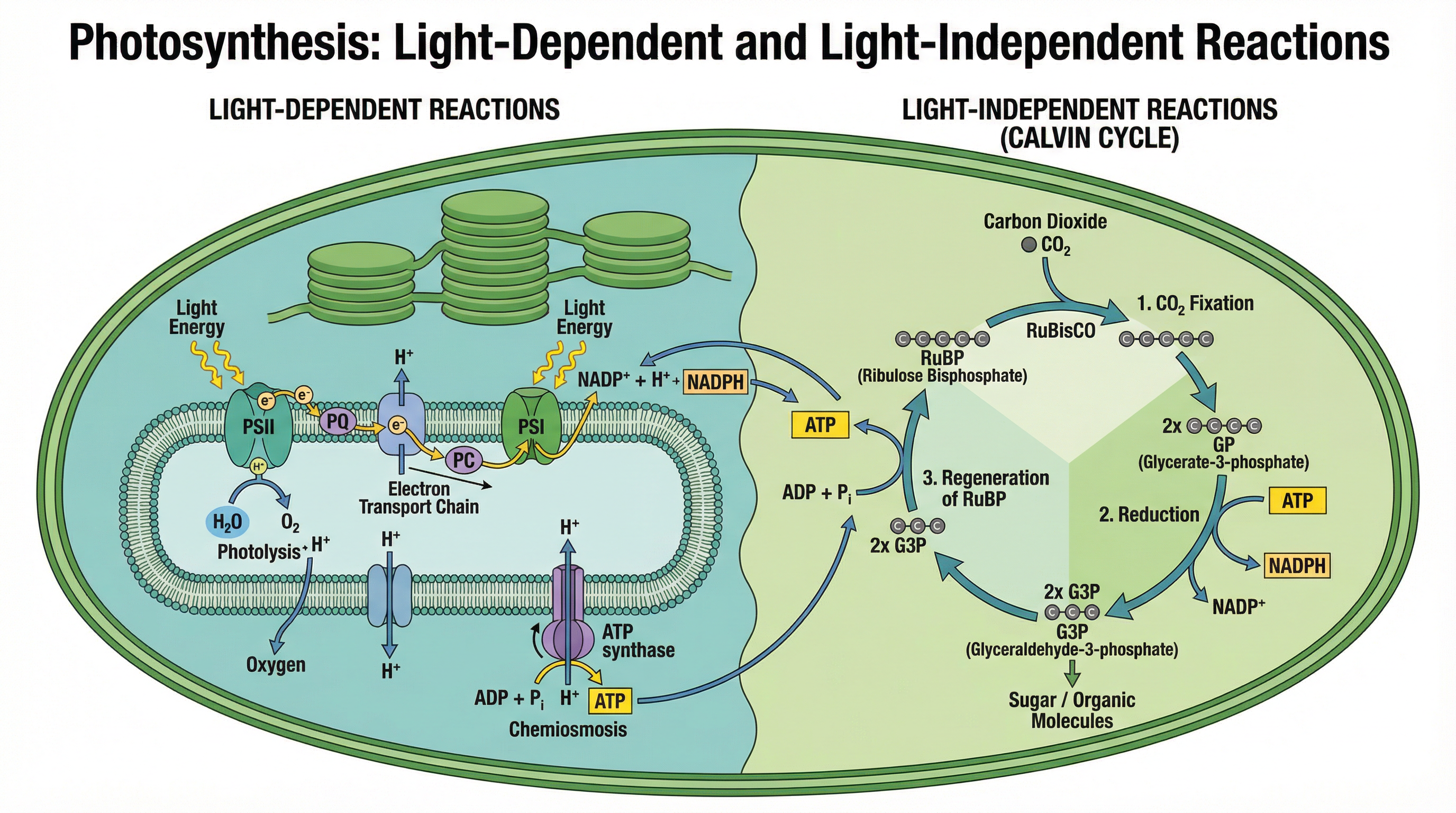
Photosynthesis is the process by which producers (plants, algae, and some bacteria) capture light energy and use it to synthesise organic molecules like glucose from carbon dioxide and water. It occurs in two main stages inside the chloroplast.
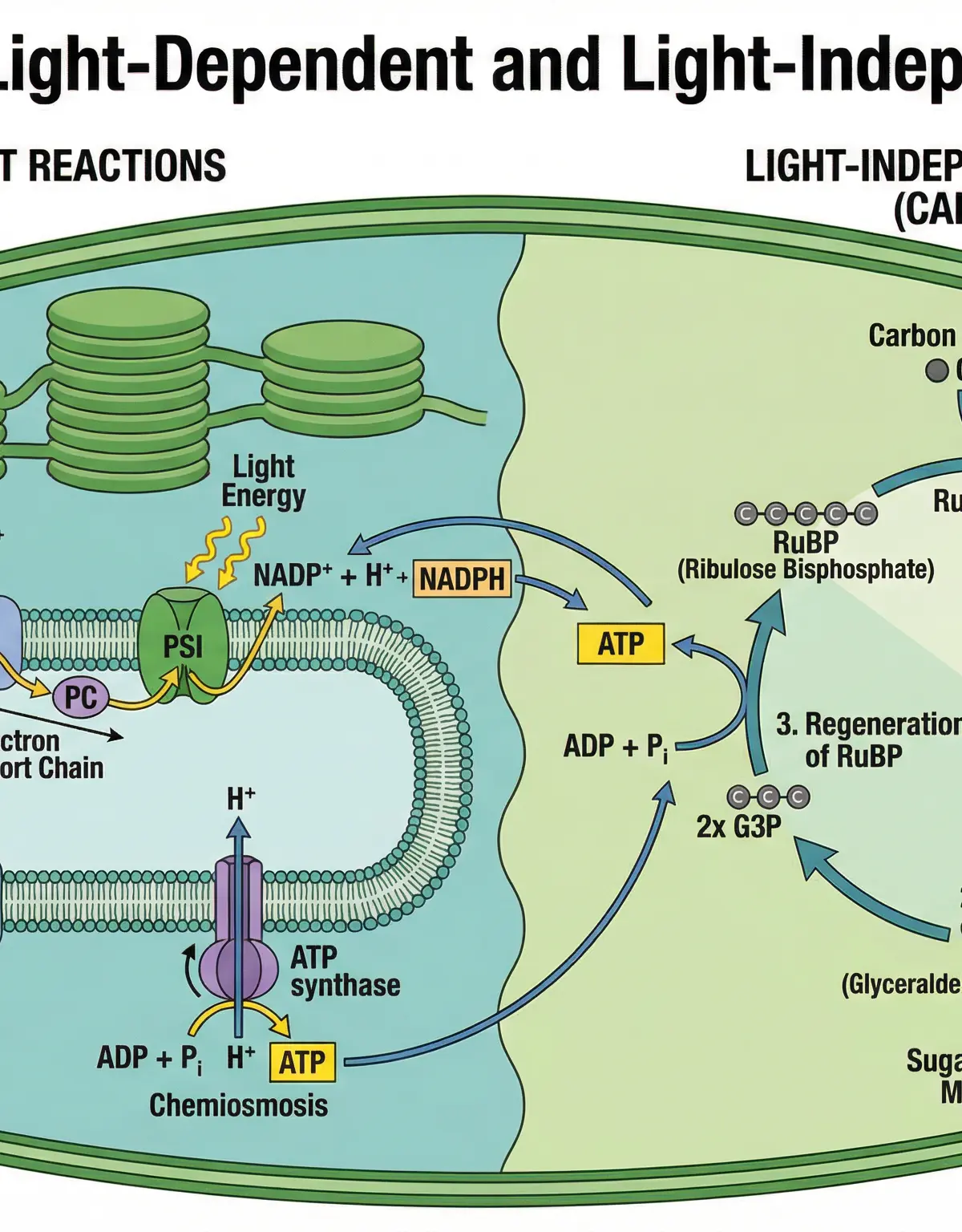
The Light-Dependent Reactions occur on the thylakoid membranes. Light energy is absorbed by photosynthetic pigments in photosystems, exciting electrons. These electrons pass down an electron transport chain, releasing energy used to actively transport protons (H+) into the thylakoid space. This creates an electrochemical gradient. Protons flow back into the stroma through ATP synthase, driving the synthesis of ATP from ADP and Pi (photophosphorylation). Concurrently, water is split by light (photolysis) to replace the lost electrons, releasing oxygen as a waste product. The final electron acceptor is NADP, which is reduced to NADPH.
The Light-Independent Reactions (Calvin Cycle) occur in the stroma. The enzyme RuBisCO catalyses the fixation of carbon dioxide by combining it with a 5-carbon compound, ribulose bisphosphate (RuBP). This forms an unstable 6-carbon compound that splits into two molecules of a 3-carbon compound, glycerate-3-phosphate (GP). GP is then reduced to triose phosphate (TP or G3P) using the ATP and NADPH produced in the light-dependent stage. Most TP is used to regenerate RuBP (requiring more ATP), while the rest is used to synthesise useful organic substances like glucose, amino acids, and lipids.
Concept 2: Respiration
Respiration is the process by which organisms release the energy stored in complex organic molecules to synthesise ATP. Aerobic respiration requires oxygen and produces a large yield of ATP, while anaerobic respiration occurs without oxygen and yields much less ATP.
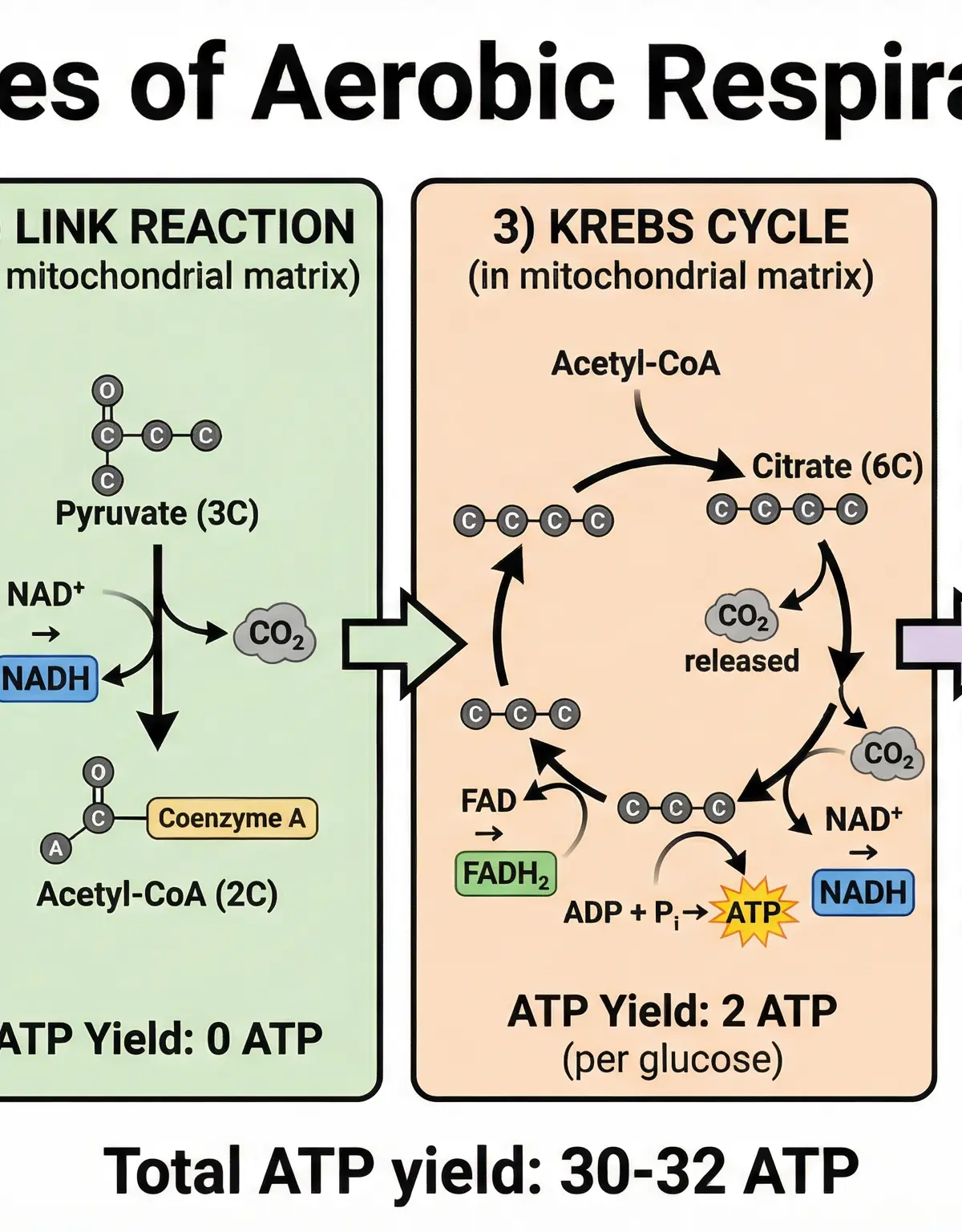
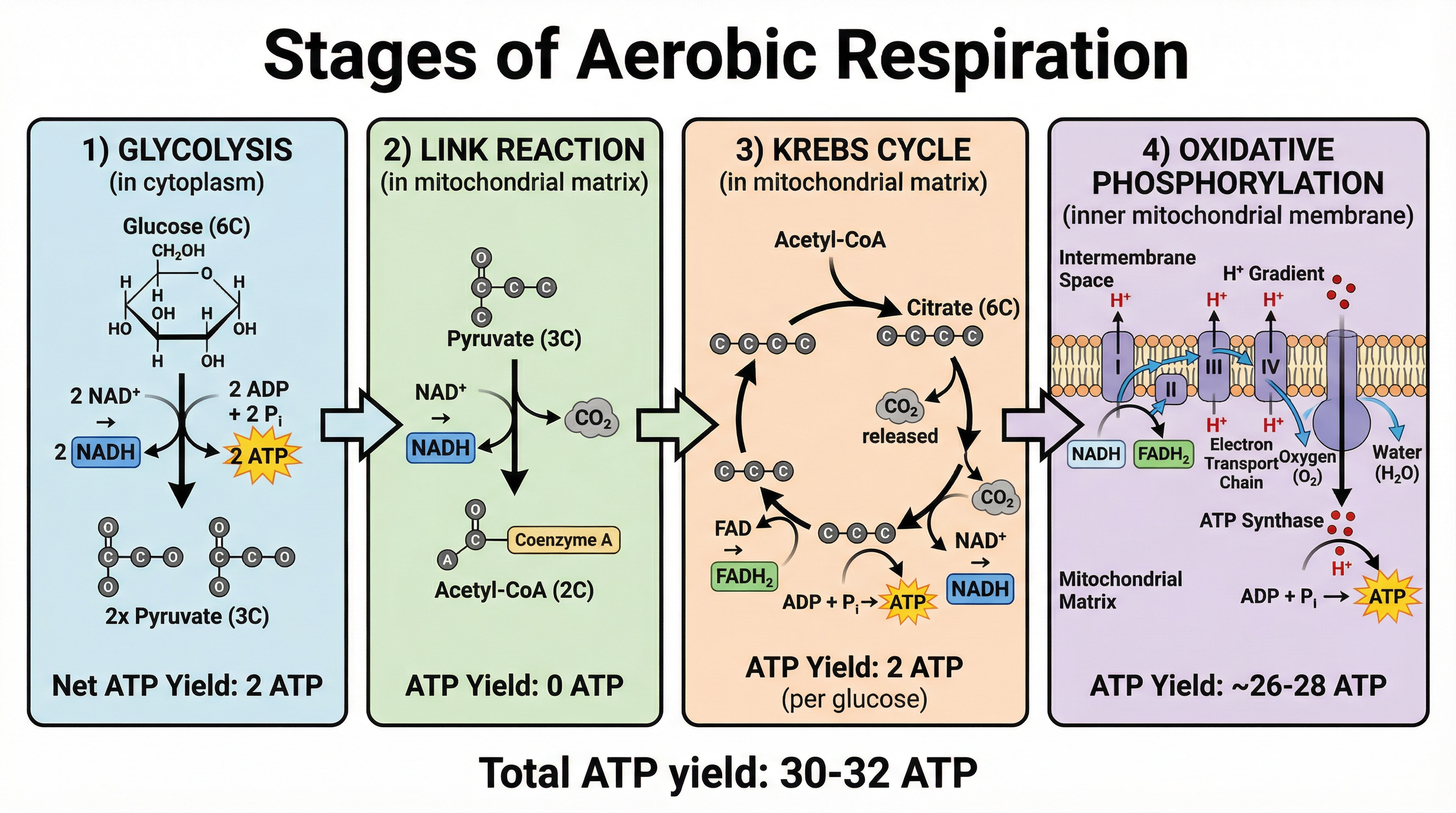
Aerobic respiration consists of four stages:
- Glycolysis (in the cytoplasm): Glucose is phosphorylated and split into two molecules of pyruvate, yielding a net of 2 ATP and 2 reduced NAD (NADH).
- Link Reaction (in the mitochondrial matrix): Pyruvate is decarboxylated and oxidised to form acetate, which combines with coenzyme A to form acetyl coenzyme A. More NADH is produced.
- Krebs Cycle (in the mitochondrial matrix): Acetyl coenzyme A reacts with a 4-carbon molecule to form a 6-carbon molecule. In a series of oxidation-reduction reactions, the 4-carbon molecule is regenerated, releasing CO2, producing ATP (by substrate-level phosphorylation), and reducing NAD and FAD.
- Oxidative Phosphorylation (on the inner mitochondrial membrane): This is where most ATP is synthesised. Reduced NAD and FAD donate electrons to the electron transport chain. The energy released is used to pump protons into the intermembrane space. Protons flow back through ATP synthase (chemiosmosis) to synthesise ATP. Oxygen acts as the final electron acceptor, combining with protons and electrons to form water.
Concept 3: Energy Transfer Between Trophic Levels
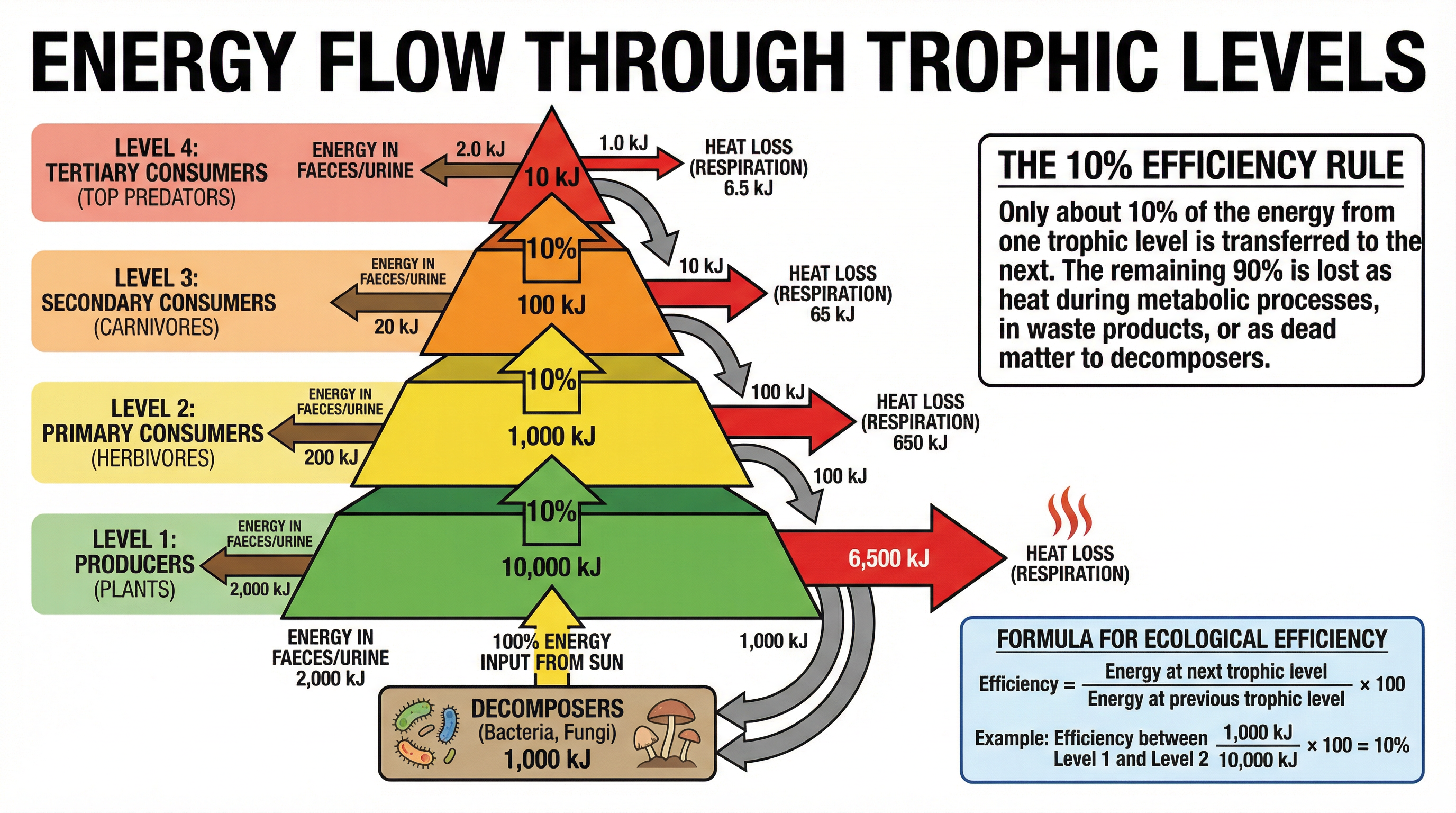
Energy enters an ecosystem through producers. The total chemical energy stored in plant biomass, in a given area or volume, in a given time is the Gross Primary Production (GPP).
However, plants use a significant proportion (often around 50%) of this GPP for their own respiration (R). The chemical energy store left after respiratory losses is the Net Primary Production (NPP).
NPP is the energy available for plant growth and reproduction, and crucially, it is the energy available to the next trophic level (primary consumers).
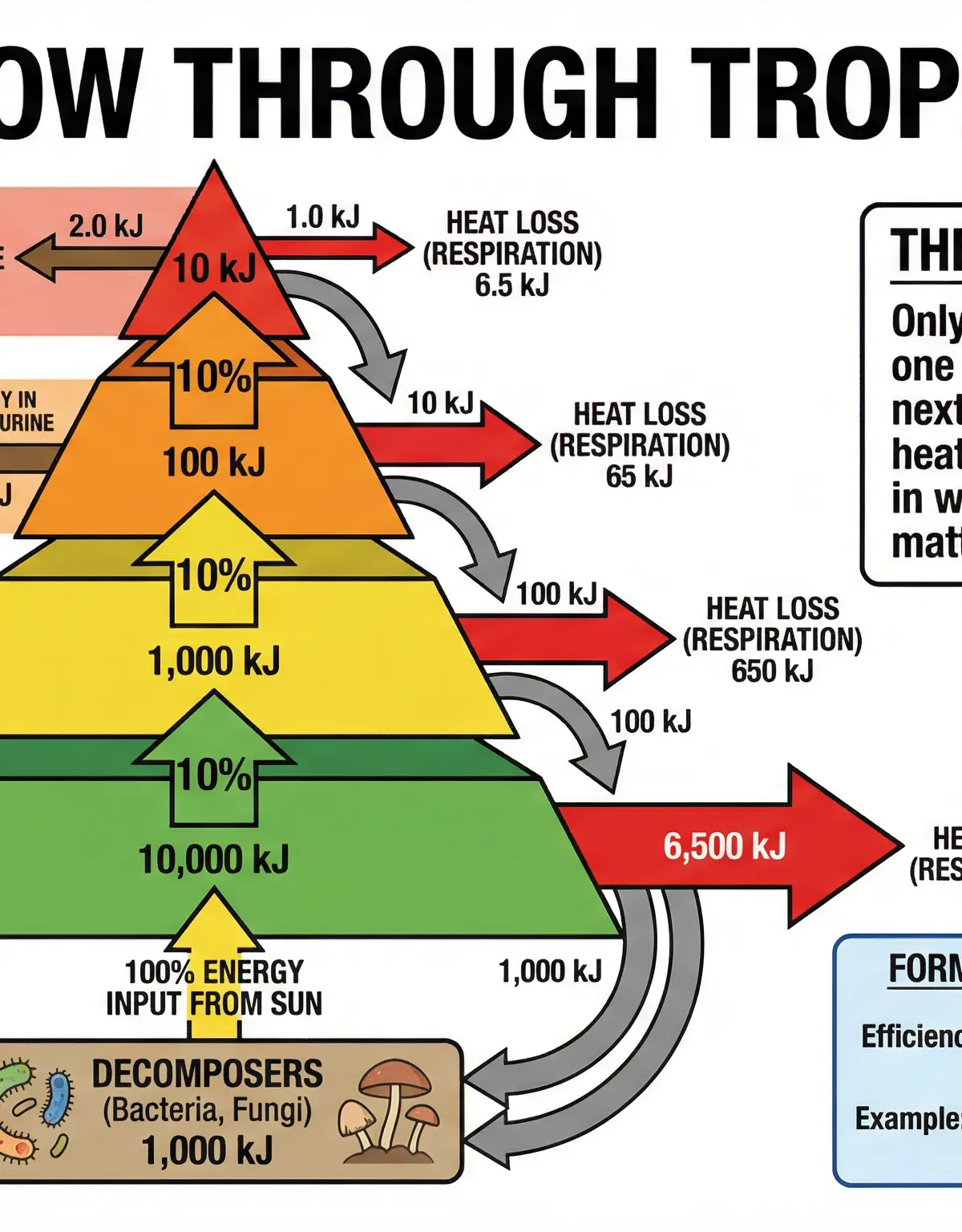
When consumers eat other organisms, the net production of consumers (N) can be calculated using the formula: N = I - (F + R), where I is the chemical energy store in ingested food, F is the energy lost in faeces and urine, and R is the respiratory losses.
Energy transfer between trophic levels is highly inefficient—typically only around 10% is passed on. The remaining 90% is lost primarily as heat from respiration, but also in faeces, urine, and parts of the organism that are not eaten or digested (which pass to decomposers). This inefficiency explains why food chains rarely exceed four or five trophic levels.
Mathematical/Scientific Relationships
- NPP = GPP - R
- NPP: Net Primary Production
- GPP: Gross Primary Production
- R: Respiratory losses to the environment
- N = I - (F + R)
- N: Net production of consumers
- I: Chemical energy store in ingested food
- F: Chemical energy lost to the environment in faeces and urine
- R: Respiratory losses to the environment
- Percentage efficiency of energy transfer = (Energy available after the transfer / Energy available before the transfer) × 100
Practical Applications
Understanding energy transfers is vital for agriculture. Farmers aim to increase the efficiency of energy transfer along human food chains to maximise yield and profit.
Methods include:
- Reducing respiratory losses in livestock by restricting movement (keeping them in pens) and keeping them warm (indoors).
- Simplifying food webs by using herbicides to kill weeds (which compete with crops for light and nutrients) and pesticides to kill insects that eat the crops.
- Using fertilisers to provide essential ions (like nitrates for amino acids) to maximise GPP.
Visual Resources
3 diagrams and illustrations
Interactive Diagrams
2 interactive diagrams to visualise key concepts
Conceptual Flow Outline
The relationship between the light-dependent and light-independent reactions of photosynthesis.
Conceptual Flow Outline
Summary of the four main stages of aerobic respiration and carbon flow.
Worked Examples
3 worked examples — open one to explore the question and available guidance.
Practice Questions
Test your understanding — click to reveal model answers
Where exactly in a plant cell does the light-independent reaction take place?
Hint: Think about the fluid-filled part of the chloroplast.
Explain why the amount of energy available to the tertiary consumer is much less than the energy available to the primary consumer. (3 marks)
Hint: Think about what happens at each trophic level transfer.
Describe the role of oxygen in aerobic respiration. (2 marks)
Hint: Where does oxygen step in at the very end of the process?
A farmer wants to increase the net production of their cattle. Explain how keeping the cattle in a heated barn reduces respiratory losses. (2 marks)
Hint: Cattle are mammals (warm-blooded). What do they use energy for in cold weather?
In the light-dependent reaction, light energy generates ATP. Describe how. (5 marks)
Hint: Think about the electron transport chain and chemiosmosis.