AQA · GCSE · Biology
Homeostasis and response
Master the intricate control systems that keep your body in perfect balance. From lightning-fast nerve impulses to the slow, steady control of hormones, this topic is crucial for understanding how organisms survive and respond to their environment.
- 7 min read
- 3 worked examples
- 5 practice questions
- 6 key terms
Study Notes
Overview
Welcome to Homeostasis and Response, one of the most conceptually rich topics in your GCSE Biology specification. This topic is all about balance. It explores how organisms detect changes in their environment—both internal and external—and coordinate appropriate responses to survive.
Understanding homeostasis is fundamental to Biology because it links cellular processes (like enzyme action) to whole-organism survival. Without these control systems, our bodies could not function. This topic connects deeply with your earlier study of cell biology, enzymes, and respiration. In your exam, you can expect a mix of short-answer recall questions (e.g., naming parts of a reflex arc) and extended 6-mark questions asking you to explain negative feedback mechanisms or compare nervous and hormonal control.
Key Concepts
Concept 1: The Principles of Homeostasis
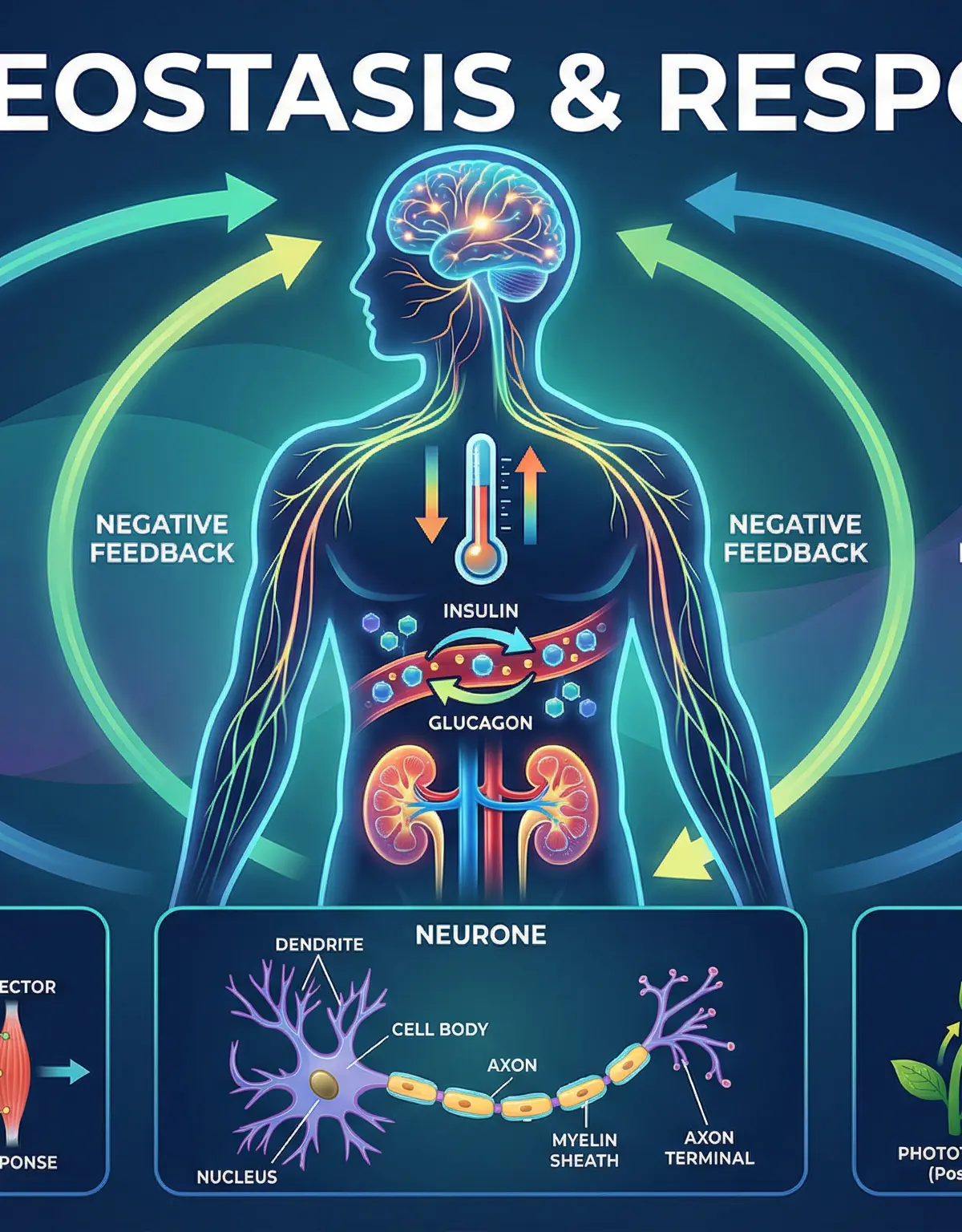
Homeostasis is the regulation of internal conditions within a cell or organism to maintain optimum conditions for function, in response to internal and external changes. This is vital because enzymes and cells require very specific conditions (like temperature and pH) to work efficiently.
Every homeostatic control system relies on three main components:
- Receptors: Cells that detect stimuli (changes in the environment).
- Coordination centres: Areas like the brain, spinal cord, or pancreas that receive and process information from receptors.
- Effectors: Muscles or glands that bring about responses to restore optimum levels.
These systems operate using negative feedback. When a level (like blood glucose or temperature) rises above the optimum, the system acts to lower it. When it falls below, the system acts to raise it.
Concept 2: The Human Nervous System
The nervous system enables humans to react to their surroundings and coordinate their behaviour. Information passes along cells called neurones as electrical impulses.
The pathway of a conscious action is:
Stimulus → Receptor → Sensory neurone → Coordinator (Brain) → Motor neurone → Effector → Response
However, for rapid protection, we have reflex actions. These are automatic and rapid; they do not involve the conscious part of the brain. The pathway (the reflex arc) passes through the spinal cord or an unconscious part of the brain.
Stimulus → Receptor → Sensory neurone → Relay neurone (in CNS) → Motor neurone → Effector → Response
Example: Touching a hot object. The temperature receptor in the skin detects the heat (stimulus). An electrical impulse travels along the sensory neurone to the spinal cord. It crosses a synapse (a gap between neurones where chemical neurotransmitters diffuse across) to a relay neurone, then across another synapse to a motor neurone. The impulse reaches the muscle in the arm (effector), which contracts (response) to pull the hand away.
Concept 3: Hormonal Coordination
The endocrine system is composed of glands that secrete chemicals called hormones directly into the bloodstream. The blood carries the hormone to a target organ where it produces an effect. Compared to the nervous system, hormonal effects are slower but act for longer.
The pituitary gland in the brain is a 'master gland' which secretes several hormones into the blood in response to body conditions. These hormones in turn act on other glands to stimulate other hormones to be released to bring about effects.
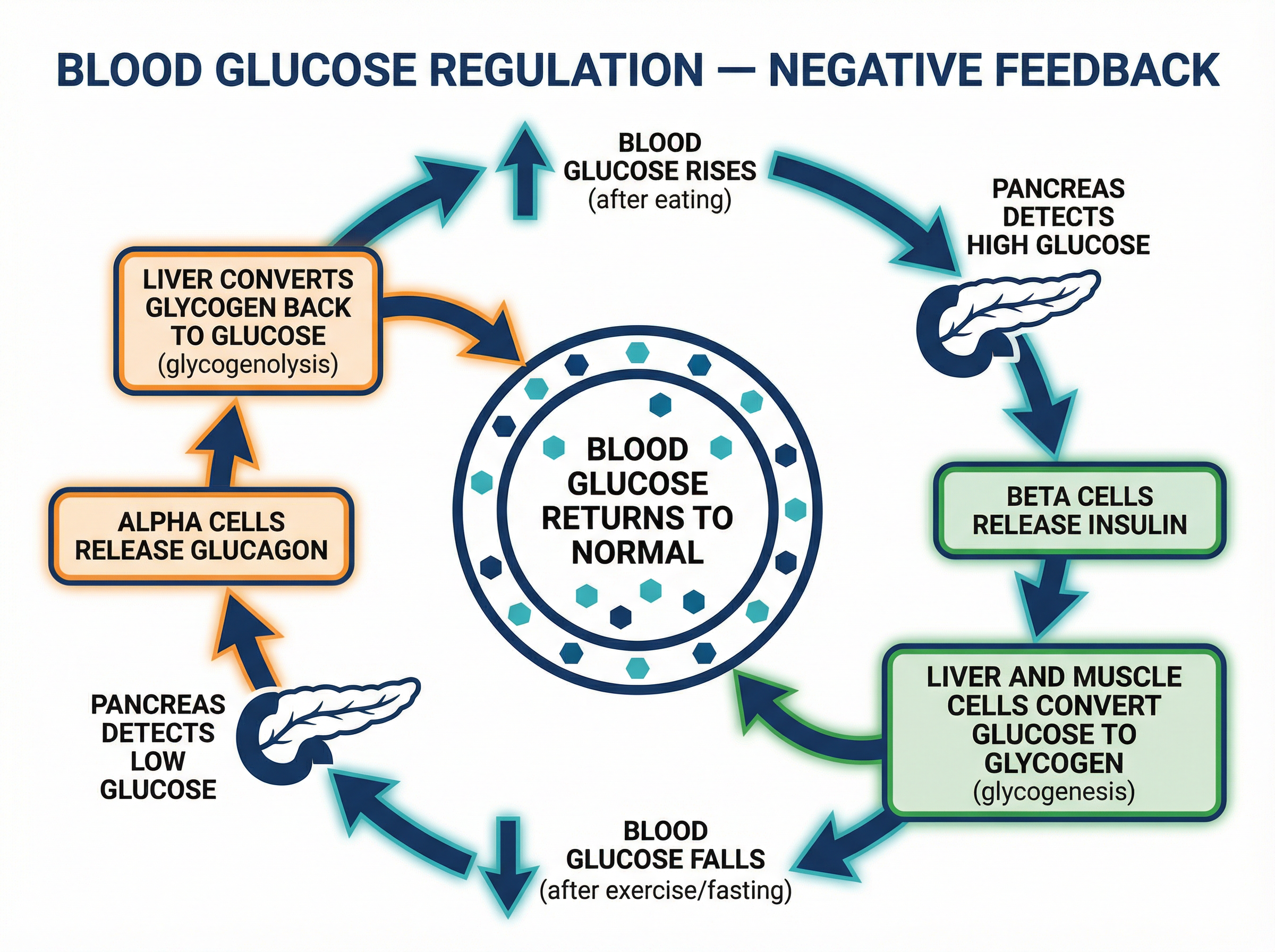
Concept 4: Control of Blood Glucose Concentration
Blood glucose concentration is monitored and controlled by the pancreas.
If blood glucose is too high (e.g., after a meal):
- The pancreas secretes the hormone insulin.
- Insulin causes glucose to move from the blood into cells.
- In liver and muscle cells, excess glucose is converted to glycogen for storage.
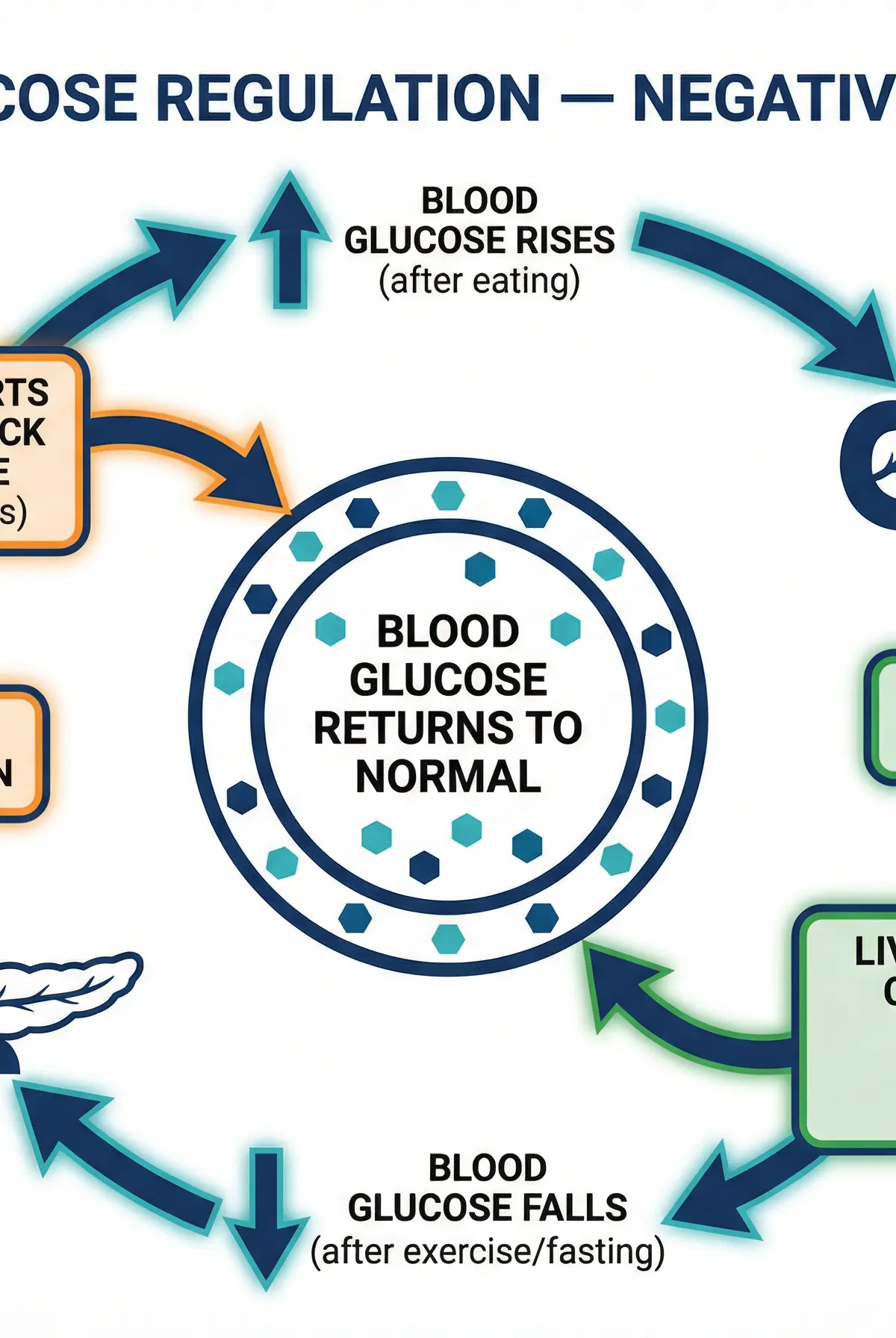
If blood glucose is too low (e.g., during exercise):
- The pancreas secretes the hormone glucagon.
- Glucagon makes the liver convert glycogen back into glucose and release it into the blood.
Type 1 Diabetes is a disorder where the pancreas fails to produce sufficient insulin. It is characterised by uncontrolled high blood glucose levels and is treated with insulin injections.
Type 2 Diabetes is where the body cells no longer respond to insulin produced by the pancreas. A carbohydrate-controlled diet and an exercise regime are common treatments. Obesity is a major risk factor.
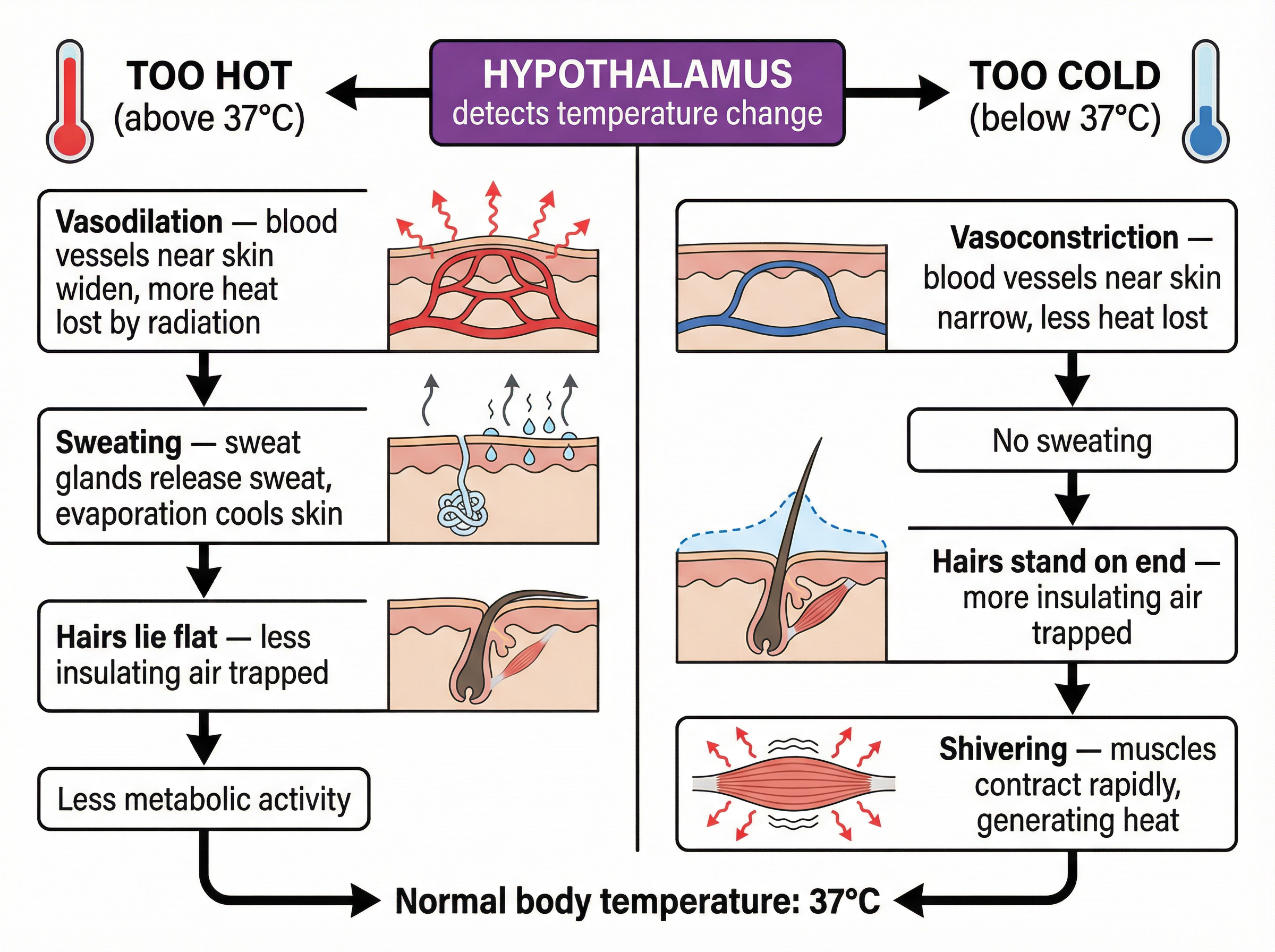
Concept 5: Thermoregulation (Higher Tier focus)
Body temperature is monitored and controlled by the thermoregulatory centre in the brain (hypothalamus). This centre contains receptors sensitive to the temperature of the blood. The skin also contains temperature receptors and sends nervous impulses to the thermoregulatory centre.
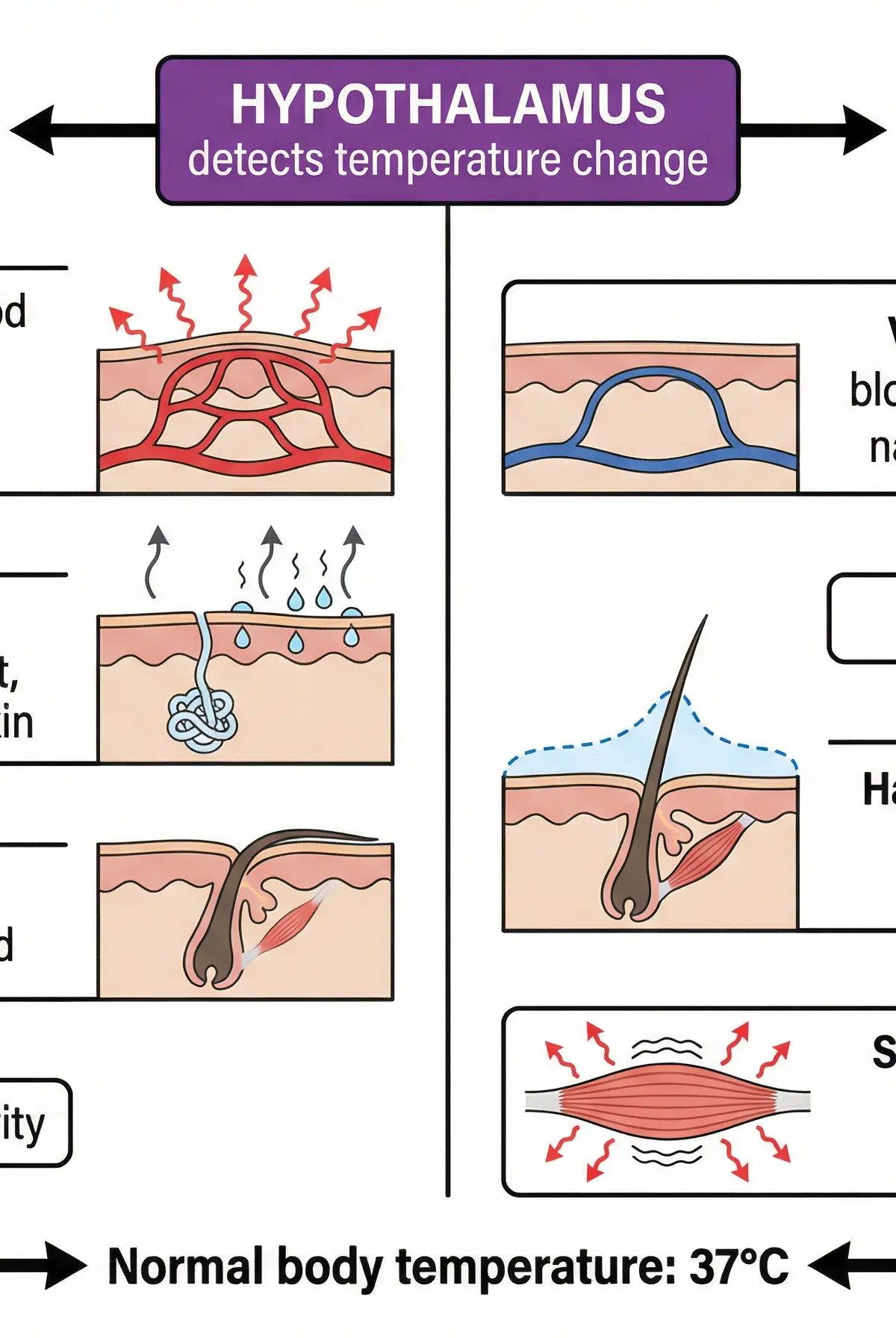
If body temperature is too high:
- Blood vessels supplying the skin capillaries dilate (vasodilation), so more blood flows near the skin surface, increasing heat loss by radiation.
- Sweat is produced from sweat glands; it evaporates, transferring energy to the environment.
If body temperature is too low:
- Blood vessels supplying the skin capillaries constrict (vasoconstriction), reducing blood flow near the skin surface.
- Sweating stops.
- Skeletal muscles contract rapidly (shivering), which requires respiration, transferring energy to warm the body.
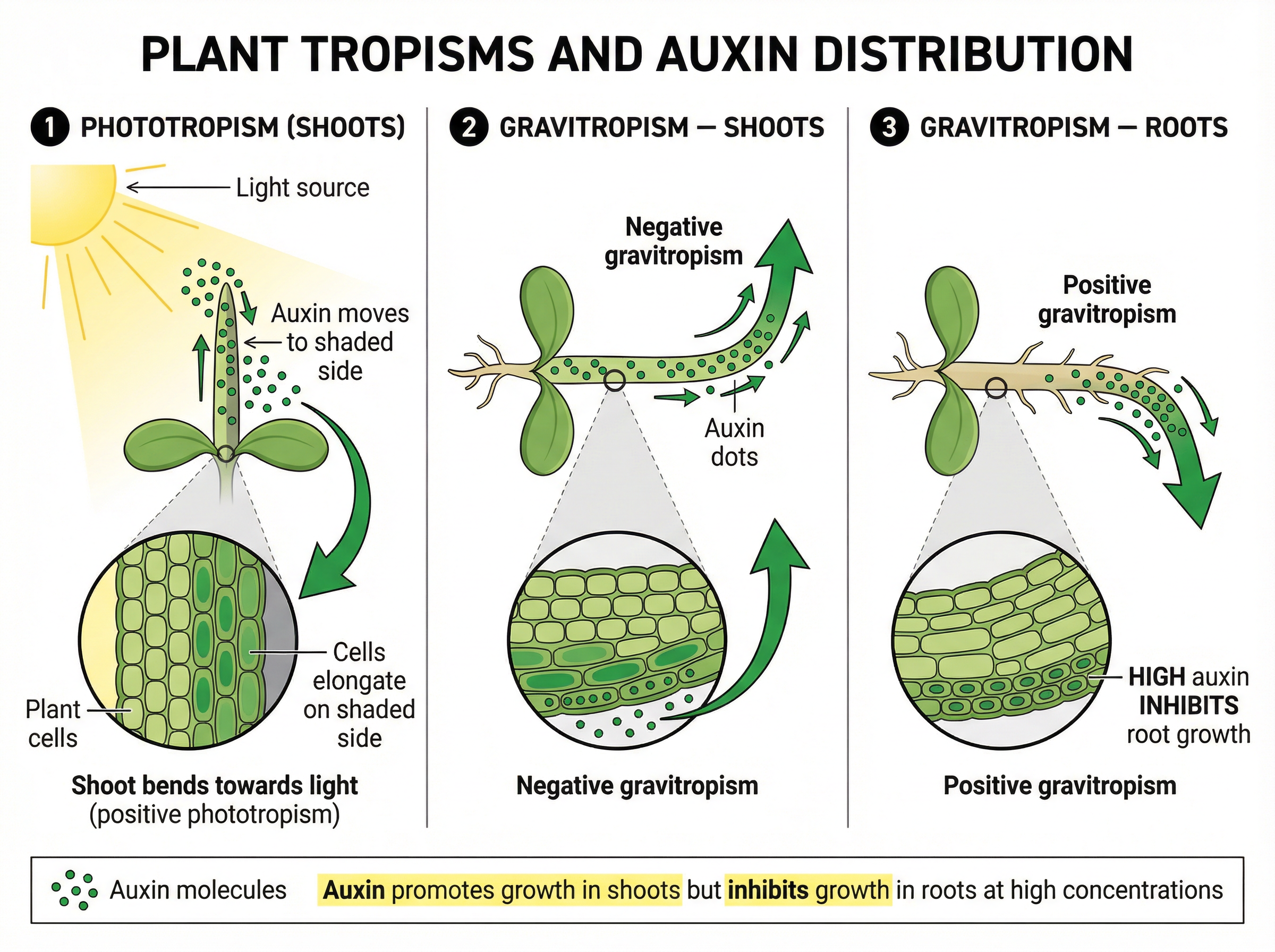
Concept 6: Plant Hormones
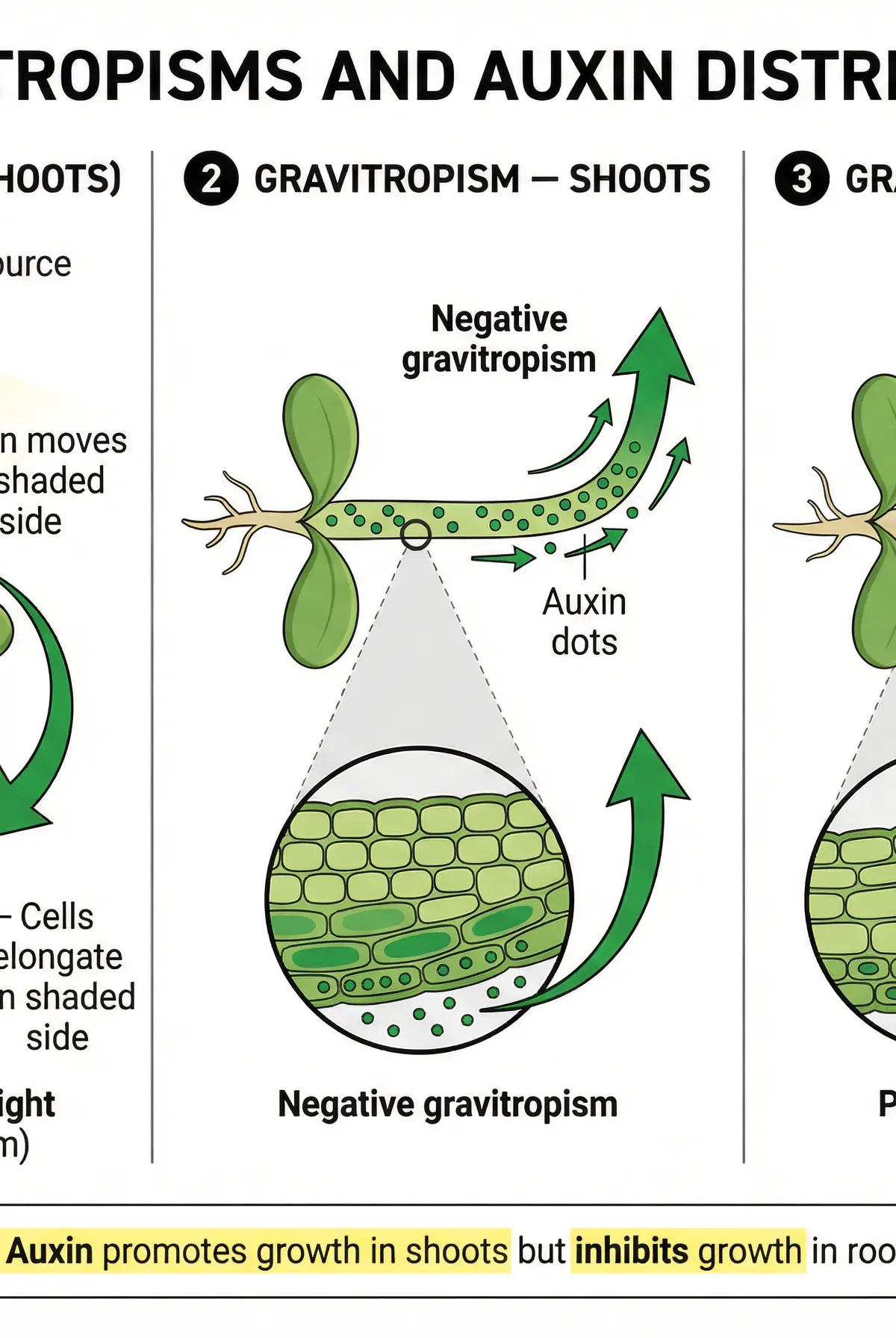
Plants also produce hormones to coordinate and control growth and responses to light (phototropism) and gravity (gravitropism).
Auxins control growth in the shoots and roots. Unequal distributions of auxin cause unequal growth rates in plant roots and shoots.
- In shoots, auxin promotes cell elongation. It accumulates on the shaded side, causing the shoot to bend towards the light.
- In roots, high concentrations of auxin inhibit cell elongation. It accumulates on the lower side due to gravity, causing the root to grow downwards.
Other plant hormones include Gibberellins (important in initiating seed germination) and Ethene (controls cell division and ripening of fruits).
Mathematical/Scientific Relationships
-
Reaction Time Calculations: You may be asked to calculate mean reaction times from a ruler drop test.
Mean = Sum of all values / Number of values
Remember to exclude anomalies before calculating the mean. -
Converting units: Reaction times are often measured in milliseconds (ms).
1 second (s) = 1000 milliseconds (ms)
Must memorise.
Practical Applications
Required Practical: Investigating Reaction TimeYou must know how to investigate the effect of a factor (like caffeine or practice) on human reaction time using the ruler drop test.
- Person A holds a ruler just above the open hand of Person B.
- Person A drops the ruler without warning.
- Person B catches it as quickly as possible.
- Record the distance on the ruler where it was caught.
- Use a conversion table to convert distance to reaction time.
- Repeat and calculate a mean.
Examiner tip: A common error is not dropping the ruler from the exact same height each time. Control variables include the hand used, the starting distance, and background noise.
Visual Resources
3 diagrams and illustrations
Interactive Diagrams
2 interactive diagrams to visualise key concepts
Conceptual Flow Outline
The general pathway of the nervous system.
Conceptual Flow Outline
Negative feedback loop for high blood glucose.
Worked Examples
3 worked examples — open one to explore the question and available guidance.
Practice Questions
Test your understanding — click to reveal model answers
State the three main components of all control systems in the body. (3 marks)
Hint: Think about how a signal is detected, processed, and acted upon.
Explain how a nerve impulse passes across a synapse. (3 marks)
Hint: Electrical impulses cannot jump gaps. What chemical is involved?
Compare the nervous system and the endocrine system. (4 marks)
Hint: Think about the type of signal, how it travels, the speed, and how long the effect lasts.
A person with Type 1 diabetes eats a large meal containing a lot of carbohydrate. Explain what will happen to their blood glucose concentration and how they should treat this. (4 marks)
Hint: What does carbohydrate break down into? What is missing in Type 1 diabetes?
Explain how vasodilation helps to cool the body down. (3 marks)
Hint: What exactly is widening? Where does the blood go?