AQA · GCSE · Biology
Organisation
Master the hierarchy of life, from microscopic cells to complex organ systems. This crucial GCSE Biology topic covers the digestive and circulatory systems, plant transport, and how lifestyle choices impact health, making it a major source of exam marks.
- 8 min read
- 3 worked examples
- 5 practice questions
- 6 key terms
Study Notes
Overview
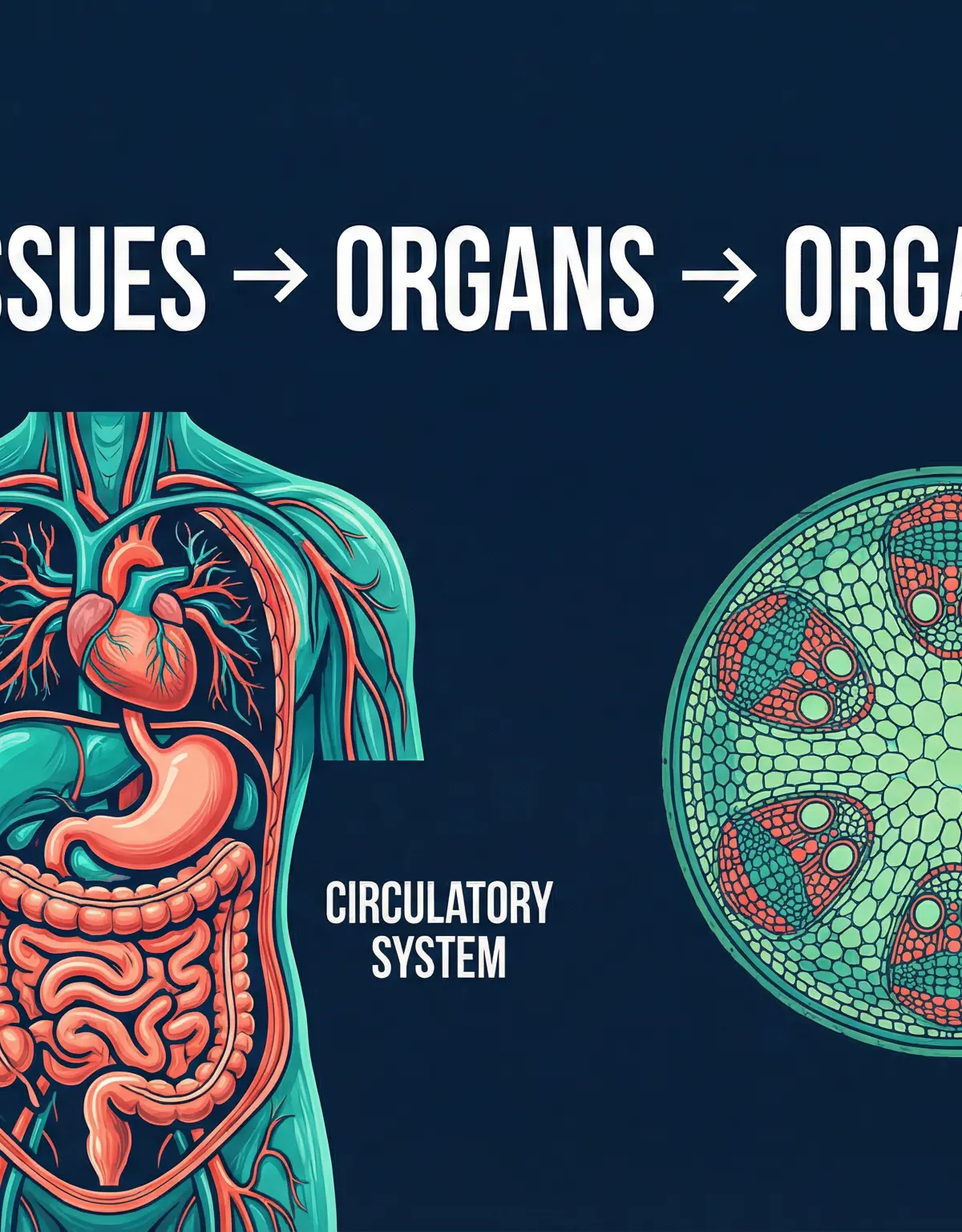
Welcome to Organisation, a fundamental topic in GCSE Biology that bridges the gap between microscopic cell biology and whole-organism function. This topic explores how living things are built from the ground up, starting with individual cells and scaling up to complex, coordinated organ systems.
Understanding organisation is crucial because it underpins almost every other topic in Biology. You'll explore the human digestive system, learning how enzymes act as biological catalysts to break down our food. We'll trace the journey of blood through the double circulatory system, examining the heart and blood vessels. We'll also dive into plant biology, looking at how xylem and phloem transport essential substances. Finally, we'll connect biology to the real world by evaluating how lifestyle factors like diet, smoking, and exercise influence the risk of non-communicable diseases.
Examiners love testing this topic through a mix of short recall questions, diagram labelling, and extended 6-mark explanations linking structure to function.
Listen to the Podcast
Key Concepts
Concept 1: Principles of Organisation
Living organisms are built on a hierarchical structure. You must be able to define each level precisely for the exam:
- Cells: The basic building blocks of all living organisms.
- Tissues: A group of cells with a similar structure and function working together (e.g., muscular tissue contracts to bring about movement).
- Organs: An aggregation (collection) of different tissues working together to perform a specific function (e.g., the stomach contains muscular, glandular, and epithelial tissues).
- Organ Systems: A group of organs working together to perform a specific function (e.g., the digestive system).
Concept 2: The Human Digestive System
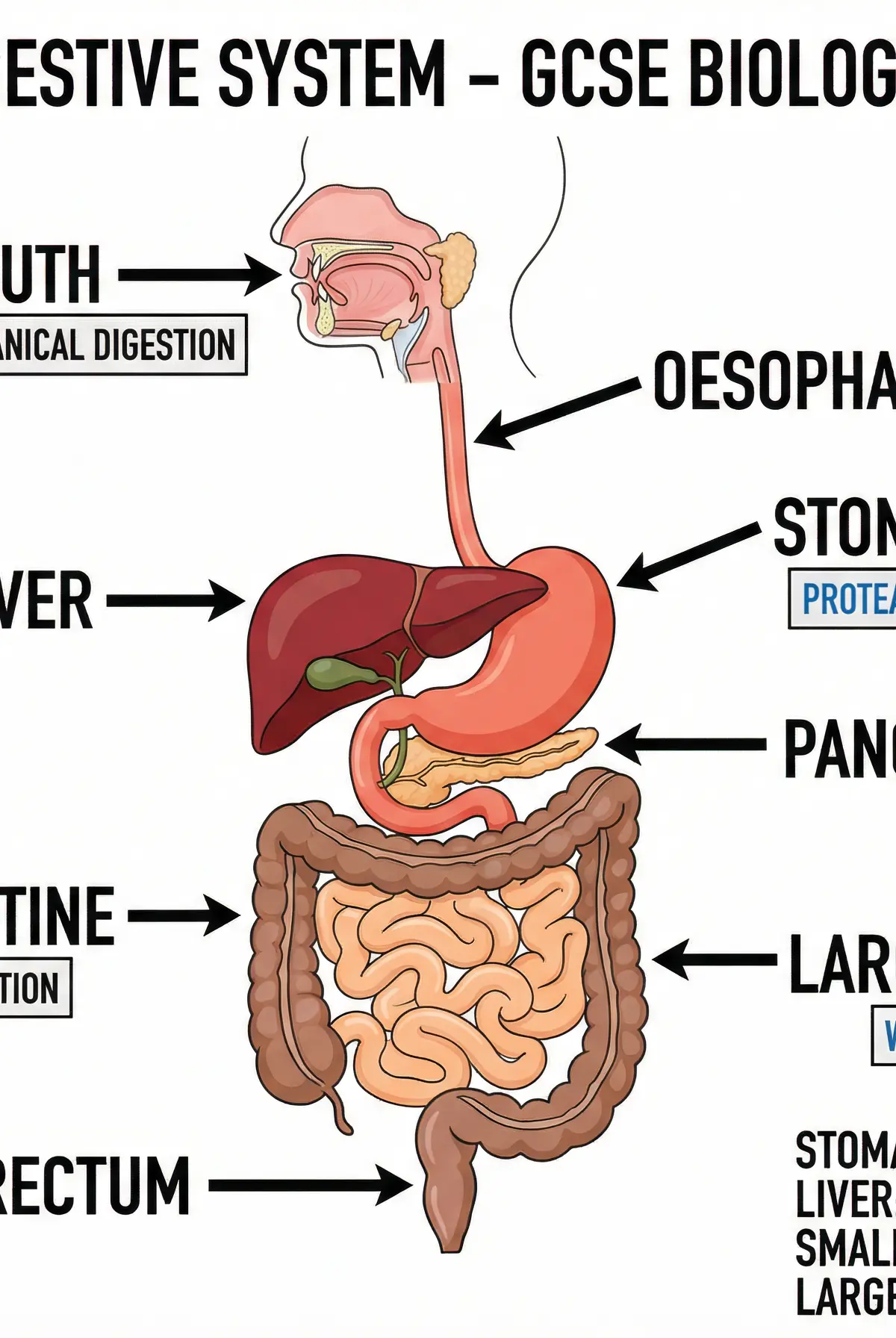
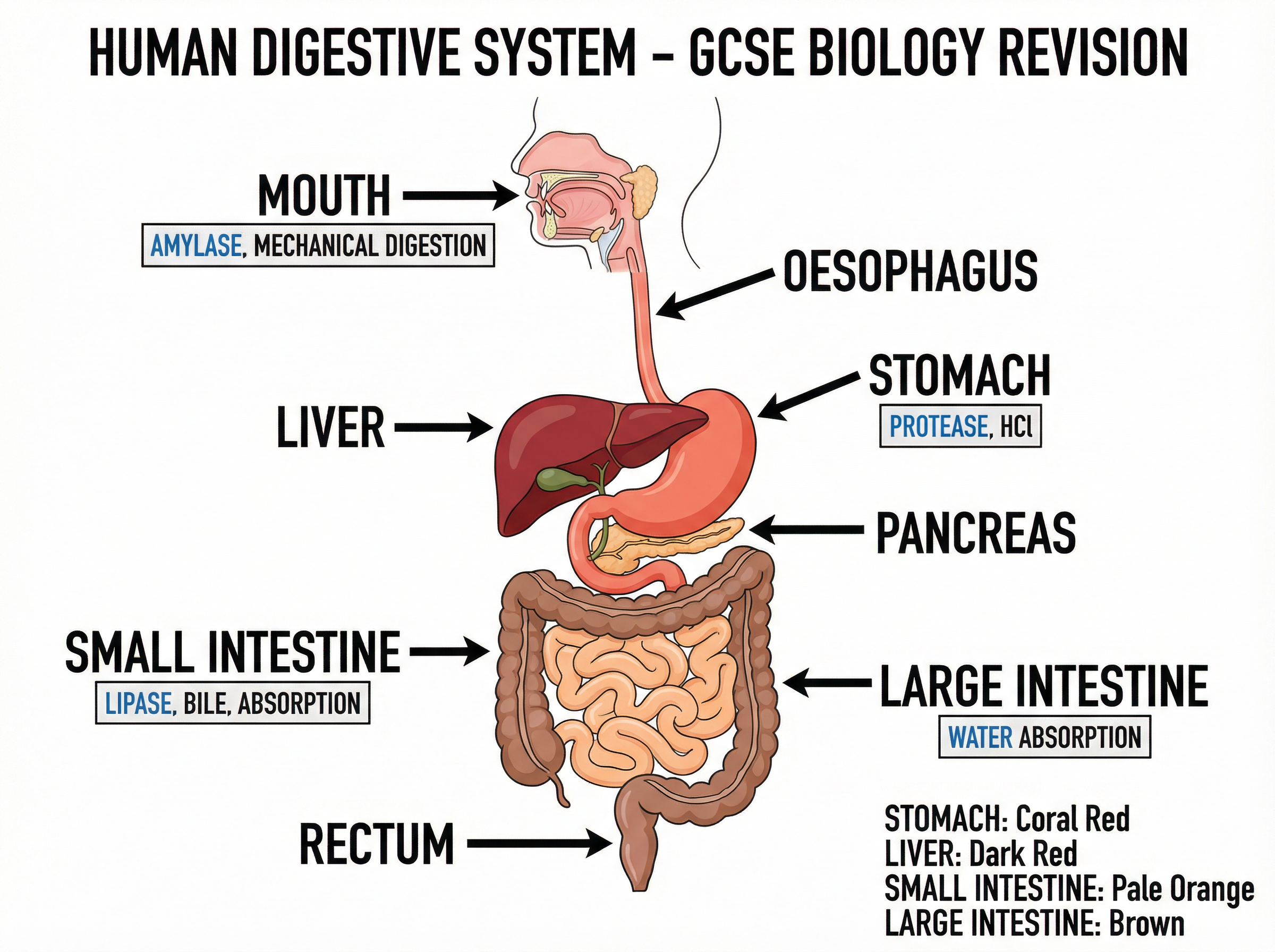
The digestive system is an organ system where several organs work together to digest and absorb food. Digestion is the process of breaking down large, insoluble molecules into small, soluble molecules that can be absorbed into the bloodstream.
Enzymes in DigestionEnzymes are biological catalysts made of protein. They speed up chemical reactions without being used up. They work on the 'lock and key' theory: the chemical reacting (the substrate) fits perfectly into the enzyme's active site.
- Amylase (a carbohydrase): Breaks down starch into sugars. Produced in the salivary glands, pancreas, and small intestine.
- Protease: Breaks down proteins into amino acids. Produced in the stomach, pancreas, and small intestine.
- Lipase: Breaks down lipids (fats and oils) into fatty acids and glycerol. Produced in the pancreas and small intestine.
The Role of BileBile is a crucial substance produced by the liver and stored in the gall bladder before being released into the small intestine. Crucially, bile is not an enzyme. It performs two main functions:
- Neutralisation: It is alkaline, so it neutralises the hydrochloric acid from the stomach, creating the optimum slightly alkaline conditions for enzymes in the small intestine.
- Emulsification: It breaks down large drops of fat into smaller droplets. This increases the surface area for lipase enzymes to act upon, significantly speeding up lipid digestion.
Concept 3: The Heart and Blood Vessels
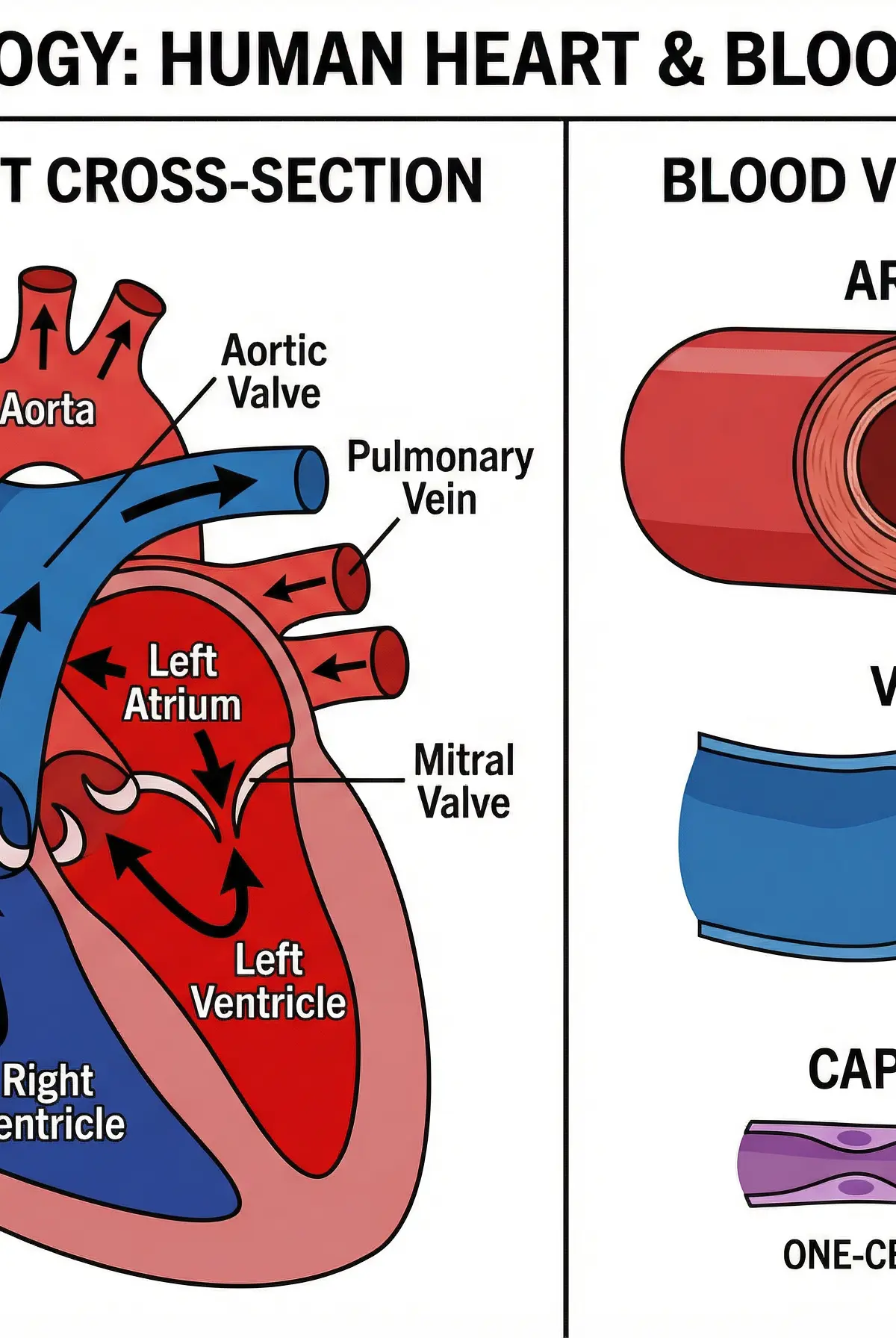
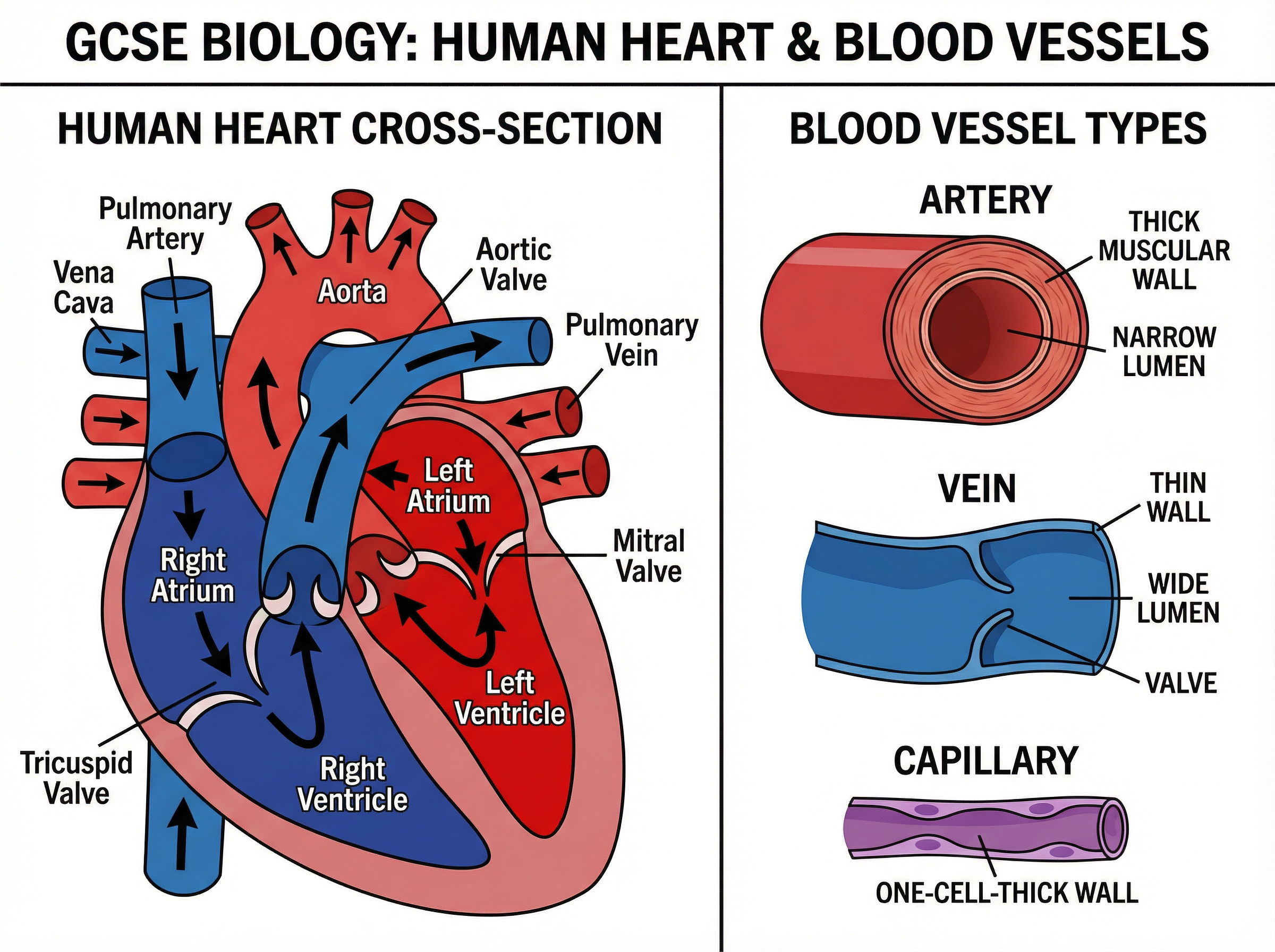
The circulatory system transports substances around the body. Humans have a double circulatory system: the right ventricle pumps blood to the lungs for gas exchange, while the left ventricle pumps blood around the rest of the body.
The HeartThe heart is an organ made primarily of muscle tissue. It has four chambers and several valves to ensure blood flows in the correct direction.
- Blood enters the atria via the vena cava (from the body) and pulmonary vein (from the lungs).
- The atria contract, forcing blood into the ventricles.
- The ventricles contract, forcing blood out of the heart via the pulmonary artery (to the lungs) and the aorta (to the body).
- The natural resting heart rate is controlled by a group of cells acting as a pacemaker in the right atrium.
Blood VesselsYou must be able to link the structure of the three main blood vessels to their function:
- Arteries: Carry blood away from the heart under high pressure. They have thick, muscular, elastic walls and a narrow lumen to withstand and maintain this pressure.
- Veins: Carry blood back to the heart under lower pressure. They have thinner walls, a wider lumen, and contain valves to prevent the backflow of blood.
- Capillaries: Involved in the exchange of materials at the tissues. Their walls are only one cell thick, creating a short diffusion pathway for efficient exchange of oxygen, glucose, and waste products.
Concept 4: Plant Tissues and Transport
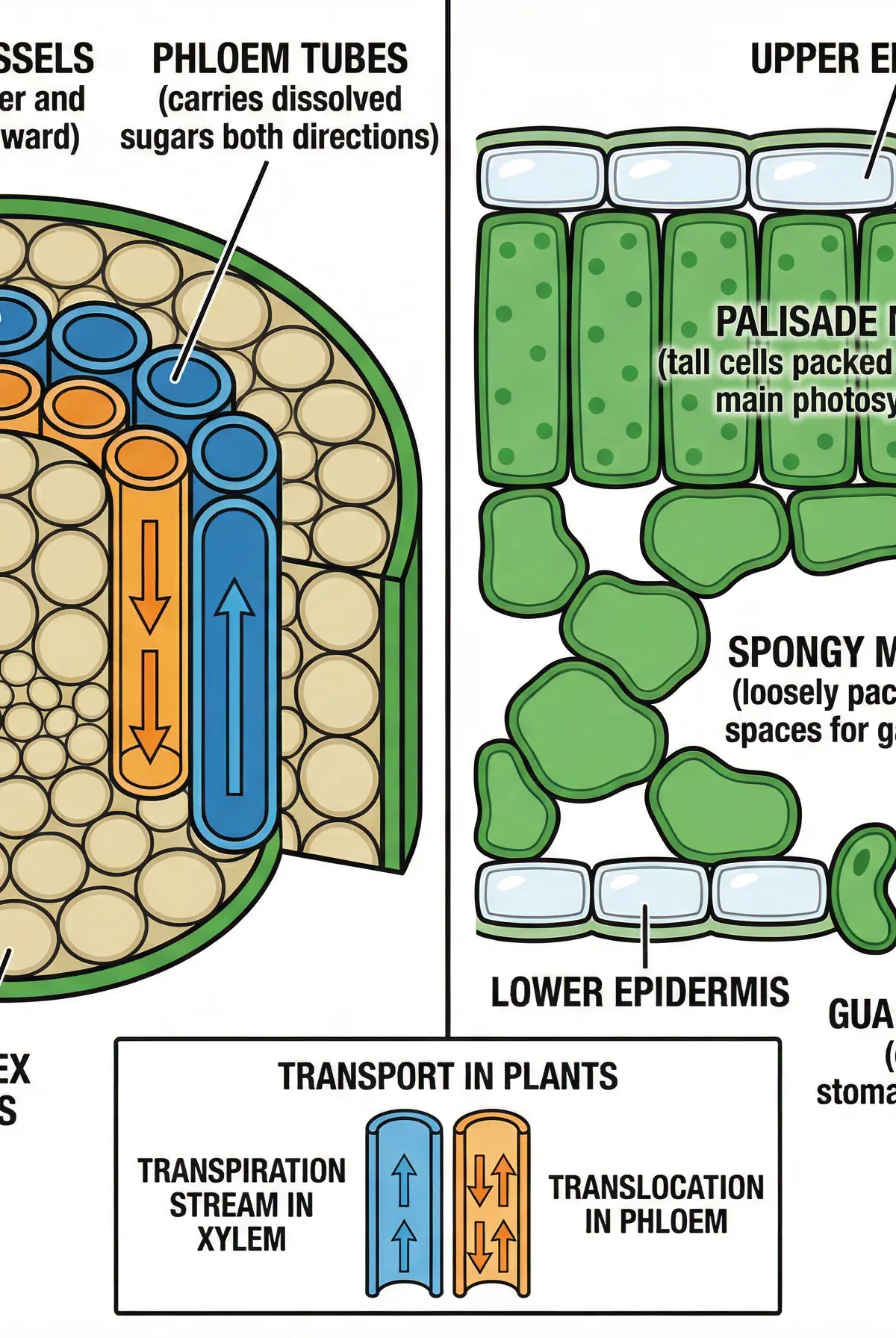
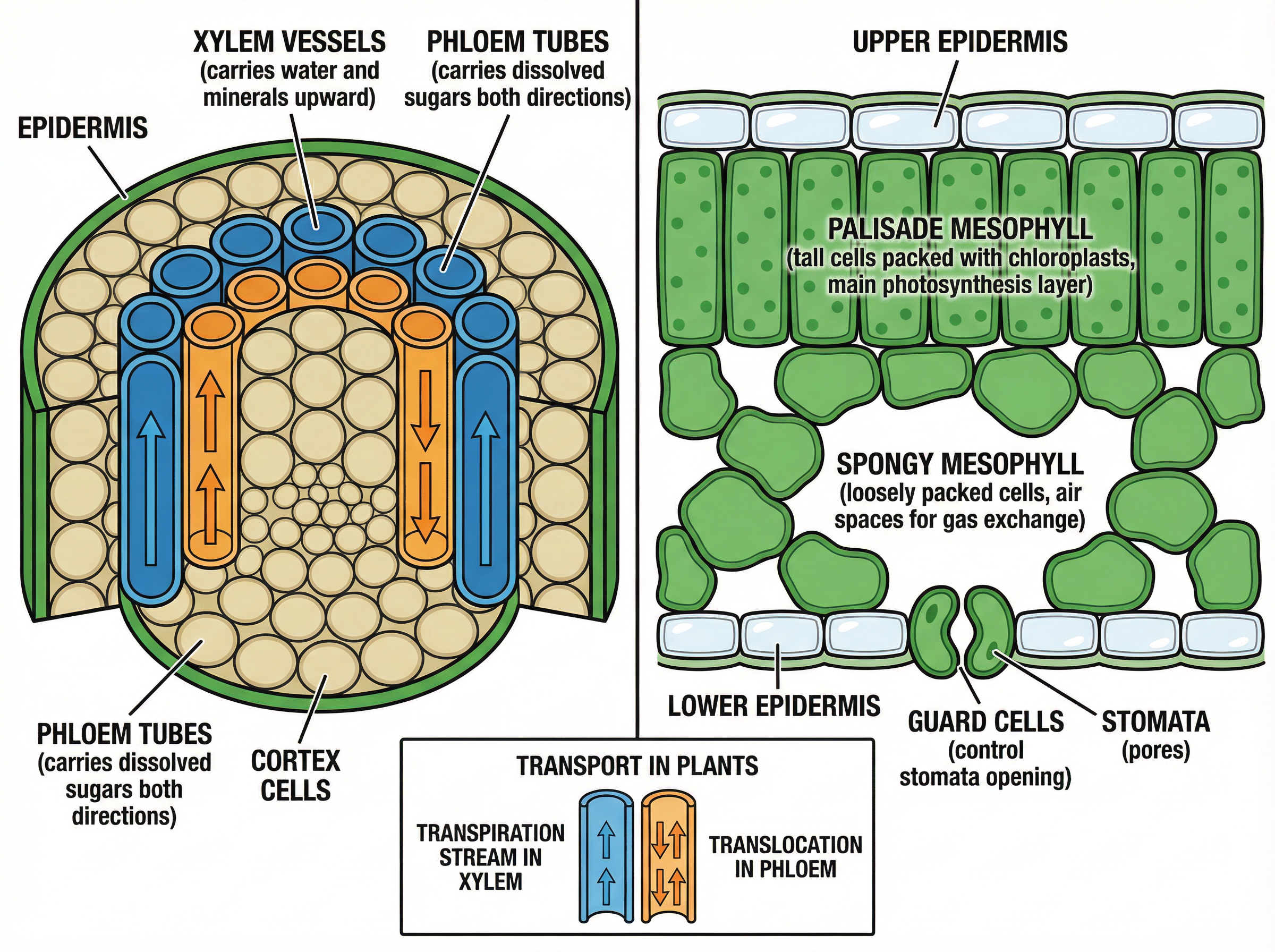
Plants are also highly organised. A leaf is a plant organ made of several tissues:
- Epidermal tissue: Covers the whole plant. The upper epidermis is transparent to let light through.
- Palisade mesophyll: Packed with chloroplasts for photosynthesis; located near the top of the leaf.
- Spongy mesophyll: Contains air spaces to facilitate gas exchange (diffusion of CO2 and O2).
- Xylem and Phloem: Transport tissues.
Transport in Plants
- Transpiration: The loss of water vapour from the leaves. Water is drawn up through the xylem vessels from the roots to the leaves in a continuous transpiration stream. Xylem vessels are composed of hollow, dead cells strengthened by lignin. Transpiration is affected by temperature, humidity, air movement, and light intensity.
- Translocation: The movement of dissolved sugars (food) from the leaves to the rest of the plant for immediate use or storage. This occurs in the phloem tubes, which have pores in their end walls to allow cell sap to flow through. Translocation happens in both directions.
Concept 5: Health and Non-Communicable Diseases
Health is the state of physical and mental well-being. Diseases are major causes of ill health. Non-communicable diseases (NCDs) cannot be transmitted between individuals; they are often caused by a combination of genetics and lifestyle factors.
Examiners require you to link specific risk factors to specific diseases:
- Diet, smoking, and lack of exercise: Increase the risk of cardiovascular disease.
- Obesity: A major risk factor for Type 2 diabetes.
- Alcohol: Can cause liver disease and affect brain function.
- Smoking: Causes lung disease and lung cancer. Smoking during pregnancy affects the development of the unborn baby.
- Carcinogens (e.g., ionising radiation): Increase the risk of various cancers.
Mathematical/Scientific Relationships
- Rate of Blood Flow:
Volume of blood / number of minutes- Used to calculate cardiac output. Units are typically ml/min.
- Rate of Transpiration: Can be estimated using a potometer by measuring the distance a bubble moves over time.
Rate = Distance moved / Time taken. - BMI (Body Mass Index):
Mass (kg) / (Height (m))^2- Used to classify weight categories and assess the risk of obesity-related diseases.
Practical Applications
Required Practical: Food TestsYou must know how to test for different food groups:
- Sugars: Add Benedict's solution and heat in a water bath. Positive result: turns from blue to brick red/orange.
- Starch: Add iodine solution. Positive result: turns from orange-brown to blue-black.
- Proteins: Add Biuret reagent. Positive result: turns from blue to purple/lilac.
- Lipids: Add Sudan III (or ethanol). Positive result: a red-stained layer forms on the surface.
Required Practical: Effect of pH on AmylaseInvestigating how pH affects the rate of amylase activity. This involves mixing amylase, starch, and a buffer solution of a specific pH, then using iodine solution on a spotting tile to time how long it takes for the starch to be completely broken down (when the iodine stops turning black).
Visual Resources
3 diagrams and illustrations
Interactive Diagrams
2 interactive diagrams to visualise key concepts
Conceptual Flow Outline
The hierarchy of organisation in living organisms.
Conceptual Flow Outline
The path of blood through the double circulatory system. Blue represents deoxygenated blood; red represents oxygenated blood.
Worked Examples
3 worked examples — open one to explore the question and available guidance.
Practice Questions
Test your understanding — click to reveal model answers
Name the enzyme that breaks down starch and state where it is produced in the human body. (3 marks)
Hint: Think about the enzyme found in saliva.
Explain how the structure of a capillary is adapted to its function. (2 marks)
Hint: Think about what needs to move in and out of a capillary and how the distance affects this.
Compare the structure and function of xylem tissue and phloem tissue. (6 marks)
Hint: Structure your answer by discussing what they transport, the direction of transport, and what the tubes are made of.
A person has a diet high in saturated fat. Explain how this can lead to a heart attack. (4 marks)
Hint: Think about what happens inside the coronary arteries.
Describe the test for proteins and state the positive result. (2 marks)
Hint: Think of the blue reagent that turns purple.