Pearson Edexcel · A-Level · Biology
DNA and Protein Synthesis
Master the intricate relationship between DNA, proteins, and disease in Topic 2: Genes and Health. This core unit explores how microscopic genetic changes lead to macroscopic health impacts, using cystic fibrosis as a vital case study.
- 7 min read
- 3 worked examples
- 5 practice questions
- 6 key terms
Study Notes
Overview
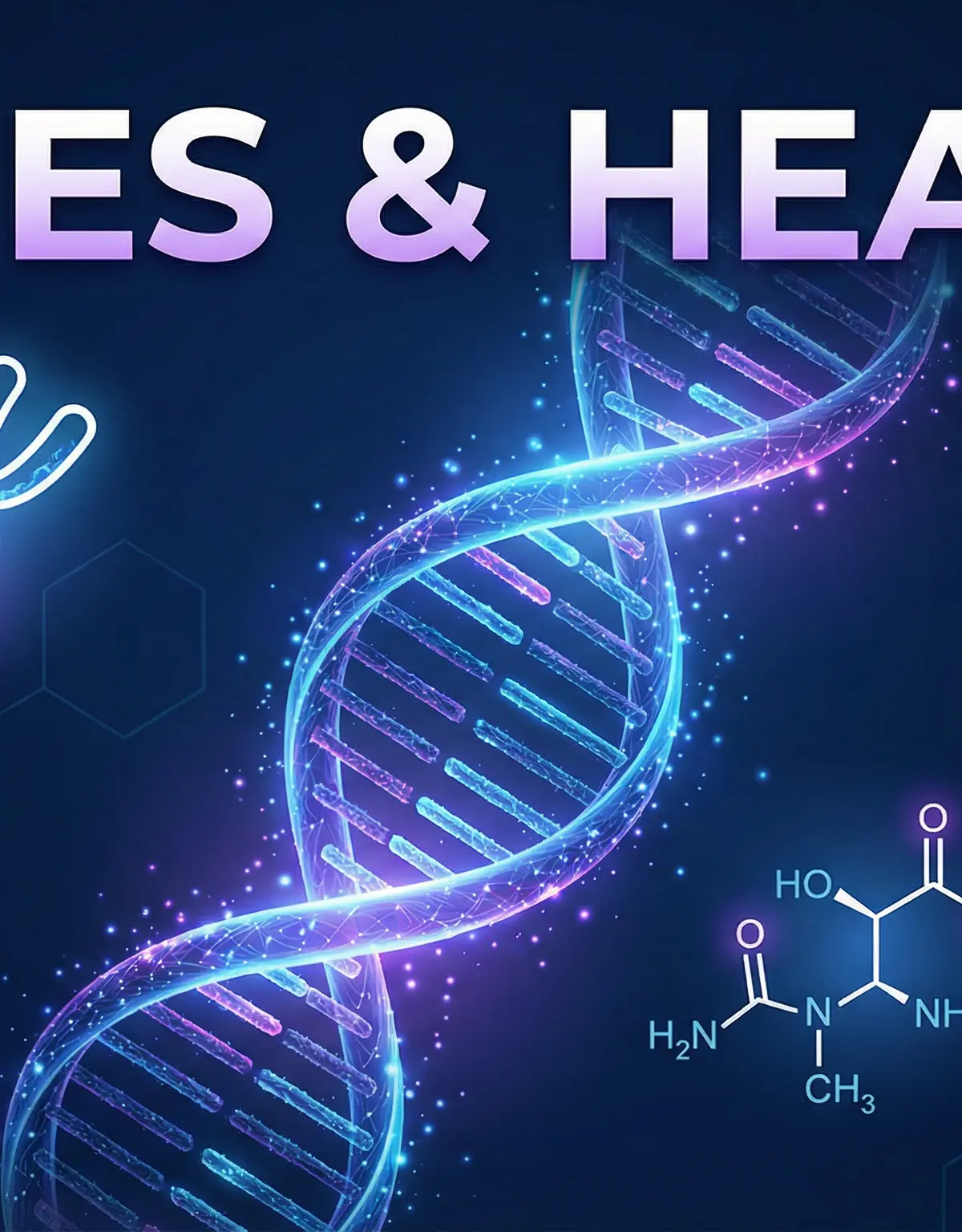
Welcome to Topic 2: Genes and Health. This crucial section of the specification bridges the gap between molecular biology and human physiology. You will explore how the genetic code stored in DNA translates into functional proteins, and crucially, what happens when this process goes wrong. By studying cystic fibrosis (CF) as a primary example, you will understand the profound impact of a single gene mutation on the entire human body. This topic is foundational; examiners frequently link it to cell transport, enzymes, and gas exchange. Expect a mix of short factual recall questions on DNA structure, calculation questions involving genetic crosses, and extended 6-mark responses requiring you to evaluate the ethical implications of genetic screening.
Listen to the comprehensive audio guide below for a full topic review:
Key Concepts
Concept 1: DNA Structure and Protein Synthesis
DNA (deoxyribonucleic acid) is a polynucleotide — a polymer of nucleotides. Each nucleotide consists of a deoxyribose sugar, a phosphate group, and a nitrogenous base (Adenine, Thymine, Cytosine, or Guanine). The molecule forms a double helix, with the two strands running antiparallel and held together by hydrogen bonds between complementary base pairs (A pairs with T via two hydrogen bonds; C pairs with G via three hydrogen bonds).
A gene is a specific sequence of DNA bases that codes for a sequence of amino acids in a polypeptide chain. The genetic code is a triplet code (three bases, or a codon, code for one amino acid), non-overlapping (each base is read only once), and degenerate (most amino acids are coded for by more than one triplet). Protein synthesis occurs in two main stages: transcription (in the nucleus, where a complementary mRNA copy of the gene is made) and translation (at the ribosomes, where tRNA molecules bring specific amino acids to build the polypeptide chain based on the mRNA sequence).
Why this works: The specific sequence of amino acids (primary structure) determines how the polypeptide chain folds (secondary and tertiary structure). The resulting 3D shape is critical for the protein's function, whether it's an enzyme's active site or a membrane channel.
Concept 2: Cell Membrane Structure and Transport
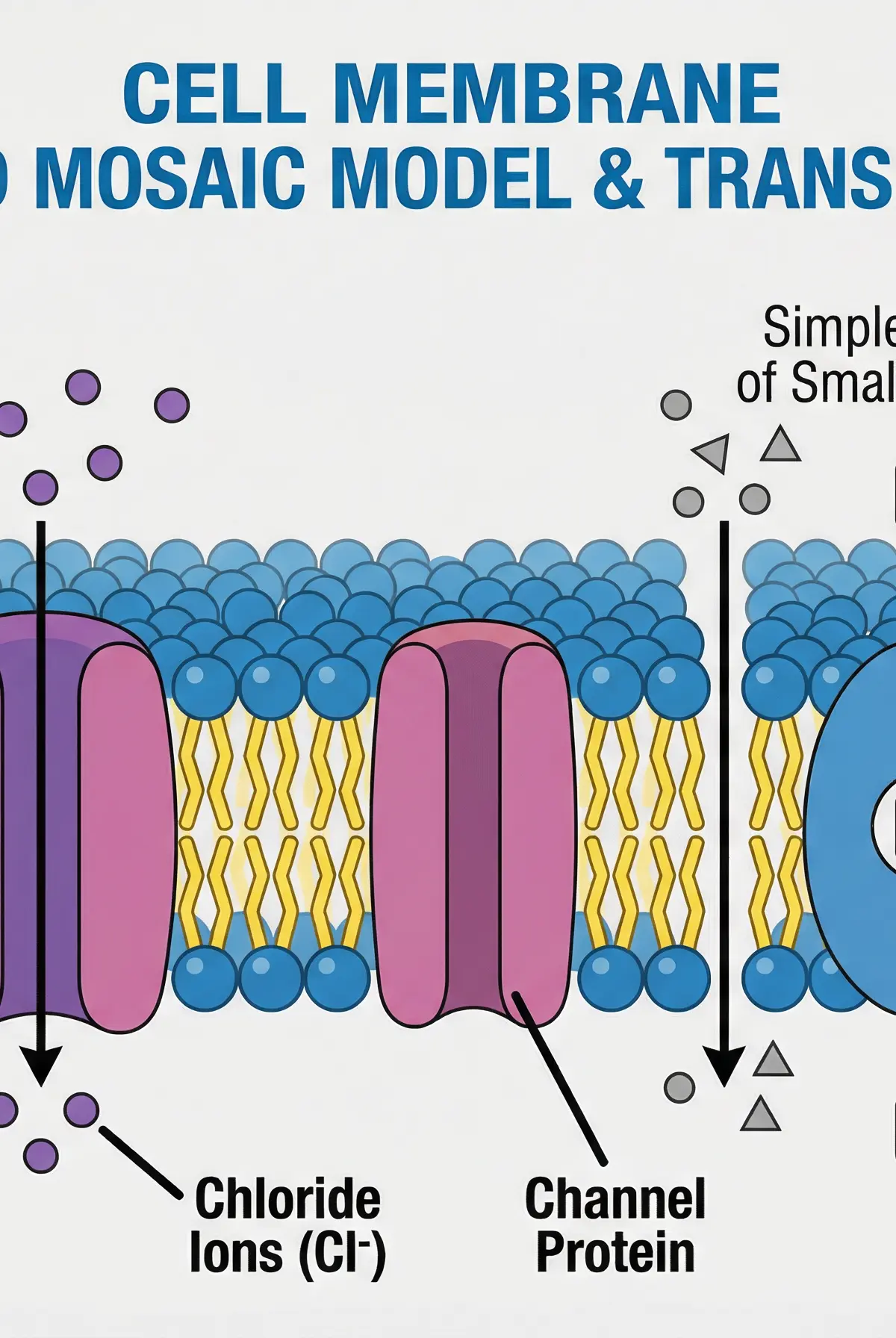
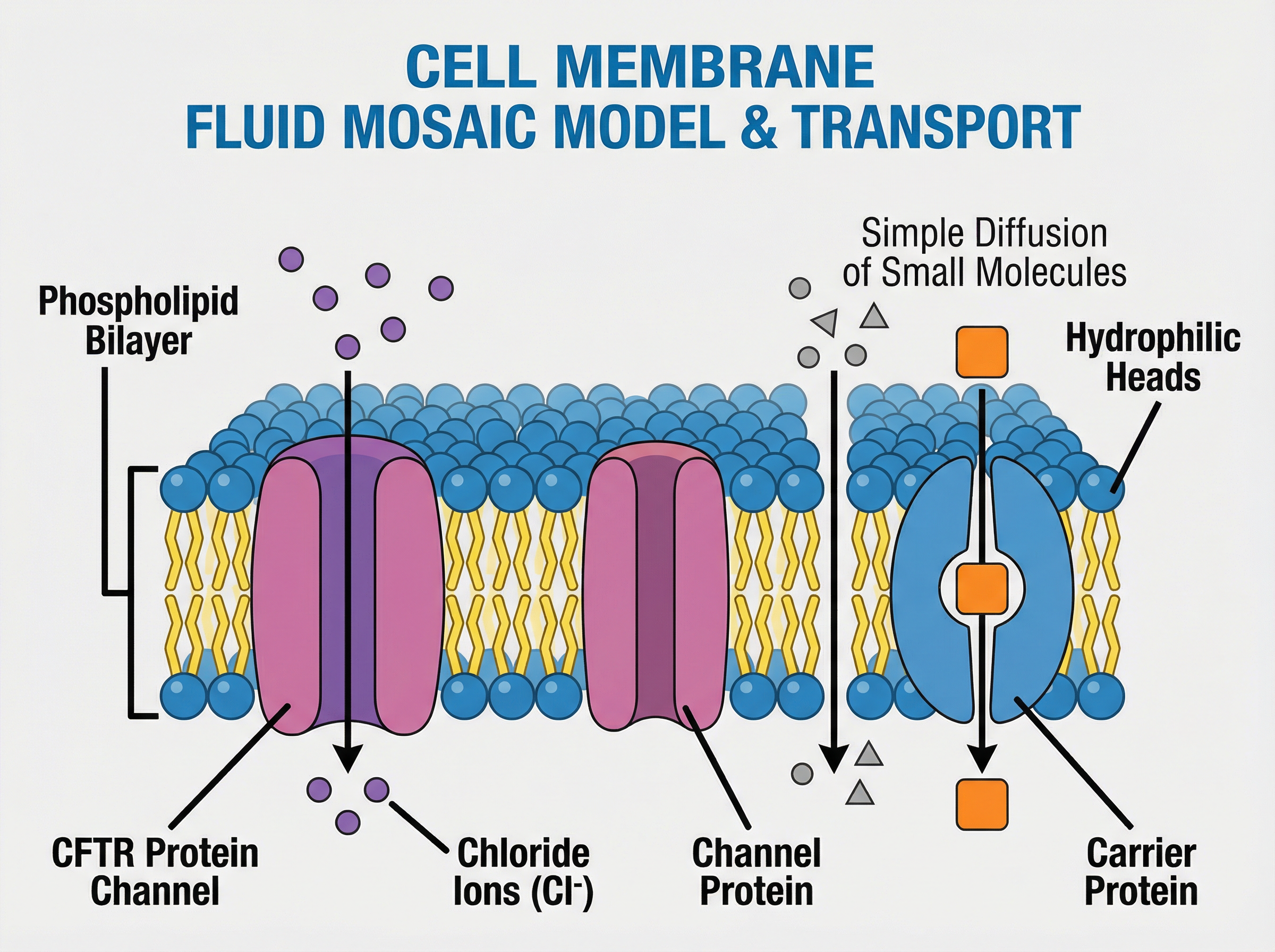
The cell membrane is described by the fluid mosaic model. It consists of a phospholipid bilayer with embedded proteins, cholesterol, glycoproteins, and glycolipids. The phospholipids have hydrophilic (water-loving) phosphate heads pointing outwards and hydrophobic (water-hating) fatty acid tails pointing inwards, creating a barrier to water-soluble substances.
Substances move across the membrane via several mechanisms:
- Simple Diffusion: Net movement of small, non-polar molecules (e.g., O₂, CO₂) from an area of higher concentration to lower concentration directly through the bilayer. Passive (no ATP required).
- Facilitated Diffusion: Movement of larger or polar molecules/ions (e.g., glucose, Cl⁻) down their concentration gradient via specific channel or carrier proteins. Passive.
- Active Transport: Movement of substances against their concentration gradient using carrier proteins and energy from ATP.
- Osmosis: The net movement of water molecules from an area of higher water potential to an area of lower water potential through a partially permeable membrane.
Concept 3: Cystic Fibrosis and the CFTR Protein
Cystic fibrosis is caused by a mutation in the gene coding for the CFTR (Cystic Fibrosis Transmembrane Conductance Regulator) protein. In a healthy individual, the CFTR protein acts as a channel for chloride ions (Cl⁻) to move out of cells (e.g., in the lungs or digestive system) by facilitated diffusion. As Cl⁻ ions leave the cell, the water potential outside the cell decreases, causing water to move out of the cell by osmosis. This keeps the mucus on the epithelial surface thin and watery.
In a person with CF, the mutated CFTR protein is either missing or non-functional. Chloride ions cannot leave the cell, so water does not move out by osmosis. Consequently, the mucus becomes abnormally thick and sticky. This sticky mucus blocks airways in the lungs (increasing the risk of infection and reducing gas exchange efficiency) and blocks the pancreatic duct (preventing digestive enzymes from reaching the small intestine).
Concept 4: Inheritance and Genetic Crosses
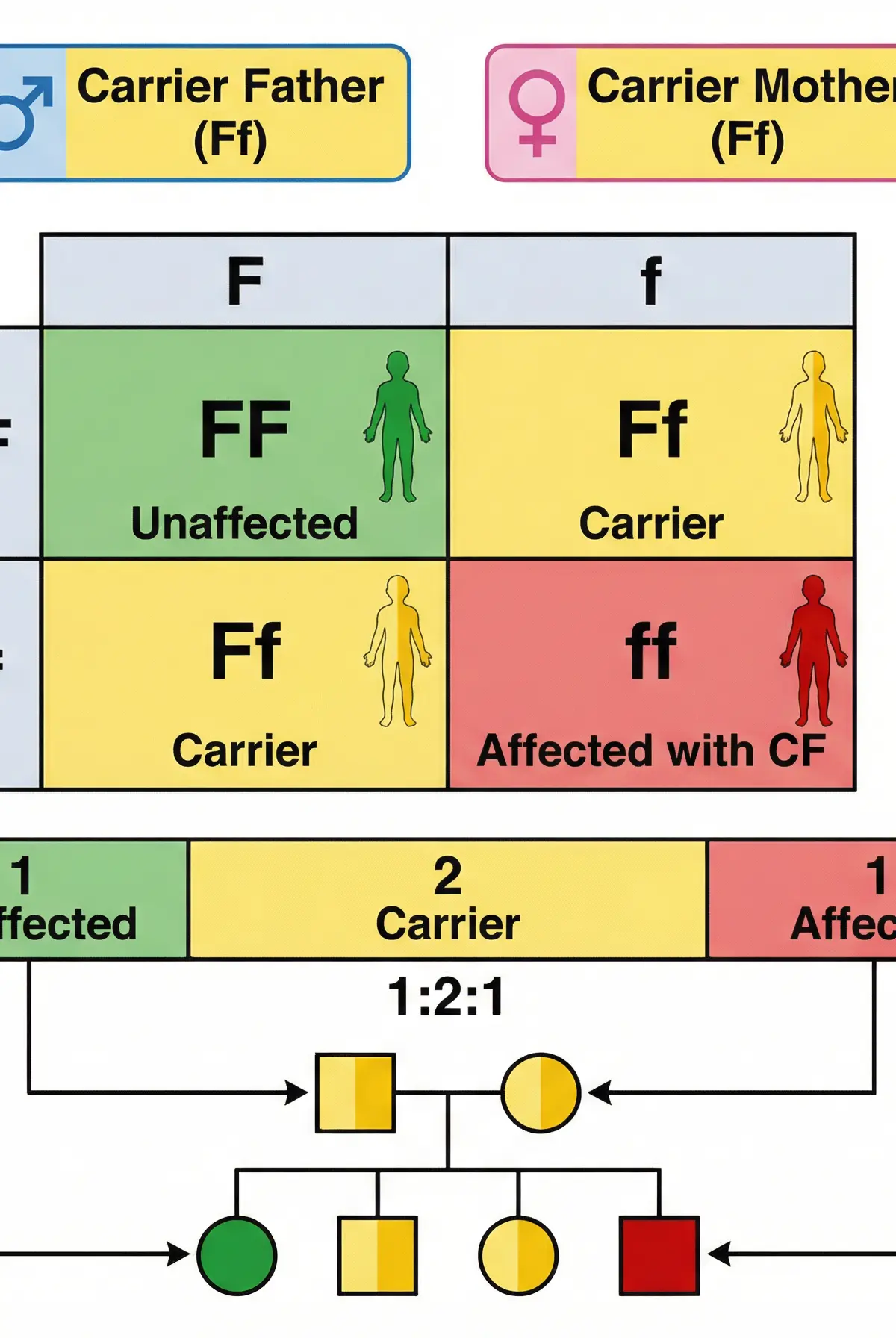
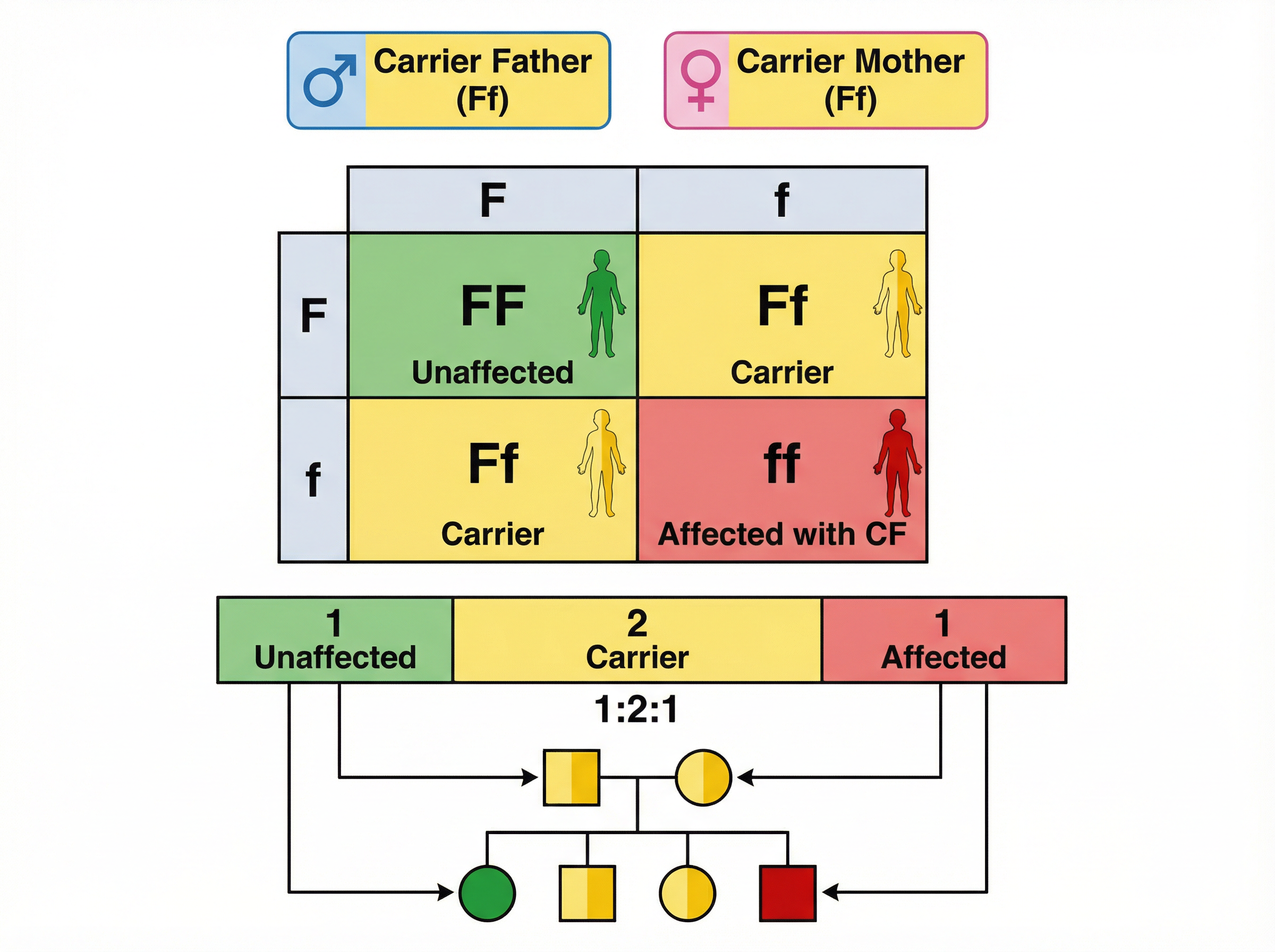
Cystic fibrosis is an autosomal recessive condition. This means the faulty allele is located on an autosome (a non-sex chromosome) and an individual must inherit two copies of the recessive allele (homozygous recessive genotype, e.g., ff) to have the phenotype of cystic fibrosis.
Individuals with one dominant healthy allele and one recessive faulty allele (heterozygous genotype, e.g., Ff) are carriers. They do not have CF but can pass the faulty allele to their offspring. Genetic crosses, often represented using Punnett squares, allow us to predict the probability of offspring inheriting the condition.
Example: If two carrier parents (Ff x Ff) have a child, the Punnett square shows a 1 in 4 (25%) probability of the child being unaffected (FF), a 2 in 4 (50%) probability of being a carrier (Ff), and a 1 in 4 (25%) probability of having CF (ff).
Concept 5: Genetic Screening
Genetic screening involves testing individuals to identify whether they possess a particular allele. Types of screening include:
- Carrier testing: Identifying heterozygous individuals who have a family history of a recessive condition.
- Pre-implantation genetic diagnosis (PGD): Testing embryos created via IVF before implantation to select those without the faulty allele.
- Prenatal testing: Testing the foetus during pregnancy using amniocentesis (sampling amniotic fluid) or chorionic villus sampling (CVS) (sampling placental tissue).
Examiners frequently ask candidates to evaluate the ethical and social issues surrounding screening, such as the risk of miscarriage with prenatal testing, the emotional distress of false positives/negatives, and the ethical debate regarding abortion if a foetus is found to have a genetic condition.
Mathematical/Scientific Relationships
While there are few complex equations in this specific topic, probability calculations are essential:
- Probability = (Number of desired outcomes) / (Total number of possible outcomes)
- When predicting inheritance, always express the final answer as a percentage, fraction, or ratio as requested by the command word.
Practical Applications
Understanding DNA structure and mutations is the foundation of modern genomics and personalised medicine. The development of targeted therapies for cystic fibrosis, such as drugs that help the faulty CFTR protein fold correctly or stay open longer, directly relies on the molecular understanding covered in this topic.
Visual Resources
2 diagrams and illustrations
Interactive Diagrams
2 interactive diagrams to visualise key concepts
Conceptual Flow Outline
The Central Dogma: How DNA determines protein function.
Conceptual Flow Outline
The sequence of events leading to symptoms in Cystic Fibrosis.
Worked Examples
3 worked examples — open one to explore the question and available guidance.
Practice Questions
Test your understanding — click to reveal model answers
Compare the processes of simple diffusion and active transport. (3 marks)
Hint: Think about concentration gradients and energy requirements.
A woman who does not have cystic fibrosis but whose father had the condition marries a man who is a carrier. Determine the probability that they will have a child with cystic fibrosis. (4 marks)
Hint: First, deduce the woman's genotype from her father's phenotype.
Evaluate the use of chorionic villus sampling (CVS) compared to amniocentesis for prenatal genetic screening. (6 marks)
Hint: Consider the timing of the tests and the relative risks of miscarriage.
Explain why the genetic code is described as degenerate and non-overlapping. (2 marks)
Hint: Think about what these specific terms mean in relation to codons and amino acids.
Describe how the structure of a phospholipid relates to its function in the cell membrane. (3 marks)
Hint: Discuss the two distinct parts of the phospholipid molecule and how they interact with water.