Pearson Edexcel · A-Level · Biology
Using Genome Projects
Topic 3: Voice of the Genome explores how the universal genetic code directs the synthesis of proteins and how gene expression is precisely controlled. Mastering this topic is crucial for the exam, as examiners frequently test your ability to link DNA structure to cell differentiation and epigenetic inheritance.
- 5 min read
- 3 worked examples
- 5 practice questions
- 6 key terms
Study Notes
Overview
Topic 3, 'Voice of the Genome', sits at the very core of molecular biology. It answers a fundamental question: if almost every cell in your body contains the exact same DNA, how do they look and function so differently? The answer lies in gene expression—the process by which the instructions in our DNA are converted into functional products, such as proteins.
This topic is heavily tested because it connects multiple fundamental concepts. You must understand the central dogma of molecular biology (DNA → RNA → Protein), the intricate mechanisms of transcription and translation, and how these processes are regulated by transcription factors and epigenetics. Examiners frequently use this topic to test your synoptic understanding, asking you to link genetic mutations to altered protein function and disease phenotypes.
Listen to our comprehensive podcast summary of this topic here:
Key Concepts
Concept 1: The Central Dogma (Transcription and Translation)
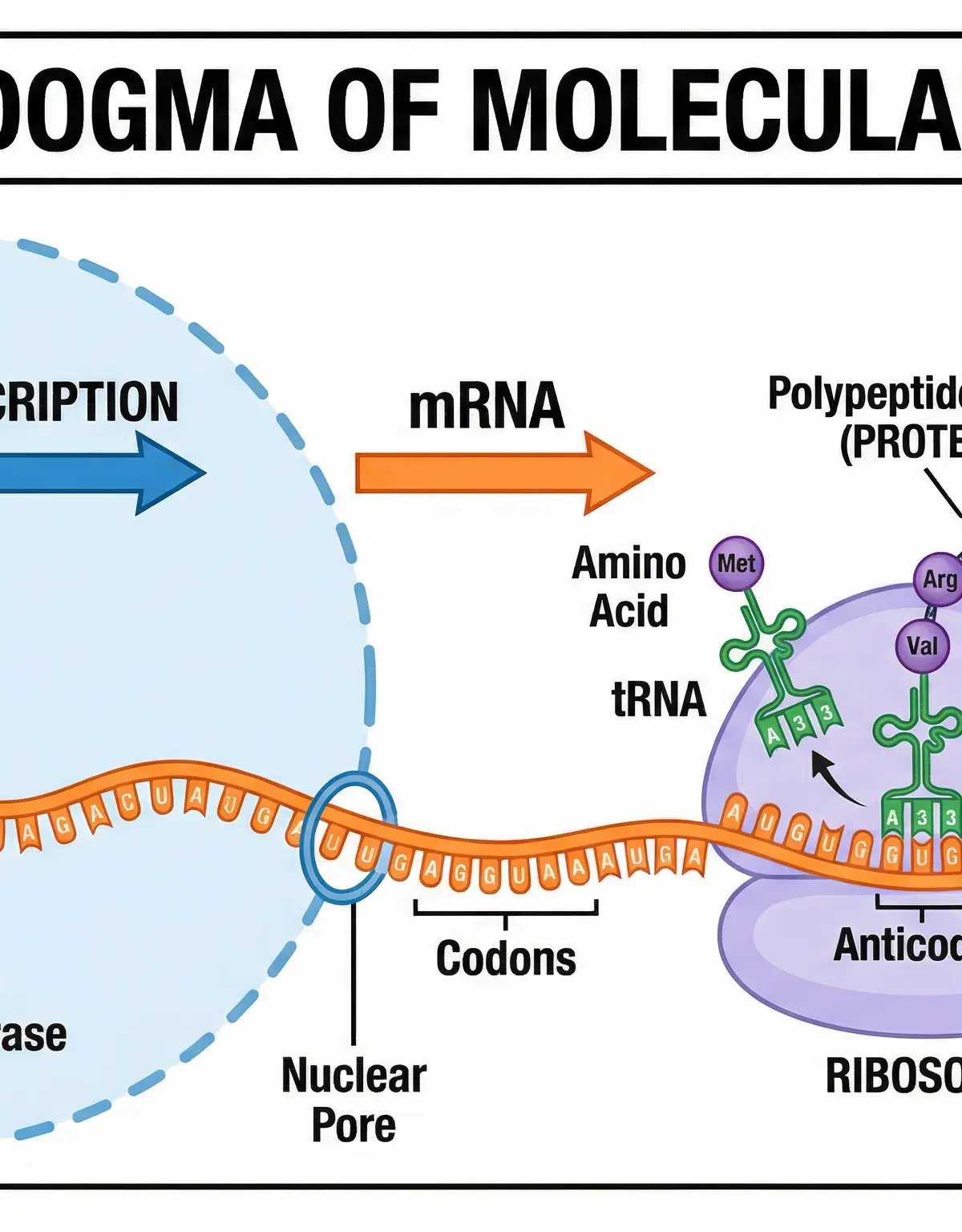
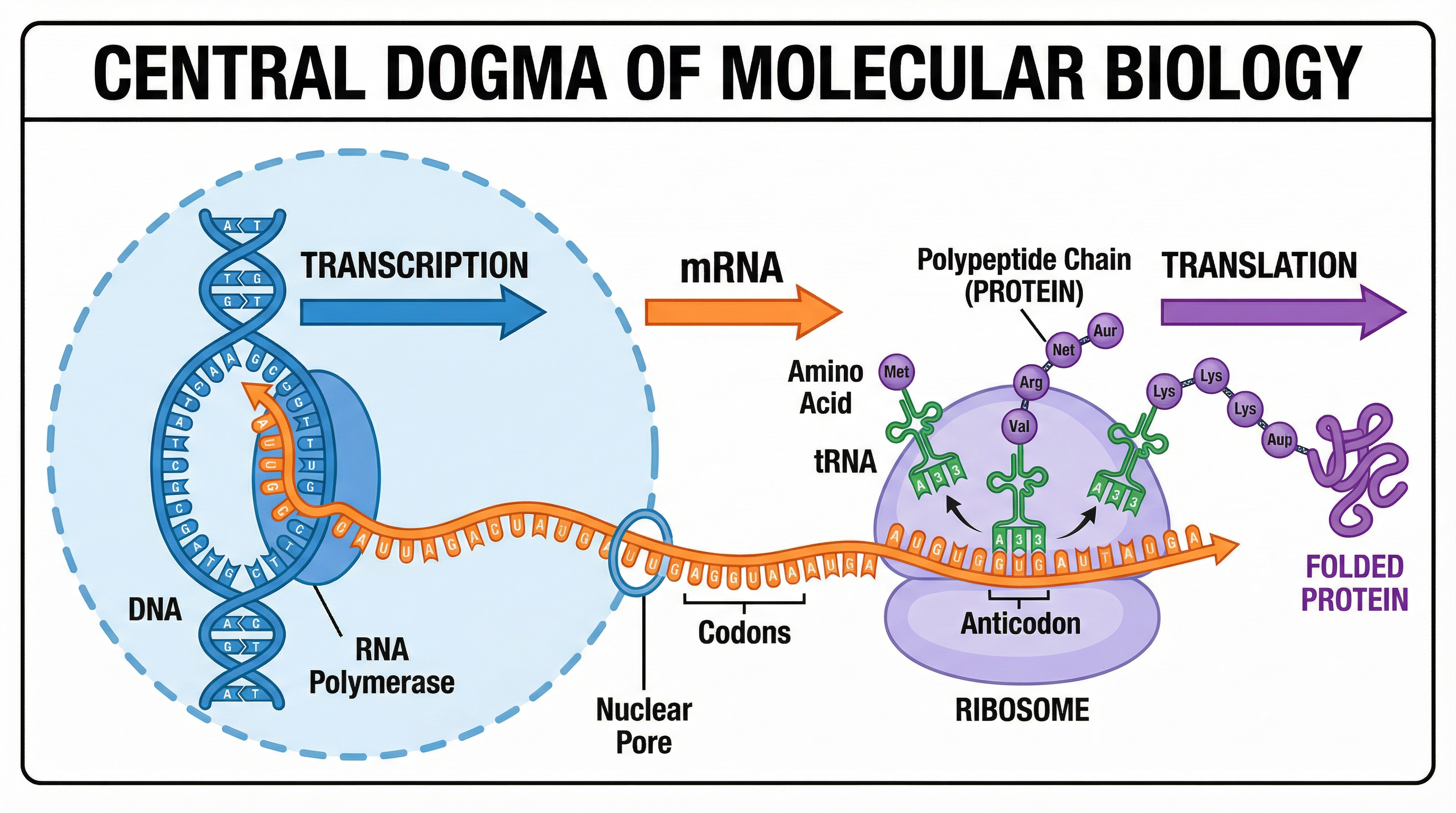
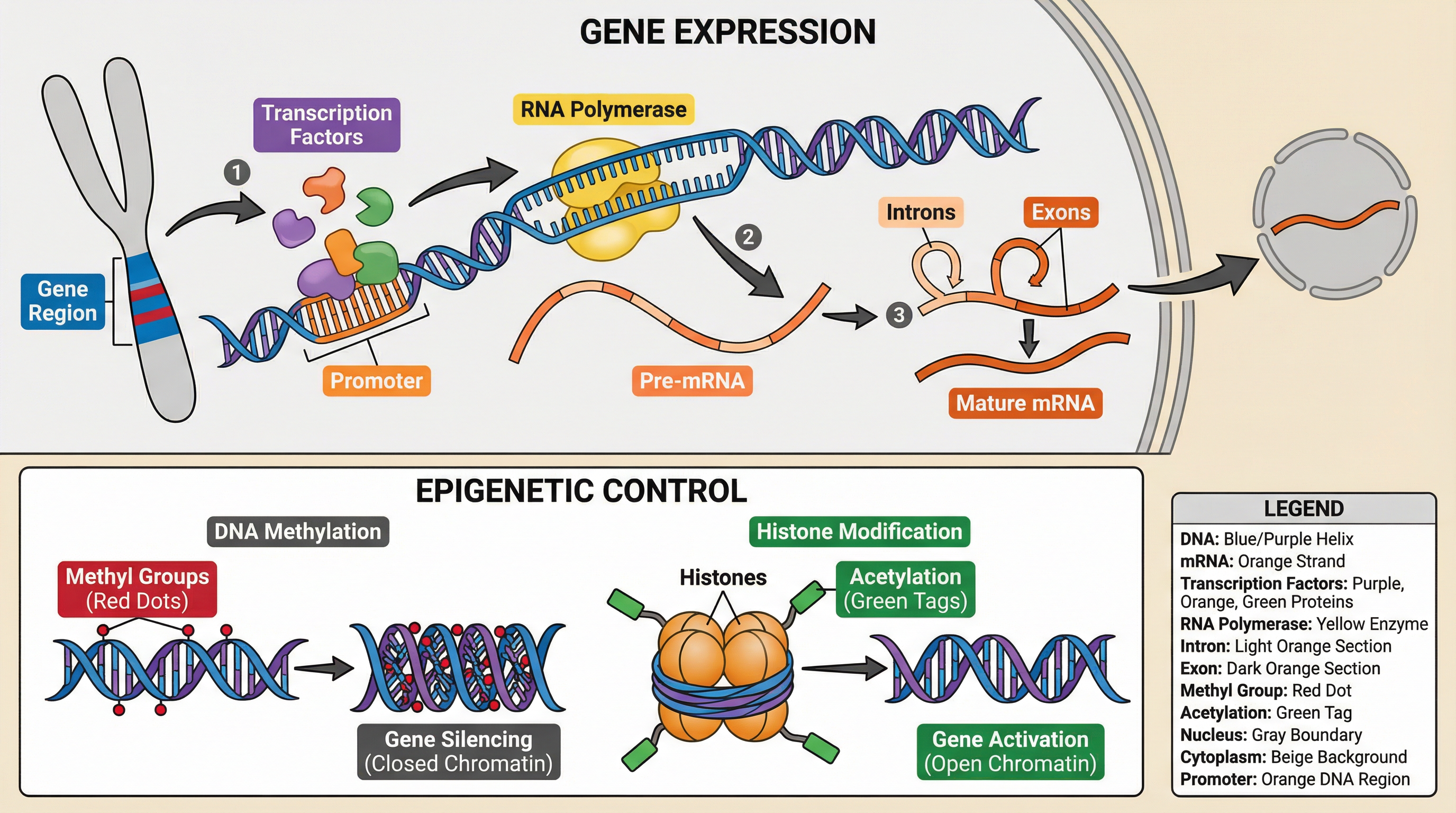
The flow of genetic information is directional. It begins in the nucleus with transcription. The enzyme RNA polymerase binds to a specific promoter region on the DNA. It unwinds the double helix and uses the antisense (template) strand to synthesise a complementary strand of messenger RNA (mRNA). Crucially, in RNA, the base uracil (U) replaces thymine (T).
In eukaryotes, this initial transcript is pre-mRNA. It undergoes splicing, where non-coding regions (introns) are removed and coding regions (exons) are joined together to form mature mRNA. This mature mRNA then exits the nucleus through a nuclear pore.
Translation occurs at the ribosomes in the cytoplasm. The mRNA is read in sequences of three bases called codons. Transfer RNA (tRNA) molecules carry specific amino acids to the ribosome. Each tRNA has an anticodon that is complementary to the mRNA codon. The ribosome catalyses the formation of peptide bonds between adjacent amino acids, building a polypeptide chain that will eventually fold into a functional protein.
Concept 2: The Genetic Code
The genetic code has three vital features that you must be able to state and explain for 3-mark questions:
- Universal: The same specific base triplets code for the same amino acids in all living organisms. This is strong evidence for evolution from a common ancestor.
- Non-overlapping: Each base in the sequence is read only once and is part of only one triplet.
- Degenerate: There are 64 possible triplets but only 20 amino acids. Therefore, most amino acids are coded for by more than one triplet. This provides a buffer against the effects of point mutations.
Concept 3: Control of Gene Expression and Epigenetics
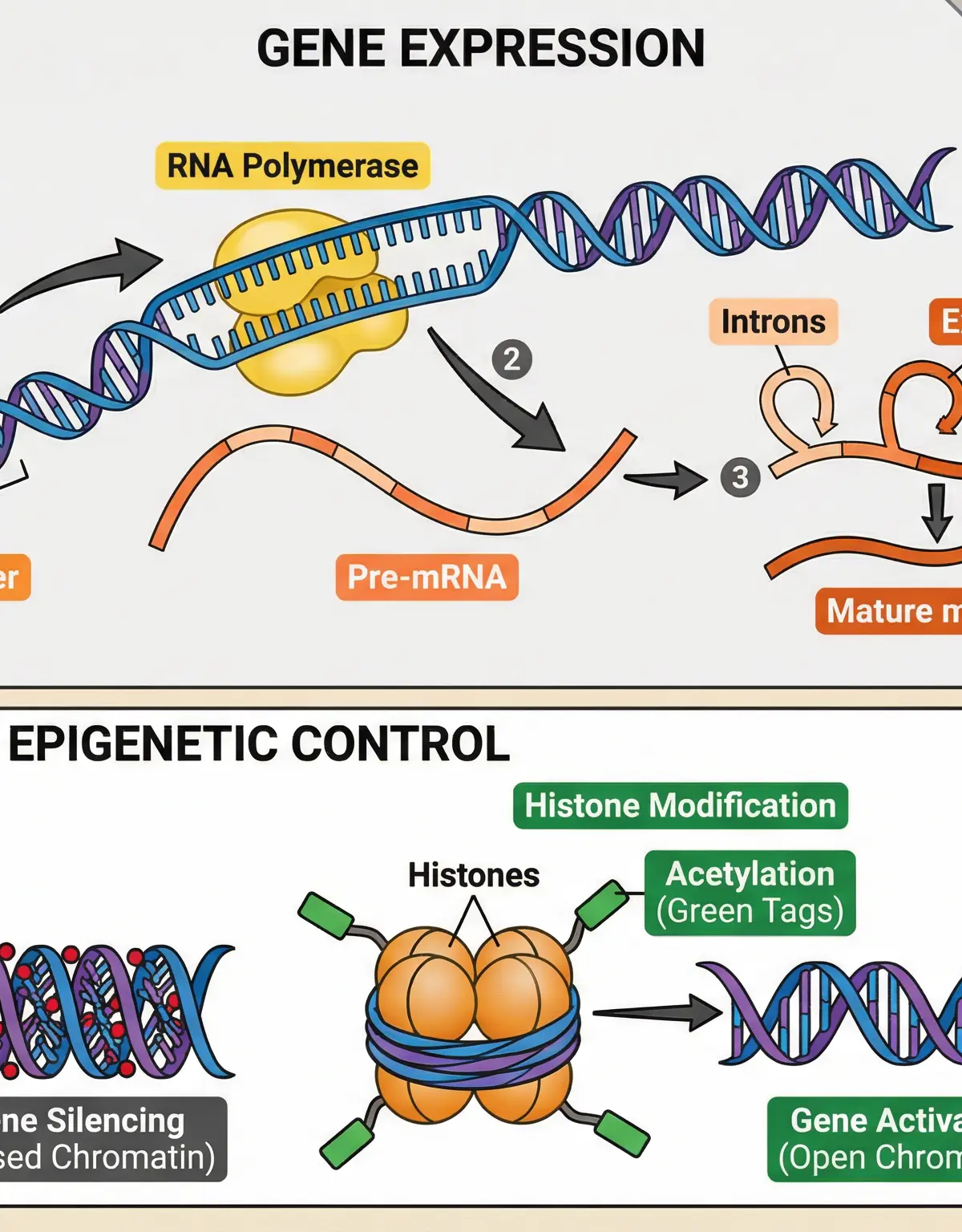
Not all genes are expressed in all cells. Gene expression is controlled primarily at the transcriptional level by proteins called transcription factors. These bind to specific promoter regions on the DNA, either facilitating or inhibiting the binding of RNA polymerase.
Epigenetics refers to heritable changes in gene function without changes to the base sequence of DNA. The two main mechanisms are:
- DNA Methylation: The addition of methyl groups (–CH3) to cytosine bases. Increased methylation typically represses gene transcription by preventing transcription factors from binding and causing the chromatin to condense.
- Histone Modification: The addition of acetyl groups to histone proteins (acetylation) makes the chromatin less condensed, allowing transcription factors and RNA polymerase to access the DNA, thereby activating gene expression. Decreased acetylation has the opposite effect.
Concept 4: Stem Cells and Differentiation
Stem cells are unspecialised cells capable of dividing by mitosis and differentiating into specialised cell types. They are classified by their potency:
- Totipotent: Can differentiate into any cell type, including extra-embryonic tissues (e.g., the placenta). Found only in the very early embryo.
- Pluripotent: Can differentiate into almost any cell type, but not extra-embryonic tissues. Found in the inner cell mass of the blastocyst.
- Multipotent: Can differentiate into a limited number of specialised cell types (e.g., haematopoietic stem cells in the bone marrow).
Differentiation occurs because some genes are permanently switched off (often via epigenetic silencing) while others remain active. Once differentiated, a cell is committed to its specific function.
Mathematical/Scientific Relationships
While this topic is largely descriptive, you may be asked to calculate the number of amino acids in a polypeptide given the length of the mRNA sequence, or vice versa.
Formula: Number of amino acids = (Number of mRNA bases ÷ 3) - 1
Note: The '- 1' accounts for the stop codon, which does not code for an amino acid.
Practical Applications
Understanding gene expression has profound medical applications. Epigenetic therapy is being developed to treat cancers caused by the abnormal methylation of tumour suppressor genes. Furthermore, the discovery of induced pluripotent stem cells (iPSCs)—where adult somatic cells are reprogrammed to become pluripotent by introducing specific transcription factors—has revolutionised regenerative medicine, offering the potential for patient-specific tissue replacement without the ethical issues associated with embryonic stem cells.
Visual Resources
2 diagrams and illustrations
Interactive Diagrams
2 interactive diagrams to visualise key concepts
Conceptual Flow Outline
Flowchart showing the sequence of events from DNA to the start of translation.
Conceptual Flow Outline
The hierarchy of stem cell potency and differentiation.
Worked Examples
3 worked examples — open one to explore the question and available guidance.
Practice Questions
Test your understanding — click to reveal model answers
Compare and contrast the processes of transcription and translation. (4 marks)
Hint: Think about location, the template used, the product formed, and the key molecules involved.
Explain how a substitution mutation in a gene might not affect the function of the protein produced. (3 marks)
Hint: Recall the features of the genetic code. What does 'degenerate' mean?
Evaluate the use of induced pluripotent stem cells (iPSCs) compared to embryonic stem cells in medical treatments. (5 marks)
Hint: Consider ethics, immune rejection, and the potential for differentiation.
Describe the role of the spliceosome in gene expression. (2 marks)
Hint: What happens to pre-mRNA before it leaves the nucleus?
Explain how oestrogen affects gene expression. (4 marks)
Hint: Oestrogen is a lipid-soluble hormone. How does it interact with transcription factors?