Pearson Edexcel · GCSE · Biology
Topic 1 – Key concepts in biology
Master the fundamentals of health, disease, and the immune system. This topic forms the foundation for understanding how pathogens affect our bodies and how medical science fights back — crucial knowledge for your GCSE exams.
- 6 min read
- 3 worked examples
- 5 practice questions
- 6 key terms
Study Notes
Overview

Welcome to Topic 1: Key Concepts in Biology. This foundational topic explores the definition of health, the distinction between communicable and non-communicable diseases, and the fascinating mechanisms your body uses to defend itself against pathogens.
Understanding these concepts is vital because they form the basis for much of the Biology specification. Examiners frequently test your ability to link lifestyle factors to non-communicable diseases, and your understanding of the specific immune response is a classic source of high-tariff questions. You will also encounter questions requiring you to evaluate treatments and understand the rigorous process of medicine development.
Listen to our summary podcast here:
Key Concepts
Concept 1: Defining Health and Disease
Health is not simply the absence of illness. The World Health Organisation defines health as a state of complete physical, mental, and social well-being. Examiners expect you to mention all three aspects. A disease is a condition that impairs the normal functioning of an organism.
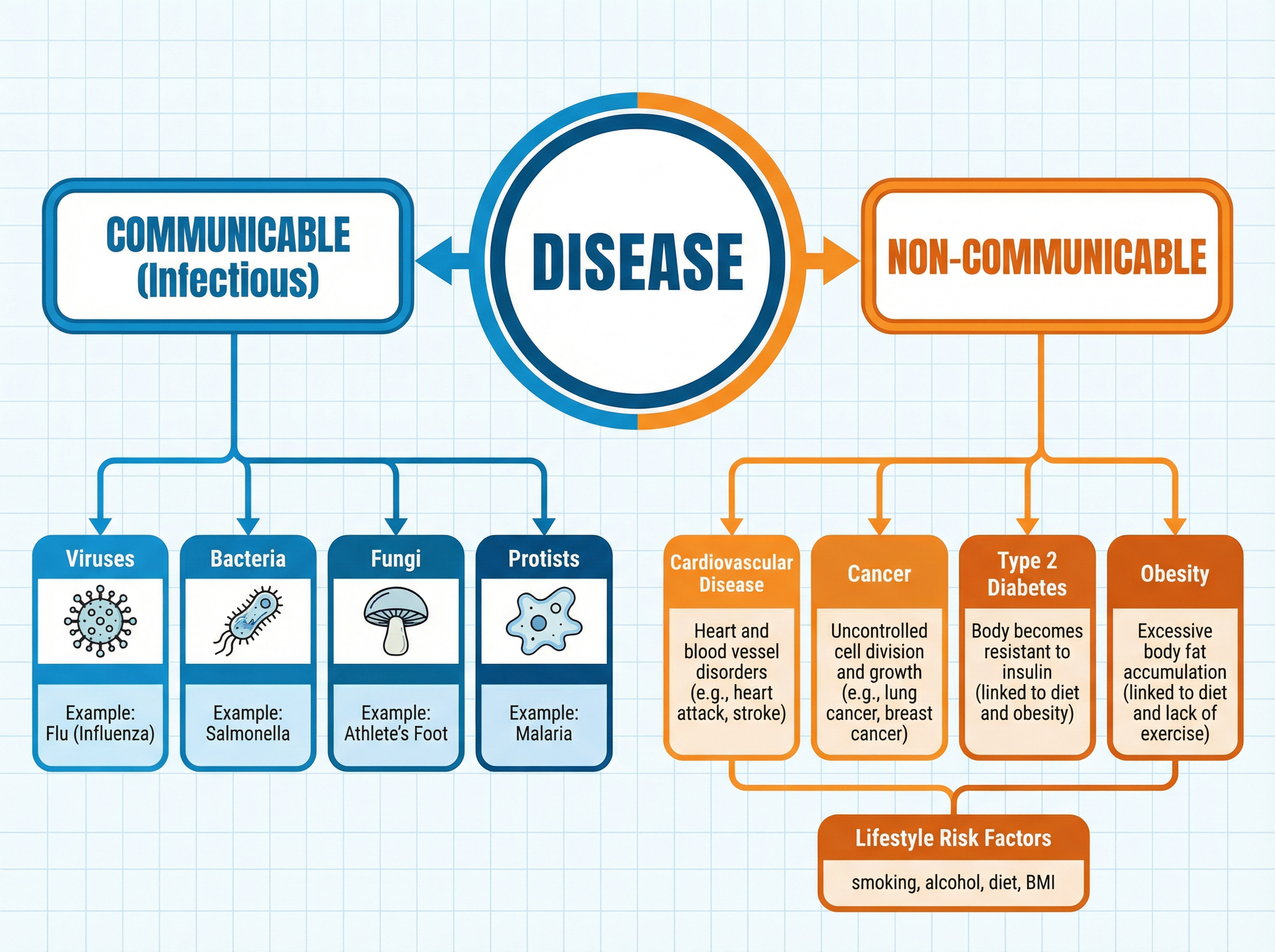
Diseases are classified into two main categories: communicable and non-communicable.
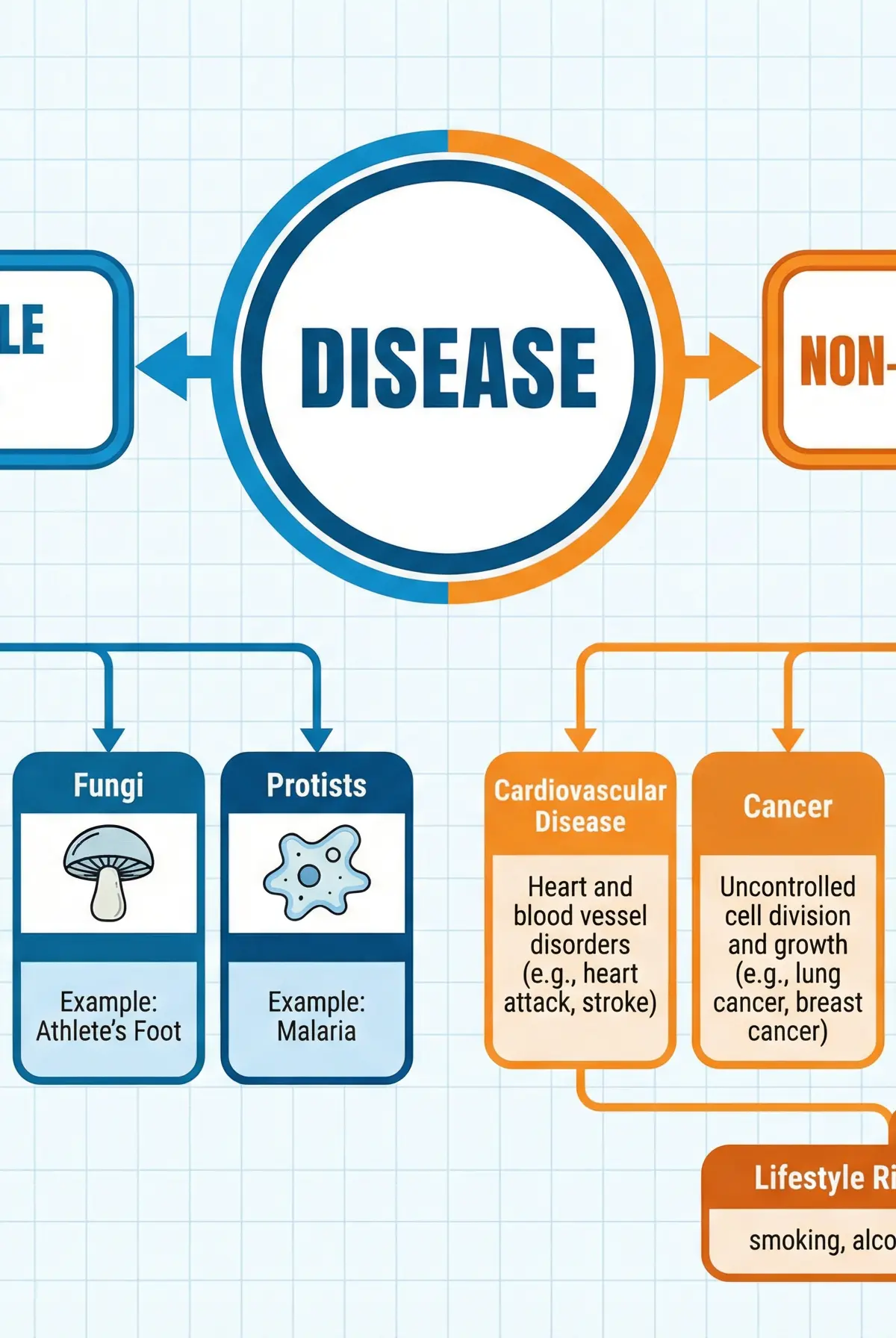
Communicable diseases are infectious. They are caused by pathogens — microorganisms such as viruses, bacteria, fungi, and protists — that can be spread between individuals. For example, influenza is a viral communicable disease.
Non-communicable diseases cannot be transmitted between individuals. They are often the result of genetics, lifestyle factors, or environmental influences. Examples include cardiovascular disease, cancer, and type 2 diabetes.
Concept 2: Pathogens and Transmission
Pathogens spread through various routes:
- Airborne: Droplets containing pathogens are inhaled (e.g., cold viruses).
- Water/Food-borne: Ingesting contaminated food or water (e.g., Salmonella, Cholera).
- Direct Contact: Physical contact with an infected individual or surface (e.g., Athlete's foot).
- Vectors: Organisms that carry and pass on the pathogen without getting the disease themselves (e.g., mosquitoes transmitting malaria).
Concept 3: Human Defences Against Pathogens
Your body has a two-tier defence system. The first tier consists of non-specific physical and chemical barriers that prevent pathogens from entering.
Physical barriers:
- Skin: Acts as a tough, waterproof barrier.
- Mucus and Cilia: Mucus in the respiratory tract traps pathogens, and tiny hairs called cilia sweep the mucus up to the throat to be swallowed.
Chemical barriers:
- Stomach Acid: Hydrochloric acid (pH 2) destroys most ingested pathogens.
- Lysozymes: Enzymes found in tears, saliva, and mucus that break down bacterial cell walls.
Concept 4: The Immune Response
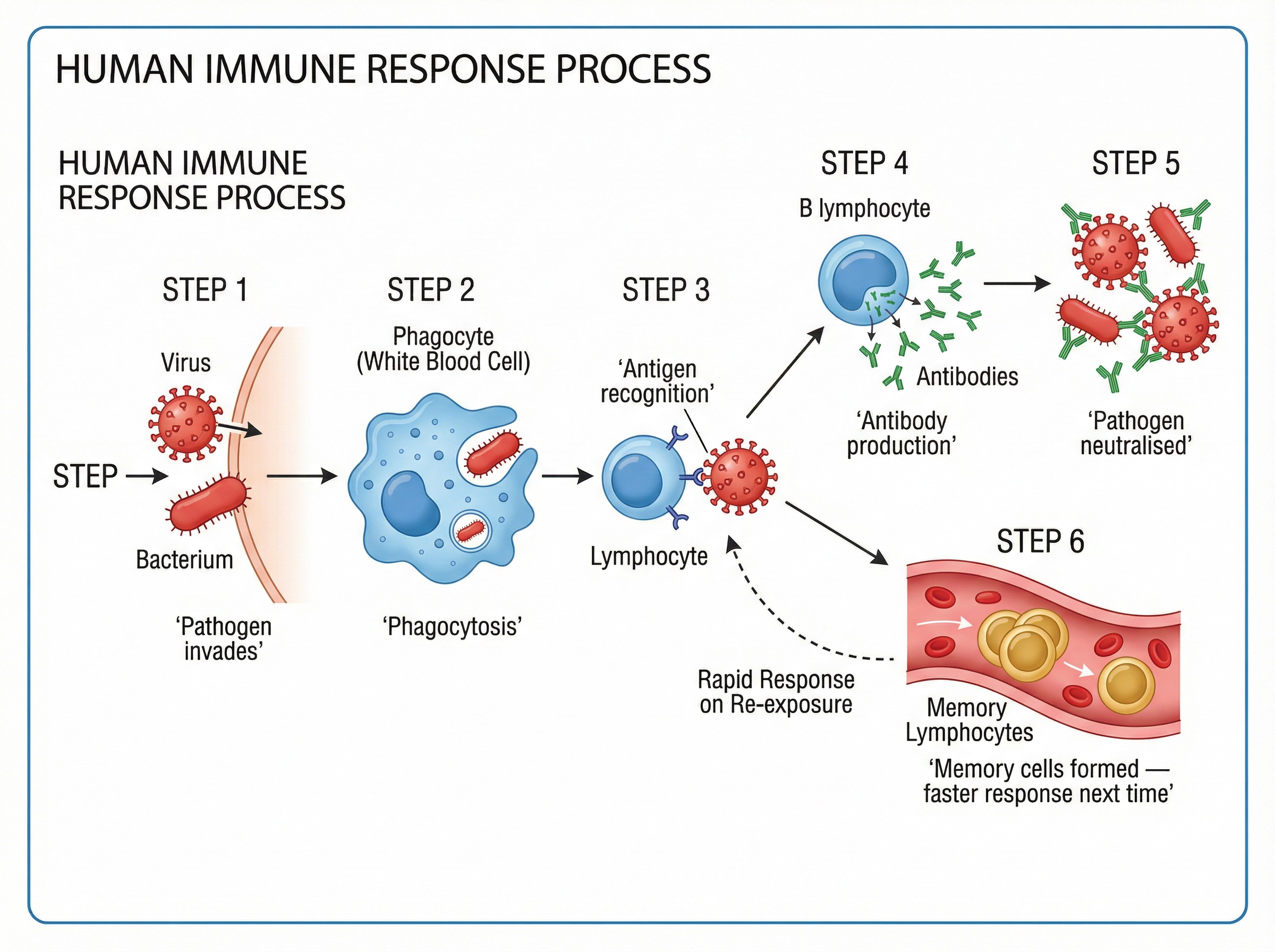
If pathogens breach the physical and chemical barriers, the immune system takes over. This involves white blood cells.
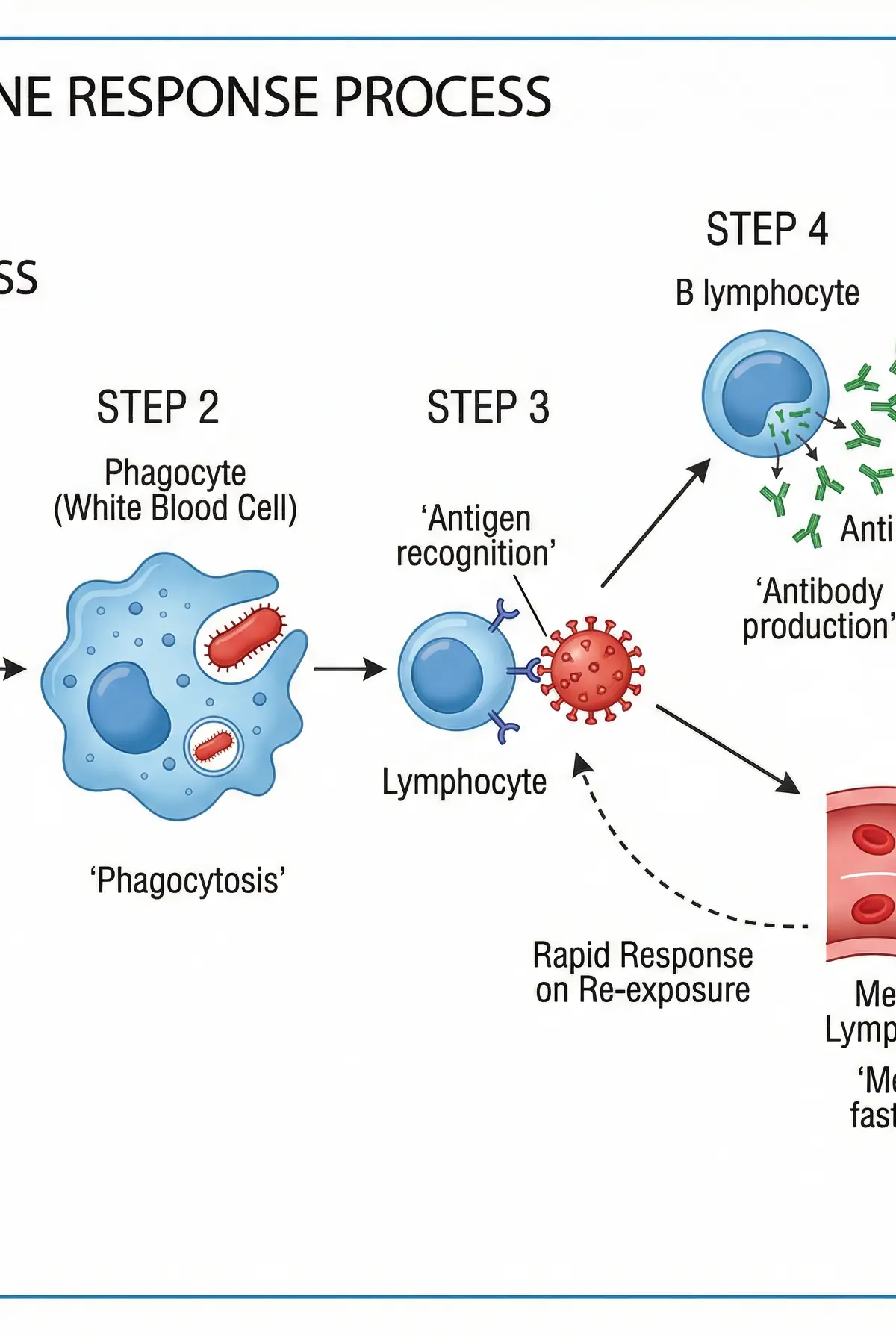
- Phagocytosis: Phagocytes (a type of white blood cell) engulf and digest pathogens.
- Antibody Production: Lymphocytes detect foreign proteins on the surface of pathogens called antigens. They produce specific Y-shaped proteins called antibodies that bind to these antigens, clumping pathogens together and neutralising them.
- Antitoxin Production: Lymphocytes also produce antitoxins that neutralise the harmful toxins released by bacteria.
Memory Lymphocytes: After an infection is cleared, some lymphocytes remain as memory cells. If the same pathogen re-enters the body, these cells rapidly produce large quantities of the specific antibodies, often destroying the pathogen before symptoms develop. This is the basis of immunity.
Concept 5: Medicines and Treatments
Antibiotics (e.g., penicillin) are medicines that kill or inhibit the growth of bacteria. They do not destroy viruses because viruses reproduce inside host cells, and antibiotics cannot target them without damaging the host's own cells.
Developing new medicines is a rigorous process:
- Discovery: Identifying potential new drugs.
- Preclinical Testing: Testing on cells, tissues, and live animals to check for toxicity and efficacy.
- Clinical Trials: Testing on healthy human volunteers (for safety/dosage) and then on patients (for efficacy). These often use a double-blind trial where neither the doctor nor the patient knows who receives the real drug and who receives a placebo, removing bias.
Mathematical/Scientific Relationships
Body Mass Index (BMI)
BMI is used to assess if a person is a healthy weight for their height.
Formula: BMI = Mass (kg) / (Height (m))²
Note: This formula must be memorised.
Waist-to-Hip Ratio
This ratio is an indicator of abdominal fat, which is linked to cardiovascular disease.
Formula: Waist-to-Hip Ratio = Waist circumference / Hip circumference
Note: Ensure both measurements are in the same units (e.g., cm).
Practical Applications
**Investigating Microbial Cultures (Required Practical)**You must understand how to culture microorganisms using aseptic techniques to prevent contamination. This involves sterilising Petri dishes, using a Bunsen burner flame to sterilise inoculating loops, and securing the lid of the Petri dish with adhesive tape (but not sealing it completely to allow oxygen in, preventing the growth of harmful anaerobic bacteria). Examiners often ask you to calculate the cross-sectional area of clear zones (zones of inhibition) around antibiotic discs using the formula Area = πr².
Visual Resources
2 diagrams and illustrations
Interactive Diagrams
2 interactive diagrams to visualise key concepts
Conceptual Flow Outline
Flowchart showing the sequence of the human immune response.
Conceptual Flow Outline
The stages of medicine development and testing.
Worked Examples
3 worked examples — open one to explore the question and available guidance.
Practice Questions
Test your understanding — click to reveal model answers
State two chemical defences the human body uses to prevent infection. (2 marks)
Hint: Think about the stomach and the eyes.
Explain why antibiotics cannot be used to treat HIV. (2 marks)
Hint: What type of pathogen causes HIV, and what do antibiotics target?
Describe the stages of a clinical trial for a new drug. (4 marks)
Hint: Start with who is tested first, and explain the use of a placebo.
Explain how the human immune system responds to an infection by a bacterial pathogen. (6 marks)
Hint: Mention the two types of white blood cells and the specific proteins involved.
A student investigates the effectiveness of different antibiotics on bacterial growth. Describe how they should prepare the agar plate to ensure the investigation is not contaminated. (4 marks)
Hint: Think about aseptic techniques.