Pearson Edexcel · GCSE · Biology
Topic 3 – Genetics
Master the intricacies of the human immune system and the pathogens that challenge it. This comprehensive guide covers communicable and non-communicable diseases, defence mechanisms, and medicine development, providing essential knowledge to secure top marks in your GCSE Biology exam.
- 6 min read
- 3 worked examples
- 5 practice questions
- 6 key terms
Study Notes
Overview
This topic, Disease and Immunity, is a cornerstone of GCSE Biology, exploring the delicate balance between health and illness. It investigates the microscopic world of pathogens—viruses, bacteria, fungi, and protists—and the sophisticated defence mechanisms our bodies employ to combat them. Understanding this topic is crucial, as it connects deeply with cell biology, human physiology, and the practical applications of science in medicine development.
Examiners frequently test your ability to distinguish between communicable and non-communicable diseases, and to explain the specific immune response using precise terminology. You will encounter a mix of short-answer recall questions and longer, 6-mark extended response questions requiring you to evaluate treatments or describe processes like phagocytosis and vaccination. By mastering the core concepts and the specific language required by the mark scheme, you will be well-prepared to tackle any question on this topic.
Key Concepts
Concept 1: Defining Health and Disease
Health is not merely the absence of illness; it is defined by the World Health Organisation as a state of complete physical, mental, and social well-being. This three-part definition is essential for exam success. Diseases are categorised as either communicable (infectious) or non-communicable. Communicable diseases are caused by pathogens and can be transmitted between individuals. Non-communicable diseases, such as cardiovascular disease or cancer, cannot be passed from person to person and are often influenced by lifestyle factors like diet, exercise, and smoking.
Example: A patient with Type 2 diabetes has a non-communicable disease, while a patient with influenza has a communicable disease caused by a viral pathogen.
Concept 2: Pathogens and Transmission
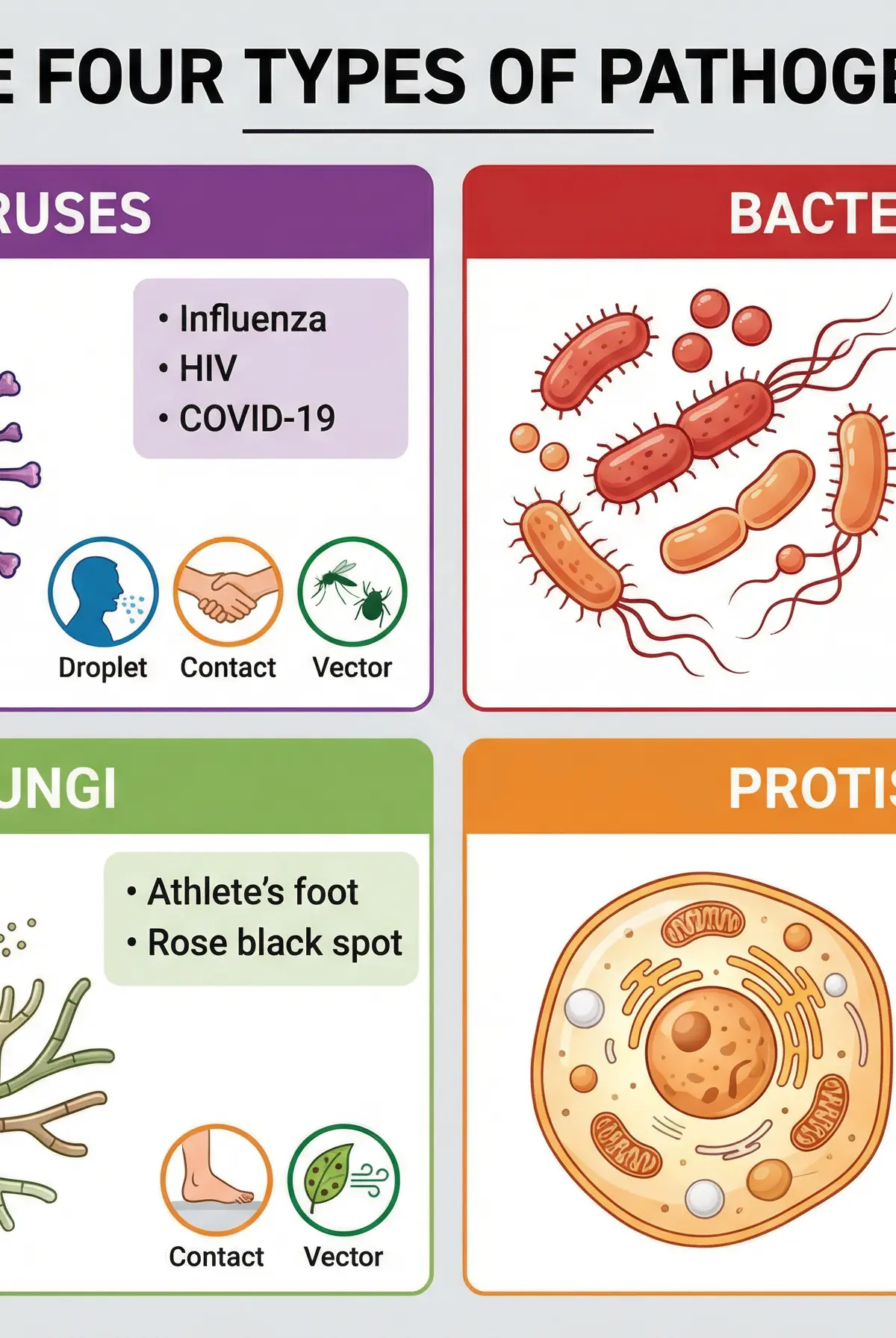
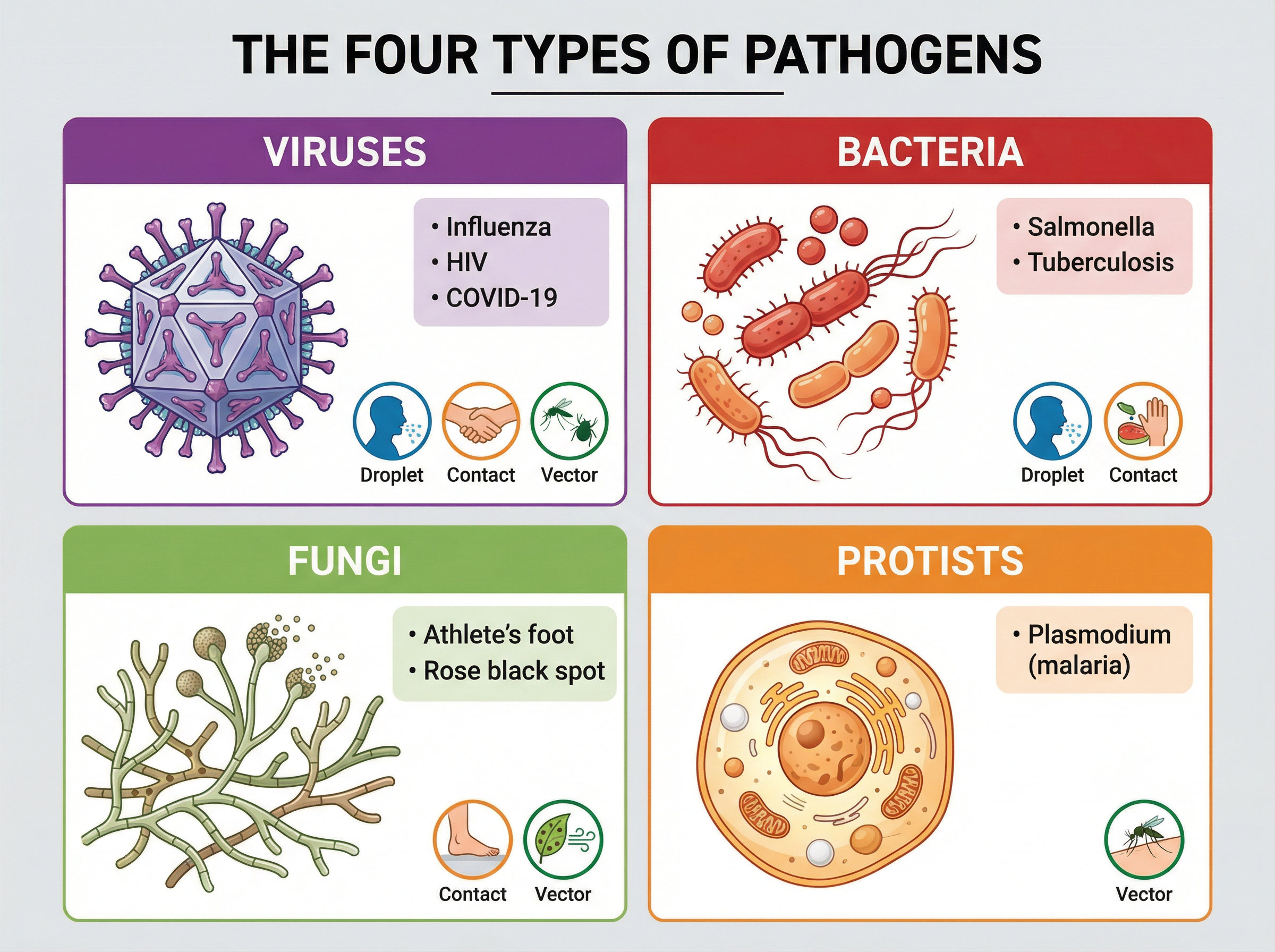
Pathogens are microorganisms that cause infectious diseases. There are four main types: viruses, bacteria, fungi, and protists. Viruses are non-living and replicate inside host cells, causing cell damage. Bacteria are prokaryotes that reproduce rapidly and produce toxins. Fungi can be single-celled or multicellular, often spreading via spores. Protists are diverse eukaryotes, some of which are parasitic. Pathogens spread through various routes, including direct contact, water, air (droplets), and vectors (organisms that carry the pathogen without being infected themselves, like mosquitoes carrying malaria).
Concept 3: Human Defence Systems
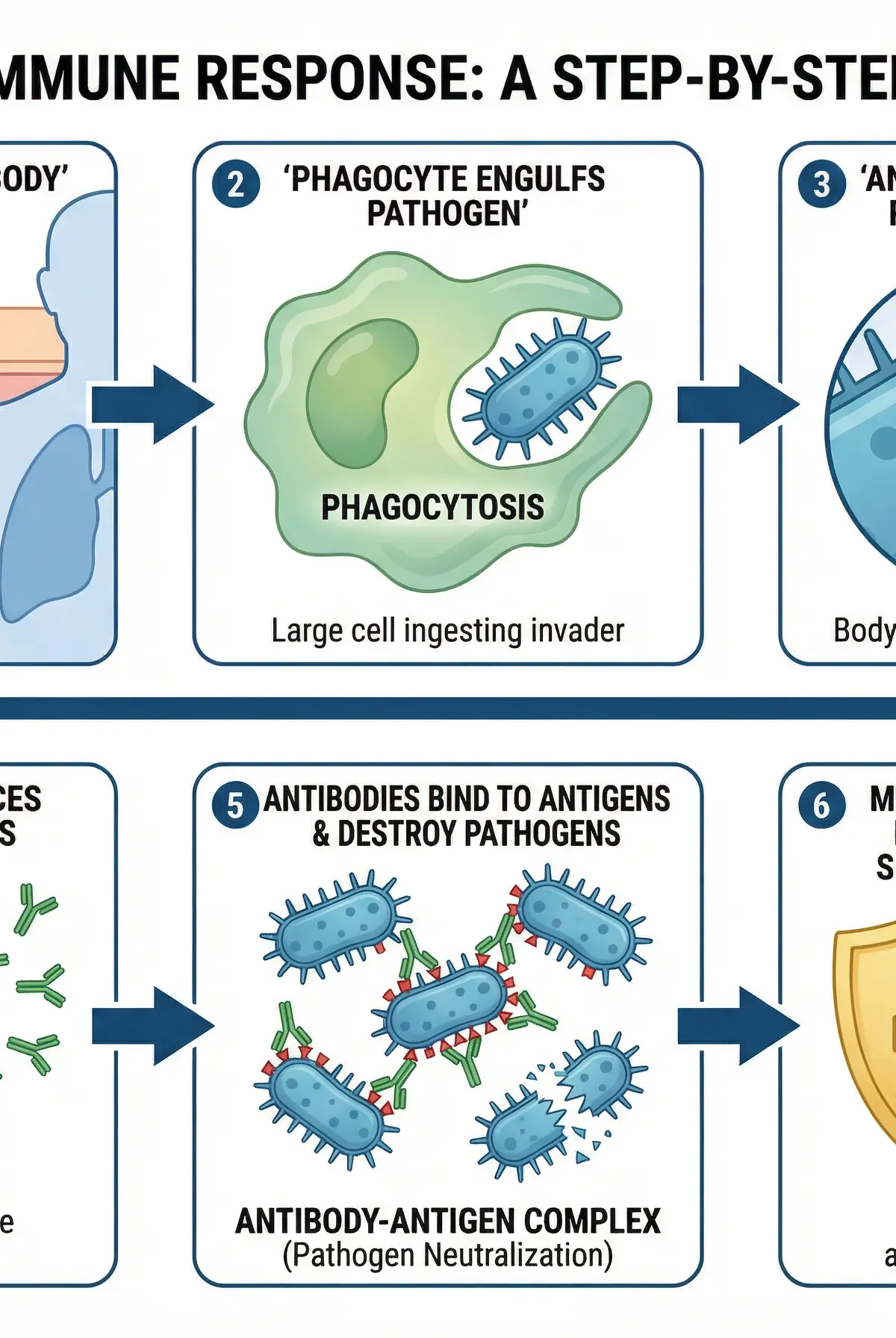
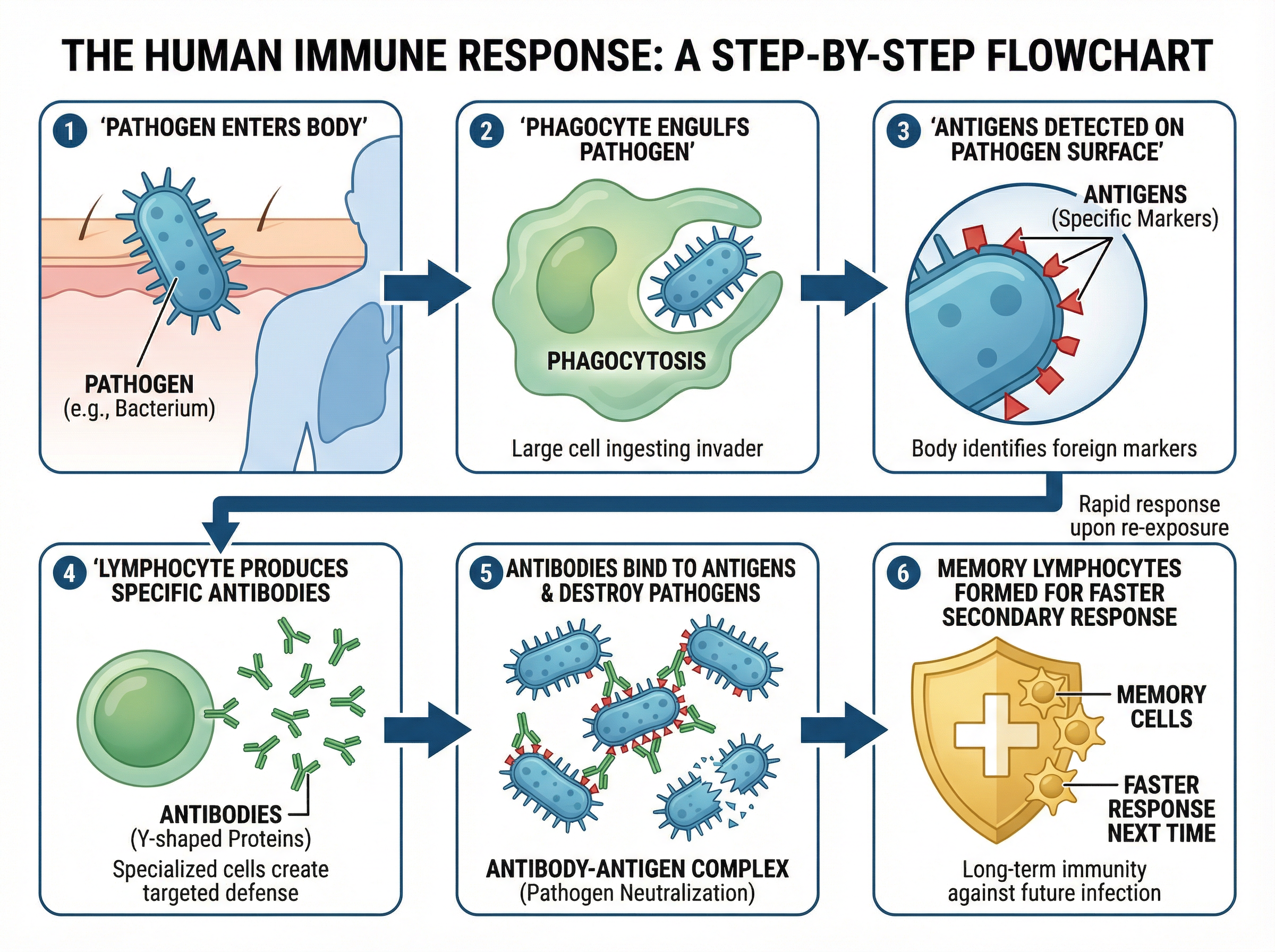
The human body has two main lines of defence. The non-specific defence system includes physical barriers like the skin and mucus, and chemical barriers like stomach acid (hydrochloric acid) and lysozymes in tears. If pathogens breach these barriers, the specific immune system takes over. White blood cells called phagocytes engulf and digest pathogens in a process called phagocytosis. Other white blood cells, lymphocytes, recognise specific proteins on the surface of pathogens called antigens. The lymphocytes produce antibodies that are complementary in shape to the specific antigen, binding to them and neutralising the pathogen.
Concept 4: Vaccination and Medicines
Vaccination involves introducing a dead or inactive form of a pathogen into the body. This stimulates lymphocytes to produce specific antibodies. Crucially, memory lymphocytes remain in the blood after the initial infection. If the same pathogen enters the body again, these memory cells produce antibodies much faster and in greater quantities, preventing illness. This is the secondary immune response.
When treating bacterial infections, antibiotics like penicillin are used. They work by destroying bacterial cells (often by breaking down their cell walls) without harming human cells. However, antibiotics are entirely ineffective against viruses because viruses replicate inside host cells where the antibiotic cannot reach them without damaging the cell itself.
Mathematical/Scientific Relationships
Body Mass Index (BMI)
BMI is used to assess whether a person has a healthy body weight for their height. It is a key indicator for the risk of non-communicable diseases like cardiovascular disease.
Formula: BMI = Mass (kg) / (Height (m))²
This formula must be memorised. Ensure mass is in kilograms and height is in metres before squaring the height.
Cross-Sectional Area of Bacterial Cultures
When investigating the effect of antibiotics or antiseptics on bacterial growth, you may need to calculate the area of the clear zone (zone of inhibition) around a paper disc on an agar plate.
Formula: Area = πr²
This formula must be memorised. Measure the diameter of the clear zone, divide by 2 to find the radius (r), and then use π (pi) to calculate the area.
Practical Applications
Required Practical: Investigating Microbial Cultures
This practical involves investigating the effect of antiseptics or antibiotics on bacterial growth using agar plates.
Key Steps:
- Ensure all equipment (Petri dishes, agar, inoculating loops) is sterilised to prevent contamination.
- Inoculate the agar with the chosen bacteria using an aseptic technique (e.g., passing the loop through a Bunsen burner flame).
- Place paper discs soaked in different antiseptics or antibiotics onto the agar.
- Incubate the plates at 25°C (in schools, to prevent the growth of human pathogens) for 48 hours.
- Measure the diameter of the clear zones around the discs to calculate the area of inhibition.
Examiner Focus: Examiners frequently test your understanding of aseptic techniques. You must be able to explain why each step is taken (e.g., "flaming the loop kills unwanted microorganisms").
Visual Resources
2 diagrams and illustrations
Interactive Diagrams
2 interactive diagrams to visualise key concepts
Conceptual Flow Outline
Flowchart detailing the body's sequential defence mechanisms against pathogens.
Conceptual Flow Outline
The stages of medicine development and testing.
Worked Examples
3 worked examples — open one to explore the question and available guidance.
Practice Questions
Test your understanding — click to reveal model answers
State the four main types of pathogen. (2 marks)
Hint: Think of the microorganisms that cause diseases like the flu, food poisoning, athlete's foot, and malaria.
Describe how the stomach helps to defend the body against pathogens. (2 marks)
Hint: What chemical is found in the stomach?
Explain how a person can become immune to a specific disease after a viral infection. (4 marks)
Hint: Think about the role of white blood cells and what happens after the initial infection is cleared.
Evaluate the use of antibiotics in treating communicable diseases. (6 marks)
Hint: Consider what antibiotics are effective against, what they are not effective against, and the issue of antibiotic resistance.
Describe the stages involved in testing a new drug before it can be licensed for public use. (5 marks)
Hint: Think about the sequence: from the lab to animals, then to humans.