Pearson Edexcel · GCSE · Biology
Topic 4 – Natural selection and genetic modification
Master the mechanisms of evolution and the cutting-edge science of genetic engineering. This topic is heavily tested, particularly on the step-by-step processes of natural selection and the specific enzymes used in genetic modification.
- 5 min read
- 3 worked examples
- 5 practice questions
- 6 key terms
Study Notes
Overview
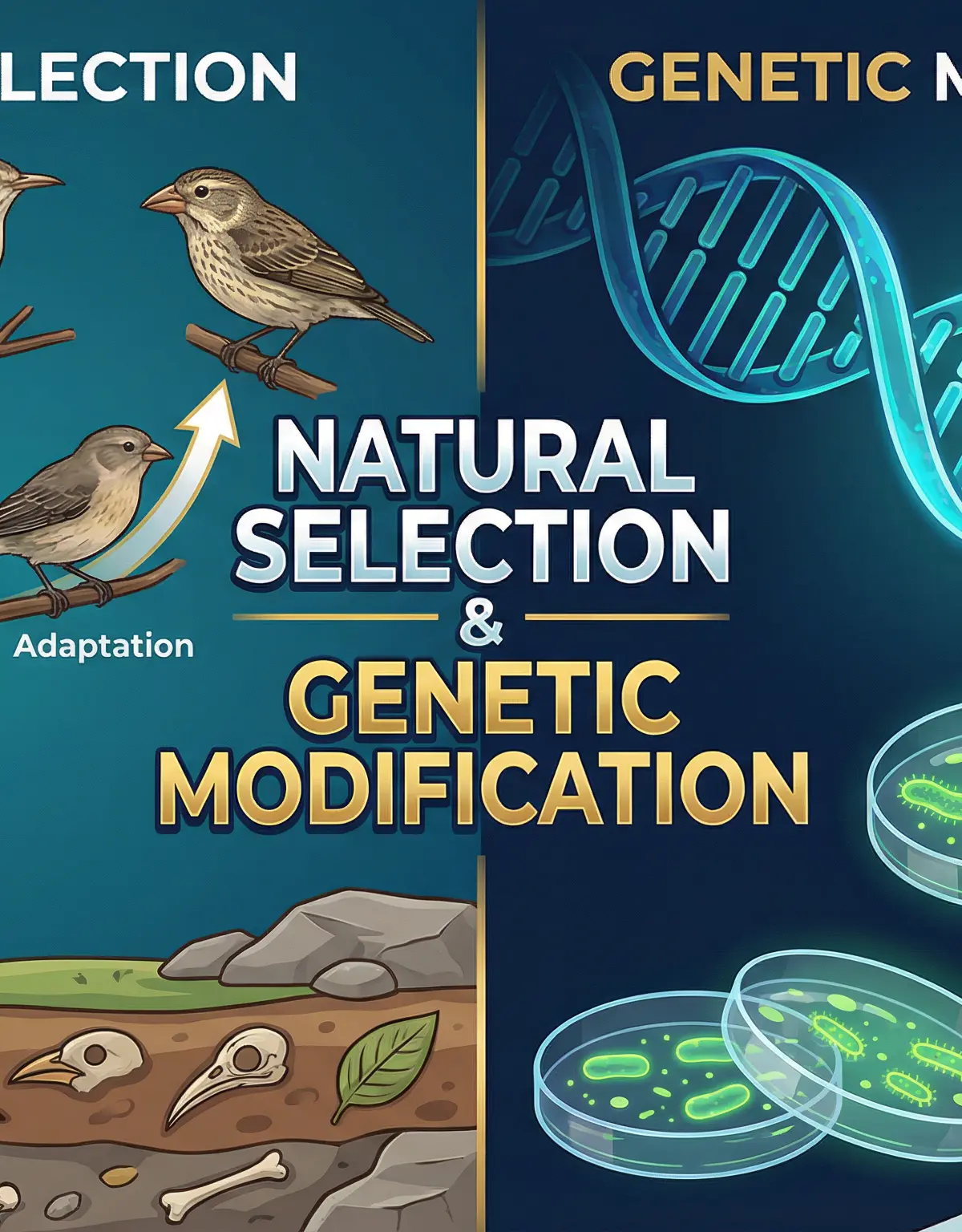
Welcome to Topic 4: Natural Selection and Genetic Modification. This topic bridges the gap between classical evolutionary theory and modern biotechnology. You will explore how Charles Darwin's observations led to the theory of evolution by natural selection, and how this process explains the incredible diversity of life on Earth.
Crucially, you will also delve into how humans have learned to manipulate DNA itself. Genetic modification (or genetic engineering) allows us to transfer genes between entirely different species, leading to breakthroughs like bacteria that produce human insulin. This topic is fundamental to modern biology and frequently appears in extended response (6-mark) questions where you must clearly explain step-by-step processes or evaluate the ethical implications of genetic technologies. It connects heavily with your understanding of DNA structure, inheritance, and cell biology.
Listen to our comprehensive revision podcast to solidify your understanding:
Key Concepts
Concept 1: Evolution by Natural Selection
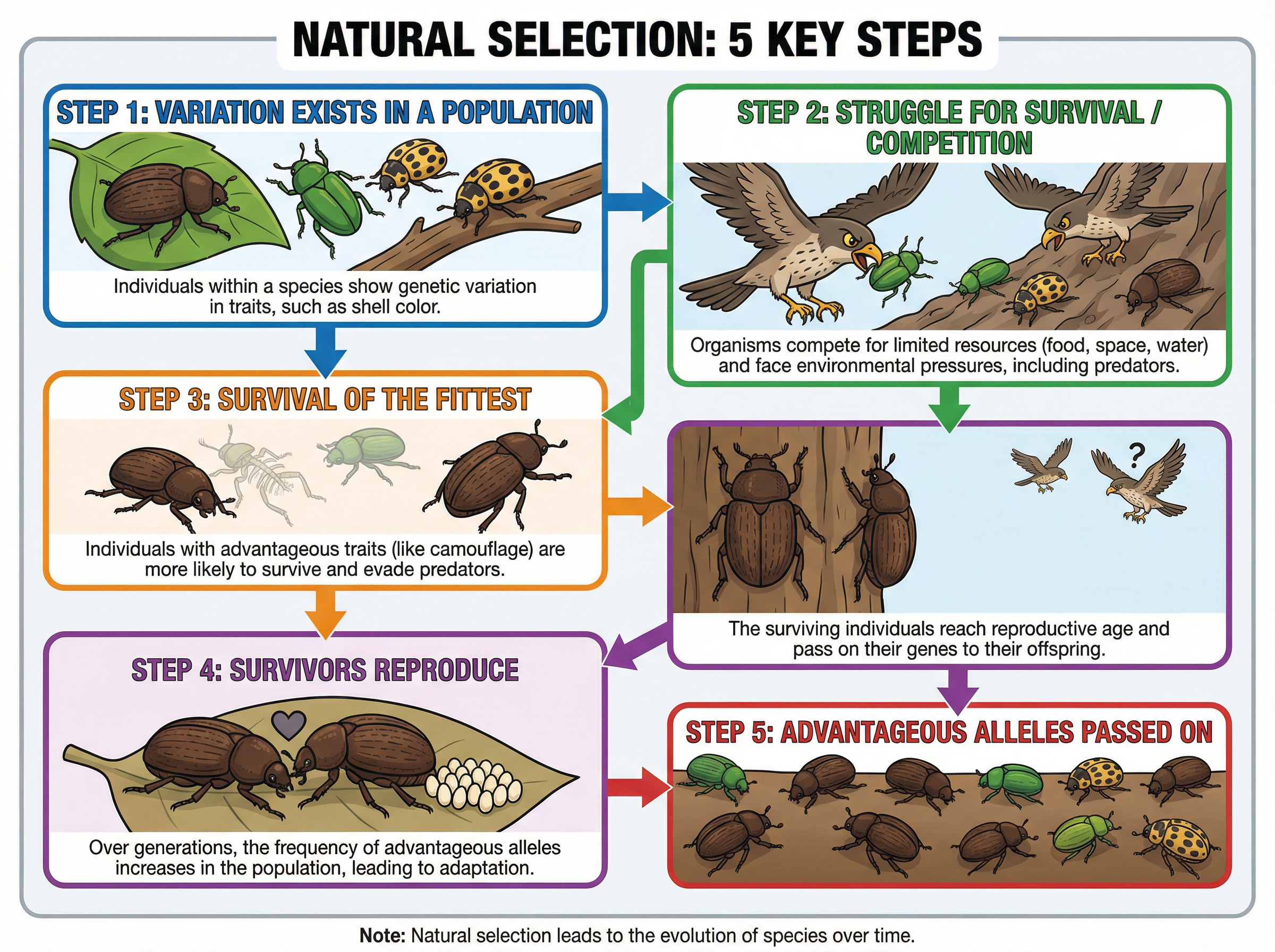
Evolution is the change in the inherited characteristics of a population over time through a process called natural selection. Examiners want to see you apply a specific five-step sequence to any example they give you (like peppered moths or antibiotic-resistant bacteria).
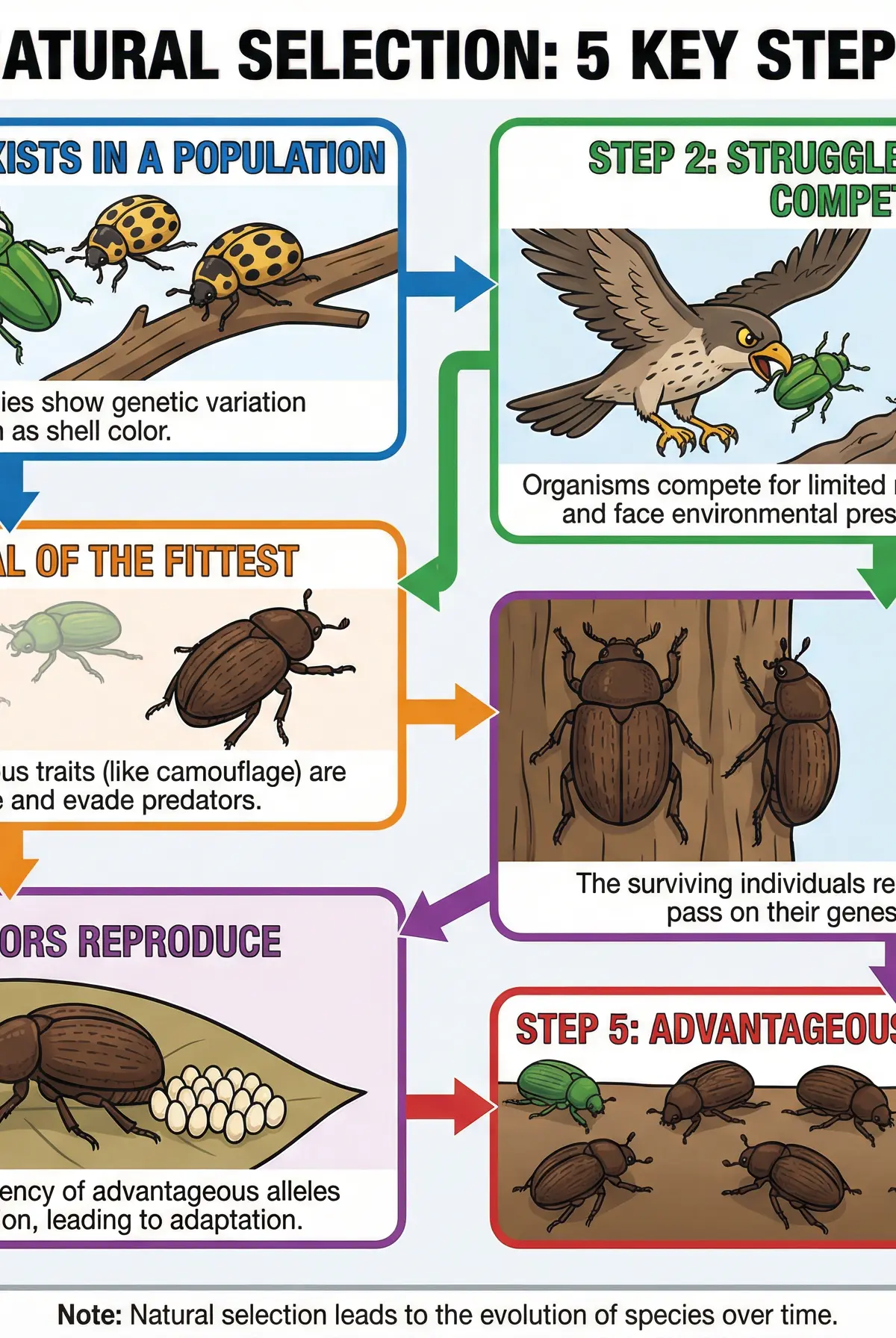
- Variation: Within any population, there is genetic variation due to random mutations.
- Competition: Organisms face a struggle for survival (competing for food, mates, avoiding predators).
- Survival of the fittest: Individuals with advantageous alleles are better adapted to their environment and are more likely to survive.
- Reproduction: These survivors live long enough to reproduce.
- Passing on alleles: They pass their advantageous alleles to their offspring. Over generations, the frequency of these alleles increases.
Example: If asked about antibiotic resistance, explain that a random mutation causes resistance in one bacterium. When the antibiotic is applied (the selection pressure), non-resistant bacteria die, but the resistant one survives, reproduces, and passes on the resistance allele.
Concept 2: Evidence for Evolution
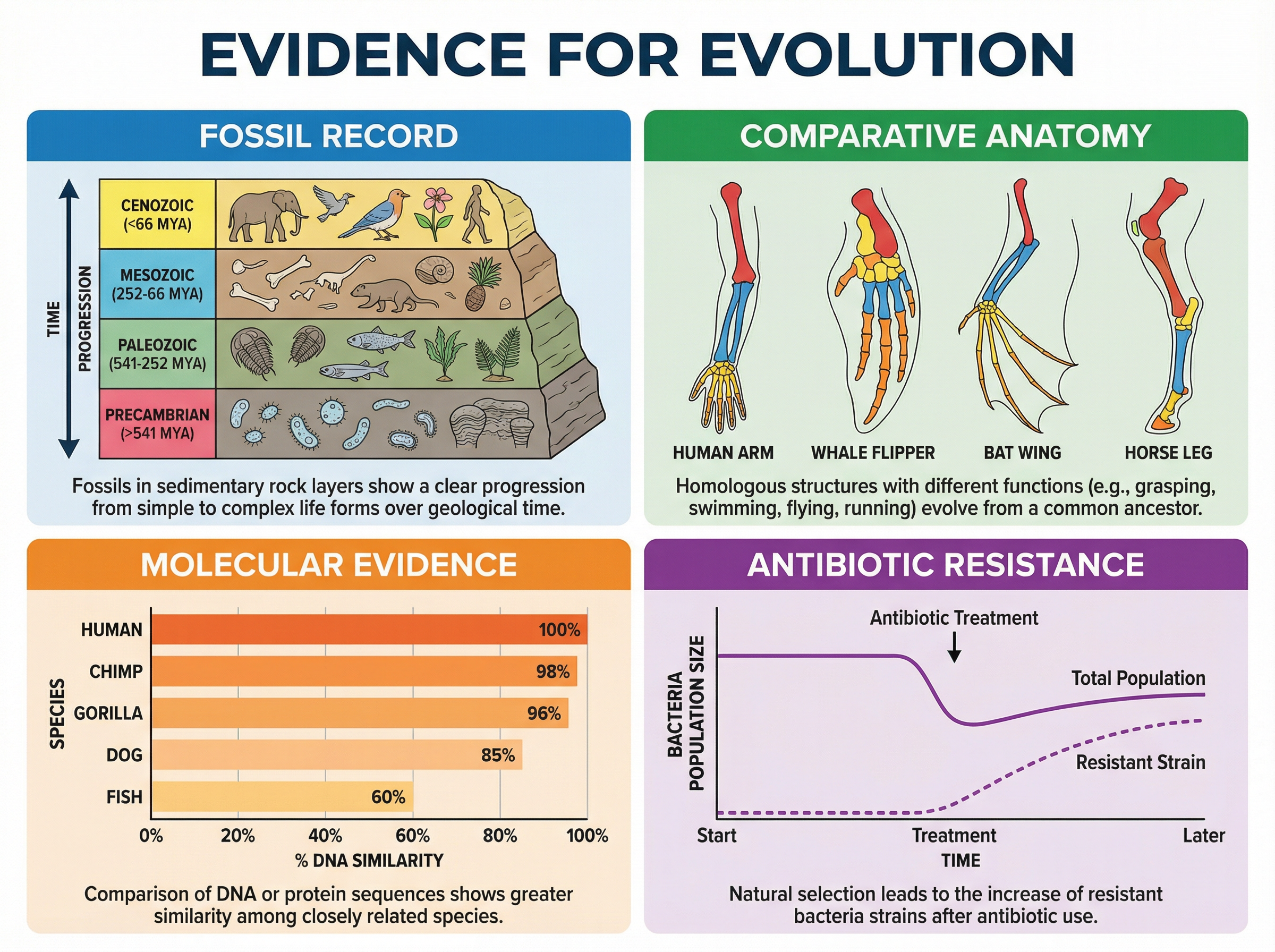
Darwin's theory is supported by several distinct lines of evidence. You must be able to describe these and explain how they support the theory of a common ancestor.
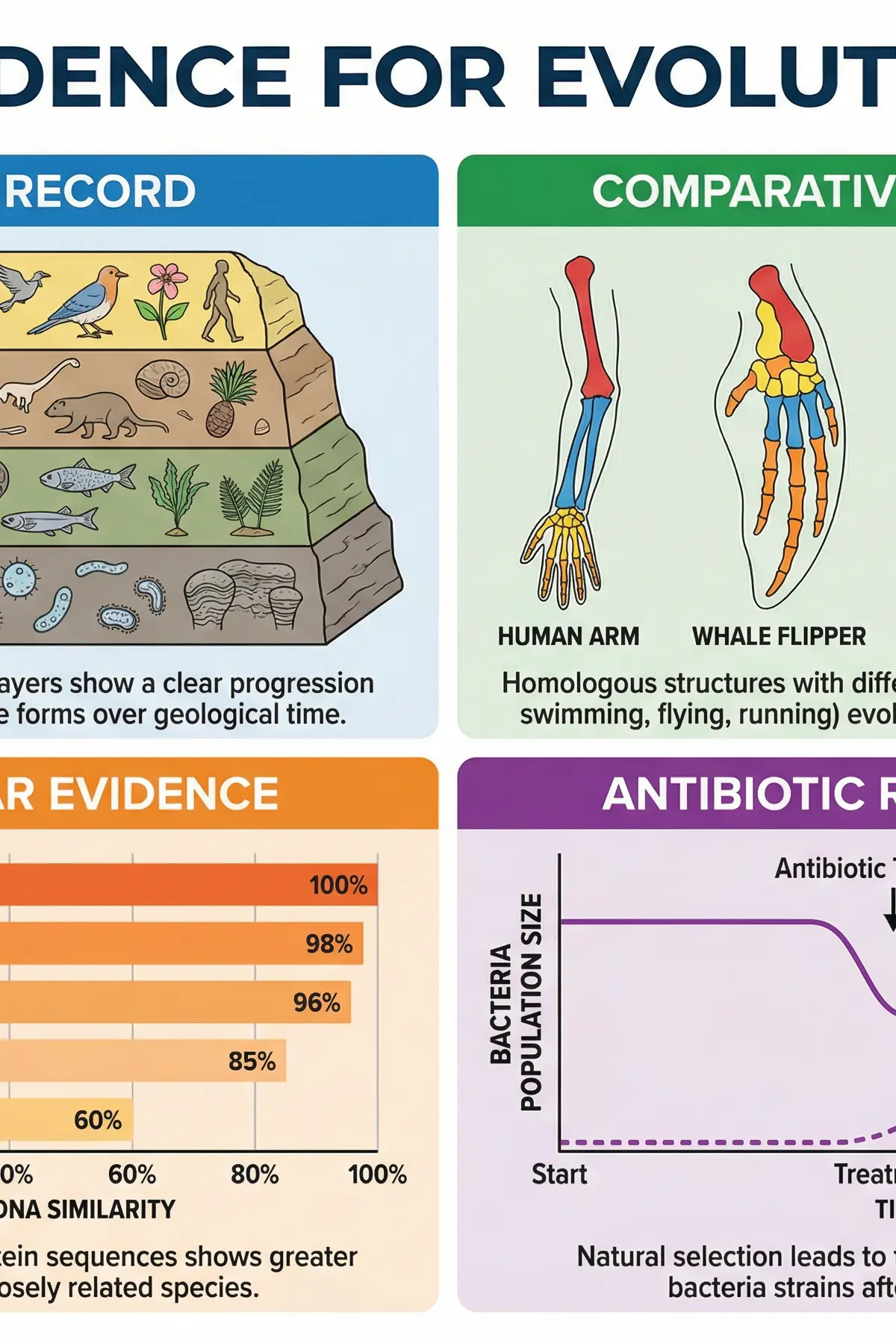
- The Fossil Record: Fossils found in chronological order in rock strata show how species have changed over millions of years. However, the record is incomplete because soft-bodied organisms decay before fossilising.
- Comparative Anatomy: Homologous structures, such as the pentadactyl (five-fingered) limb found in humans, whales, and bats, suggest evolution from a common ancestor, even though the limbs are now adapted for different functions.
- Molecular Evidence: Comparing DNA or amino acid sequences between species reveals evolutionary relationships. The more similar the sequences, the more recently the species shared a common ancestor.
Concept 3: Genetic Modification (Genetic Engineering)
Genetic modification involves transferring a gene from the genome of one organism to the genome of another. This is a highly examinable process that requires precise terminology.
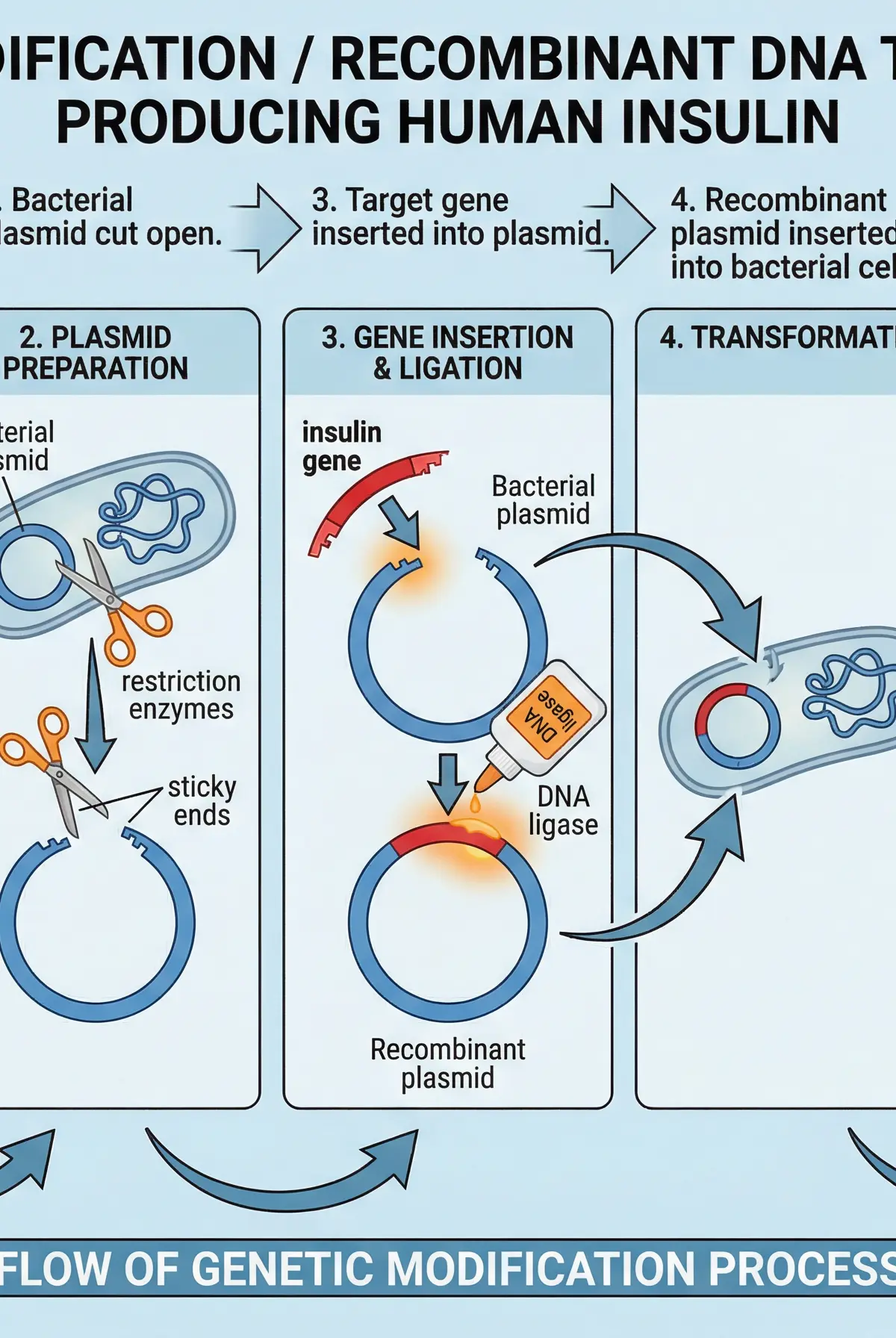
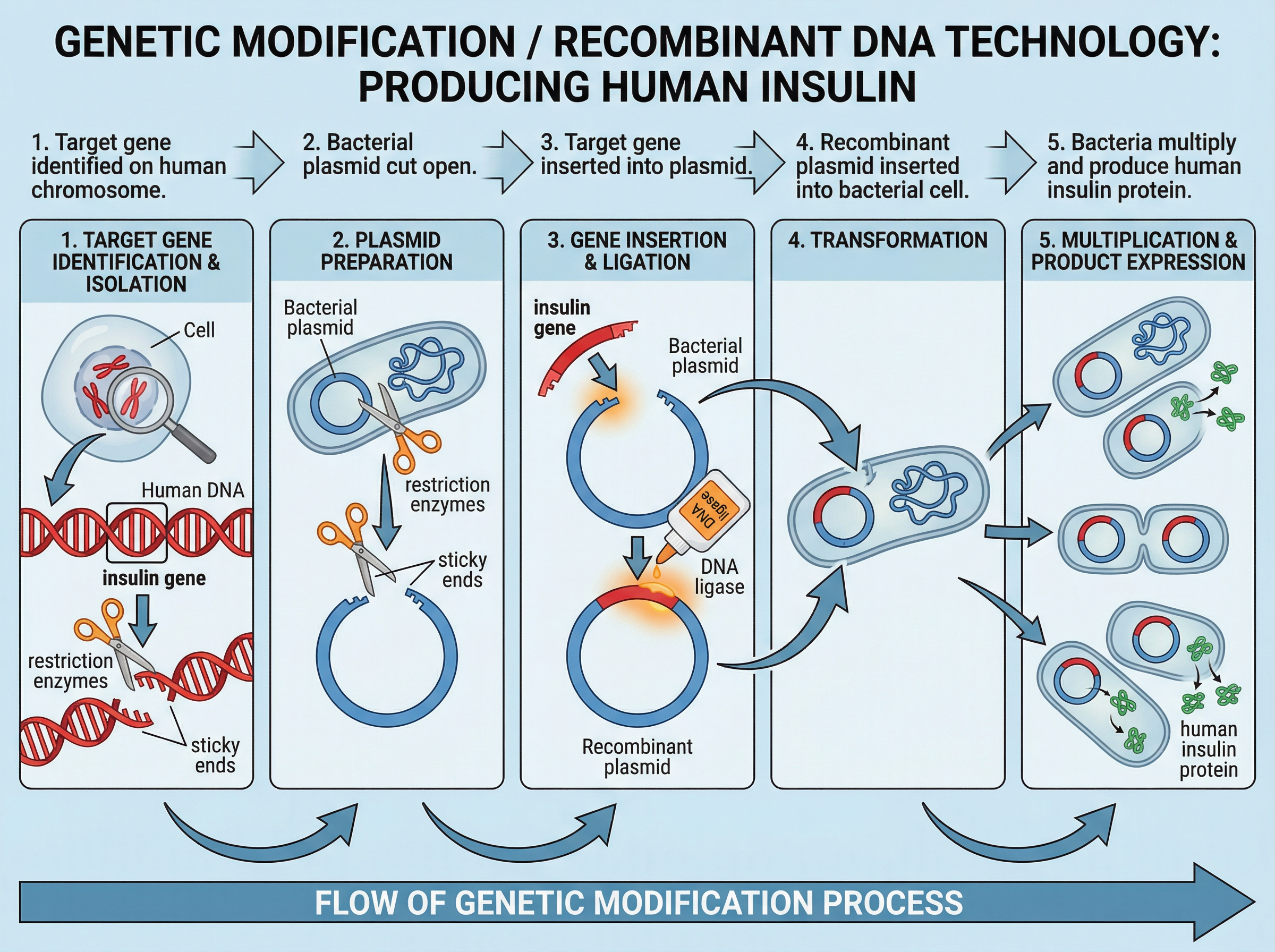
- Isolation: The target gene (e.g., the human insulin gene) is cut out of the DNA using restriction enzymes. These enzymes leave staggered cuts called sticky ends.
- Vector Preparation: A bacterial plasmid (a small circle of DNA) is cut open using the same restriction enzyme, creating complementary sticky ends.
- Ligation: The target gene and the plasmid are mixed. The complementary sticky ends pair up, and an enzyme called DNA ligase joins them together to form a recombinant plasmid.
- Transformation: The recombinant plasmid is inserted back into a bacterial cell.
- Expression: The transgenic bacteria multiply in a fermenter and produce the human protein (e.g., insulin), which can be harvested and purified.
Mathematical/Scientific Relationships
While this topic is less math-heavy than others, you may be asked to calculate the percentage increase or decrease in a population (e.g., resistant bacteria) or calculate the rate of evolution based on fossil dating.
- Percentage Change = ((New Value - Old Value) / Old Value) × 100
- Rate = Change in quantity / Time taken
Practical Applications
- Medicine: Producing human insulin for diabetics using GM bacteria; producing human growth hormone; developing vaccines.
- Agriculture: Developing GM crops like Golden Rice (enriched with Vitamin A precursor), crops resistant to herbicides (so farmers can spray fields to kill weeds without killing the crop), or crops resistant to insect pests (like Bt cotton).
- Ethics: You must be prepared to evaluate GM. Advantages include increased food yield and medical breakthroughs. Disadvantages include potential unknown health effects, the risk of cross-pollination with wild weeds (creating 'superweeds'), and reduced biodiversity.
Visual Resources
3 diagrams and illustrations
Interactive Diagrams
2 interactive diagrams to visualise key concepts
Conceptual Flow Outline
Flowchart of Natural Selection
Conceptual Flow Outline
Process of Genetic Modification
Worked Examples
3 worked examples — open one to explore the question and available guidance.
Practice Questions
Test your understanding — click to reveal model answers
State the name of the enzyme used to cut DNA in genetic engineering. (1 mark)
Hint: Think of the molecular 'scissors'.
Explain why the fossil record provides incomplete evidence for evolution. (2 marks)
Hint: Think about what parts of an animal fossilise easily, and what happens to the rest.
A species of plant has developed resistance to a fungal disease. Explain how this resistance evolved. (4 marks)
Hint: Apply the 5 steps of natural selection to this specific plant and disease.
Explain why the same restriction enzyme must be used to cut both the human DNA and the bacterial plasmid during genetic modification. (2 marks)
Hint: What needs to match up perfectly for the two pieces of DNA to join?
Some people object to the genetic modification of crop plants. Evaluate the use of genetically modified crops. (6 marks)
Hint: Provide at least two pros, two cons, and a justified conclusion.