Pearson Edexcel · GCSE · Biology
Topic 5 – Health, disease and the development of medicines
Master the body's incredible defence systems and the science behind modern medicines. This topic is heavily examined every year, rewarding students who can precisely explain immune responses and evaluate medical trials.
- 7 min read
- 3 worked examples
- 5 practice questions
- 6 key terms
Study Notes
Overview
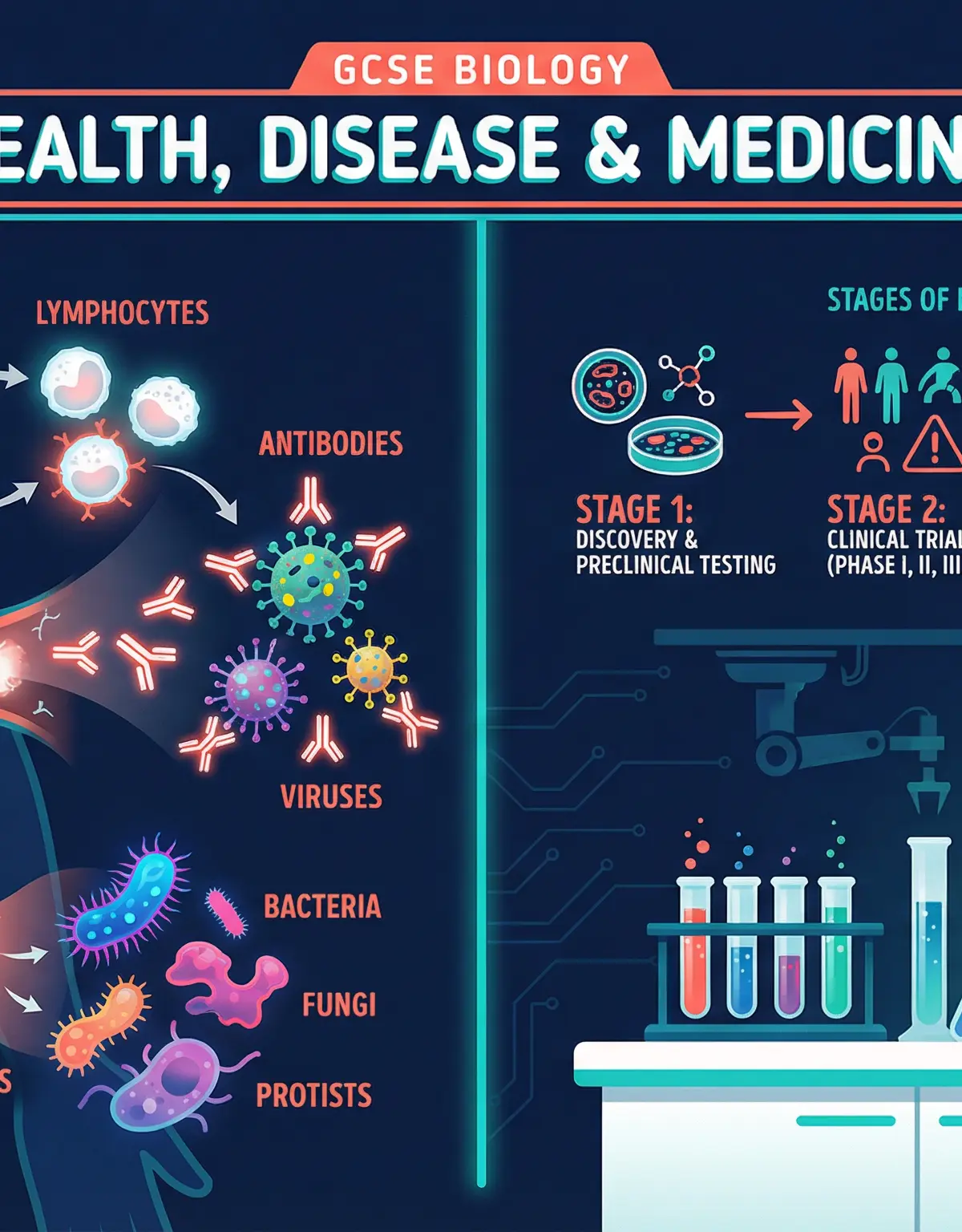
Topic 5: Health, Disease and the Development of Medicines is a cornerstone of GCSE Biology. It bridges the microscopic world of pathogens with the macroscopic impacts on human populations. You will explore how microscopic invaders cause illness, the remarkable two-tier defence system your body deploys against them, and how scientists develop medicines to assist this fight. This topic is crucial because it connects heavily with cell biology (Topic 1) and often features in extended 6-mark questions evaluating medical treatments or explaining immune responses. Examiners are looking for precise terminology—using 'antigen' and 'antibody' correctly is often the difference between a grade 6 and a grade 8.
Listen to the topic podcast here for a comprehensive audio review:
Key Concepts
Concept 1: Defining Health and Disease
Health is not merely the absence of illness. The World Health Organisation defines health as a state of complete physical, mental, and social well-being. This three-part definition is a frequent 1-mark or 2-mark question. Diseases are categorised into two main types: communicable and non-communicable. Communicable diseases can be transferred between individuals (e.g., influenza, malaria) and are caused by pathogens. Non-communicable diseases cannot be transferred (e.g., cardiovascular disease, type 2 diabetes) and are often linked to genetics and lifestyle factors. Understanding this distinction is fundamental, as the methods for preventing and treating them are entirely different.
Example: A candidate might be asked to classify a list of diseases. Tuberculosis is communicable (caused by bacteria), whereas coronary heart disease is non-communicable (linked to diet and exercise).
Concept 2: Pathogens and Infection
Pathogens are disease-causing microorganisms. There are four main types you must know: viruses, bacteria, fungi, and protists.
- Viruses are non-living; they invade host cells, replicate using the cell's machinery, and cause the cell to burst.
- Bacteria are prokaryotic cells that reproduce rapidly and produce toxins that damage tissues.
- Fungi can be single-celled or multicellular, often causing superficial infections like athlete's foot.
- Protists are eukaryotic and often require a vector, such as the mosquito for malaria.
Pathogens spread via direct contact, water, air, or vectors. Preventing spread involves targeting these transmission routes—for instance, using mosquito nets to block vectors or practicing good hygiene to prevent direct contact transmission.
Concept 3: The Human Immune Response
Your body has a sophisticated defence system. The non-specific defences act as a physical and chemical barrier against all pathogens: the skin, stomach acid (hydrochloric acid), and mucus/cilia in the respiratory tract.
If pathogens breach these barriers, the specific immune response is triggered.
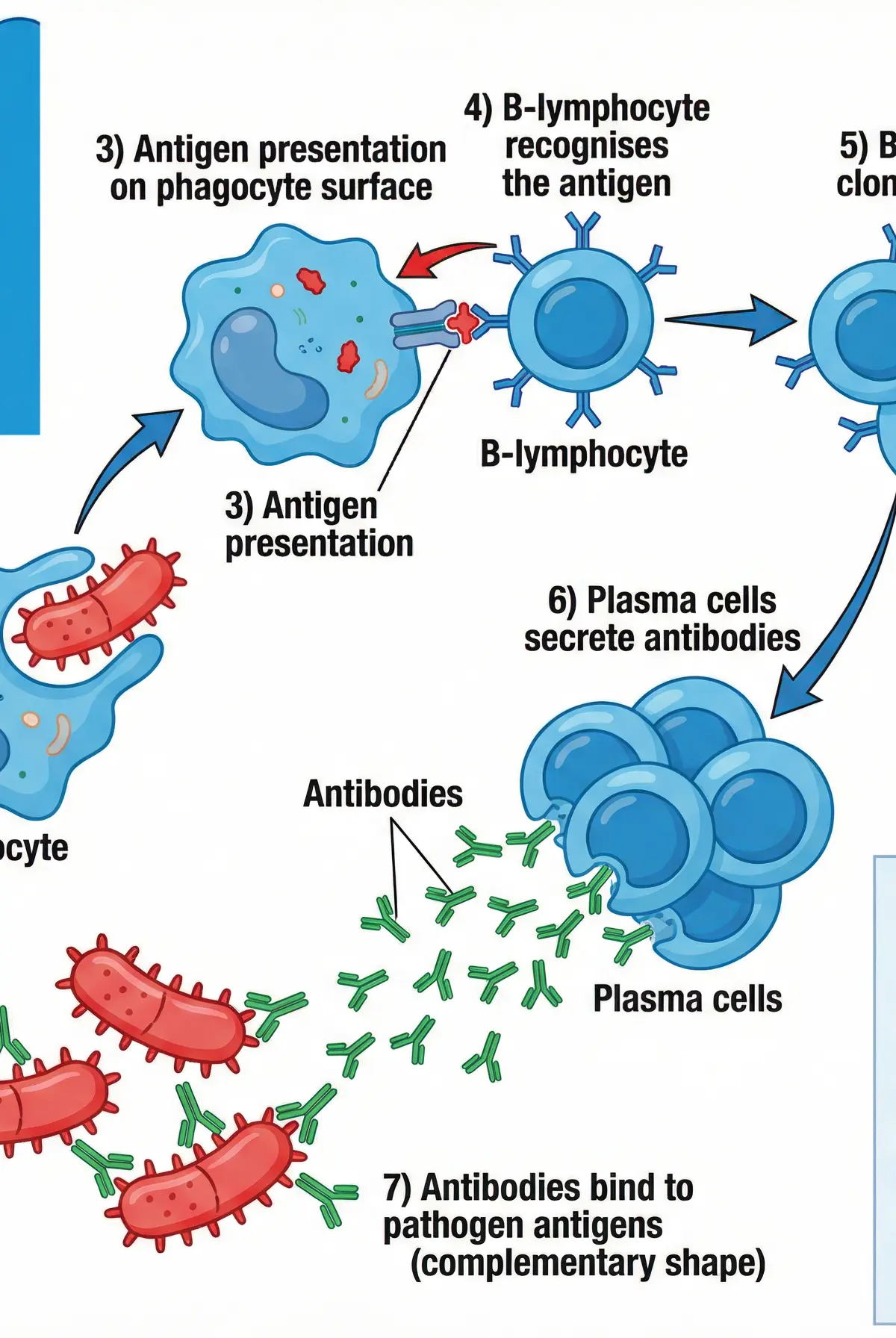
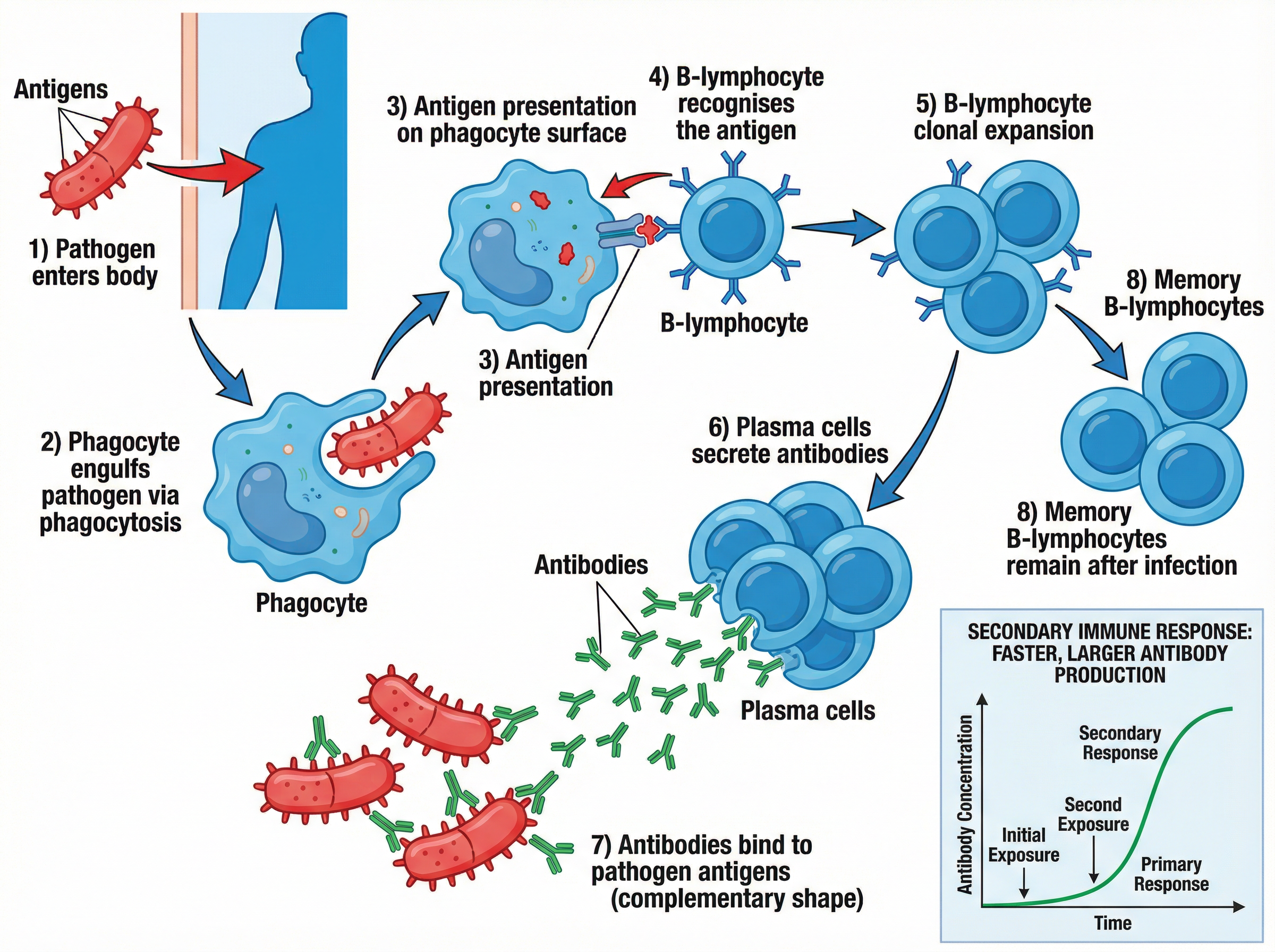
Pathogens have unique proteins on their surface called antigens. White blood cells called phagocytes engulf and digest pathogens in a process called phagocytosis. Other white blood cells called lymphocytes recognise the foreign antigens and produce antibodies. Antibodies are Y-shaped proteins with a complementary shape to the specific antigen. They bind to the pathogens, clumping them together and marking them for destruction. Crucially, after the infection is cleared, some lymphocytes remain as memory cells. If the same pathogen enters again, these memory cells produce antibodies much faster and in greater quantities, preventing you from falling ill. This secondary immune response is the biological basis for vaccination.
Concept 4: Medicine Development and Antibiotics
When our immune system needs help, we turn to medicines. Antibiotics (like penicillin) are used to treat bacterial infections. They work by inhibiting bacterial cell wall synthesis or other vital processes. Crucially, antibiotics do not kill viruses, because viruses reproduce inside host cells where antibiotics cannot reach them without damaging the host.
Developing new medicines is a long, rigorous process to ensure they are safe and effective.
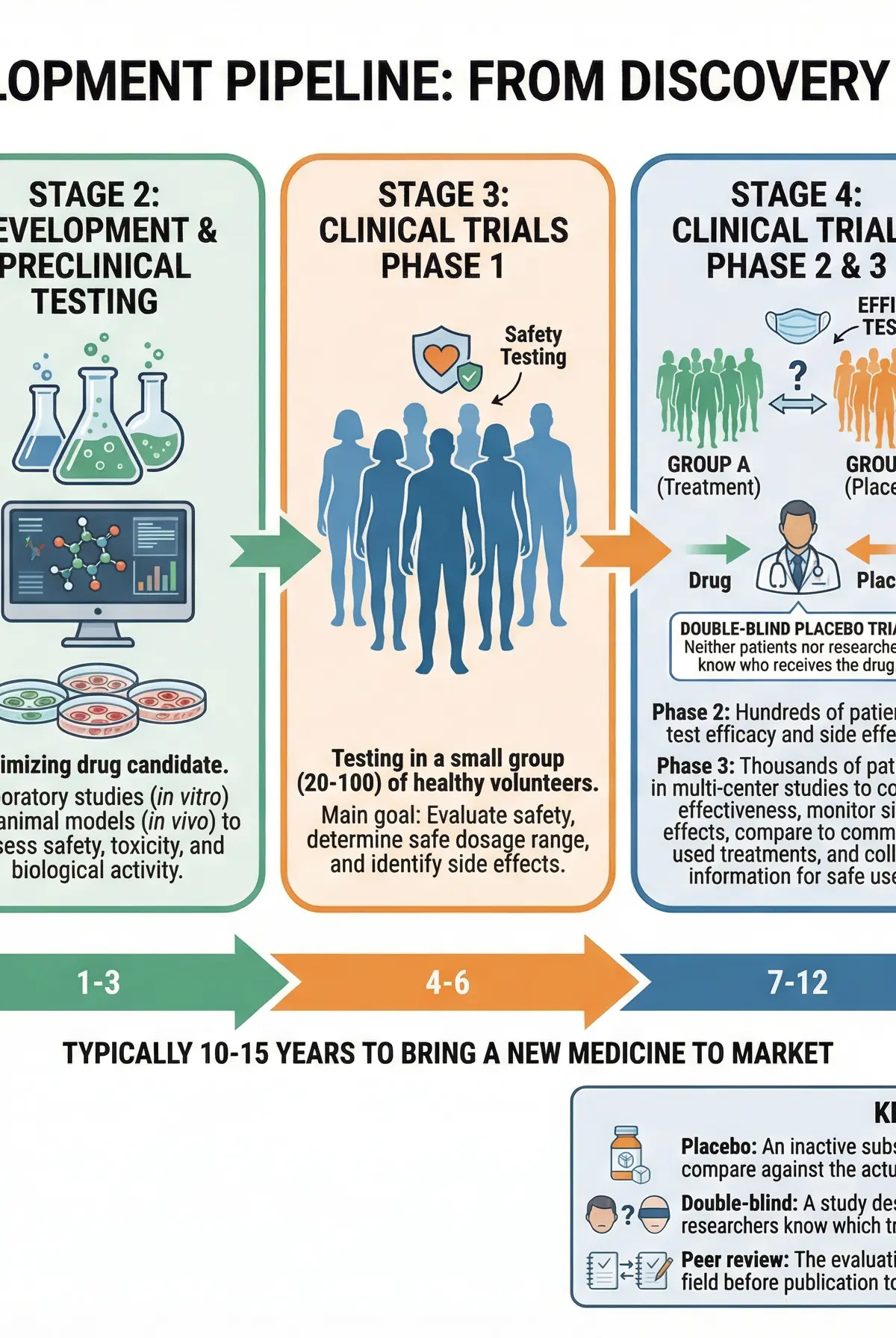
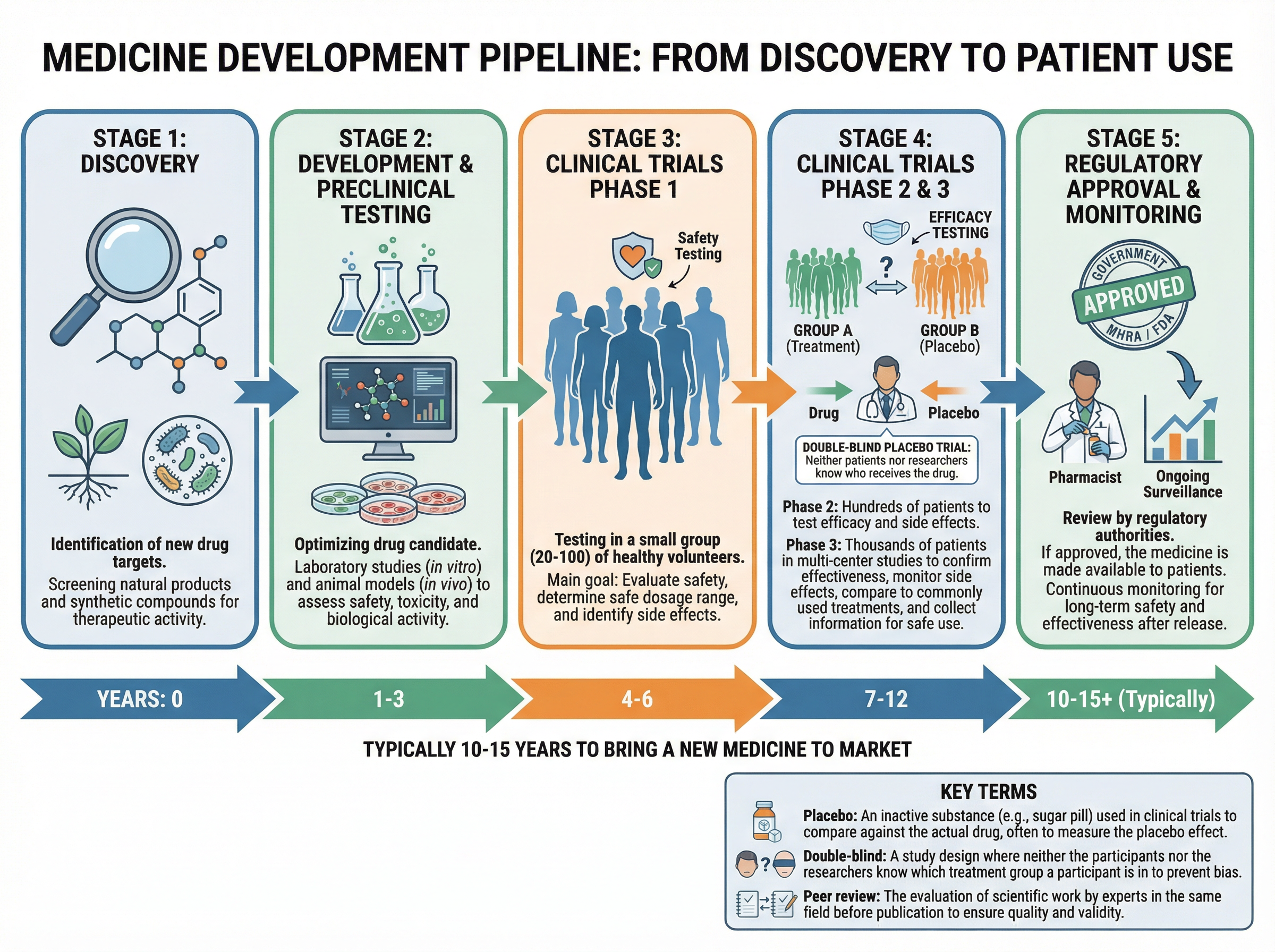
The process begins with preclinical testing in laboratories using cells, tissues, and live animals to determine toxicity and efficacy. This is followed by clinical trials involving human volunteers. Phase 1 uses healthy volunteers to check for safety and side effects at low doses. Phases 2 and 3 use patients with the disease to find the optimum dose and test efficacy. The gold standard is a double-blind trial, where some patients receive a placebo (an inactive substance). Neither the patients nor the doctors know who receives the real drug, which eliminates bias and controls for the placebo effect.
Concept 5: Non-Communicable Diseases and Lifestyle
Non-communicable diseases are heavily influenced by lifestyle risk factors. A risk factor increases the probability of developing a disease. For example, smoking is a major risk factor for cardiovascular disease and lung cancer due to carcinogens and carbon monoxide in tobacco smoke. Diet and exercise affect obesity, which is a major risk factor for type 2 diabetes.
Mathematical/Scientific Relationships
**Body Mass Index (BMI)**BMI is used to classify a person's weight relative to their height.
Formula: \text{BMI} = \frac{\text{mass (kg)}}{(\text{height (m)})^2}
Must memorise. Ensure height is in metres, not centimetres.
Waist-to-Hip RatioThis assesses abdominal obesity, which is closely linked to cardiovascular disease.
Formula: \text{Ratio} = \frac{\text{waist circumference}}{\text{hip circumference}}
Must memorise. Both measurements must be in the same units.
Cross-sectional Area of Bacterial CulturesWhen evaluating the effectiveness of antibiotics on agar plates, you measure the zone of inhibition (the clear area where bacteria haven't grown).
Formula: \text{Area} = \pi r^2
Must memorise. Measure the diameter, halve it to get the radius (r), and calculate the area.
Practical Applications
Required Practical: Investigating the effect of antiseptics/antibiotics on bacterial growth
- Method: You will use aseptic technique to inoculate an agar plate with bacteria. You then place paper discs soaked in different antibiotics or antiseptics onto the agar. After incubation at 25^\circ\text{C} (to prevent the growth of harmful human pathogens), you measure the clear 'zones of inhibition' around each disc.
- Key skill: Aseptic technique is crucial. You must pass the inoculating loop through a Bunsen flame to sterilise it, work near the flame to create an updraft that moves microbes away, and tape the petri dish lid loosely to allow oxygen in (preventing the growth of dangerous anaerobic bacteria).
- Examiner Focus: Expect questions asking you to calculate the area of the zone of inhibition or to explain why specific aseptic steps were taken.
Visual Resources
2 diagrams and illustrations
Interactive Diagrams
2 interactive diagrams to visualise key concepts
Conceptual Flow Outline
Flowchart showing the sequence of the human immune response.
Conceptual Flow Outline
The pipeline of new medicine development.
Worked Examples
3 worked examples — open one to explore the question and available guidance.
Practice Questions
Test your understanding — click to reveal model answers
State the difference between a communicable and a non-communicable disease. Give one example of each.
Hint: Think about whether the disease can be 'caught' from someone else.
Explain why antibiotics cannot be used to treat viruses.
Hint: Where do viruses live and reproduce?
A student is investigating the effect of different antiseptics on bacterial growth. Explain why the student must pass the inoculating loop through a Bunsen burner flame before using it.
Hint: What is the scientific term for ensuring no unwanted microorganisms are present?
Describe how monoclonal antibodies are produced.
Hint: Think about the two types of cells that must be fused together.
Evaluate the use of double-blind trials in testing new medicines.
Hint: What does double-blind mean, and what human psychological factors does it prevent?