Pearson Edexcel · GCSE · Biology
Topic 7 – Animal coordination, control and homeostasis
Master the incredible systems that keep your body alive and functioning. This topic covers the nervous and endocrine systems, and how homeostasis maintains your internal environment—essential knowledge that guarantees marks in every GCSE Biology paper.
- 6 min read
- 3 worked examples
- 5 practice questions
- 6 key terms
Study Notes
Overview
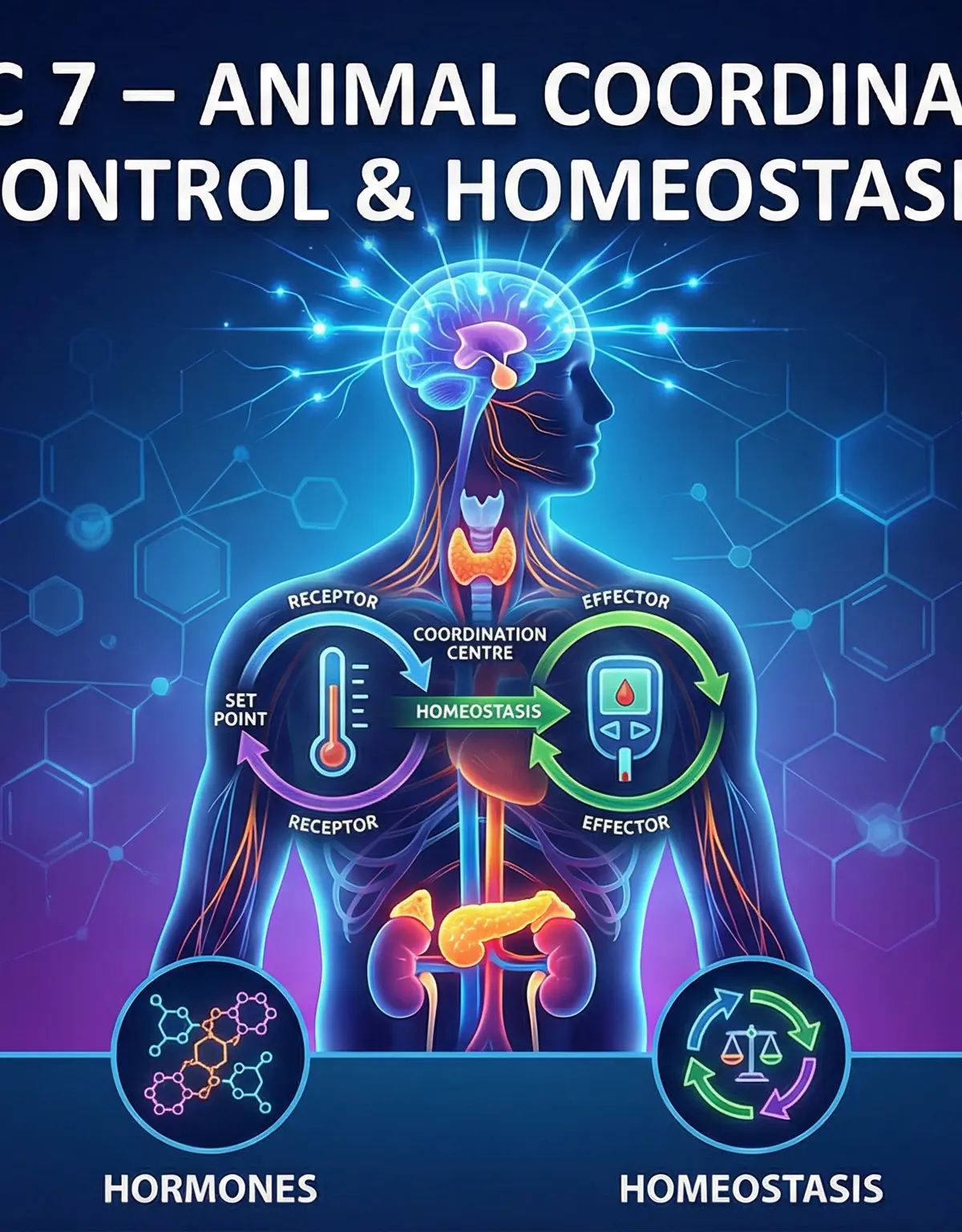
Welcome to Topic 7: Animal Coordination, Control and Homeostasis. This topic is fundamentally about how your body detects changes in the environment and responds to them to keep you alive. It is a cornerstone of Biology because it explains the delicate balance required for survival.
Examiners love this topic because it links directly to practical applications, such as treating diabetes, and requires you to understand both rapid, short-term responses (the nervous system) and slower, long-term regulation (the endocrine system). You will frequently encounter 6-mark extended response questions asking you to describe negative feedback loops or compare the two coordination systems.
Key Concepts
Concept 1: The Nervous System
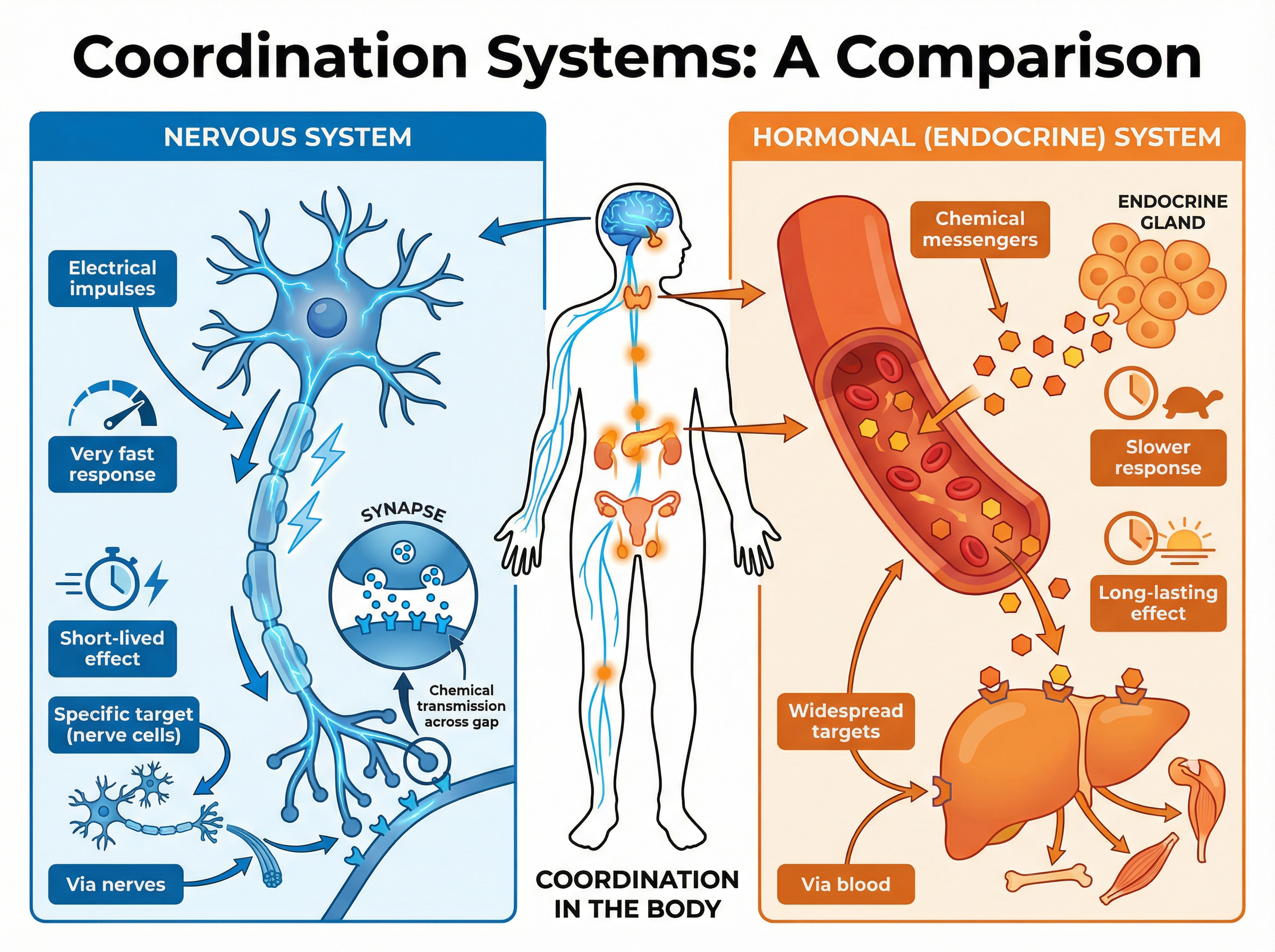
The nervous system enables humans to react to their surroundings and coordinate their behaviour. Information from receptors passes along cells (neurones) as electrical impulses to the central nervous system (CNS), which comprises the brain and spinal cord. The CNS coordinates the response of effectors, which may be muscles contracting or glands secreting hormones.
Example: If you touch a hot stove, temperature receptors in your skin detect the heat. An electrical impulse travels along a sensory neurone to the CNS, crosses a synapse to a relay neurone, and then travels along a motor neurone to the muscles in your arm (the effector), causing them to contract and pull your hand away. This is a reflex arc.
Concept 2: Synapses
Neurones never actually touch each other. The junction between two neurones is called a synapse. When an electrical impulse reaches the end of a neurone, it causes the release of chemicals called neurotransmitters. These chemicals diffuse across the gap and bind to receptor molecules on the next neurone, triggering a new electrical impulse. Examiners often ask why reflex actions are fast—it's because they bypass the conscious parts of the brain, reducing the number of synapses involved.
Concept 3: The Endocrine System
The endocrine system is composed of glands which secrete chemicals called hormones directly into the bloodstream. The blood carries the hormone to a target organ where it produces an effect. Compared to the nervous system, the effects are slower but act for longer.
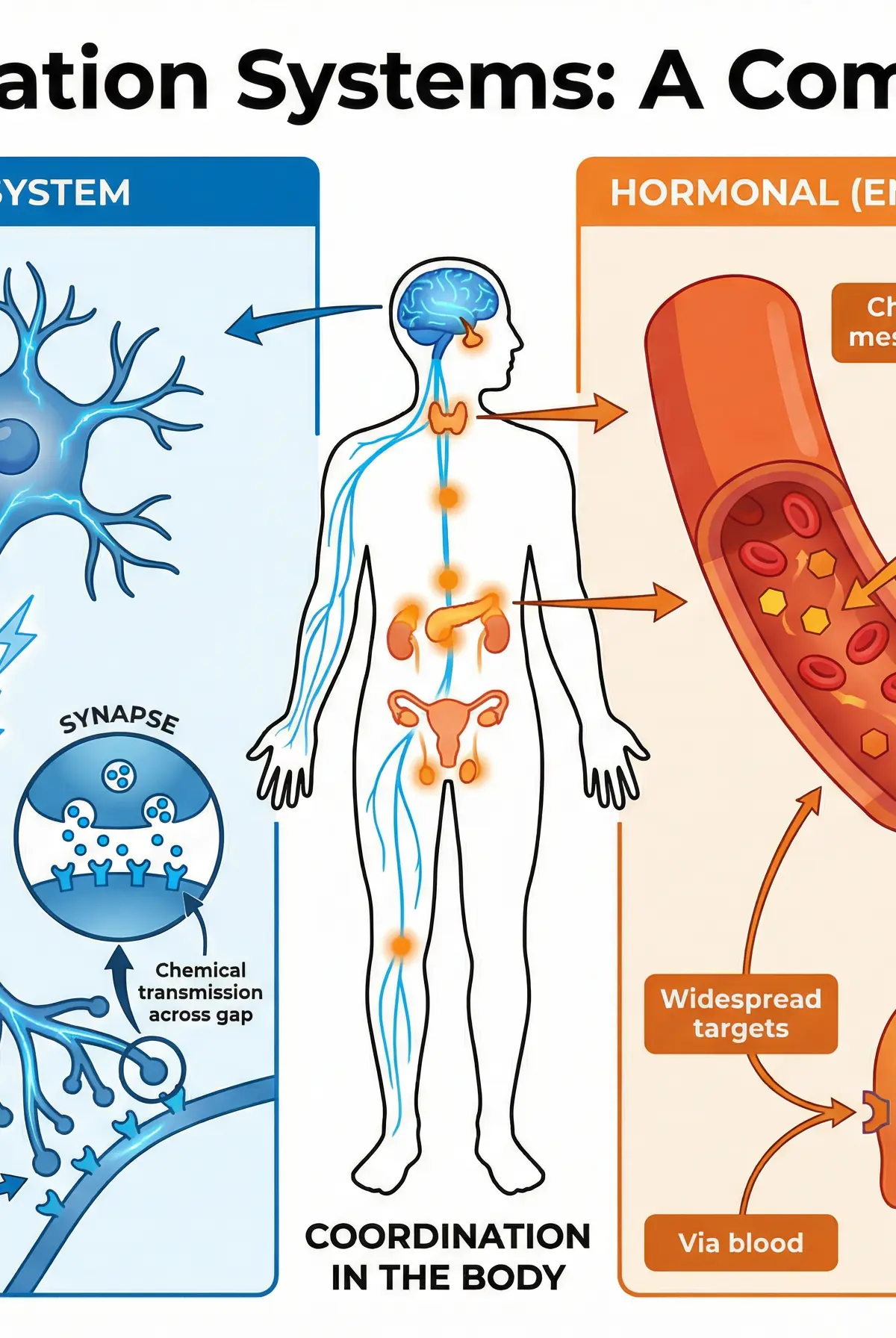
The 'master gland' is the pituitary gland in the brain, which secretes several hormones into the blood in response to body conditions. These hormones in turn act on other glands to stimulate other hormones to be released to bring about effects.
Concept 4: Homeostasis and Negative Feedback
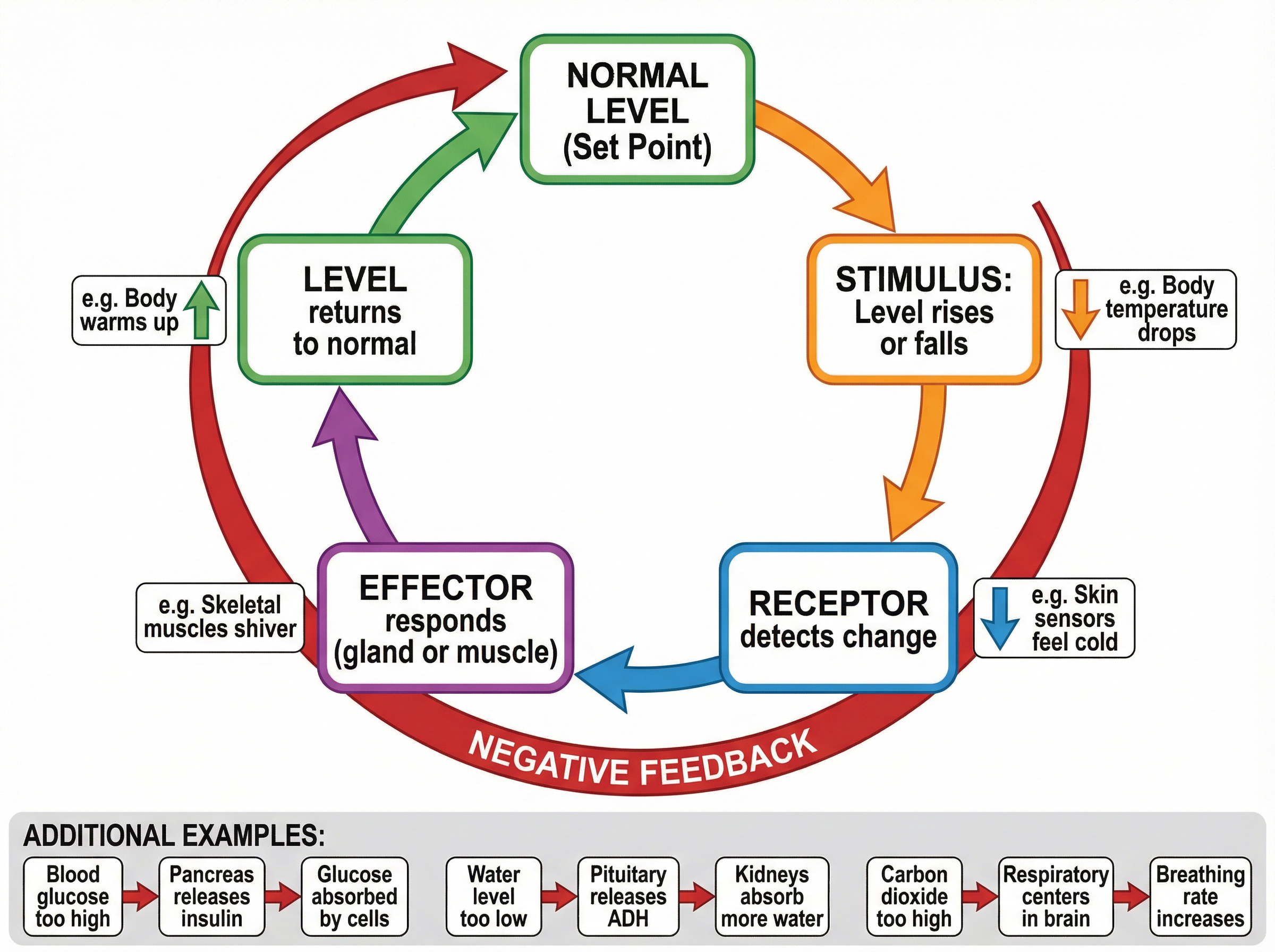
Homeostasis is the regulation of the internal conditions of a cell or organism to maintain optimum conditions for function in response to internal and external changes. This is crucial for maintaining optimal conditions for enzyme action and all cell functions.
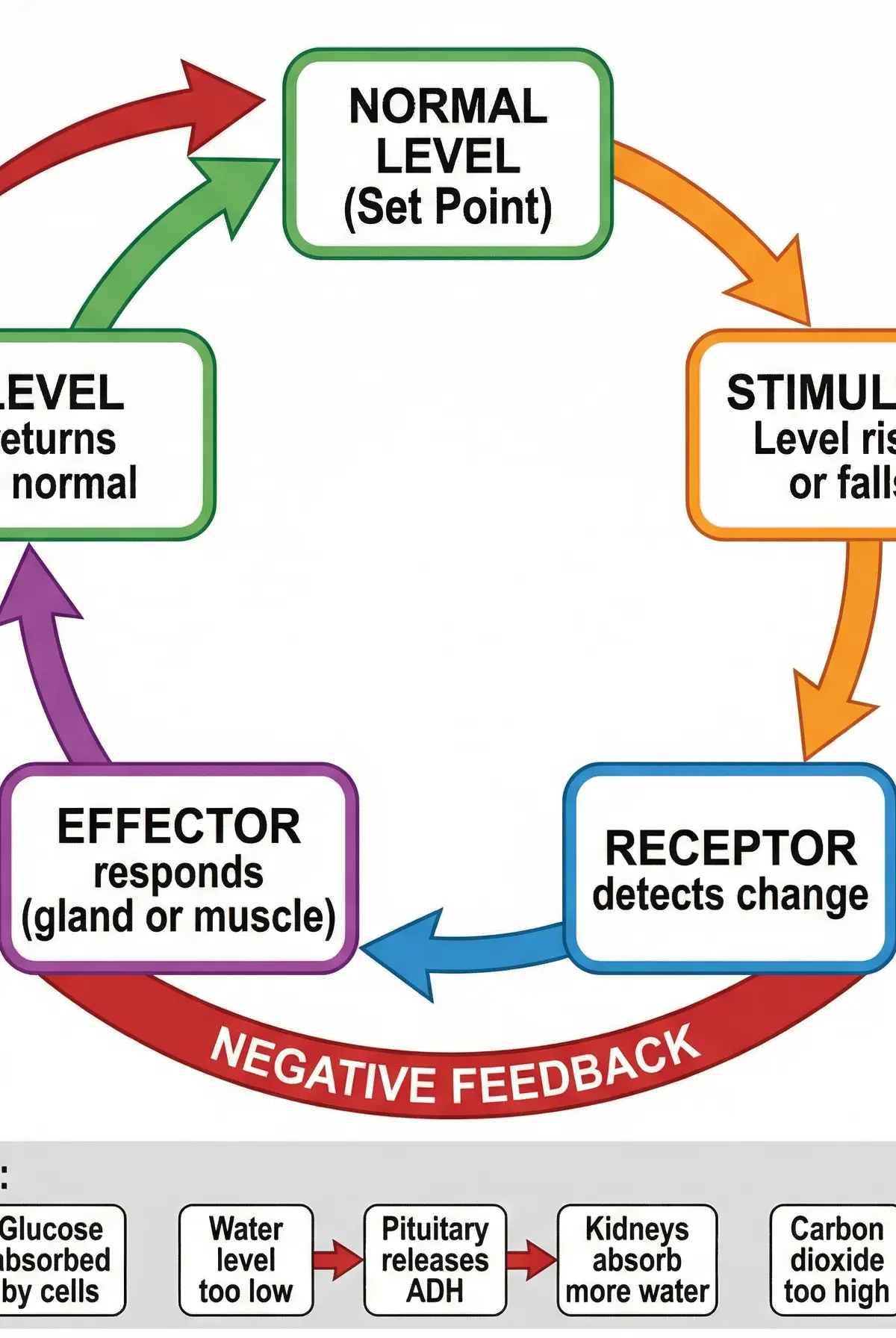
Control systems include:
- Receptors: cells that detect stimuli (changes in the environment).
- Coordination centres: such as the brain, spinal cord and pancreas, which receive and process information from receptors.
- Effectors: muscles or glands, which bring about responses which restore optimum levels.
These systems rely on negative feedback: if a factor (like temperature or blood glucose) increases, changes take place to reduce it and restore it to the original level. If it decreases, changes take place to increase it.
Concept 5: Control of Blood Glucose Concentration
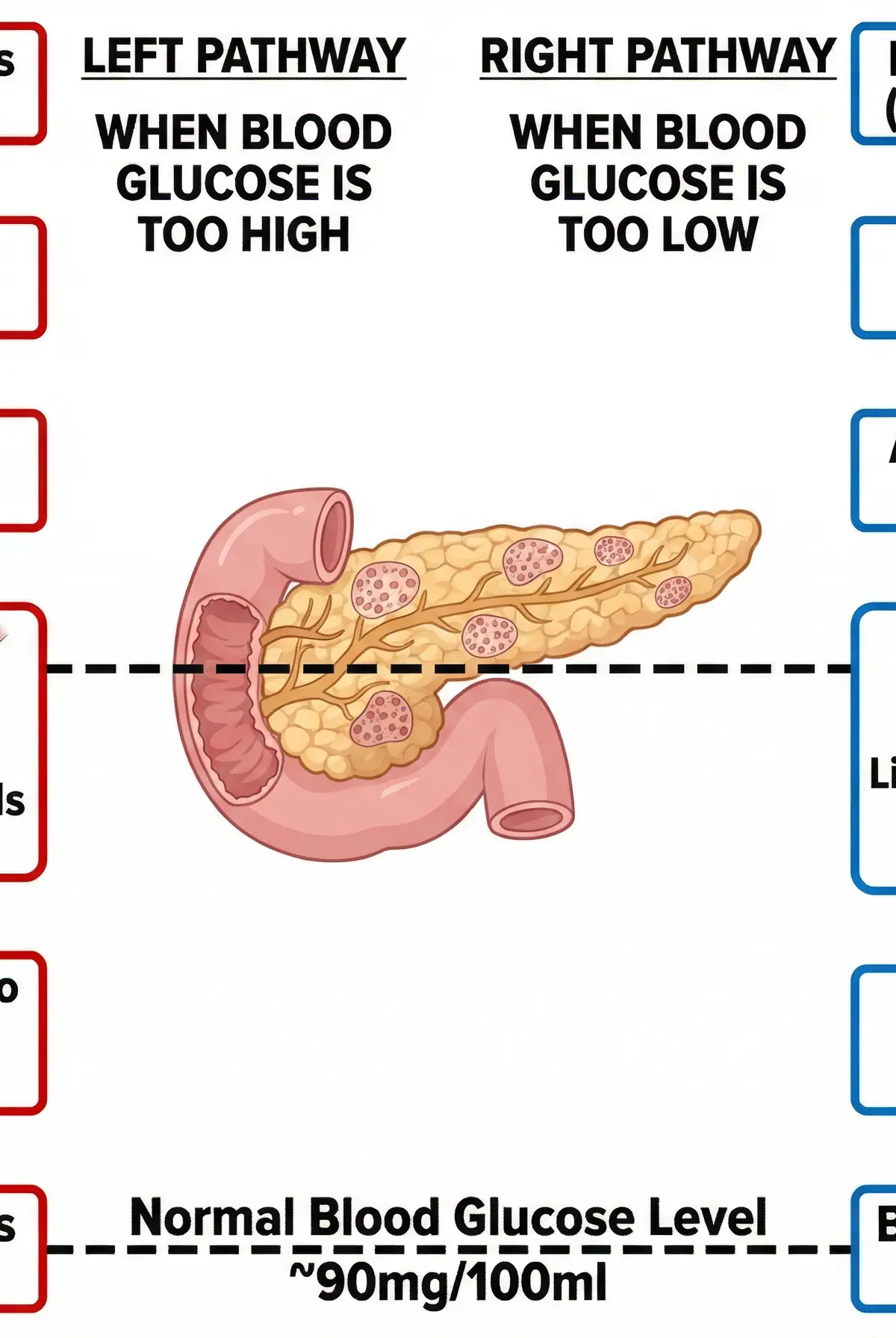
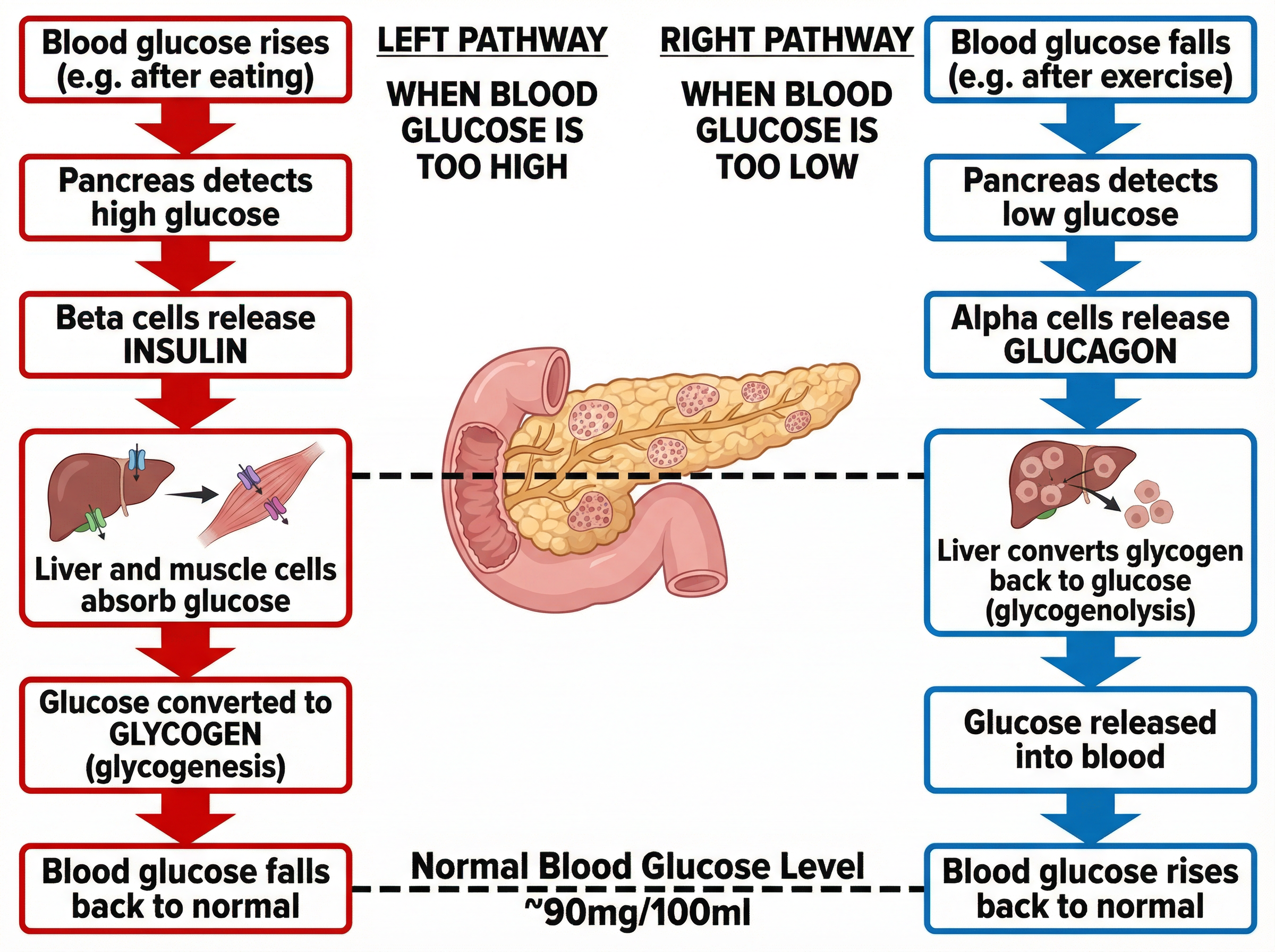
Blood glucose concentration is monitored and controlled by the pancreas.
If the blood glucose concentration is too high, the pancreas produces the hormone insulin that causes glucose to move from the blood into the cells. In liver and muscle cells, excess glucose is converted to glycogen for storage.
If the blood glucose concentration is too low, the pancreas produces the hormone glucagon that causes glycogen to be converted into glucose and released into the blood.
Type 1 diabetes is a disorder in which the pancreas fails to produce sufficient insulin. It is characterised by uncontrolled high blood glucose levels and is normally treated with insulin injections.
Type 2 diabetes is a disorder where the body cells no longer respond to insulin produced by the pancreas. A carbohydrate-controlled diet and an exercise regime are common treatments. Obesity is a risk factor for Type 2 diabetes.
Mathematical/Scientific Relationships
- BMI (Body Mass Index):
BMI = mass (kg) / (height (m))^2
Used to assess if a person is a healthy weight. A BMI over 30 is considered obese and is a significant risk factor for Type 2 diabetes. - Waist-to-hip ratio:
Ratio = waist circumference / hip circumference
Another measure of obesity. A ratio above 1.0 for men or 0.85 for women indicates abdominal obesity and higher risk of Type 2 diabetes. - Cross-sectional area of bacterial cultures:
Area = πr²
Required for evaluating the effectiveness of antibiotics or antiseptics on agar plates. Measure the radius of the clear zone (zone of inhibition) and calculate the area.
Practical Applications
Required Practical: Investigating the effect of a factor on human reaction time.
- Apparatus: Metre ruler, chair, table.
- Method:
- Person A sits with their arm resting on the edge of a table.
- Person B holds a ruler vertically between Person A's thumb and first finger, with the zero mark level with the thumb.
- Person B drops the ruler without warning.
- Person A catches it as quickly as possible.
- Record the number on the ruler where it was caught.
- Repeat and calculate a mean.
- Change a factor (e.g., after drinking a caffeinated drink) and repeat.
- Expected Results: Caffeine usually decreases reaction time (the ruler is caught at a lower number).
- Common Errors: Not dropping the ruler from the same height every time; anticipating the drop.
- Examiner Focus: They will ask you about independent, dependent, and control variables, and how to improve the accuracy (e.g., using a computer program to measure reaction time in milliseconds).
Visual Resources
3 diagrams and illustrations
Interactive Diagrams
2 interactive diagrams to visualise key concepts
Conceptual Flow Outline
The Reflex Arc: The pathway of an electrical impulse during a reflex action.
Conceptual Flow Outline
Negative feedback loop for high blood glucose.
Worked Examples
3 worked examples — open one to explore the question and available guidance.
Practice Questions
Test your understanding — click to reveal model answers
State the function of a receptor. (1 mark)
Hint: Think about what the receptor does right at the start of a nervous response.
Explain how information passes across a synapse. (3 marks)
Hint: Remember that the electrical signal cannot jump the gap. What is released instead?
A person with Type 1 diabetes has high blood glucose concentration after eating a meal. Explain why. (3 marks)
Hint: What is missing in a person with Type 1 diabetes, and what does that missing substance normally do?
Describe the role of the skin in regulating body temperature when the environment is very cold. (4 marks)
Hint: Think about blood vessels and muscles.
Evaluate the use of BMI versus waist:hip ratio as a measure of obesity. (4 marks)
Hint: Consider the limitations of BMI. What does it not account for?