OCR · GCSE · Biology
Control of Body Temperature
Master thermoregulation for your OCR GCSE Biology exam. This guide breaks down how your body maintains its core temperature, focusing on the crucial role of the hypothalamus and the mechanisms of negative feedback. Nail the 6-mark questions by understanding vasodilation, vasoconstriction, and the science of sweating.
- 5 min read
- 3 worked examples
- 5 practice questions
- 6 key terms
Study Notes
Overview
Thermoregulation is a fundamental concept in biology, representing a key example of homeostasis – the maintenance of a stable internal environment. For your OCR GCSE exam, understanding how the human body controls its temperature is not just about knowing facts; it’s about applying principles to explain physiological responses. This topic, specification point 5.5, frequently appears in exams, often as challenging 6-mark, level-of-response questions. A solid grasp of thermoregulation connects to other key areas like enzymes (their optimal temperature), the nervous system (receptors, coordinators, effectors), and respiration (heat release). This guide will equip you with the precise language and conceptual understanding required to earn maximum credit.
Key Concepts
1. The Thermoregulatory Centre: The Hypothalamus
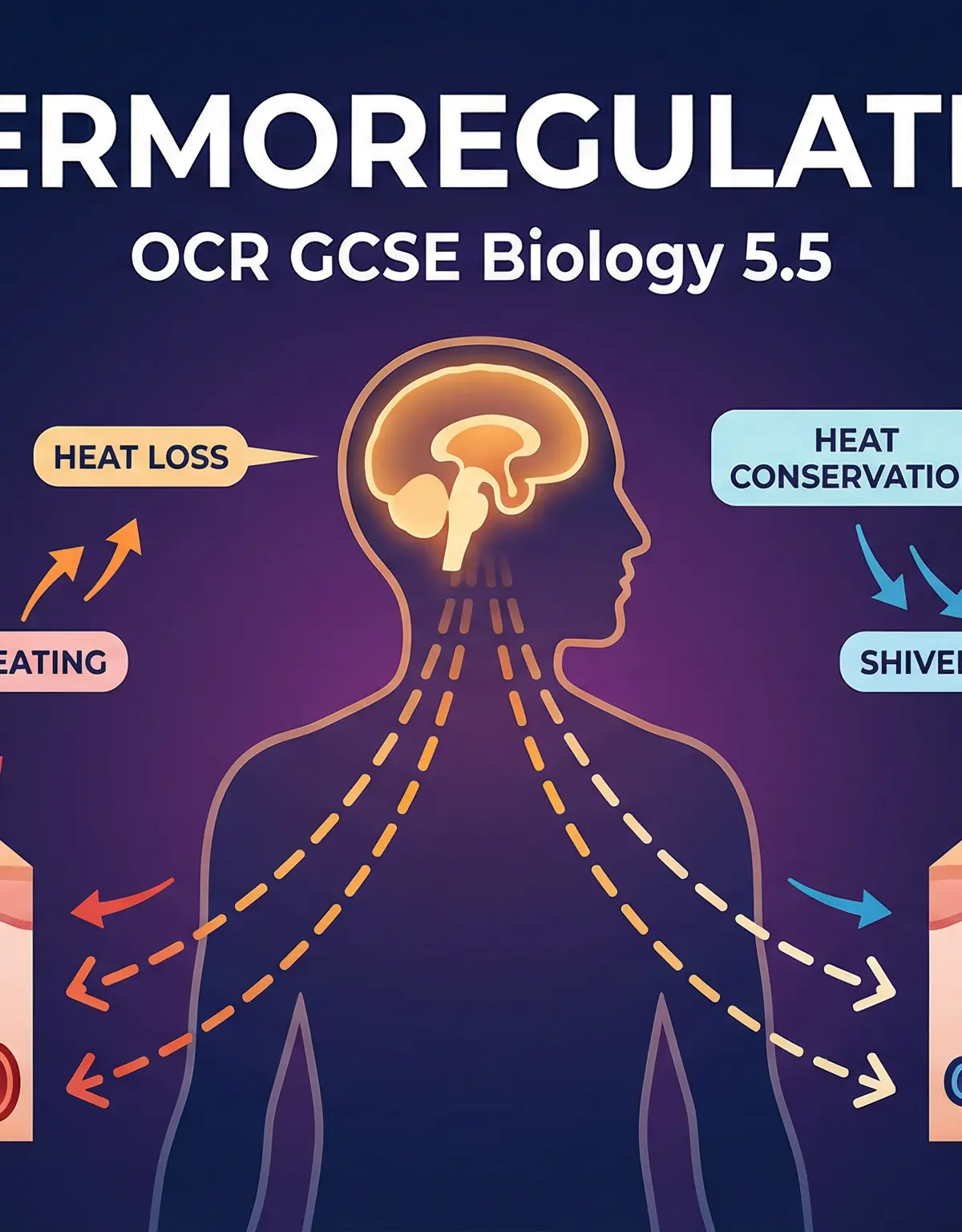
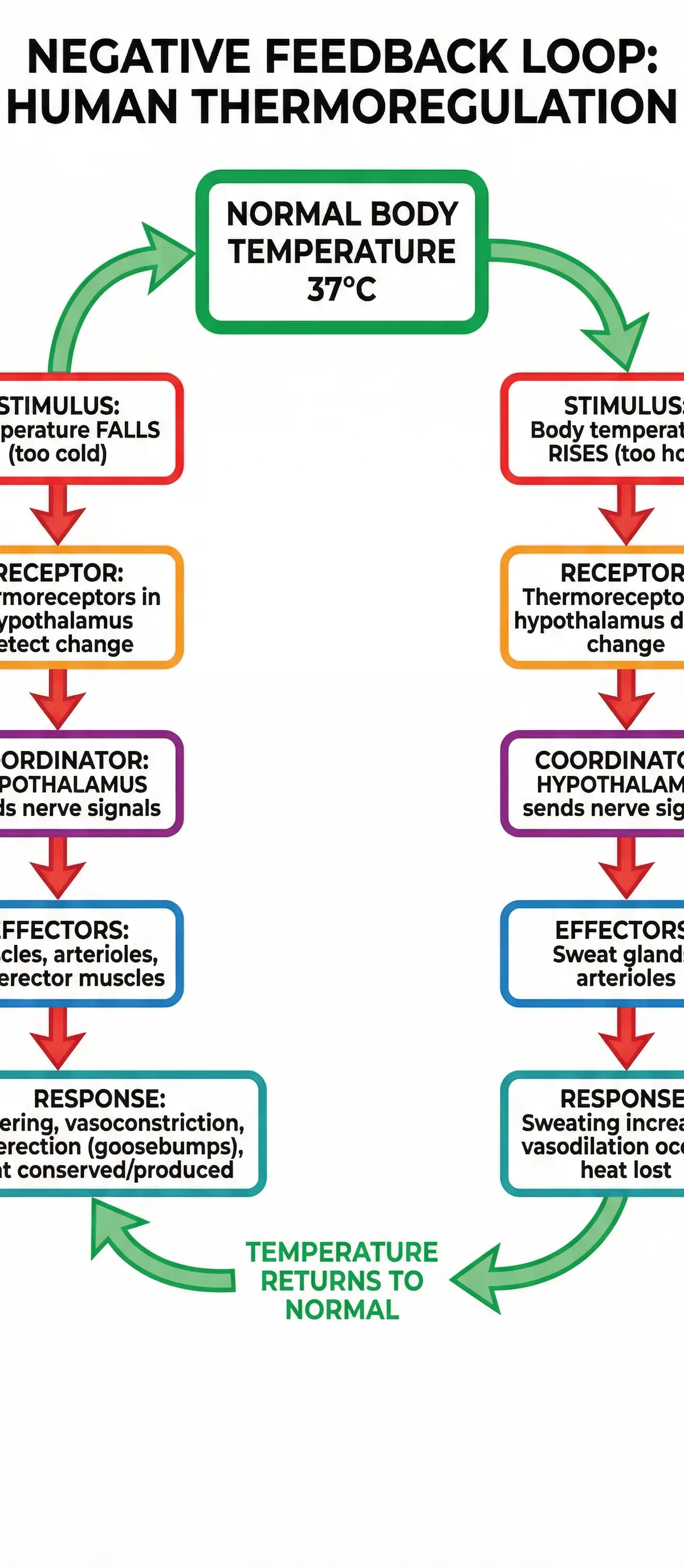
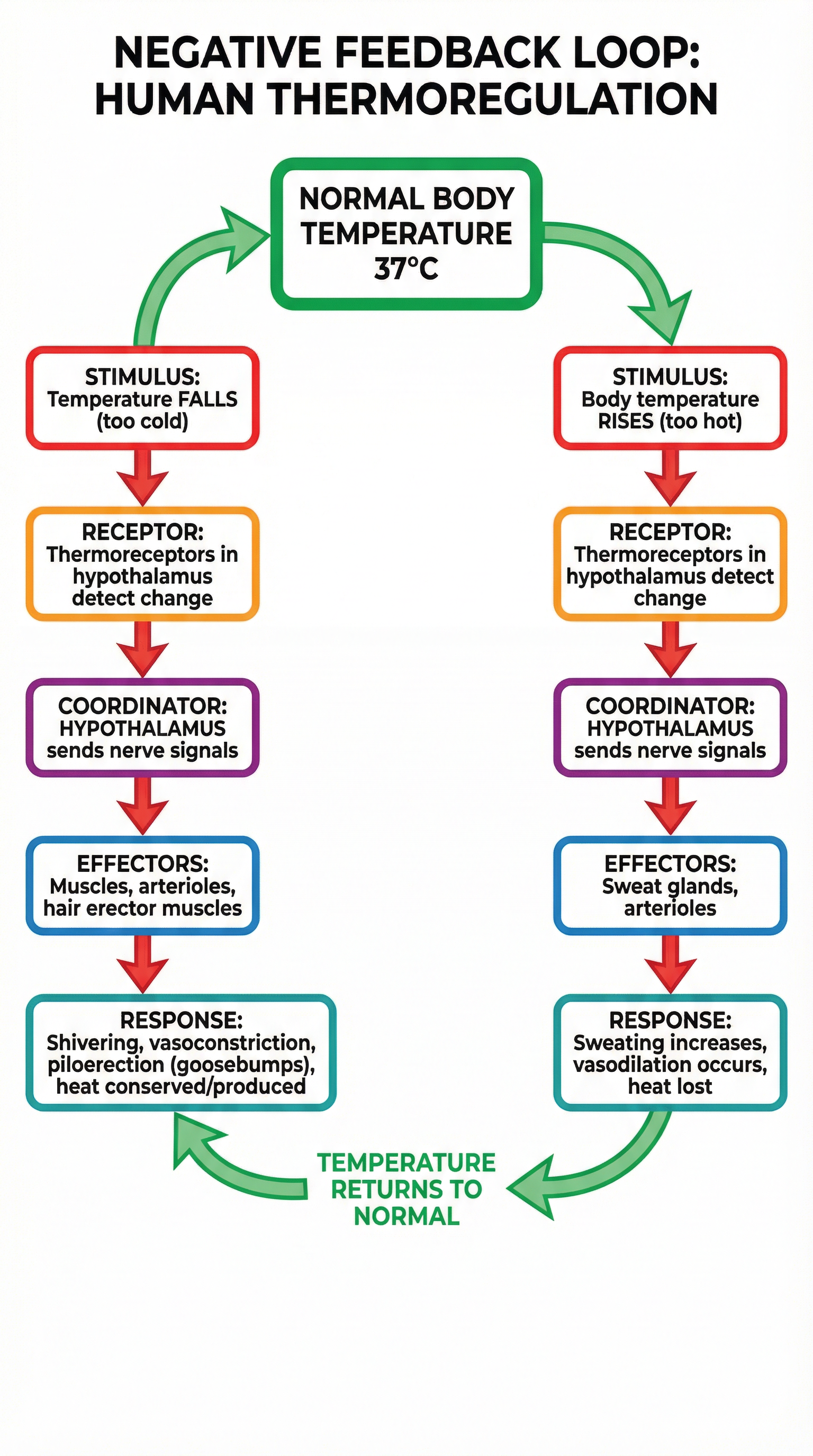
The control of body temperature is coordinated by the hypothalamus, a small but vital part of the brain. It acts as the body’s thermostat. The hypothalamus contains thermoreceptors, which are specialised cells that constantly monitor the temperature of the blood flowing through them. If the blood temperature deviates from the set point of approximately 37°C, the hypothalamus initiates a coordinated response by sending nerve impulses to effectors around the body. It is critical for candidates to identify the hypothalamus as both the primary receptor and the coordinator.
2. Negative Feedback: The Control System
Thermoregulation operates on a principle of negative feedback. This is a self-regulating mechanism where the response counteracts the initial stimulus, bringing the system back to its normal set point.
- If temperature rises: The hypothalamus detects the change and triggers responses to cool the body down.
- If temperature falls: The hypothalamus detects the change and triggers responses to warm the body up.
Once the temperature returns to 37°C, the hypothalamus detects this and switches off the corrective mechanisms. This prevents over-correction and maintains a stable temperature.
3. Responses to High Temperature
When the body gets too hot, the hypothalamus triggers two main responses to lose heat:
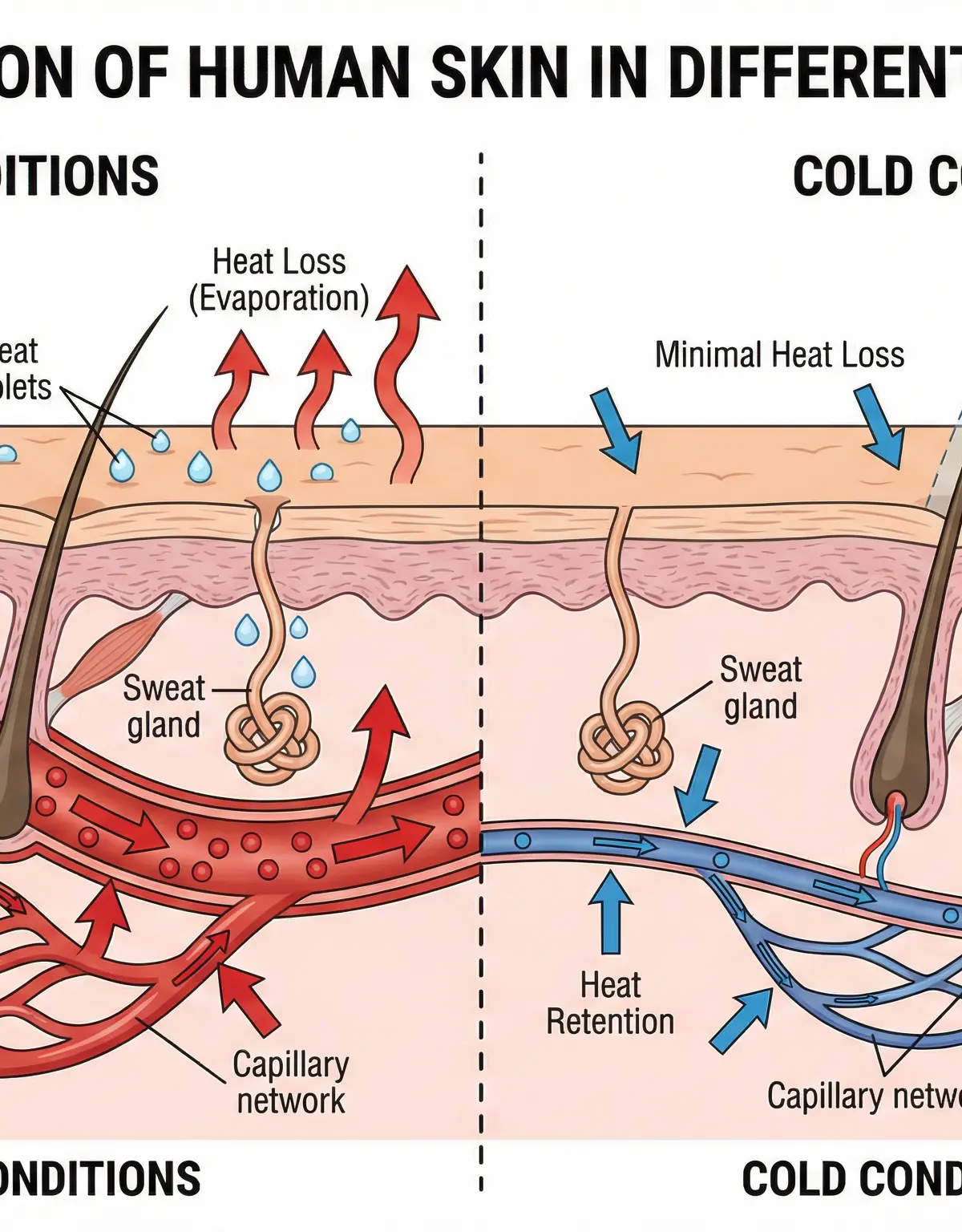
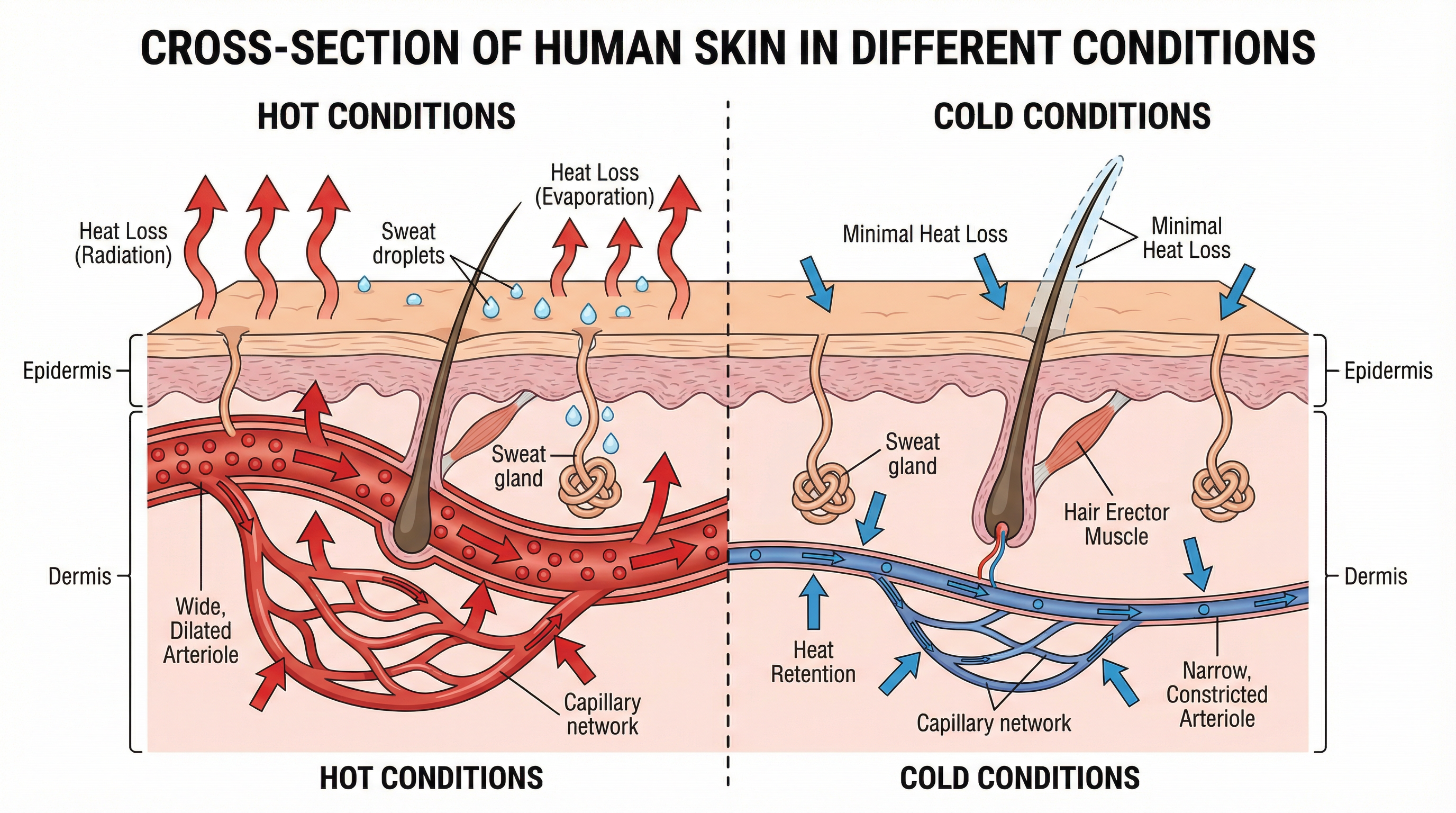
- Vasodilation: The arterioles (small arteries) leading to the skin capillaries dilate (widen). This increases blood flow through the capillaries near the skin surface. As the warm blood is closer to the cooler external environment, more heat is lost from the blood to the air by radiation. This is why a person may appear flushed or red when hot.
- Sweating: Sweat glands are stimulated to secrete sweat onto the skin surface. For sweating to cool the body, the sweat must evaporate. This process of changing from a liquid to a gas requires energy, which is taken from the skin as heat. It is crucial to explain that evaporation transfers thermal energy from the skin to the surroundings.
4. Responses to Low Temperature
When the body gets too cold, the hypothalamus triggers responses to conserve heat and generate more:
- Vasoconstriction: The arterioles leading to the skin capillaries constrict (narrow). This reduces blood flow to the skin surface, keeping warm blood deeper within the body and minimising heat loss by radiation. The skin may appear pale.
- Shivering: The skeletal muscles contract and relax rapidly and involuntarily. This process requires energy from respiration. Respiration is an exothermic reaction, meaning it releases heat. This released heat warms the body. Candidates must link muscle contraction to respiration to heat release to gain full marks.
- Piloerection: The hair erector muscles contract, pulling the body hairs upright. In animals with thick fur, this traps a layer of air which acts as an insulator. In humans, this response (goosebumps) is not very effective due to our lack of dense body hair, but it is still a recognised mechanism.
Mathematical/Scientific Relationships
There are no specific mathematical formulas to memorise for this topic at GCSE level. However, understanding the relationship between surface area and heat loss is important. A larger surface area to volume ratio leads to faster heat loss, which is why smaller animals lose heat more quickly than larger ones. This principle also applies to the increased surface area of blood capillaries during vasodilation, facilitating greater heat loss.
Practical Applications
This topic does not have a specific required practical. However, the principles of thermoregulation are applied in many real-world contexts:
- Survival in extreme environments: Understanding thermoregulation is critical for survival in deserts or polar regions.
- Sports science: Athletes need to manage their body temperature to perform optimally and avoid heatstroke.
- Medicine: Fever is a controlled raising of the body temperature set point by the hypothalamus to help fight infection. Hypothermia is a dangerous drop in body temperature.
Visual Resources
2 diagrams and illustrations
Interactive Diagrams
2 interactive diagrams to visualise key concepts
Conceptual Flow Outline
A flowchart showing the negative feedback pathway for responding to an increase in body temperature.
Conceptual Flow Outline
A flowchart showing the negative feedback pathway for responding to a decrease in body temperature.
Worked Examples
3 worked examples — open one to explore the question and available guidance.
Practice Questions
Test your understanding — click to reveal model answers
Name the part of the brain that controls body temperature. (1 mark)
Hint: It acts as the body's thermostat.
Describe two ways the body responds to being too hot. (2 marks)
Hint: Think about what happens to your skin.
Explain how vasoconstriction helps to control body temperature on a cold day. (3 marks)
Hint: Think about the path of blood and heat.
A rare genetic condition prevents a person’s sweat glands from working. Evaluate the potential impact of this condition on the person, particularly during exercise. (5 marks)
Hint: Consider the consequences of overheating and the limitations of other cooling mechanisms.
Explain why the control of body temperature is described as a negative feedback system. (4 marks)
Hint: What does 'negative' mean in this context? How does the system 'feed back' on itself?