OCR · GCSE · Biology
Selective Breeding
Master OCR GCSE Biology Topic 6.9: Selective Breeding. This guide breaks down the core process, reveals what examiners want for top marks, and explains the critical genetic risks of inbreeding that differentiate Higher Tier candidates.
- 5 min read
- 3 worked examples
- 5 practice questions
- 6 key terms
Study Notes
Overview
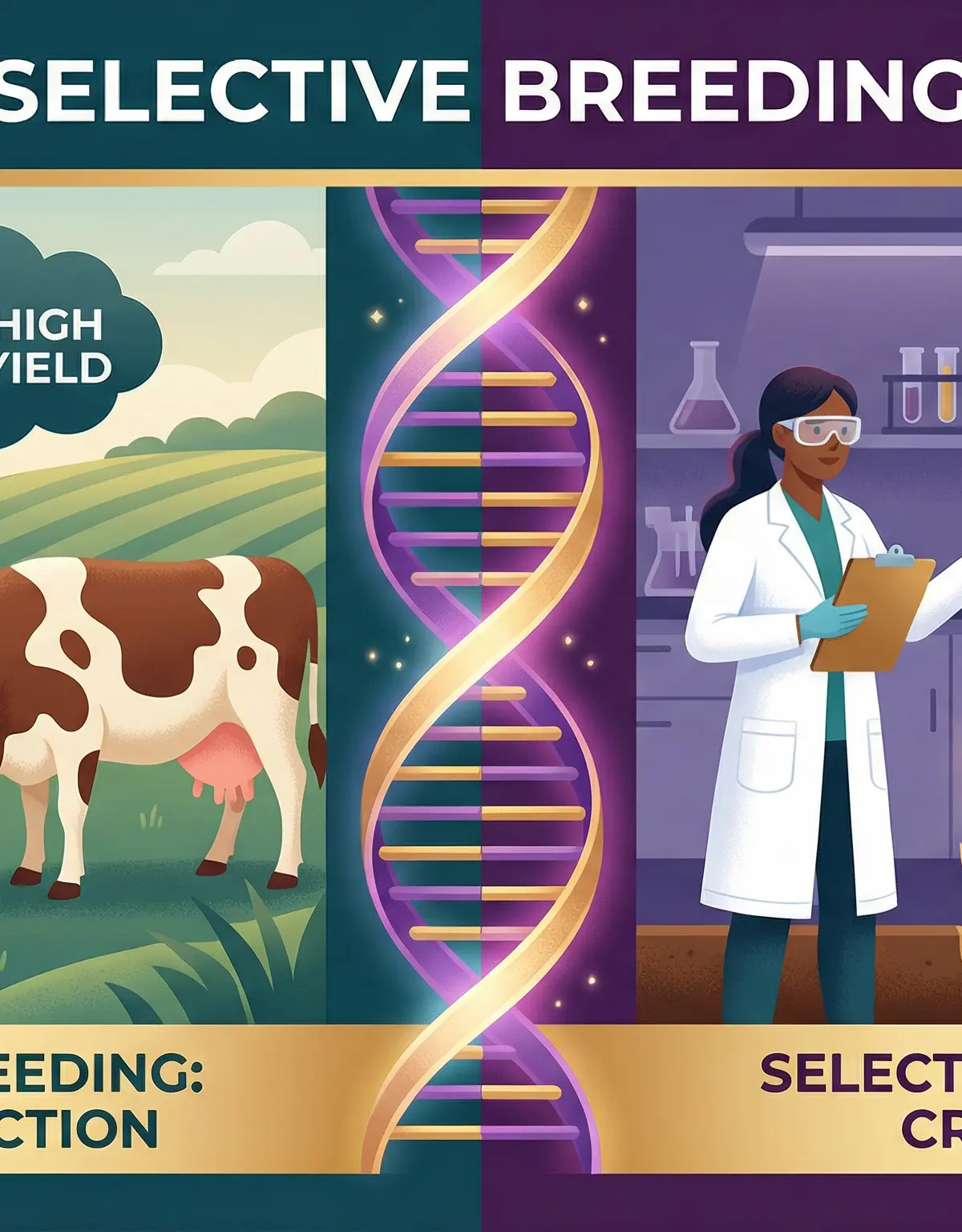
Selective breeding, also known as artificial selection, is a cornerstone of modern agriculture and genetics. It's the process by which humans choose organisms with desirable characteristics and breed them together to enhance those traits in subsequent generations. For your OCR GCSE Biology exam, this topic is crucial as it bridges concepts from genetics, inheritance, and evolution. Examiners frequently test the logical sequence of the breeding process (AO1), your ability to apply it to contexts like farming (AO2), and, for Higher Tier students, your understanding of its genetic consequences, such as the reduction of the gene pool (AO3). Expect questions ranging from short-answer 'Describe' tasks to longer 'Evaluate' questions that require you to weigh the pros and cons.
Key Concepts
Concept 1: The Core Process of Selection
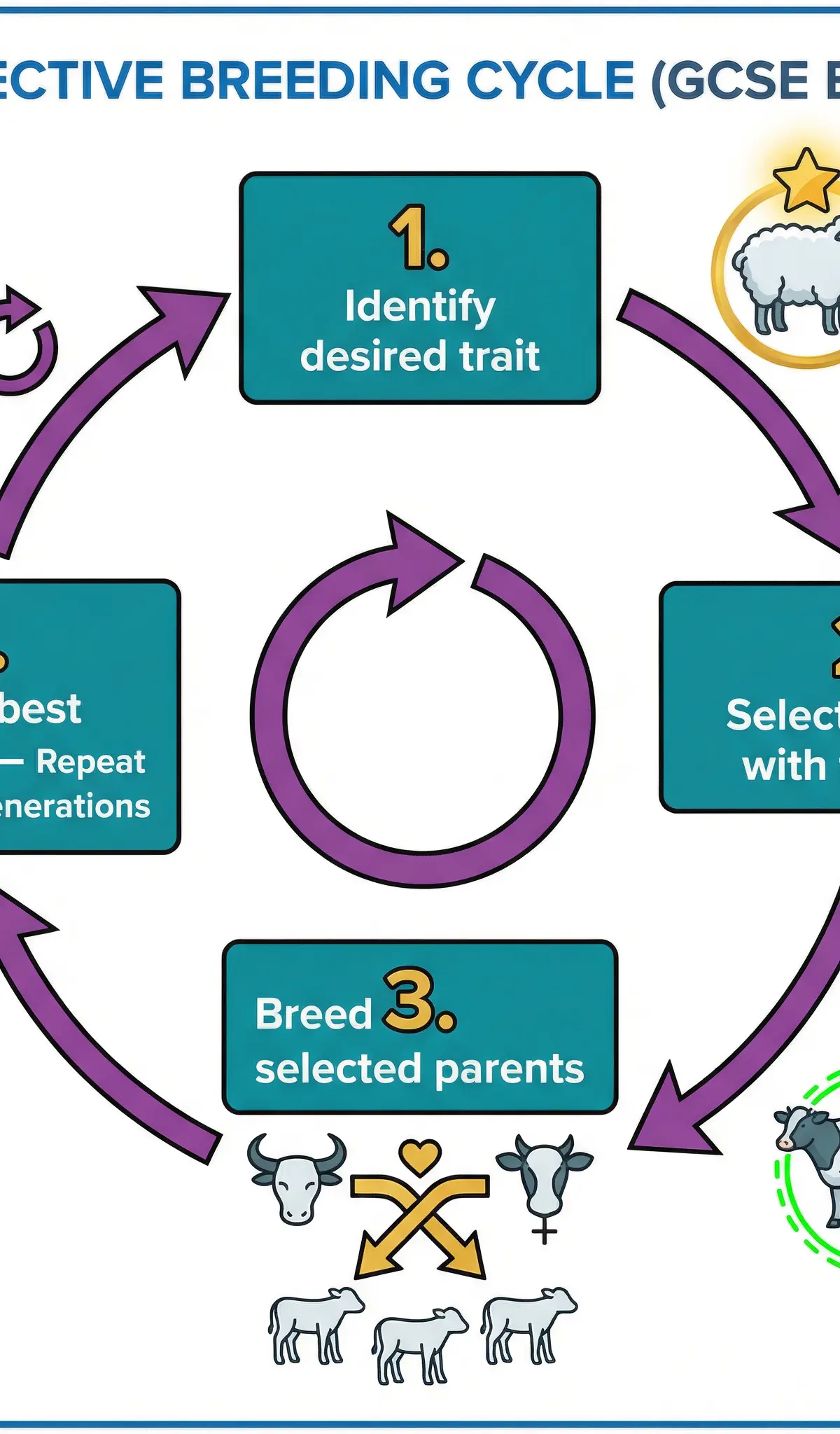
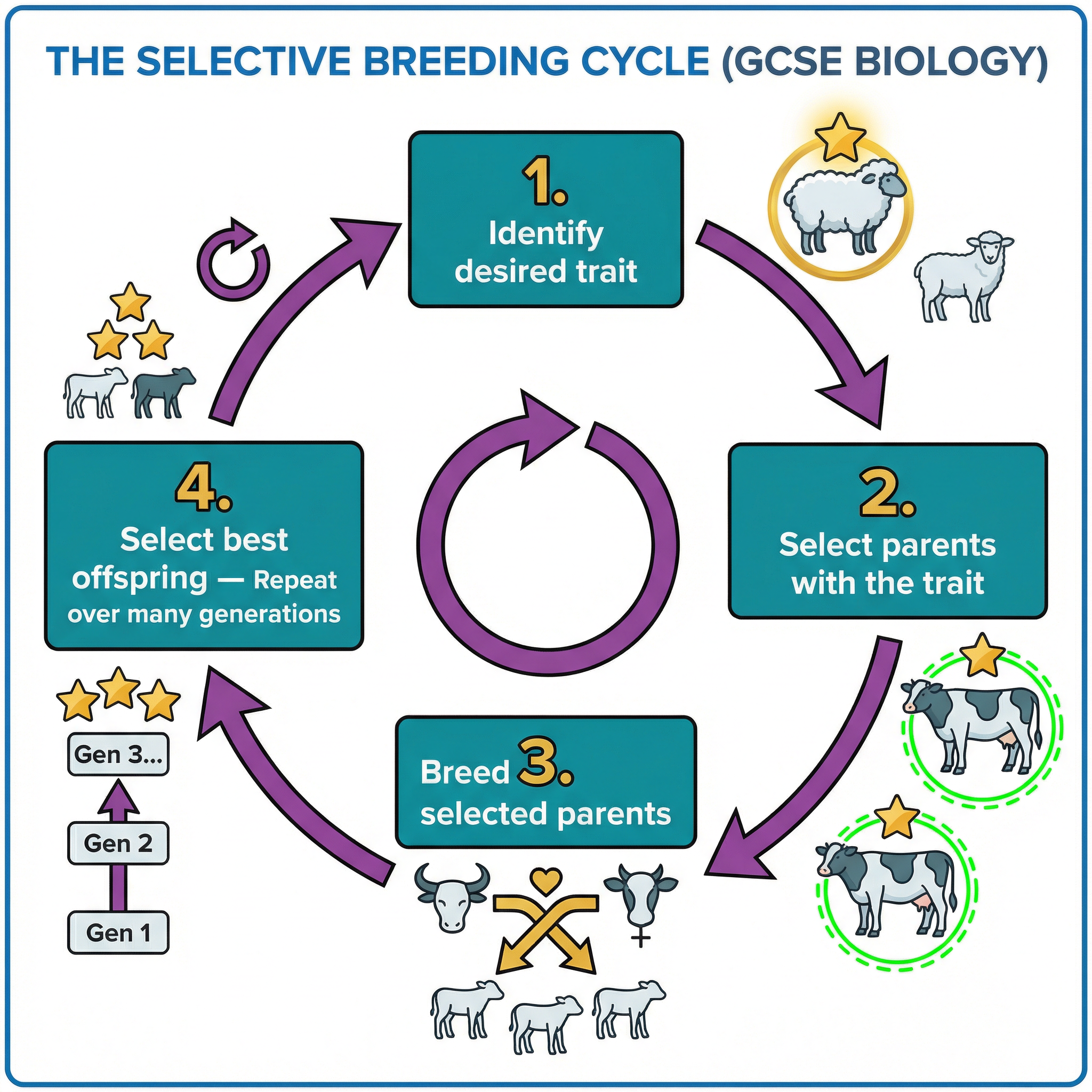
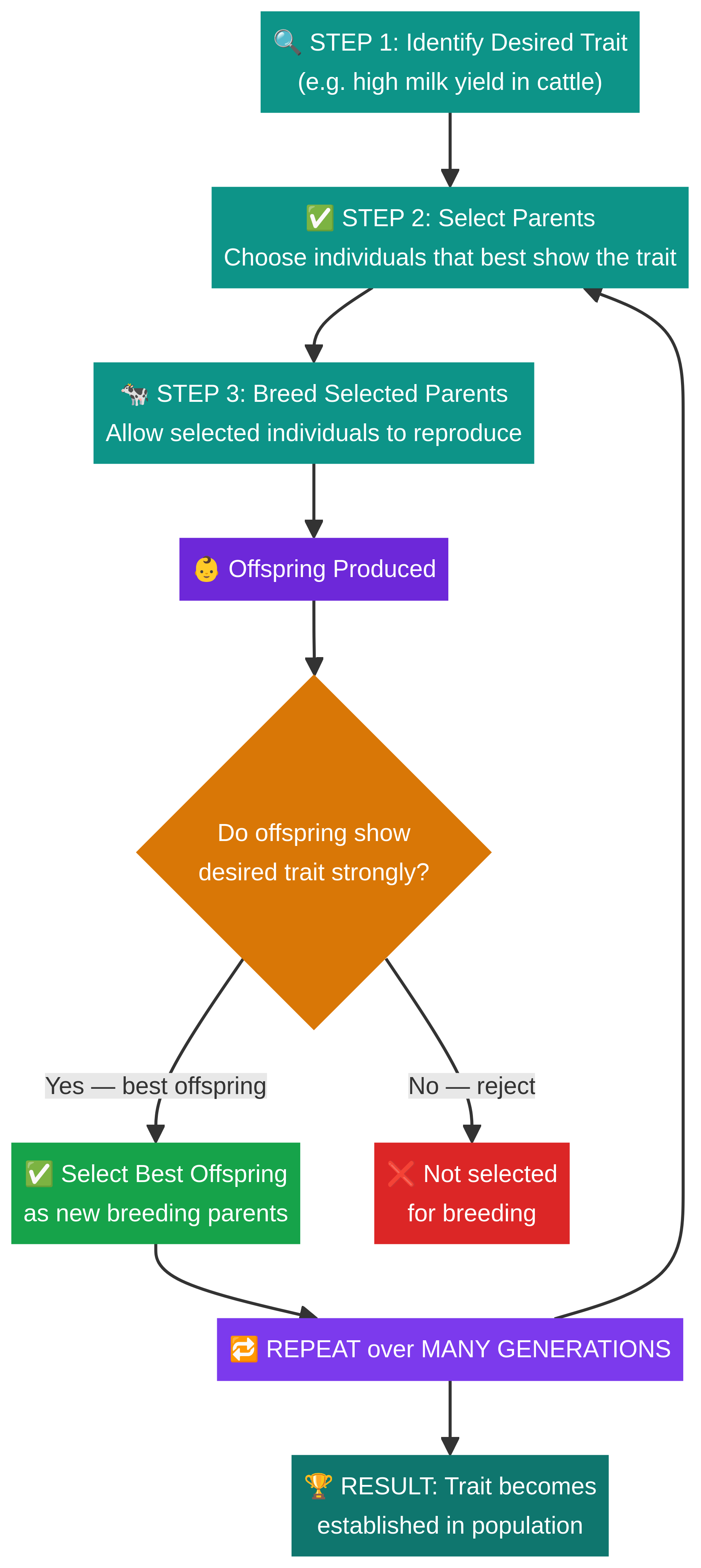
At its heart, selective breeding is a simple loop: identify a trait, select the best individuals, breed them, and then select the best of their offspring to continue the cycle. The crucial element that candidates often miss is that this is not a quick fix; it must be repeated over many generations to be effective. Think of it like slowly turning up the volume on a specific genetic trait. Each generation gets a little 'louder' in that characteristic.
Example: A farmer wants wheat that produces more grain. In a field, some plants naturally produce slightly more grain than others due to genetic variation. The farmer collects seeds only from these high-yielding plants and uses them to sow the next crop. In the next generation, the average yield will be slightly higher. By repeating this for decades, the farmer develops a variety of wheat that consistently produces a high yield.
Concept 2: The Importance of Existing Variation
Selective breeding does not create new characteristics from scratch. It can only act on the variation that already exists within a population's gene pool. If there are no alleles for a particular trait (e.g., resistance to a new disease), you cannot select for it. This is a fundamental difference between selective breeding and genetic engineering, where new genes can be introduced. The process works by increasing the frequency of desirable alleles and decreasing the frequency of undesirable ones.
Concept 3: The Risks of Inbreeding (Higher Tier)
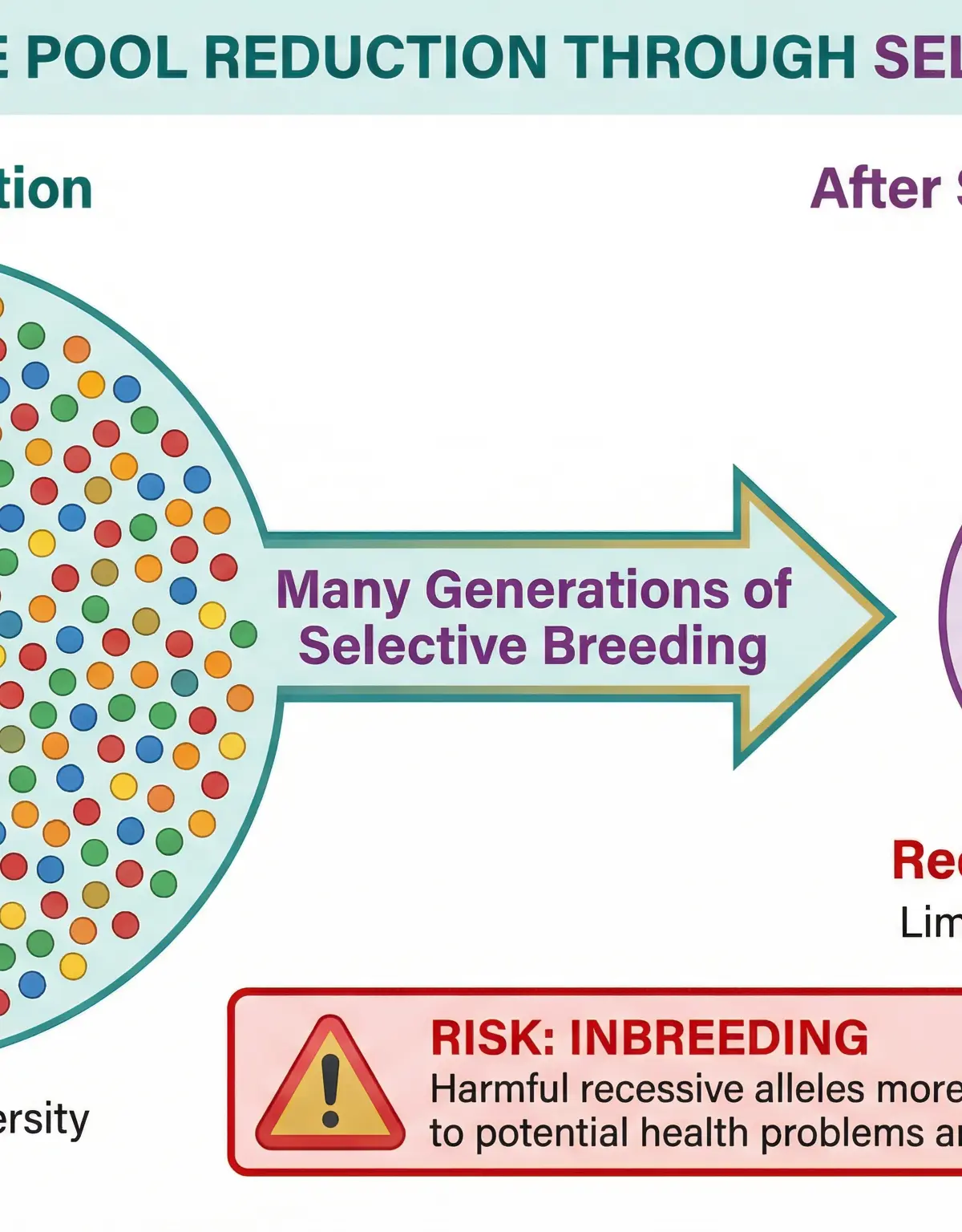
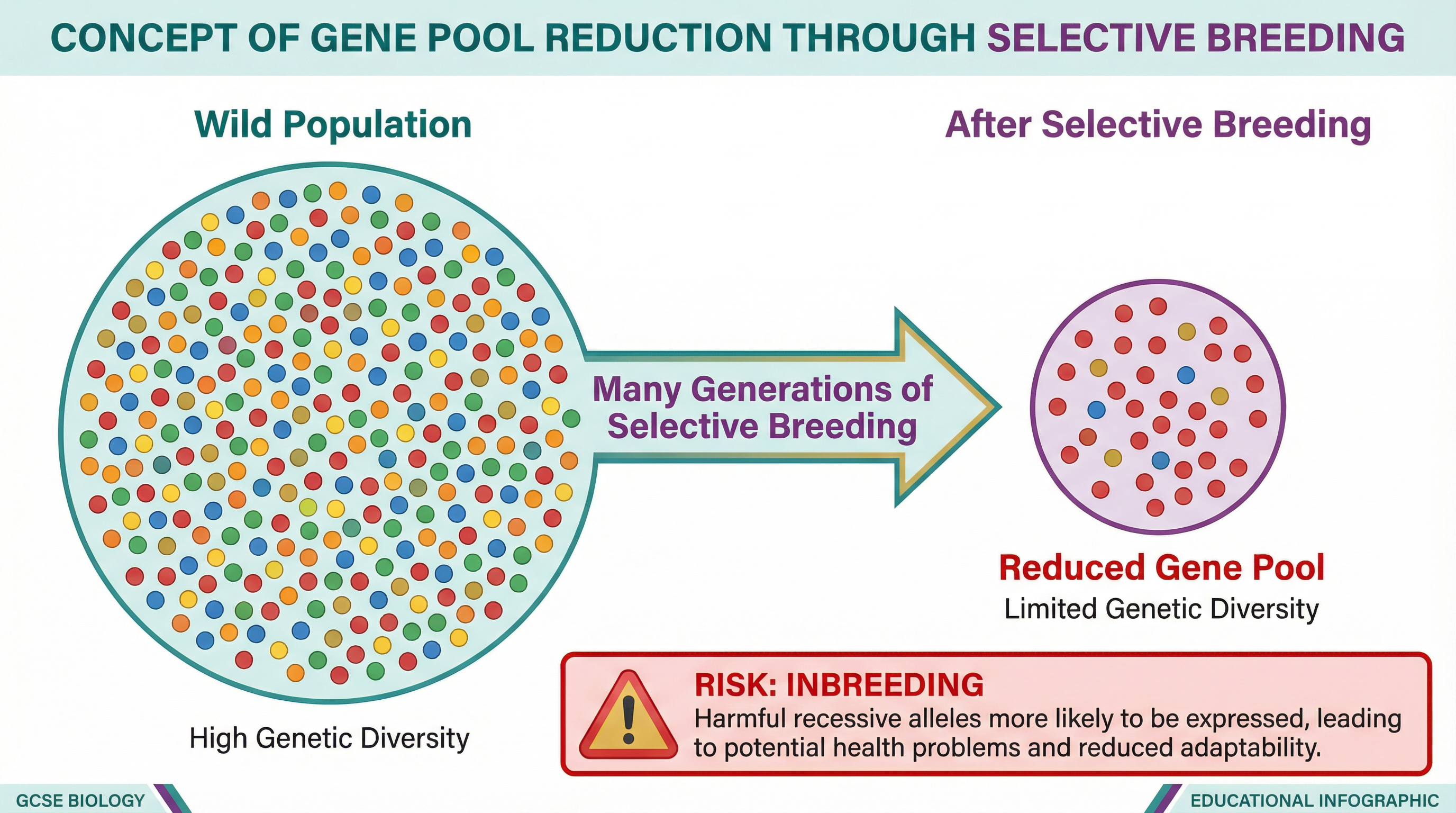
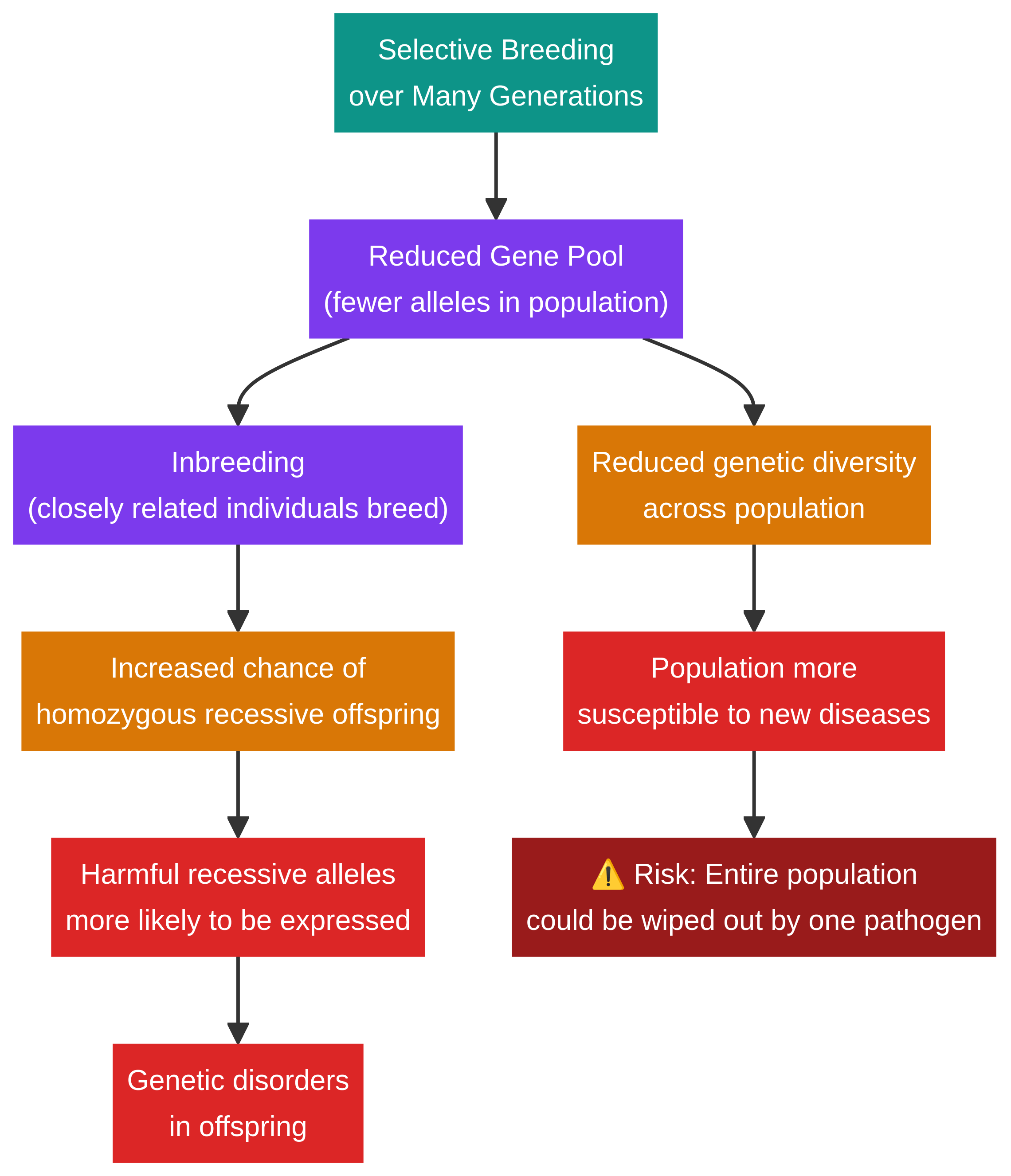
When you repeatedly select from a small number of individuals, you are inevitably breeding closely related organisms. This is called inbreeding. Over many generations, this drastically reduces the size of the gene pool (the number of different alleles in the population). This has two major negative consequences that examiners expect Higher Tier candidates to explain:
- Increased chance of genetic disorders: Many harmful alleles are recessive, meaning you need two copies to have the disorder. In a large, diverse population, it's rare for two individuals carrying the same harmful recessive allele to breed. In an inbred population, it becomes much more common, leading to a higher incidence of genetic diseases (e.g., certain cancers in pedigree dogs).
- Reduced resistance to new diseases: If all individuals in a population are genetically very similar, they are all likely to be susceptible to the same pathogens. A single new virus or fungus could wipe out an entire crop or herd because there is no genetic variation to provide a few resistant individuals.
Mathematical/Scientific Relationships
There are no specific mathematical formulas to memorise for this topic. However, you may be asked to interpret data related to selective breeding, such as graphs showing the increase in a trait (e.g., milk yield) over several generations. When reading these graphs, pay attention to the trend line and be able to describe the rate of change.
Practical Applications
Selective breeding is fundamental to our food supply and domestic life. Examiners can ask you to apply your knowledge to any of these contexts:
- Agriculture: Creating crops with higher yield, disease resistance, or drought tolerance. Developing livestock that produce more meat, milk, or wool.
- Horticulture: Producing flowers with unusual colours or larger blooms.
- Domestic Animals: Breeding dogs for specific temperaments (e.g., guide dogs) or physical abilities (e.g., racing greyhounds).
- Medical Research: Mice are often selectively bred to be susceptible to certain diseases so that researchers can study them.
Visual Resources
4 diagrams and illustrations
Interactive Diagrams
2 interactive diagrams to visualise key concepts
Conceptual Flow Outline
A flowchart showing the cyclical process of selective breeding. This visualises the key 'Identify -> Select -> Breed -> Select Offspring -> Repeat' loop that is essential for exam answers.
Conceptual Flow Outline
A concept map illustrating the negative consequences of selective breeding, a key area for Higher Tier candidates. It shows how the process leads to a reduced gene pool, inbreeding, and increased susceptibility to disease.
Worked Examples
3 worked examples — open one to explore the question and available guidance.
Practice Questions
Test your understanding — click to reveal model answers
State two examples of characteristics that might be selected for in cattle.
Hint: Think about what farmers get from cattle.
Explain why it is important to repeat the process of selective breeding over many generations.
Hint: Think about how genes and alleles work. Does a trait become fixed after just one cross?
A plant breeder wants to create a new variety of tomato that is resistant to a fungal disease. Describe the steps the breeder should take.
Hint: Use the I-S-B-R framework and apply it to the context of tomatoes and disease resistance.
Explain why a reduced gene pool could be a problem for a population of selectively bred animals. [4 marks] (Higher Tier)
Hint: Think about what happens if the environment changes or a new threat appears.
Compare selective breeding with natural selection. [5 marks]
Hint: Think about who (or what) is doing the selecting, the speed of the process, and the outcome.