OCR · GCSE · Biology
Topic B3: Organism level systems
Master the incredible systems that keep you alive! Topic B3 covers how your nervous and endocrine systems coordinate everything from rapid reflexes to long-term blood sugar control. This is a high-yield exam topic that tests your understanding of homeostasis and negative feedback.
- 6 min read
- 3 worked examples
- 5 practice questions
- 6 key terms
Study Notes
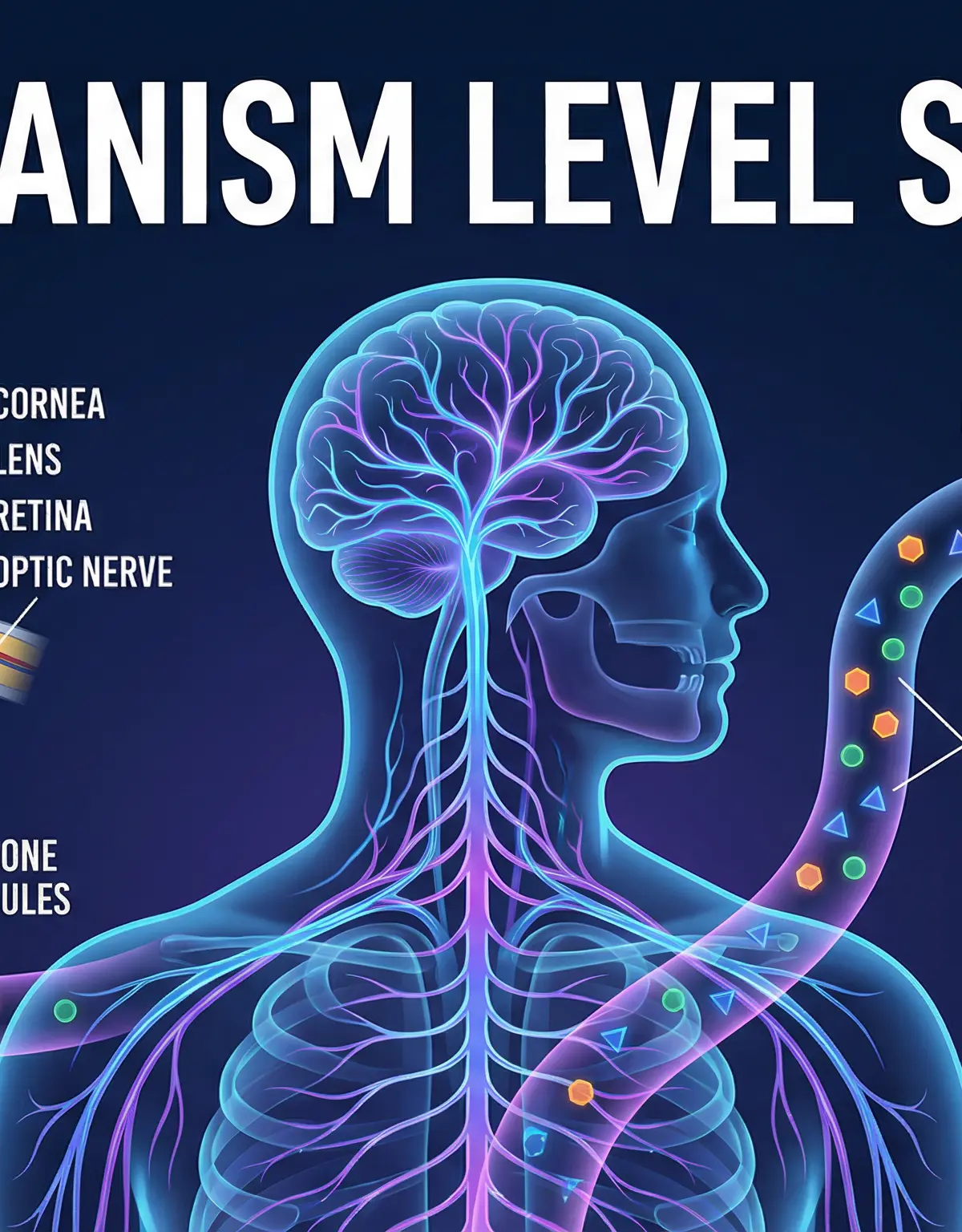
Overview
Welcome to Topic B3: Organism Level Systems. This crucial topic explores how the human body detects changes in the environment and coordinates appropriate responses to survive. It is a cornerstone of Biology because it explains the fundamental concept of homeostasis—maintaining a stable internal environment despite external fluctuations.
You will learn how the nervous system uses rapid electrical impulses to trigger immediate reactions, such as pulling your hand away from a hot object. You will also discover how the endocrine system uses chemical messengers (hormones) travelling in the blood to control slower, long-lasting processes like the menstrual cycle and blood glucose regulation.
Examiners frequently test this topic with high-mark extended response questions requiring you to explain negative feedback loops or compare different systems. It links heavily to cell biology (how hormones affect target cells) and ecology (how organisms adapt to their environment).
Key Concepts
Concept 1: The Nervous System and Reflex Arcs
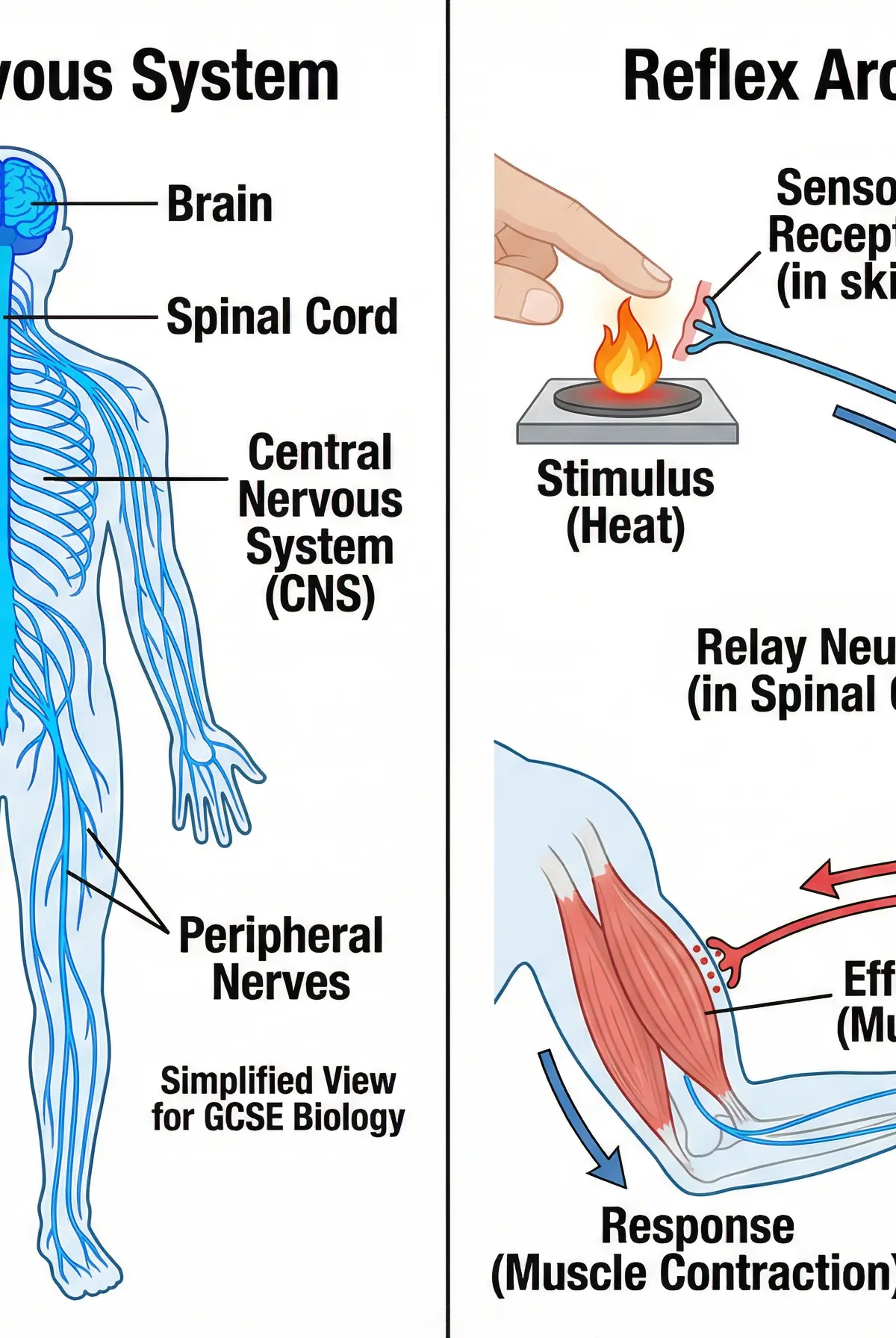
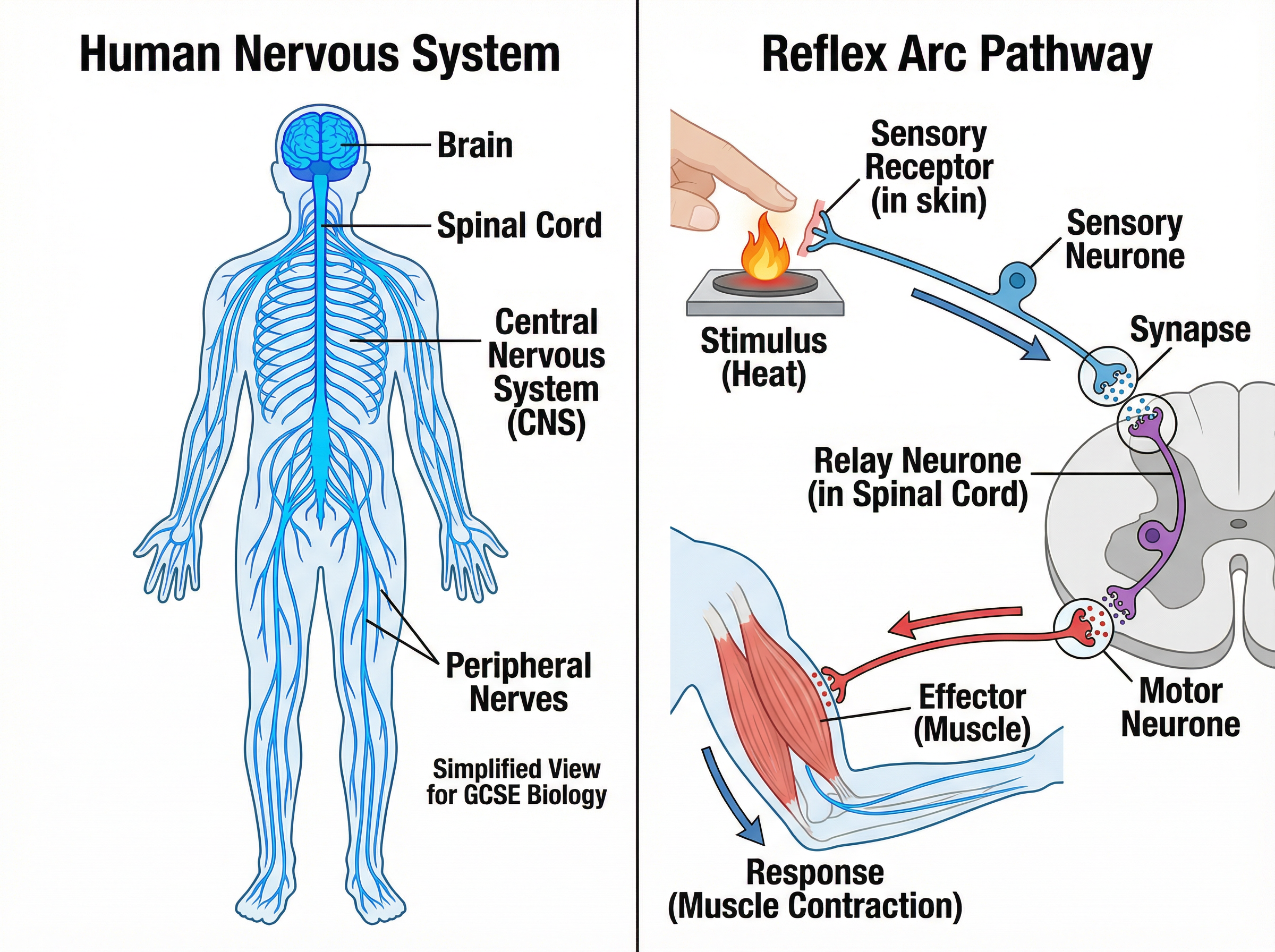
The nervous system enables humans to react to their surroundings and coordinate their behaviour. It comprises the Central Nervous System (CNS)—the brain and spinal cord—and a network of peripheral nerves.
When a receptor detects a stimulus (a change in the environment), an electrical impulse is generated. This impulse travels along a sensory neurone to the CNS. Here, the information is processed, and an impulse is sent along a motor neurone to an effector (a muscle or gland), which brings about a response.
The Reflex ArcReflex actions are automatic and rapid; they do not involve the conscious part of the brain. This makes them essential for survival, as they help prevent injury.
The pathway is: Stimulus → Receptor → Sensory neurone → Relay neurone (in the CNS) → Motor neurone → Effector → Response.
Between neurones are tiny gaps called synapses. The electrical impulse cannot jump the gap. Instead, it triggers the release of chemical neurotransmitters, which diffuse across the synapse and bind to receptors on the next neurone, setting off a new electrical impulse. This chemical diffusion slows the signal down slightly but ensures impulses only travel in one direction.
Concept 2: The Endocrine System
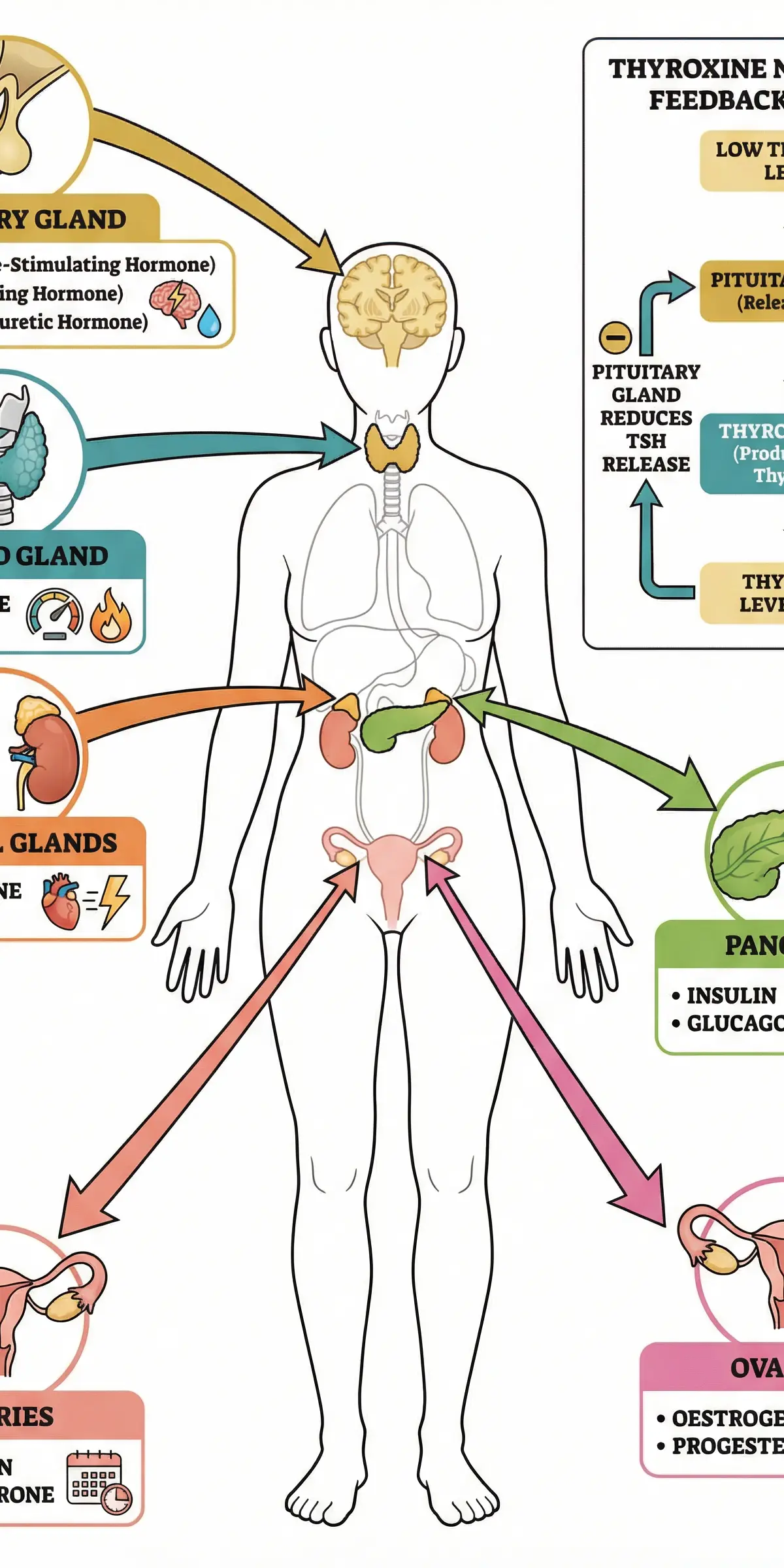
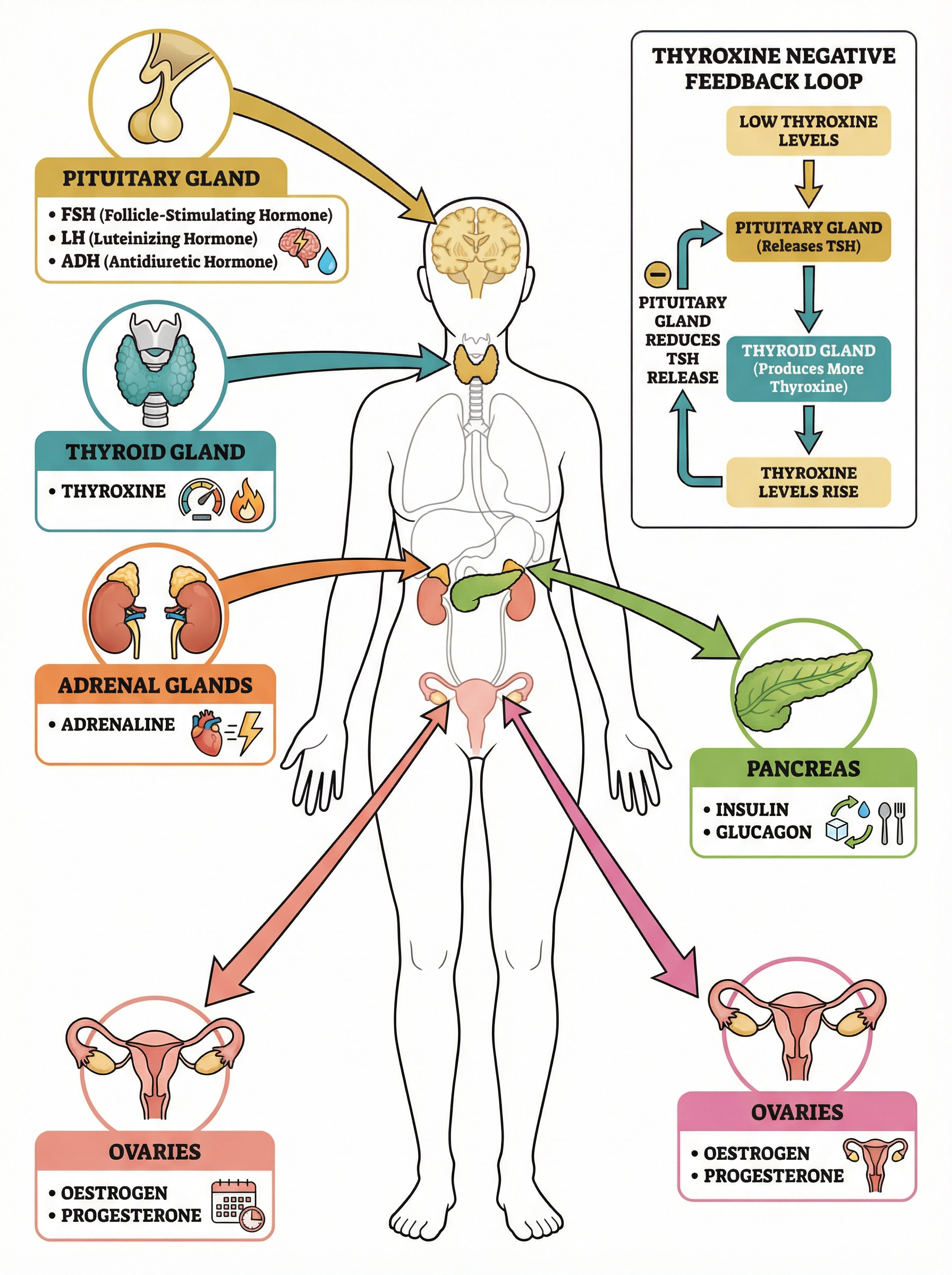
The endocrine system is composed of glands that secrete chemicals called hormones directly into the bloodstream. The blood carries the hormone to a target organ where it produces an effect. Compared to the nervous system, the effects are slower but act for longer.
The pituitary gland in the brain is often called the 'master gland'. It secretes several hormones into the blood in response to body conditions. These hormones in turn act on other glands to stimulate other hormones to be released to bring about effects.
Concept 3: Homeostasis and Blood Glucose Regulation
Homeostasis is the regulation of the internal conditions of a cell or organism to maintain optimum conditions for function in response to internal and external changes. It maintains optimal conditions for enzyme action and all cell functions.
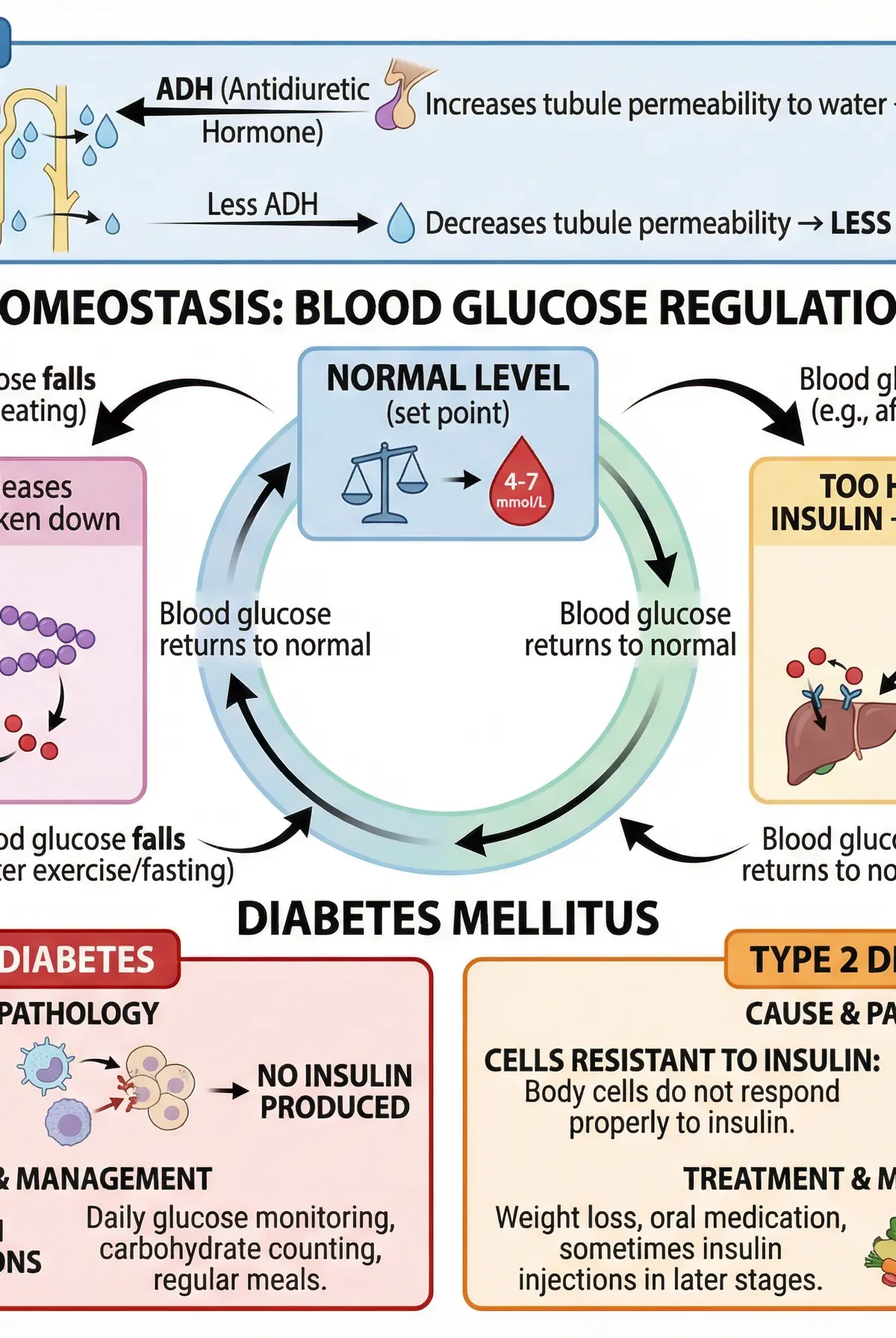
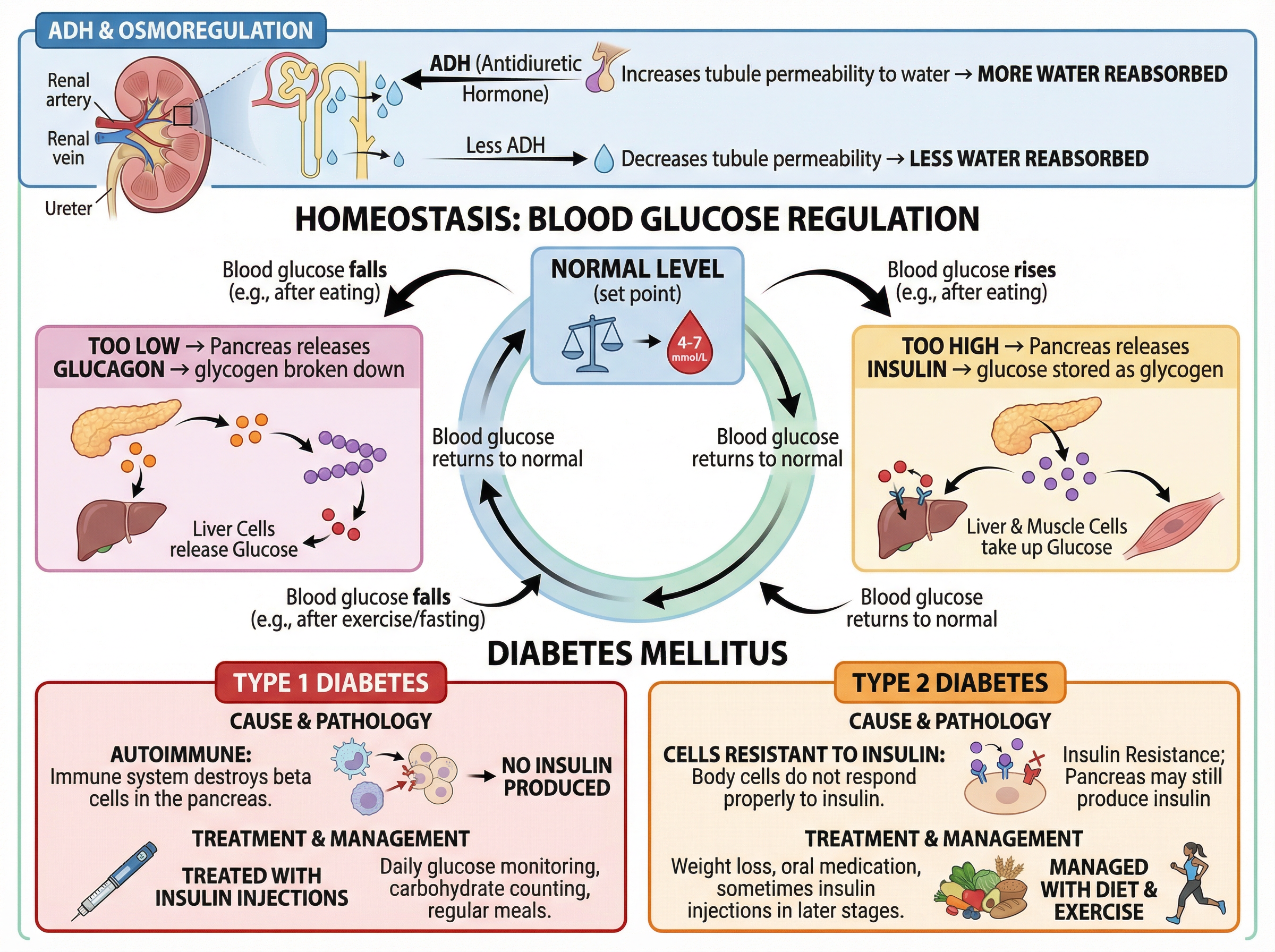
Blood glucose concentration is monitored and controlled by the pancreas.
**If blood glucose is too high:**The pancreas produces the hormone insulin that causes glucose to move from the blood into the cells. In liver and muscle cells, excess glucose is converted to glycogen for storage.
**If blood glucose is too low:**The pancreas produces the hormone glucagon that causes glycogen to be converted into glucose and released into the blood.
This is a classic example of negative feedback: as the level returns to normal, the corrective mechanism is switched off.
Diabetes
- Type 1 diabetes is a disorder in which the pancreas fails to produce sufficient insulin. It is characterised by uncontrolled high blood glucose levels and is normally treated with insulin injections.
- Type 2 diabetes is a disorder where the body cells no longer respond to insulin produced by the pancreas. A carbohydrate-controlled diet and an exercise regime are common treatments. Obesity is a risk factor.
Concept 4: Water and Nitrogen Balance
Water leaves the body via the lungs during exhalation, from the skin in sweat, and from the kidneys in urine. If cells lose or gain too much water by osmosis, they do not function efficiently.
The kidneys produce urine by filtration of the blood and selective reabsorption of useful substances such as glucose, some ions, and water.
The water level in the body is controlled by the hormone ADH (antidiuretic hormone), which acts on the kidney tubules. ADH is released by the pituitary gland when the blood is too concentrated (low water potential). It causes more water to be reabsorbed back into the blood from the kidney tubules. This is controlled by negative feedback.
Concept 5: Plant Hormones
Plants produce hormones to coordinate and control growth and responses to light (phototropism) and gravity (gravitropism or geotropism). Unequal distributions of auxin cause unequal growth rates in plant roots and shoots.
- Gibberellins are important in initiating seed germination.
- Ethene controls cell division and ripening of fruits.
Mathematical/Scientific Relationships
There are no complex mathematical formulas to memorise for this specific topic, but you must be able to:
- Interpret graphs showing hormone levels over time (e.g., the menstrual cycle or blood glucose levels).
- Extract data from tables comparing Type 1 and Type 2 diabetes prevalence.
- Calculate means and percentage changes when analysing data from required practicals (e.g., reaction times).
Practical Applications
Required Practical: Reaction TimesYou must know how to investigate the effect of a factor on human reaction time. The standard method is the ruler drop test.
- Independent variable: The factor being changed (e.g., caffeine intake, practice, distractions).
- Dependent variable: The distance the ruler falls before being caught (converted to reaction time).
- Control variables: The hand used, the height the ruler is dropped from, the person dropping the ruler.
Examiners often ask how to improve the accuracy of this practical—using a computer program to measure reaction time is more accurate as it removes human error and has a higher resolution (measures to milliseconds).
Visual Resources
3 diagrams and illustrations
Interactive Diagrams
2 interactive diagrams to visualise key concepts
Conceptual Flow Outline
The sequence of events in a reflex arc
Conceptual Flow Outline
Negative feedback loop for blood glucose regulation
Worked Examples
3 worked examples — open one to explore the question and available guidance.
Practice Questions
Test your understanding — click to reveal model answers
A student accidentally touches a sharp pin and immediately pulls their hand away. Describe the nervous pathway that causes this response. (6 marks)
Hint: Think about the sequence SRSRMER and don't forget how the signal crosses between neurones.
Explain how the hormones insulin and glucagon control the person's blood glucose concentration after a meal and during exercise. (5 marks)
Hint: Address both scenarios: after a meal (high glucose) and during exercise (low glucose).
Give two differences between the nervous system and the endocrine system. (2 marks)
Hint: Think about the type of signal and how long the effects last.
Explain how the pituitary gland and the kidneys reduce water loss when a person is dehydrated. (4 marks)
Hint: What hormone is released when blood is too concentrated, and what does it do to the kidney tubules?
A student investigated reaction times using the ruler drop test. State two variables they should control to ensure a valid investigation. (2 marks)
Hint: What must stay exactly the same to make it a fair test?