OCR · GCSE · Biology
Topic B4: Community level systems
Master the complex interdependencies within ecosystems, from the cycling of carbon and water to the flow of biomass through trophic levels. This topic is essential for understanding how living and non-living factors shape the natural world, and it's a goldmine for high-mark data interpretation questions.
- 5 min read
- 3 worked examples
- 5 practice questions
- 6 key terms
Study Notes
Overview
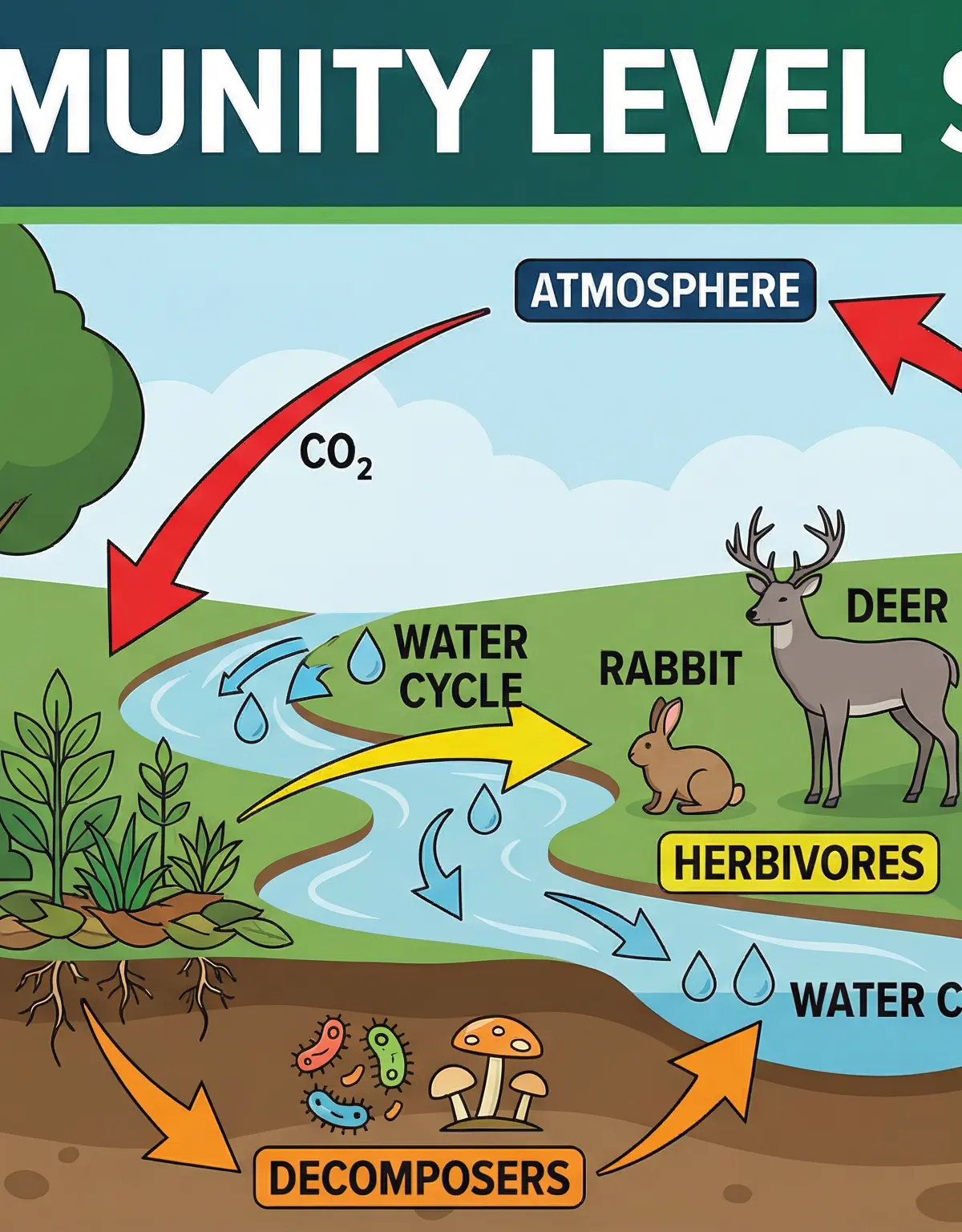
Topic B4: Community Level Systems explores the intricate web of relationships that sustain life on Earth. You will learn how organisms interact with each other and their environment, and how essential materials are continuously recycled. This topic is fundamental to Biology because it connects individual organisms to the global processes that support all ecosystems. It links heavily with topics on photosynthesis, respiration, and human impact on the environment. Examiners frequently test this area using data-rich questions, asking you to interpret food webs, calculate biomass transfer, and explain the consequences of changing environmental factors.
Key Concepts
Concept 1: Ecosystems and Interdependence
An ecosystem encompasses all the living organisms (the community) in a specific area, interacting with their non-living environment. Organisms do not exist in isolation; they are interdependent. This means they rely on each other for resources such as food, shelter, pollination, and seed dispersal. If one species is removed from a food web, it can have cascading effects throughout the entire community.
Example: In a woodland ecosystem, if a disease wipes out the rabbit population, the foxes (predators) will have less food and their numbers may decline. Meanwhile, the grass (producers) that the rabbits normally eat may overgrow, potentially outcompeting other plant species.
Concept 2: Biotic and Abiotic Factors
Communities are shaped by two main types of factors. Biotic factors are living elements, such as predation, competition (for food, territory, or mates), disease, and mutualism. Abiotic factors are non-living, physical elements, including temperature, light intensity, soil pH, water availability, and mineral ion concentration. Examiners often require candidates to distinguish between these and explain how a change in one factor affects population sizes.
Concept 3: Biomass Transfer and Pyramids
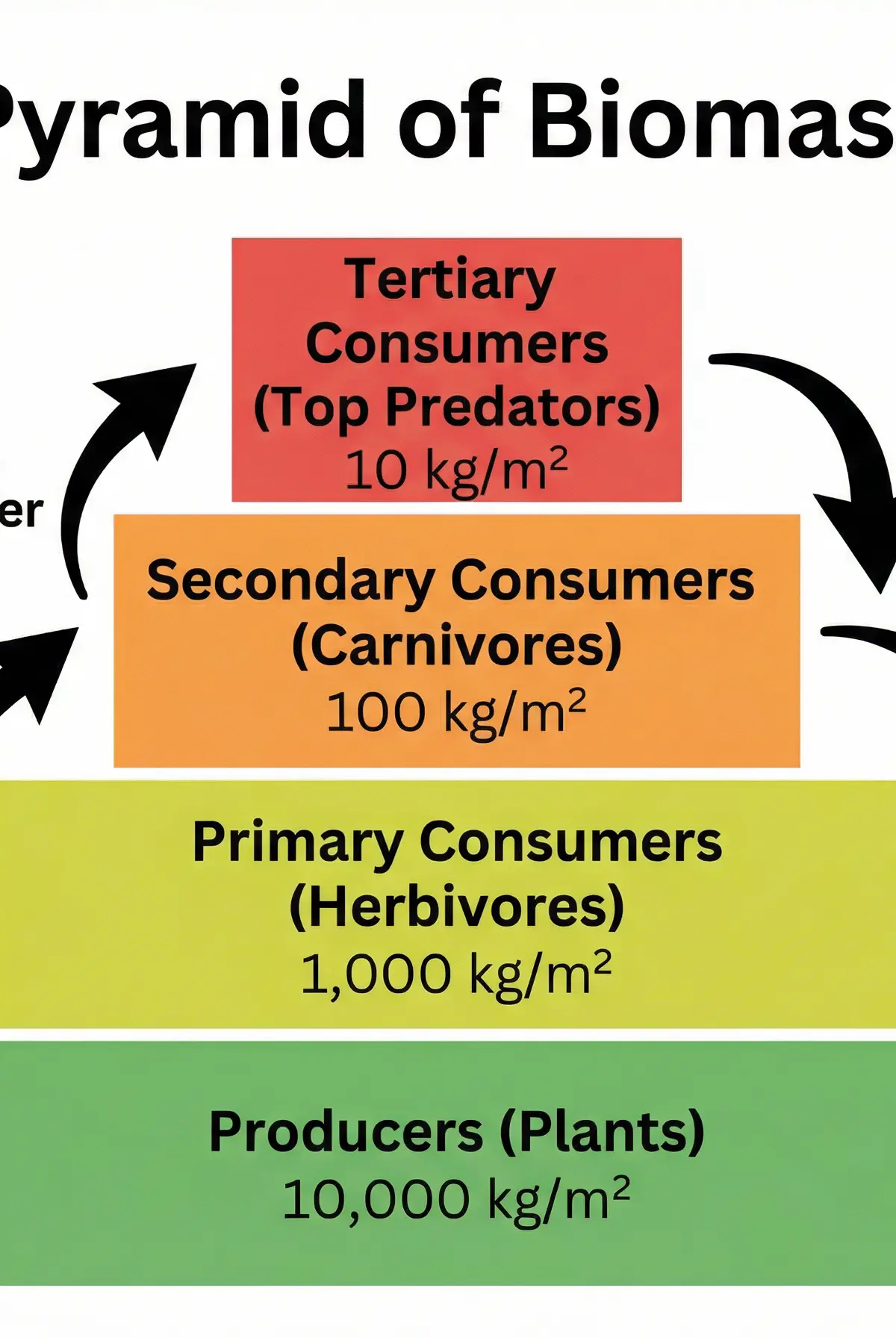
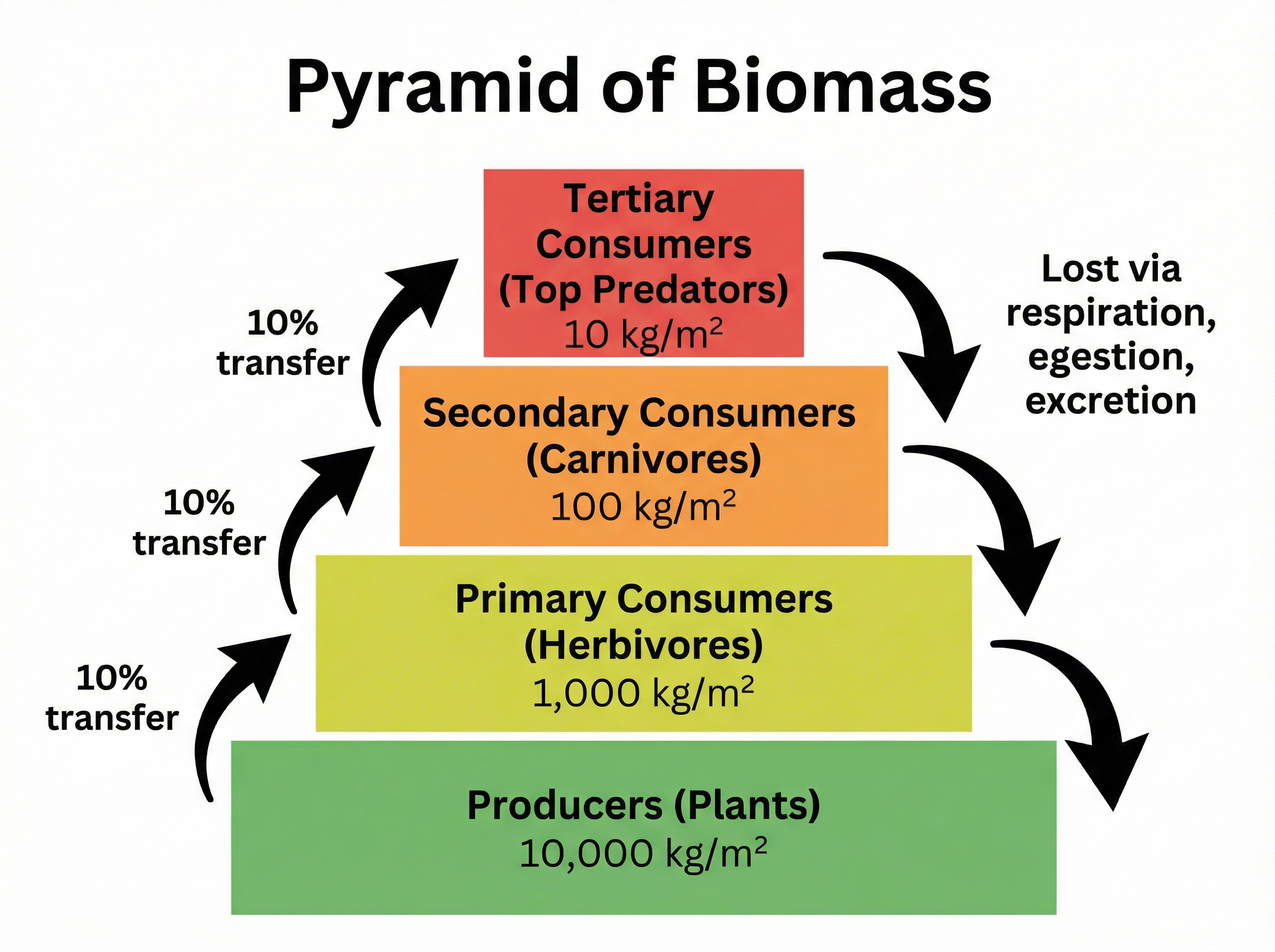
Biomass is the mass of living material in an organism or a trophic level. Food chains and webs show the flow of biomass from producers to consumers. However, this transfer is highly inefficient. At each trophic level, biomass is lost primarily through three processes: respiration (which releases energy as heat), egestion (removal of undigested food as faeces), and excretion (removal of metabolic waste like urea). Because of these losses, pyramids of biomass get narrower at each successive level, and food chains rarely exceed four or five trophic levels.
Concept 4: The Carbon and Water Cycles
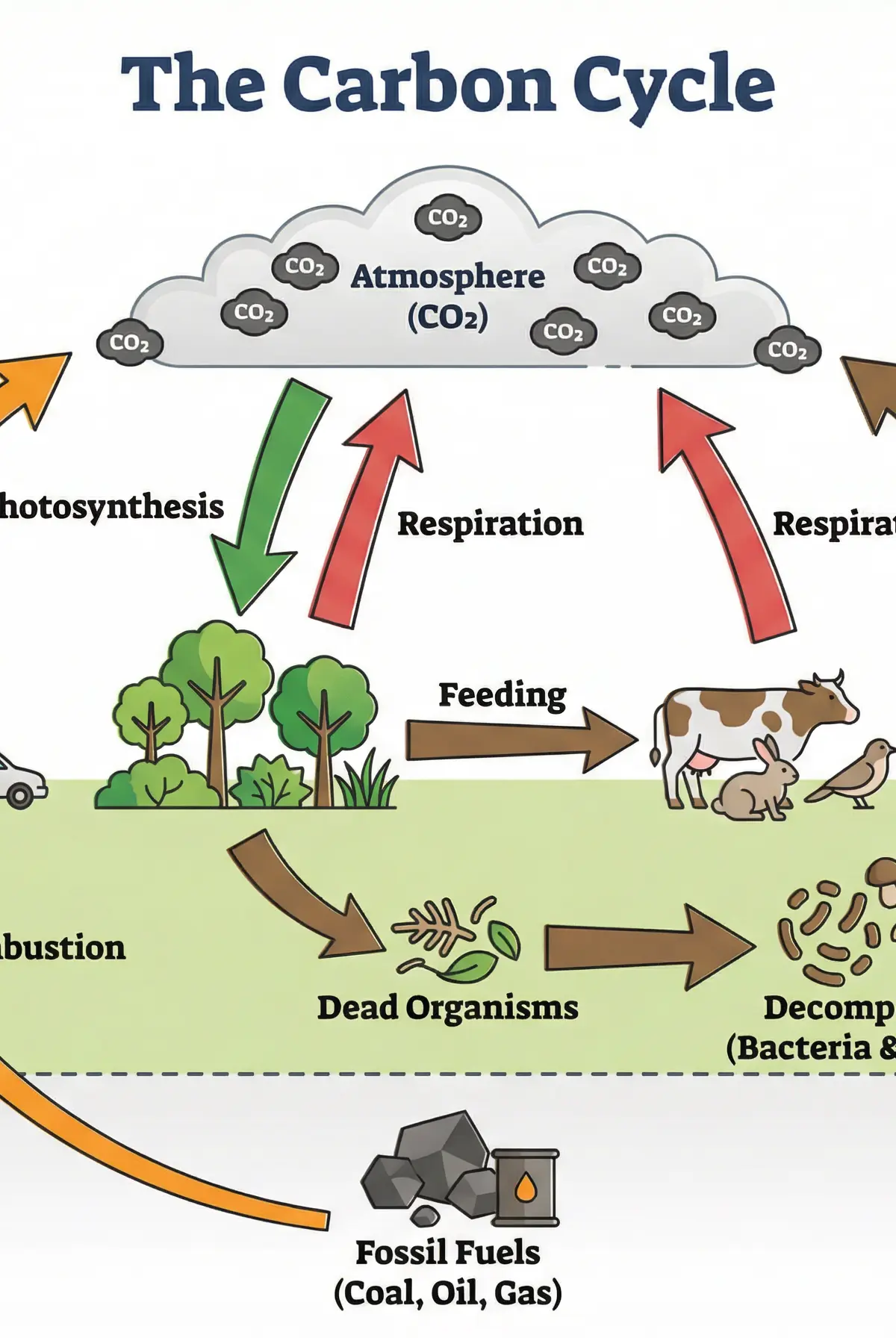
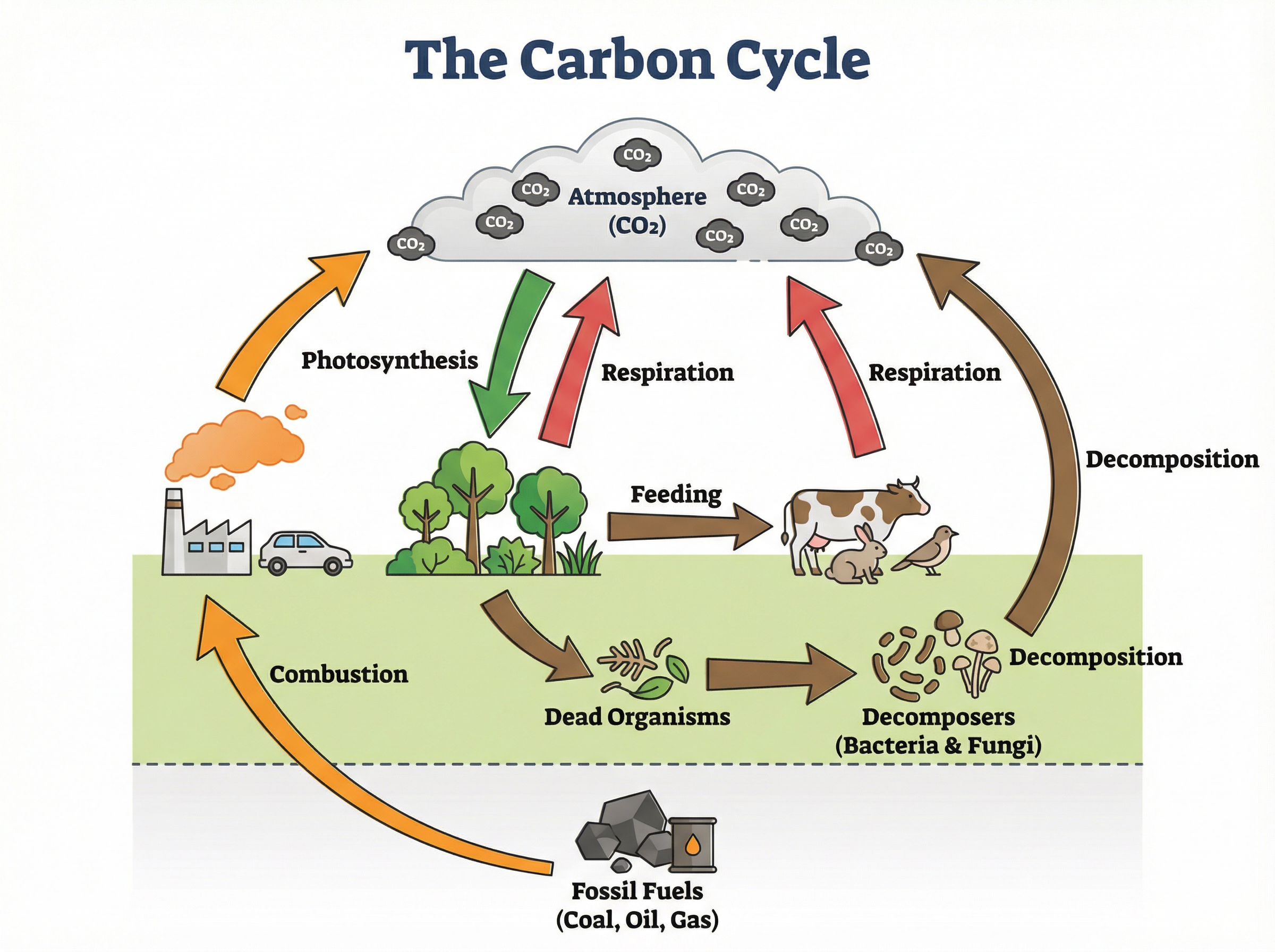
Materials in an ecosystem are continuously recycled. The carbon cycle involves the removal of carbon dioxide from the atmosphere by photosynthesis, and its return through respiration (by plants, animals, and decomposers) and combustion of fossil fuels. The water cycle involves evaporation, condensation, precipitation, and transpiration. Both cycles rely heavily on the sun's energy and the vital role of microorganisms in breaking down dead matter.
Concept 5: Decomposition
Decomposers (bacteria and fungi) break down dead organic matter, releasing trapped nutrients back into the soil and carbon dioxide into the atmosphere. This process is essential for nutrient cycling. The rate of decomposition is affected by temperature, moisture, and oxygen availability. Warm, moist, and aerobic conditions provide the optimal environment for decomposer enzymes to function.
Mathematical/Scientific Relationships
Efficiency of Biomass Transfer (%)
\text{Efficiency} = \frac{\text{Biomass transferred to the next level}}{\text{Biomass available at the previous level}} \times 100
Must memorise. Use this to calculate the percentage of biomass that successfully moves from one trophic level to the next. Remember that typical efficiency is only around 10%.
Practical Applications
Understanding decomposition has significant real-world applications in agriculture and waste management. Gardeners and farmers create compost heaps to produce natural fertiliser. They optimize conditions by turning the compost (introducing oxygen for aerobic respiration) and keeping it moist, which maximizes the rate at which microorganisms break down the organic waste.
Podcast Revision
Listen to this 10-minute revision podcast for a comprehensive review of the topic, including exam tips and a quick-fire quiz:
Visual Resources
2 diagrams and illustrations
Interactive Diagrams
2 interactive diagrams to visualise key concepts
Conceptual Flow Outline
A simplified flowchart of the Carbon Cycle showing the key processes moving carbon between stores.
Conceptual Flow Outline
A simple food chain demonstrating the direction of arrows representing biomass transfer.
Worked Examples
3 worked examples — open one to explore the question and available guidance.
Practice Questions
Test your understanding — click to reveal model answers
State two abiotic factors that could affect the distribution of a plant species in a field. [2 marks]
Hint: Think about the non-living physical conditions the plant needs to survive.
A student observed a food chain: Grass -> Grasshopper -> Frog -> Owl. Explain what would happen to the population of grasshoppers if a disease killed most of the frogs. [3 marks]
Hint: Think about the immediate effect on the grasshoppers, and then the secondary effect on their food source.
Explain how carbon from a dead leaf is returned to the atmosphere. [4 marks]
Hint: Which organisms are involved, what do they do, and what chemical process releases the gas?
In a marine ecosystem, phytoplankton have a biomass of 50,000 arbitrary units. Zooplankton eat the phytoplankton and have a biomass of 4,500 units. Small fish eat the zooplankton and have a biomass of 360 units. Calculate the efficiency of biomass transfer between the zooplankton and the small fish. [2 marks]
Hint: Make sure you select the correct two trophic levels from the data provided.
Evaluate the use of compost heaps by gardeners to recycle nutrients. [6 marks]
Hint: Provide both advantages and disadvantages, explain the biology behind decomposition, and end with a conclusion.