OCR · GCSE · Biology
Topic B5: Genes, inheritance and selection
Master the blueprint of life with this comprehensive guide to Genes, Inheritance, and Selection. From predicting traits with Punnett squares to understanding how natural selection drives evolution, you'll learn exactly what examiners are looking for to secure top marks.
- 5 min read
- 3 worked examples
- 5 practice questions
- 6 key terms
Study Notes
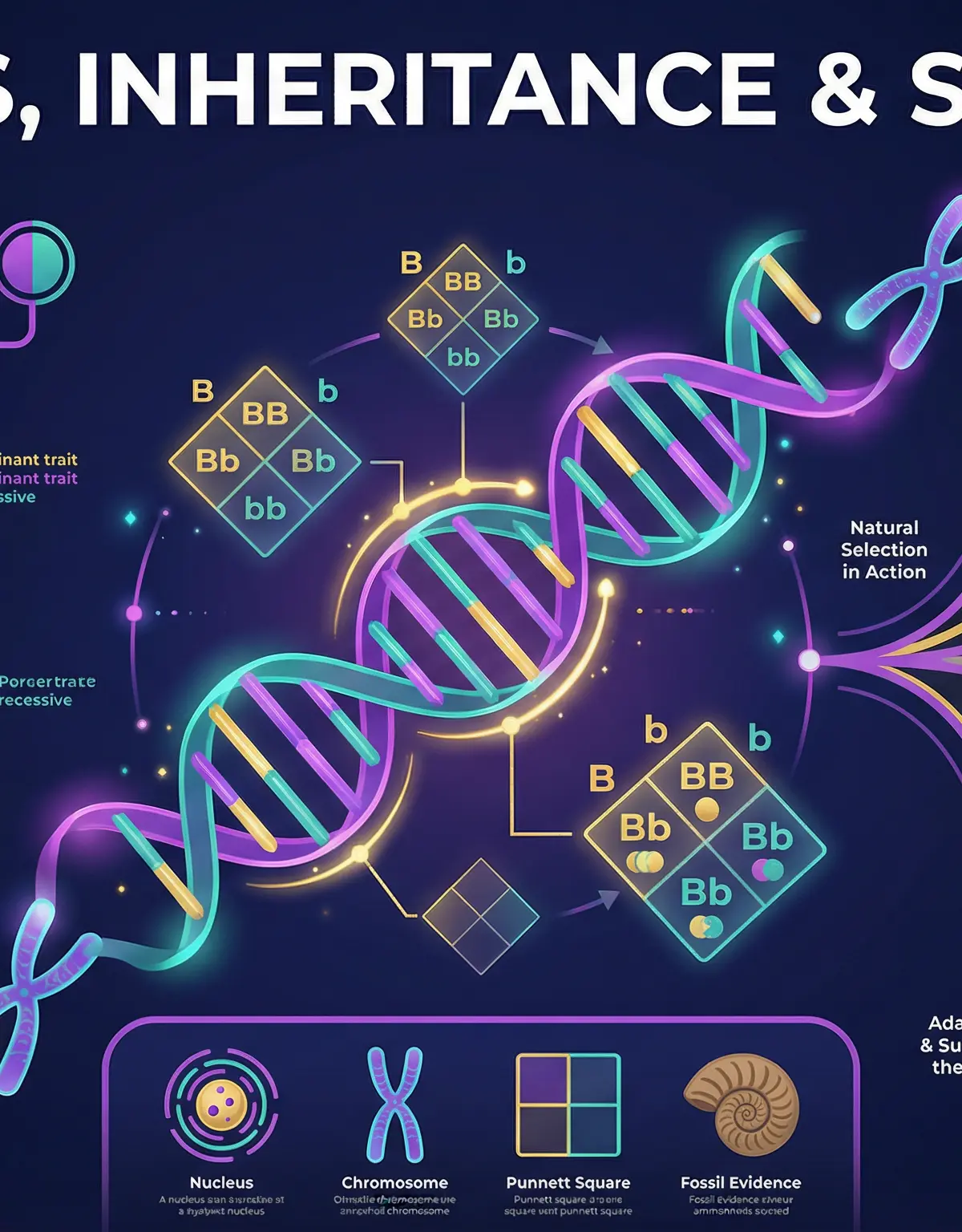
Overview
Welcome to Topic B5: Genes, Inheritance and Selection. This topic forms the foundation of modern biology, explaining how characteristics are passed from one generation to the next and how species evolve over time. It is heavily tested in exams, particularly your ability to use Punnett squares, define genetic terms precisely, and explain natural selection without making common misconceptions.
This topic connects strongly with cell biology (meiosis) and ecology (adaptation). Examiners love synoptic questions that link genetic variation to survival in different ecosystems. Throughout this guide, we will focus on the exact terminology and structures required by the mark scheme.
Key Concepts
Concept 1: The Genetic Hierarchy
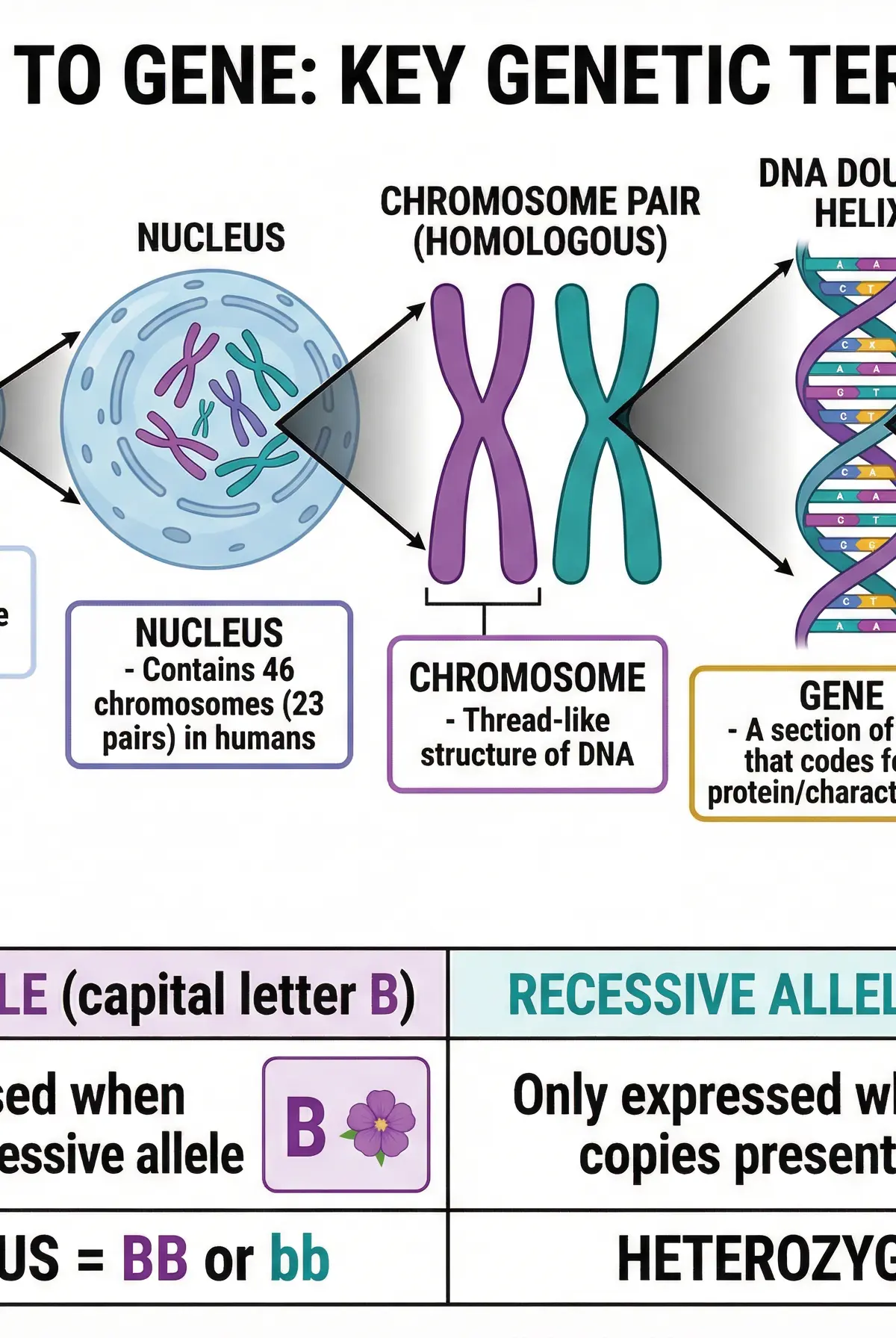
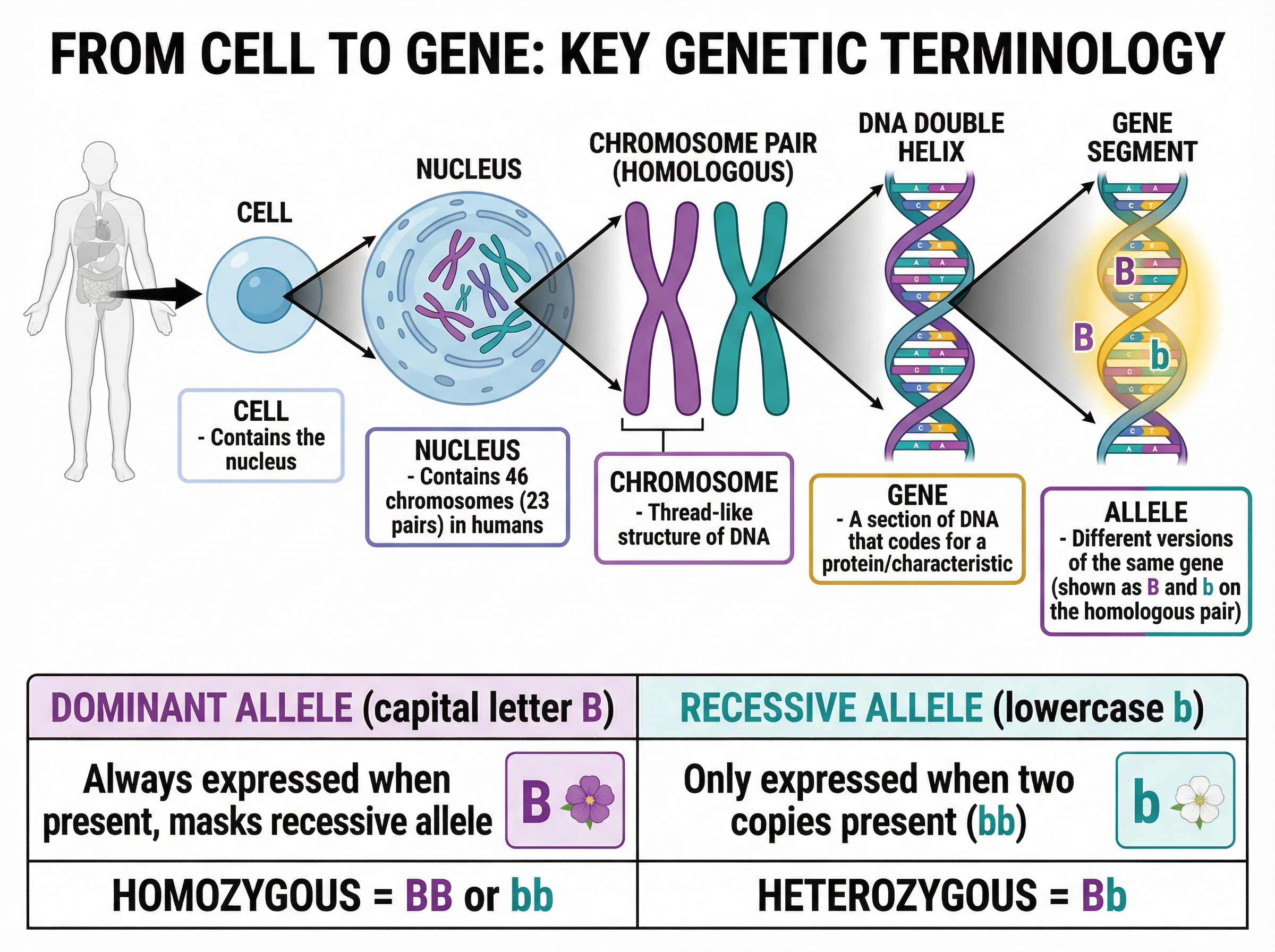
To secure marks, candidates must clearly distinguish between the structures that carry genetic information. Inside a eukaryotic cell is a nucleus. The nucleus contains chromosomes, which are long, coiled molecules of DNA. A gene is a specific section of DNA on a chromosome that codes for a particular sequence of amino acids, to make a specific protein.
Think of it like a library:
- The nucleus is the library building.
- The chromosomes are the books.
- The genes are the chapters in the books.
- The DNA is the text itself.
Concept 2: Alleles and Inheritance
Genes come in different versions called alleles. For example, the gene for eye colour has an allele for brown eyes and an allele for blue eyes. Because humans have pairs of chromosomes (one from each parent), we have two alleles for every gene.
- Dominant alleles (represented by a capital letter, e.g., B) are always expressed in the phenotype, even if only one copy is present.
- Recessive alleles (represented by a lowercase letter, e.g., b) are only expressed if two copies are present.
If an individual has two identical alleles (BB or bb), they are homozygous. If they have two different alleles (Bb), they are heterozygous.
Concept 3: Reproduction and Meiosis
Asexual reproduction involves only one parent and no fusion of gametes. Cells divide by mitosis, producing genetically identical offspring (clones). This is rapid but produces no genetic variation.
Sexual reproduction involves the fusion of male and female gametes (fertilisation). Gametes are formed by meiosis, a type of cell division that halves the number of chromosomes. In humans, meiosis produces sperm and egg cells with 23 chromosomes each. When they fuse, the resulting zygote has the full 46 chromosomes. Because meiosis shuffles genetic material, sexual reproduction leads to variation in the offspring.
Concept 4: Predicting Inheritance with Punnett Squares
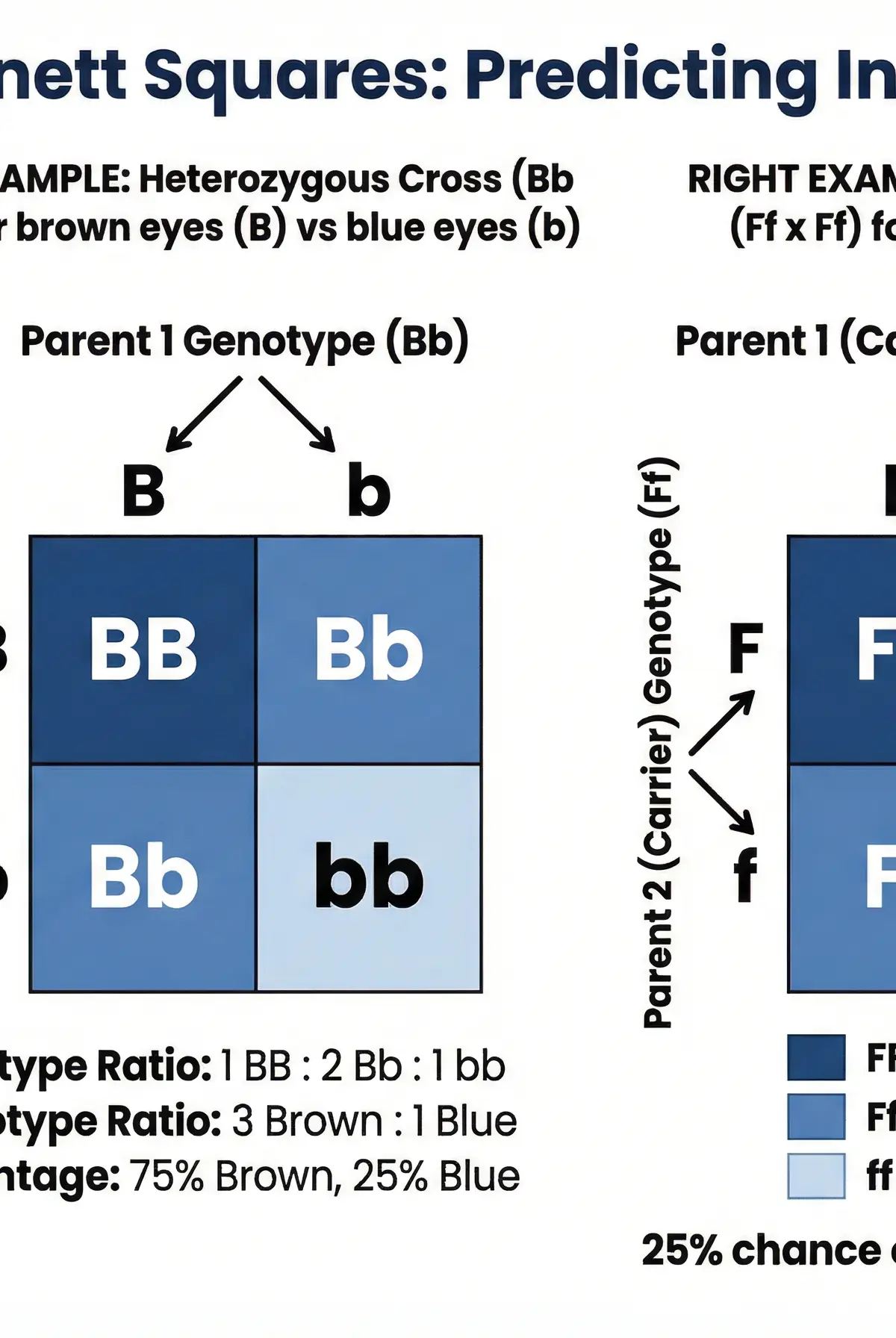
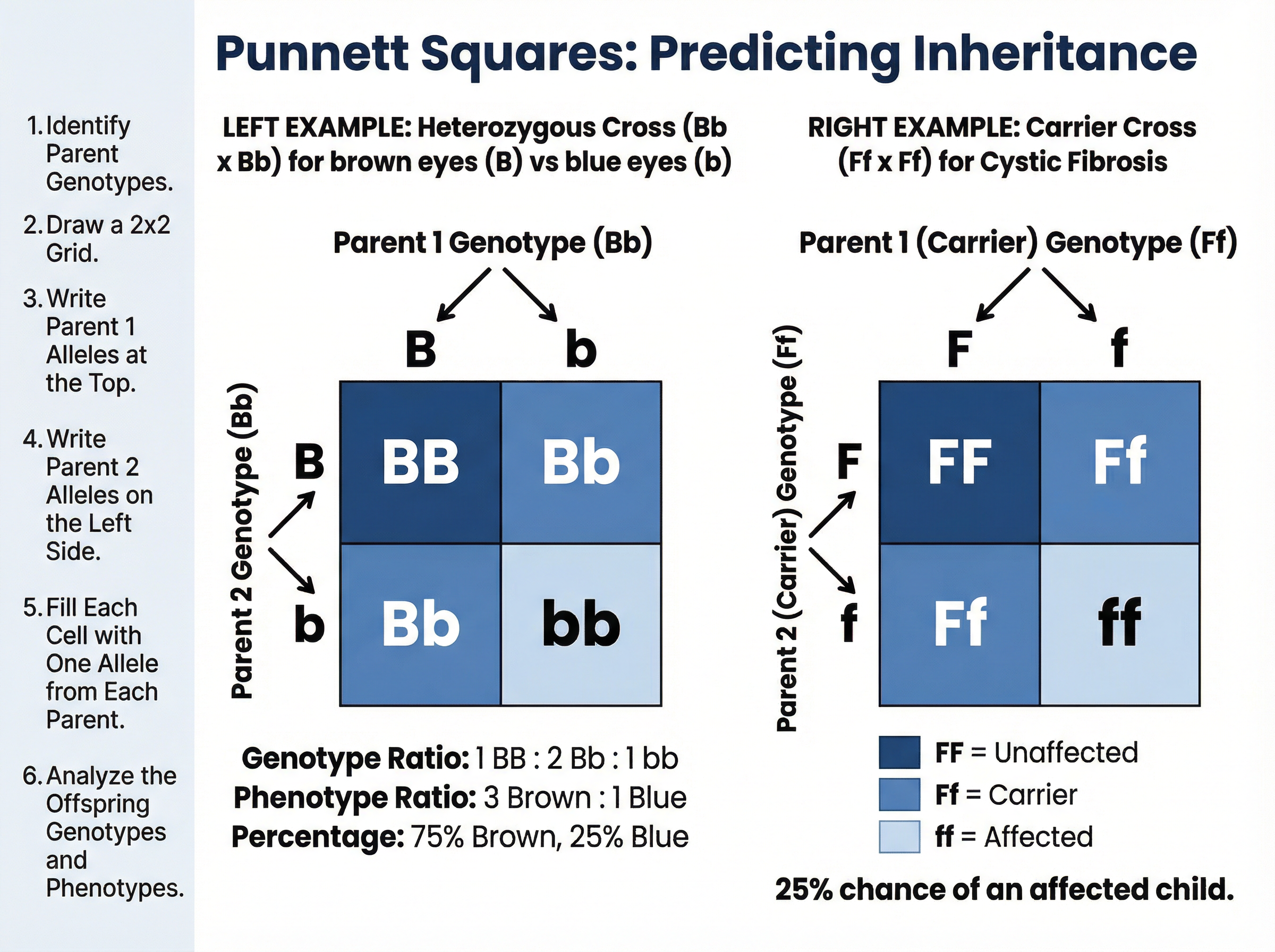
A Punnett square is a model used to predict the outcome of a genetic cross. It shows all possible combinations of alleles from the parents.
How to construct a Punnett square:
- Determine the genotypes of the parents.
- Place the alleles of one parent across the top, and the other parent down the side.
- Fill in the boxes by combining the alleles from the corresponding row and column.
- Calculate the probabilities of different genotypes and phenotypes.
Concept 5: Evolution by Natural Selection
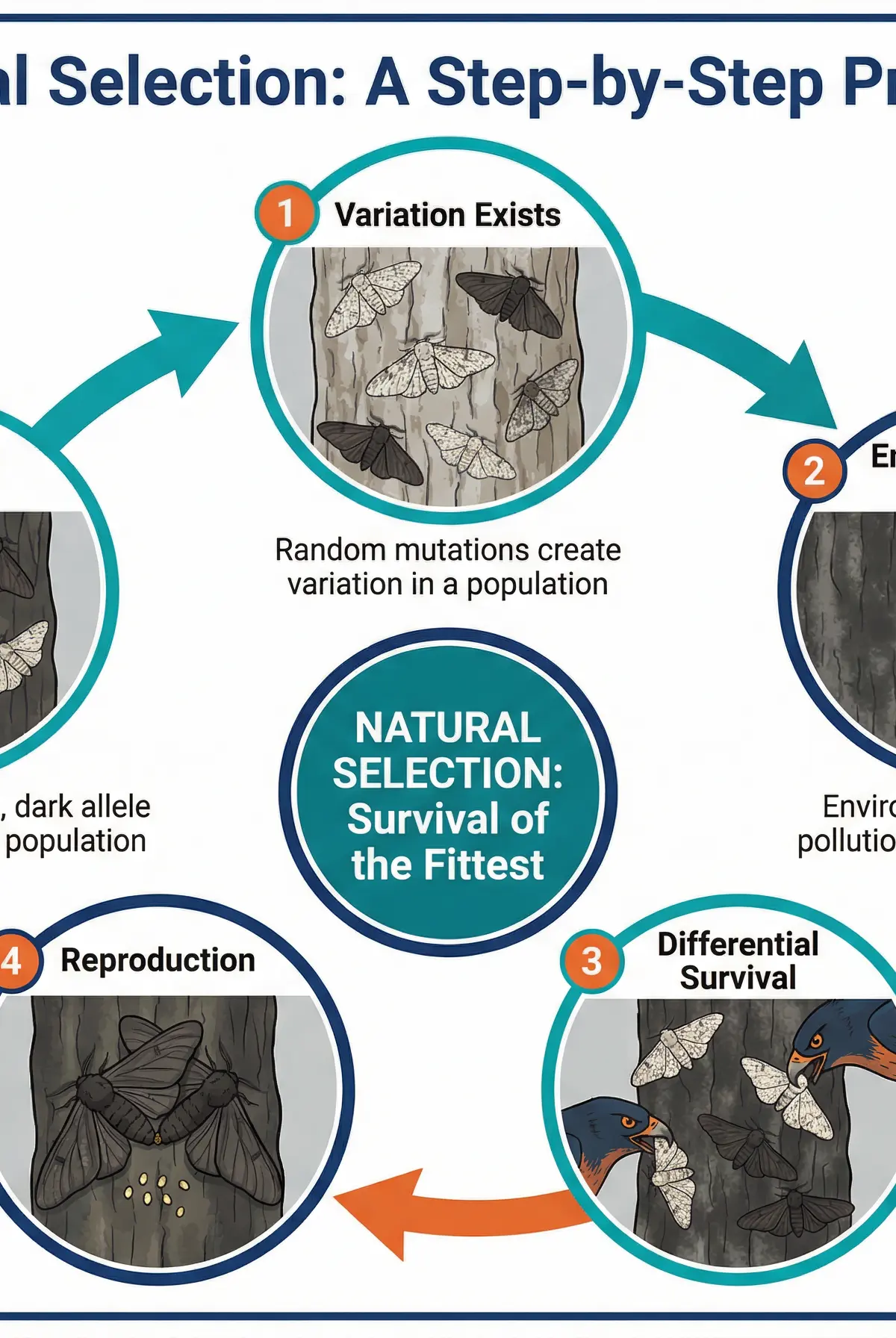
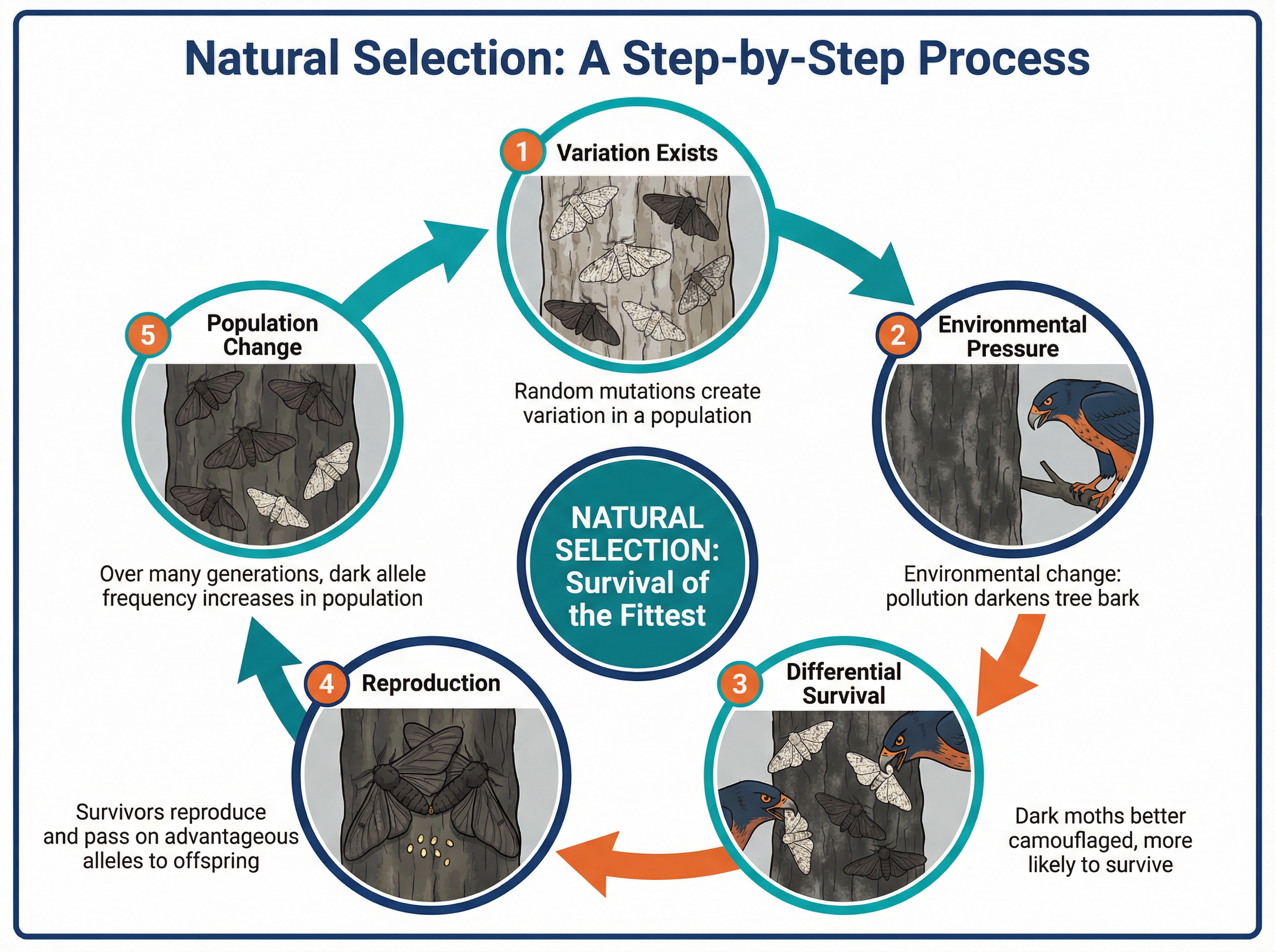
Evolution is the change in the inherited characteristics of a population over time through a process called natural selection. Charles Darwin and Alfred Russel Wallace independently proposed this theory.
The 5-Step Examiner-Approved Sequence:
- Variation: Within a population, there is genetic variation due to random mutations.
- Competition: Organisms overproduce offspring, leading to competition for limited resources.
- Advantage: Some variants have characteristics better suited to the environment.
- Survival & Reproduction: These better-adapted individuals are more likely to survive and reproduce.
- Inheritance: They pass on their advantageous alleles to the next generation, increasing the frequency of these alleles over time.
Mathematical/Scientific Relationships
- Probability in Genetics: Often expressed as a fraction (1/4), a ratio (3:1), or a percentage (25%).
- Formula for percentage: rac{ ext{Number of specific phenotype}}{ ext{Total number of offspring}} imes 100
- Note: Probabilities predict the likelihood of an outcome, not the guaranteed result. Each fertilization event is independent.
Practical Applications
Understanding inheritance is crucial for selective breeding (artificial selection), where humans breed plants and animals for particular genetic characteristics (e.g., disease resistance in crops, high milk yield in cows). It also underpins genetic engineering, where a gene from one organism is transferred to another.
Visual Resources
3 diagrams and illustrations
Interactive Diagrams
2 interactive diagrams to visualise key concepts
Conceptual Flow Outline
The process of meiosis resulting in four genetically distinct gametes.
Conceptual Flow Outline
Flowchart showing the mechanism of natural selection.
Worked Examples
3 worked examples — open one to explore the question and available guidance.
Practice Questions
Test your understanding — click to reveal model answers
A plant with red flowers is crossed with a plant with white flowers. All the offspring have red flowers. State which allele is dominant and explain how you know. (2 marks)
Hint: Look at the phenotype of the offspring compared to the parents.
Cystic fibrosis is an inherited disorder caused by a recessive allele (f). Two healthy parents have a child with cystic fibrosis. Explain how this is possible. You may use a genetic diagram. (4 marks)
Hint: If the parents are healthy but have an affected child, what must their genotypes be?
MRSA is a strain of bacteria that is resistant to many antibiotics. Explain how MRSA evolved. (6 marks)
Hint: Use the 5 steps of natural selection: variation, advantage, survival, reproduction, inheritance.
Compare the outcomes of mitosis and meiosis. (4 marks)
Hint: Think about the number of cells produced, the chromosome number, and genetic variation.
A student states: 'Humans evolved from monkeys.' Evaluate this statement using your knowledge of evolution. (3 marks)
Hint: Did we evolve *from* them, or do we share something in the past?