OCR · GCSE · Biology
Topic B6: Global challenges
Master the real-world applications of Biology with Topic B6: Global Challenges. From calculating population sizes using capture-recapture to explaining the exact steps of genetic engineering and immune responses, this guide covers the high-yield content examiners love to test.
- 6 min read
- 3 worked examples
- 5 practice questions
- 6 key terms
Study Notes
Overview
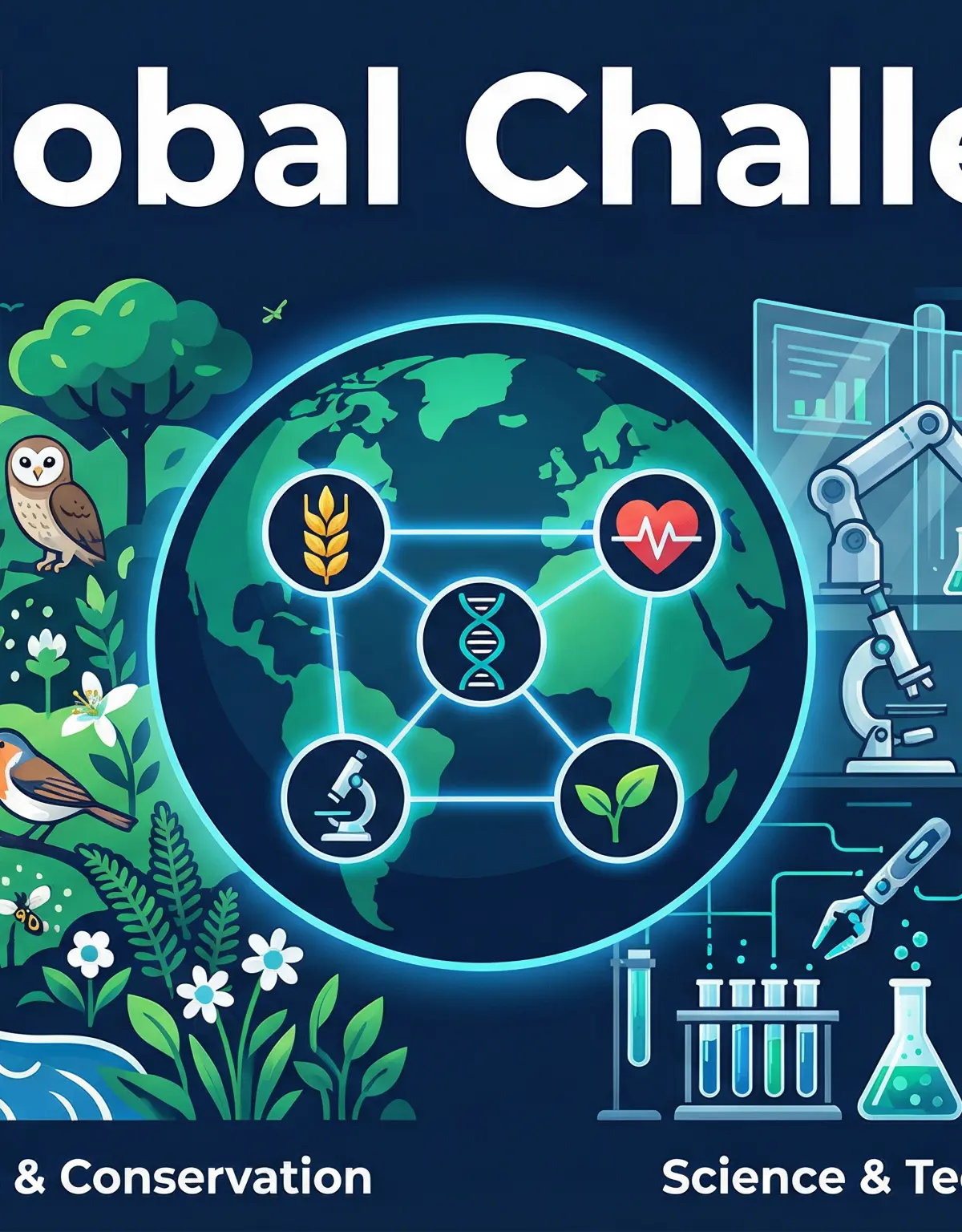
Welcome to Topic B6: Global Challenges! This is a fascinating and highly relevant section of the GCSE Biology specification. Rather than just looking at isolated cells or single organisms, this topic zooms out to examine how biological systems interact with the modern world.
We will explore how scientists monitor ecosystems to protect biodiversity, how we can produce enough food for a rapidly growing human population (over 8 billion and counting!), and how we combat disease using everything from our own immune systems to cutting-edge genetic engineering.
This topic is crucial because it frequently appears in extended response (6-mark) questions where you must evaluate different strategies or explain complex processes like genetic engineering step-by-step. Examiners love testing your ability to apply biological knowledge to real-world scenarios. Let's dive in!
Key Concepts
Concept 1: Monitoring the Environment (Sampling Techniques)
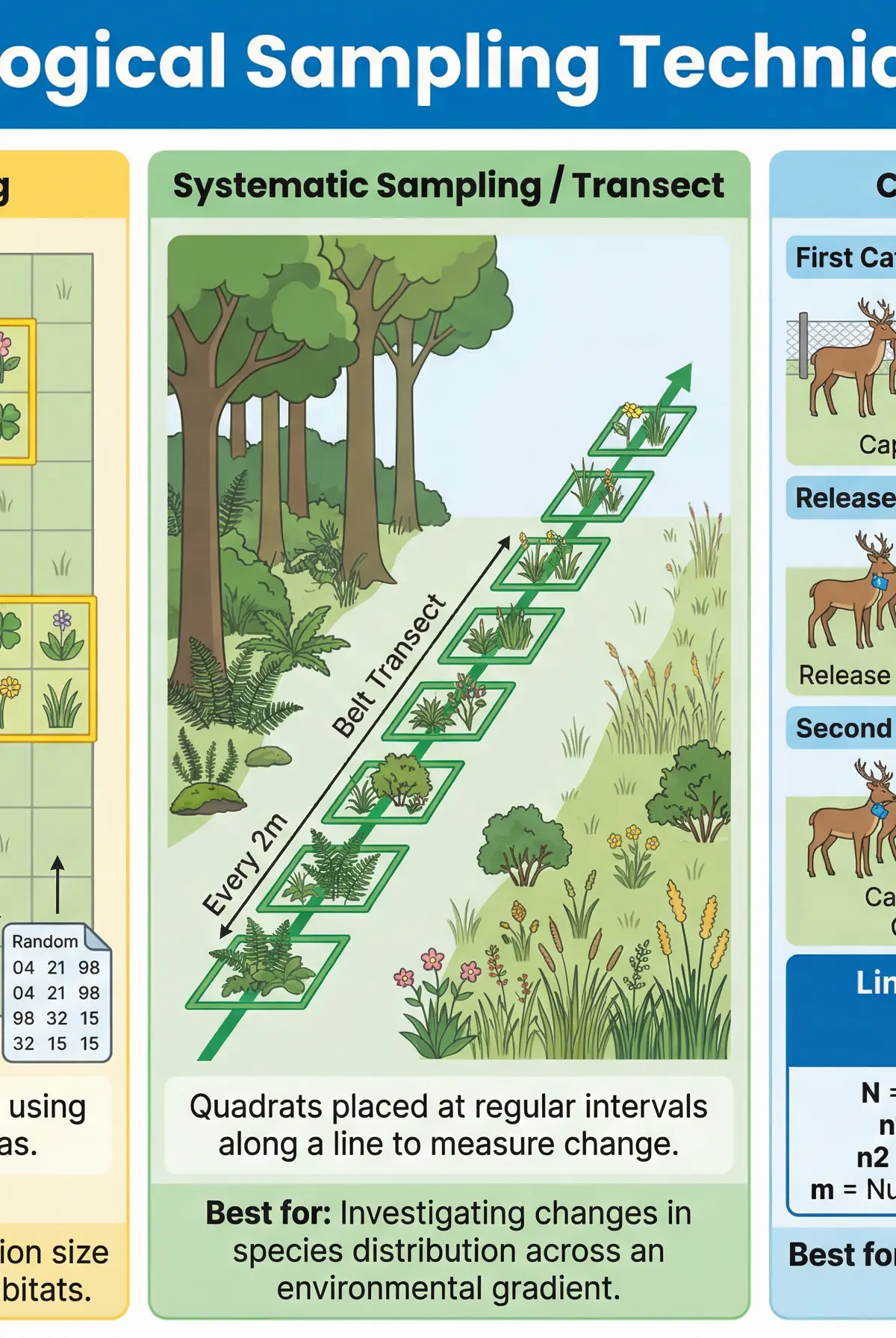
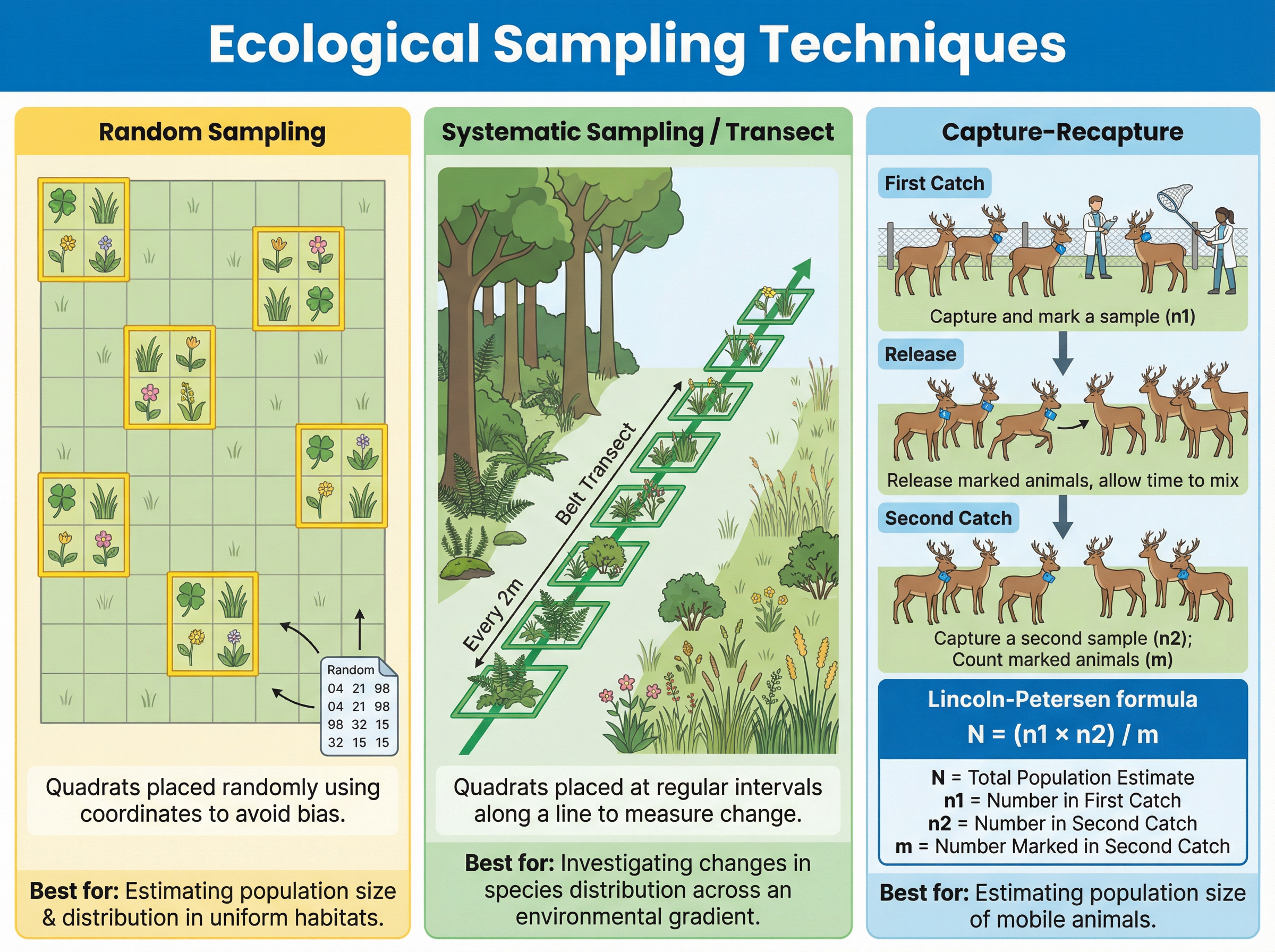
To protect biodiversity, we first need to measure it. Because we cannot count every single organism in a habitat, we take samples. Examiners expect you to know which technique to use and why.
**1. Random Sampling (Quadrats)**Used for estimating the population of plants or slow-moving animals in a uniform habitat. You must use random number coordinates to place the quadrat (e.g., a 0.5m × 0.5m square frame) to avoid bias.
Why it works: Random placement ensures the sample is representative of the whole area.
**2. Systematic Sampling (Transects)**Used to investigate how species distribution changes across an environmental gradient (e.g., from the shade of a tree into bright sunlight). You lay a tape measure (the transect) and place quadrats at regular intervals along it.
Why it works: It shows a clear relationship between an abiotic factor (like light intensity) and species abundance.
3. Capture-RecaptureUsed for mobile animals. You capture a sample (n_1), mark them harmlessly, release them, and allow them to mix. Later, you capture a second sample (n_2) and count how many are marked (m).
Why it works: The proportion of marked animals in the second catch reflects the proportion of marked animals in the total population.
Concept 2: Feeding the Human Population
As the population grows, we need sustainable ways to increase food yield.
Hydroponics: Growing plants in water containing dissolved nutrients, without soil.
- Advantages: Can be done anywhere (e.g., urban warehouses), exact nutrient control, fewer soil-borne pests.
- Disadvantages: Expensive setup, requires continuous electricity for pumps/lights.
Biological Control: Introducing a natural predator or parasite to control a pest population instead of using chemical pesticides.
- Advantages: No chemical pollution, pests cannot become resistant.
- Disadvantages: The predator might become an invasive species and eat non-target organisms.
Concept 3: Genetic Engineering
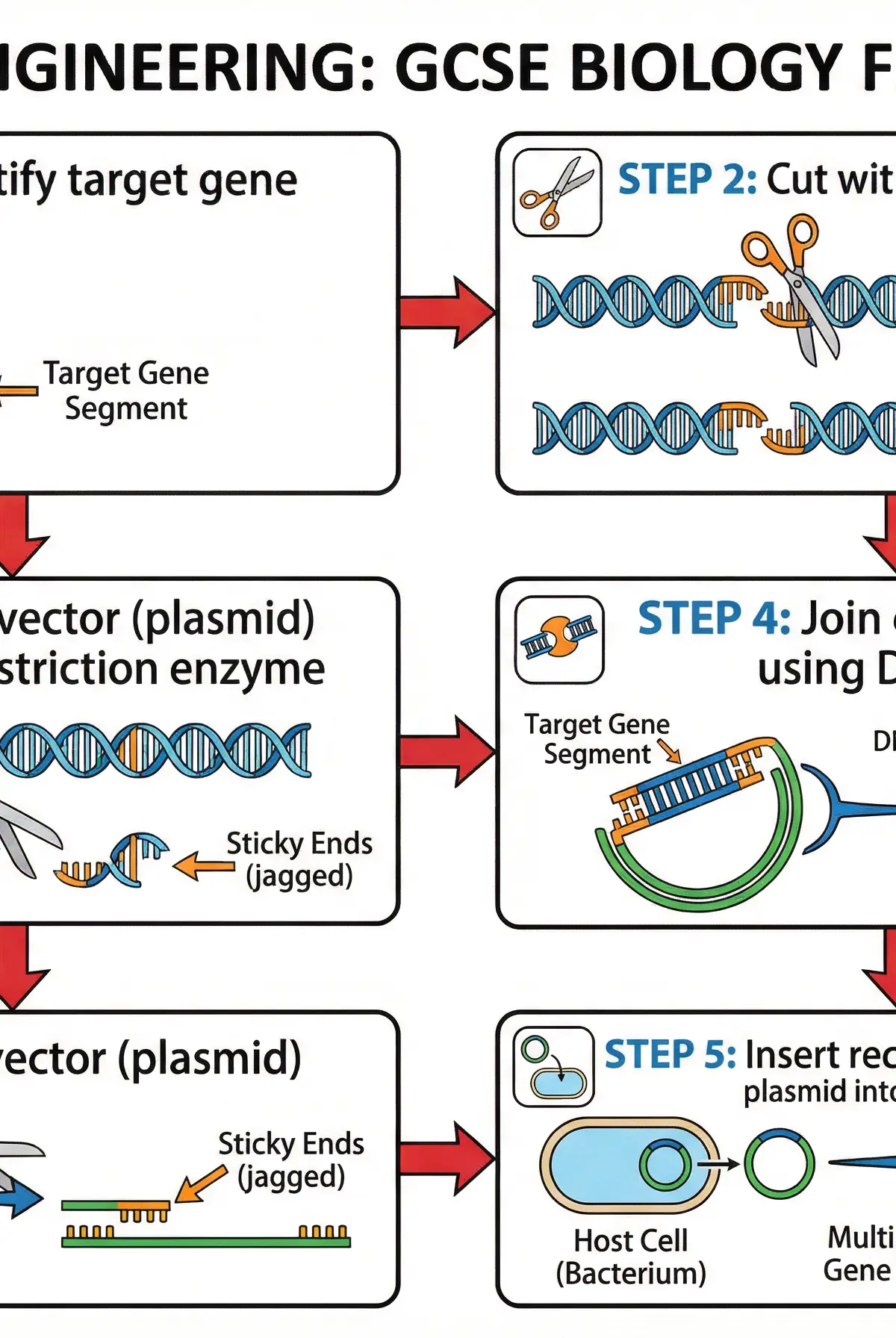
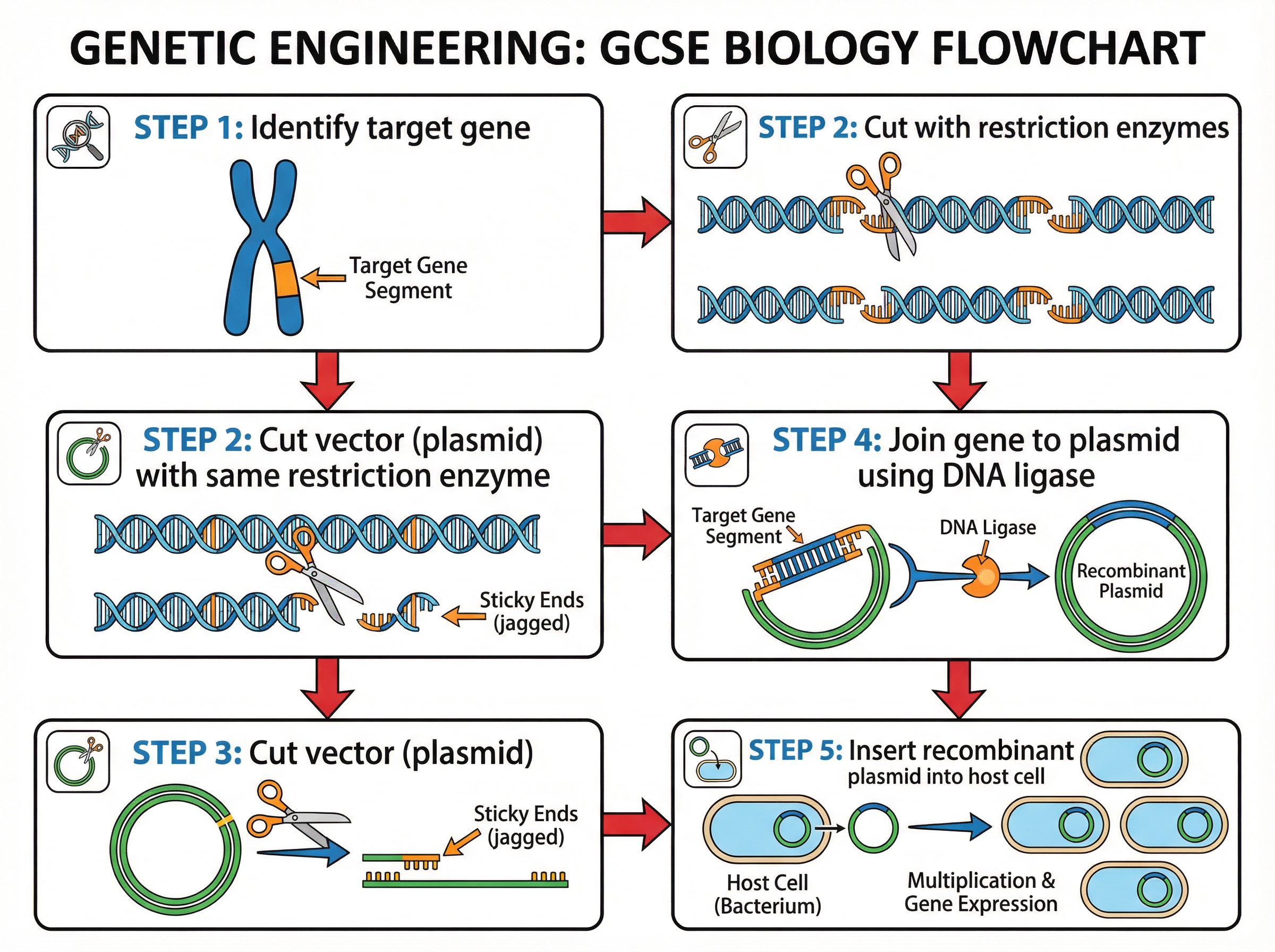
Genetic engineering involves modifying an organism's genome by introducing a gene from another organism to give a desired characteristic (e.g., disease resistance in crops, or insulin production in bacteria). This is a classic 6-mark question topic.
The 5 Steps (Higher Tier Focus):
- Identify the target gene.
- Cut the gene out using restriction enzymes. This leaves single-stranded overhangs called sticky ends.
- Cut open a vector (usually a bacterial plasmid) using the same restriction enzyme so it has complementary sticky ends.
- Join the gene into the plasmid using the enzyme DNA ligase, forming a recombinant plasmid.
- Insert the recombinant plasmid into a host bacterial cell, which will then multiply and express the gene.
Concept 4: Health and Disease
Health is a state of complete physical, mental, and social well-being, not merely the absence of disease.
Communicable Diseases: Caused by pathogens (bacteria, viruses, fungi, protists) and can be transmitted between individuals (e.g., flu, malaria).
Non-Communicable Diseases: Cannot be transmitted. They are caused by genetics, lifestyle, or environmental factors (e.g., cardiovascular disease, cancer).
Examiner Note: Cancer is caused by uncontrolled cell division due to mutations. Do not just call it a "genetic disease."
Concept 5: The Immune System and Vaccination
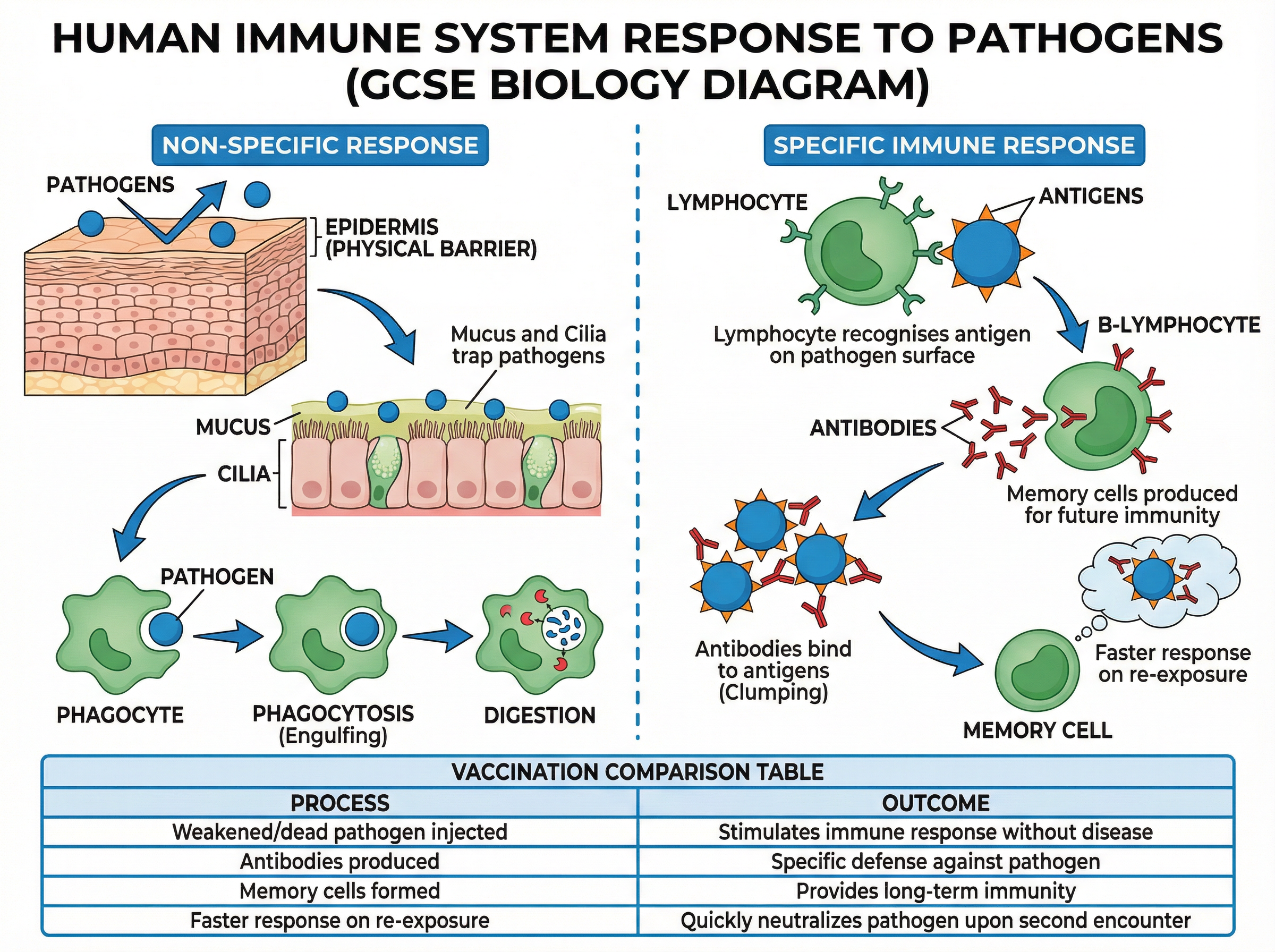
When a pathogen enters the body, the immune system responds.
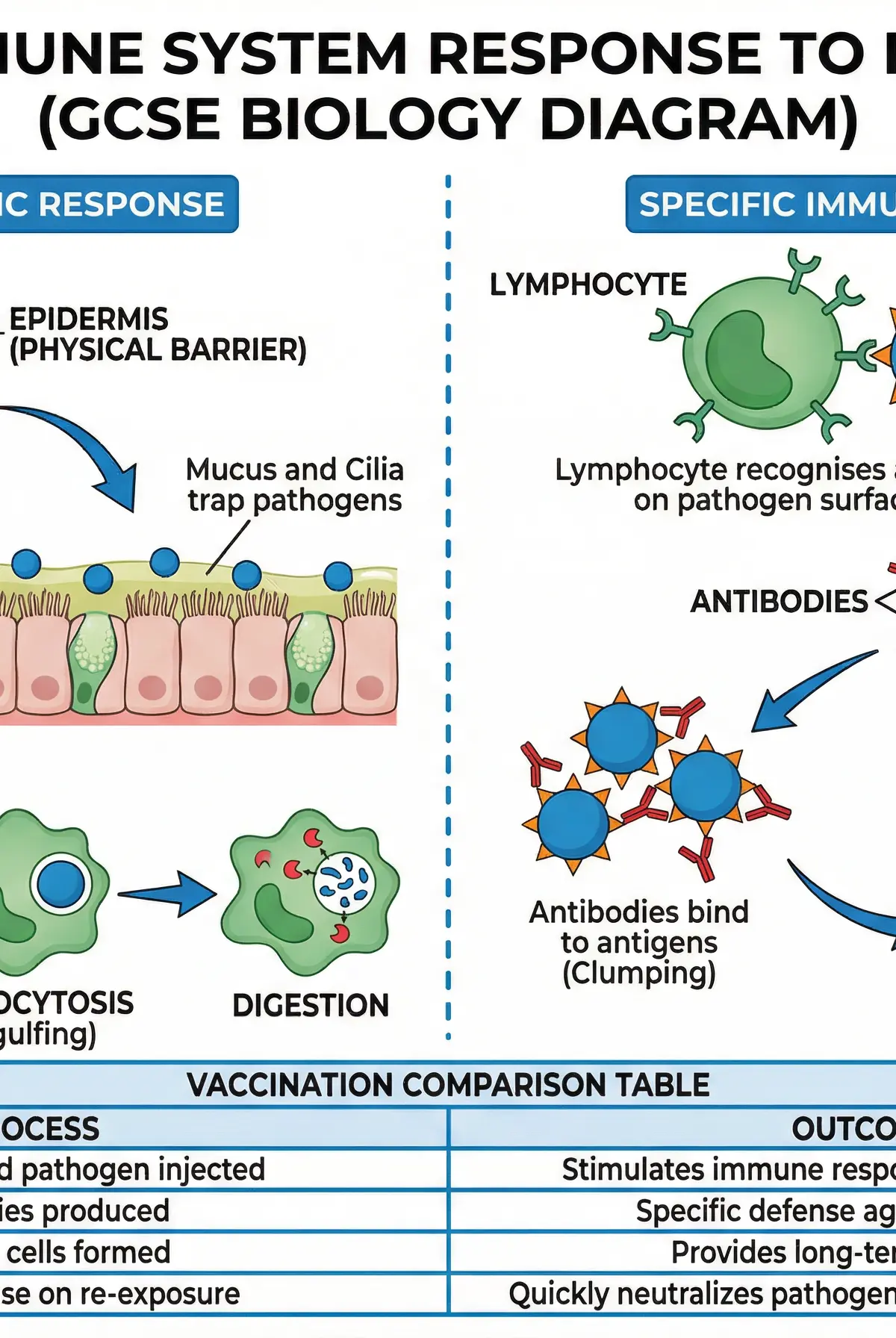
Non-Specific Defences: Physical barriers (skin), chemical barriers (stomach acid), and phagocytes (white blood cells that engulf and digest pathogens via phagocytosis).
Specific Immune Response:
- Lymphocytes (a type of white blood cell) recognise specific antigens on the surface of the pathogen.
- B-lymphocytes produce specific antibodies that are complementary to the antigens.
- Antibodies bind to the pathogens, clumping them together or marking them for destruction.
- Memory cells are produced, remaining in the blood to provide long-term immunity.
Vaccination: Involves injecting a dead or inactive form of a pathogen. It stimulates the specific immune response and the production of memory cells without causing the disease. If the live pathogen enters the body later, the response is rapid and massive.
Mathematical/Scientific Relationships
**1. The Lincoln-Petersen Formula (Capture-Recapture)**Used to estimate population size (N).
N = \frac{n_1 \times n_2}{m}
- N = Estimated total population size
- n_1 = Number of animals captured and marked in the first sample
- n_2 = Total number of animals captured in the second sample
- m = Number of marked animals in the second sample
(Must memorise)
2. Estimating Population from Quadrats
\text{Estimated Population} = \frac{\text{Total Area}}{\text{Area of one quadrat}} \times \text{Mean number per quadrat}
(Must memorise)
Audio Revision: The B6 Podcast
Listen to this 10-minute audio summary covering all the core concepts, examiner tips, and a quick-fire recall quiz!
Visual Resources
3 diagrams and illustrations
Interactive Diagrams
2 interactive diagrams to visualise key concepts
Conceptual Flow Outline
Flowchart showing the human immune response to a pathogen.
Conceptual Flow Outline
The sequence of events in genetic engineering.
Worked Examples
3 worked examples — open one to explore the question and available guidance.
Practice Questions
Test your understanding — click to reveal model answers
State the term used to describe a disease that can be passed from one person to another. (1 mark)
Hint: Think of the word that means 'able to be communicated'.
Describe how a vaccine provides immunity against a specific virus. (4 marks)
Hint: What is actually in the vaccine? What cells does your body produce in response?
A farmer wants to control aphids on his crops. Evaluate the use of biological control compared to chemical pesticides. (6 marks)
Hint: Evaluate means you need pros and cons for both methods, followed by a conclusion.
Why is it important to use the same restriction enzyme to cut both the target gene and the bacterial plasmid? (2 marks)
Hint: Think about the shape of the ends that are left after cutting.
A student uses a 0.25 m² quadrat to sample daisies in a 500 m² field. Across 10 quadrats, they count a total of 40 daisies. Calculate the estimated total population of daisies in the field. (3 marks)
Hint: First, find the mean per quadrat. Then scale it up to the total area.