OCR · GCSE · Biology
Vaccination
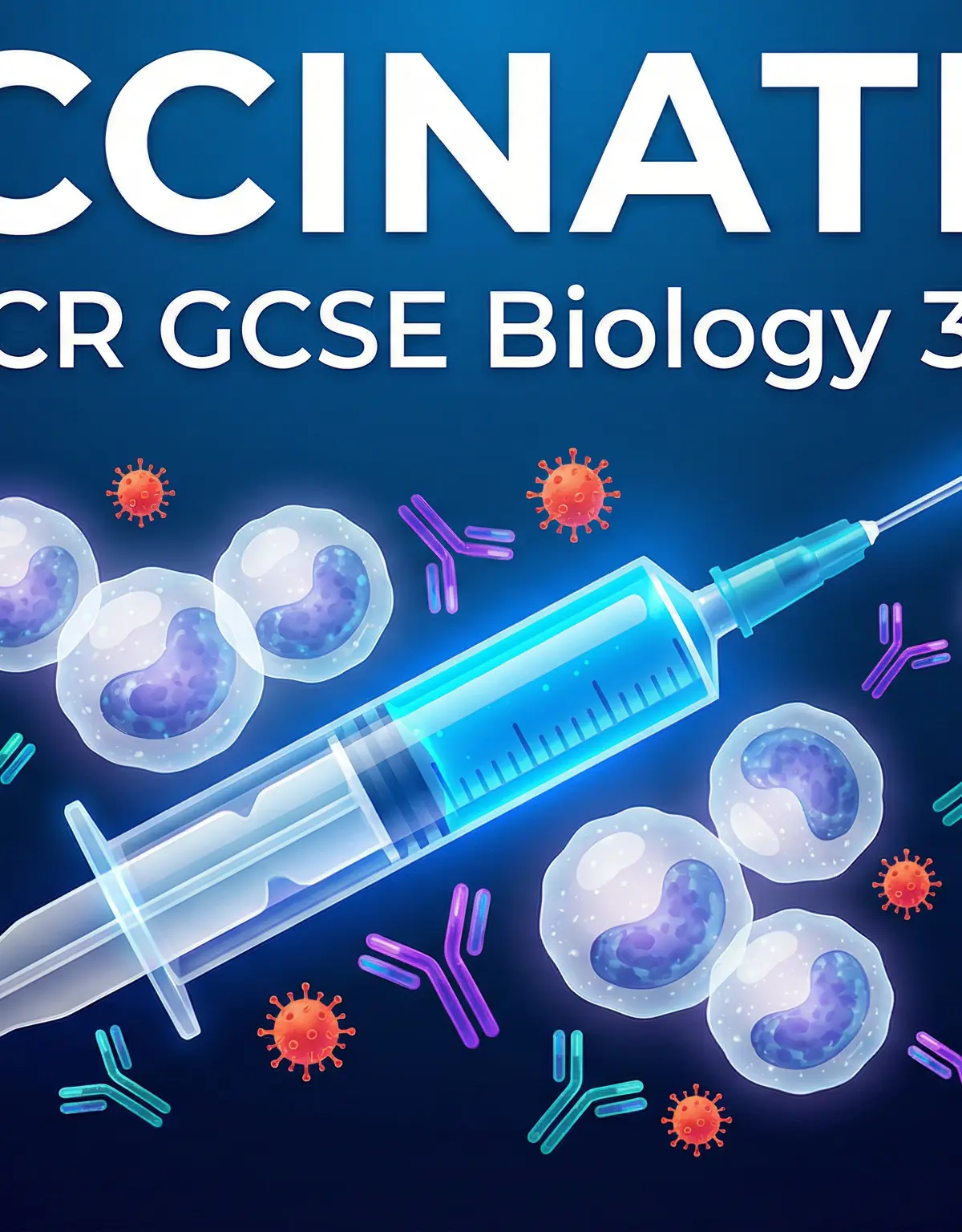
Master OCR GCSE Biology Topic 3.8: Vaccination. This guide breaks down the immune response, herd immunity, and exam technique to help you secure top marks. Learn how your body fights pathogens and how vaccination programmes protect entire communities.
- 5 min read
- 3 worked examples
- 5 practice questions
- 6 key terms
Study Notes
Overview
Vaccination is a cornerstone of modern medicine and a critical topic in your GCSE Biology exam. It explores how we can artificially induce immunity to a pathogen without causing disease. Examiners will expect you to understand the specific cellular mechanisms involved, from the initial injection to the long-term protection it provides. This topic is not just about memorising facts; it's about applying your knowledge to interpret data, such as antibody concentration graphs, and evaluating the societal impact of vaccination through the concept of herd immunity. You'll often see 6-mark questions that require you to link the biological process to its real-world application, so a solid grasp of the entire sequence is essential for earning full credit.
Key Concepts
Concept 1: The Vaccine and the Primary Immune Response
A vaccine introduces a safe version of a pathogen into the body. For your exam, you must state that it contains a dead, inactive, or attenuated (weakened) form of the pathogen. This is a non-negotiable detail for the first mark. These pathogens, although harmless, still have unique protein markers on their surface called antigens. Your immune system recognises these antigens as foreign. A type of white blood cell called a lymphocyte has a receptor on its surface that is a complementary shape to the antigen. When it binds, this specific lymphocyte is stimulated to divide and produce two types of cells: plasma cells and memory cells. The plasma cells produce vast quantities of antibodies. These antibodies are proteins that are a specific complementary shape to the antigen. They bind to the antigens on the pathogen, causing them to clump together and marking them for destruction by other white blood cells (phagocytes). This entire process is called the primary immune response. It can be slow and may take several weeks to build up a high concentration of antibodies, during which time a person might feel slightly unwell.
Concept 2: Memory Cells and the Secondary Immune Response
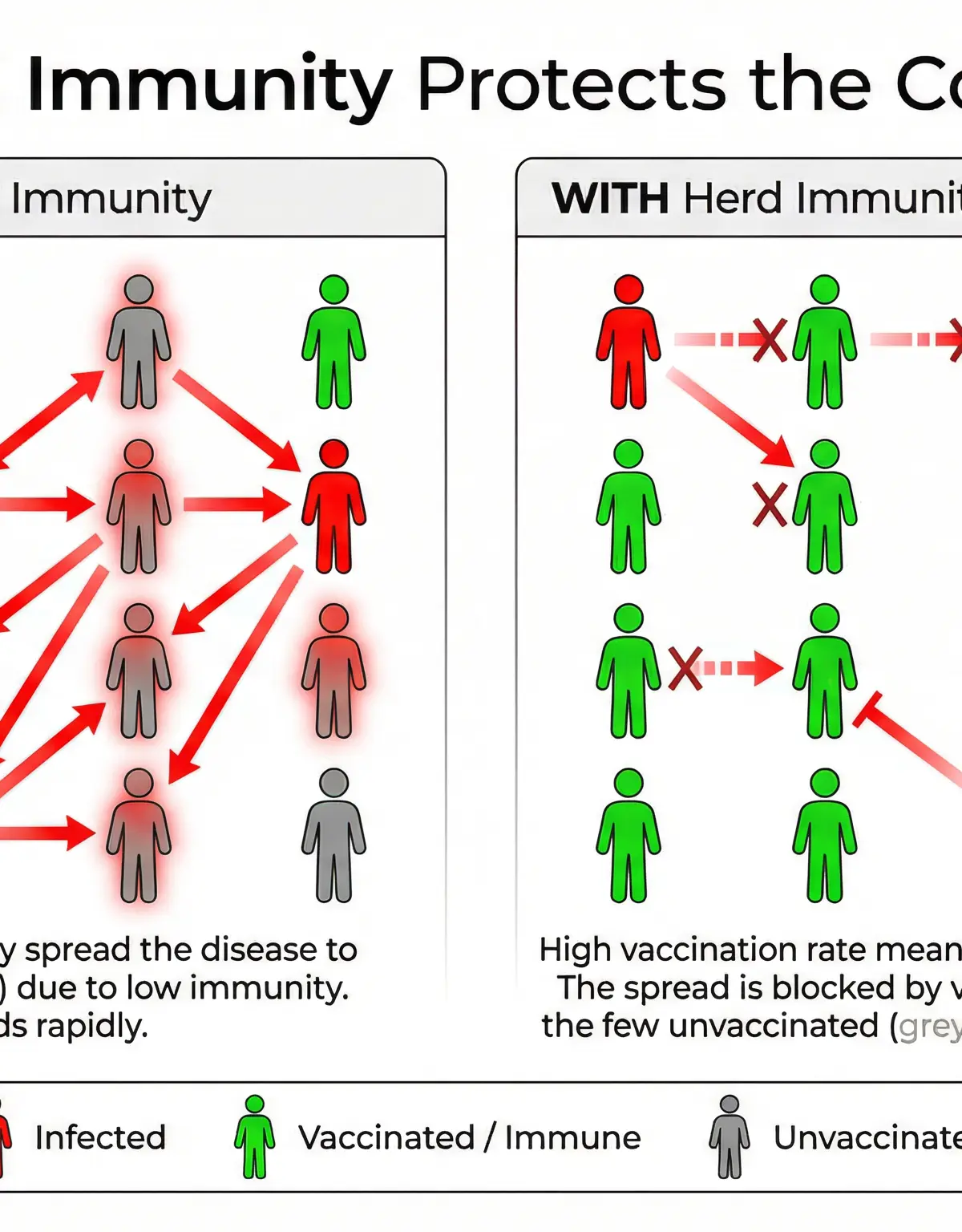
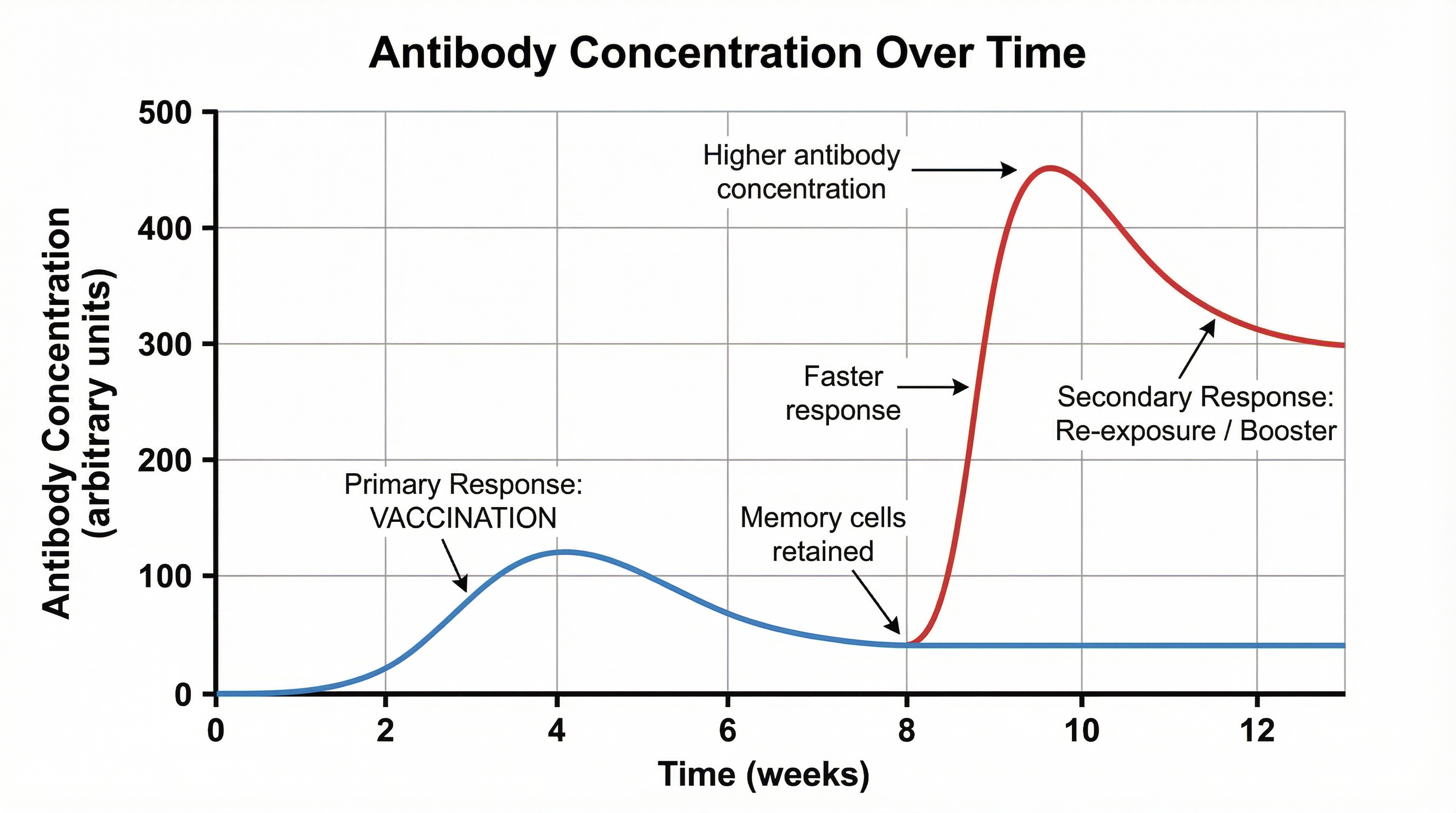
The true power of vaccination lies in the creation of memory cells. After the primary response, these specialised lymphocytes remain in your bloodstream for months, years, or even a lifetime. They 'remember' the specific antigen. If you are later infected with the actual, live pathogen, your immune system is prepared. The memory cells recognise the antigen instantly and trigger the secondary immune response. This response is dramatically different from the primary one. For full marks, you must use comparative language: the secondary response is faster, produces a higher concentration of antibodies, and the response lasts longer. This rapid and powerful flood of antibodies neutralises the pathogen before it can multiply and cause symptoms. This is what it means to be immune.
Concept 3: Herd Immunity
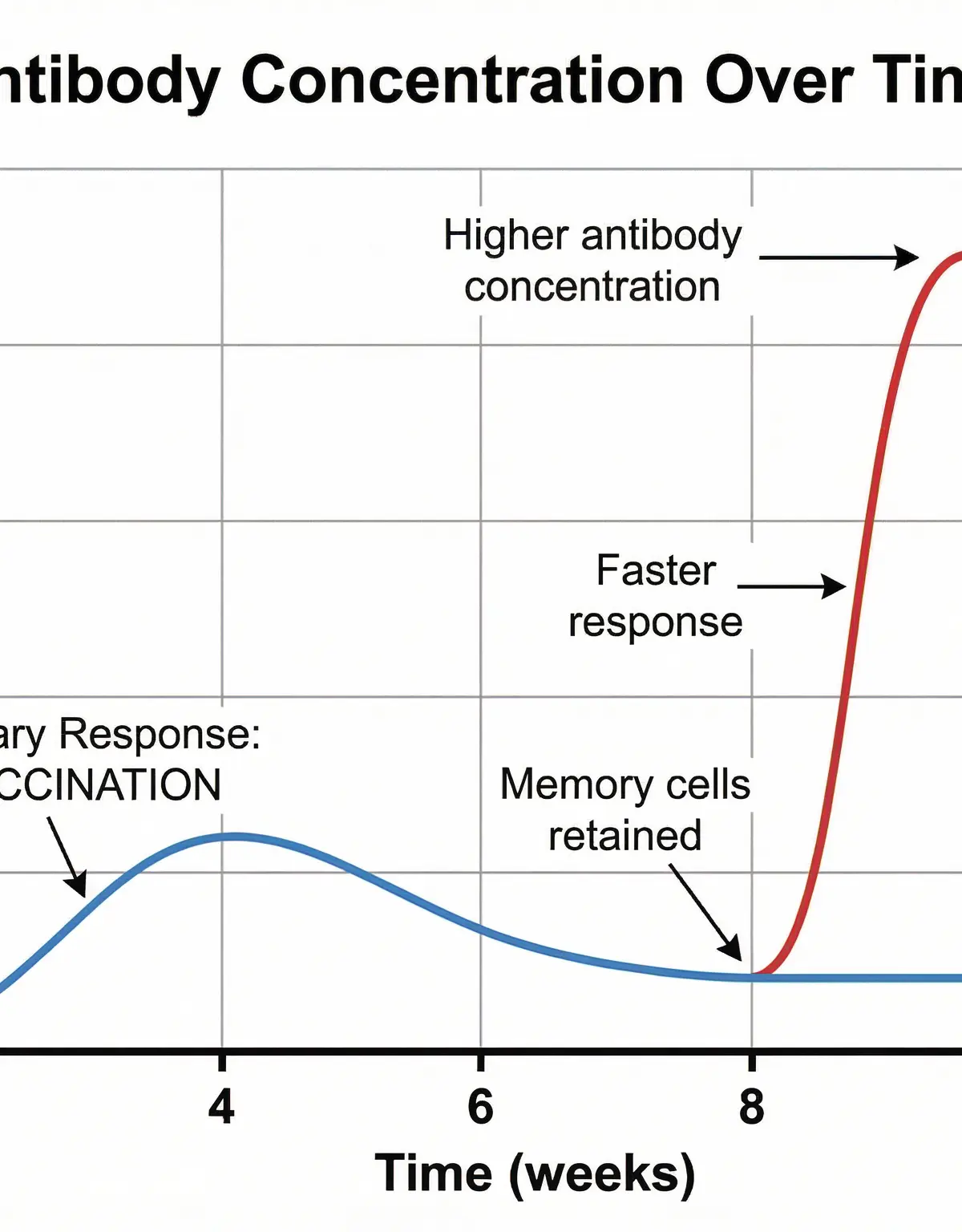
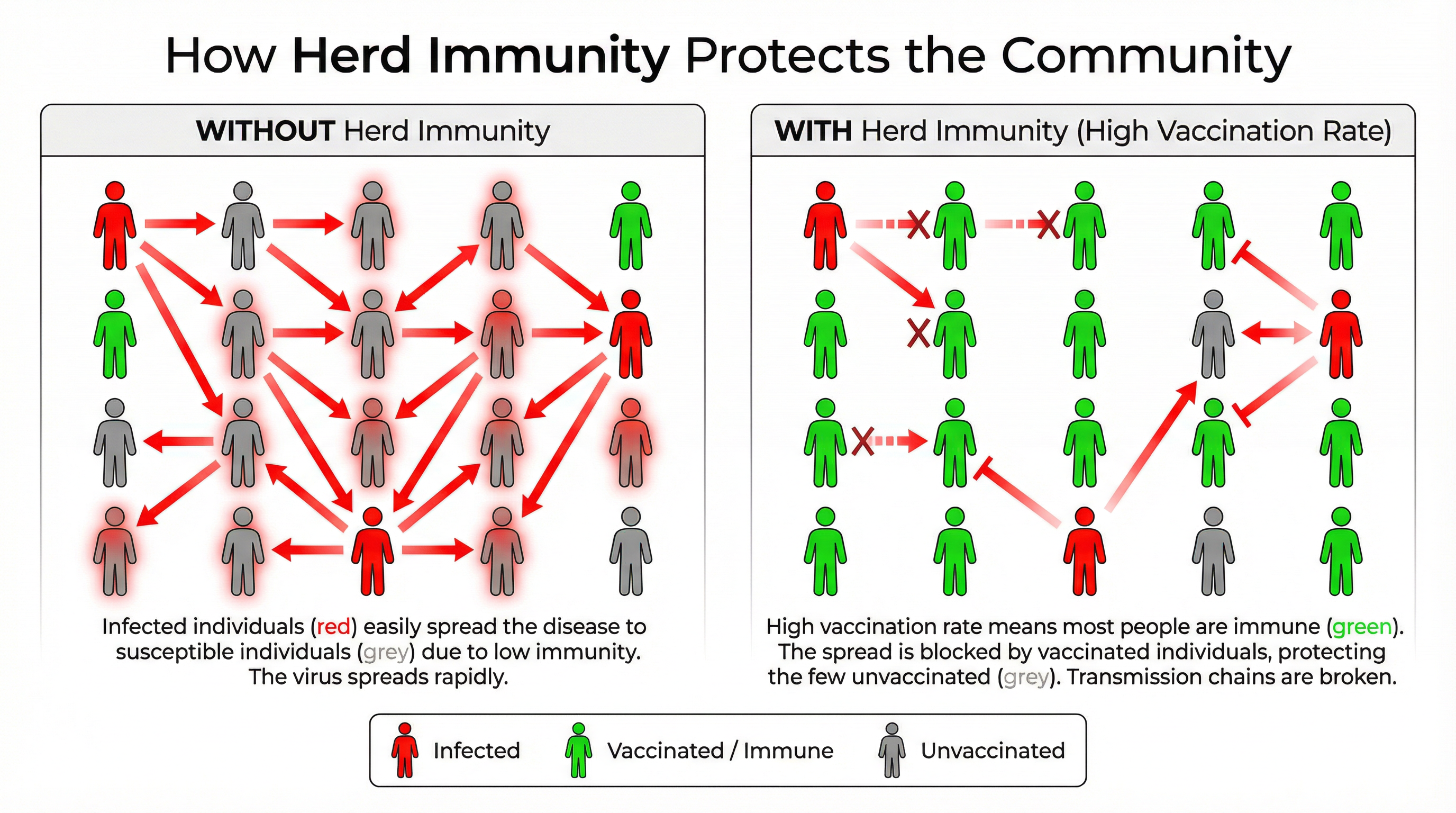
Vaccination doesn't just protect the individual; it protects the entire community. This concept is called herd immunity. When a high percentage of the population is vaccinated (e.g., over 90-95% for highly infectious diseases like measles), it creates a protective barrier. The pathogen finds it difficult to spread because most people it encounters are immune. This breaks the chains of transmission. The critical point to make in an exam is that herd immunity protects unvaccinated individuals, such as newborn babies, people with compromised immune systems (e.g., those undergoing chemotherapy), or those who cannot be vaccinated for medical reasons. It protects them not by making them stronger, but by reducing the probability that they will ever come into contact with an infected person. A common mistake is to think herd immunity strengthens an individual's own immunity; it does not. It is purely about reducing the spread of the pathogen in the population.
Mathematical/Scientific Relationships
There are no specific mathematical formulas to memorise for this topic. However, you must be proficient in graphical data interpretation. You will frequently be presented with graphs showing antibody concentration over time, similar to the one above. Key skills include:
- Reading axes: Correctly identifying the units for time (days/weeks) and antibody concentration (arbitrary units).
- Describing trends: Using phrases like "increases rapidly to a peak of...", "gradually declines to...".
- Comparing curves: Directly comparing the primary and secondary responses using data points. For example: "The peak antibody concentration in the secondary response at week 10 was 450 units, over three times higher than the peak of 120 units in the primary response at week 4."
- Calculating differences: Finding the difference in peak concentrations or the time taken to reach the peak.
Podcast Episode: Vaccination Masterclass
Listen to our 10-minute audio guide to consolidate your learning, review exam technique, and test your recall.
Visual Resources
2 diagrams and illustrations
Interactive Diagrams
2 interactive diagrams to visualise key concepts
Conceptual Flow Outline
Flowchart showing the sequence of events from vaccination to immunity.
Conceptual Flow Outline
Concept map illustrating how vaccinated individuals in a population block the transmission of a pathogen, protecting the unvaccinated.
Worked Examples
3 worked examples — open one to explore the question and available guidance.
Practice Questions
Test your understanding — click to reveal model answers
Describe the role of lymphocytes in the immune response to vaccination. (3 marks)
Hint: Think about what these cells recognise and what they produce.
A new vaccine is developed. In a trial, scientists measure the time it takes for antibody concentration to peak after the first and second doses. The first dose peaked after 21 days. The second dose, given 8 weeks later, peaked after just 4 days. Calculate how many times faster the secondary response was. (2 marks)
Hint: This is a simple ratio calculation.
Evaluate the use of a mass vaccination programme to control the spread of a highly infectious disease. (6 marks)
Hint: Evaluate means you need to consider pros and cons, and come to a conclusion. Think about the individual, the community, and any potential downsides.
What is an attenuated pathogen? (1 mark)
Hint: Think about the state of the pathogen in the vaccine.
Explain why a person may need a 'booster' vaccination every few years for diseases like tetanus. (2 marks)
Hint: Think about what might happen to the immune system's 'memory' over time.