Eduqas · GCSE · Biology
Cell biology
Cell Biology is the foundational topic for all of GCSE Biology, covering everything from basic cell structure to cell division and respiration. Mastering these concepts is essential, as examiners consistently use them as a basis for more complex questions across the entire specification.
- 6 min read
- 3 worked examples
- 5 practice questions
- 6 key terms
Study Notes
Overview
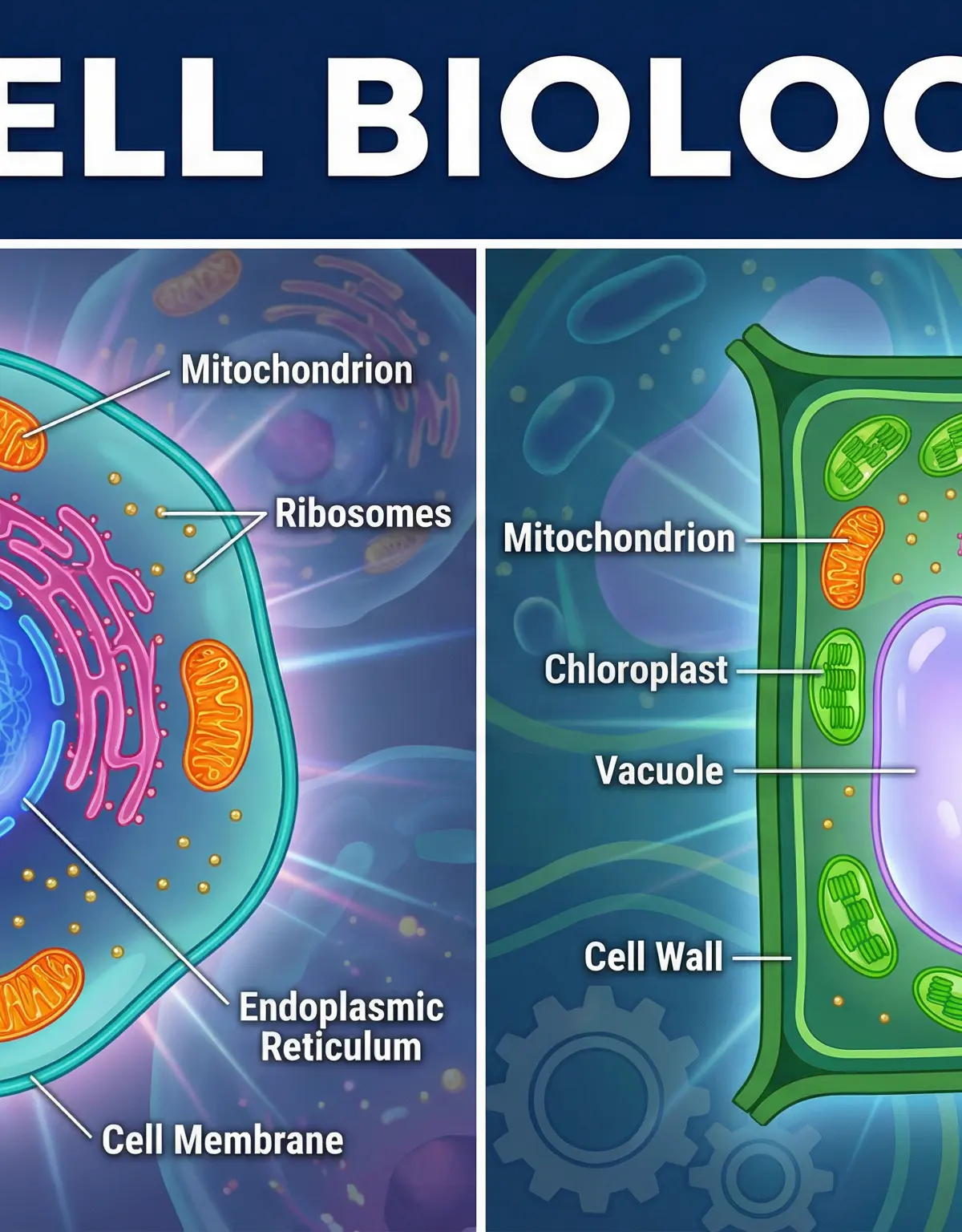
Cell Biology is the cornerstone of your GCSE Biology course. Every living organism is composed of cells, making this topic fundamental to understanding how life works. Examiners frequently test this area not only in dedicated questions but also synoptically, linking it to topics like infection and response, bioenergetics, and inheritance.
In this guide, we will explore the intricate structures of both prokaryotic and eukaryotic cells, detailing the specific functions of sub-cellular organelles. We will also examine the crucial processes of cell division through mitosis, the role of stem cells in differentiation, and the vital metabolic reactions of respiration and enzyme action. Typical exam questions in this topic range from simple recall of organelle functions to complex evaluations of stem cell ethics and multi-step calculations of magnification.
Key Concepts
Concept 1: Eukaryotic and Prokaryotic Cells
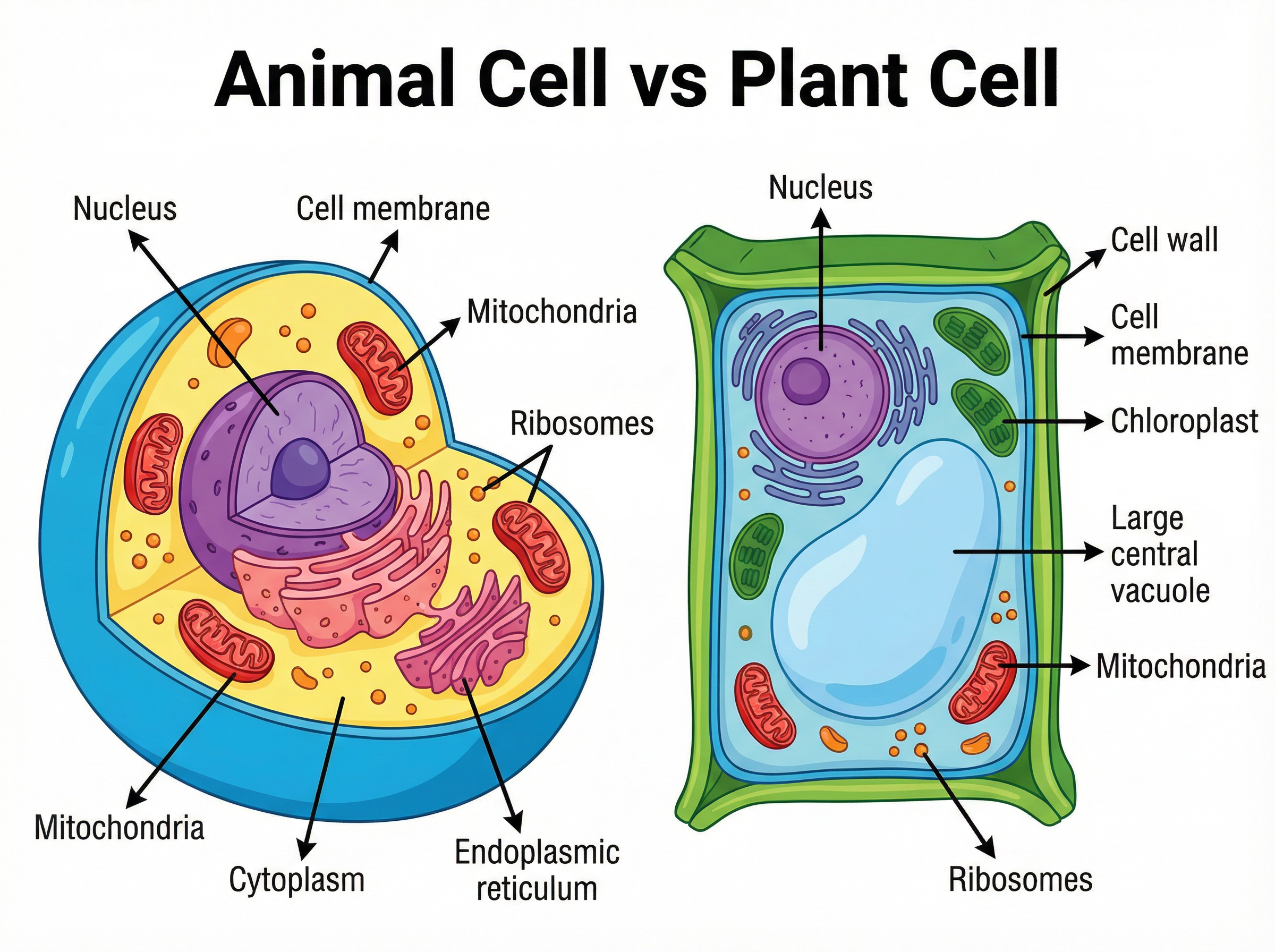
All cells can be classified into two broad categories: eukaryotic and prokaryotic. Eukaryotic cells, which include animal and plant cells, are complex and contain a true nucleus where the genetic material is enclosed within a membrane. They also feature various membrane-bound organelles such as mitochondria and chloroplasts.
Prokaryotic cells, such as bacteria, are much smaller and simpler. They lack a true nucleus; instead, their genetic material floats freely in the cytoplasm as a single circular loop of DNA. They may also contain smaller rings of DNA called plasmids. Both types of cells share common features: a cell membrane to control what enters and leaves, cytoplasm where chemical reactions occur, and ribosomes for protein synthesis.
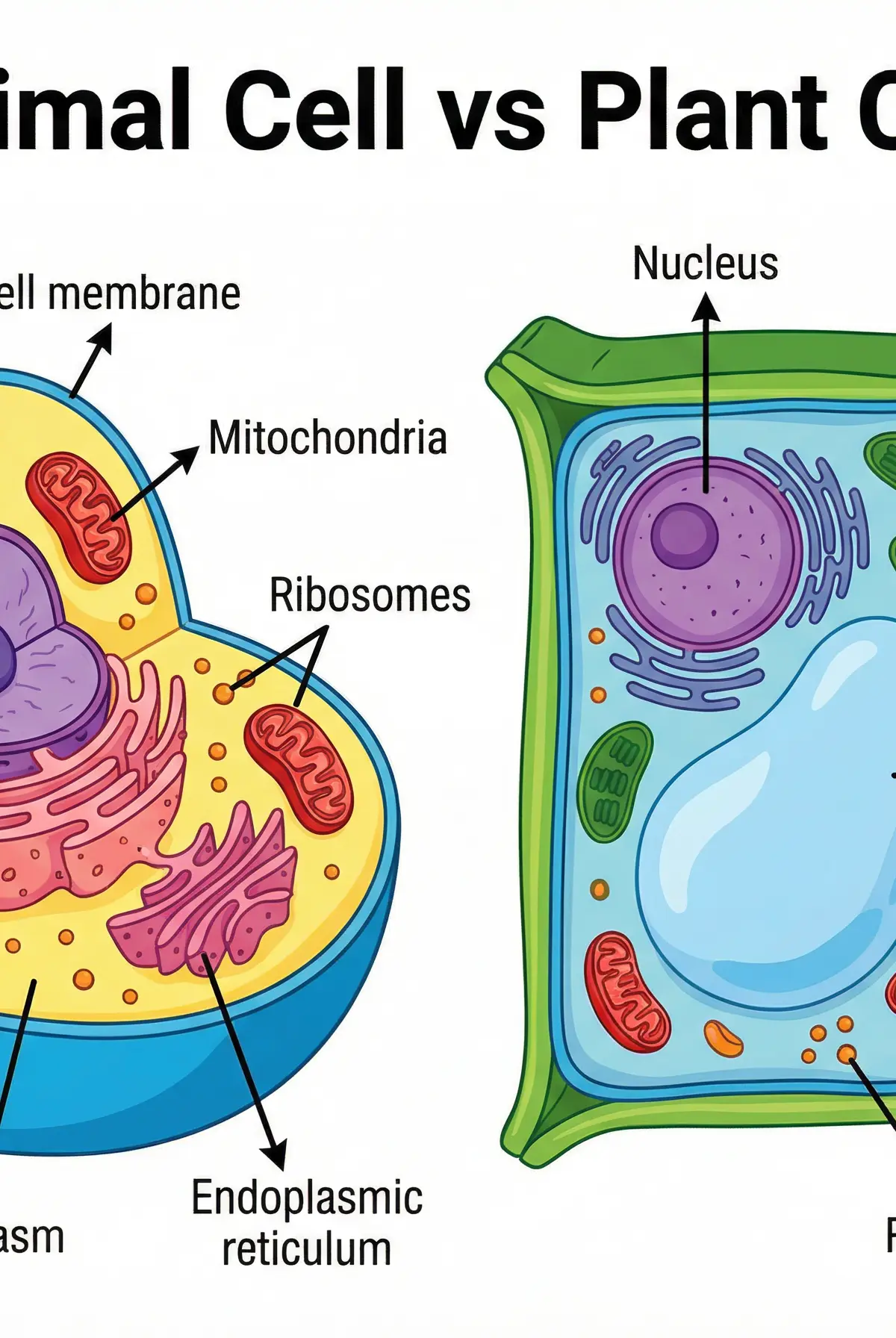
Example: If an examiner asks you to compare a bacterial cell to a plant cell, you must state similarities (both have a cell membrane, cell wall, and ribosomes) AND differences (plant cells have a nucleus and chloroplasts, bacterial cells have plasmids and no nucleus).
Concept 2: Cell Specialisation and Differentiation
As an organism develops, cells differentiate to form different types of cells. Most types of animal cell differentiate at an early stage, whereas many types of plant cells retain the ability to differentiate throughout life. In mature animals, cell division is mainly restricted to repair and replacement.
When a cell differentiates, it acquires different sub-cellular structures to enable it to carry out a certain function. It has become a specialised cell. For instance, a sperm cell is specialised to carry male DNA to the egg; it has a long tail for swimming and is packed with mitochondria to provide the energy needed.
Concept 3: The Cell Cycle and Mitosis
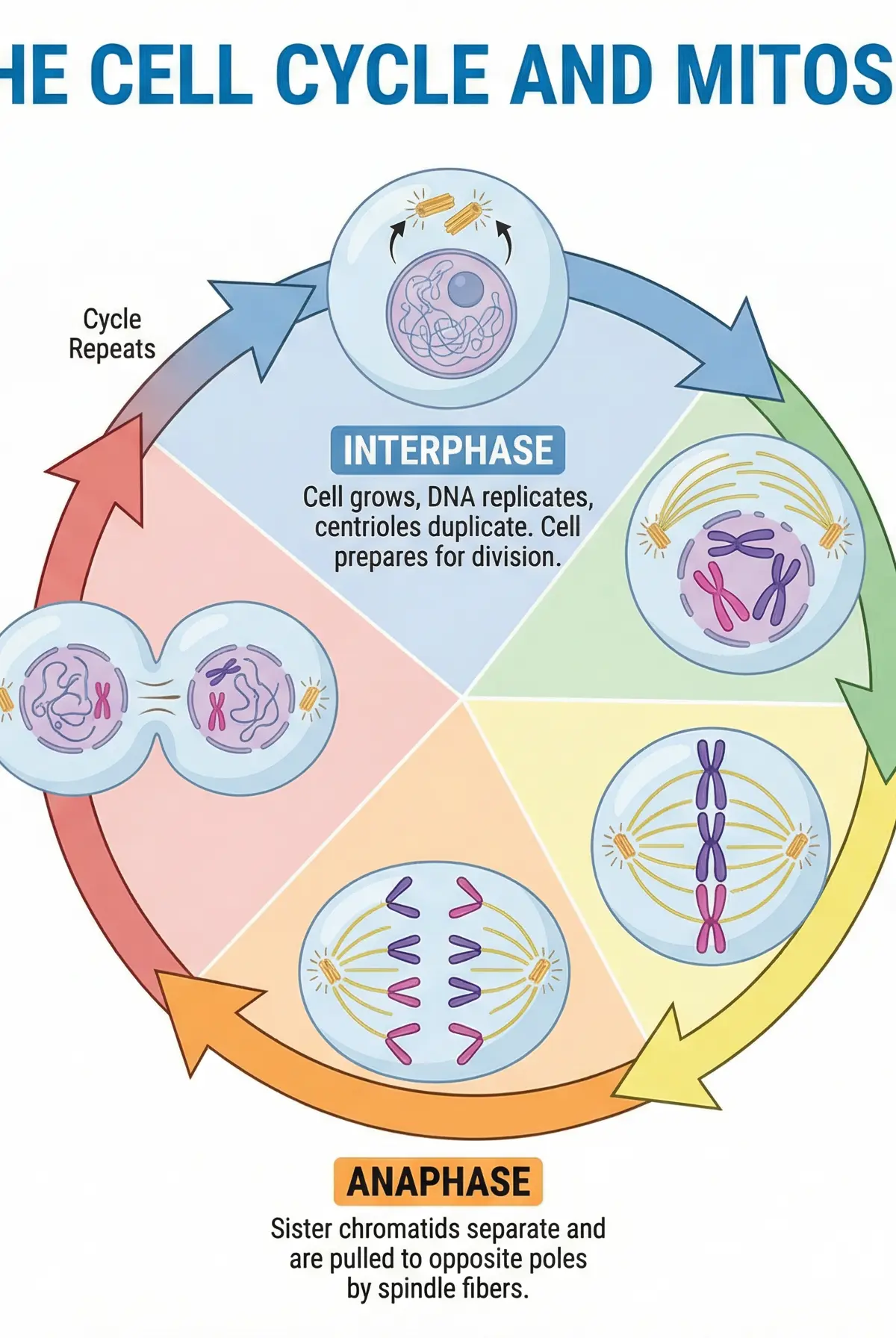
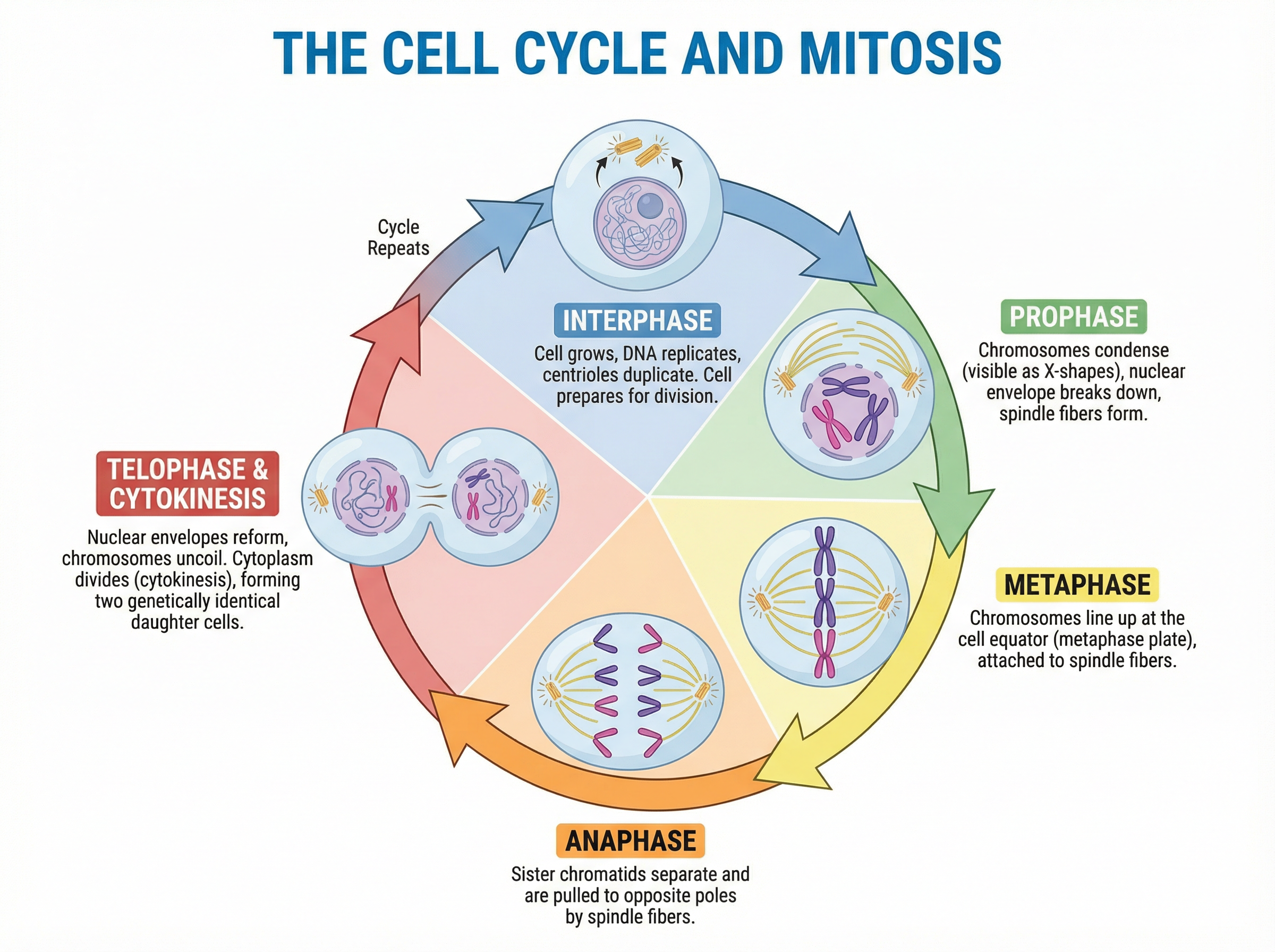
Cells divide in a series of stages called the cell cycle. During the cell cycle, the genetic material is doubled and then divided into two identical cells.
Before a cell can divide, it must grow and increase the number of sub-cellular structures such as ribosomes and mitochondria. The DNA replicates to form two copies of each chromosome. In mitosis, one set of chromosomes is pulled to each end of the cell and the nucleus divides. Finally, the cytoplasm and cell membranes divide to form two identical daughter cells.
Concept 4: Stem Cells
A stem cell is an undifferentiated cell of an organism which is capable of giving rise to many more cells of the same type, and from which certain other cells can arise from differentiation. Stem cells from human embryos can be cloned and made to differentiate into most different types of human cells. Stem cells from adult bone marrow can form many types of cells including blood cells.
Meristem tissue in plants can differentiate into any type of plant cell, throughout the life of the plant. This allows for the production of clones of plants quickly and economically.
Concept 5: Enzymes
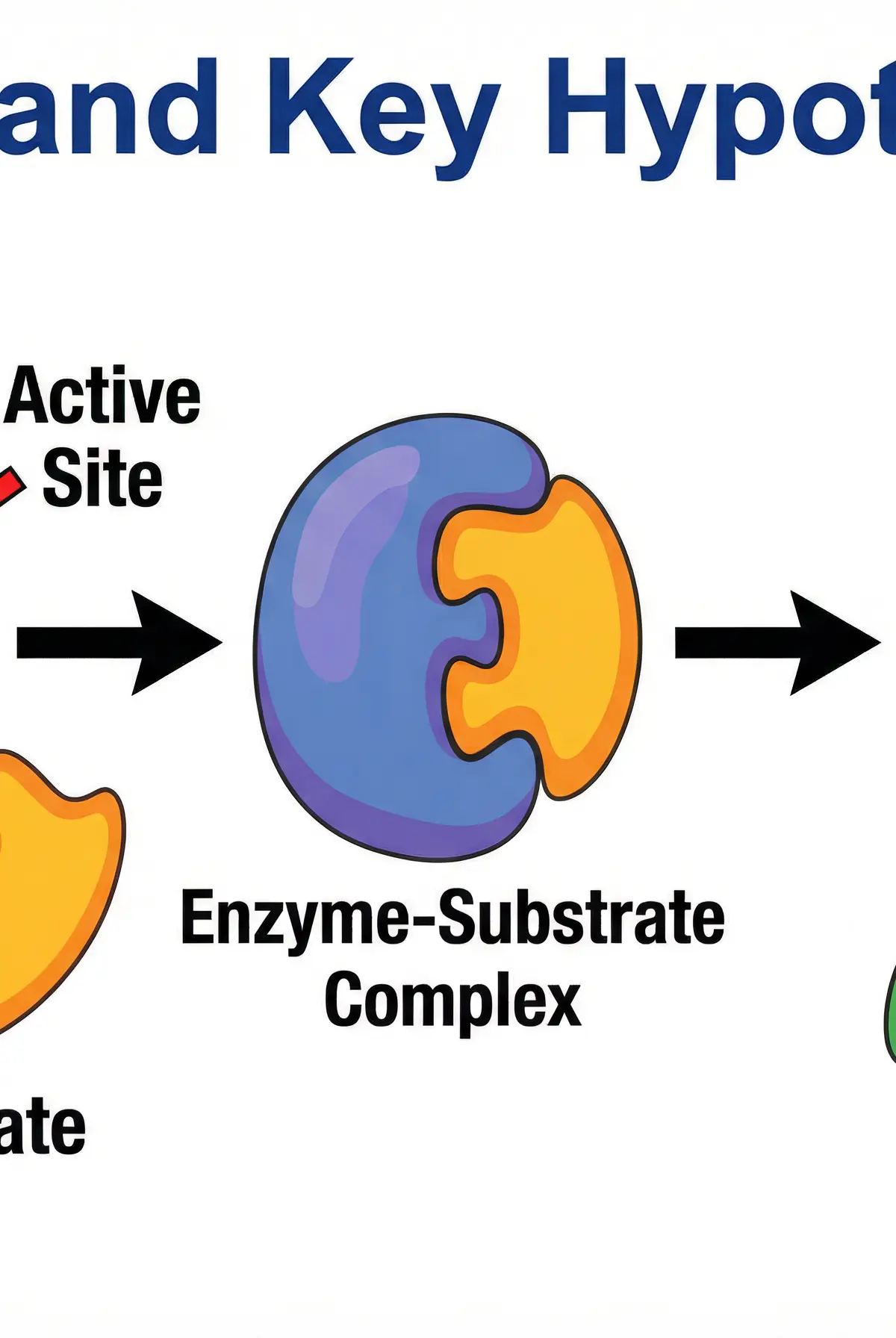
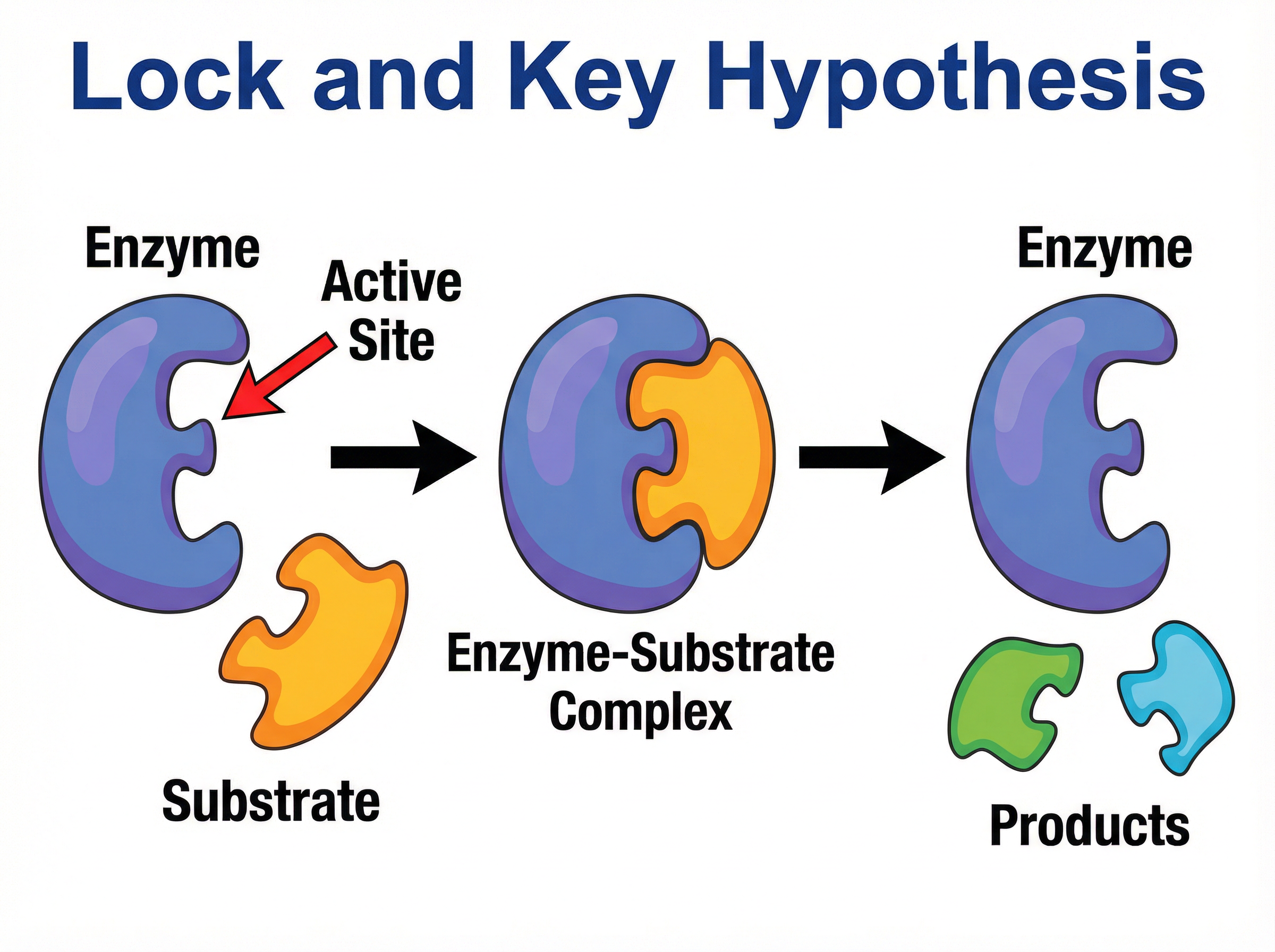
Enzymes are biological catalysts made of protein. They speed up chemical reactions in cells. The shape of the active site of the enzyme is specific to the substrate it binds to, forming an enzyme-substrate complex. This is known as the 'lock and key' hypothesis.
Enzymes have an optimum temperature and pH. If the temperature is too high, the bonds holding the enzyme together break. This changes the shape of the active site, meaning the substrate can no longer fit. The enzyme is denatured. It is crucial to use the term 'denatured' and not 'killed', as enzymes are not living things.
Concept 6: Respiration
Cellular respiration is an exothermic reaction which is continuously occurring in living cells. The energy transferred supplies all the energy needed for living processes. Respiration in cells can take place aerobically (using oxygen) or anaerobically (without oxygen), to transfer energy.
Aerobic respiration yields a large amount of energy. The word equation is: Glucose + Oxygen → Carbon dioxide + Water.
Anaerobic respiration in muscles yields much less energy because the oxidation of glucose is incomplete. The word equation is: Glucose → Lactic acid.
Mathematical/Scientific Relationships
Magnification Equation:
\text{Magnification} = \frac{\text{Size of image}}{\text{Size of real object}}
When using this formula, ensure both the image size and real object size are in the same units before calculating. Examiners frequently provide the image size in millimetres (mm) and expect the real size in micrometres (µm).
Practical Applications
Required Practical: MicroscopyYou must be able to use a light microscope to observe, draw and label a selection of plant and animal cells. A magnification scale must be included. Common errors include drawing thick, sketchy lines instead of clear, continuous lines, and shading areas. Examiners will penalise drawings that do not follow scientific conventions.
Required Practical: Effect of pH on AmylaseYou must be able to investigate the effect of pH on the rate of reaction of amylase enzyme. This involves using iodine solution to test for the presence of starch. The key is to control variables such as temperature (using a water bath) and concentration of amylase and starch.
Visual Resources
3 diagrams and illustrations
Interactive Diagrams
2 interactive diagrams to visualise key concepts
Conceptual Flow Outline
Flowchart showing the process of differentiation from a stem cell into specialised cells in animals and plants.
Conceptual Flow Outline
Concept map comparing the pathways and products of aerobic and anaerobic respiration.
Worked Examples
3 worked examples — open one to explore the question and available guidance.
Practice Questions
Test your understanding — click to reveal model answers
Name one structure found in a plant cell but not in an animal cell. (1 mark)
Hint: Think about what plants need to do that animals don't, or how they stay upright.
Describe the function of ribosomes. (1 mark)
Hint: They are tiny structures found in all cells.
Explain how a sperm cell is adapted for its function. (3 marks)
Hint: Think about what a sperm cell needs to do and where it needs to go.
Evaluate the use of embryonic stem cells compared to adult stem cells in medical treatments. (4 marks)
Hint: Consider both the medical potential and the ethical issues of each type.
Explain why the rate of an enzyme-controlled reaction decreases when the temperature goes above the optimum. (3 marks)
Hint: What happens to the protein structure of the enzyme?