Eduqas · GCSE · Biology
Homeostasis in humans
Master the essential mechanisms that keep your body alive and functioning. This topic covers how your body maintains a constant internal environment through negative feedback, regulating blood glucose, body temperature, and water balance—key concepts that are heavily tested in every exam series.
- 8 min read
- 3 worked examples
- 5 practice questions
- 6 key terms
Study Notes
Overview
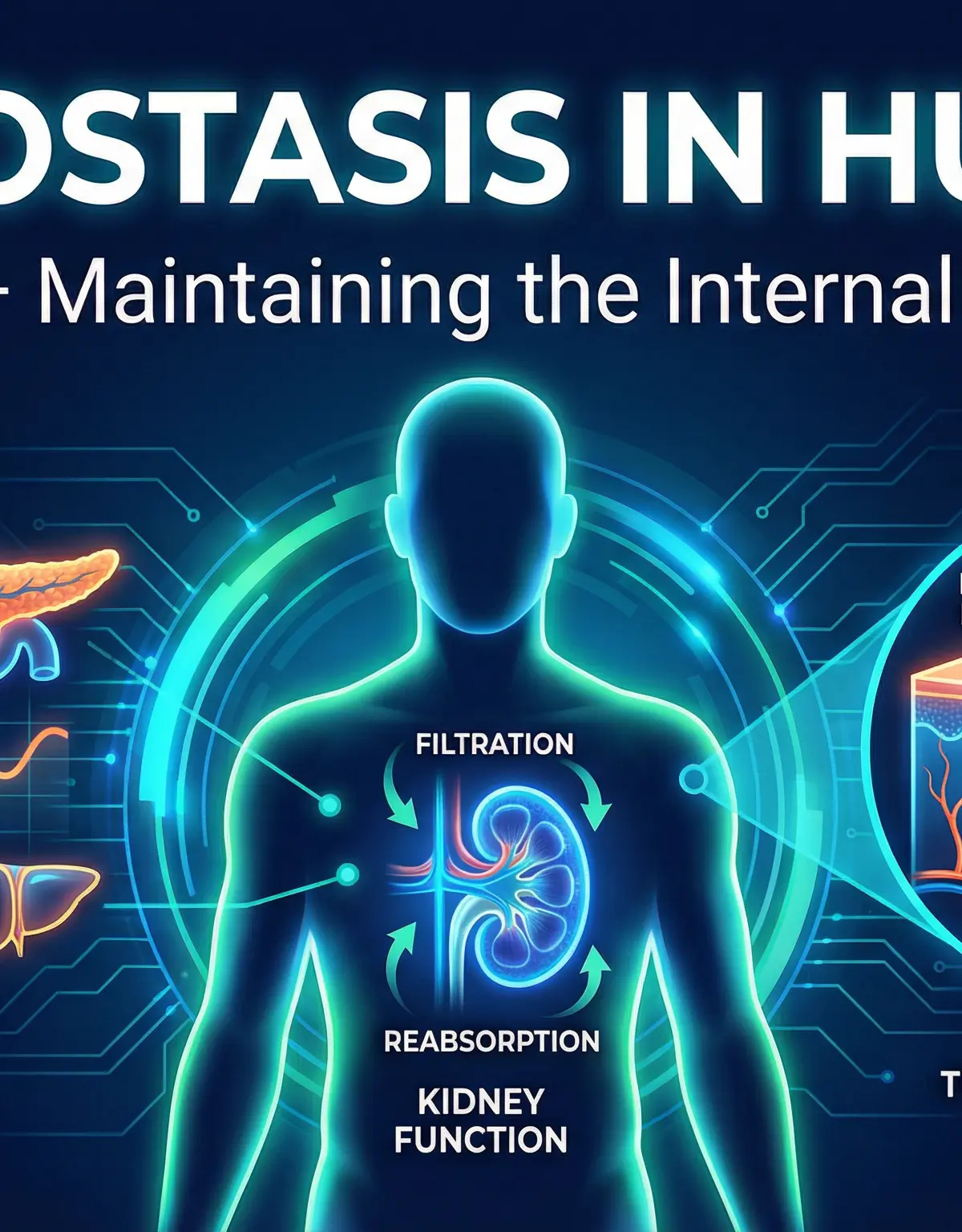
Welcome to Topic 4.3: Homeostasis in Humans. Homeostasis is the maintenance of a constant internal environment. It is a fundamental concept in Biology because it explains how your body keeps its cells alive despite constant changes in the external environment and your own activity levels.
Your enzymes have specific optimum conditions (temperature and pH) where they function best. If your internal environment fluctuates too much, enzymes can denature, metabolic reactions slow down or stop, and cells die. Therefore, your body must constantly monitor and adjust key variables: blood glucose concentration, body temperature, and water levels.
Examiners love testing homeostasis because it links directly to other major topics, such as the nervous system, the endocrine system (hormones), and respiration. You will frequently encounter 6-mark extended response questions asking you to explain a negative feedback loop, or data interpretation questions based on blood glucose or urine concentration graphs.
Key Concepts
Concept 1: Negative Feedback Mechanisms
All homeostatic control systems rely on negative feedback. This is a mechanism where a change in a system produces a response that reverses the change, bringing the system back to its normal set point.
Think of it like a thermostat controlling central heating. If the room gets too cold (stimulus), the thermostat (receptor) detects this and turns on the boiler (effector). The room heats up (response). Once it reaches the target temperature, the boiler turns off.
In the human body, a negative feedback loop always follows this sequence:
- Receptor detects a stimulus (a change in the environment).
- The coordination centre (brain, spinal cord, or pancreas) receives and processes the information.
- An effector (muscle or gland) produces a response.
- The response restores the optimum level, and the system switches off.
Concept 2: Blood Glucose Regulation
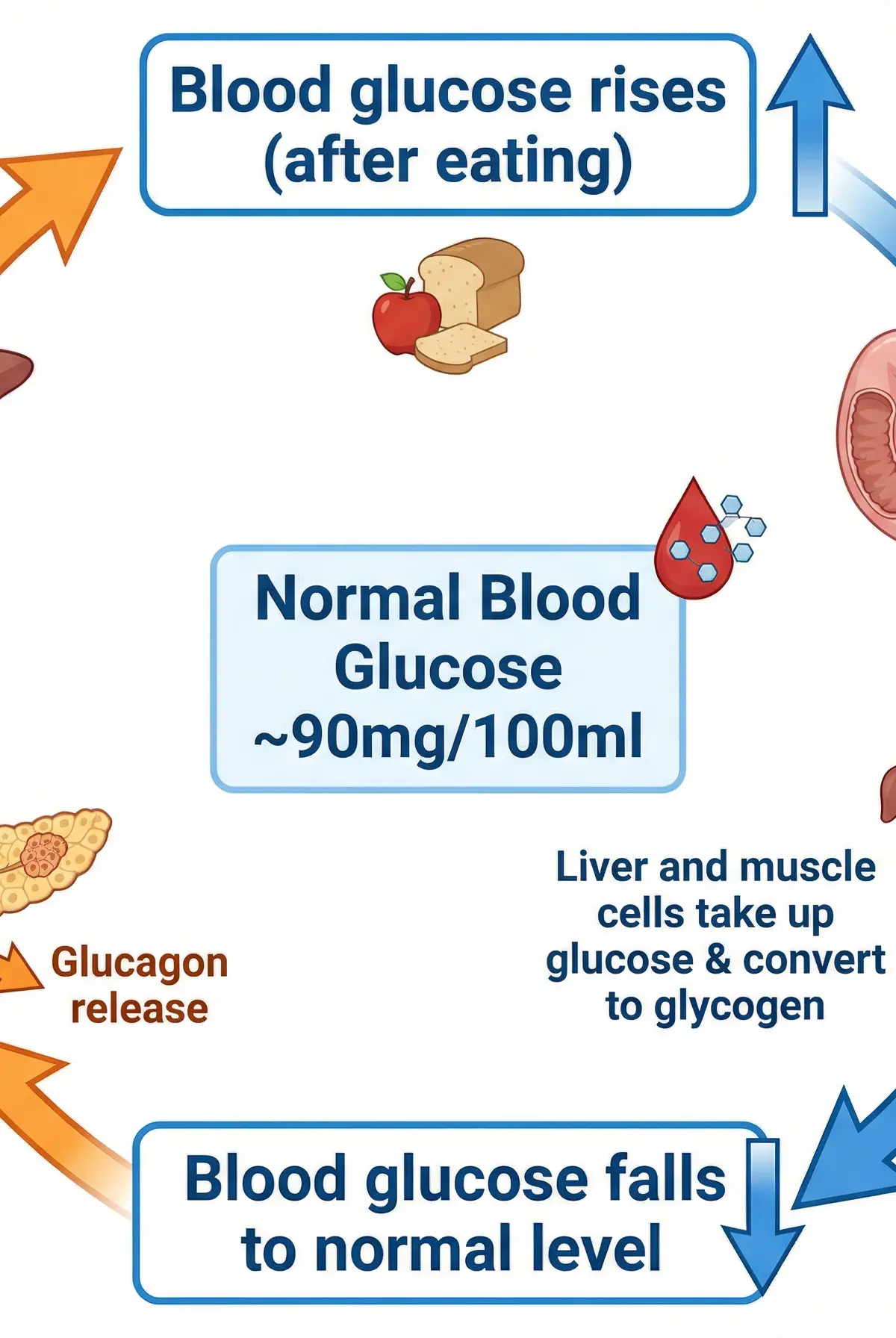
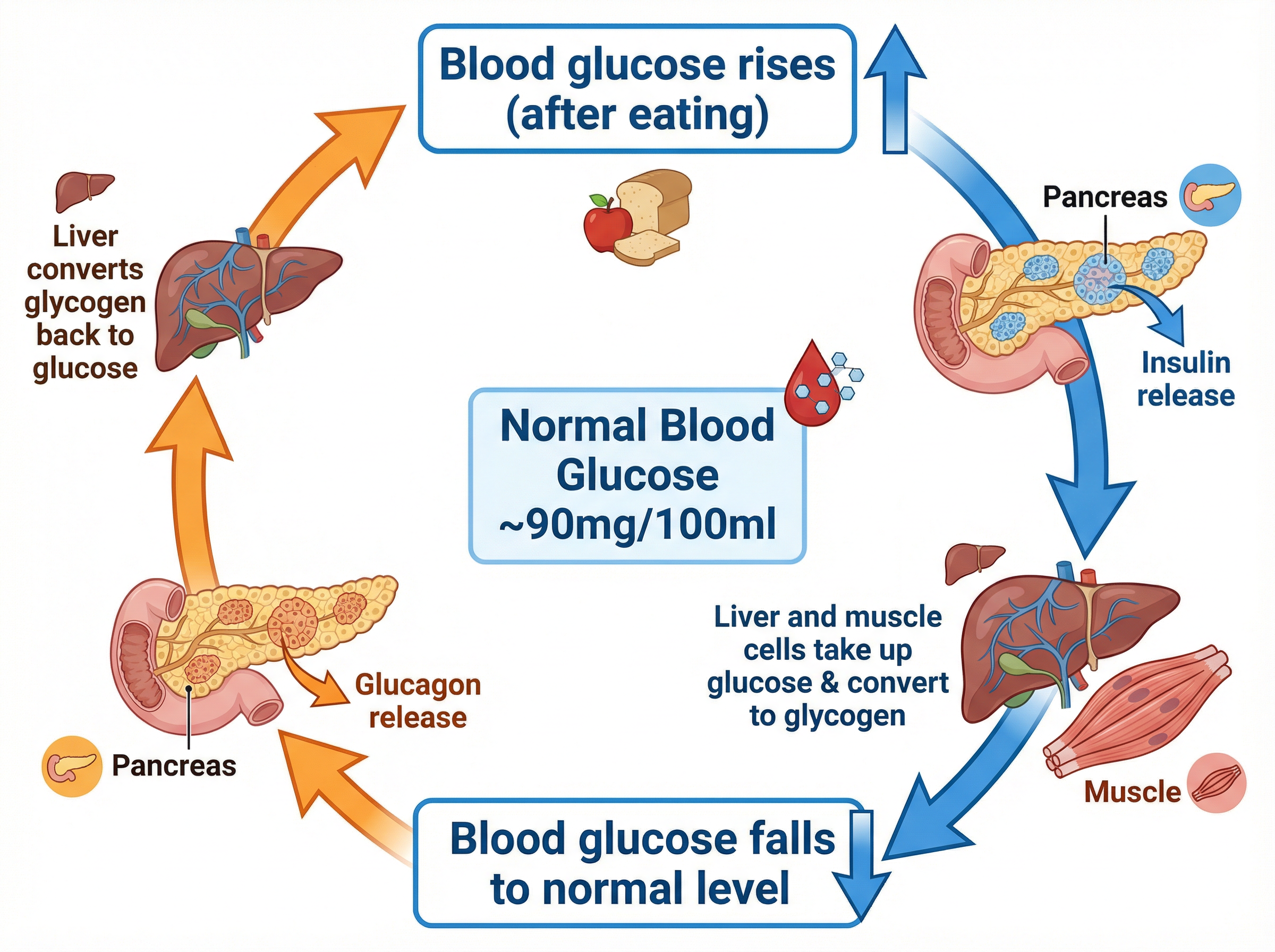
Blood glucose concentration must be kept within a narrow range. If it is too high, it can damage blood vessels and cause water to leave cells by osmosis. If it is too low, cells cannot respire and release energy.
This regulation is controlled by the pancreas, which acts as both the receptor and the coordination centre. It releases two antagonistic (opposing) hormones: insulin and glucagon.
When blood glucose is too high (e.g., after eating carbohydrates):
- The pancreas detects the rise and secretes insulin into the blood.
- Insulin travels to the liver and muscle cells.
- It causes these cells to take up glucose from the blood and convert it into glycogen (an insoluble storage carbohydrate).
- Blood glucose levels fall back to normal.
When blood glucose is too low (e.g., during exercise):
- The pancreas detects the fall and secretes glucagon.
- Glucagon travels to the liver.
- It causes the liver to break down stored glycogen back into glucose, which is released into the blood.
- Blood glucose levels rise back to normal.
Diabetes
Diabetes is a condition where the body cannot properly control blood glucose levels.
- Type 1 Diabetes: The pancreas fails to produce sufficient insulin. It is an autoimmune condition usually diagnosed in childhood. It is treated with regular insulin injections.
- Type 2 Diabetes: The body cells no longer respond to the insulin produced by the pancreas (insulin resistance). It is strongly linked to obesity and a sedentary lifestyle. It is treated with a carbohydrate-controlled diet and an exercise regime.
Concept 3: Thermoregulation
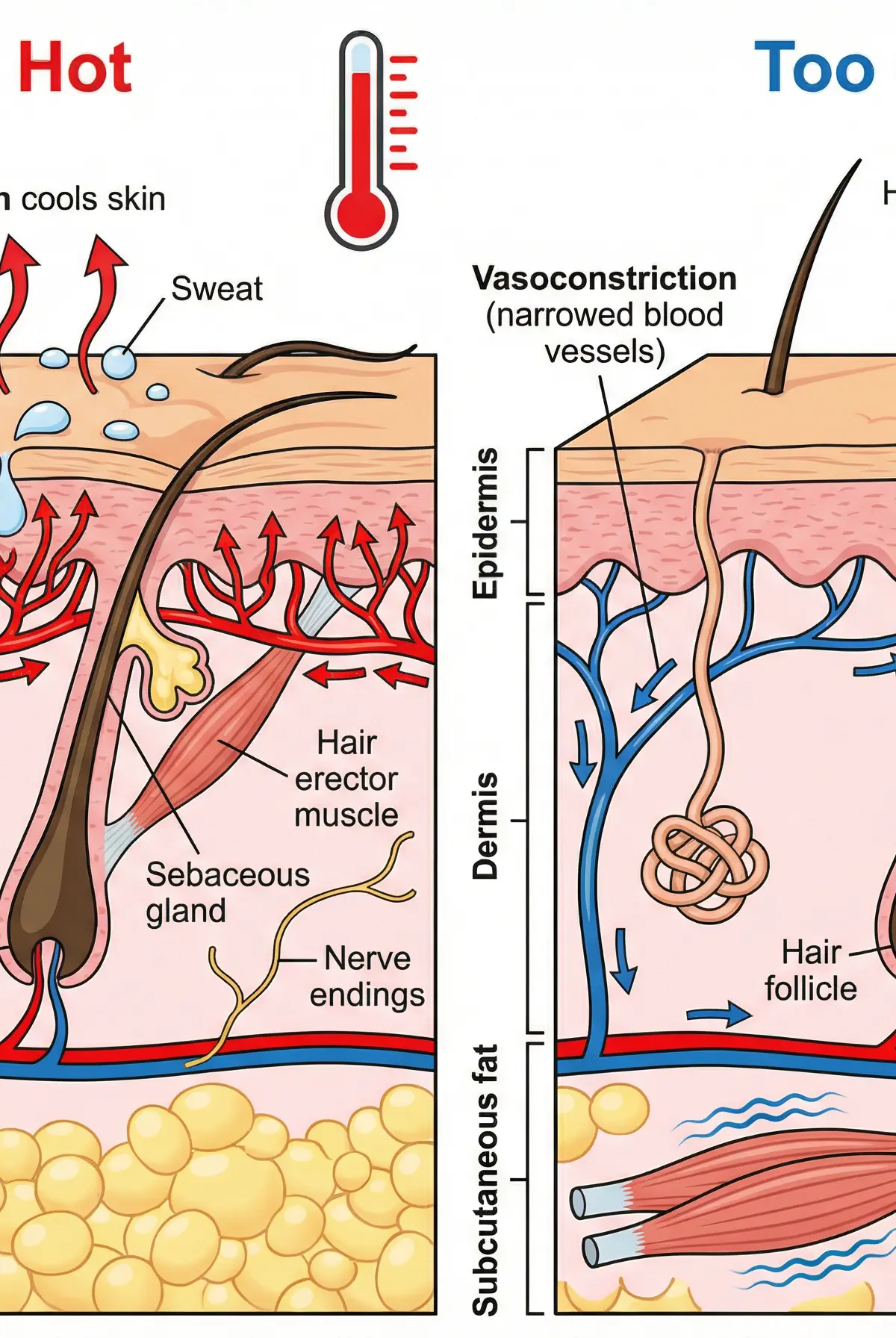
Human body temperature must be maintained at approximately 37°C, the optimum temperature for human enzymes.
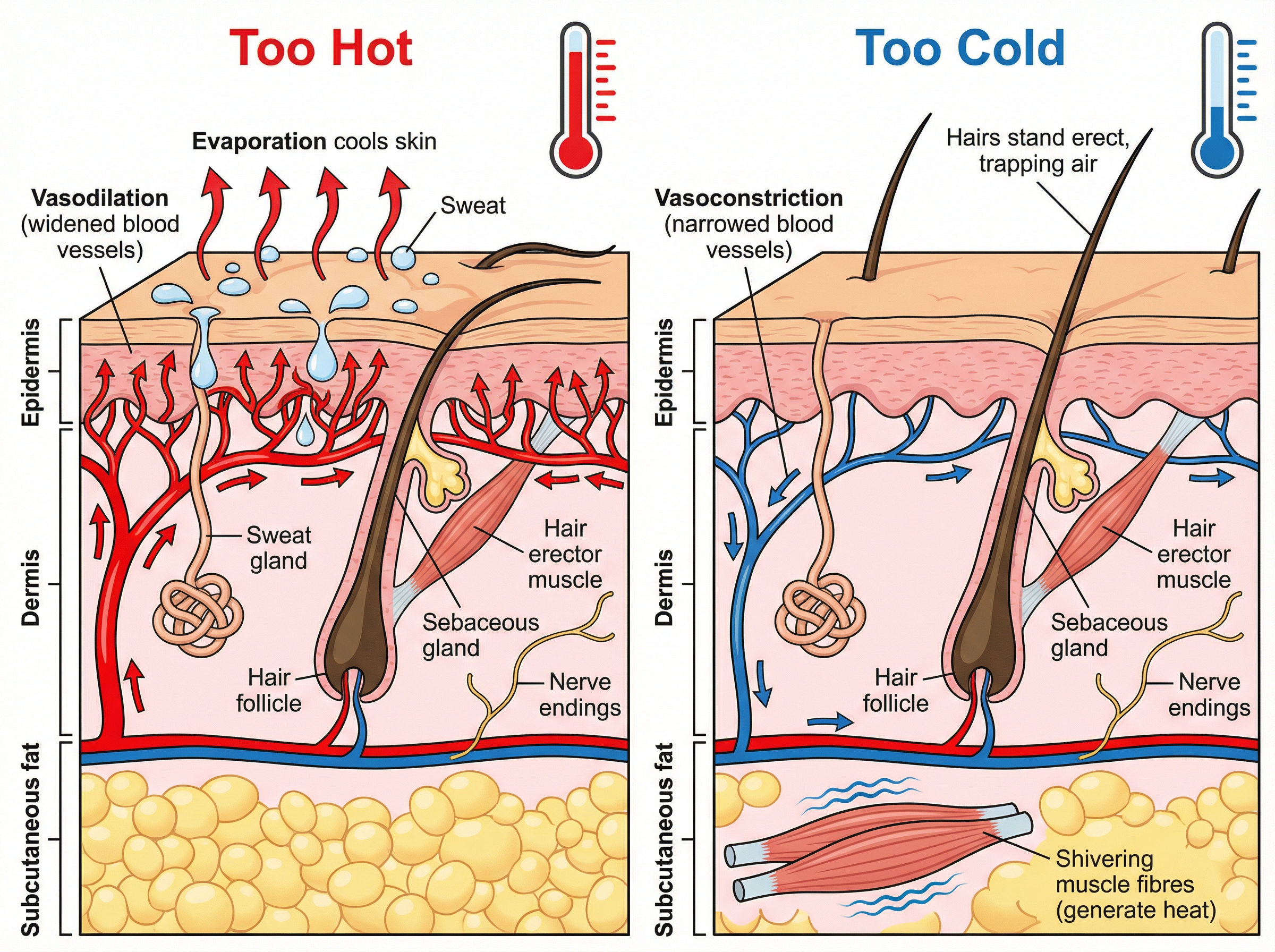
The thermoregulatory centre in the hypothalamus (part of the brain) monitors temperature. It contains receptors sensitive to the temperature of the blood flowing through the brain, and it receives nerve impulses from temperature receptors in the skin.
When body temperature is too high:
- Vasodilation: Blood vessels supplying the skin capillaries dilate (widen). More blood flows close to the surface of the skin, so more heat is lost to the environment by radiation.
- Sweating: Sweat glands produce sweat. As the water in sweat evaporates from the skin surface, it takes heat energy away from the body, cooling it down.
- Hairs lie flat: Hair erector muscles relax, so no insulating layer of air is trapped.
When body temperature is too low:
- Vasoconstriction: Blood vessels supplying the skin capillaries constrict (narrow). Less blood flows near the skin surface, reducing heat loss by radiation.
- Shivering: Skeletal muscles contract rapidly. These muscle contractions require energy from respiration, and respiration is an exothermic reaction that releases heat energy to warm the body.
- Hairs stand erect: Hair erector muscles contract, trapping a layer of insulating air next to the skin.
Concept 4: The Kidneys and Osmoregulation
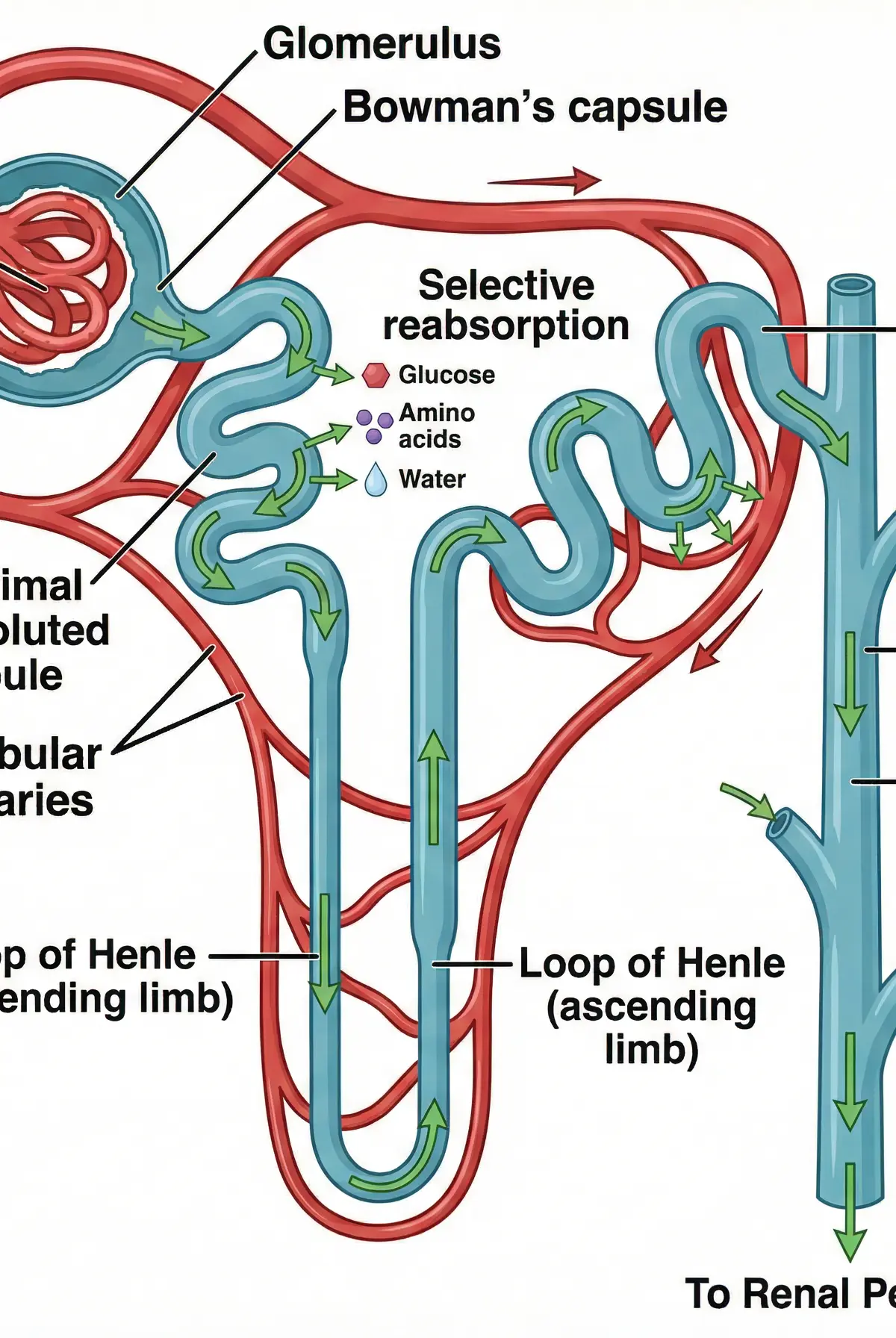
The kidneys are responsible for removing waste products from the blood and regulating the water and ion content of the blood (osmoregulation).
Waste products include urea, which is produced in the liver from the breakdown of excess amino acids (deamination). Urea is toxic and must be excreted in urine.
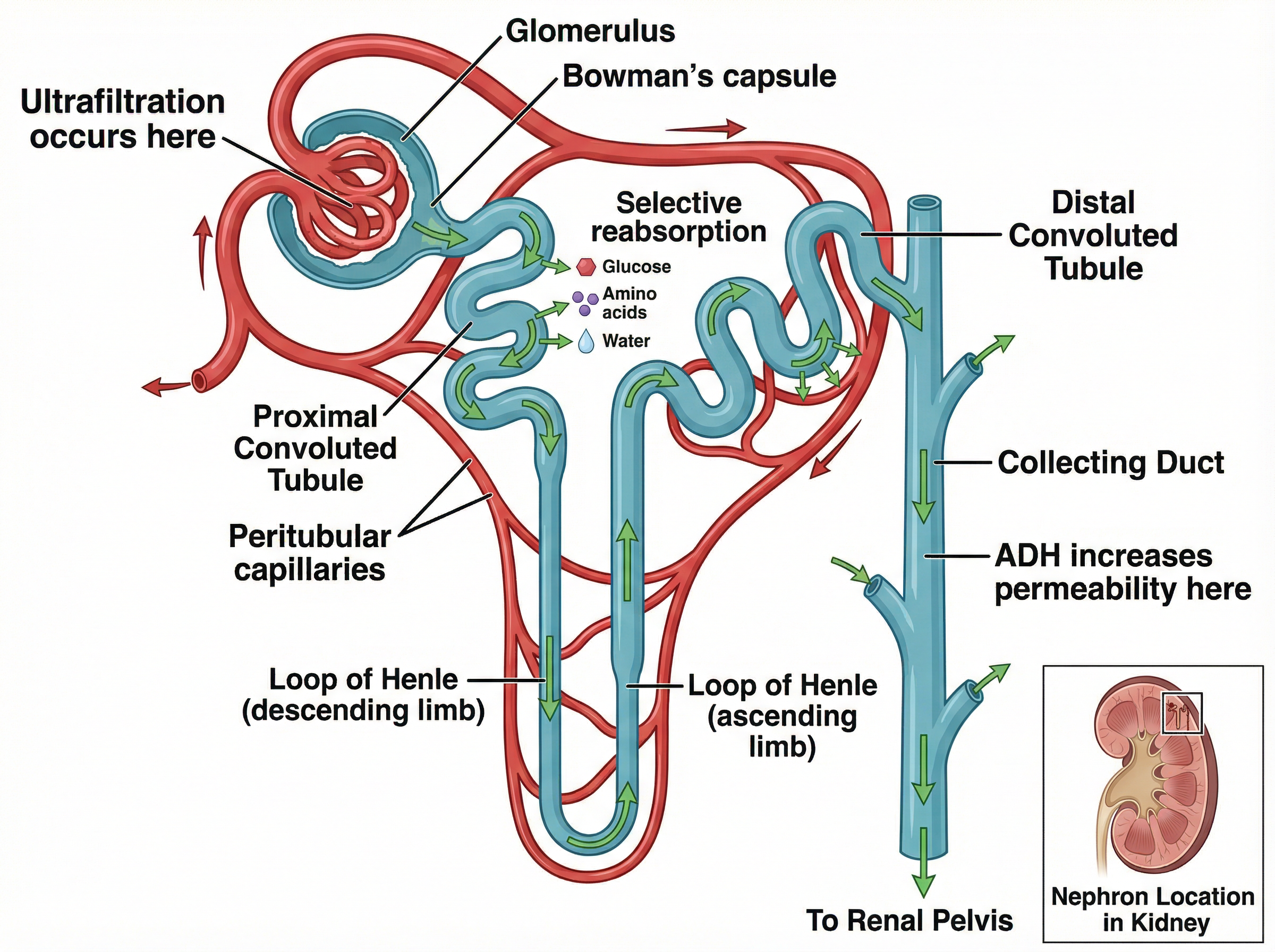
The kidney functions in two main stages within millions of tiny tubules called nephrons:
- Ultrafiltration: Blood enters the kidney under high pressure. Small molecules (water, urea, ions, and glucose) are forced out of the blood into the Bowman's capsule. Large molecules like proteins and blood cells remain in the blood.
- Selective Reabsorption: As the filtrate passes along the tubule, useful substances are reabsorbed back into the blood.
- All glucose is reabsorbed by active transport.
- Some ions are reabsorbed.
- Some water is reabsorbed by osmosis, depending on the body's needs.
- No urea is reabsorbed.
**Controlling Water Balance (ADH)**The amount of water reabsorbed is controlled by a hormone called ADH (anti-diuretic hormone), released by the pituitary gland in the brain.
- If blood water concentration is too low (dehydrated): The pituitary gland releases more ADH. ADH makes the kidney tubules (collecting duct) more permeable to water. More water is reabsorbed back into the blood. A small volume of concentrated urine is produced.
- If blood water concentration is too high (overhydrated): The pituitary gland releases less ADH. The kidney tubules become less permeable to water. Less water is reabsorbed. A large volume of dilute urine is produced.
Mathematical/Scientific Relationships
While there are no specific physics-style equations to memorise for homeostasis, you must understand the mathematical relationship of negative feedback:
- Rate of change = -k × (Current Value - Set Point)
- In biology, we express this as a proportional but opposing response: the greater the deviation from the norm, the stronger the corrective response (e.g., more insulin released for a higher blood glucose spike).
You must also be able to calculate Body Mass Index (BMI) to assess risk for Type 2 Diabetes:
BMI = mass (kg) / (height (m))²
(Must memorise)
Practical Applications
Understanding homeostasis is crucial in medicine:
- Dialysis: Patients with kidney failure use a dialysis machine, which acts as an artificial kidney. Blood flows alongside dialysis fluid, separated by a partially permeable membrane, allowing urea and excess ions to diffuse out while retaining glucose and proteins.
- Urine Testing: Doctors test urine for glucose (a sign of diabetes) or protein (a sign of kidney damage, as proteins should be too large to be filtered out of the blood).
Visual Resources
3 diagrams and illustrations
Interactive Diagrams
2 interactive diagrams to visualise key concepts
Conceptual Flow Outline
The negative feedback loop of blood glucose regulation involving insulin and glucagon.
Conceptual Flow Outline
The negative feedback loop of water regulation (osmoregulation) via ADH.
Worked Examples
3 worked examples — open one to explore the question and available guidance.
Practice Questions
Test your understanding — click to reveal model answers
Define the term homeostasis. [2 marks]
Hint: Think about what the body is trying to keep constant.
Compare Type 1 and Type 2 diabetes in terms of their cause and treatment. [4 marks]
Hint: One is a lack of production, the other is a lack of response.
Explain how the body responds to a decrease in core body temperature. [6 marks]
Hint: Think about blood vessels, muscles, and hairs.
Describe the process of ultrafiltration in the kidney. [3 marks]
Hint: Where does it happen, what causes it, and what is filtered?
Explain the role of ADH in regulating blood water concentration. [5 marks]
Hint: What releases it? What is its target? What does it change?