Eduqas · GCSE · Biology
Hormonal coordination and control in humans
Master the body's chemical communication system. Learn how hormones control everything from your metabolism to the fight-or-flight response, and how they interact in complex cycles like the menstrual cycle.
- 6 min read
- 3 worked examples
- 5 practice questions
- 6 key terms
Study Notes
Overview
Welcome to Topic 4.2: Hormonal Coordination and Control in Humans. While the nervous system uses fast electrical impulses, the endocrine system relies on chemical messengers called hormones. These hormones are secreted by glands directly into the bloodstream and carried to specific target organs. This topic is fundamental to understanding human physiology because it explains how our bodies maintain a stable internal environment (homeostasis) and respond to changes.
In your exam, you will be expected to identify the main endocrine glands on a diagram, explain the concept of negative feedback using thyroxine as an example, and describe the specific effects of adrenaline. Furthermore, a major section of this topic focuses on the menstrual cycle and how four specific hormones interact to regulate it. Examiners frequently test your ability to evaluate different methods of contraception and explain how hormones are used in fertility treatments like IVF. This topic links closely with homeostasis and human reproduction.
Key Concepts
Concept 1: The Endocrine System
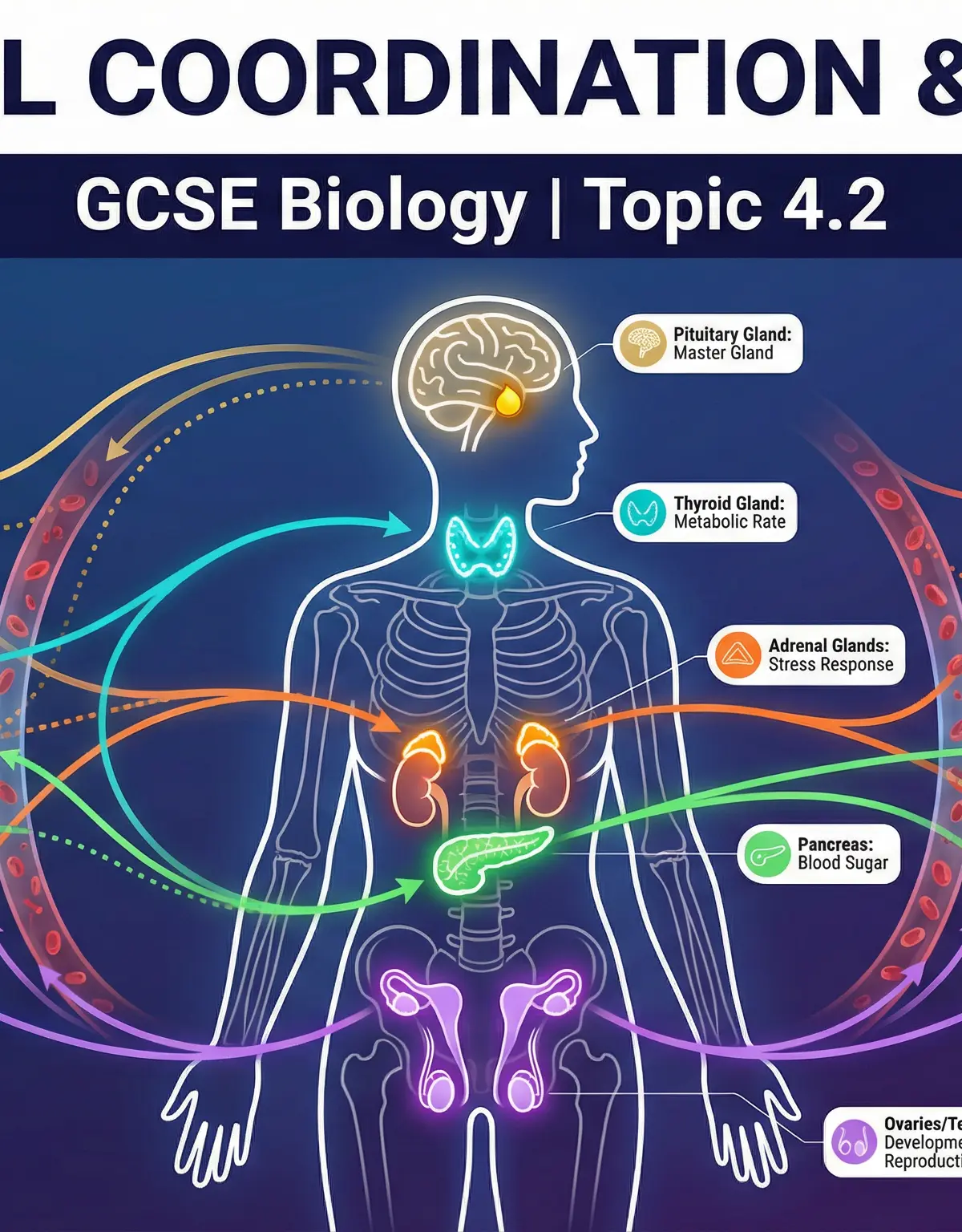
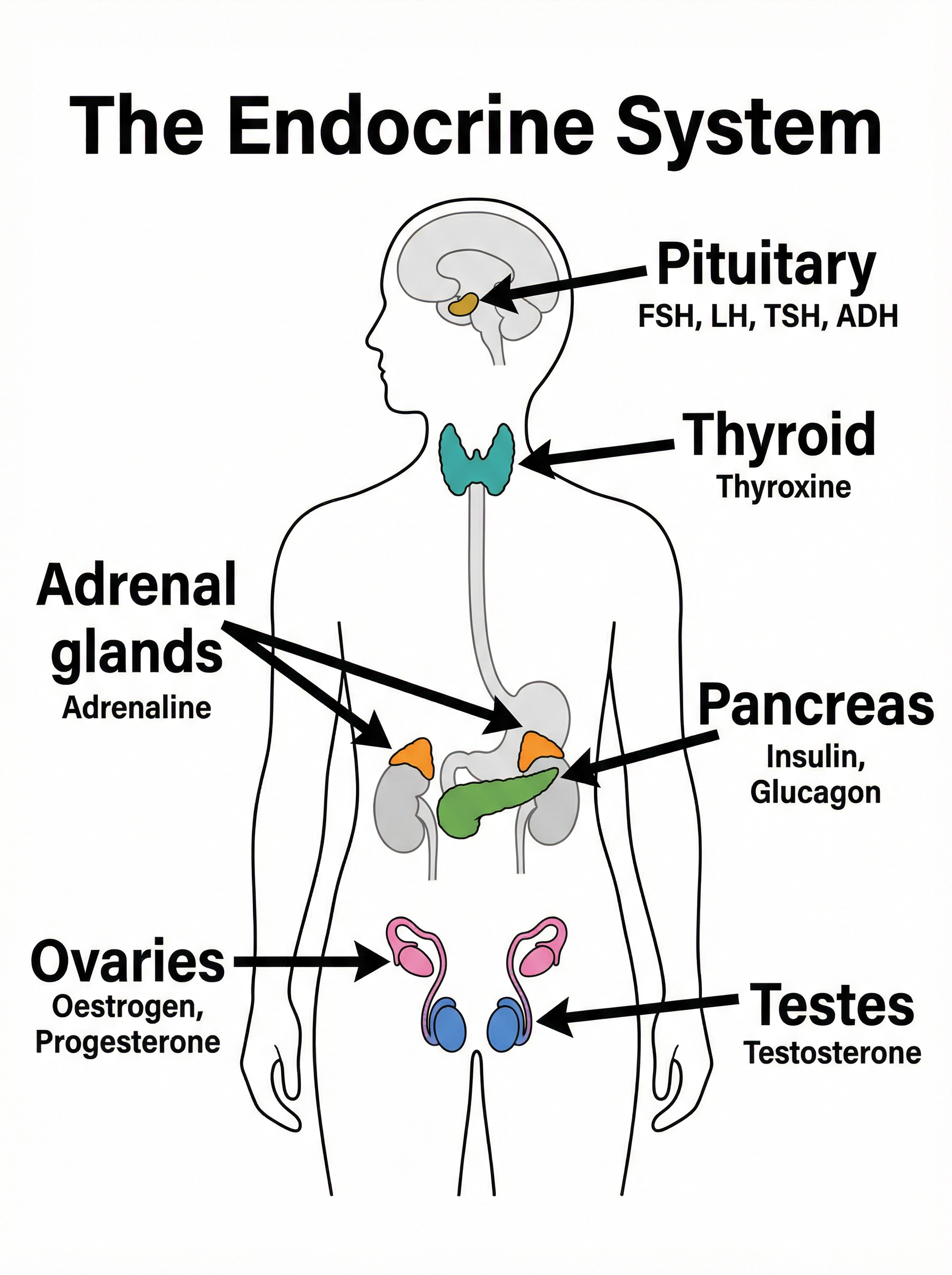
The endocrine system is composed of glands that secrete chemicals called hormones directly into the bloodstream. The blood carries the hormone to a target organ where it produces an effect. Compared to the nervous system the effects are slower but act for longer.
The "master gland" is the pituitary gland in the brain. It secretes several hormones into the blood in response to body conditions. These hormones in turn act on other glands to stimulate other hormones to be released to bring about effects.
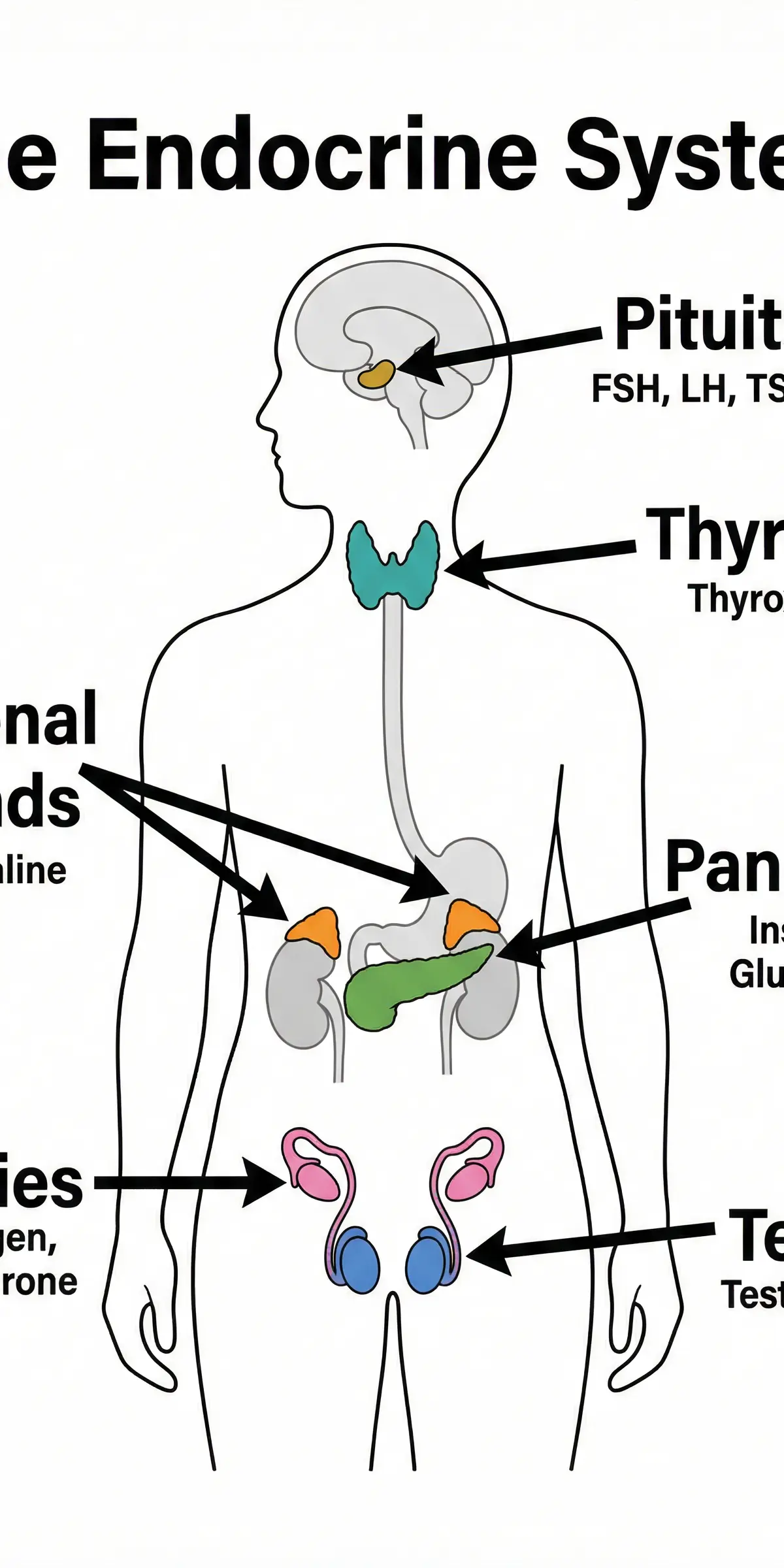
Key Glands to Identify:
- Pituitary Gland: Located at the base of the brain. Produces FSH, LH, ADH, and TSH.
- Thyroid Gland: Located in the neck. Produces thyroxine.
- Adrenal Glands: Located above the kidneys. Produce adrenaline.
- Pancreas: Located behind the stomach. Produces insulin and glucagon.
- Ovaries (Females): Located in the lower abdomen. Produce oestrogen and progesterone.
- Testes (Males): Located in the scrotum. Produce testosterone.
Concept 2: Negative Feedback
Negative feedback is a critical mechanism in homeostasis. It ensures that if the level of something rises, control systems reduce it again. If the level falls, control systems raise it.
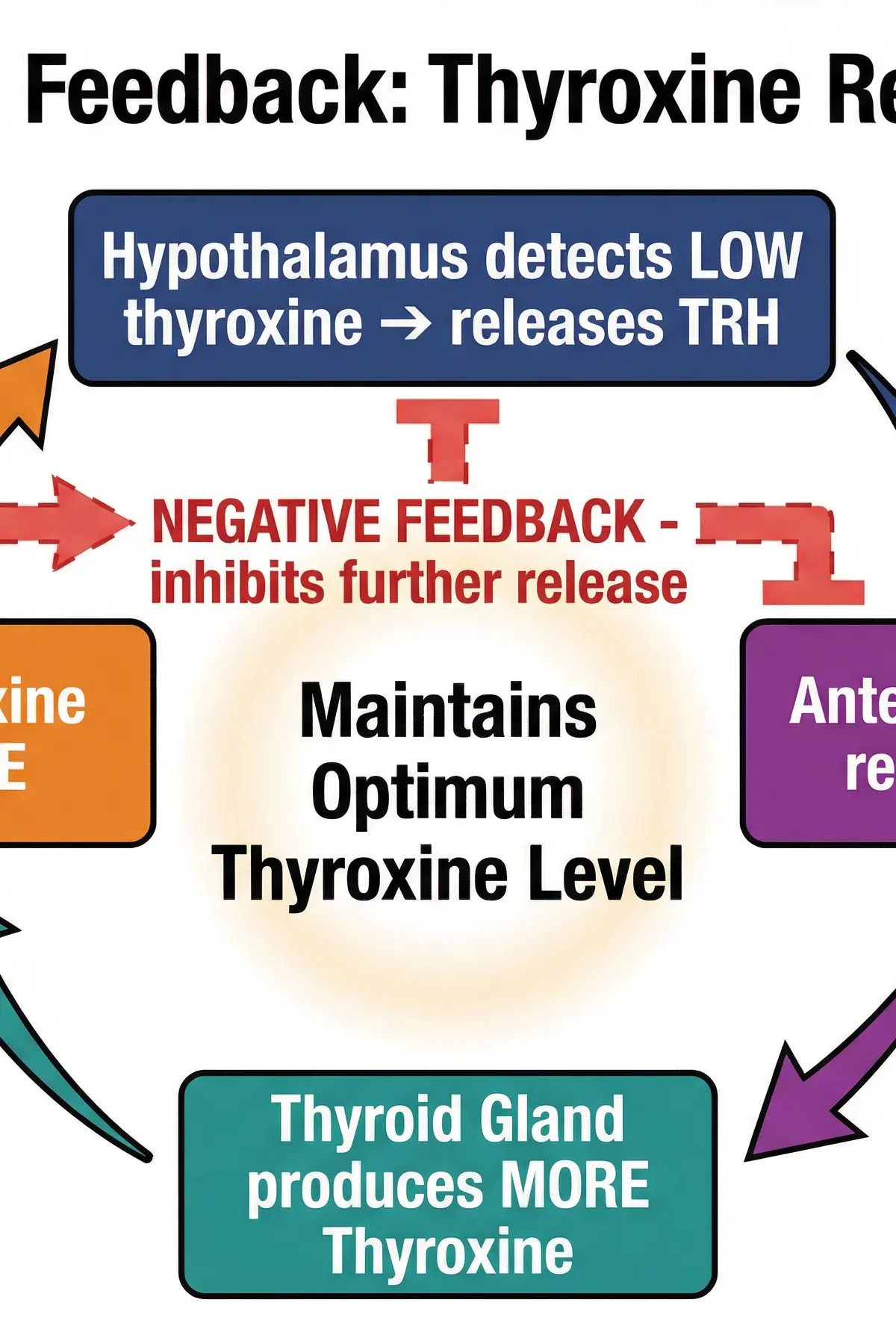
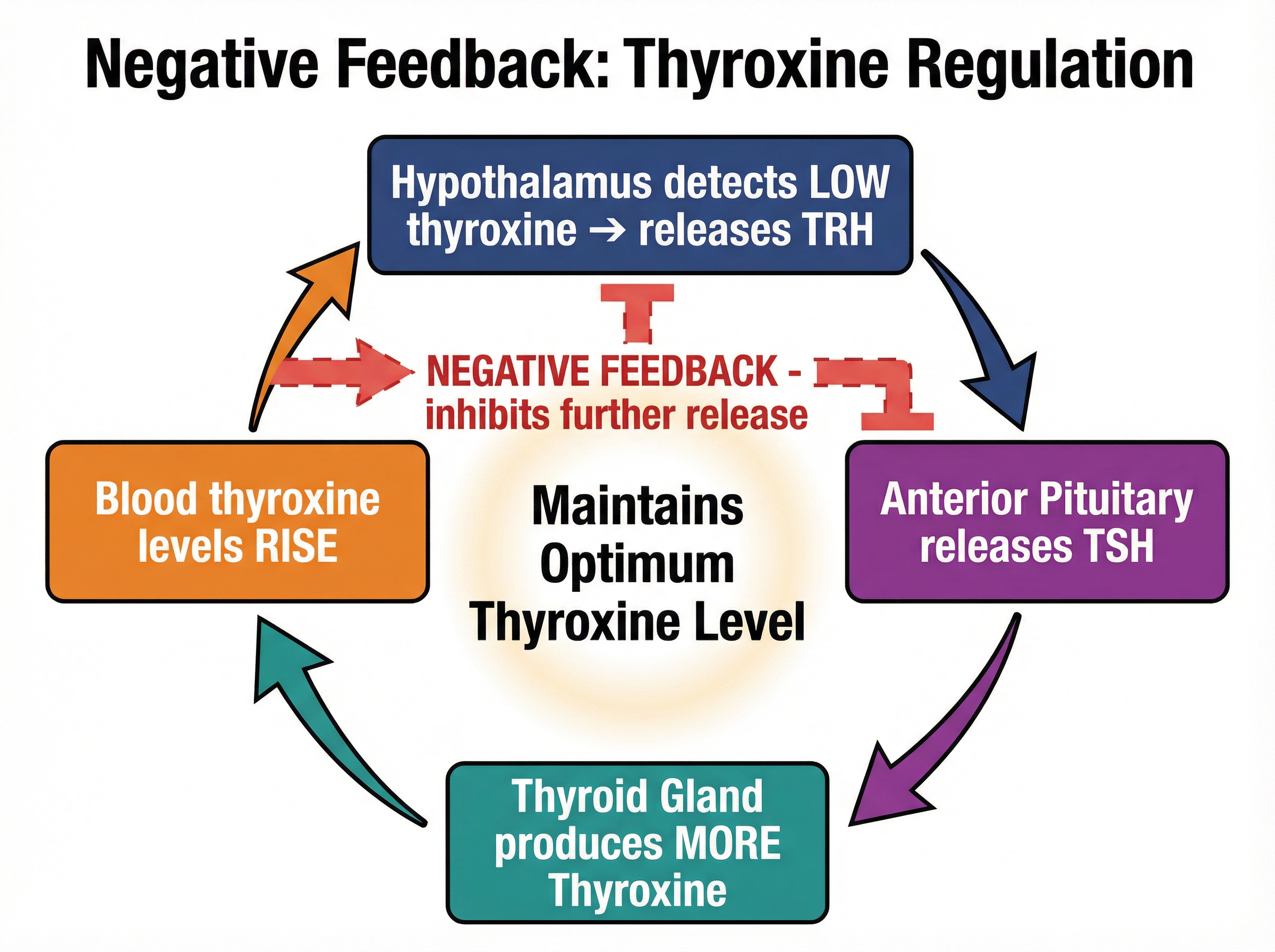
Example: Thyroxine RegulationThyroxine from the thyroid gland stimulates the basal metabolic rate. It plays an important role in growth and development. Thyroxine levels are controlled by negative feedback:
- Low thyroxine levels in the bloodstream stimulate the hypothalamus to release TRH.
- TRH causes the pituitary gland to release TSH (Thyroid Stimulating Hormone).
- TSH stimulates the thyroid gland to release more thyroxine.
- As thyroxine levels return to normal, they inhibit the release of TRH and TSH, stopping further thyroxine production.
Concept 3: Adrenaline and the Fight-or-Flight Response
Adrenaline is produced by the adrenal glands in times of fear or stress. It prepares the body for "fight or flight" by:
- Increasing the heart rate, which boosts the delivery of oxygen and glucose to the brain and muscles.
- Increasing the breathing rate to take in more oxygen.
- Converting glycogen into glucose in the liver, raising blood sugar levels for respiration.
- Diverting blood away from the digestive system towards the skeletal muscles.
Concept 4: The Menstrual Cycle
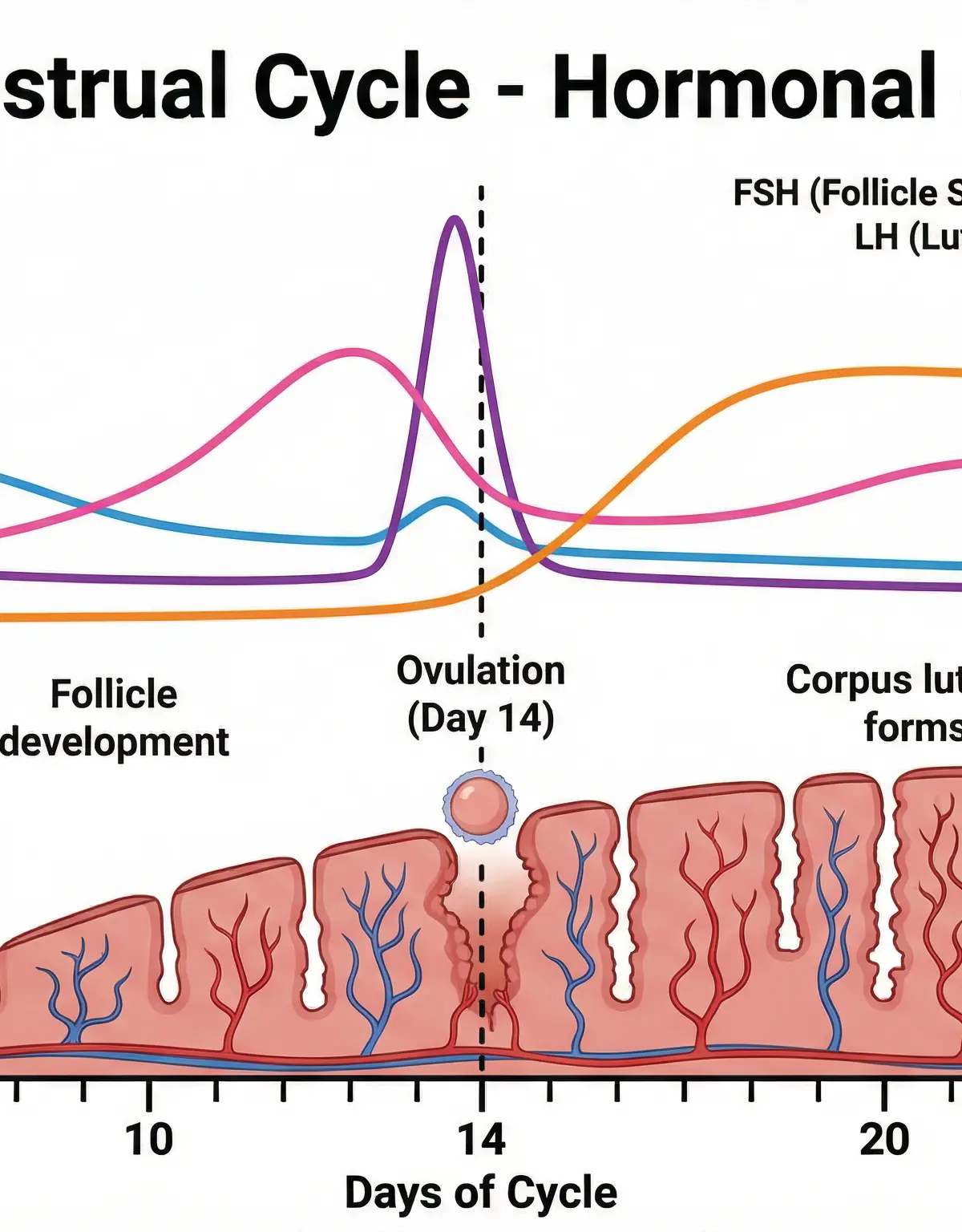
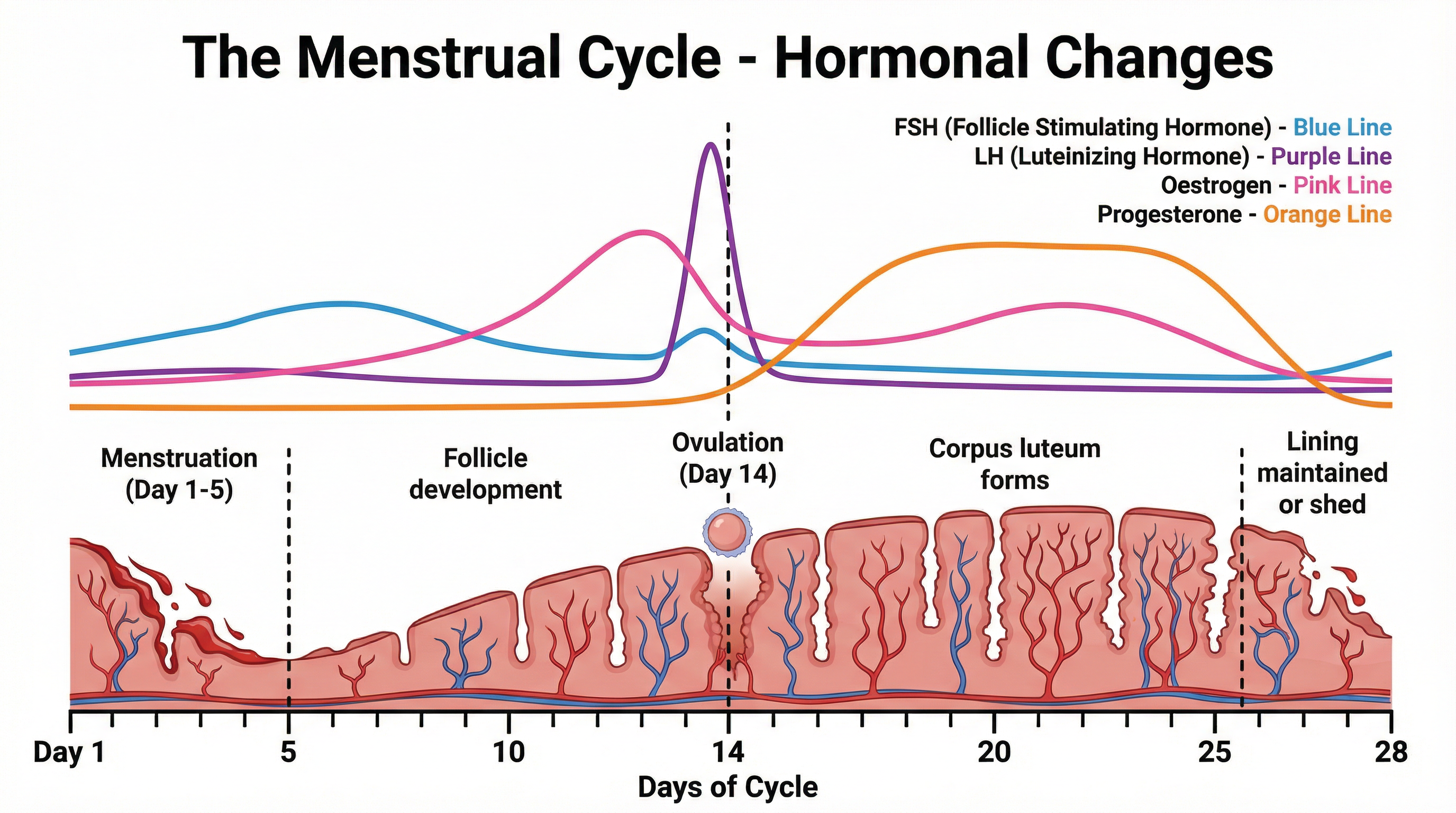
The menstrual cycle is controlled by four hormones interacting in a complex sequence over approximately 28 days:
- FSH (Follicle Stimulating Hormone): Secreted by the pituitary gland. Causes an egg to mature in an ovary. Stimulates the ovaries to release oestrogen.
- Oestrogen: Secreted by the ovaries. Causes the lining of the uterus to thicken and grow. Inhibits the release of FSH and stimulates the release of LH.
- LH (Luteinising Hormone): Secreted by the pituitary gland. A surge in LH triggers ovulation (the release of a mature egg) around day 14.
- Progesterone: Secreted by the empty follicle (corpus luteum) in the ovaries after ovulation. Maintains the lining of the uterus during the second half of the cycle. Inhibits the release of both FSH and LH.
Concept 5: Contraception and Fertility Treatments
Hormones can be used to control fertility.
- Oral contraceptives (The Pill): Contain hormones (oestrogen and progesterone) to inhibit FSH production so that no eggs mature.
- Injections, implants, or skin patches: Provide slow release of progesterone to inhibit the maturation and release of eggs for months or years.
**Fertility Treatments (IVF):**Women who struggle to conceive may be given a "fertility drug" containing FSH and LH. This stimulates the maturation and release of eggs.
In Vitro Fertilisation (IVF) involves giving a mother FSH and LH to stimulate the maturation of several eggs. The eggs are collected from the mother and fertilised by sperm from the father in the laboratory. The fertilised eggs develop into embryos. When they are tiny balls of cells, one or two embryos are inserted into the mother's uterus.
Practical Applications
Understanding hormonal control is vital in modern medicine. The development of the contraceptive pill revolutionised family planning, giving individuals control over reproduction. Similarly, the use of FSH and LH in IVF treatments has allowed millions of people with fertility issues to have children. Knowledge of adrenaline is used in treating severe allergic reactions (anaphylaxis) using EpiPens, which inject adrenaline to open airways and raise blood pressure.
Visual Resources
3 diagrams and illustrations
Interactive Diagrams
2 interactive diagrams to visualise key concepts
Conceptual Flow Outline
Flowchart showing the hormonal interactions in the menstrual cycle.
Conceptual Flow Outline
The pathway of the fight-or-flight response.
Worked Examples
3 worked examples — open one to explore the question and available guidance.
Practice Questions
Test your understanding — click to reveal model answers
State the gland that produces adrenaline. (1 mark)
Hint: Think about the organs located just above your kidneys.
Describe the difference between the nervous system and the endocrine system. (3 marks)
Hint: Compare the speed, the type of signal, and how long the effect lasts.
A woman has a 28-day menstrual cycle. Explain why a blood test on day 13 shows high levels of oestrogen but low levels of progesterone. (4 marks)
Hint: Think about what oestrogen does just before ovulation, and when progesterone is actually produced.
Explain how IVF treatment works to help a woman become pregnant. (4 marks)
Hint: What hormones are given? Where does fertilisation happen?
Explain how negative feedback controls the level of thyroxine in the blood. (4 marks)
Hint: Mention the hypothalamus, TSH, and the thyroid gland.