Eduqas · GCSE · Biology
Inheritance, variation and evolution
Master the blueprint of life! This topic covers how DNA controls your traits, how characteristics are passed down through generations, and how natural selection drives the evolution of all species on Earth.
- 5 min read
- 3 worked examples
- 5 practice questions
- 6 key terms
Study Notes
Overview
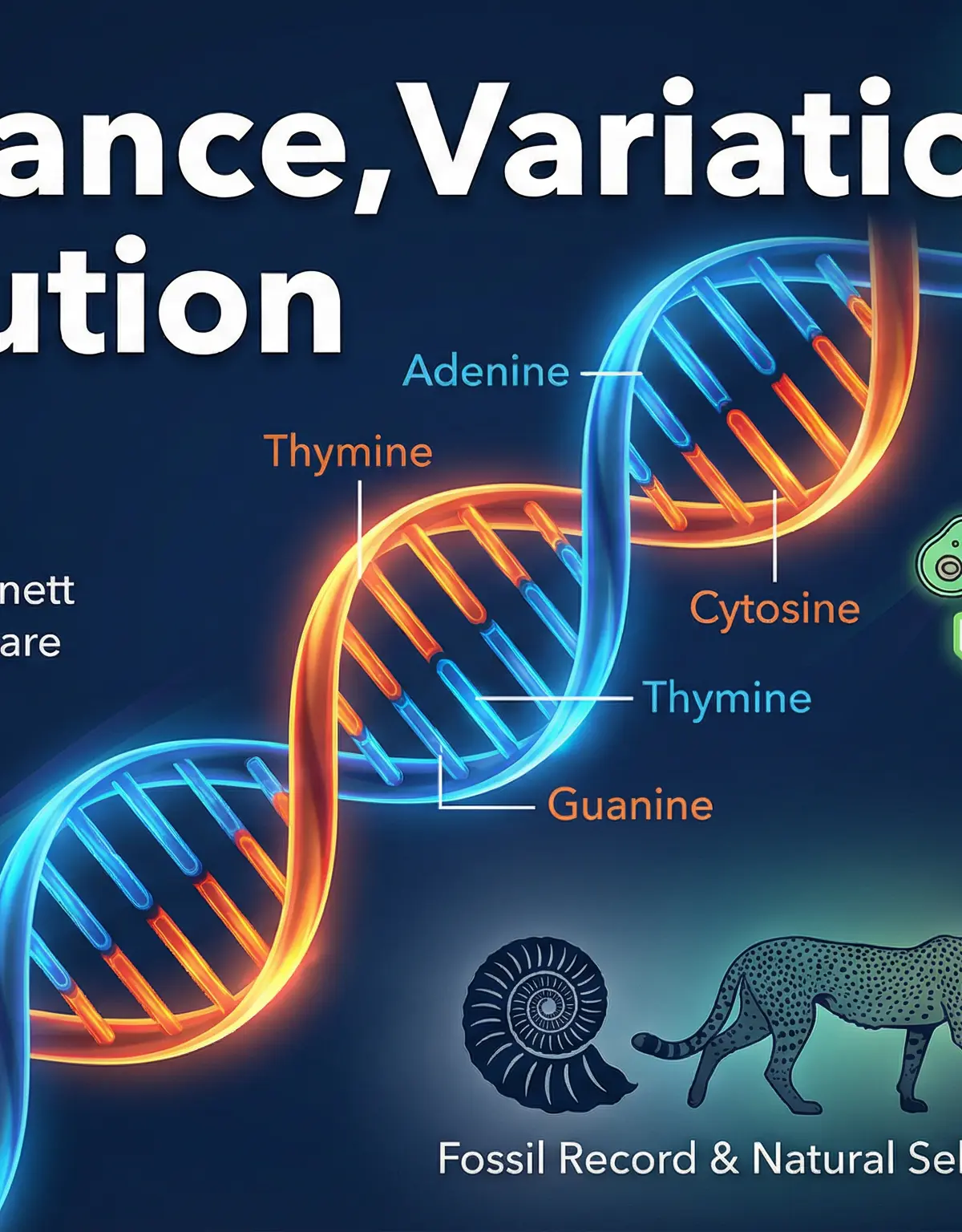
Welcome to Inheritance, Variation and Evolution. This topic is fundamental to Biology because it explains the continuity of life and the incredible diversity we see around us. You'll learn how the DNA in your cells acts as a code for making proteins, how traits are passed from parents to offspring, and how environmental pressures drive the evolution of species over millions of years. Examiners frequently test this topic using a mix of short factual recall questions (like defining 'allele' or 'genotype') and longer application questions (like explaining natural selection or drawing Punnett squares). It links heavily to earlier topics on cell structure and division, and connects forward to ecology and human impact on the environment.
Listen to the topic podcast below for a comprehensive review of all key concepts:
Key Concepts
Concept 1: DNA Structure and the Genome
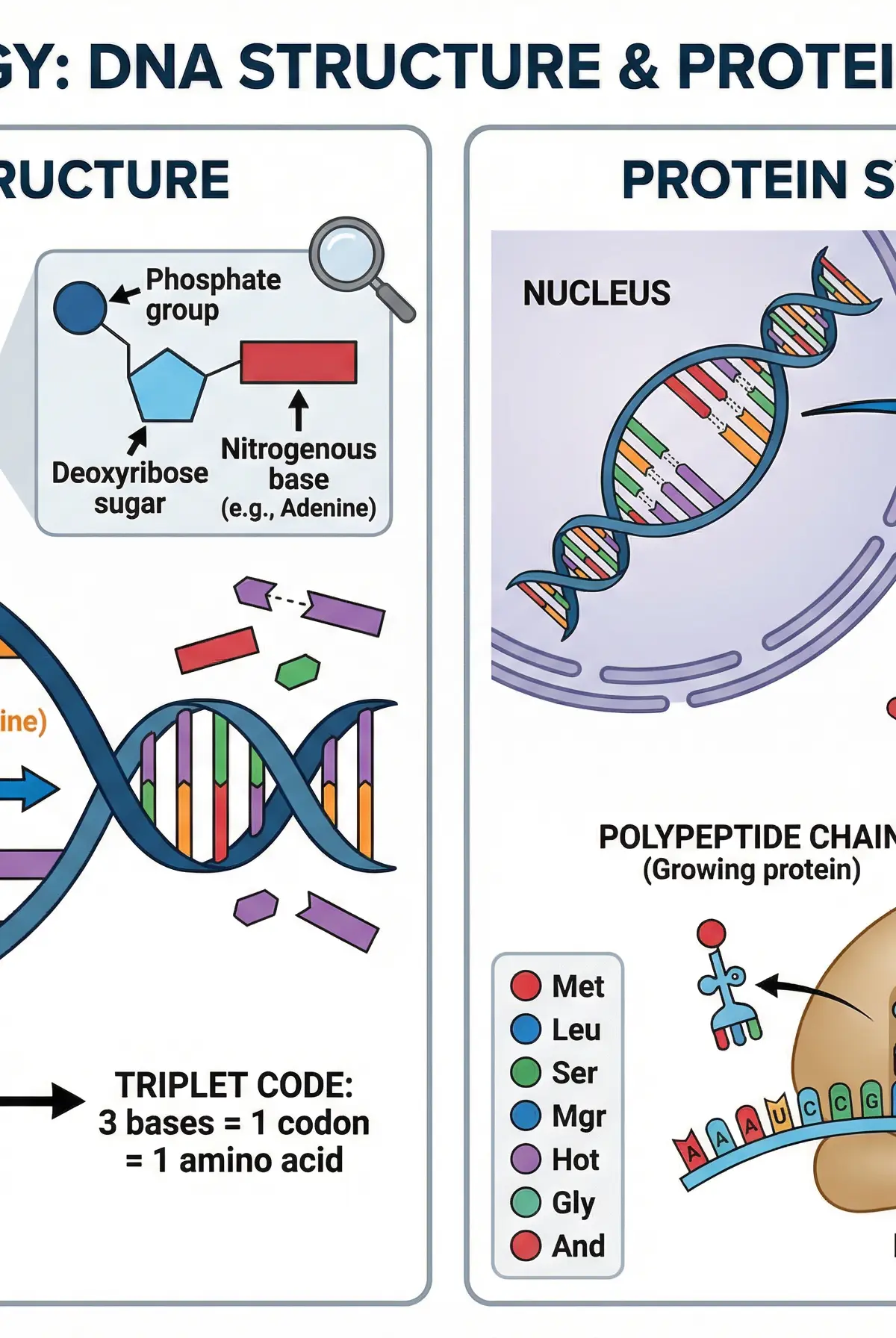
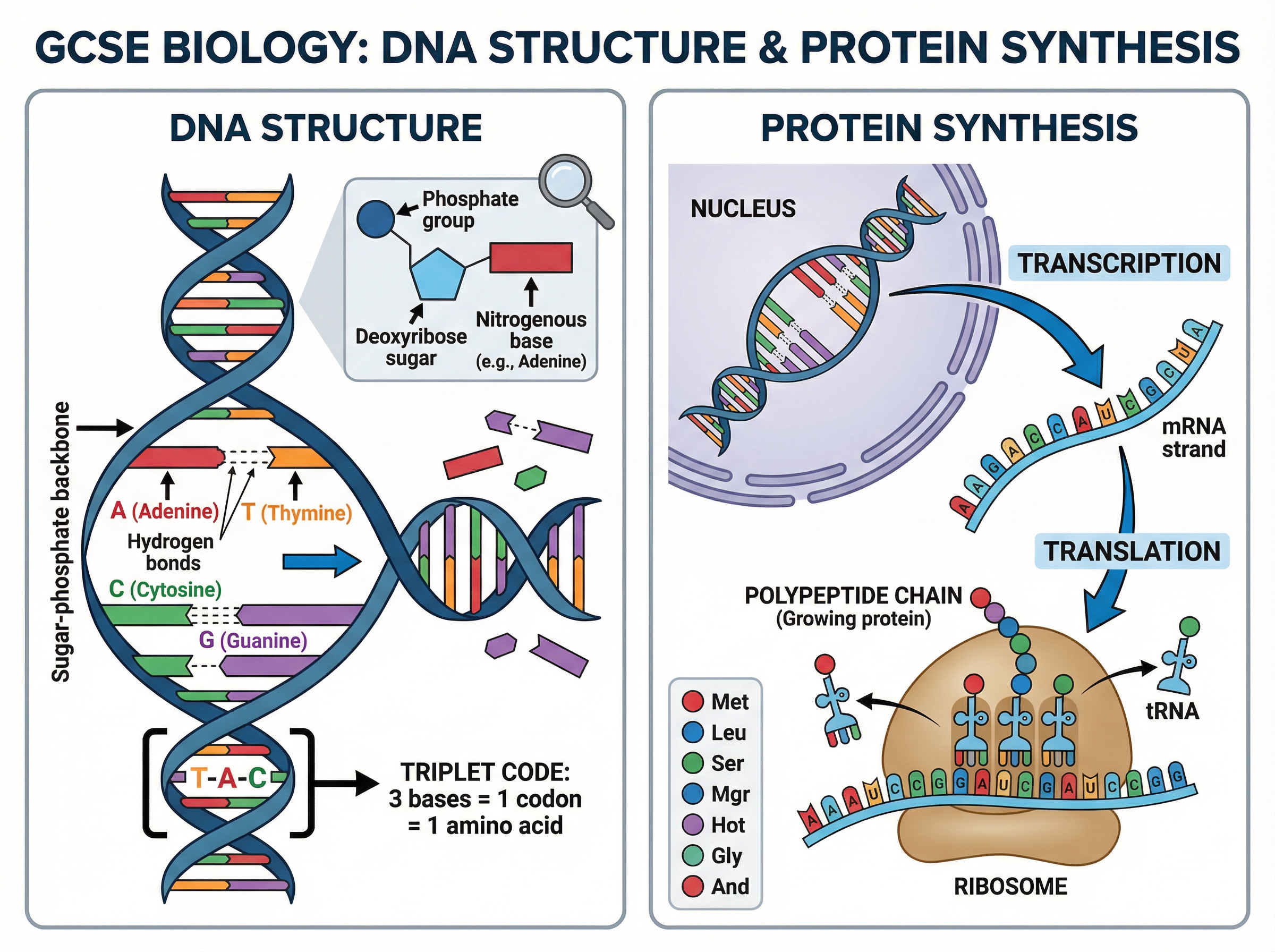
DNA (deoxyribonucleic acid) is a polymer made up of two strands forming a double helix. The DNA is contained in structures called chromosomes. A gene is a small section of DNA on a chromosome. Each gene codes for a particular sequence of amino acids, to make a specific protein. The genome is the entire genetic material of that organism. The whole human genome has now been studied and this will have great importance for medicine in the future.
DNA is made from four different nucleotides. Each nucleotide consists of a common sugar and phosphate group with one of four different bases attached to the sugar. The bases are A, C, G and T. A sequence of three bases is the code for a particular amino acid. The order of bases controls the order in which amino acids are assembled to produce a particular protein.
Concept 2: Genetic Inheritance
Some characteristics are controlled by a single gene, such as fur colour in mice or red-green colour blindness in humans. Each gene may have different forms called alleles. The alleles present, or genotype, operate at a molecular level to develop characteristics that can be expressed as a phenotype.
A dominant allele is always expressed, even if only one copy is present. A recessive allele is only expressed if two copies are present (therefore no dominant allele present). If the two alleles present are the same the organism is homozygous for that trait, but if the alleles are different they are heterozygous.
Most characteristics are a result of multiple genes interacting, rather than a single gene.
Concept 3: Variation and Evolution
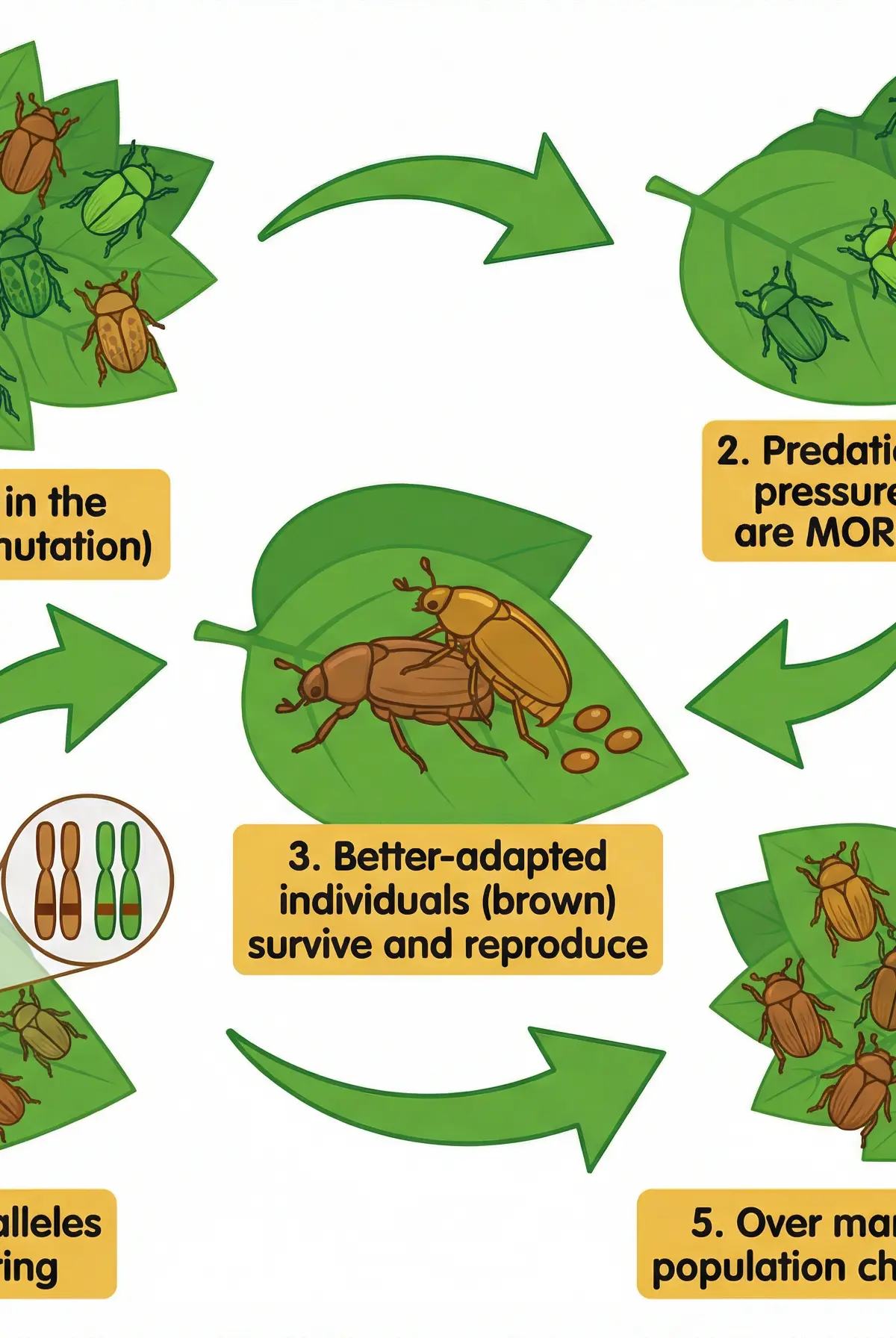
Differences in the characteristics of individuals in a population is called variation and may be due to differences in the genes they have inherited (genetic causes), the conditions in which they have developed (environmental causes), or a combination of genes and the environment. Mutations occur continuously. Very rarely a mutation will lead to a new phenotype. If the new phenotype is suited to an environmental change it can lead to a rapid change in the species.
Evolution is a change in the inherited characteristics of a population over time through a process of natural selection which may result in the formation of a new species. The theory of evolution by natural selection states that all species of living things have evolved from simple life forms that first developed more than three billion years ago.
Concept 4: Selective Breeding and Genetic Engineering
Selective breeding (artificial selection) is the process by which humans breed plants and animals for particular genetic characteristics. Humans have been doing this for thousands of years since they first bred food crops from wild plants and domesticated animals. It involves choosing parents with the desired characteristic from a mixed population, breeding them together, and repeating this with the best offspring over many generations.
Genetic engineering is a process which involves modifying the genome of an organism by introducing a gene from another organism to give a desired characteristic. Plant crops have been genetically engineered to be resistant to diseases or to produce bigger better fruits. Bacterial cells have been genetically engineered to produce useful substances such as human insulin to treat diabetes.
Mathematical/Scientific Relationships
**Probability in Genetic Crosses:**Outcomes of genetic crosses are usually expressed as probabilities, ratios, or percentages.
- A 3:1 ratio means there is a 75% chance (or 0.75 probability) of one phenotype and a 25% chance (or 0.25 probability) of the other.
- Remember that each fertilization event is independent. If parents have a 25% chance of having a child with a recessive disorder, that 25% chance applies to every child they have, regardless of previous children.
Practical Applications
Understanding inheritance is crucial for modern medicine, particularly in predicting and treating genetic disorders like cystic fibrosis or polydactyly. Genetic engineering has revolutionized agriculture with GM crops and medicine with the production of synthetic insulin. Understanding evolution is critical for managing antibiotic resistance in bacteria, which is currently one of the greatest threats to global health.
Visual Resources
2 diagrams and illustrations
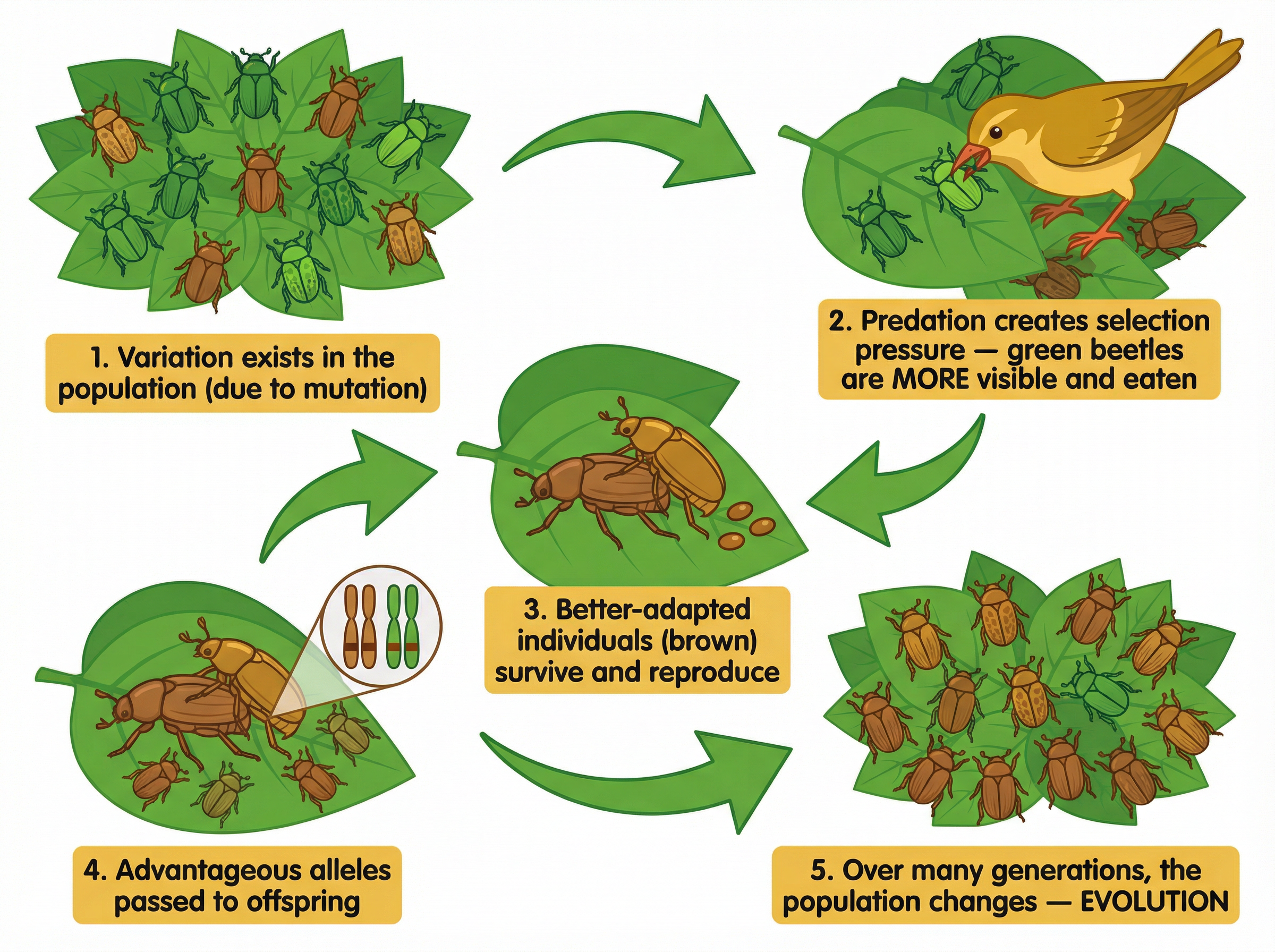
Interactive Diagrams
2 interactive diagrams to visualise key concepts
Conceptual Flow Outline
The sequence of events in natural selection (VISTA model)
Conceptual Flow Outline
The central dogma of protein synthesis
Worked Examples
3 worked examples — open one to explore the question and available guidance.
Practice Questions
Test your understanding — click to reveal model answers
MRSA is a strain of bacteria that is resistant to antibiotics. Explain how a population of MRSA bacteria might have evolved from a non-resistant population. [4 marks]
Hint: Think about the VISTA model: Variation, Inheritance, Selection, Time, Adaptation.
A woman with polydactyly (caused by a dominant allele, D) is heterozygous. She has a child with a man who does not have polydactyly. What is the probability their child will have the condition? [3 marks]
Hint: What must the man's genotype be if he doesn't have a dominant condition?
State the three parts of a DNA nucleotide. [3 marks]
Hint: Think about the backbone and the rungs of the ladder.
Describe the process of selective breeding to produce cows with high milk yields. [4 marks]
Hint: Who does the selecting? What happens over many generations?
Evaluate the use of genetic engineering in agriculture. [4 marks]
Hint: You need to give both advantages and disadvantages to get full marks on an evaluate question.