Eduqas · GCSE · Biology
Non-communicable diseases in humans
Master the interaction of lifestyle factors and non-communicable diseases for your GCSE Biology exam. Learn how diet, smoking, alcohol, and exercise impact health, and how to evaluate cardiovascular treatments to secure top marks.
- 6 min read
- 3 worked examples
- 5 practice questions
- 6 key terms
Study Notes

Overview
Non-communicable diseases (NCDs) are conditions that cannot be passed from person to person. Unlike communicable diseases caused by pathogens, NCDs develop over time and are often the result of the interaction of multiple lifestyle factors. This topic is crucial in GCSE Biology because it bridges human biology with real-world health challenges. Examiners frequently use this topic to test your ability to evaluate data, connect different biological systems, and explain the consequences of lifestyle choices.
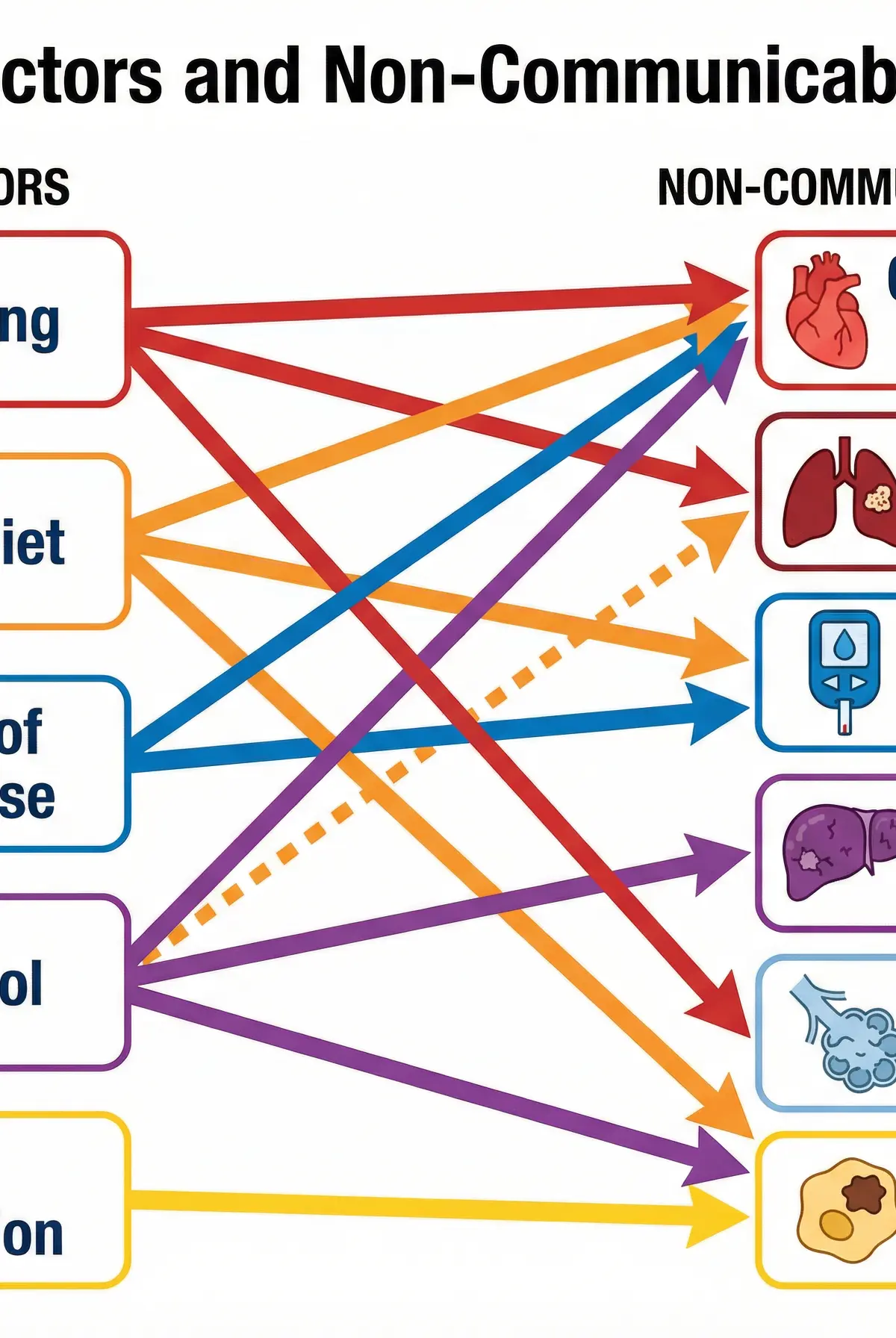
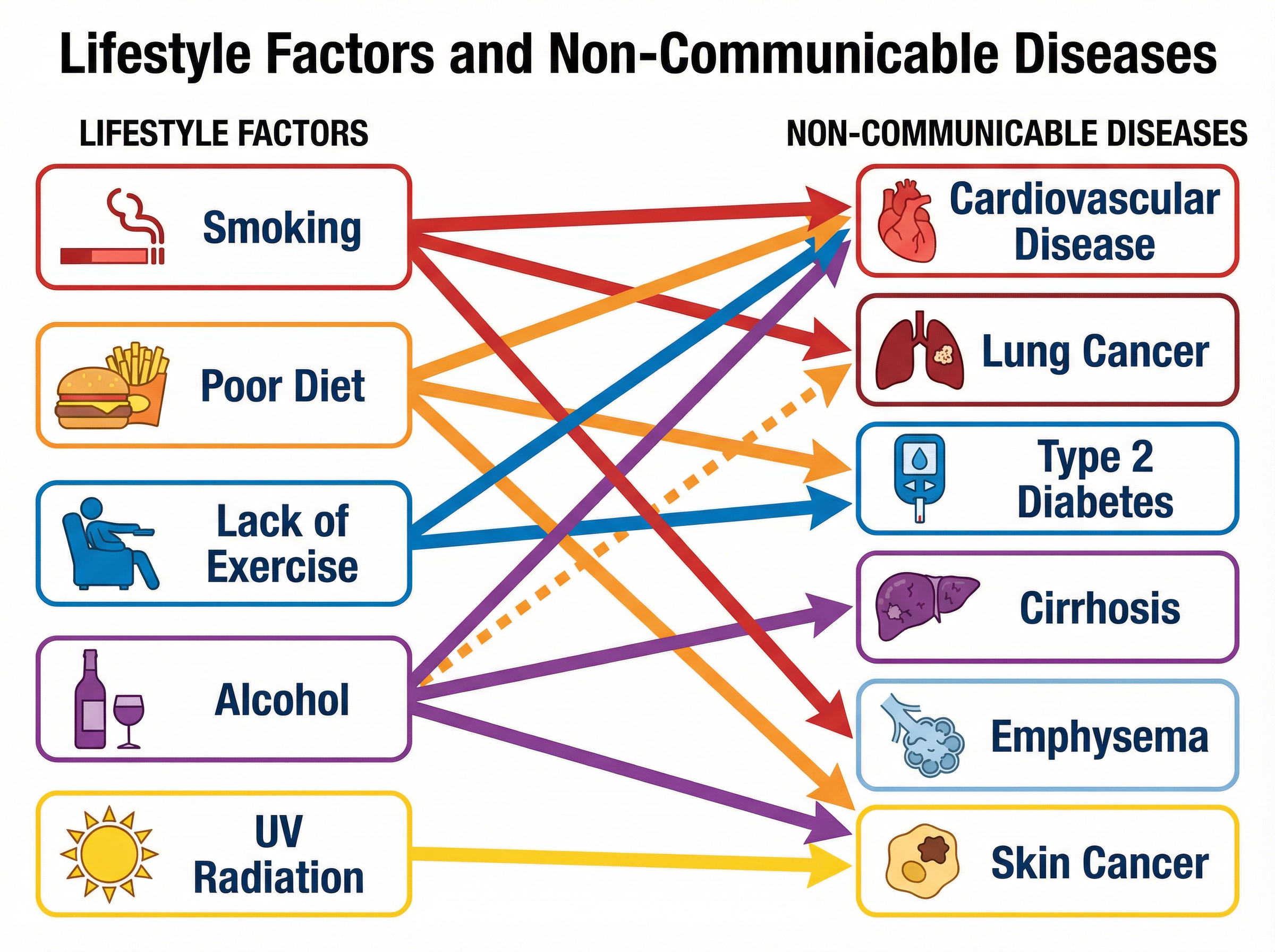
You will need to understand how factors like smoking, diet, alcohol, and UV radiation contribute to diseases such as cardiovascular disease, lung cancer, type 2 diabetes, cirrhosis, and skin cancer. Moreover, you must be able to evaluate the medical and lifestyle treatments available for these conditions. This topic links heavily to the circulatory system, the respiratory system, and cell division (cancer).
Key Concepts
Concept 1: The Interaction of Lifestyle Factors
Examiners want to see that you understand diseases are rarely caused by a single factor. They result from the interaction of multiple lifestyle choices and genetic predispositions. For instance, a person who consumes a diet high in saturated fats, smokes, and does not exercise is at a significantly higher risk of developing cardiovascular disease than someone with only one of these risk factors. The effects compound.
Example: If a person has a BMI over 30 (obese) and a genetic history of diabetes, their risk of developing Type 2 diabetes is exponentially higher if they also consume a diet high in refined sugars and lead a sedentary lifestyle.
Concept 2: Smoking and Disease
Cigarette smoke contains thousands of harmful chemicals. Three key components are critical for your exam:
- Carcinogens: These chemicals damage the DNA in cells, leading to uncontrolled cell division, which causes cancer (particularly lung cancer).
- Nicotine: An addictive stimulant that raises heart rate and blood pressure, contributing to cardiovascular disease.
- Carbon Monoxide: A poisonous gas that binds irreversibly to haemoglobin in red blood cells, reducing the oxygen-carrying capacity of the blood.
Smoking also damages the alveoli in the lungs, reducing their surface area and elasticity. This condition is called emphysema, leading to severe breathlessness.
Concept 3: Diet, Exercise, and Cardiovascular Disease
A diet high in saturated fats increases blood cholesterol levels. This excess cholesterol can lead to the build-up of fatty deposits (plaques) inside the coronary arteries, a condition known as atherosclerosis. These plaques narrow the arteries, restricting blood flow and oxygen delivery to the heart muscle, which can cause a heart attack.
Lack of exercise exacerbates this risk. Regular physical activity strengthens the heart muscle, lowers resting blood pressure, and improves the body's sensitivity to insulin.
Concept 4: Alcohol and the Liver
The liver is responsible for breaking down alcohol. However, excessive alcohol consumption over a long period overworks the liver cells. This leads to the destruction of liver tissue, which is replaced by scar tissue. This irreversible condition is called cirrhosis, severely impairing the liver's ability to function (e.g., producing bile, detoxifying blood).
Concept 5: UV Radiation and Skin Cancer
Exposure to ultraviolet (UV) radiation from the sun or sunbeds is a major risk factor for skin cancer. UV rays penetrate the skin and damage the DNA in skin cells. If this mutation occurs in the genes that control the cell cycle, the cells may divide uncontrollably, forming a malignant tumour (melanoma).
Concept 6: Evaluating Treatments for Cardiovascular Disease
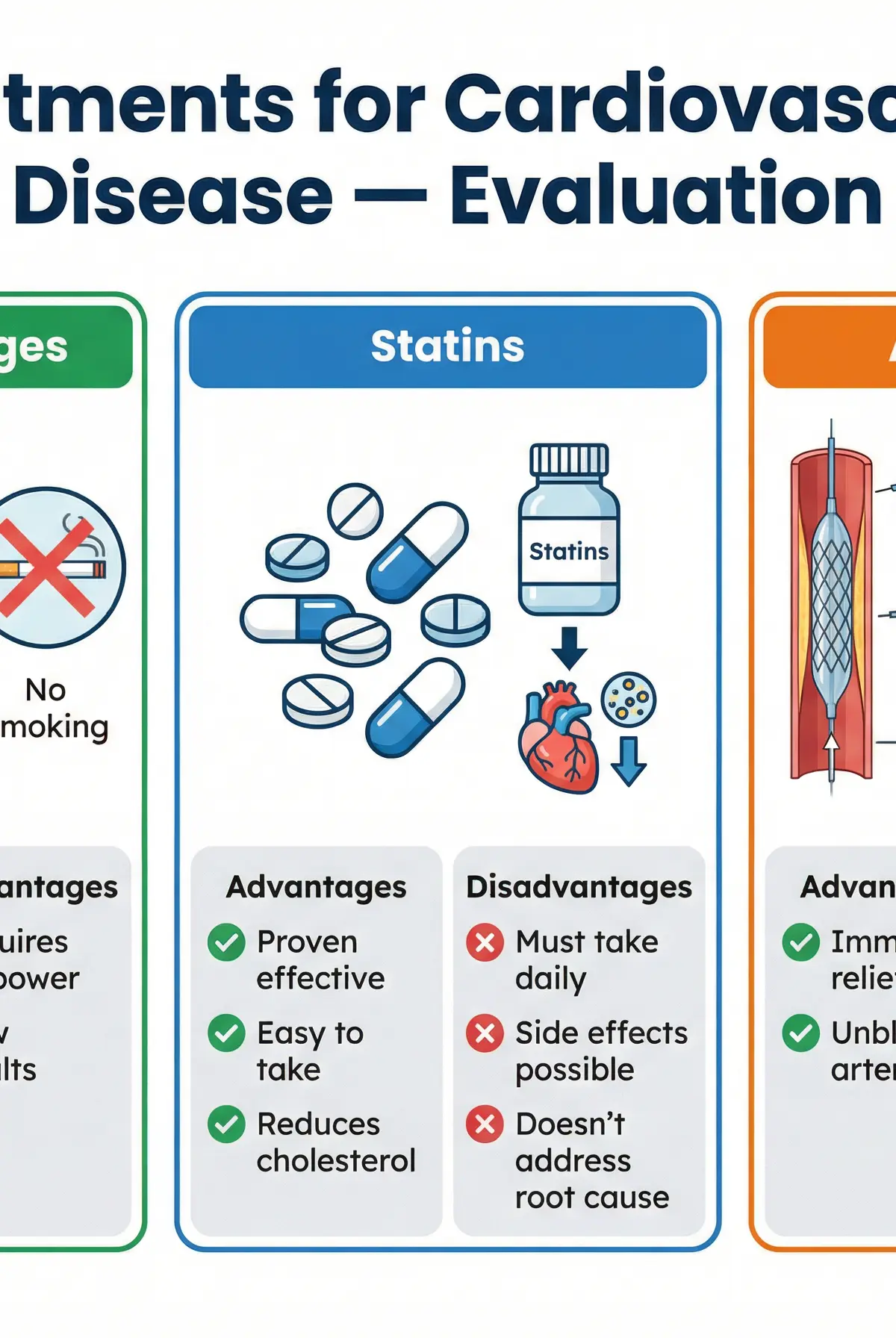
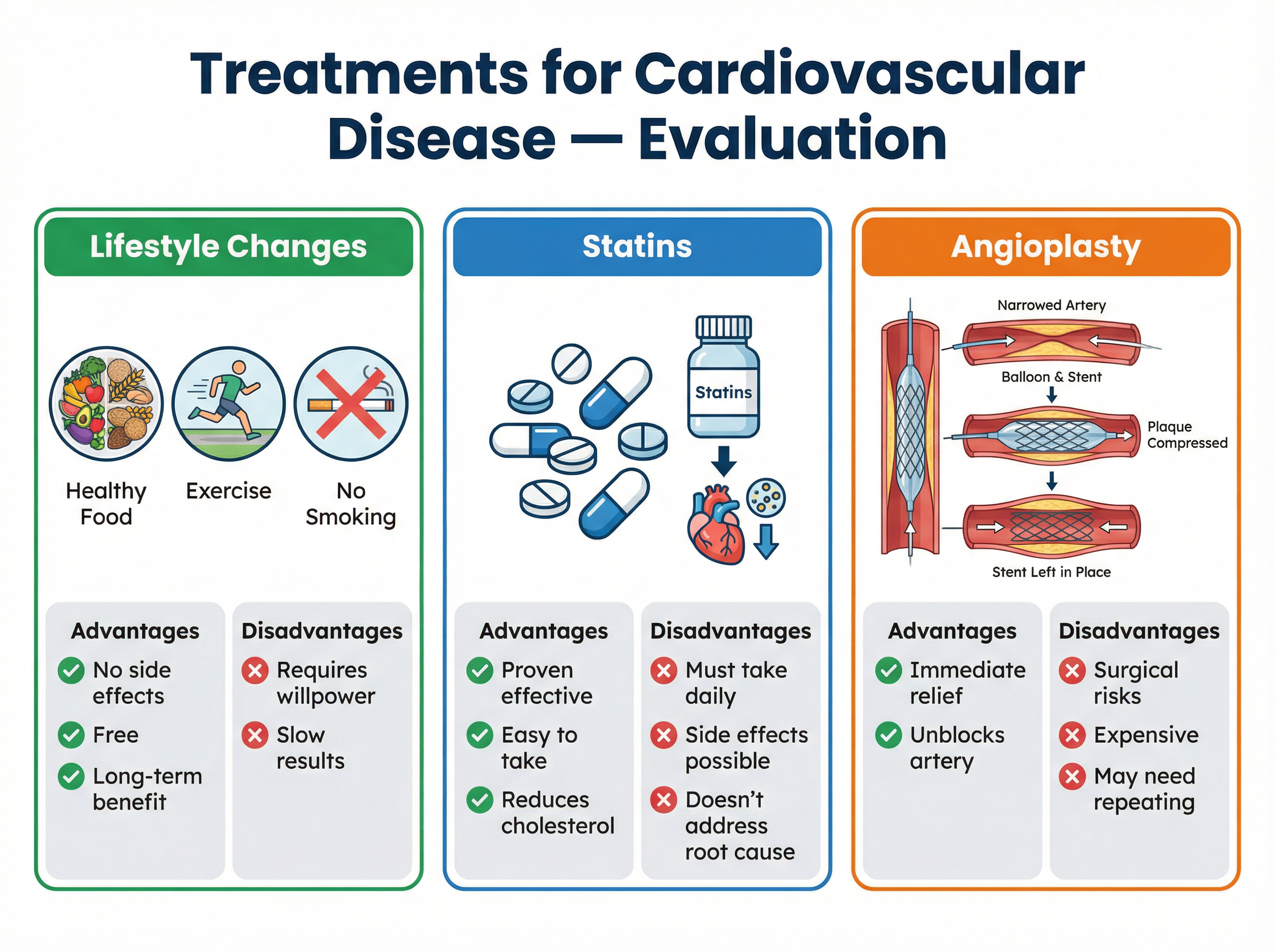
You must be able to evaluate three main treatments for cardiovascular disease. Remember, "evaluate" means giving both advantages and disadvantages.
-
Lifestyle Changes: Improving diet and increasing exercise.
- Advantages: No side effects, free, addresses the root cause, long-term health benefits.
- Disadvantages: Requires significant willpower, results are slow, may not be sufficient for severe cases.
-
Statins: Drugs that lower blood cholesterol levels.
- Advantages: Clinically proven to reduce the risk of heart attacks, easy to take.
- Disadvantages: Must be taken daily for life, potential side effects (e.g., muscle pain, liver damage), does not cure the underlying lifestyle issue.
-
Angioplasty and Stents: A surgical procedure to widen narrowed arteries using a balloon, often leaving a wire mesh tube (stent) to keep it open.
- Advantages: Immediate relief of symptoms, physically restores blood flow.
- Disadvantages: Carries surgical risks (infection, bleeding), expensive, the artery may narrow again over time.
Mathematical/Scientific Relationships
- Body Mass Index (BMI): \text{BMI} = \frac{\text{mass in kg}}{(\text{height in m})^2}
- Usage: Used to classify individuals as underweight, healthy weight, overweight, or obese. Obesity is a major risk factor for Type 2 diabetes and cardiovascular disease. (Must memorise formula).
Practical Applications
Understanding these risk factors is the foundation of public health policy. Governments use taxation (e.g., sugar tax, alcohol duty) and legislation (e.g., banning smoking in public places) to reduce the incidence of non-communicable diseases, thereby reducing the financial burden on the NHS.
Podcast Revision
Listen to the 10-minute BioRevise podcast episode covering all key concepts, exam tips, and a quick-fire recall quiz for this topic:
Visual Resources
2 diagrams and illustrations
Interactive Diagrams
2 interactive diagrams to visualise key concepts
Conceptual Flow Outline
Flowchart showing the progression from poor diet to a heart attack.
Conceptual Flow Outline
The multiple pathways by which smoking damages health.
Worked Examples
3 worked examples — open one to explore the question and available guidance.
Practice Questions
Test your understanding — click to reveal model answers
State two lifestyle factors that increase the risk of developing cardiovascular disease. (2 marks)
Hint: Think about what you eat and what you do (or don't do) in your free time.
Explain how a stent works to treat cardiovascular disease. (3 marks)
Hint: What is the physical problem in the artery, and how does the stent fix it?
A patient is diagnosed with high cholesterol. The doctor suggests trying lifestyle changes before prescribing statins. Evaluate this advice. (4 marks)
Hint: Give the pros and cons of lifestyle changes compared to just taking the drug.
Describe the effects of carbon monoxide from cigarette smoke on the body. (2 marks)
Hint: Think about red blood cells and what they carry.
Explain why non-communicable diseases are described as resulting from the 'interaction' of factors. Use Type 2 diabetes as an example. (4 marks)
Hint: How do two different bad habits combine to make the risk worse?