Eduqas · GCSE · Biology
Photosynthesis
Master the endothermic process of photosynthesis, where plants convert light energy into glucose. This guide covers the essential equations, limiting factors, and the required practical that are guaranteed to appear on your GCSE Biology paper.
- 5 min read
- 3 worked examples
- 5 practice questions
- 6 key terms
Study Notes
Overview

Photosynthesis is arguably the most important biochemical process on Earth. It is the method by which green plants and algae use light energy to synthesise glucose from carbon dioxide and water. This topic forms the foundation of Biology because it explains how energy enters almost all food chains. Without photosynthesis, there would be no oxygen to breathe and no food to eat.
In your GCSE exams, this topic is heavily tested across multiple assessment objectives. You will need to recall the basic word and symbol equations (AO1), apply your knowledge to novel graphs showing limiting factors (AO2), and evaluate the methodology of the pondweed required practical (AO3). Examiners frequently link photosynthesis to other topics, such as cell structure (chloroplasts), bioenergetics (respiration), and ecology (food webs).
Before you begin revising, take 10 minutes to listen to our dedicated revision podcast, which covers the core concepts, common pitfalls, and examiner tips:
Key Concepts
Concept 1: The Endothermic Nature of Photosynthesis
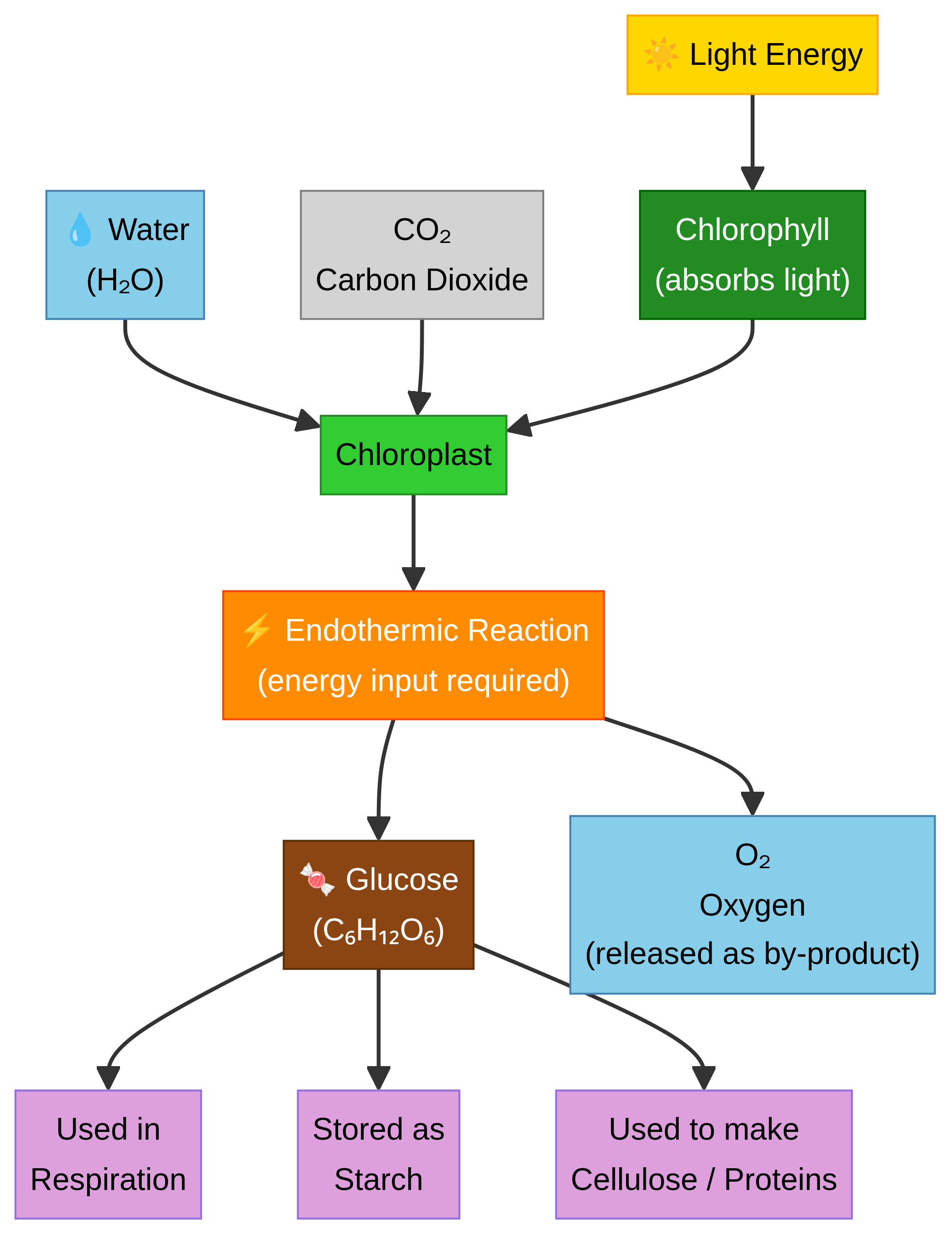
Photosynthesis is an endothermic reaction. This means it requires an input of energy from the environment to proceed. In this case, the energy source is light (usually from the sun).
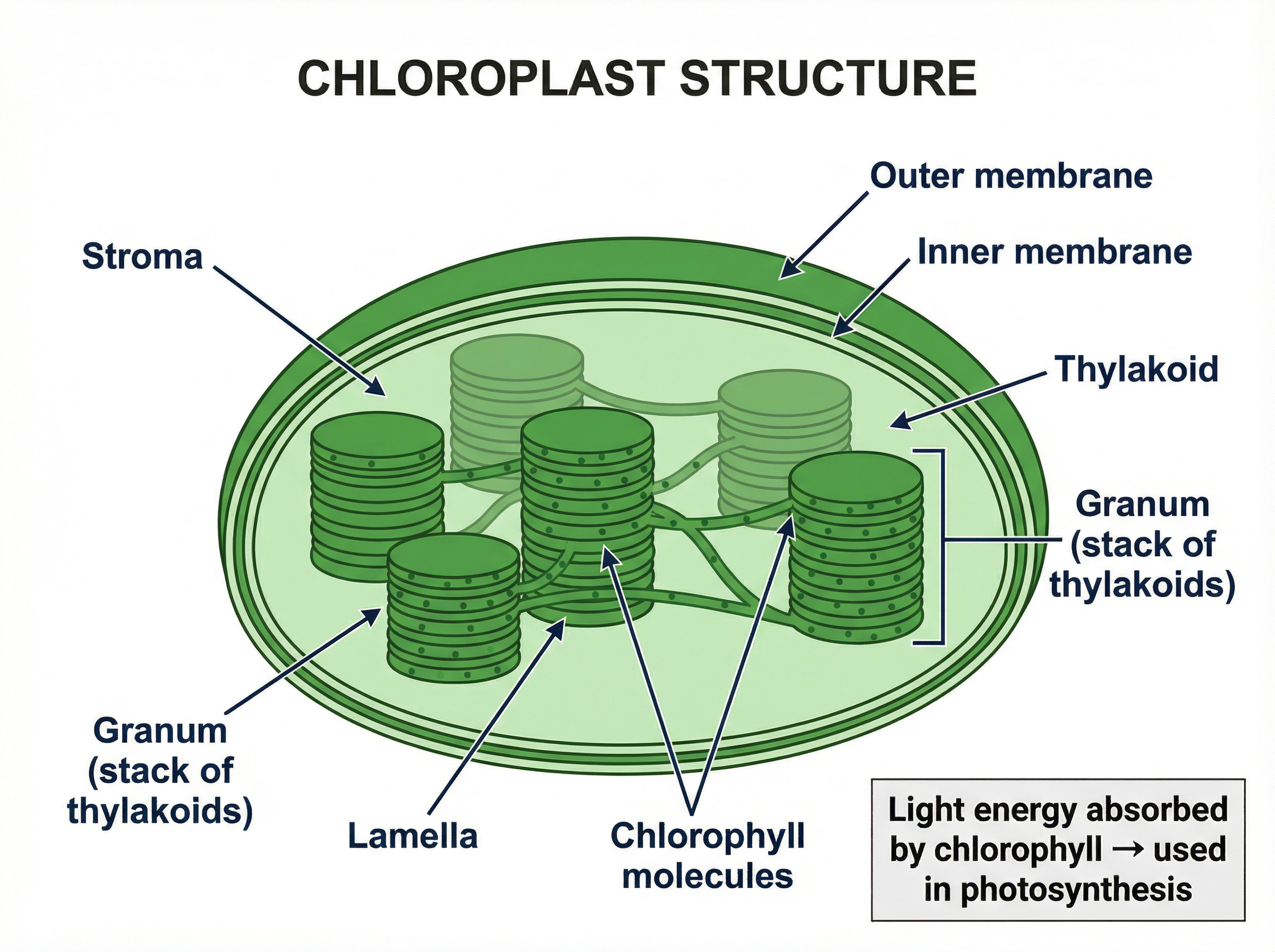
Inside plant cells, organelles called chloroplasts contain a green pigment named chlorophyll. The role of chlorophyll is to absorb this light energy. A common mistake candidates make is listing chlorophyll as a reactant; it is not used up in the reaction, but rather acts as the energy absorber that drives the process.
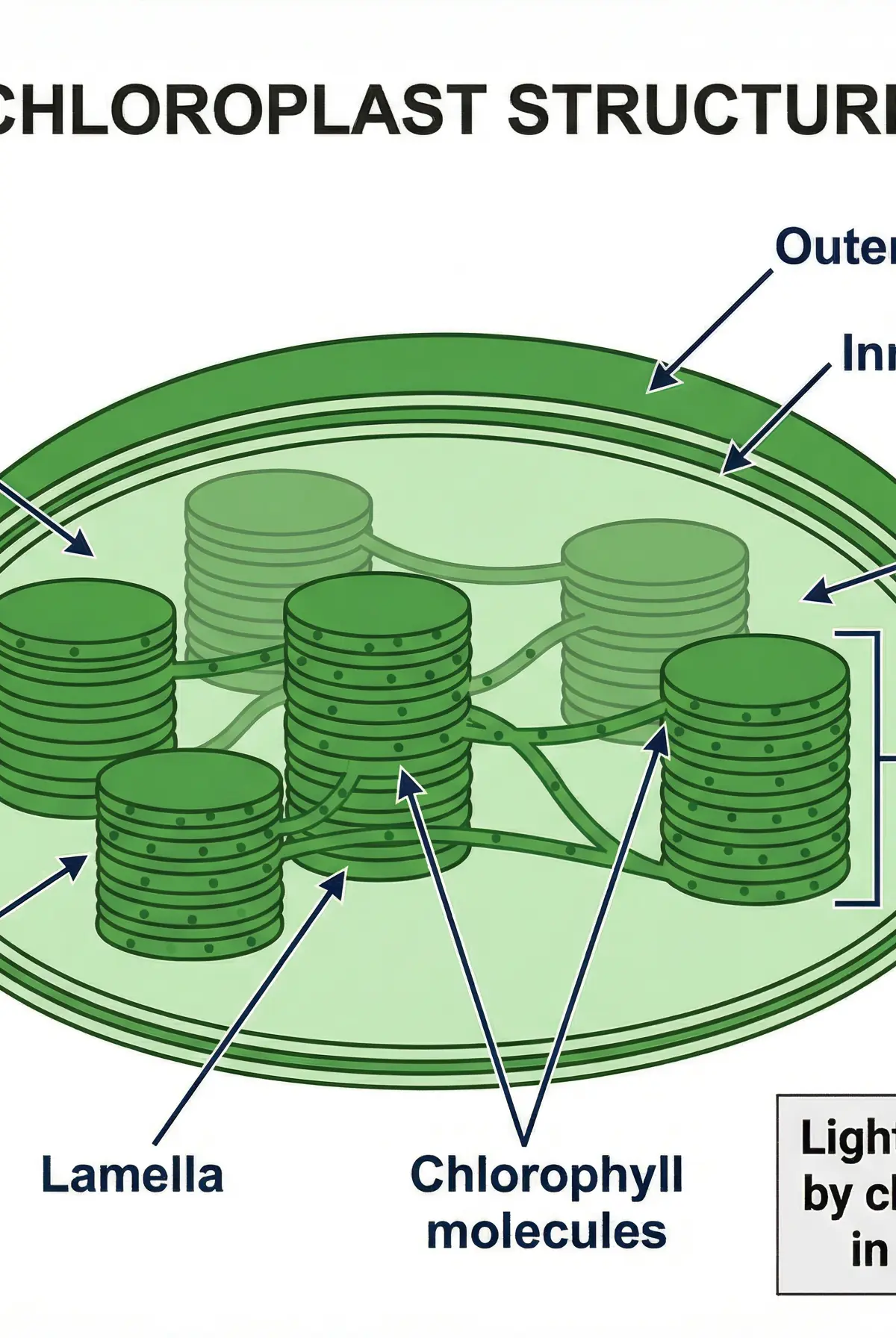
Example: If a plant is kept in a dark cupboard, photosynthesis stops completely because the endothermic reaction has no energy input, even if carbon dioxide and water are plentiful.
Concept 2: Limiting Factors
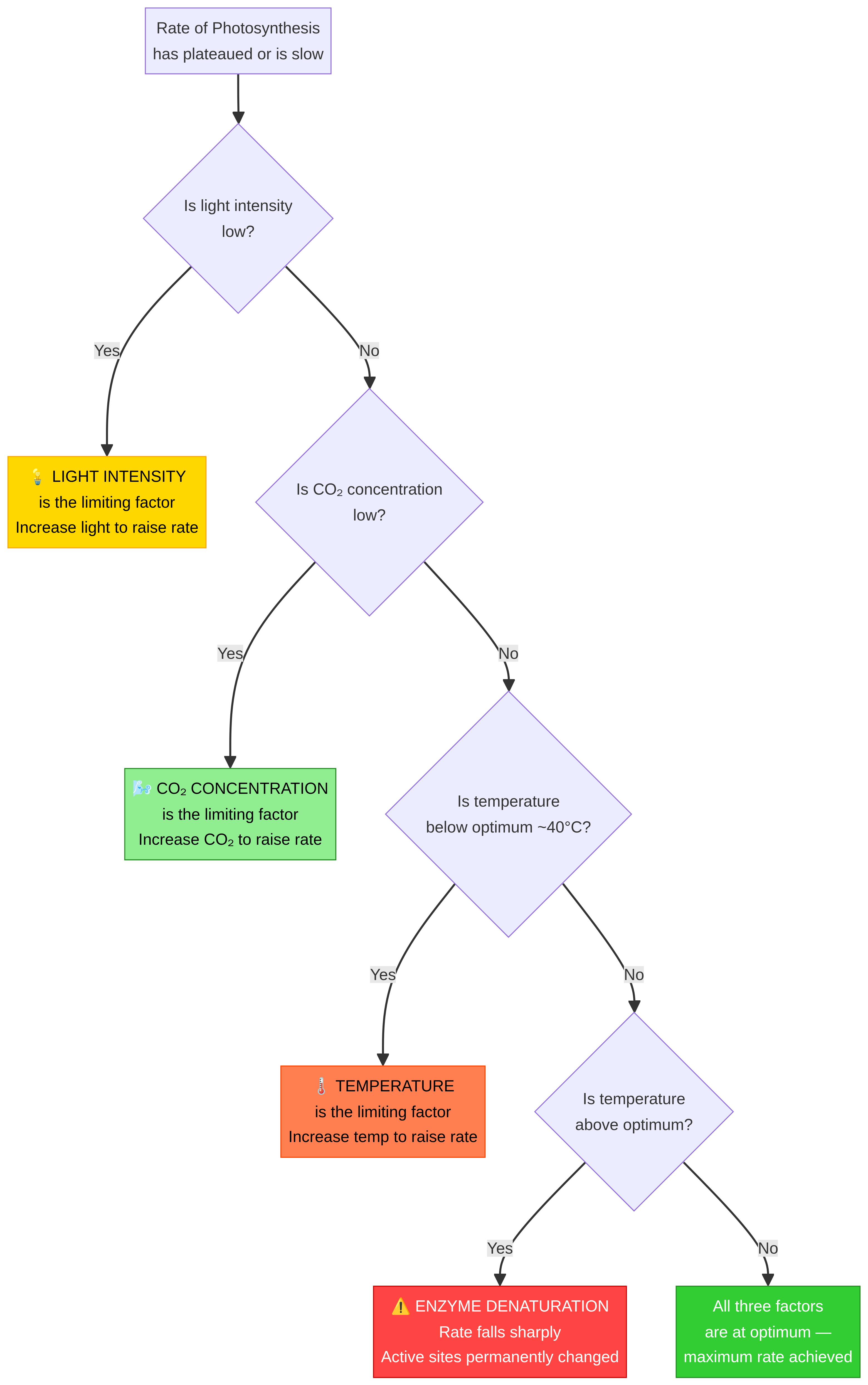
A limiting factor is the component of a reaction that is in shortest supply, thus preventing the rate of the reaction from increasing any further. For photosynthesis, there are three main limiting factors:
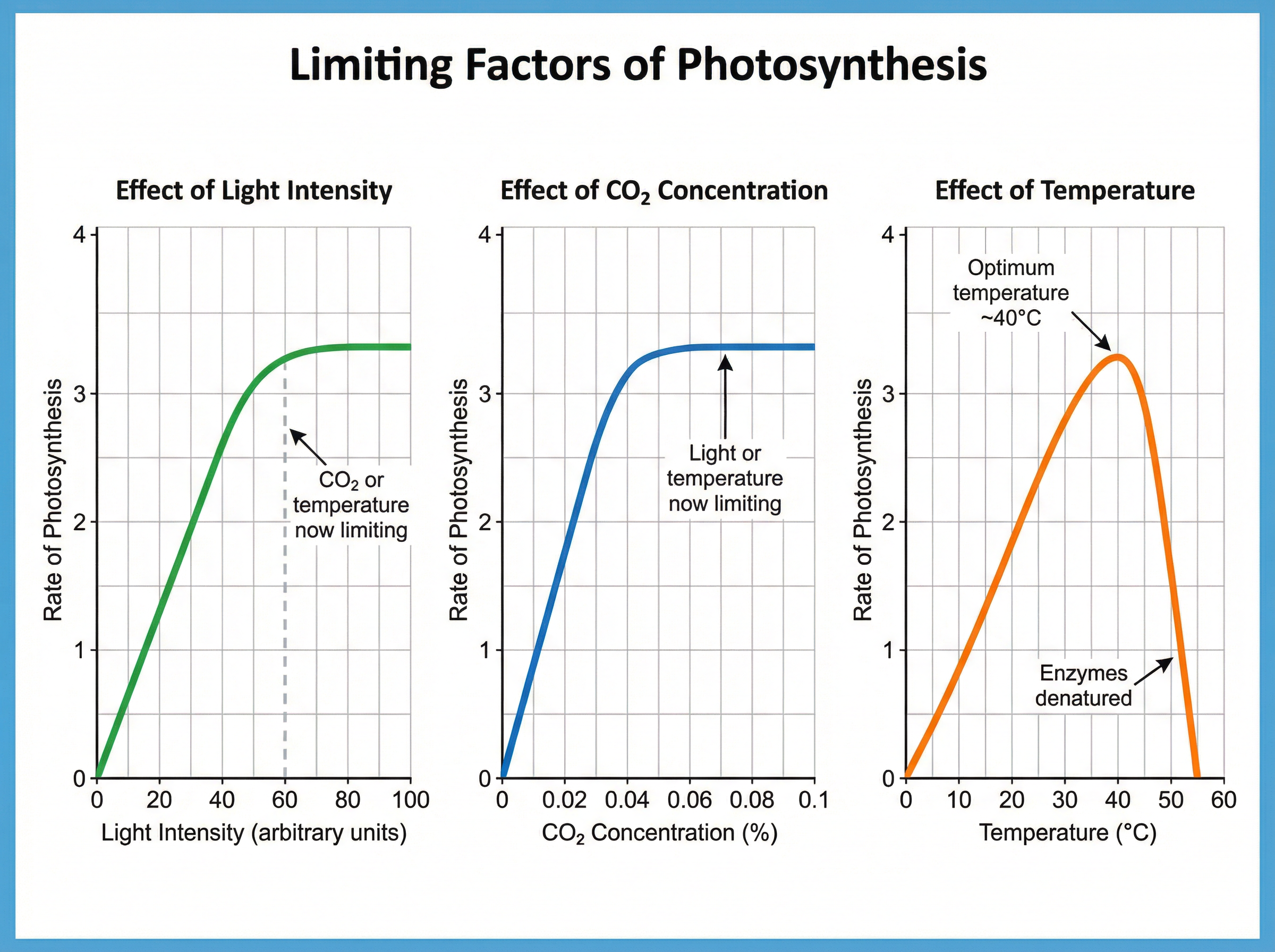
- Light Intensity: As light intensity increases, the rate of photosynthesis increases linearly, until another factor becomes limiting.
- Carbon Dioxide Concentration: CO₂ is a reactant. Increasing its concentration increases the rate, up to a plateau point.
- Temperature: This affects the kinetic energy of molecules. As temperature rises, the rate increases up to the optimum temperature (usually around 40°C). Above this, the enzymes controlling photosynthesis denature (their active sites change shape), and the rate falls sharply to zero.
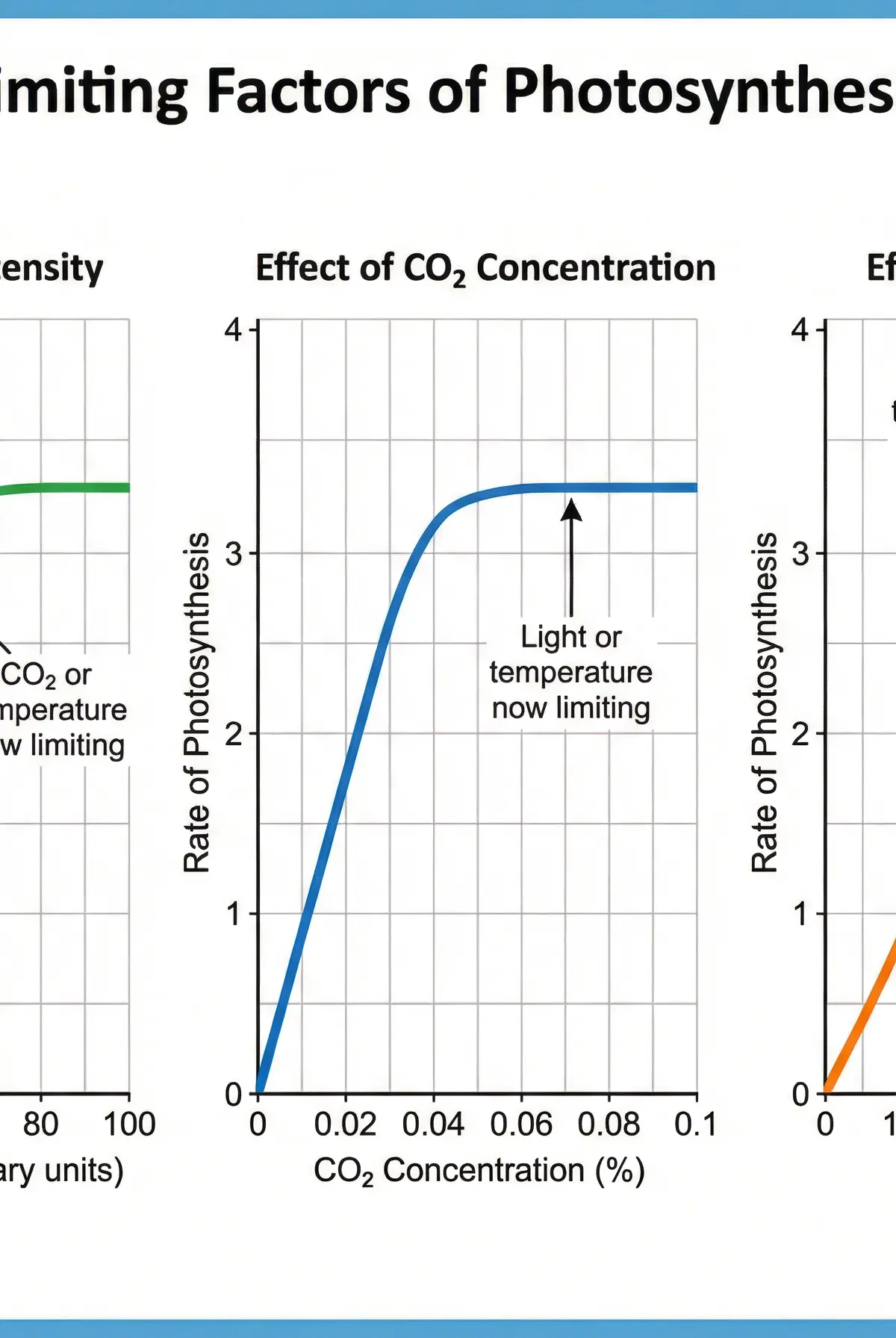
Examiners love to provide graphs showing these factors and ask you to identify which factor is limiting the rate at specific points on the curve.
Concept 3: Uses of Glucose
The glucose produced during photosynthesis is not just left in the leaf. Plants use it in five main ways:
- For respiration (to release energy)
- Converted into insoluble starch for storage
- Used to produce fat or oil (lipids) for storage
- Used to produce cellulose, which strengthens the cell wall
- Combined with nitrate ions (absorbed from the soil) to produce amino acids for protein synthesis
Mathematical/Scientific Relationships
The Photosynthesis Equation
You must memorise both the word and symbol equations.
Word Equation:
Carbon dioxide + Water → Glucose + Oxygen
(Note: Light and chlorophyll are written above/below the arrow, not as reactants)
Symbol Equation (Higher Tier):
6CO₂ + 6H₂O → C₆H₁₂O₆ + 6O₂
The Inverse Square Law (Higher Tier)
When investigating light intensity, the distance of the lamp from the plant is crucial. The light intensity (I) is inversely proportional to the square of the distance (d) from the light source.
I \propto \frac{1}{d^2}
If you double the distance, the light intensity drops by a factor of four (2^2 = 4). If you triple the distance, it drops by a factor of nine (3^2 = 9).
Practical Applications
Required Practical: Investigating the Rate of Photosynthesis
You are required to know how to investigate the effect of light intensity on the rate of photosynthesis using an aquatic plant like pondweed (Elodea).
Method Overview:
- Place a piece of pondweed in a beaker of water (often containing sodium hydrogencarbonate to supply CO₂).
- Place a lamp at a specific distance (e.g., 10 cm) from the beaker.
- Allow the pondweed to acclimatise for 5 minutes.
- Count the number of oxygen bubbles produced in 1 minute (or use a gas syringe to measure the volume of oxygen).
- Repeat the count twice more to calculate a mean.
- Move the lamp to different distances (e.g., 20 cm, 30 cm, 40 cm) and repeat the process.
Common Examiner Questions:
- Why use an LED lamp? Because it doesn't emit much heat, preventing temperature from becoming a confounding variable.
- What are the sources of error? Bubbles can be different sizes, and counting by eye is subjective and prone to human error. Using a gas syringe is more accurate.
Visual Resources
4 diagrams and illustrations
Interactive Diagrams
2 interactive diagrams to visualise key concepts
Conceptual Flow Outline
The inputs, process, and outputs of photosynthesis, including the uses of glucose.
Conceptual Flow Outline
Decision tree for identifying the limiting factor of photosynthesis.
Worked Examples
3 worked examples — open one to explore the question and available guidance.
Practice Questions
Test your understanding — click to reveal model answers
Write the balanced symbol equation for photosynthesis. (2 marks)
Hint: Remember the chemical formula for glucose is C₆H₁₂O₆, and you need to balance the carbons, hydrogens, and oxygens.
A farmer wants to increase the yield of his tomatoes in a greenhouse. He decides to increase the temperature from 20°C to 35°C and provide artificial lighting at night. Explain why these changes will increase his tomato yield. (4 marks)
Hint: Link the environmental changes to the rate of photosynthesis, and then link photosynthesis to plant growth.
In the pondweed practical, a student noticed that the lamp became very hot during the experiment. Evaluate the impact of this on the student's results and suggest an improvement. (3 marks)
Hint: Think about what temperature does to the rate of photosynthesis and how it affects the validity of investigating light intensity.
Describe how you would investigate the effect of light intensity on the rate of photosynthesis in pondweed. (6 marks)
Hint: Think of this as a recipe. What equipment do you need? What do you change? What do you measure? What do you keep the same?
State three ways a plant uses the glucose produced in photosynthesis. (3 marks)
Hint: Think of the SCARF acronym.