Eduqas · GCSE · Biology
Selective breeding and gene technology
This topic explores how humans manipulate the genomes of organisms through selective breeding and genetic engineering. Mastering these concepts is crucial for the exam, as examiners frequently test your ability to distinguish between the two methods and evaluate their ethical and practical implications.
- 6 min read
- 3 worked examples
- 5 practice questions
- 6 key terms
Study Notes
Overview
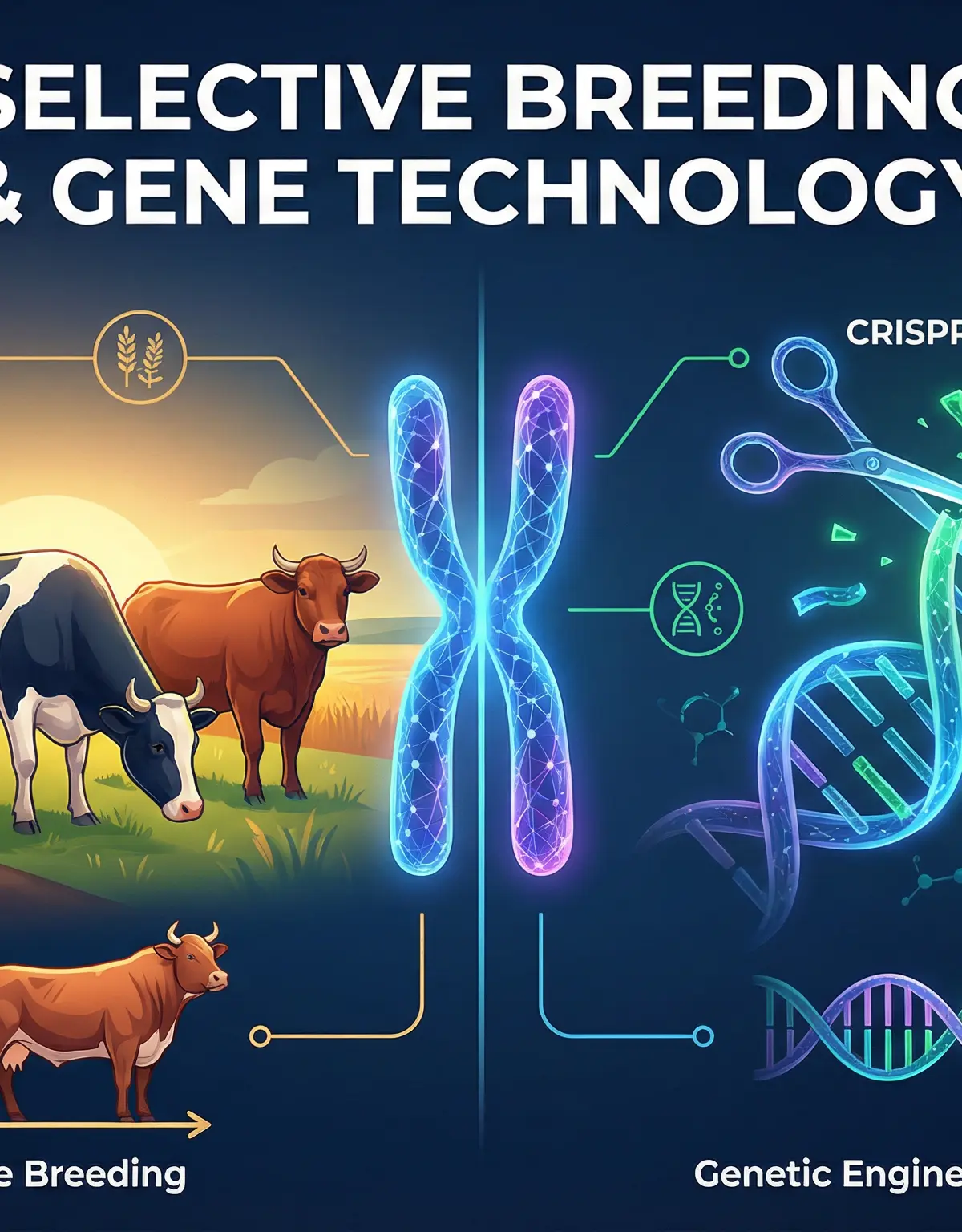
Selective breeding and gene technology are among the most transformative biological processes used by humans. This topic (7.4) is fundamentally about how we alter the characteristics of living organisms to suit our needs. It connects directly to your earlier studies on DNA structure, inheritance, and variation.
In your GCSE Biology exams, this topic is heavily tested. Examiners will expect you to recall the specific steps of genetic engineering using correct terminology (like 'restriction enzymes' and 'plasmids'). More importantly, you must be prepared for extended response questions (often 4 to 6 marks) where you evaluate the benefits and risks of these technologies. You must understand that while genetic engineering offers incredible medical and agricultural benefits, it also raises significant ecological and ethical concerns.
Listen to the topic podcast below to consolidate your understanding:
Key Concepts
Concept 1: Selective Breeding
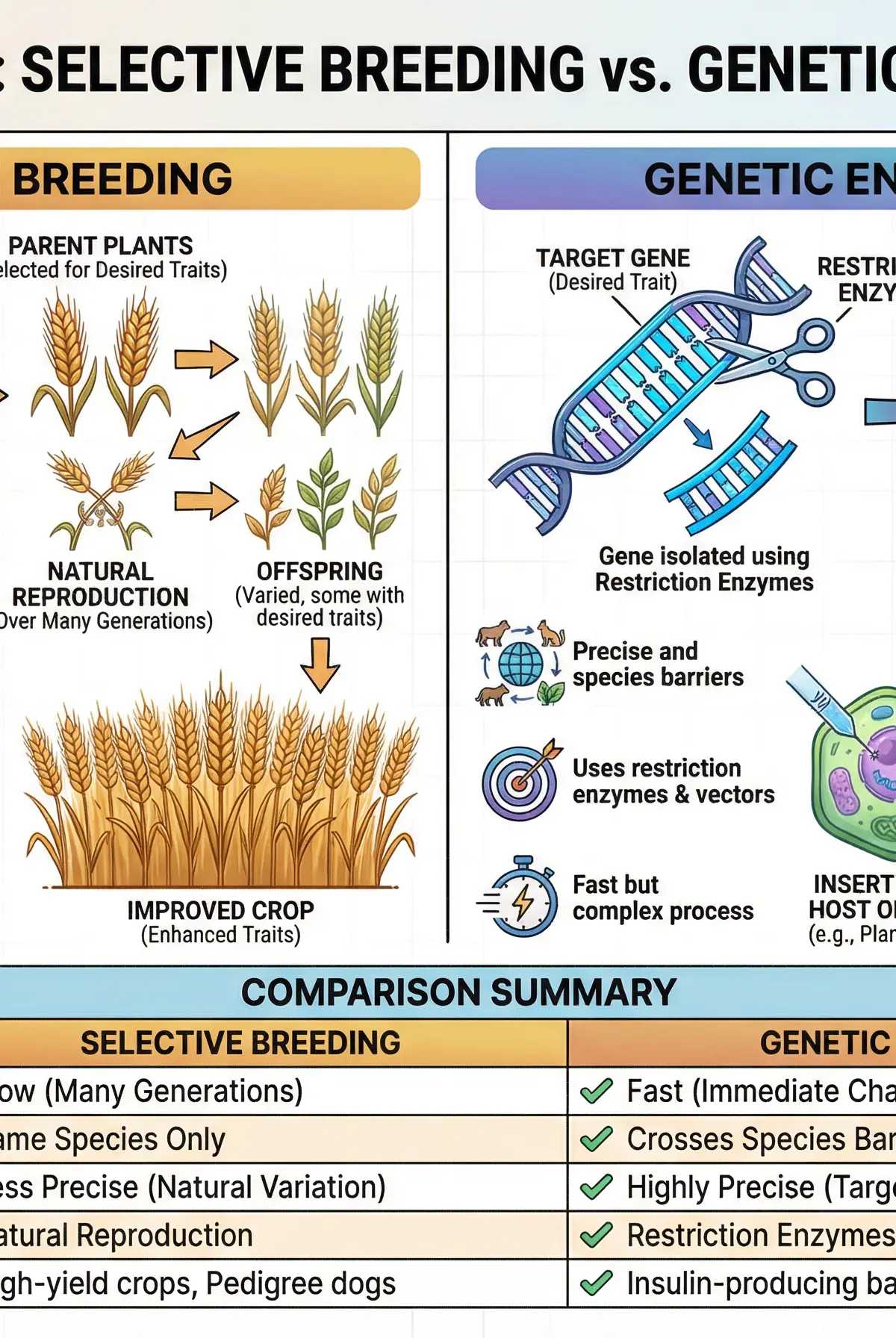
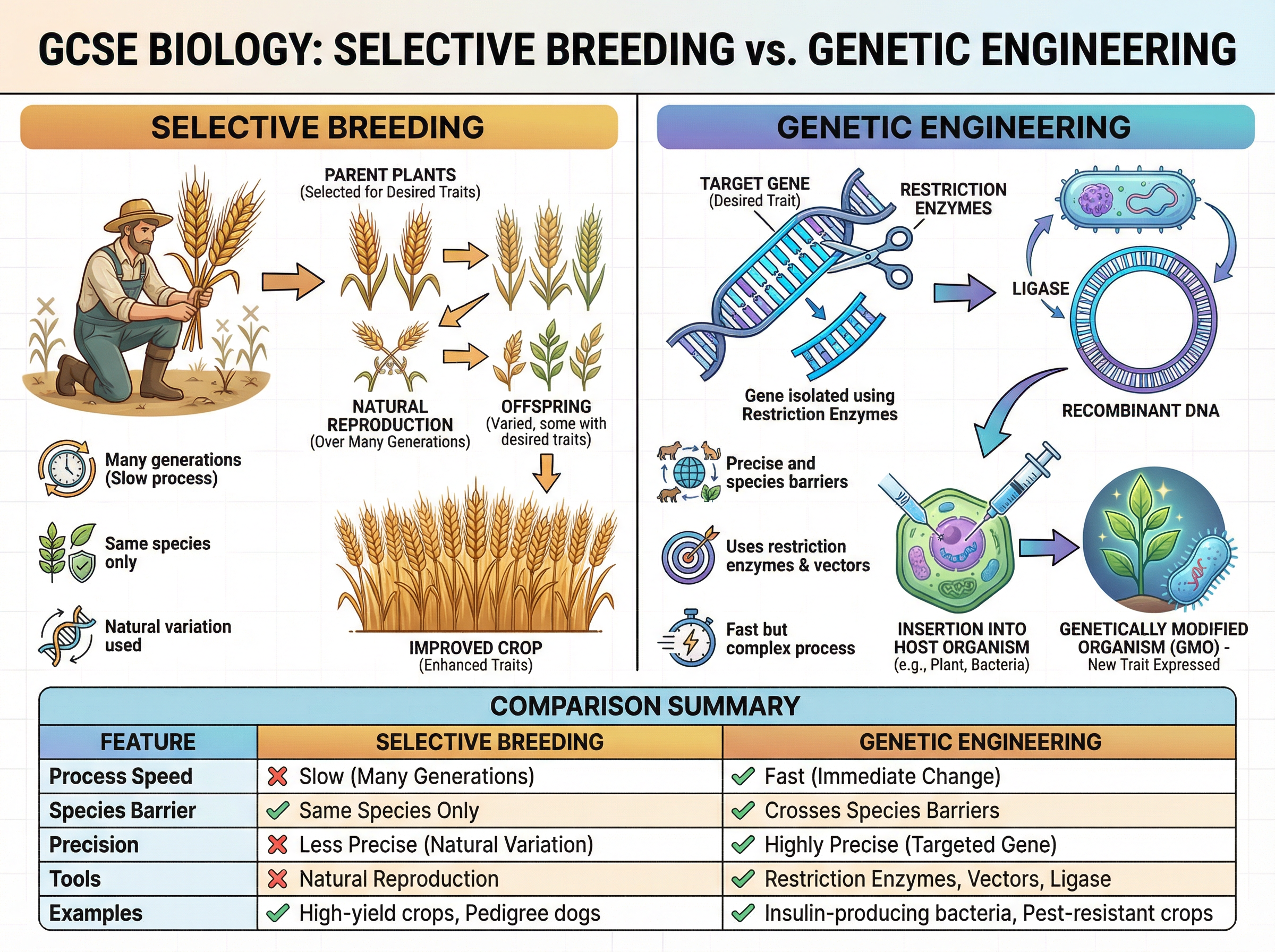
Selective breeding (also known as artificial selection) is the process by which humans breed plants and animals for particular genetic characteristics. This process has been used for thousands of years to produce food crops from wild plants and domesticated animals from wild ancestors.
The process follows a logical sequence that you must be able to describe:
- Identify individuals in a population that show the desired characteristic.
- Breed these selected individuals together.
- Select the best offspring from this cross that show the desired trait, and breed them together.
- Repeat this process over many generations until all offspring show the desired characteristic.
Example: Farmers selectively breeding cows to produce high milk yields. By continually breeding the best milk-producing cows with bulls whose mothers were high yielders, the average milk yield of the herd increases over time.
However, there is a major drawback: selective breeding reduces the gene pool (the number of different alleles in a population). This can lead to inbreeding depression, where organisms are more prone to disease or inherited defects. A classic exam example is pedigree dogs, such as pugs with breathing difficulties.
Concept 2: Genetic Engineering
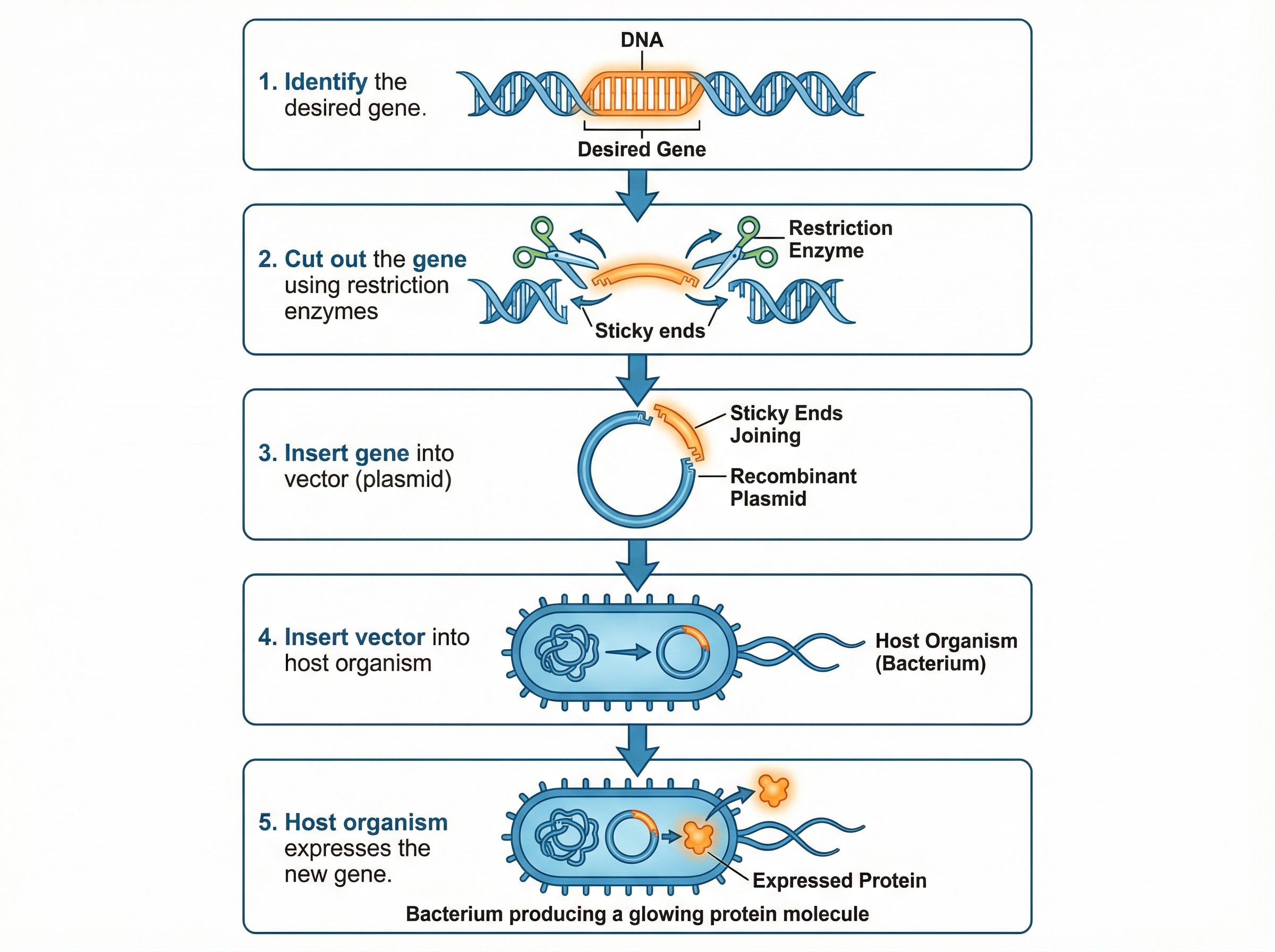
Genetic engineering is a much more recent and precise technology. It involves modifying the genome of an organism by introducing a gene from another organism to give a desired characteristic. Unlike selective breeding, genetic engineering can cross species barriers.
Examiners require you to know the specific steps of the process:
- Isolation: Enzymes (called restriction enzymes) are used to isolate and cut out the required gene from an organism's DNA. This leaves 'sticky ends' on the DNA fragment.
- Vector Preparation: A vector is used to transfer the gene. The vector is usually a bacterial plasmid (a small circle of DNA) or a virus. The vector is cut open using the same restriction enzyme, creating matching sticky ends.
- Insertion: The gene is inserted into the vector. An enzyme called DNA ligase is used to join the sticky ends together, forming recombinant DNA.
- Transfer: The vector is inserted into the target organism (the host) at an early stage of its development (e.g., an egg or early embryo). This ensures that as the organism grows, every cell contains the new gene.
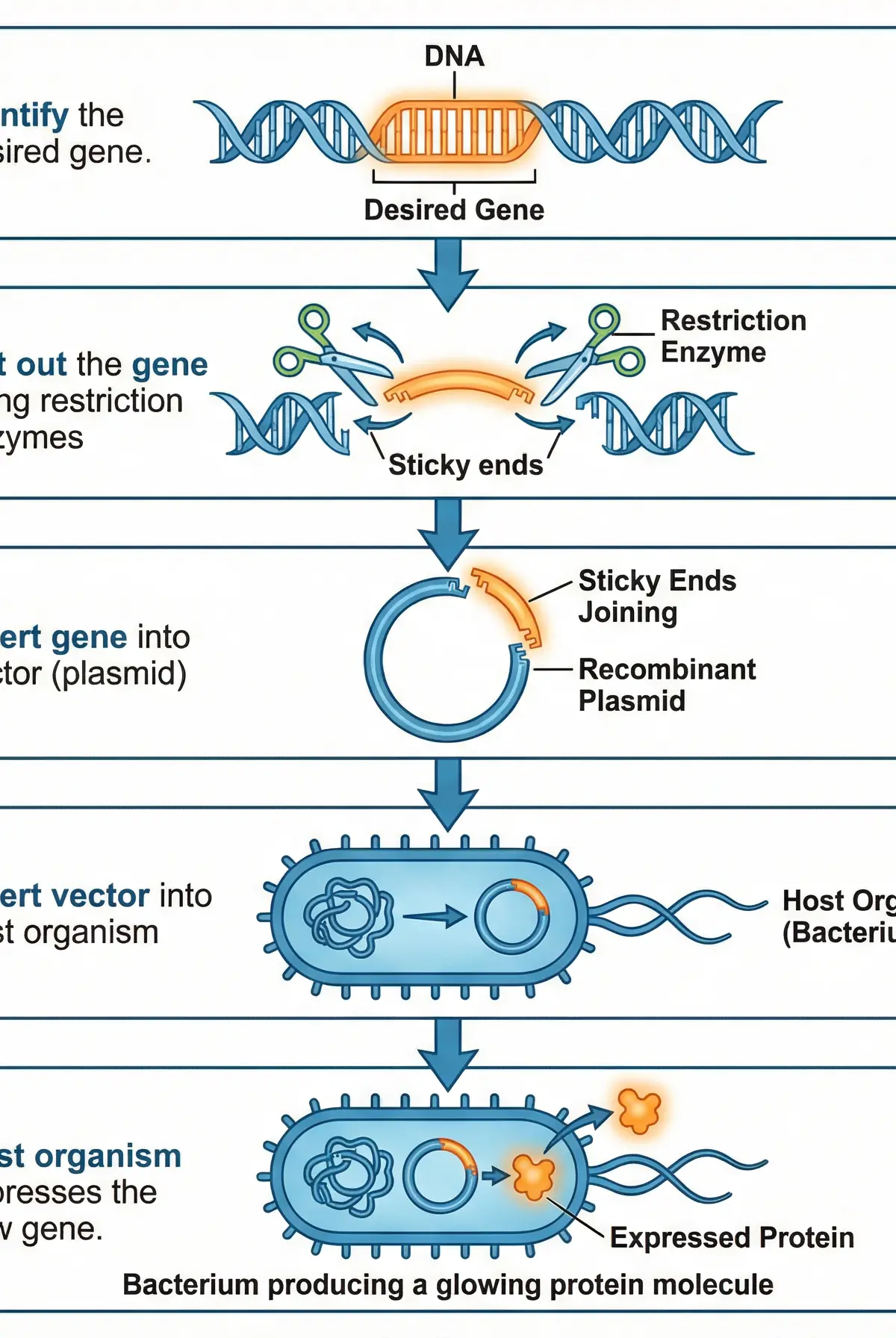
Example: The production of human insulin. The human gene for insulin production is inserted into a bacterial plasmid. The genetically modified bacteria reproduce rapidly in a fermenter, producing large quantities of human insulin that can be harvested and purified to treat Type 1 diabetes.
Concept 3: Evaluating Gene Technology
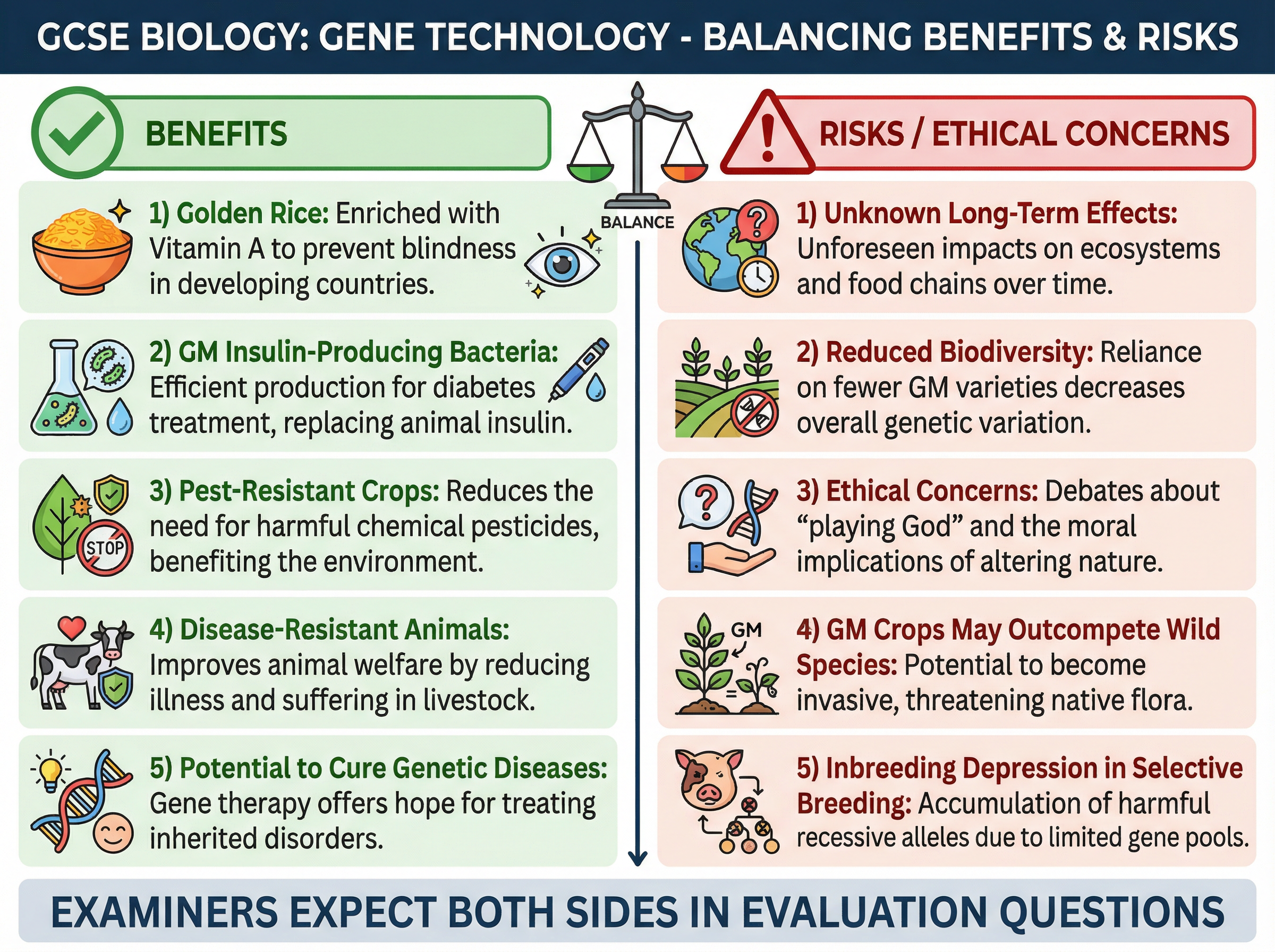
Evaluation questions require you to consider both the advantages and the disadvantages.
Benefits:
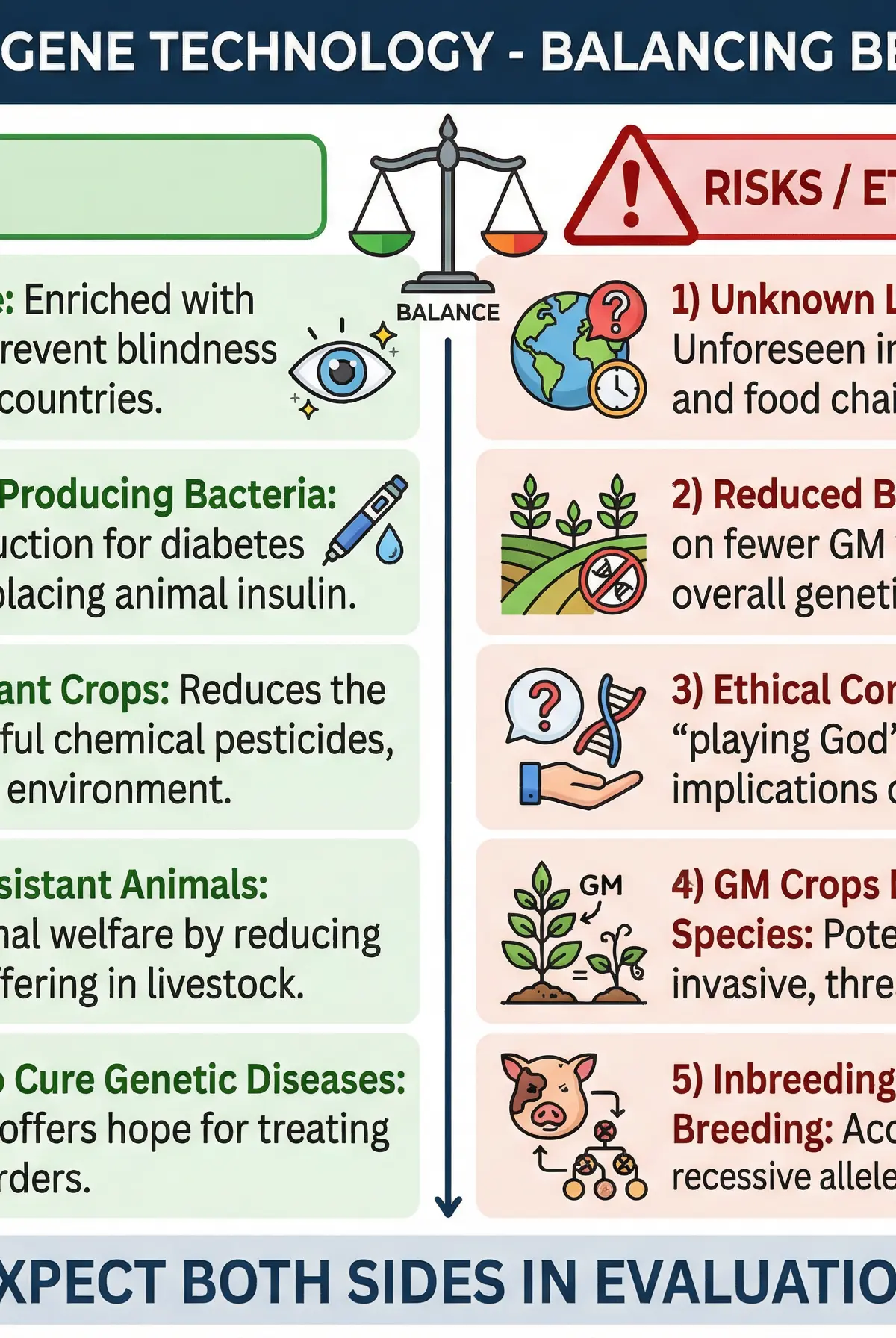
- Agriculture: Genetically modified (GM) crops can be engineered to be resistant to insect pests or herbicides. This increases crop yields and reduces the need for chemical sprays. Crops like Golden Rice are engineered to contain higher nutritional value (Vitamin A).
- Medicine: Production of vital human proteins (like insulin or human growth hormone) cheaply and safely. Gene therapy offers the potential to cure inherited genetic disorders by replacing faulty alleles with healthy ones.
Risks and Ethical Concerns:
- Ecological: There are concerns that GM crops might affect populations of wild flowers and insects (reducing biodiversity). There is also the risk of genes transferring to wild relatives, creating 'superweeds' resistant to herbicides.
- Health: Some people are concerned about the long-term effects of eating GM food on human health, although no adverse effects have been proven.
- Ethical: Some argue it is ethically wrong to manipulate the DNA of living things, often termed 'playing God'. There are also concerns about the welfare of GM animals.
Mathematical/Scientific Relationships
While this topic is less mathematically heavy than genetics, you may be asked to calculate percentage increases in crop yields due to selective breeding or genetic engineering.
Percentage Change Formula:
\text{Percentage Change} = \frac{\text{New Value} - \text{Original Value}}{\text{Original Value}} \times 100
Use this when comparing the yield of a wild crop variety to a selectively bred or GM variety.
Practical Applications
- Agriculture: The development of Bt cotton, which produces a toxin lethal to certain insect pests but harmless to humans.
- Medicine: The use of transgenic sheep to produce human proteins in their milk, which can be extracted to treat diseases like cystic fibrosis.
Visual Resources
3 diagrams and illustrations
Interactive Diagrams
2 interactive diagrams to visualise key concepts
Conceptual Flow Outline
The cyclical process of Selective Breeding
Conceptual Flow Outline
The Genetic Engineering Process
Worked Examples
3 worked examples — open one to explore the question and available guidance.
Practice Questions
Test your understanding — click to reveal model answers
State one characteristic that farmers might selectively breed for in crop plants. (1 mark)
Hint: Think about what makes a plant more valuable or easier to grow.
Explain why selective breeding can cause problems in dog breeds. (3 marks)
Hint: Think about what happens to the variety of genes when closely related animals are bred together.
Describe the role of enzymes in genetic engineering. (3 marks)
Hint: There are two specific types of enzymes you need to name and state their function.
Compare the processes of selective breeding and genetic engineering. (4 marks)
Hint: Look for differences in speed, precision, species barriers, and the tools used.
Some people object to the genetic engineering of food crops. Evaluate the use of genetically modified crops. (6 marks)
Hint: You must discuss both advantages and disadvantages, and finish with a conclusion.