Eduqas · GCSE · Biology
Transport systems
Master the essential mechanisms of transport in both plants and animals. This topic is a heavy hitter in the GCSE Biology exams, frequently appearing in 6-mark questions and data analysis tasks.
- 6 min read
- 3 worked examples
- 5 practice questions
- 6 key terms
Study Notes
Overview
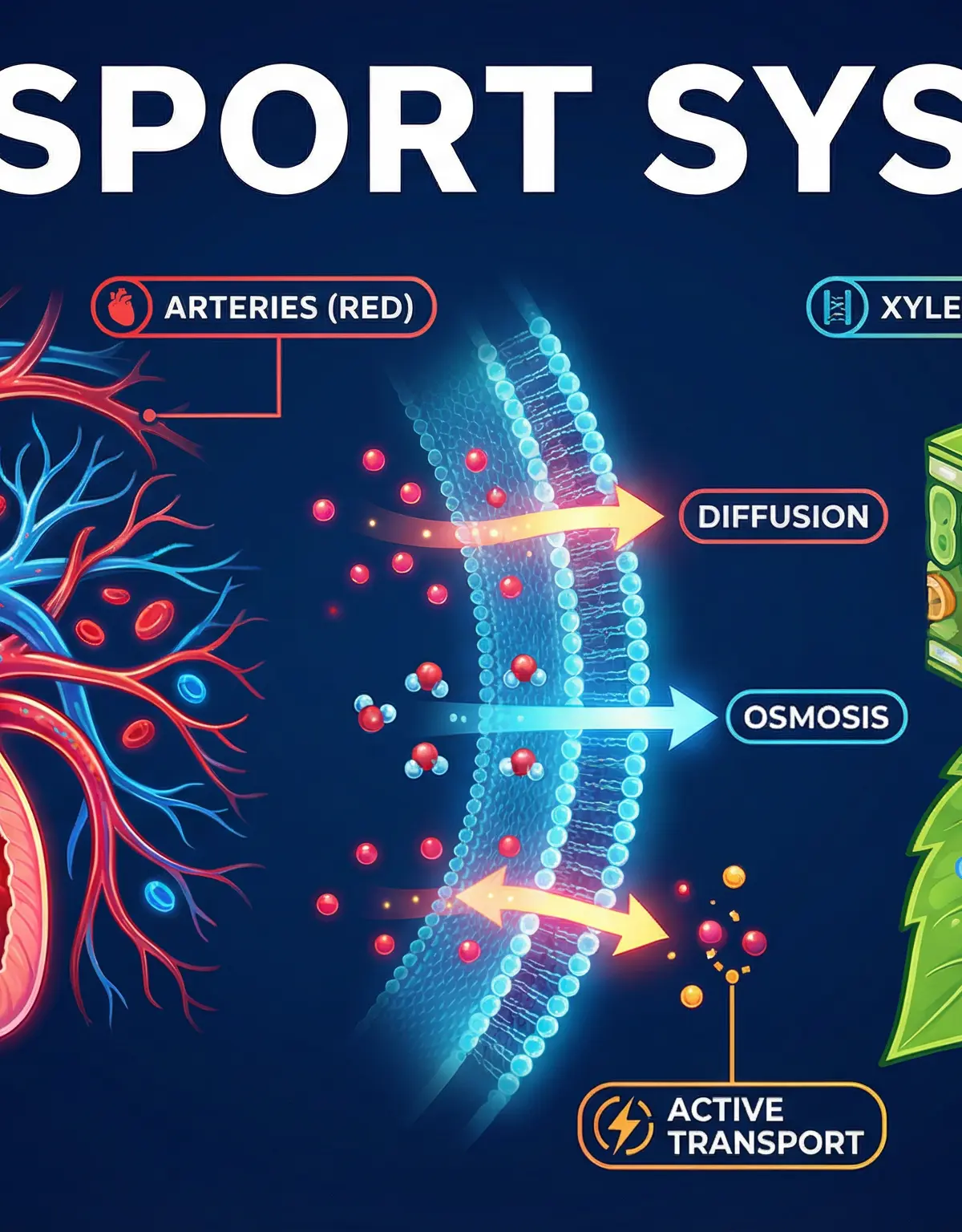
Transport systems are fundamental to the survival of all complex multicellular organisms. As organisms increase in size, their surface area to volume ratio decreases, meaning simple diffusion is no longer sufficient to supply cells deep within the body with oxygen and nutrients, or to remove toxic waste products. This topic explores the elegant solutions nature has evolved: the human circulatory system and the plant vascular system.
Understanding these systems is crucial for your GCSE Biology exam. Examiners frequently test this topic through a combination of factual recall (AO1), application to new contexts (AO2), and data analysis (AO3). You must be prepared to link the microscopic structure of vessels to their macroscopic function, and to interpret data from investigations into transpiration rates.
Key Concepts
Concept 1: Movement of Substances
The foundation of transport lies in three cellular processes:
1. Diffusion: The net movement of particles from an area of higher concentration to an area of lower concentration, down a concentration gradient. This is a passive process requiring no energy from respiration. Oxygen diffuses into the blood in the alveoli, and carbon dioxide diffuses out.
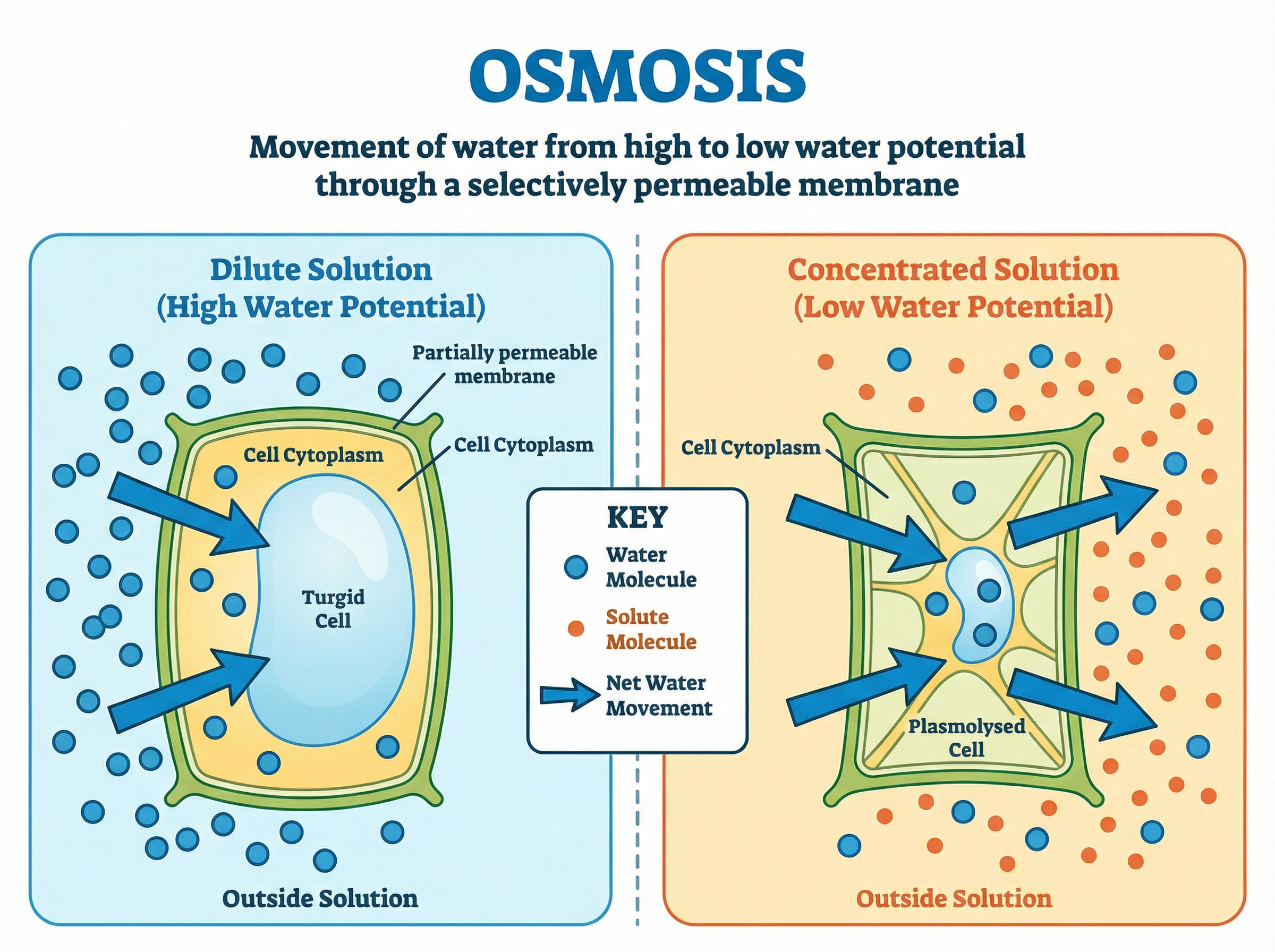
2. Osmosis: The diffusion of water molecules from a region of higher water potential (dilute solution) to a region of lower water potential (concentrated solution) through a selectively permeable membrane.
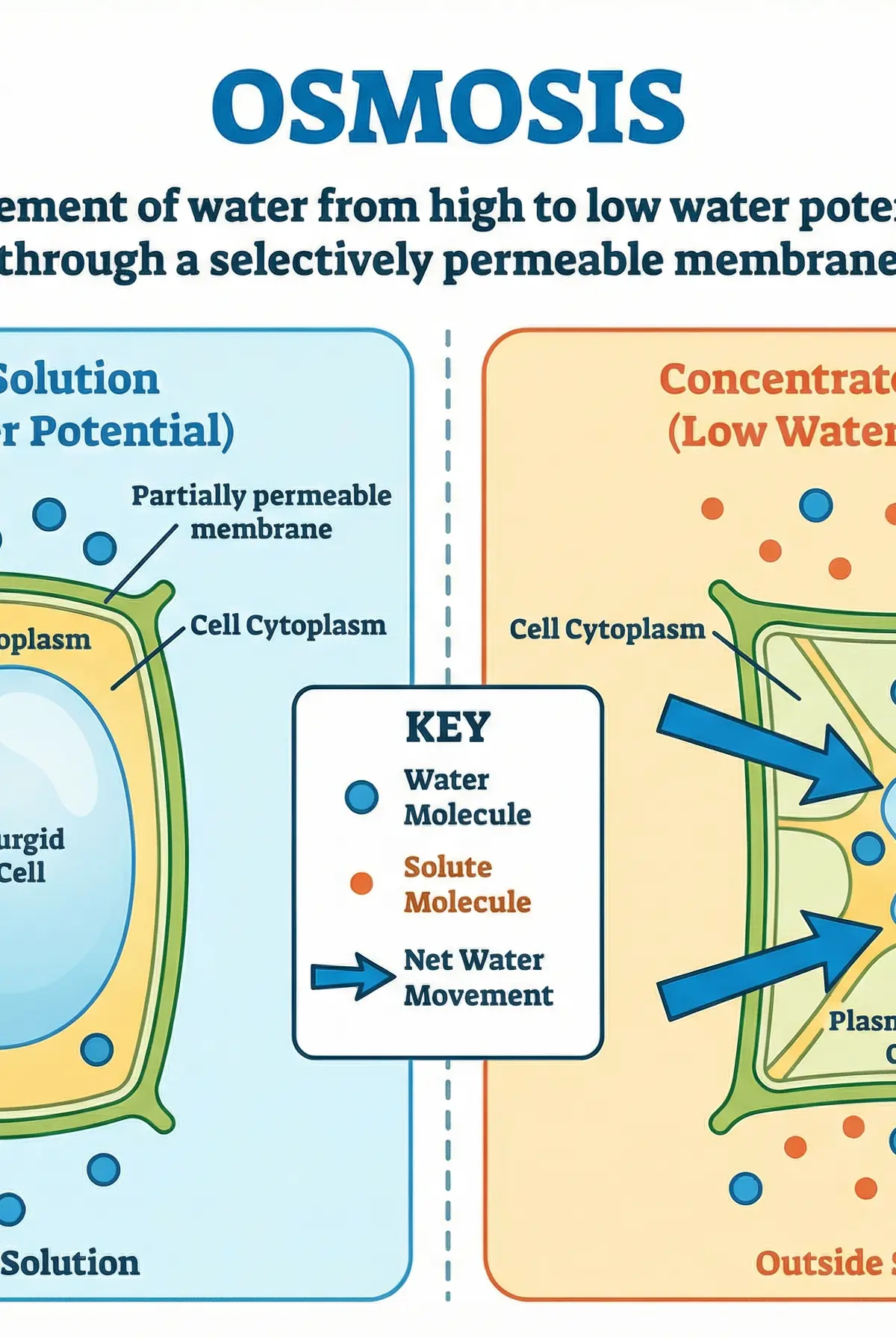
3. Active Transport: The movement of substances from a more dilute solution to a more concentrated solution (against a concentration gradient). This requires energy from respiration. A classic example is the uptake of mineral ions by root hair cells.
Concept 2: The Human Circulatory System
Humans possess a double circulatory system. Blood passes through the heart twice for every one complete circuit of the body. The right ventricle pumps deoxygenated blood to the lungs for gas exchange, while the left ventricle pumps oxygenated blood around the rest of the body under high pressure.
Blood Vessels
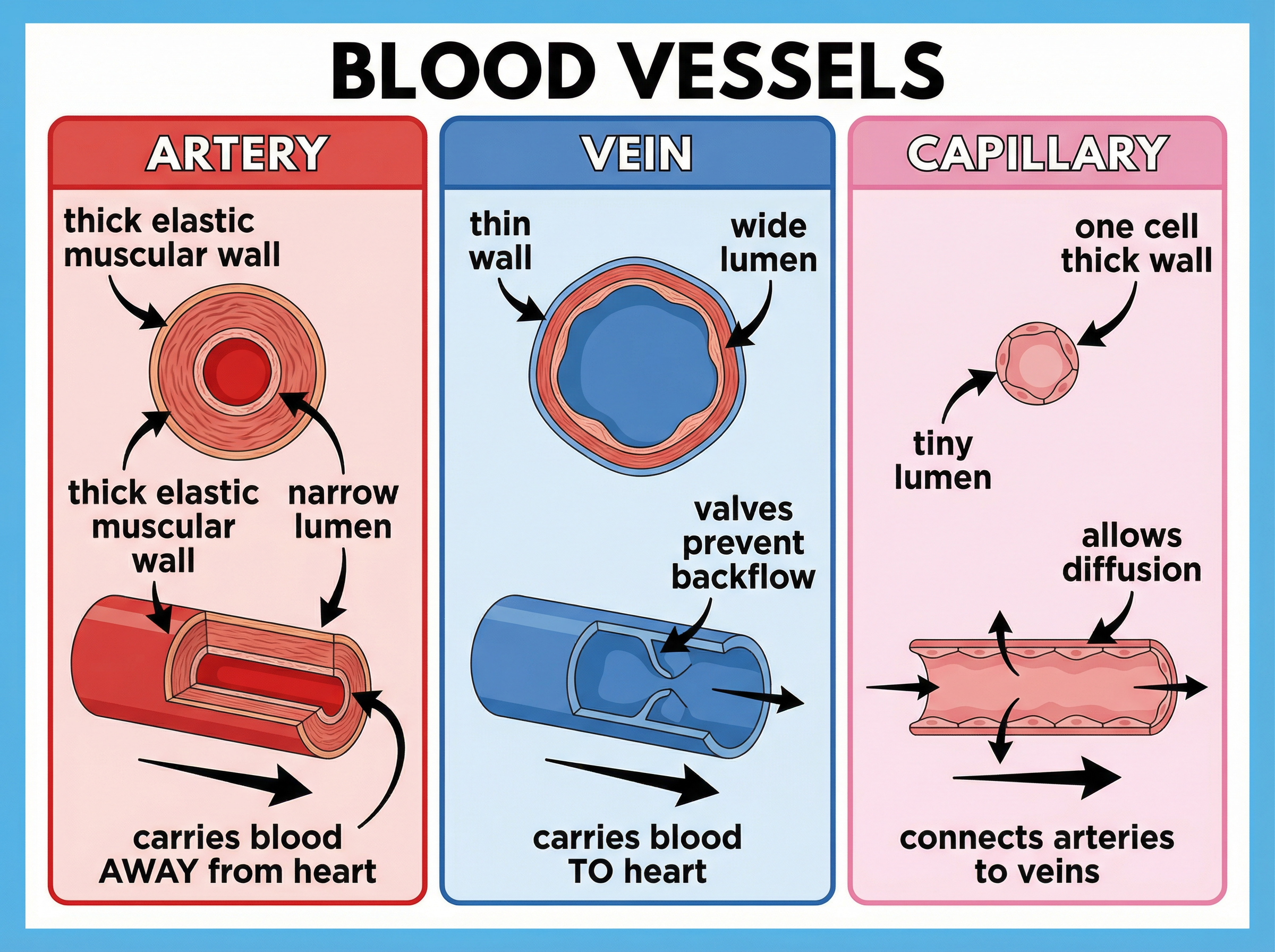
The structure of blood vessels is perfectly adapted to their function. Examiners will always expect you to link structure to function.
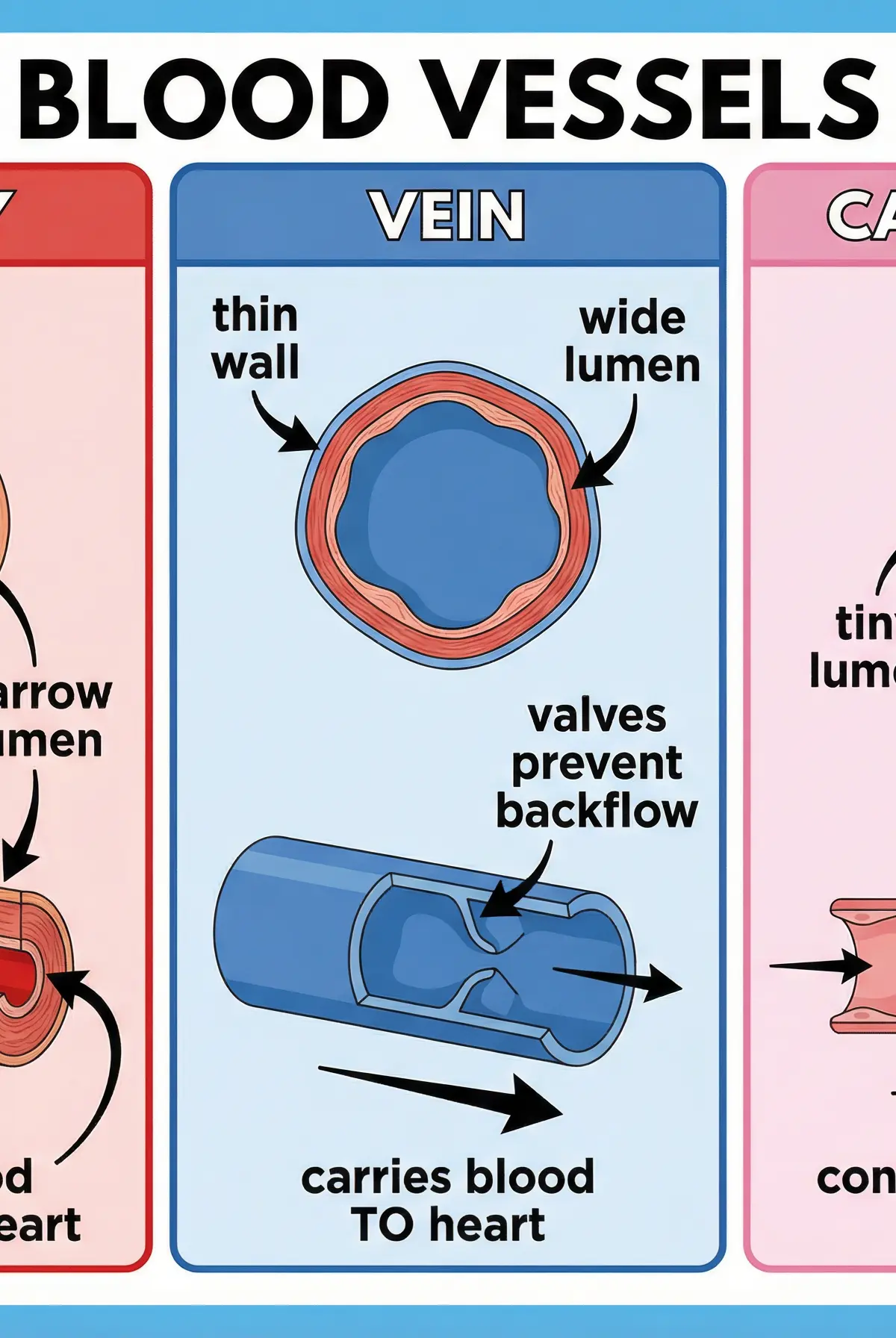
- Arteries: Carry blood away from the heart at high pressure. They have thick, elastic, muscular walls to withstand the pressure surges and maintain blood flow.
- Veins: Carry blood back to the heart at low pressure. They have thinner walls, a wider lumen, and contain valves to prevent the backflow of blood.
- Capillaries: The site of exchange. Their walls are only one cell thick, providing a short diffusion distance for oxygen, glucose, and waste products to move between the blood and the tissues.
Blood Components
Blood is a tissue consisting of a fluid called plasma, in which red blood cells, white blood cells, and platelets are suspended.
- Plasma: Transports dissolved substances including carbon dioxide, urea, glucose, and hormones.
- Red Blood Cells: Transport oxygen. They are adapted by having a biconcave disc shape (increasing surface area), containing haemoglobin (which binds to oxygen), and lacking a nucleus (providing more space for haemoglobin).
- White Blood Cells: Defend the body against pathogens through phagocytosis or antibody production.
- Platelets: Cell fragments involved in blood clotting at the site of a wound.
Concept 3: Plant Transport Systems
Plants require two separate transport systems to move water, minerals, and sugars.
Xylem and Transpiration
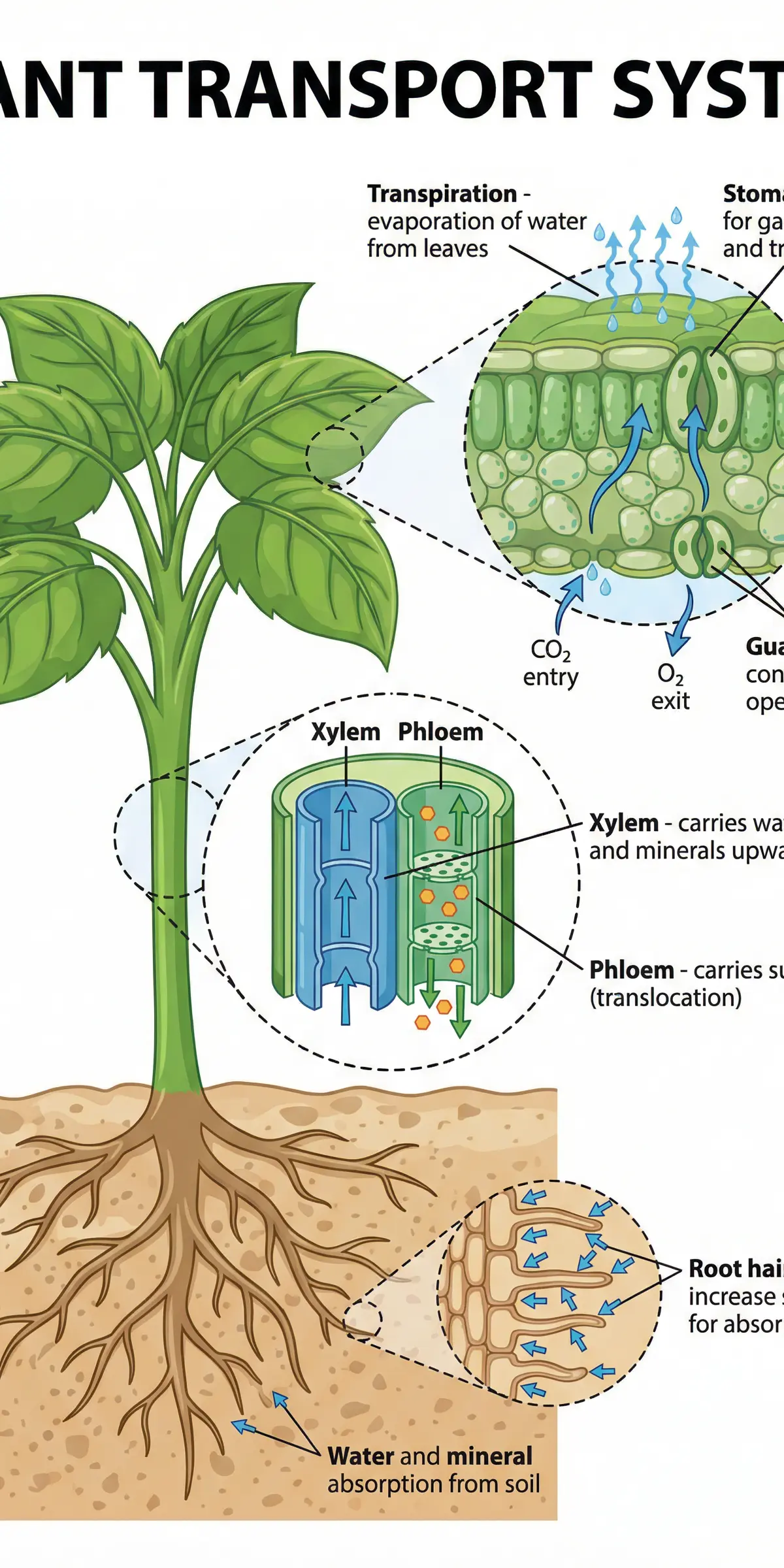
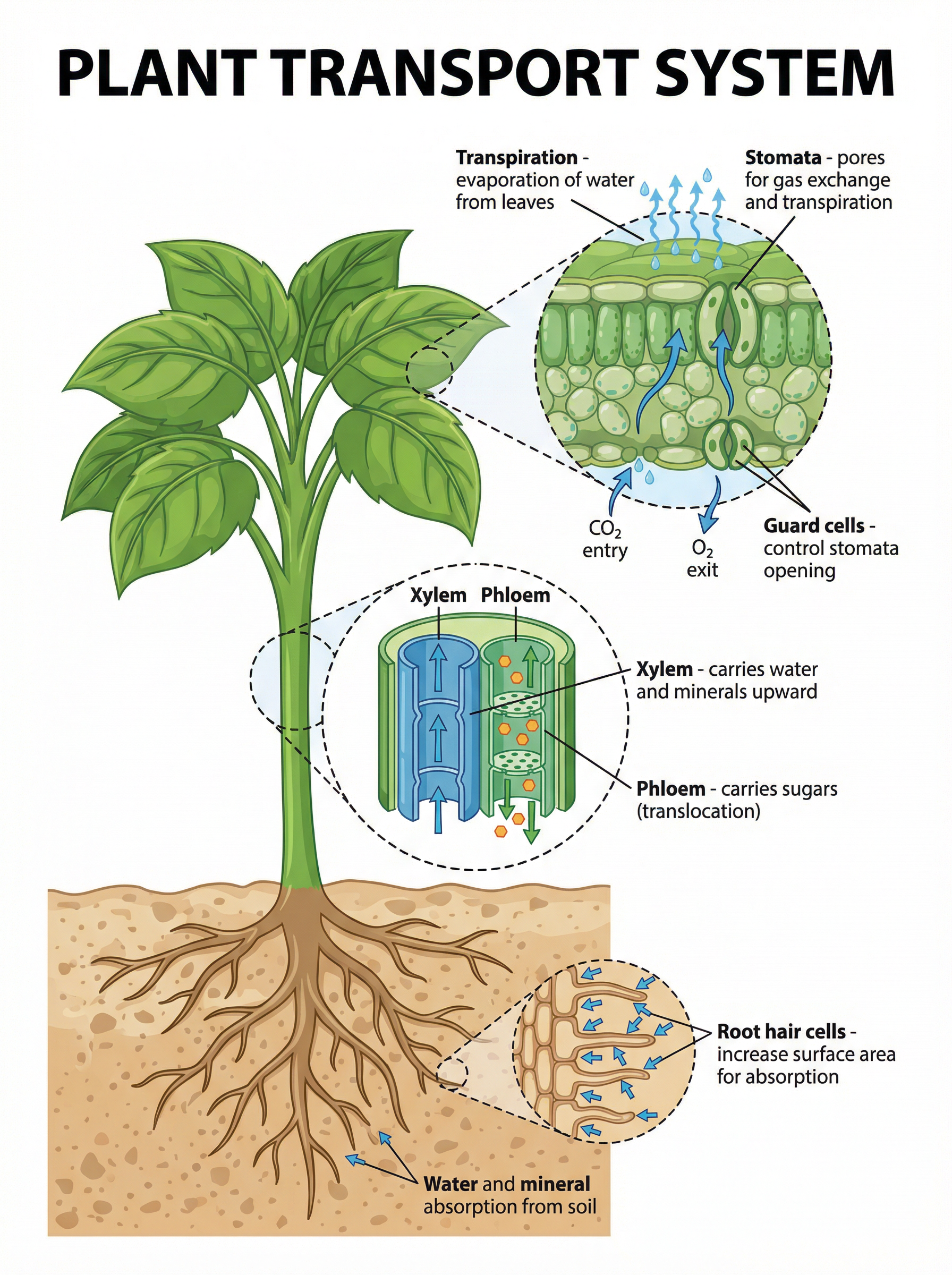
The xylem tissue transports water and mineral ions from the roots to the stems and leaves. It is composed of hollow tubes of dead cells strengthened by lignin. The movement of water from the roots through the xylem and out of the leaves is called the transpiration stream.
Transpiration is the evaporation of water from the surface of the leaves, primarily through the stomata. The rate of transpiration is affected by several environmental factors:
- Temperature: Higher temperatures increase the kinetic energy of water molecules, increasing the rate of evaporation.
- Humidity: Higher humidity decreases the concentration gradient between the inside of the leaf and the outside air, decreasing the rate of transpiration.
- Air Movement (Wind): Increased air movement blows away water vapour from the leaf surface, maintaining a steep concentration gradient and increasing transpiration.
- Light Intensity: Higher light intensity causes stomata to open wider for photosynthesis, increasing the rate of transpiration.
Phloem and Translocation
The phloem tissue transports dissolved sugars (primarily sucrose) from the leaves (where they are made during photosynthesis) to the rest of the plant for immediate use in respiration or for storage. This process is called translocation and can occur in both directions (up and down the stem). Phloem is composed of living cells with pores in their end walls (sieve plates) to allow sap to flow through.
Mathematical/Scientific Relationships
When calculating the rate of transpiration or blood flow, you will often use the formula:
Rate = Volume (or distance) / TimeEnsure you pay close attention to units (e.g., cm³/min or mm/s). You must also be comfortable calculating percentage changes when analysing data on osmosis or transpiration.
Practical Applications
Required Practical: Osmosis in Plant TissueYou must know how to investigate the effect of a range of concentrations of salt or sugar solutions on the mass of plant tissue (usually potato cylinders).
- Cut equal-sized cylinders of potato and record their initial mass.
- Place them in different concentrations of sugar solution (including distilled water as a control) for a set time.
- Remove, blot dry (to remove excess surface water which would affect the final mass), and record their final mass.
- Calculate the percentage change in mass to allow for fair comparison (as initial masses may vary slightly).
Where the line of best fit crosses the x-axis (zero percentage change), the concentration of the solution is equal to the concentration inside the potato cells (isotonic).
Listen to the PodcastFor a full audio review of this topic, listen to our expert examiner podcast below:
Visual Resources
3 diagrams and illustrations
Interactive Diagrams
2 interactive diagrams to visualise key concepts
Conceptual Flow Outline
Flowchart showing the path of blood through the human double circulatory system.
Conceptual Flow Outline
Process diagram showing how light intensity affects stomatal opening and transpiration.
Worked Examples
3 worked examples — open one to explore the question and available guidance.
Practice Questions
Test your understanding — click to reveal model answers
Explain why a plant will wilt if it is not watered. (3 marks)
Hint: Think about osmosis and the state of the cells when water is lost.
Compare the processes of diffusion and active transport. (4 marks)
Hint: You need to provide similarities AND differences. Think about concentration gradients and energy.
Explain how the human circulatory system is adapted to supply oxygen to the tissues and remove waste products. (6 marks)
Hint: Structure this answer logically. Talk about the heart, the blood vessels, and the blood itself.
A student places a piece of potato into distilled water. After 30 minutes, the mass of the potato has increased. Explain why. (3 marks)
Hint: Define the process occurring and state the direction of movement.
Describe the function of the stomata and guard cells in a leaf. (3 marks)
Hint: What moves through the stomata? What do the guard cells do?