Eduqas · GCSE · Biology
Transport systems in humans
Master the human transport system! This guide covers the double circulatory system, heart structure, blood vessels, and blood components. Essential for securing marks on structure-function relationships.
- 5 min read
- 3 worked examples
- 5 practice questions
- 6 key terms
Study Notes
Overview
Welcome to Transport Systems in Humans. This topic is fundamental to your understanding of Biology because it explains how every single cell in your body receives the oxygen and nutrients it needs to survive, and how toxic waste products are removed.
In your exam, examiners will frequently test your ability to link structure to function — for example, why the left ventricle has a thicker wall than the right, or how the structure of a capillary is adapted for exchange. This topic also links heavily to respiration, exchange surfaces, and disease.

Key Concepts
Concept 1: The Double Circulatory System
Humans have a double circulatory system. This means that blood passes through the heart twice in one complete circuit of the body.
- Pulmonary Circuit: The right ventricle pumps deoxygenated blood to the lungs where it picks up oxygen.
- Systemic Circuit: The left ventricle pumps oxygenated blood to the rest of the body.
**Why is this an advantage?**Passing through the narrow capillaries of the lungs causes blood pressure to drop significantly. If this blood went straight to the body, it would move too slowly. By returning to the heart first, the blood can be pumped out again at a high pressure, ensuring oxygen reaches the tissues rapidly to meet high metabolic demands.
Concept 2: Structure and Function of the Heart
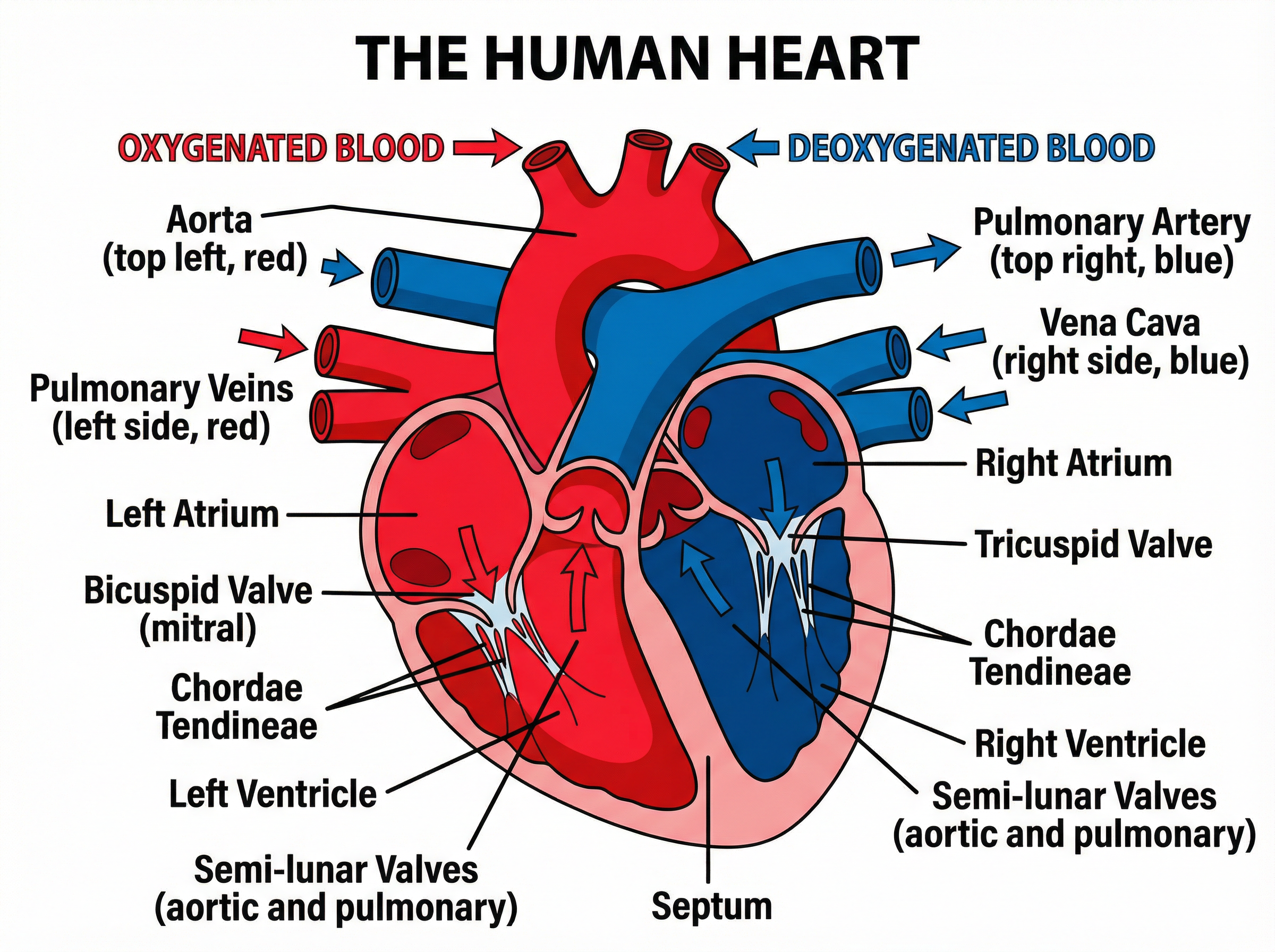
The heart is a muscular organ made primarily of cardiac muscle tissue. It acts as a double pump.
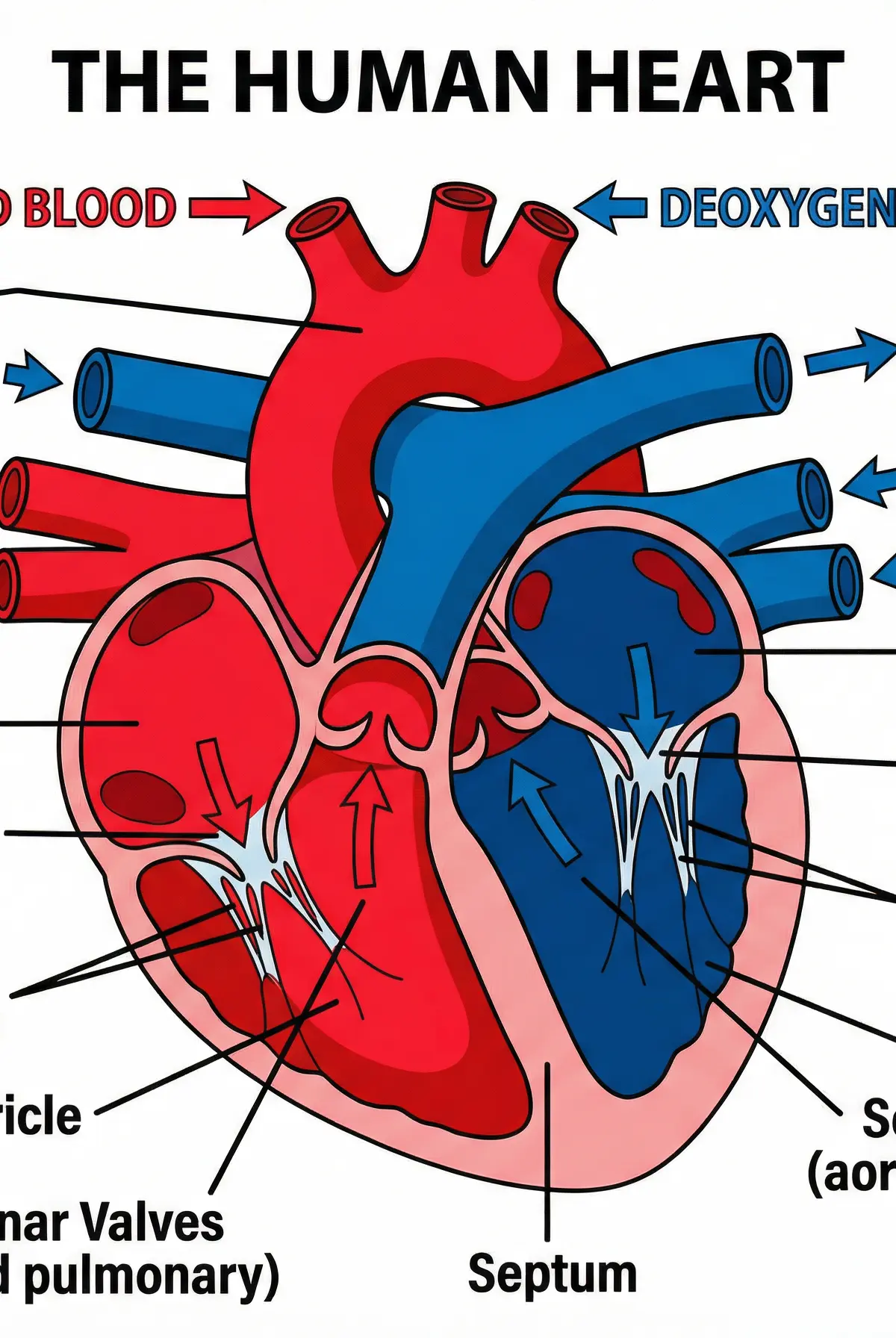
- Right Atrium: Receives deoxygenated blood from the body via the vena cava.
- Right Ventricle: Pumps deoxygenated blood to the lungs via the pulmonary artery.
- Left Atrium: Receives oxygenated blood from the lungs via the pulmonary vein.
- Left Ventricle: Pumps oxygenated blood to the whole body via the aorta.
Key Adaptations for the Exam:
- The left ventricle wall is much thicker than the right ventricle wall. It must generate a higher pressure to pump blood around the entire body, whereas the right ventricle only pumps blood the short distance to the lungs.
- Valves (tricuspid, bicuspid, and semi-lunar) prevent the backflow of blood, ensuring it flows in one direction only.
- The septum separates the left and right sides, preventing the mixing of oxygenated and deoxygenated blood.
Concept 3: Blood Vessels
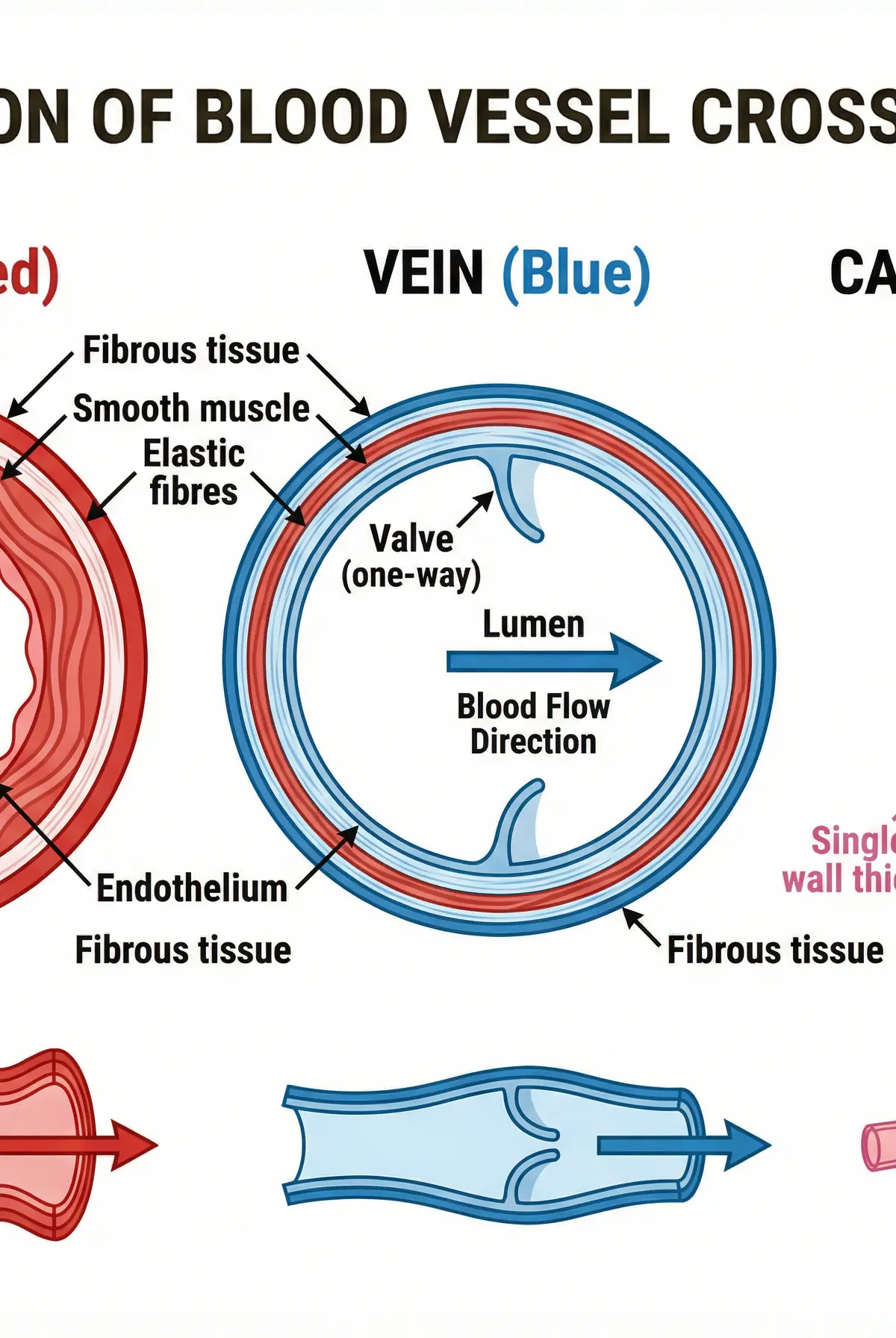
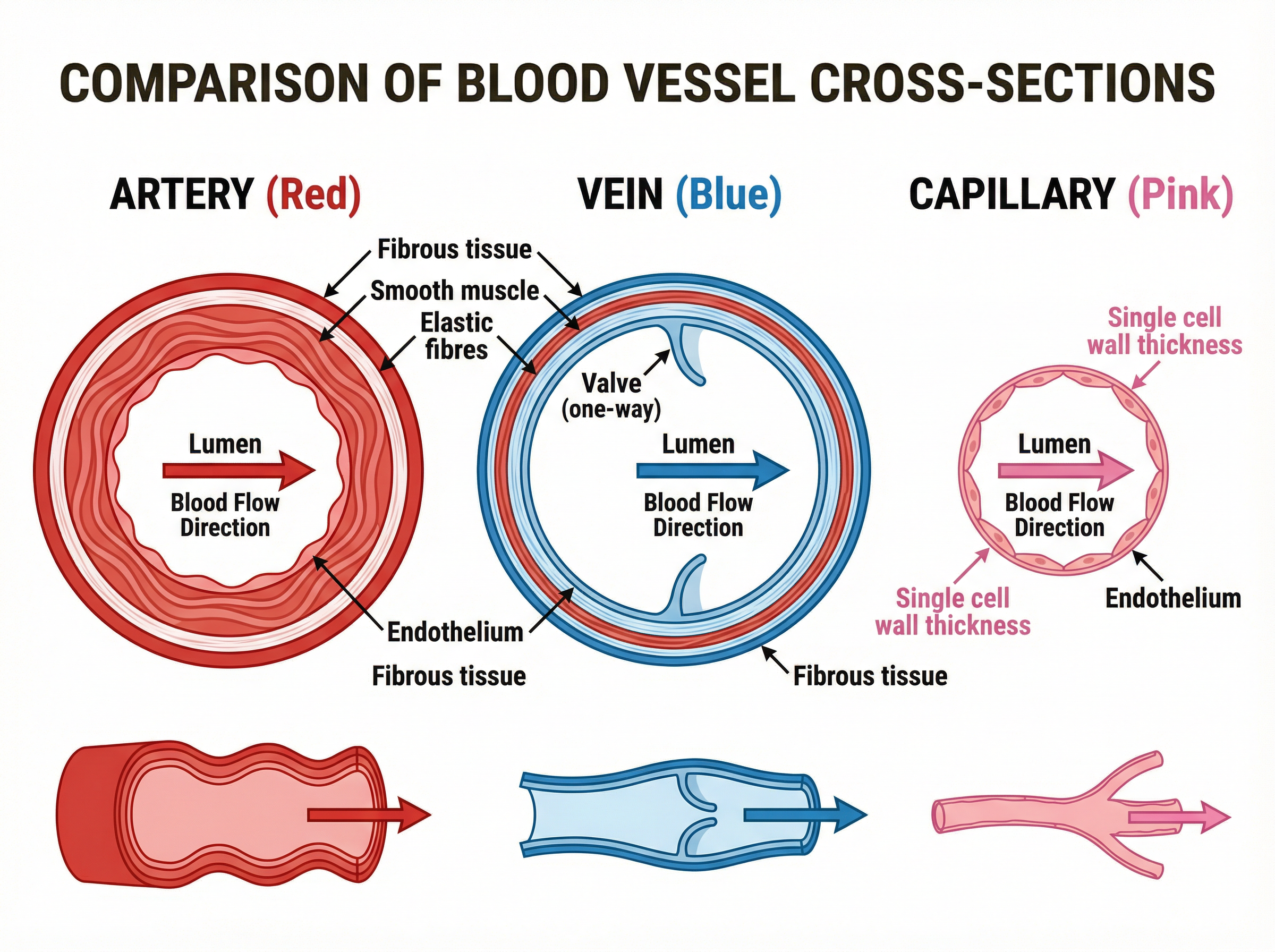
There are three main types of blood vessels, each adapted to its specific function.
-
Arteries: Carry blood away from the heart at high pressure.
- Adaptation: Thick muscular walls to withstand high pressure.
- Adaptation: Elastic fibres allow them to stretch and recoil, smoothing out the pulsatile flow of blood.
- Adaptation: Narrow lumen maintains high pressure.
-
Veins: Carry blood back to the heart at low pressure.
- Adaptation: Thinner walls and a wider lumen to reduce resistance to flow.
- Adaptation: Contain valves to prevent the backflow of blood.
-
Capillaries: Involved in the exchange of materials at the tissues.
- Adaptation: Walls are only one cell thick, providing a very short diffusion distance for rapid exchange of oxygen, glucose, and carbon dioxide.
- Adaptation: Very narrow lumen means red blood cells pass through in single file, slowing them down and increasing time for diffusion.
Concept 4: Components of Blood
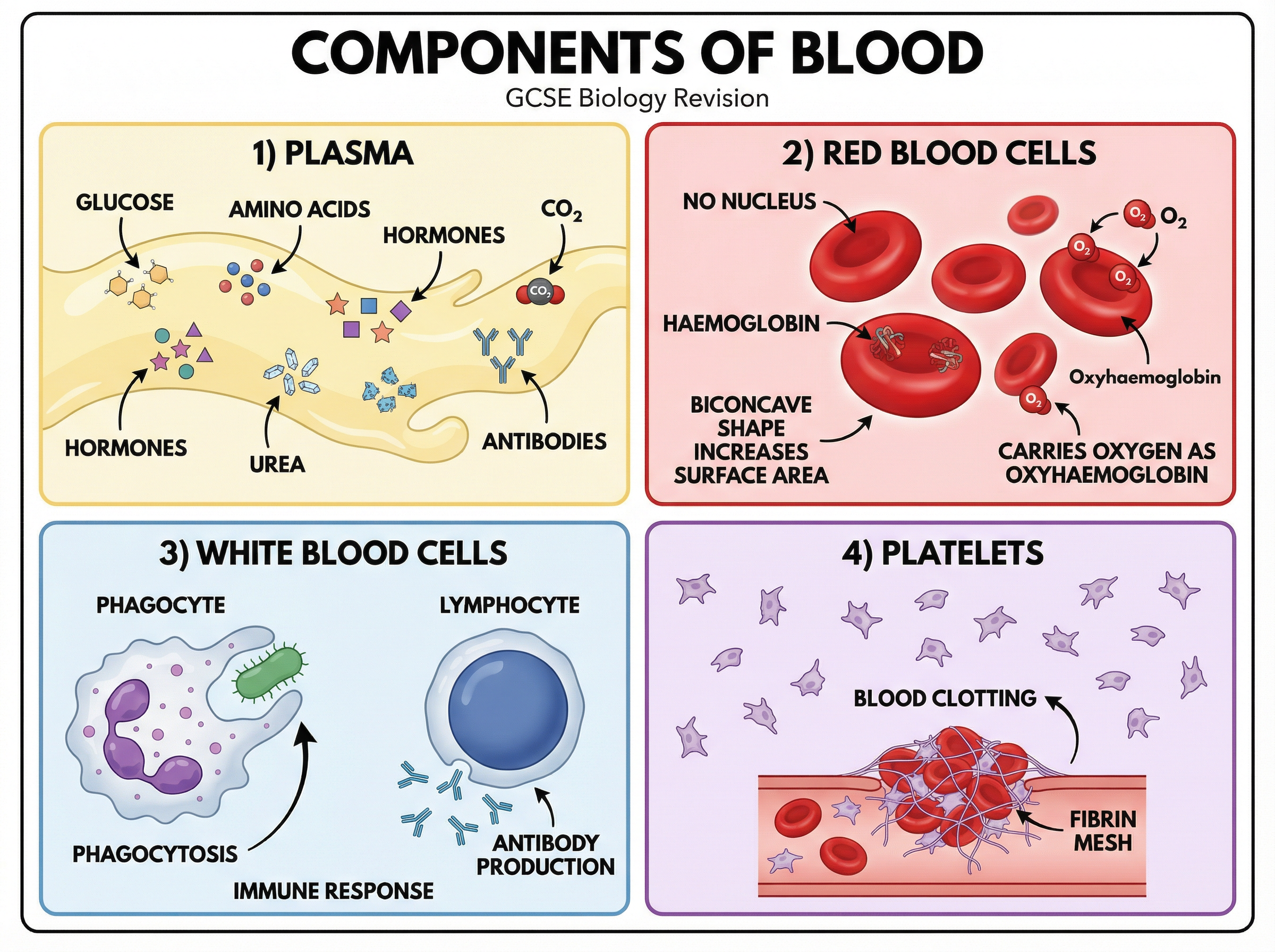
Blood is a tissue consisting of a fluid called plasma, in which red blood cells, white blood cells, and platelets are suspended.
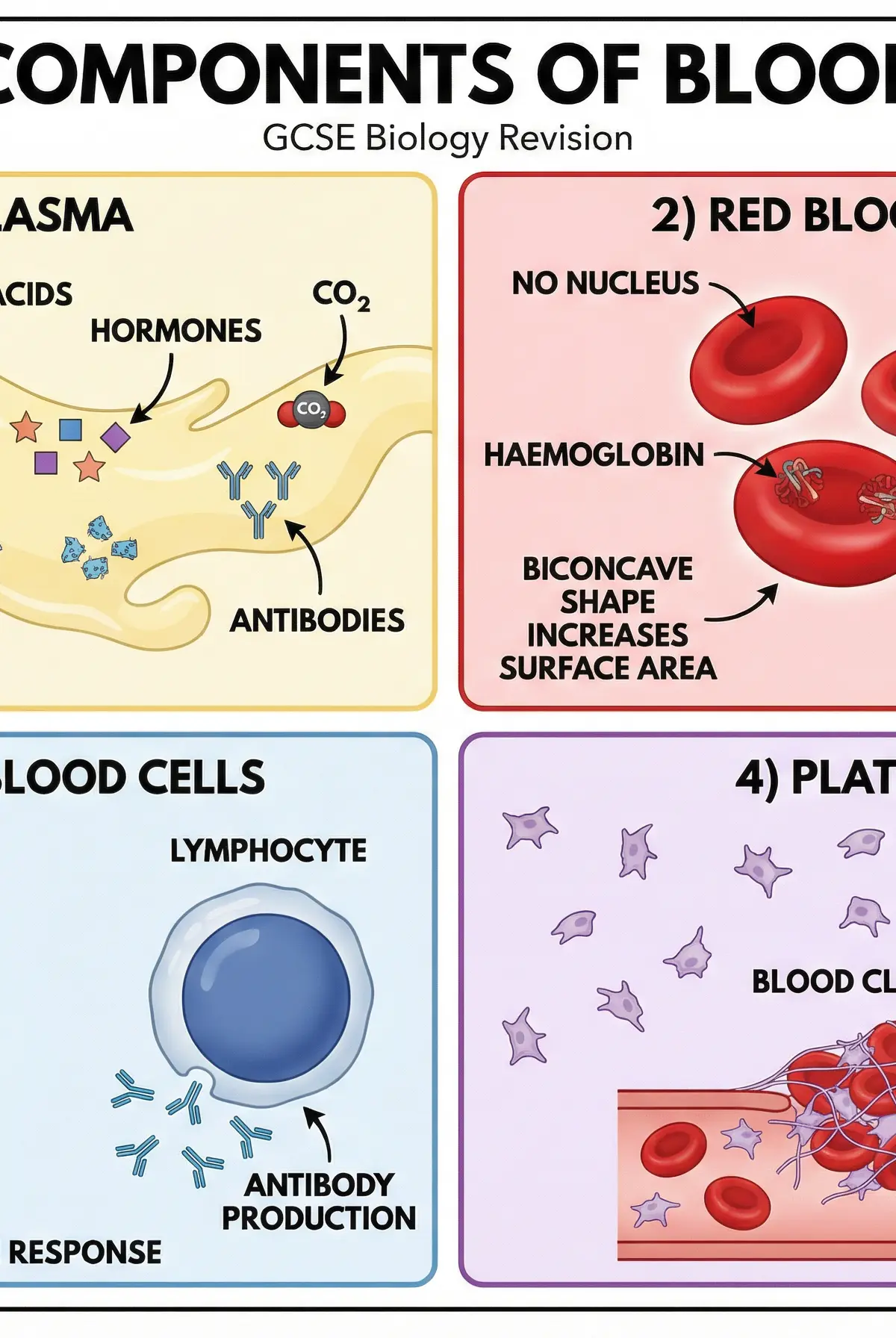
- Plasma: A pale yellow liquid that transports dissolved substances (glucose, amino acids, carbon dioxide, urea, hormones, and antibodies).
- Red Blood Cells (Erythrocytes): Transport oxygen from the lungs to the tissues.
- Biconcave shape: Increases surface area to volume ratio for rapid diffusion of oxygen.
- No nucleus: Creates more space to pack in haemoglobin, the red pigment that binds to oxygen.
- White Blood Cells: Defend the body against pathogens.
- Phagocytes: Engulf and digest pathogens (phagocytosis).
- Lymphocytes: Produce specific antibodies and antitoxins.
- Platelets: Small cell fragments involved in blood clotting. They form a network of protein fibres (fibrin) that traps blood cells to form a scab, preventing blood loss and the entry of microorganisms.
Practical Applications
While there isn't a required practical specifically for dissecting a heart in all specifications, understanding the practical skills involved is crucial. If asked about a heart dissection, remember to mention using a scalpel carefully, cutting down the ventricles to observe the differences in wall thickness, and locating the string-like chordae tendineae attached to the valves.
Visual Resources
3 diagrams and illustrations
Interactive Diagrams
2 interactive diagrams to visualise key concepts
Conceptual Flow Outline
Flowchart showing the path of blood through the double circulatory system.
Diagram could not be rendered
Approximate percentage composition of human blood.
Worked Examples
3 worked examples — open one to explore the question and available guidance.
Practice Questions
Test your understanding — click to reveal model answers
State the name of the blood vessel that carries deoxygenated blood from the heart to the lungs.
Hint: Remember, it's going Away from the heart.
Describe the function of valves in the circulatory system.
Hint: What do they stop the blood from doing?
Explain how the structure of a capillary is adapted to its function.
Hint: Think about the walls and the distance substances have to travel.
A student states that all arteries carry oxygenated blood. Explain why this statement is incorrect.
Hint: Think about the circuit that goes to the lungs.
Evaluate the advantage of a double circulatory system over a single circulatory system (like that found in fish).
Hint: Think about blood pressure after it passes through the respiratory surface.