AQA · GCSE · Business
Course version: 8132 · Version from Sept 2017
Cash flow
Master the movement of money with this definitive guide to Cash Flow. Discover why profitable businesses can still go bust, how to build and interpret cash flow forecasts, and the examiner-approved ways to solve cash flow crises.
- 5 min read
- 3 worked examples
- 2 practice questions
- 6 key terms
Check what you remember
Read the wording for your board, then hide it and explain Cash Flow in your own words. Rough notes are fine. This is a self-check, with no mark or grade.
Reference: AQA
The movement of money into and out of a business over a period of time.
Study Notes
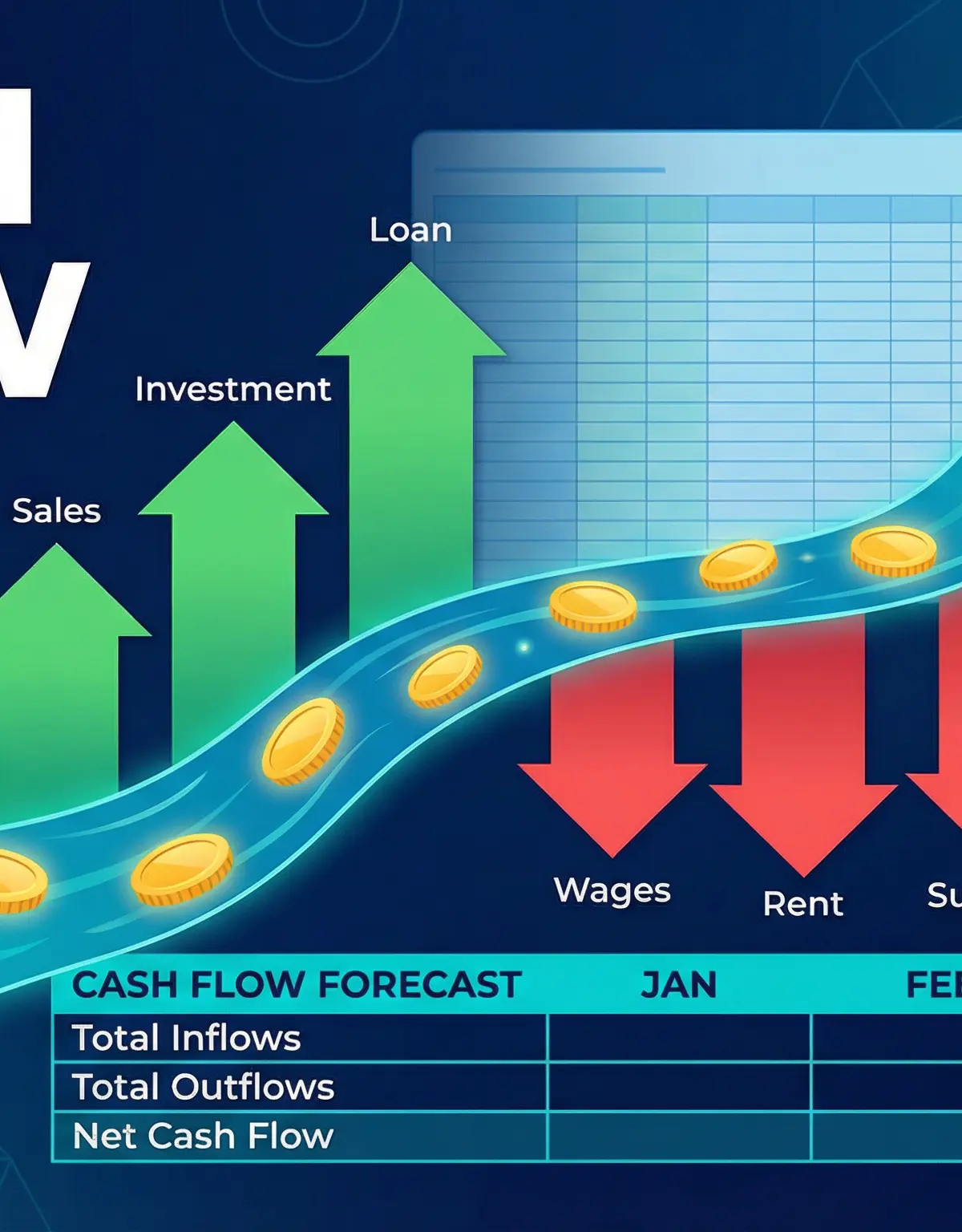
Overview
Cash flow is the lifeblood of any business, representing the dynamic movement of money in and out over a period of time. For GCSE Business candidates, mastering this topic is non-negotiable. Examiners consistently test your ability to construct forecasts, interpret financial data, and critically evaluate solutions to cash flow problems.
Historically, many fast-growing businesses have failed not because they lacked profit, but because they ran out of cash. This guide will equip you with the precise terminology and analytical skills required to secure top marks. You will learn to differentiate between cash and profit, calculate net cash flows and closing balances accurately, and weigh the short-term versus long-term impacts of various financial interventions.
Listen to the companion podcast below for an examiner's perspective on common pitfalls and top tips:
Cash vs Profit: The Crucial Distinction
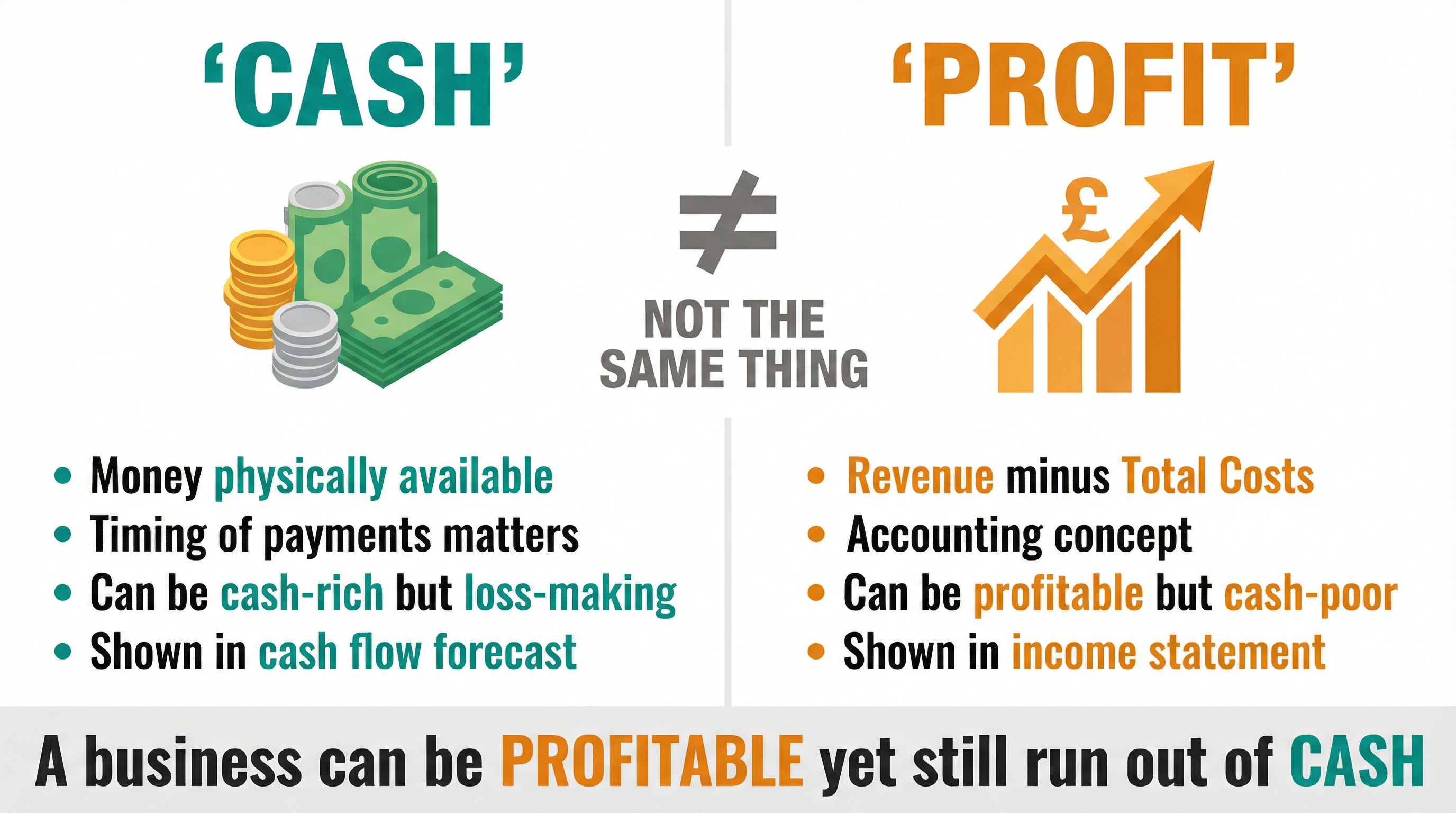
One of the most frequent errors candidates make is conflating cash with profit.
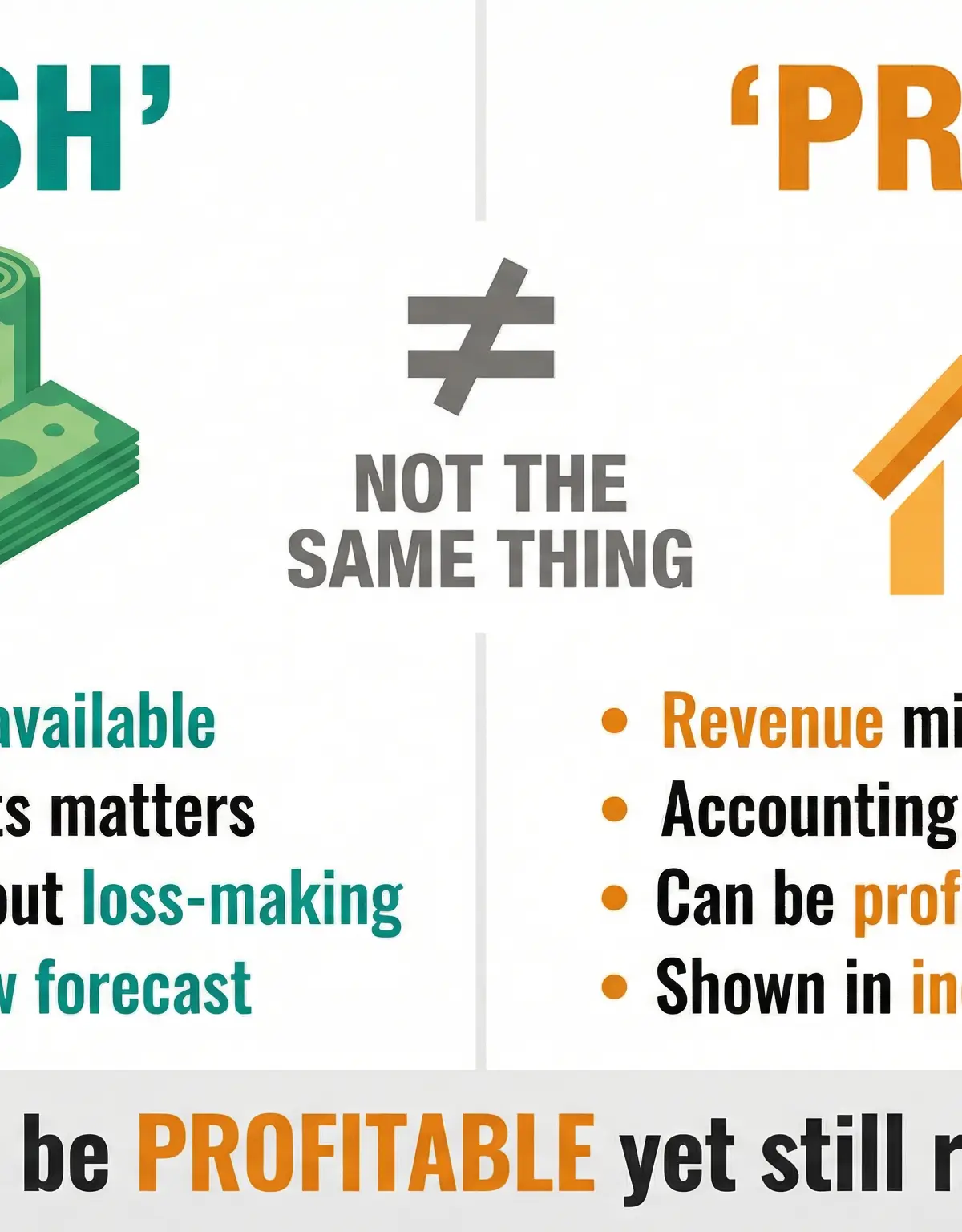
Profit is an accounting concept calculated as Total Revenue minus Total Costs. A business can record a profit when a sale is made, even if the customer has not yet paid.
Cash, however, is the physical money available to the business at a specific moment in time. A business might be highly profitable on paper but suffer a severe cash flow crisis if customers delay payment while suppliers demand immediate settlement. This scenario is often referred to as being 'cash poor but profit rich'.
Constructing a Cash Flow Forecast
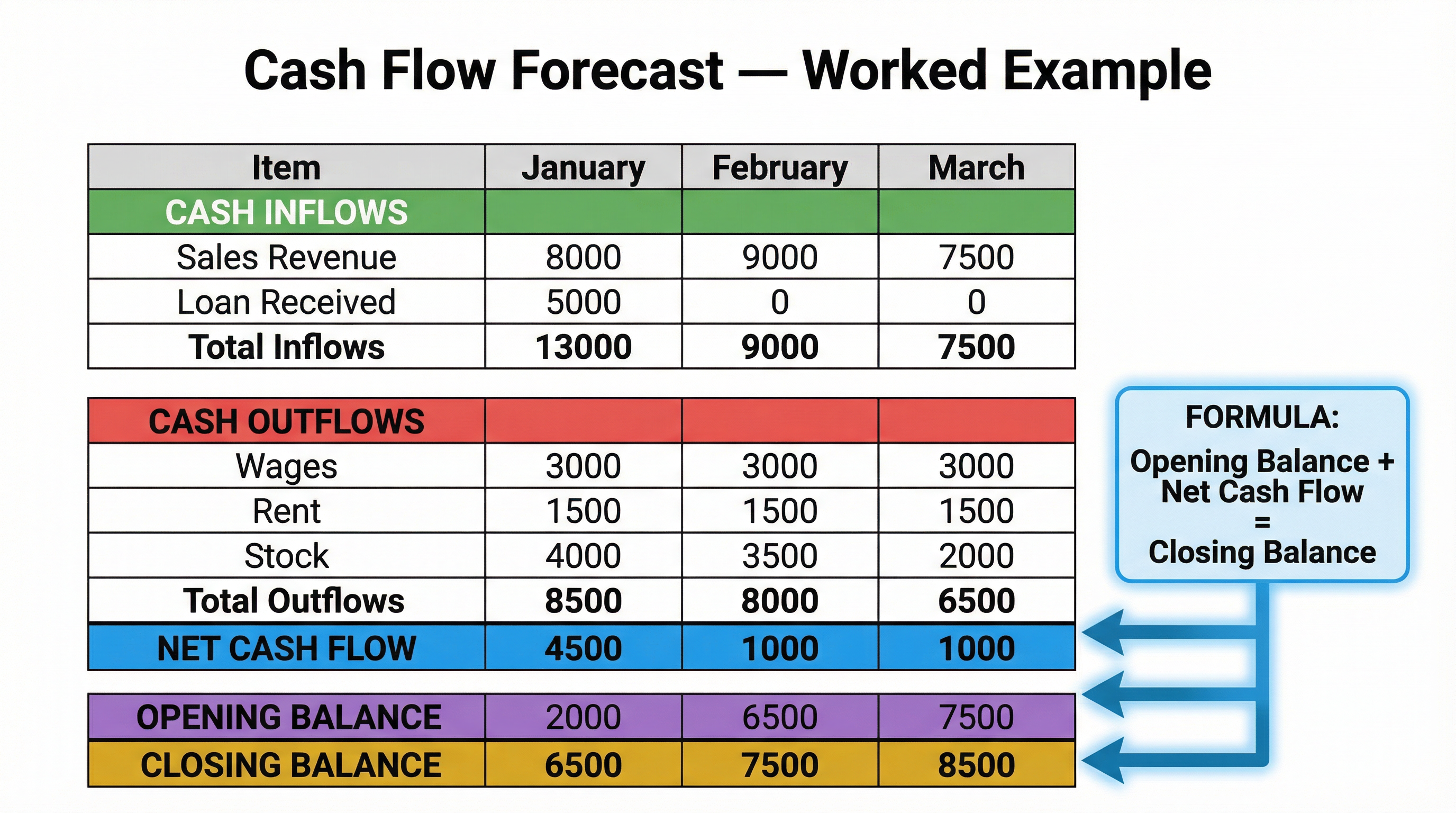
A cash flow forecast is a forward-looking financial document that predicts a business's cash inflows and outflows over a specific period, usually month by month. Examiners frequently require candidates to complete missing figures in a forecast table.
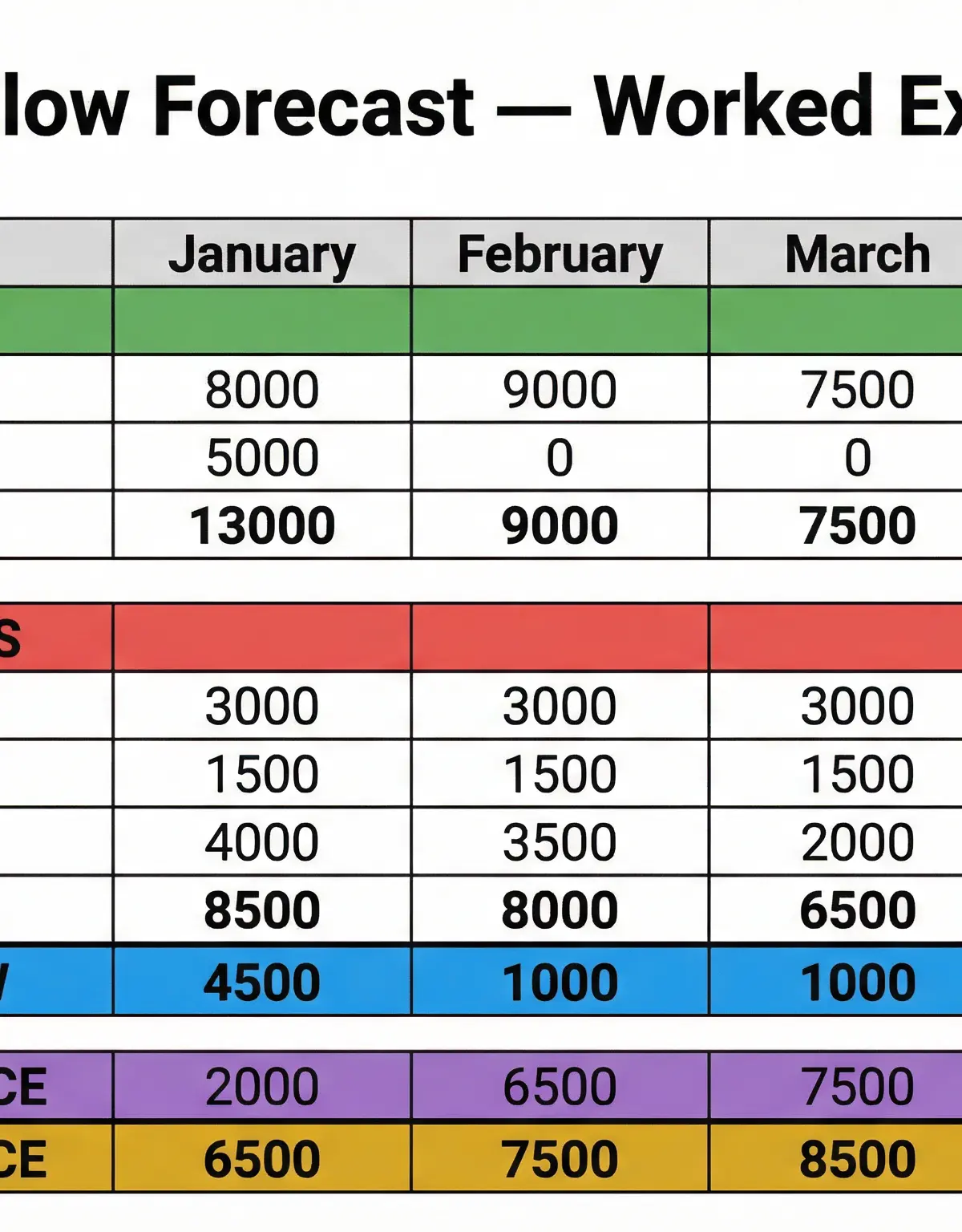
Key Components:
- Cash Inflows: Money entering the business (e.g., sales revenue, loans received, investment).
- Cash Outflows: Money leaving the business (e.g., wages, rent, payments to suppliers).
- Net Cash Flow: Calculated as Total Inflows minus Total Outflows.
- Opening Balance: The cash available at the start of the month.
- Closing Balance: Calculated as Opening Balance plus Net Cash Flow. Crucially, the closing balance of one month becomes the opening balance of the next.
Consequences of Cash Flow Problems
When outflows consistently exceed inflows, a business faces a cash flow problem. The consequences can be severe:
- Short-term: Inability to pay wages (damaging staff morale) or suppliers (leading to a loss of credit facilities).
- Long-term: The business may become insolvent, meaning it cannot pay its debts, potentially leading to administration or liquidation, even if it is profitable.
Evaluating Solutions to Cash Flow Problems
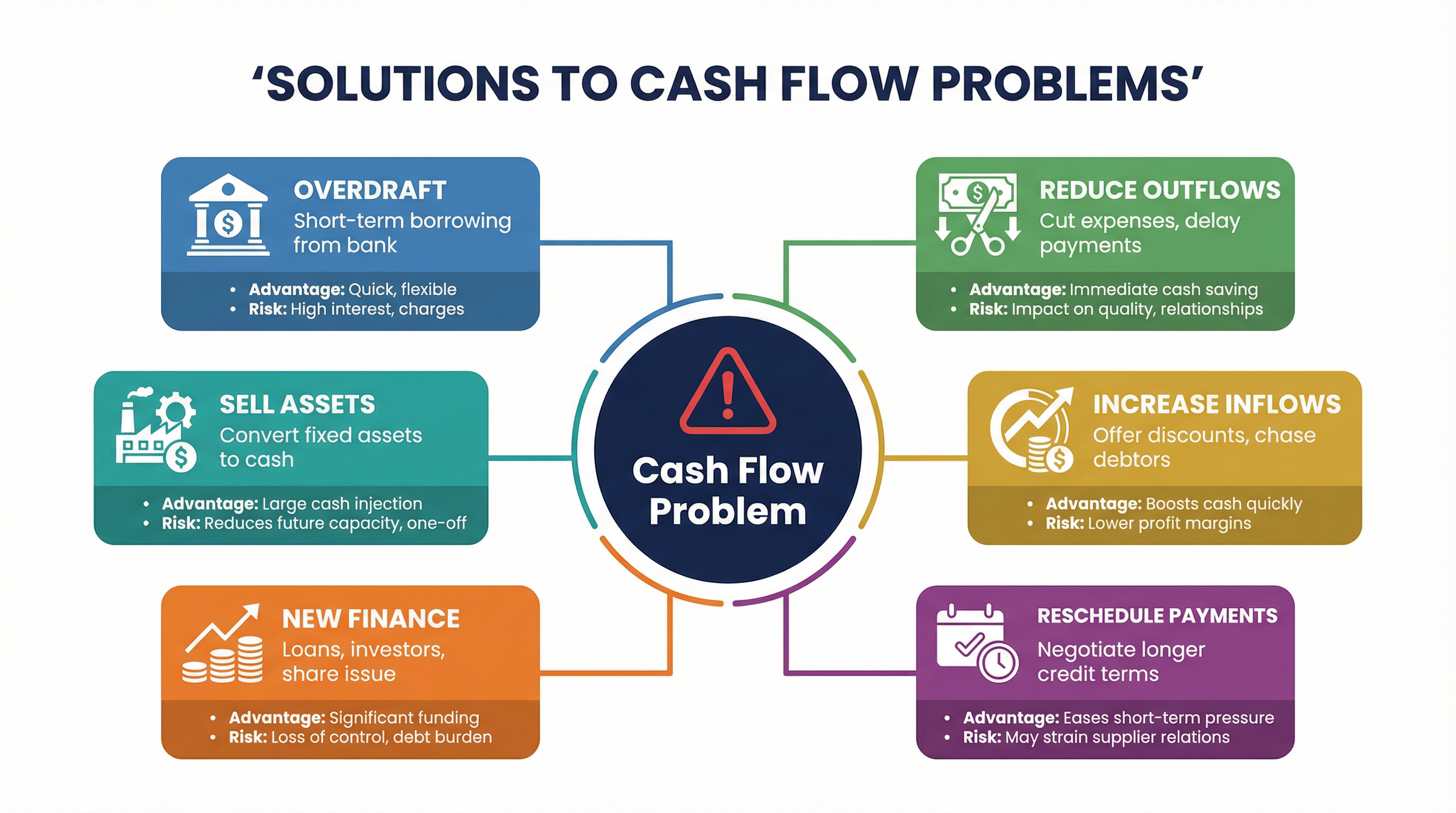
When examiners ask you to evaluate solutions, they expect a balanced analysis of both advantages and disadvantages in context.
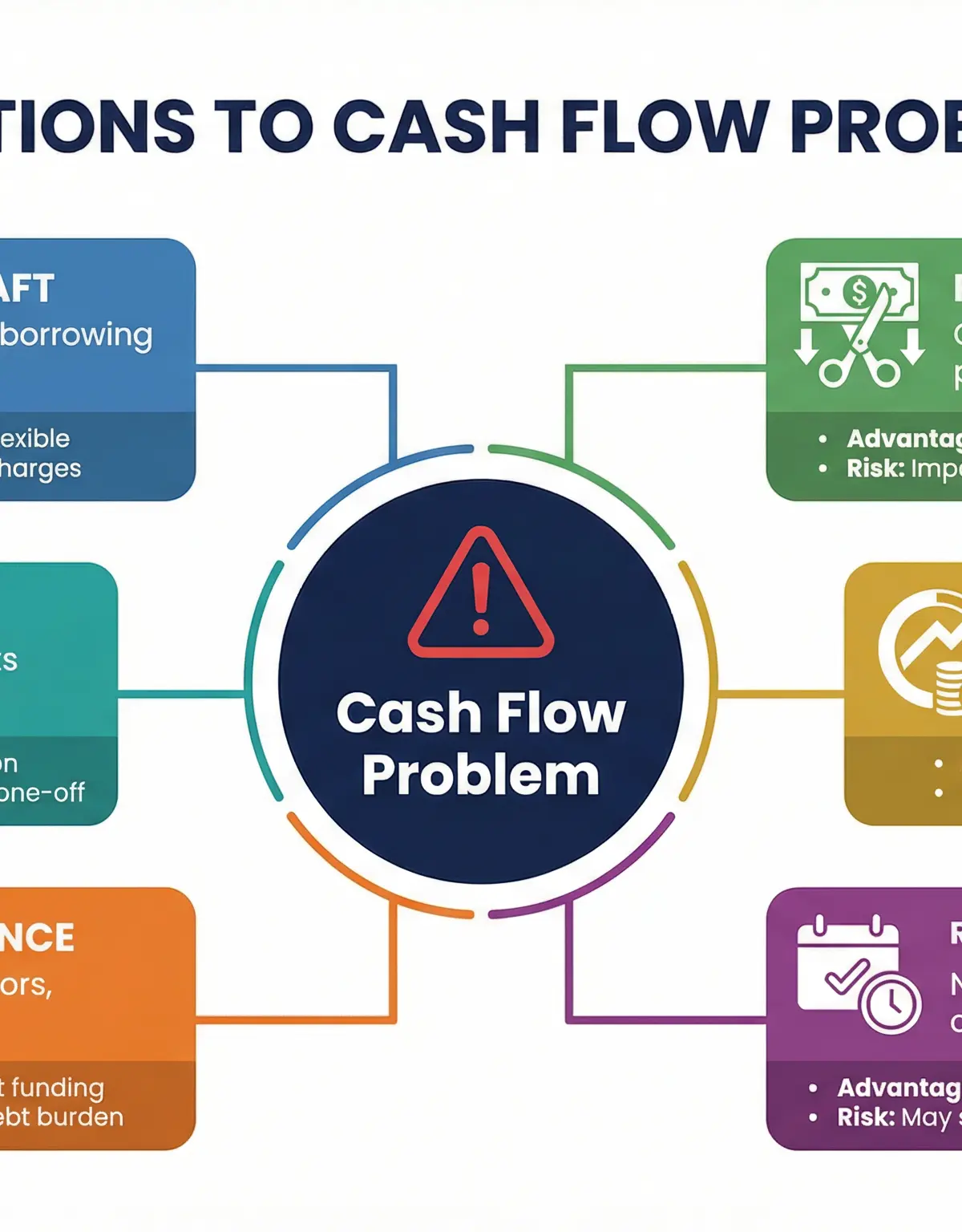
1. Arrange an Overdraft
What it is: Short-term borrowing from a bank up to an agreed limit.
Advantage: Quick to arrange and highly flexible for temporary shortfalls.
Disadvantage: High interest rates and the bank can demand immediate repayment.
2. Reschedule Payments
What it is: Negotiating longer credit terms with suppliers.
Advantage: Keeps cash in the business for longer without incurring interest.
Disadvantage: May damage supplier relationships or result in the loss of early payment discounts.
3. Reduce Outflows
What it is: Cutting expenses or delaying non-essential purchases.
Advantage: Provides an immediate improvement to the cash position.
Disadvantage: Cutting too deeply may compromise product quality or staff morale.
4. Increase Inflows
What it is: Encouraging faster payment from customers or running promotions.
Advantage: Accelerates cash collection.
Disadvantage: Offering discounts to encourage early payment reduces overall profit margins.
5. Seek New Finance
What it is: Obtaining a bank loan or issuing new shares.
Advantage: Provides a significant, lump-sum cash injection.
Disadvantage: Loans increase debt burden and require interest payments; issuing shares dilutes ownership and control.
6. Sell Assets
What it is: Converting fixed assets (e.g., machinery, property) into cash.
Advantage: Can raise substantial amounts of money quickly.
Disadvantage: Reduces the future productive capacity of the business and is a one-off solution.
Visual Resources
3 diagrams and illustrations
Interactive Diagrams
1 interactive diagram to visualise key concepts
Conceptual Flow Outline
The Mechanics of a Cash Flow Forecast
Worked Examples
3 worked examples — open one to explore the question and available guidance.
Practice Questions
Try the question, then reveal an answer plan or example response
A business is experiencing a negative net cash flow. Explain two methods the business could use to improve its cash flow position. (6 marks)
Hint: Think about one way to increase money coming in, and one way to decrease or delay money going out.
Discuss whether a bank loan or selling assets is the best way for a growing manufacturing business to solve a significant cash flow shortage. (9 marks)
Hint: Evaluate both options in the context of a 'growing manufacturing business'. What does a manufacturer need to grow?
Exam technique
How to turn what you know into marks
How to approach the question
Always check the command word. For 'Calculate', show your working. For 'Evaluate', you must provide a balanced argument with a justified conclusion.
How to structure your answer
- Essay questions
- Define key terms -> Advantage in context -> Disadvantage in context -> Justified conclusion.
- Source questions
- Apply your knowledge directly to the specific business mentioned in the case study.
- Explain questions
- Make a clear point, then develop it using connective phrases like 'this means that' or 'as a result'.
Timing
Approximately 1 minute per mark, plus planning time for longer evaluation questions.
Common pitfalls
- Confusing cash flow with profit.
- Making arithmetic errors in forecast tables and not showing working.
- Providing a one-sided evaluation without considering the drawbacks of a proposed solution.
- Failing to carry the closing balance of one month forward as the opening balance of the next.
What the command words want
- Explain
- Provide a reason and develop it logically.
- Evaluate
- Weigh up the pros and cons of a business decision and reach a supported judgement.
- Calculate
- Perform the mathematical operation and explicitly show the steps.
- State/Identify
- Give a brief, factual answer without needing explanation.
Watch or listen (optional)
Test your understanding of Cash flow
Active recall beats re-reading. Take an instant quiz now to test what you’ve learned and lock it into long-term memory.
7 days Premium · Then the free plan continues · No card, no charge