AQA · GCSE · Business
Course version: 8132 · Version from Sept 2017
Globalisation
Globalisation is the process that connects businesses, economies, and cultures worldwide. This study guide covers how UK businesses navigate international markets, compete globally, and manage the impact of exchange rates.
- 5 min read
- 3 worked examples
- 5 practice questions
- 6 key terms
Check what you remember
Read the wording for your board, then hide it and explain Globalisation in your own words. Rough notes are fine. This is a self-check, with no mark or grade.
Reference: AQA
The trend for markets to become worldwide in scope.
Study Notes
Overview
Globalisation is a fundamental concept in modern business, referring to the increasing interconnectedness of economies and markets worldwide. For GCSE Business candidates, this topic is crucial because it explores how UK businesses operate in a global context. You are expected to understand the drivers of globalisation, the opportunities and threats it presents, how UK businesses compete internationally, and the impact of fluctuating exchange rates on importers and exporters. Examiners frequently test your ability to apply these concepts to specific business scenarios, rewarding answers that show a balanced understanding of both the benefits and drawbacks of operating globally.
Listen to our comprehensive podcast on Globalisation to reinforce your understanding:
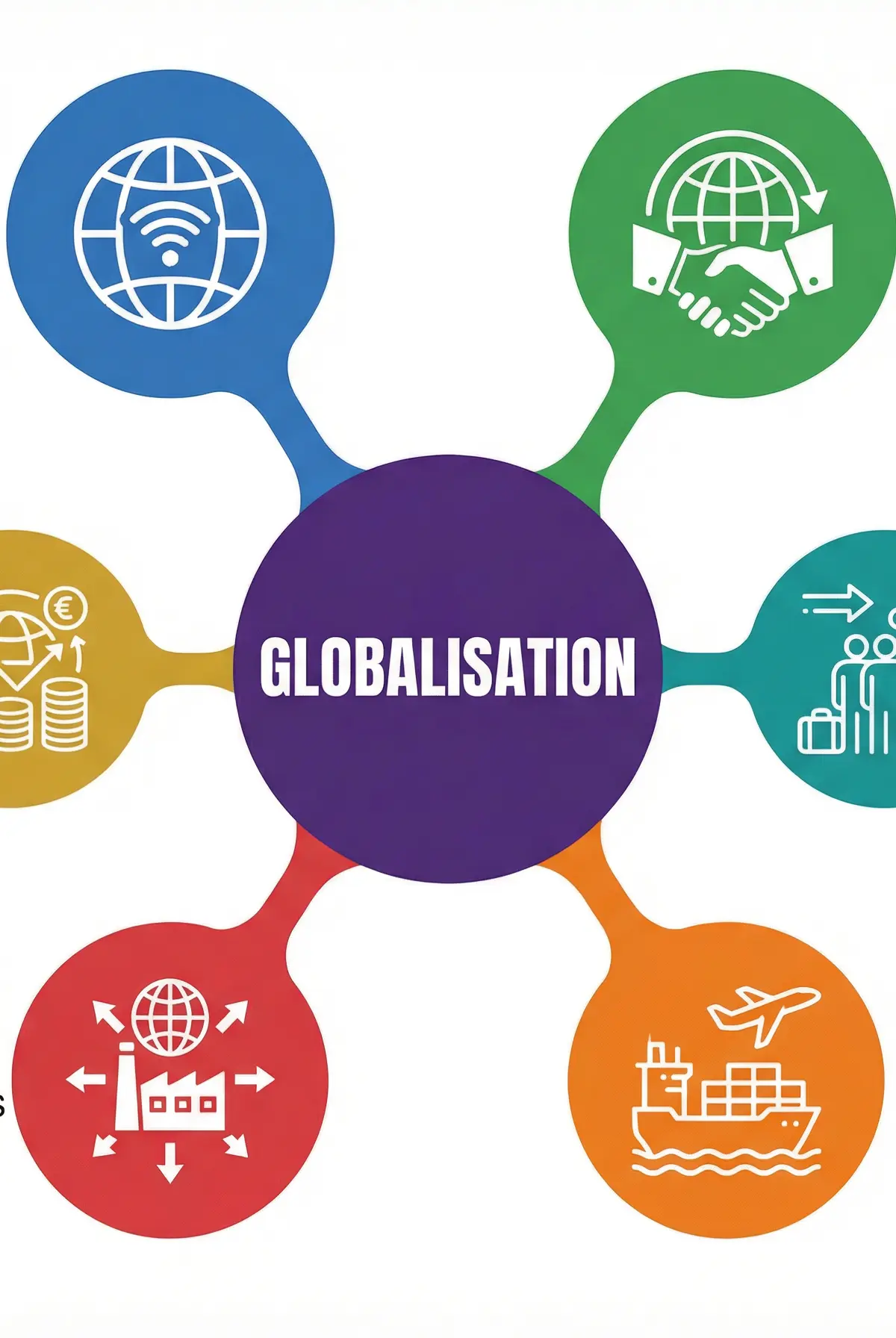
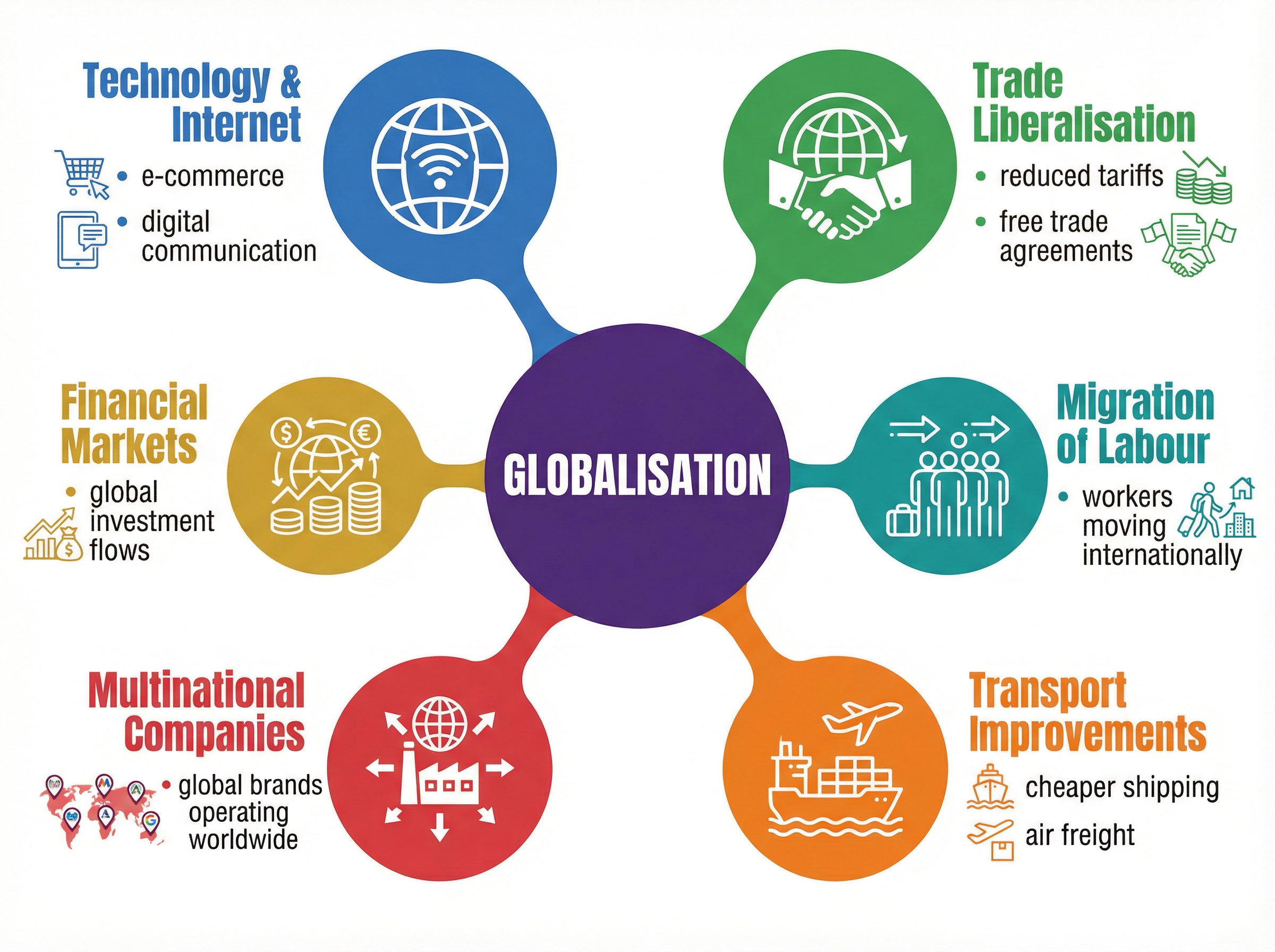
Key Drivers of Globalisation
Technology and the Internet
What happened: The rapid advancement of digital technology has transformed how businesses operate. E-commerce platforms allow even small businesses to sell globally.
Why it matters: This reduces the barrier to entry for international trade, meaning UK businesses can reach millions of new customers without needing physical stores abroad.
Specific Knowledge: E-commerce, digital communication, online payment systems.
Trade Liberalisation
What happened: Governments worldwide have worked to reduce barriers to trade, such as tariffs (taxes on imports) and quotas (limits on import quantities).
Why it matters: Free trade agreements make it cheaper and easier for businesses to import and export goods, encouraging international expansion.
Specific Knowledge: Tariffs, quotas, free trade areas (e.g., the EU single market).
Transport Improvements
What happened: Innovations in logistics, particularly containerisation and cheaper air freight, have drastically reduced the cost and time of shipping goods globally.
Why it matters: Businesses can source cheaper materials from overseas and sell finished products worldwide more efficiently.
Specific Knowledge: Container shipping, logistics, supply chain management.
Multinational Companies (MNCs)
What happened: Large corporations like Apple, Toyota, and Unilever operate in multiple countries, driving global economic integration.
Why it matters: MNCs bring investment, jobs, and technology to different countries, but also create intense competition for local businesses.
Specific Knowledge: Foreign Direct Investment (FDI), economies of scale.
Impact on UK Businesses
Opportunities
- Access to New Markets: Selling to a global customer base increases potential sales and revenue.
- Lower Costs: Sourcing raw materials or manufacturing products in countries with lower labour costs can improve profit margins.
- Access to Skills: Recruiting talent from around the world helps businesses overcome domestic skills shortages.
Challenges
- Increased Competition: UK businesses face intense competition from foreign companies that may have lower costs or innovative products.
- Complexity and Risk: Operating internationally involves dealing with different laws, cultures, languages, and economic conditions.
- Exchange Rate Fluctuations: Changes in currency values can unpredictably affect costs and revenues.
Competing Internationally
UK businesses often cannot compete on price alone due to higher domestic costs. Therefore, they focus on:
- Better Design: Creating innovative, unique products (e.g., Dyson).
- Higher Quality: Building a reputation for premium, reliable goods (e.g., Rolls-Royce, Burberry).
- Lower Prices: Some businesses achieve this through economies of scale or efficient global supply chains.
Exchange Rates
An exchange rate is the price of one currency in terms of another (e.g., £1 = $1.25). Understanding the impact of exchange rate movements is a critical exam skill.
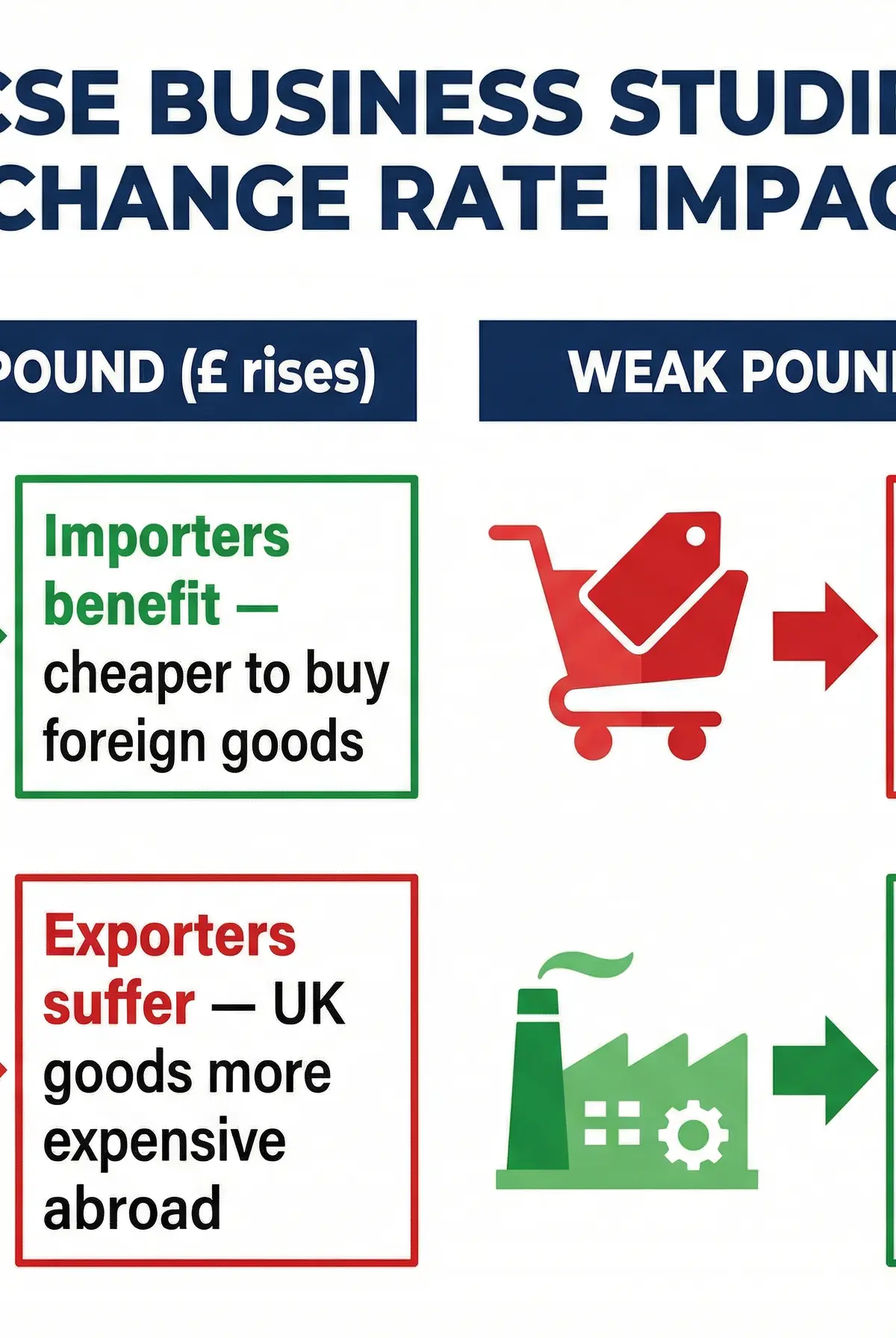
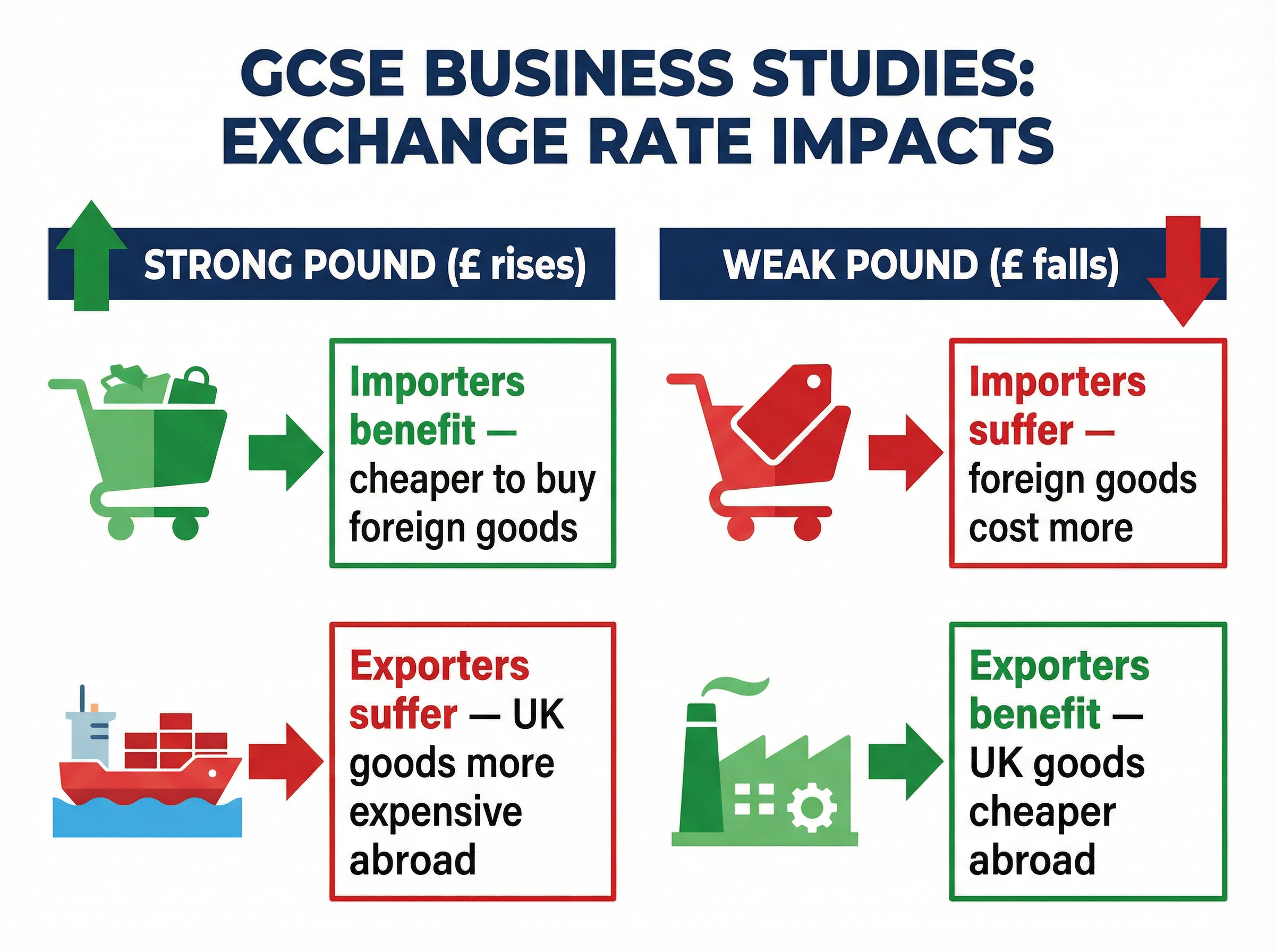
SPICED (Strong Pound Imports Cheap, Exports Dear)
- Strong Pound (£ rises):
- Importers benefit: Foreign goods become cheaper to buy, reducing costs.
- Exporters suffer: UK goods become more expensive for foreign buyers, reducing demand.
WPIDEC (Weak Pound Imports Dear, Exports Cheap)
- Weak Pound (£ falls):
- Importers suffer: Foreign goods become more expensive, increasing costs.
- Exporters benefit: UK goods become cheaper for foreign buyers, increasing demand.
Interactive Diagrams
2 interactive diagrams to visualise key concepts
Conceptual Flow Outline
Impact of a Strong Pound
Conceptual Flow Outline
Impact of a Weak Pound
Worked Examples
3 worked examples — open one to explore the question and available guidance.
Practice Questions
Try the question, then reveal an answer plan or example response
State two ways a UK business could compete internationally.
Hint: Think about what makes a product attractive to buyers besides just the cost.
Explain one way that e-commerce has helped UK businesses to operate globally.
Hint: How does selling online change the need for physical shops?
A UK furniture retailer imports most of its wood from Sweden (which uses the Euro). The value of the pound (£) has recently fallen against the Euro. Explain the likely impact of this on the UK furniture retailer.
Hint: Remember WPIDEC - Weak Pound Imports Dear.
Discuss the benefits and drawbacks for a UK tech company of relocating its manufacturing to a country with lower labour costs.
Hint: Consider both the financial savings and the potential risks to quality or reputation.
Evaluate the importance of globalisation to the success of a small UK-based online clothing retailer.
Hint: Consider how globalisation provides opportunities (sales, sourcing) but also brings threats (competition).
Exam technique
How to turn what you know into marks
How to approach the question
Always identify the command word and the specific business context before writing.
How to structure your answer
- Discuss questions
- Provide one benefit/advantage, one drawback/disadvantage, and a concluding sentence.
- Explain questions
- State the point, explain why it happens, and state the consequence for the business (Point -> Explain -> Consequence).
- Evaluate questions
- Introduction, argument for, argument against, and a strong, justified conclusion.
Timing
Approximately 1 minute per mark, plus planning time for longer questions
Common pitfalls
- Defining globalisation without explaining its effects on the business.
- Confusing the impact of exchange rates on importers and exporters.
- Attempting to calculate exchange rate conversions instead of explaining the directional impact.
What the command words want
- Discuss
- Look at both sides of an issue (benefits and drawbacks).
- Explain
- Develop a point with reasons and consequences.
- State/Identify
- Short, factual answers without explanation.
- Evaluate/Justify
- Weigh up both sides and provide a supported conclusion or recommendation.
Watch or listen (optional)
Test your understanding of Globalisation
Active recall beats re-reading. Take an instant quiz now to test what you’ve learned and lock it into long-term memory.
7 days Premium · Then the free plan continues · No card, no charge