AQA · GCSE · Business
Course version: 8132 · Version from Sept 2017
Good customer services
This study guide covers the critical role of customer service in business success. It explains the methods used, the financial and reputational impacts of good versus poor service, and how ICT has revolutionised customer interactions.
- 4 min read
- 3 worked examples
- 5 practice questions
- 6 key terms
Check what you remember
Read the wording for your board, then hide it and explain Customer Service in your own words. Rough notes are fine. This is a self-check, with no mark or grade.
Reference: AQA
The experience provided to customers before, during, and after a purchase.
Study Notes
Overview
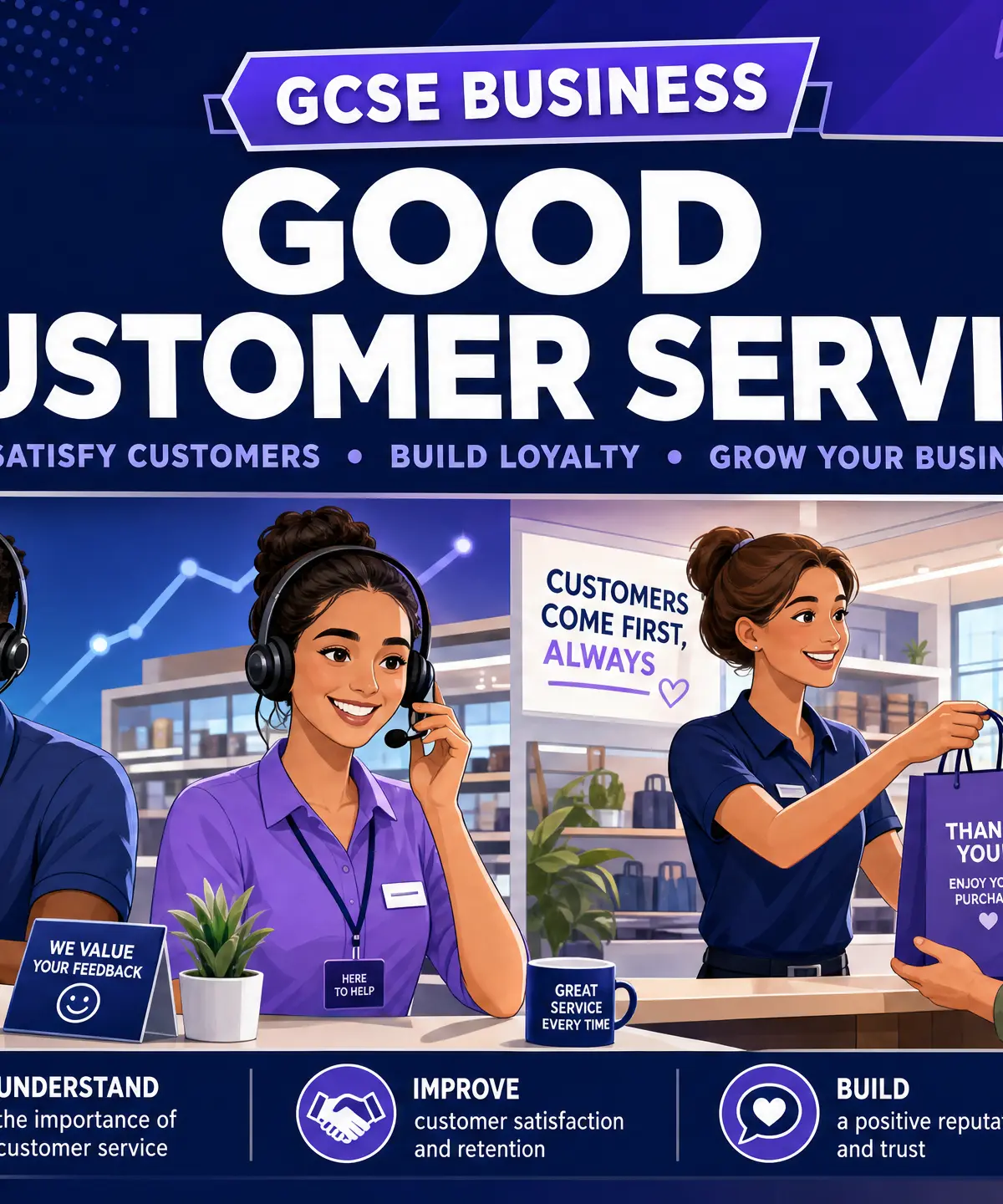
Customer service is the experience a business provides for its customers before, during, and after a purchase. In GCSE Business, examiners expect you to understand that customer service is not just about 'being nice'—it is a strategic function that directly impacts a business's reputation, revenue, and profitability. You must be able to identify specific methods of delivering good service, explain the consequences of both good and poor service, and analyse how Information and Communication Technology (ICT) has transformed the way businesses interact with their customers.
Methods of Good Customer Service
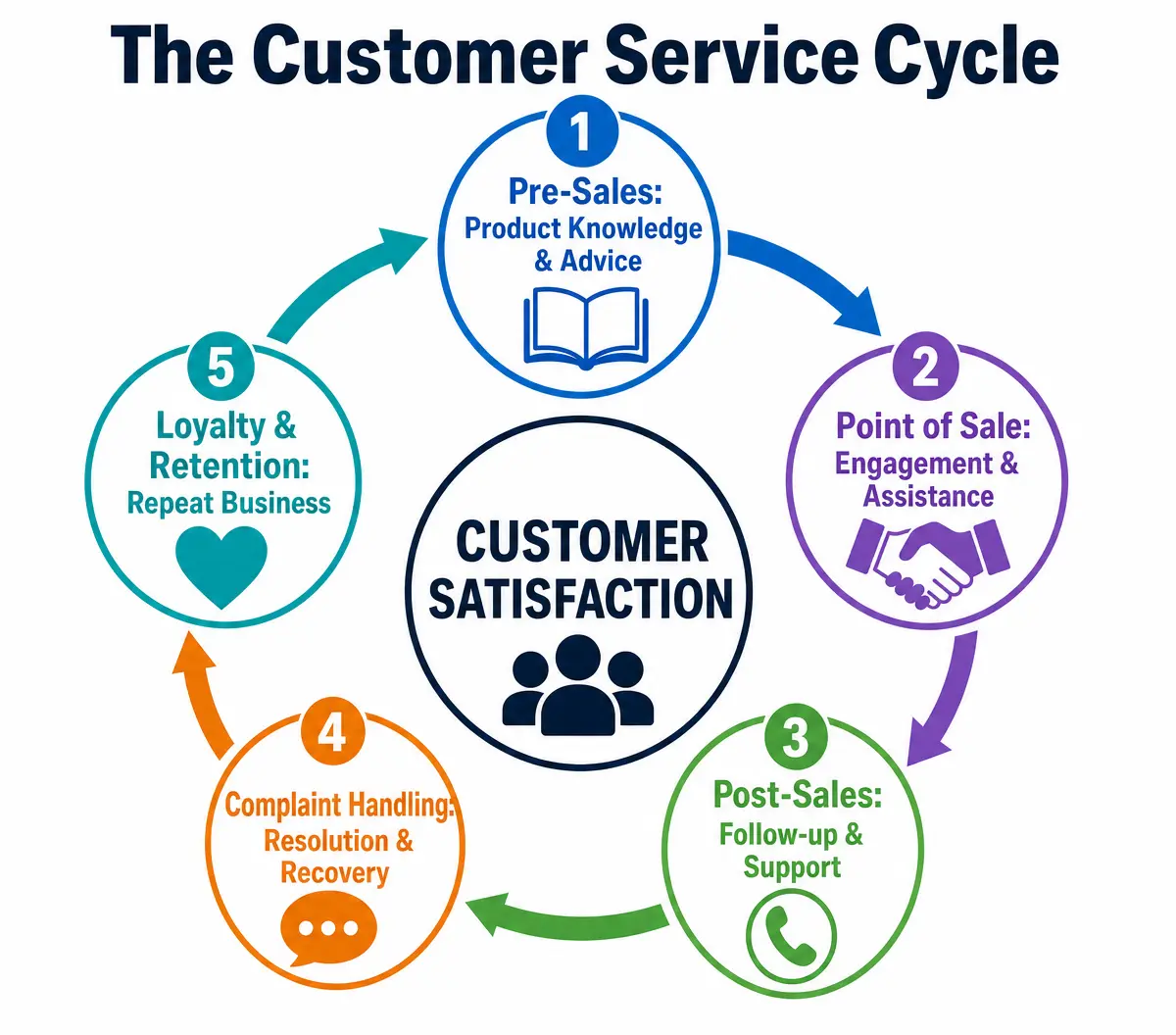
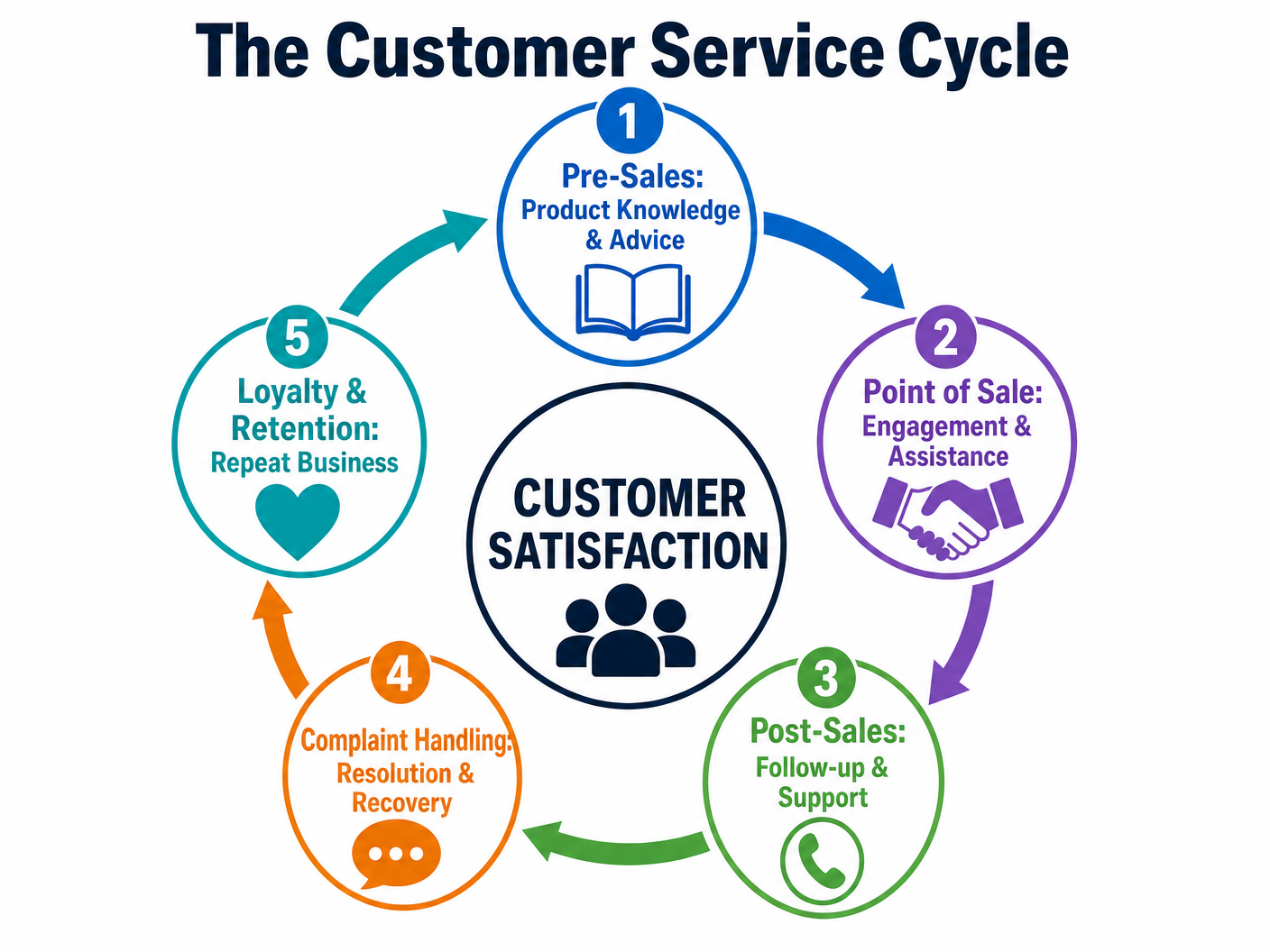
Product Knowledge
What it is: Staff having a deep understanding of the products or services they are selling.
Why it matters: It allows staff to provide accurate advice, helping customers make informed decisions. This builds trust and increases the likelihood of a sale. For example, an Apple Store employee advising a customer on which iPad best suits their needs.
Customer Engagement
What it is: The way staff interact with customers—being polite, approachable, and responsive.
Why it matters: Positive interactions make customers feel valued. This includes greeting them, answering questions promptly, and resolving issues efficiently. A friendly and helpful attitude can differentiate a business from its competitors.
Post-Sales Services
What it is: The support provided after a purchase has been made.
Why it matters: This includes warranties, clear returns policies, delivery updates, and follow-up communications. Strong post-sales support (like John Lewis's generous returns policy) reassures customers and builds long-term loyalty.
The Impact of Customer Service
Benefits of Good Customer Service
Customer Satisfaction: Meeting or exceeding expectations leaves customers feeling positive about their experience.
Customer Loyalty: Satisfied customers are more likely to return for repeat purchases.
Increased Revenue and Profit: Loyal customers spend more over time. Furthermore, good service generates positive word-of-mouth (free marketing), attracting new customers and driving up sales and profit margins.
Enhanced Reputation: A strong reputation for excellent service can become a unique selling point (USP), giving the business a competitive advantage.
Dangers of Poor Customer Service
Dissatisfied Customers: Customers who feel ignored or poorly treated will take their business elsewhere.
Poor Reputation: In the digital age, a bad experience can quickly escalate through negative online reviews (e.g., on Trustpilot) or social media complaints. This damages the brand's image.
Reduction in Revenue: Lost customers and a damaged reputation inevitably lead to falling sales and lower profits.
The Role of ICT in Customer Service
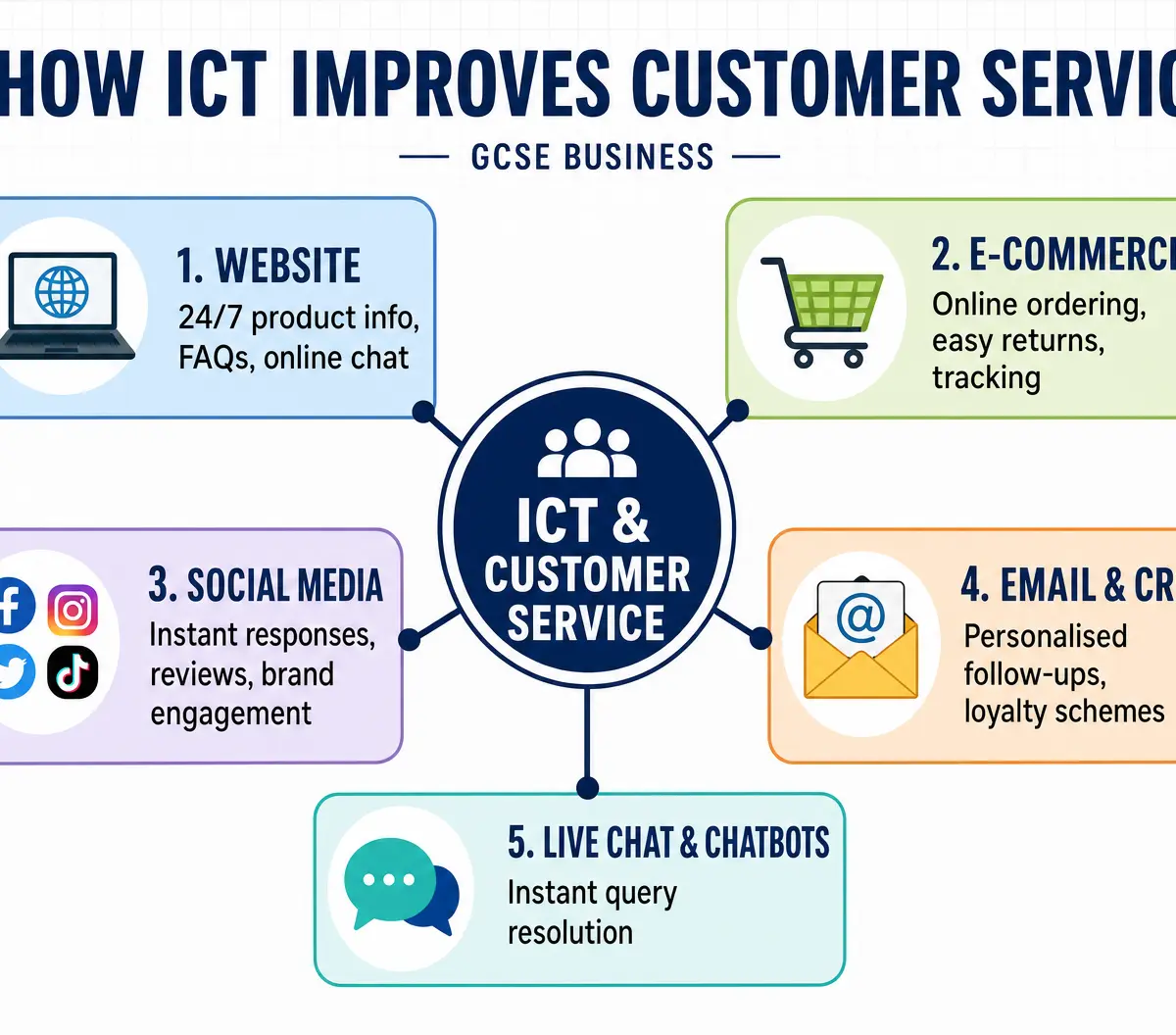
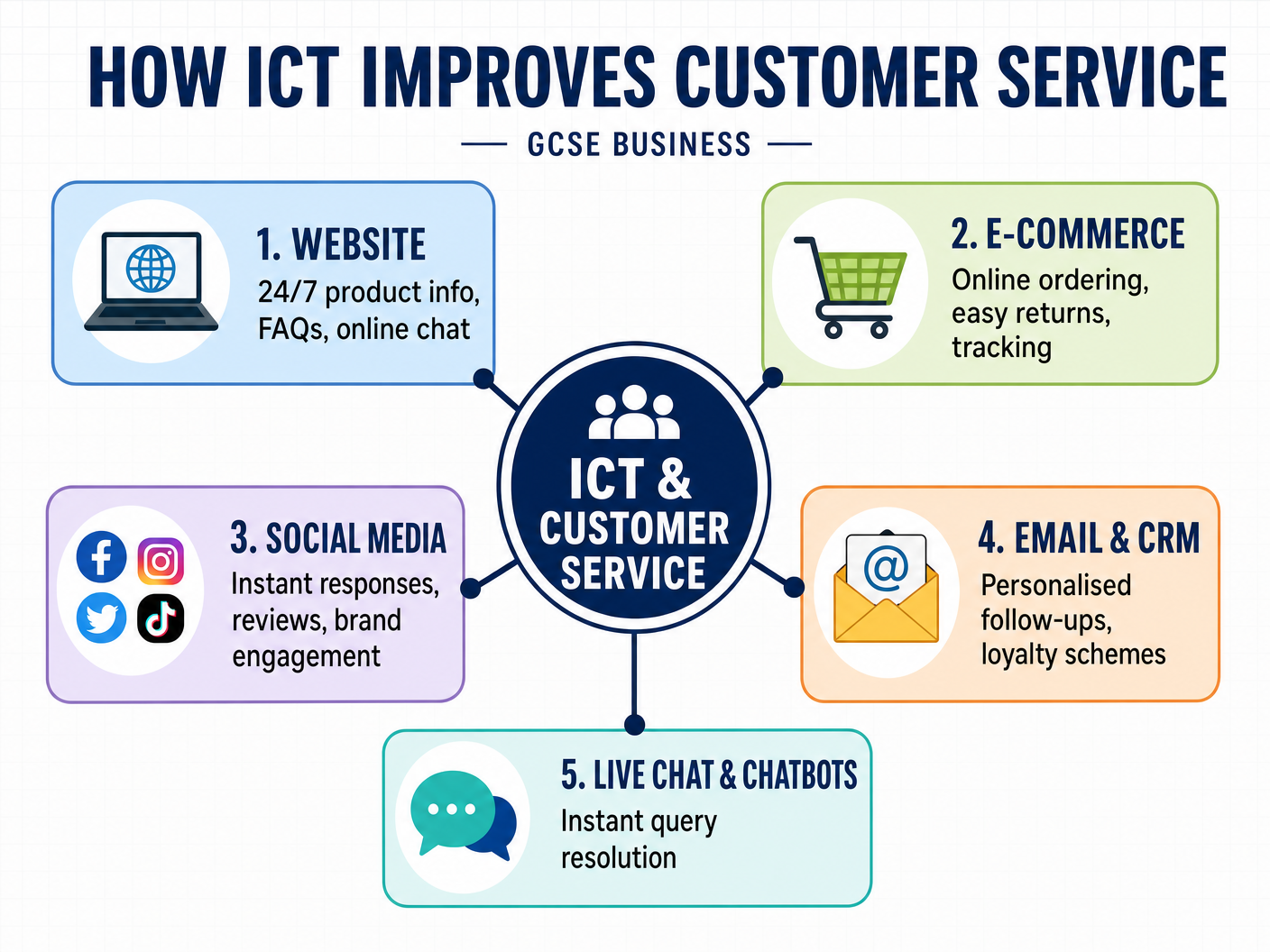
Information and Communication Technology (ICT) has drastically changed customer service expectations and delivery.
Websites and E-Commerce
Businesses use websites to provide 24/7 access to product information, FAQs, and contact details. E-commerce platforms allow for seamless online ordering, order tracking, and easy returns, increasing convenience for the customer.
Social Media
Platforms like X (formerly Twitter), Facebook, and Instagram allow businesses to engage directly with customers. They can respond to queries or complaints in real-time, often publicly, demonstrating their commitment to customer care.
Customer Relationship Management (CRM) Systems
CRM software stores customer data, including purchase history and preferences. This allows businesses to send personalised offers, targeted marketing, and tailored follow-up emails, making the customer feel valued.
Audio Revision
Listen to our 10-minute podcast episode covering all the key concepts, exam tips, and a quick-fire recall quiz:
Visual Resources
2 diagrams and illustrations
Interactive Diagrams
1 interactive diagram to visualise key concepts
Conceptual Flow Outline
The chain of impact: How good customer service leads to profitability.
Worked Examples
3 worked examples — open one to explore the question and available guidance.
Practice Questions
Try the question, then reveal an answer plan or example response
State two methods a business could use to provide good customer service. (2 marks)
Hint: Think about what happens before and after a sale.
Explain how poor product knowledge could affect a business. (3 marks)
Hint: What happens if a customer asks a question and the staff member doesn't know the answer?
Analyse how a clothing retailer could use ICT to improve its customer service. (6 marks)
Hint: Think about websites, social media, and how they make shopping easier for the customer.
Evaluate the importance of post-sales service to a manufacturer of expensive electronics. (9 marks)
Hint: Why do people need reassurance when buying expensive items? What happens if it breaks?
Explain one way a business could use a CRM (Customer Relationship Management) system. (3 marks)
Hint: What data does a CRM hold and how can it be used to target customers?
Exam technique
How to turn what you know into marks
How to approach the question
Always link customer service actions to business outcomes (revenue, profit, reputation).
How to structure your answer
- Analyse questions
- Two developed paragraphs showing detailed chains of impact, using connective language.
- Explain questions
- Point → Explanation → Development (Show the chain of consequence).
- Evaluate questions
- Arguments for → Arguments against / Alternatives → Justified conclusion.
Timing
Approximately 1 minute per mark.
Common pitfalls
- Confusing customer service with marketing or advertising.
- Writing 'customers will be happy' without linking it to loyalty, revenue, or profit.
- Failing to give specific examples of ICT (e.g., just saying 'computers' instead of 'CRM systems' or 'e-commerce').
What the command words want
- Analyse
- Show a detailed chain of cause and effect (6 marks).
- Explain
- Give a reason or benefit and develop it to show the impact (3 marks).
- Evaluate
- Look at both sides of an argument and make a final judgement (9-12 marks).
- State/Identify
- Give a simple fact or list item (1 mark).
Watch or listen (optional)
Test your understanding of Good customer services
Active recall beats re-reading. Take an instant quiz now to test what you’ve learned and lock it into long-term memory.
7 days Premium · Then the free plan continues · No card, no charge