AQA · GCSE · Business
Course version: 8132 · Version from Sept 2017
Legislation
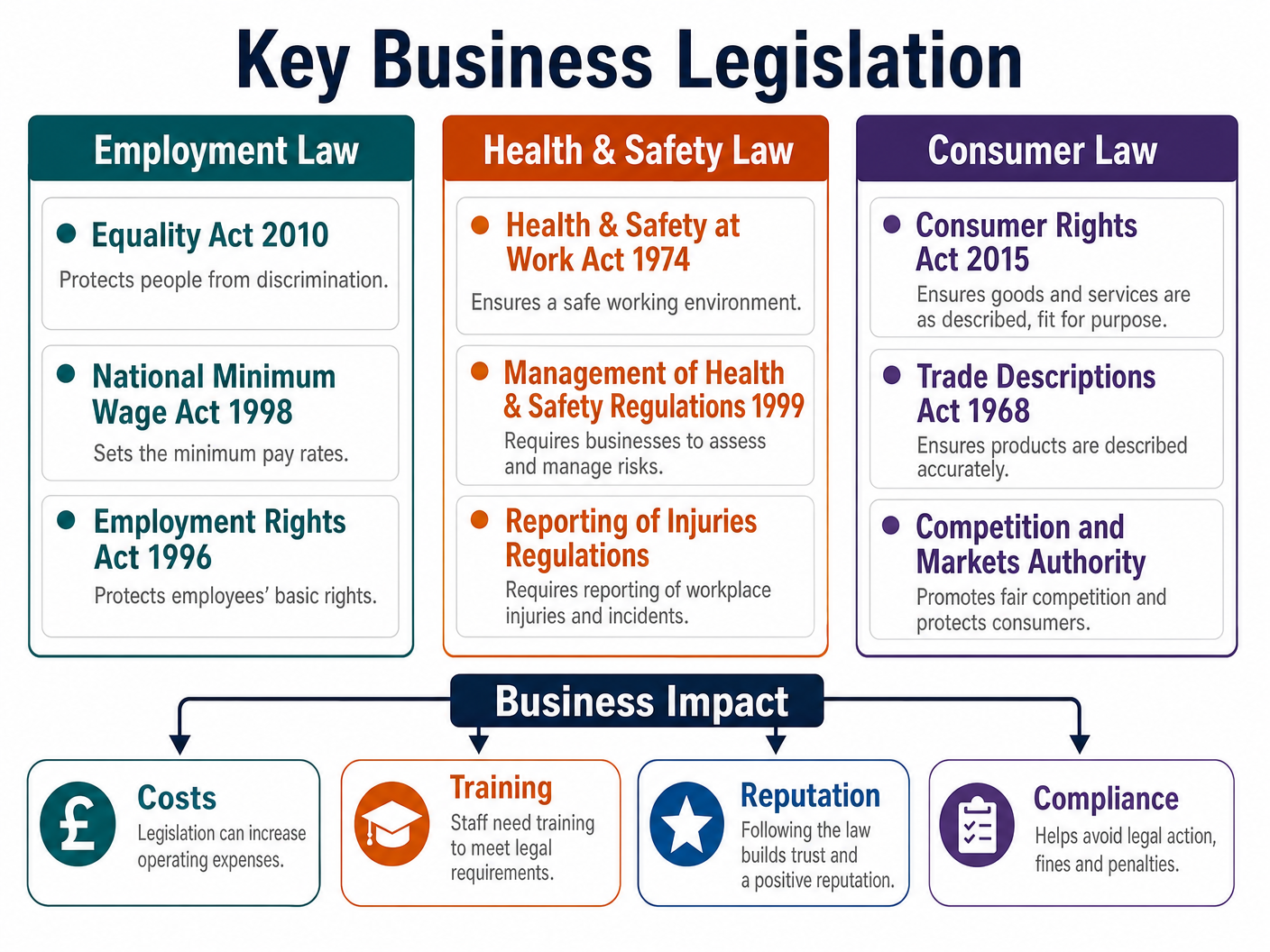
Legislation forms the rulebook that all businesses must follow, directly impacting their costs, operations, and reputation. This guide breaks down the essential Employment, Health & Safety, and Consumer laws you need to know, focusing heavily on how to evaluate their business impact for top exam marks.
- 5 min read
- 2 worked examples
- 3 practice questions
- 6 key terms
Check what you remember
Read the wording for your board, then hide it and explain Legislation in your own words. Rough notes are fine. This is a self-check, with no mark or grade.
Reference: AQA
Laws passed by acts of parliament that businesses must comply with.
Study Notes
Overview
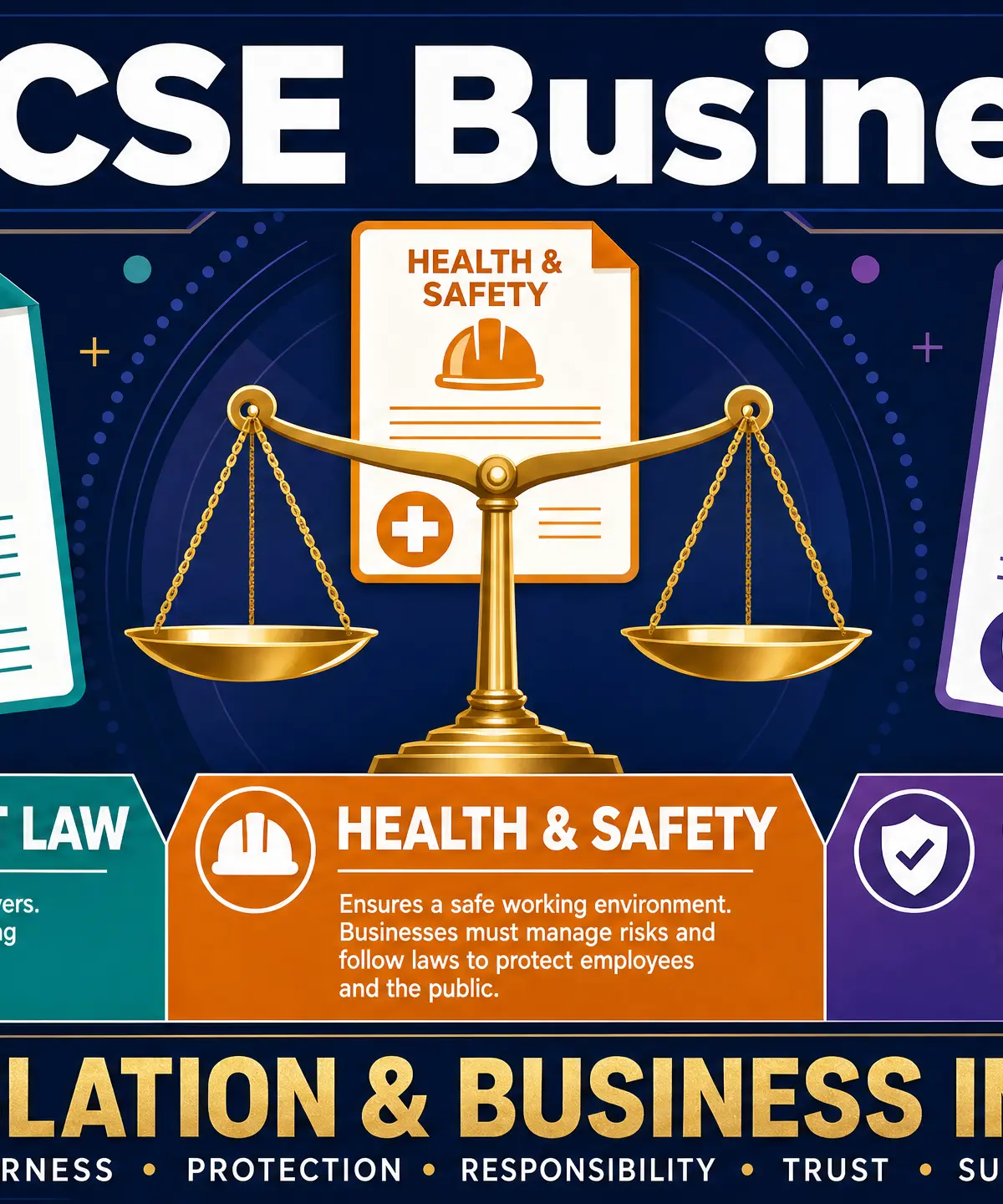
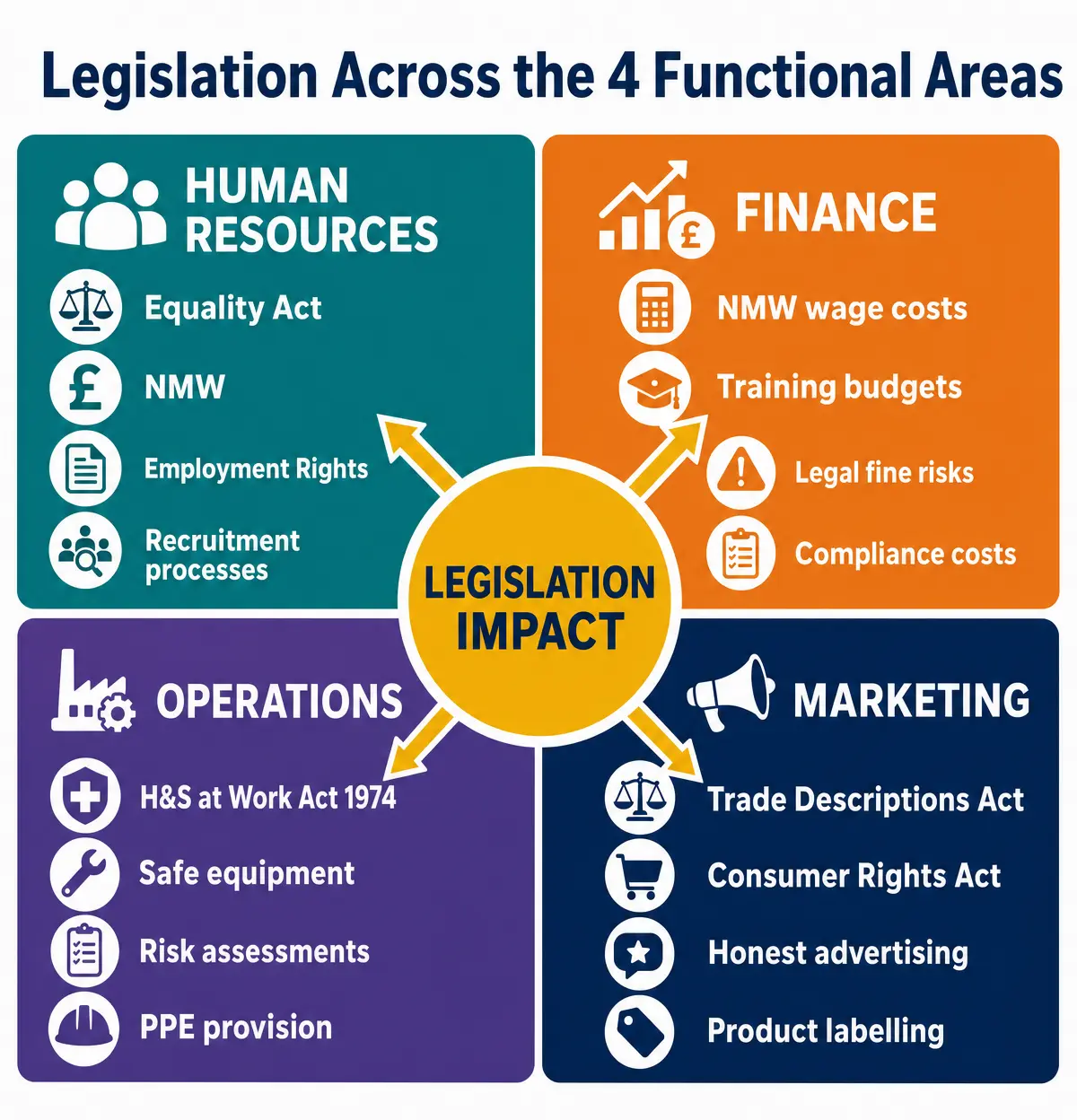
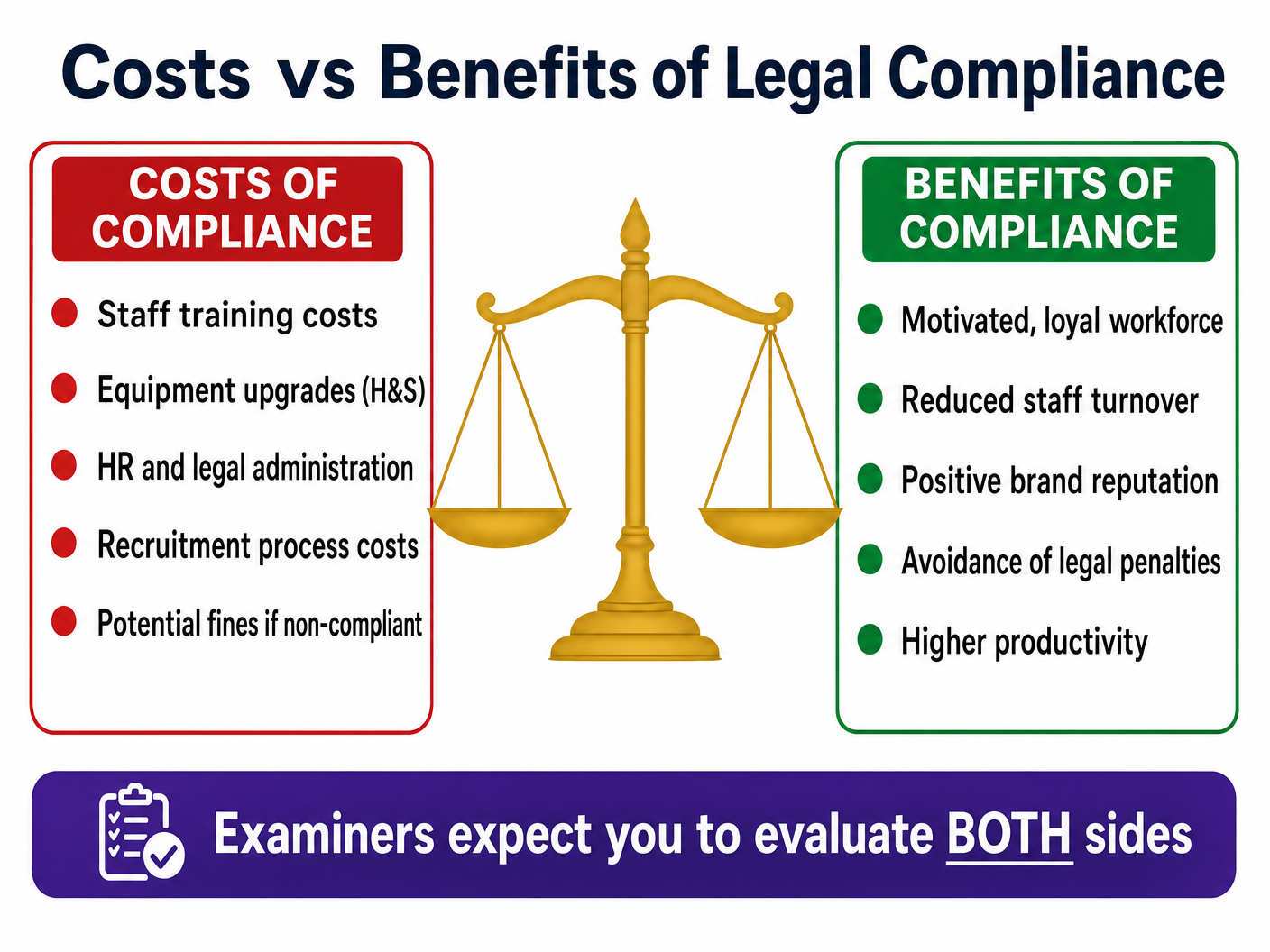
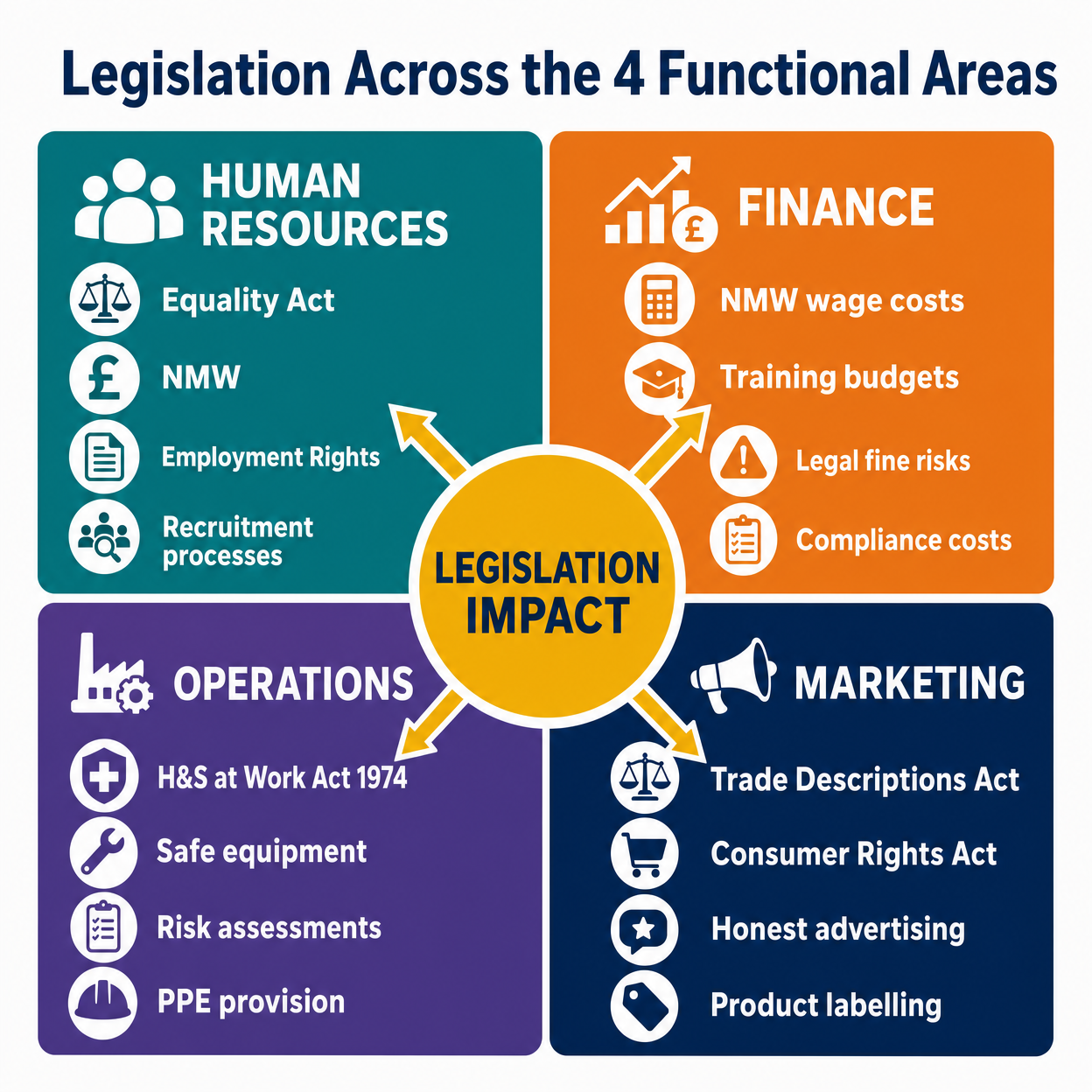
Legislation refers to the laws passed by Parliament that businesses must comply with. For GCSE Business candidates, understanding the law itself is only half the battle; the real marks are awarded for explaining how these laws impact business activity. Examiners consistently reward candidates who can link legal requirements to the four functional areas: Human Resources, Finance, Operations, and Marketing. This topic covers three main pillars: Employment Law, Health and Safety Law, and Consumer Law. You must be able to assess both the costs of compliance (such as training and equipment) and the benefits (such as motivated staff and a strong brand reputation).
Employment Law
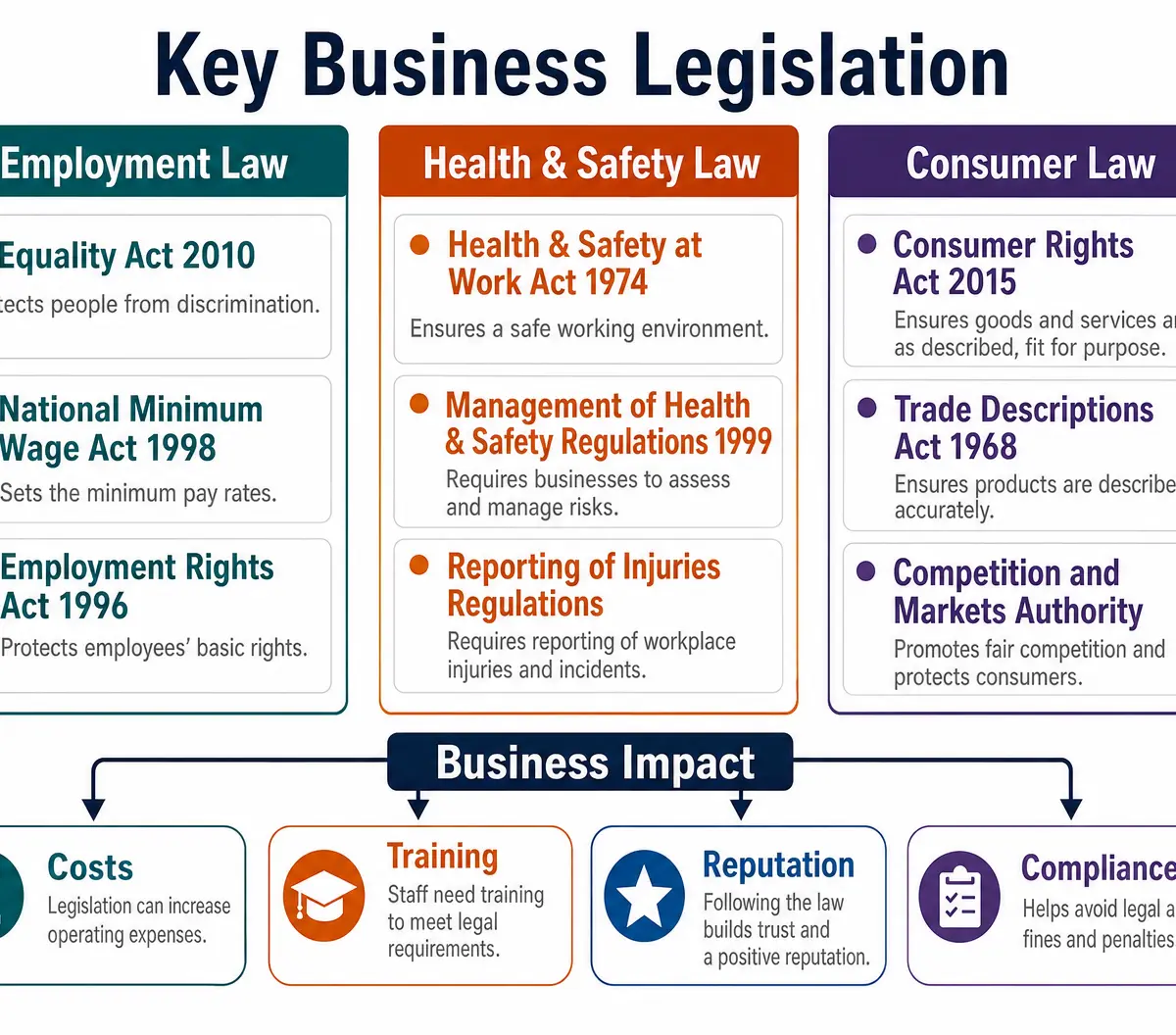
Employment law governs the relationship between employers and their staff. It aims to prevent exploitation and ensure fair treatment.
The Equality Act 2010
What it is: This act legally protects people from discrimination in the workplace and in wider society. It replaced previous anti-discrimination laws with a single Act, making the law easier to understand and strengthening protection in some situations.
Specific Knowledge: It identifies 9 'protected characteristics': age, disability, gender reassignment, marriage and civil partnership, pregnancy and maternity, race, religion or belief, sex, and sexual orientation.
Business Impact:
- Costs: HR departments must invest in training to ensure recruitment is fair. Businesses may need to adapt premises for disabled access.
- Benefits: A diverse workforce can bring new ideas, improve understanding of different customer segments, and boost staff morale.
National Minimum Wage Act 1998 (and National Living Wage)
What it is: Sets the minimum hourly rate of pay that employers are legally obliged to pay their workers. The rate varies depending on the age of the worker and whether they are an apprentice.
Business Impact:
- Costs: Directly increases the wage bill, particularly for businesses in retail, hospitality, or care. This can reduce profit margins or force businesses to raise prices.
- Benefits: Workers are more motivated, which can increase productivity and reduce staff turnover (saving on recruitment costs).
Employment Rights Act 1996
What it is: Sets out the statutory rights of employees, including the right to a written statement of employment particulars, the right to an itemised pay statement, and protection against unfair dismissal.
Health and Safety Law
Health and Safety legislation aims to protect employees, customers, and the general public from harm caused by business activities.
Health and Safety at Work Act 1974 (HASAWA)
What it is: The primary piece of legislation covering occupational health and safety in Great Britain. It places a 'duty of care' on employers to ensure, so far as is reasonably practicable, the health, safety, and welfare at work of all their employees.
Specific Knowledge: Employers must provide safe equipment, safe handling of substances, adequate training, and a written health and safety policy (if they have 5 or more employees).
Business Impact:
- Costs: Businesses must pay for Personal Protective Equipment (PPE), regular risk assessments, and health and safety training.
- Benefits: Fewer accidents mean less disruption to production, lower insurance premiums, and avoidance of massive fines or closure by the Health and Safety Executive (HSE).
Consumer Law
Consumer law protects customers from unfair business practices and unsafe products.
Consumer Rights Act 2015
What it is: Sets out rules relating to the supply of goods, services, and digital content.
Specific Knowledge: Goods must be:
- Of satisfactory quality: Not faulty or damaged.
- Fit for purpose: Do what they are supposed to do.
- As described: Match the description given to the consumer.
Business Impact:
- Costs: Businesses must have quality control systems in place and bear the cost of replacing or refunding faulty goods.
- Benefits: Compliance builds trust and brand loyalty. Satisfied customers are more likely to make repeat purchases.
Trade Descriptions Act 1968
What it is: Makes it an offence for a business to make false or misleading statements about goods or services.
Business Impact: Marketing departments must be highly accurate in their advertising. Breaching this act can lead to criminal prosecution, unlimited fines, and severe reputational damage.
The Examiner's Perspective: Evaluating Compliance
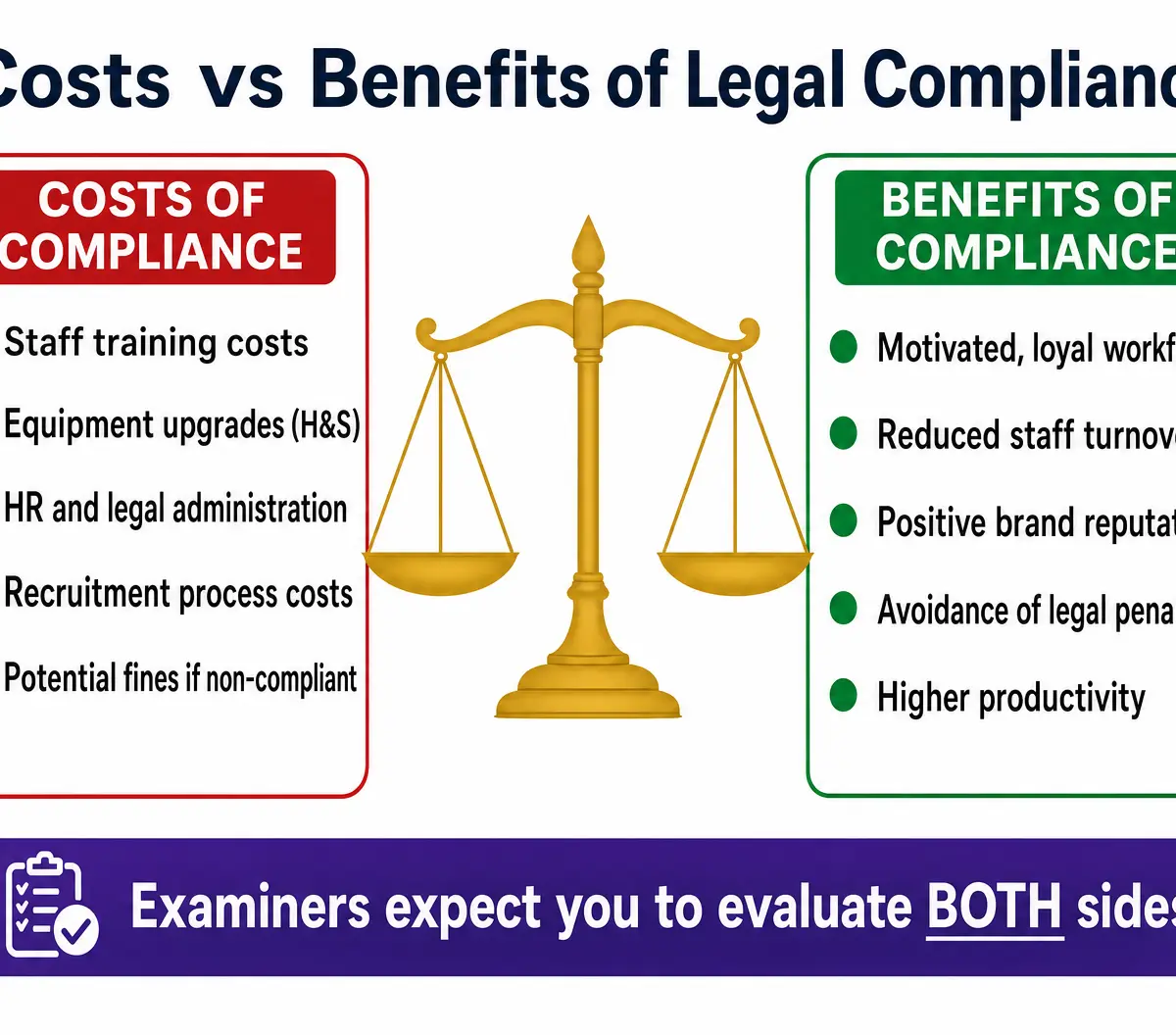
When tackling higher-mark questions (e.g., 6, 9, or 12 marks), you must demonstrate evaluation (AO3). This means weighing up the costs versus the benefits of legislation.
Worked Examples
2 worked examples — open one to explore the question and available guidance.
Practice Questions
Try the question, then reveal an answer plan or example response
State two protected characteristics under the Equality Act 2010. (2 marks)
Hint: Think about the mnemonic: A Dog Got Married...
Explain how the Consumer Rights Act 2015 might affect a business that sells washing machines. (4 marks)
Hint: Mention what the act requires (e.g., fit for purpose) and the consequence for the business (e.g., refunds).
Evaluate the impact of health and safety legislation on a manufacturing business. (12 marks)
Hint: Use the PEEC structure. Discuss the high costs of machinery safety vs the benefits of avoiding HSE fines and keeping staff safe.
Exam technique
How to turn what you know into marks
How to approach the question
Always identify the functional area affected by the legislation before you start writing.
How to structure your answer
- Assess questions
- Cost paragraph -> Benefit paragraph -> Judgement paragraph (Which is more significant and why?).
- Explain questions
- State the impact -> Give a reason why -> Explain the consequence for the business (Cost/Revenue/Profit/Reputation).
Timing
Approximately 1 minute per mark.
Common pitfalls
- Explaining what the law is, but forgetting to explain how it affects the business.
- Listing multiple points without developing them (e.g., saying 'it costs money' without explaining *why* it costs money).
- Failing to provide a conclusion in 'assess' or 'evaluate' questions.
What the command words want
- Explain
- Make a point and develop it with a linked consequence (3-4 marks).
- State/Identify
- Give a simple fact or name an act (1 mark).
- Assess/Evaluate
- Provide a balanced argument with a supported conclusion (6-12 marks).
Watch or listen (optional)
Test your understanding of Legislation
Active recall beats re-reading. Take an instant quiz now to test what you’ve learned and lock it into long-term memory.
7 days Premium · Then the free plan continues · No card, no charge