AQA · GCSE · Business
Course version: 8132 · Version from Sept 2017
Recruitment and selection of employees
Mastering recruitment and selection is crucial for any business to thrive. This study guide unpacks the essential processes of hiring, from writing a job description to evaluating internal versus external recruitment and different employment contracts, giving you the edge for top marks in your GCSE Business exams.
- 5 min read
- 3 worked examples
- 5 practice questions
- 6 key terms
Check what you remember
Read the wording for your board, then hide it and explain Recruitment in your own words. Rough notes are fine. This is a self-check, with no mark or grade.
Reference: AQA
The process of finding and hiring the best-qualified candidate for a job opening.
Study Notes

Overview
Recruitment and selection is the backbone of Human Resources in any successful business. Finding the right people, for the right roles, at the right time is critical. A bad hire can cost a business time, money, and productivity, while a great hire can drive innovation and growth. Examiners expect candidates to not only know the stages of the recruitment process but to evaluate why certain methods are better for specific business scenarios. In this topic, you will explore the six key stages of hiring, compare internal and external recruitment, and analyse the impacts of different employment contracts on both the business and the employee.
Listen to the 10-minute podcast below for a comprehensive overview of this topic from an examiner's perspective:
The Recruitment and Selection Process
Before a business can hire someone, they must follow a structured process to ensure fairness, legality, and effectiveness.
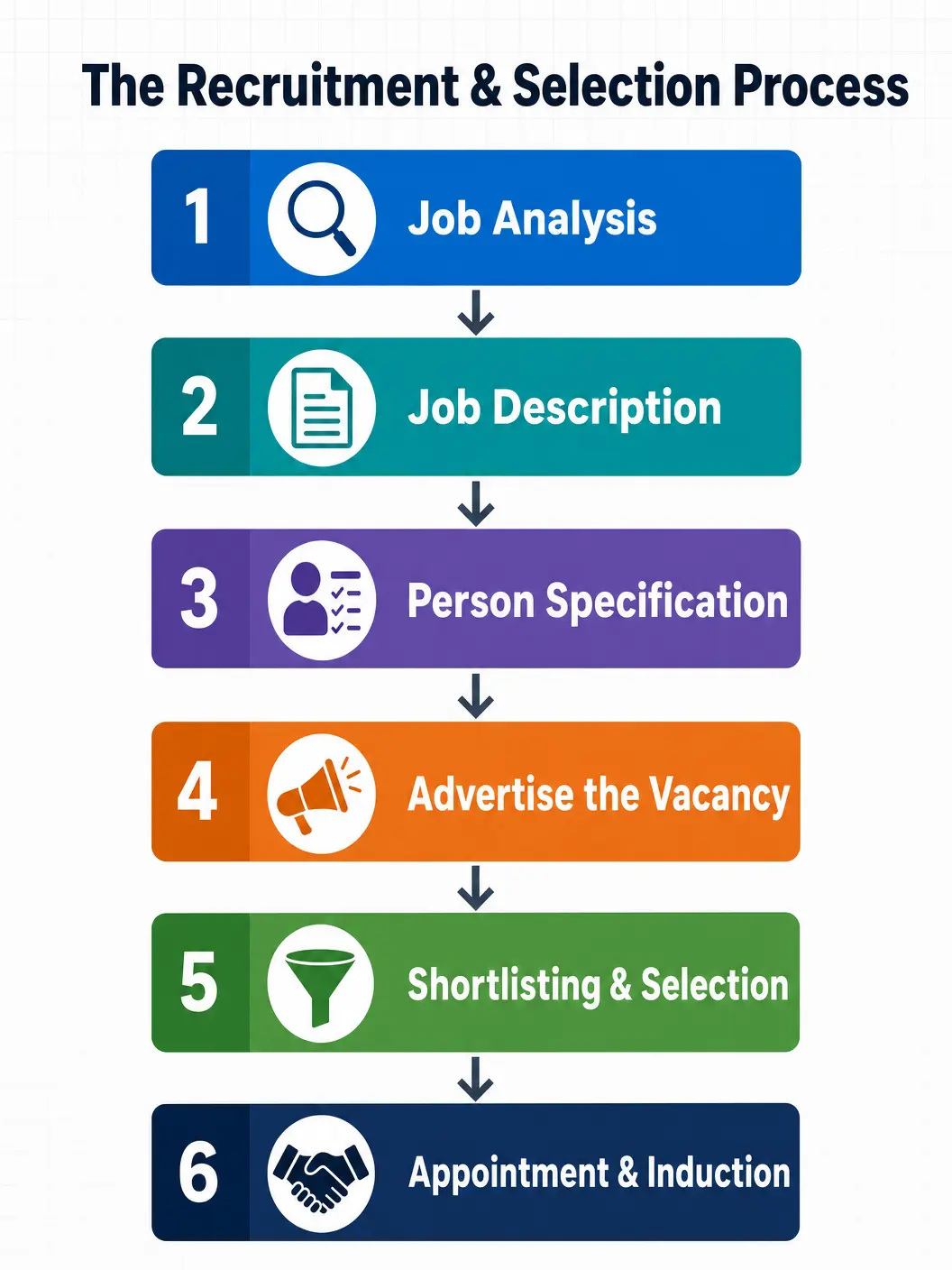
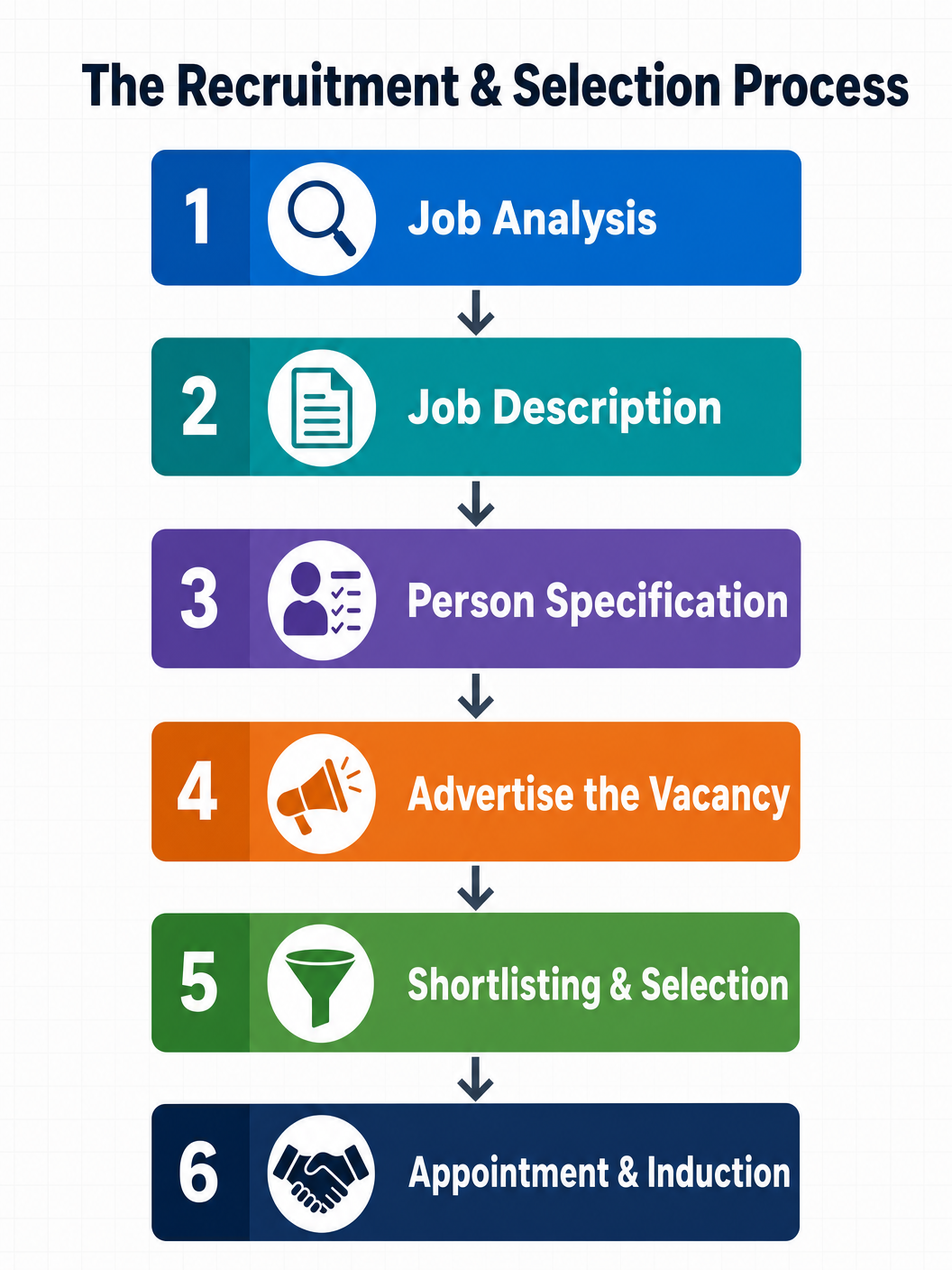
1. Job Analysis
What it is: The business evaluates the vacancy to determine exactly what the role entails and what skills are required.
Why it matters: It forms the foundation. Without knowing what the job is, the business cannot write an accurate job description.
2. Job Description
What it is: A document outlining the duties, responsibilities, location, hours, and pay of the role.
Key exam tip: Remember, a job description is about the JOB, not the person.
3. Person Specification
What it is: A profile of the ideal candidate, detailing the qualifications, skills, and experience needed.
Key exam tip: A person specification is about the PERSON. Examiners frequently test your ability to distinguish between this and the job description.
4. Advertising the Vacancy
What it is: The business decides where to advertise (e.g., local press, national websites, internally) based on the budget and the type of candidate required.
5. Shortlisting and Selection
What it is: Reviewing applications (CVs, application forms) against the person specification to create a shortlist, followed by interviews or assessment centres.
6. Appointment and Induction
What it is: Offering the job, signing the contract, and providing induction training to help the new employee settle in.
Internal vs External Recruitment
One of the most frequently tested areas is deciding where to find candidates. Businesses must weigh up the costs, speed, and need for new skills.

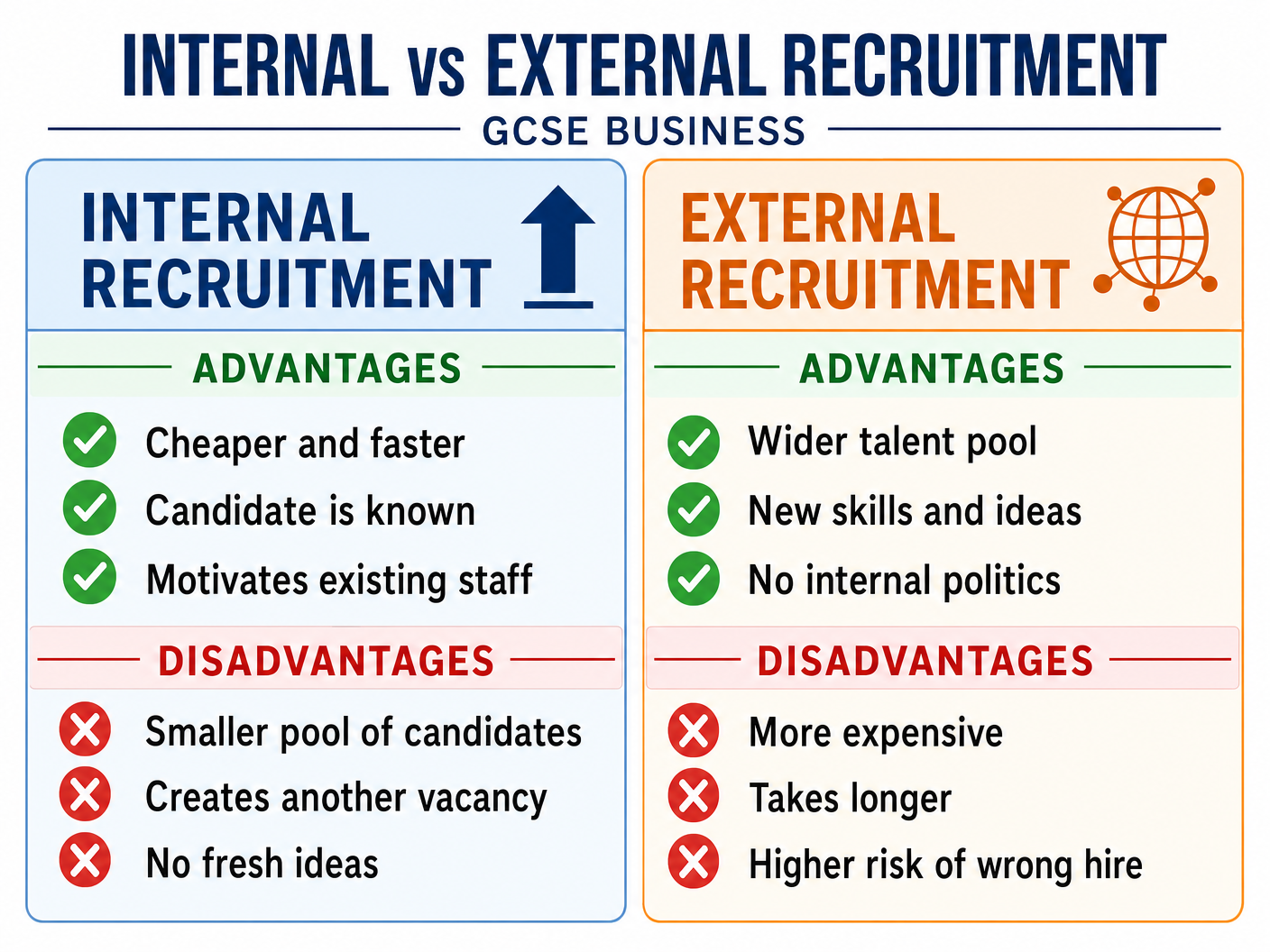
Internal Recruitment
Definition: Filling a vacancy from within the existing workforce (e.g., promotion).
Advantages: Cheaper (no agency fees), faster, candidate is already known (lower risk), motivates existing staff.
Disadvantages: Smaller pool of candidates, creates a vacancy elsewhere, no fresh ideas brought into the business.
External Recruitment
Definition: Filling a vacancy by hiring someone from outside the business.
Advantages: Access to a wider talent pool, brings in new skills and fresh ideas, avoids internal jealousy.
Disadvantages: More expensive (advertising costs), takes longer, higher risk as the candidate is unknown.
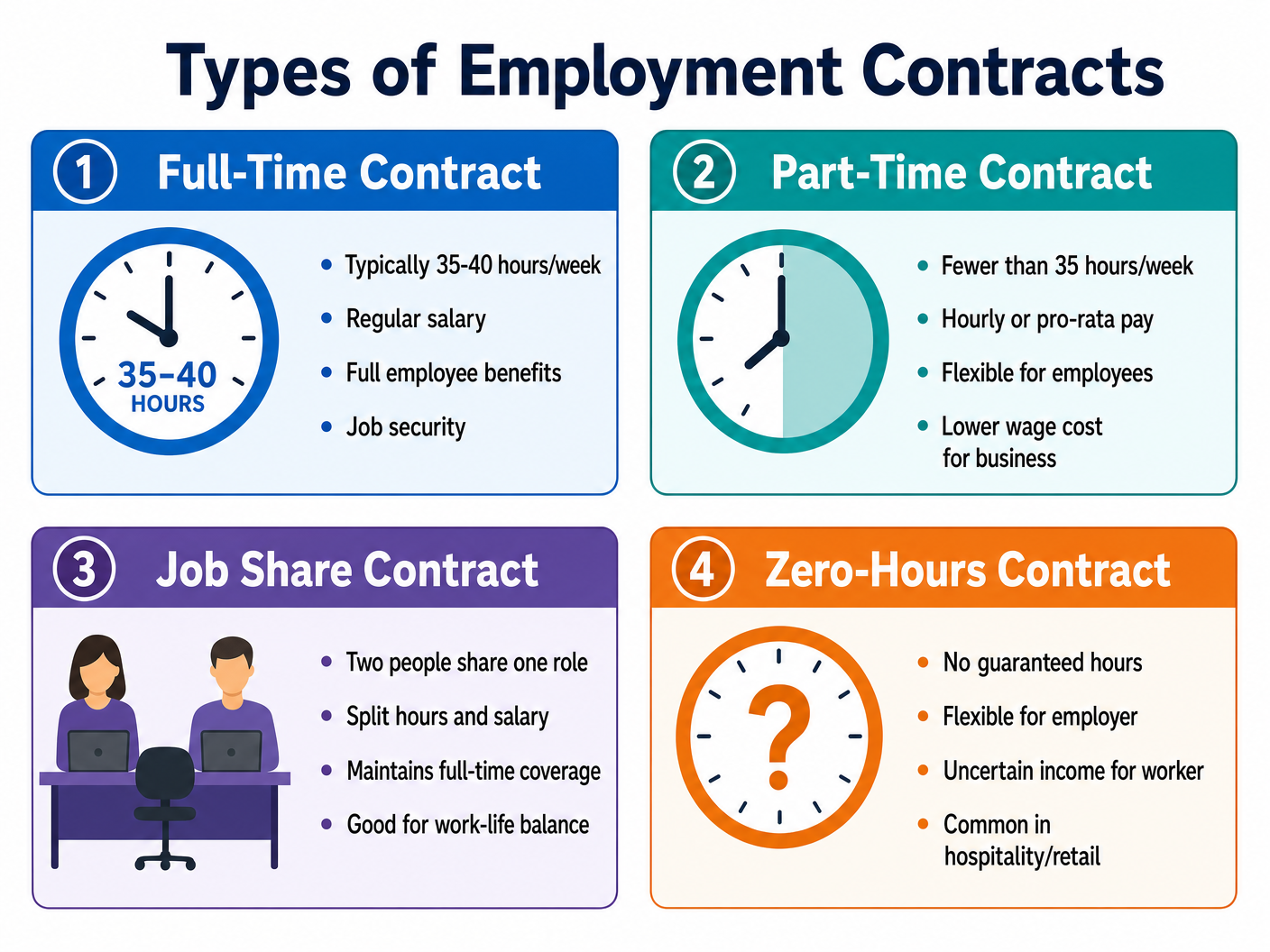
Types of Employment Contracts
Once hired, an employee must sign a contract. The type of contract affects both the business's flexibility and the worker's security.
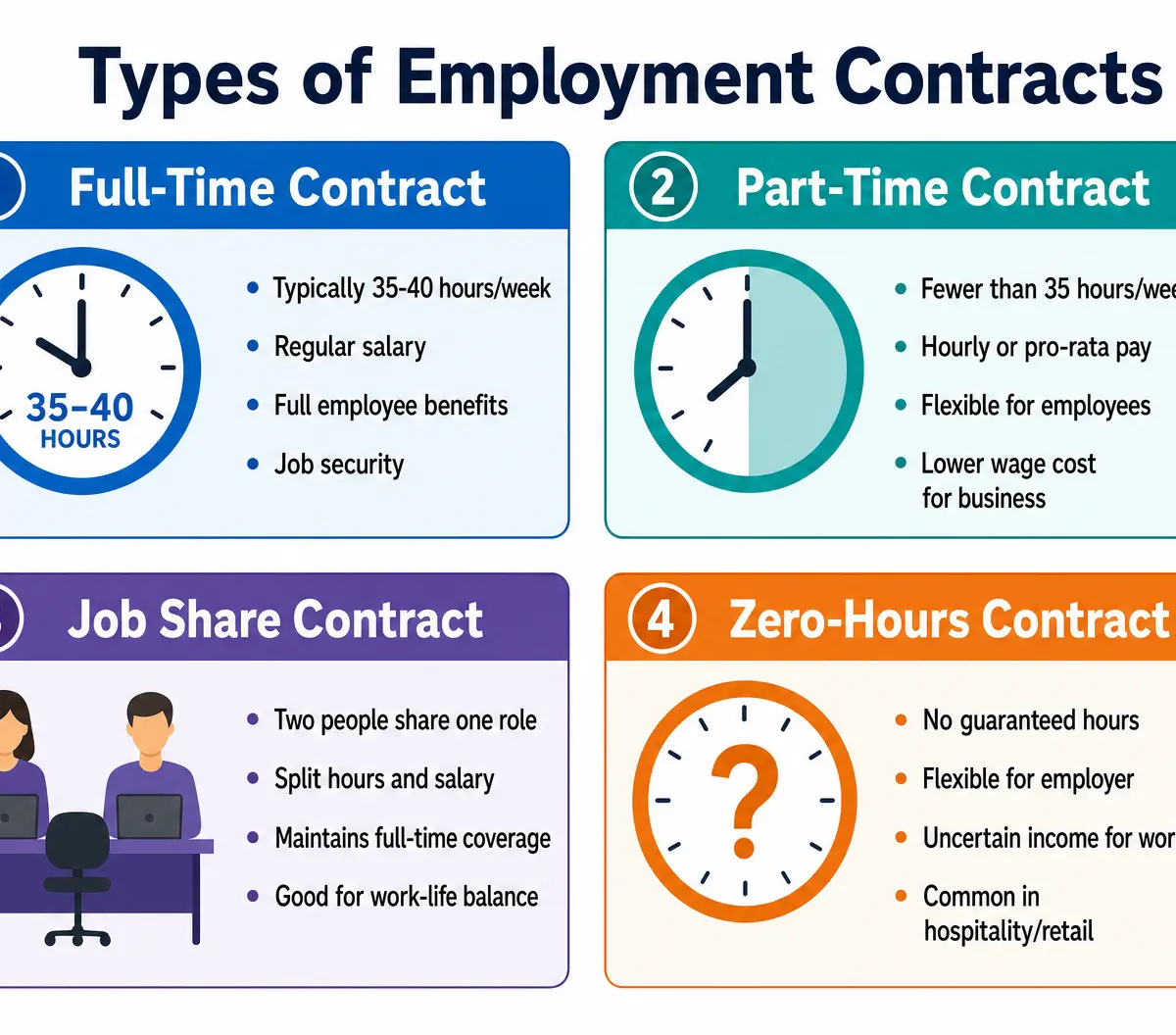
Full-Time Contract
Features: Typically 35-40 hours per week, regular salary, full benefits.
Business Impact: Ensures consistency and commitment from staff, but represents a high fixed wage cost.
Part-Time Contract
Features: Fewer than 35 hours per week.
Business Impact: Lower wage costs and allows the business to cover specific busy periods (e.g., weekends in retail).
Job Share Contract
Features: Two part-time employees share the duties and pay of one full-time role.
Business Impact: Retains experienced staff who want work-life balance and ensures full-time coverage.
Zero-Hours Contract
Features: No guaranteed minimum hours; employees are called in only when needed.
Business Impact: Maximum flexibility and low fixed costs for the business (great for seasonal demand). However, it offers zero financial security for the worker, which can lead to low motivation and high staff turnover.
Worked Examples
3 worked examples — open one to explore the question and available guidance.
Practice Questions
Try the question, then reveal an answer plan or example response
State two stages of the recruitment and selection process. (2 marks)
Hint: Think of the very first step, or the documents that need to be created.
Explain one disadvantage of external recruitment for a business. (3 marks)
Hint: Think about time, cost, or risk.
A growing software company needs a new Lead Developer. They decide to use internal recruitment. Explain one benefit of this decision. (3 marks)
Hint: How does internal recruitment affect the motivation of the current software developers?
Explain two differences between a part-time contract and a full-time contract. (4 marks)
Hint: Think about the number of hours worked and the cost to the business.
A large supermarket chain is looking to hire 50 new checkout staff for the busy Christmas period. Evaluate whether they should use external recruitment. (9 marks)
Hint: Can they find 50 people internally? What are the costs of external recruitment? Weigh them up.
Exam technique
How to turn what you know into marks
How to approach the question
Read the context carefully. If a specific business is mentioned (e.g., 'a small local bakery' or 'a multinational tech firm'), every point you make MUST link back to that specific context.
How to structure your answer
- Explain questions
- Point → Explain (Why/How) → Link (Impact on the business).
- Evaluate questions
- Define key term → Paragraph 1: Contextualised Advantage → Paragraph 2: Contextualised Disadvantage → Conclusion: Justified judgement answering the question.
Timing
Approximately 1 minute per mark, plus 2-3 minutes planning time for 9-mark or 12-mark evaluation questions.
Common pitfalls
- Giving generic answers that do not refer to the business in the case study.
- Confusing Job Description with Person Specification.
- Listing advantages without explaining *why* they are an advantage to the business.
What the command words want
- Analyse
- Show a chain of reasoning (e.g., 'This leads to... which results in...').
- Explain
- Make a point and develop it with a reason or consequence.
- State/Identify
- One sentence or a few words. No explanation needed.
- Evaluate/Discuss
- Look at both sides of the argument and provide a justified conclusion based on the specific business context.
Watch or listen (optional)
Test your understanding of Recruitment and selection of employees
Active recall beats re-reading. Take an instant quiz now to test what you’ve learned and lock it into long-term memory.
7 days Premium · Then the free plan continues · No card, no charge