AQA · GCSE · Business
Course version: 8132 · Version from Sept 2017
Technology
Discover how the digital revolution has transformed modern business operations. This comprehensive guide covers the essential impacts of e-commerce and digital communication, providing the precise knowledge and examples examiners demand for top marks.
- 5 min read
- 3 worked examples
- 5 practice questions
- 6 key terms
Check what you remember
Read the wording for your board, then hide it and explain E-commerce in your own words. Rough notes are fine. This is a self-check, with no mark or grade.
Reference: AQA
The buying and selling of goods and services using the internet.
Study Notes
Overview
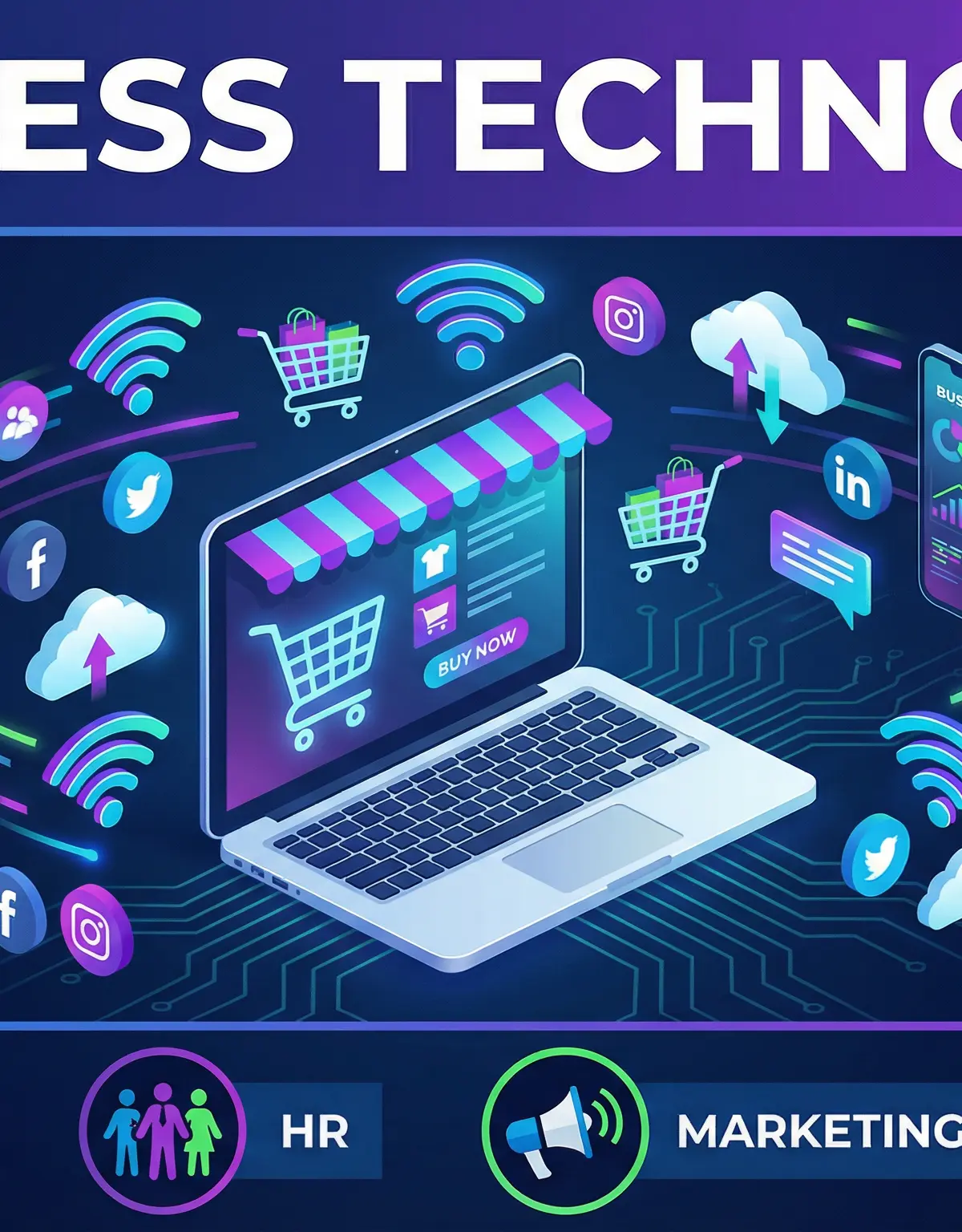
The impact of technology on business is one of the most dynamic and relevant topics in the GCSE Business specification. As the digital landscape evolves, businesses must adapt their use of Information and Communications Technology (ICT) to remain competitive. Examiners expect candidates to understand not just what these technologies are, but how and why they impact the four functional areas of a business: operations, human resources, marketing, and finance.
This topic focuses primarily on two major developments: the rise of e-commerce and the transformation of digital communication. You will need to evaluate the benefits, such as accessing wider markets and reducing costs, against the drawbacks, including increased competition and security vulnerabilities. Remember, top-band answers always use specific, real-world examples to illustrate these impacts.
The Impact of E-Commerce
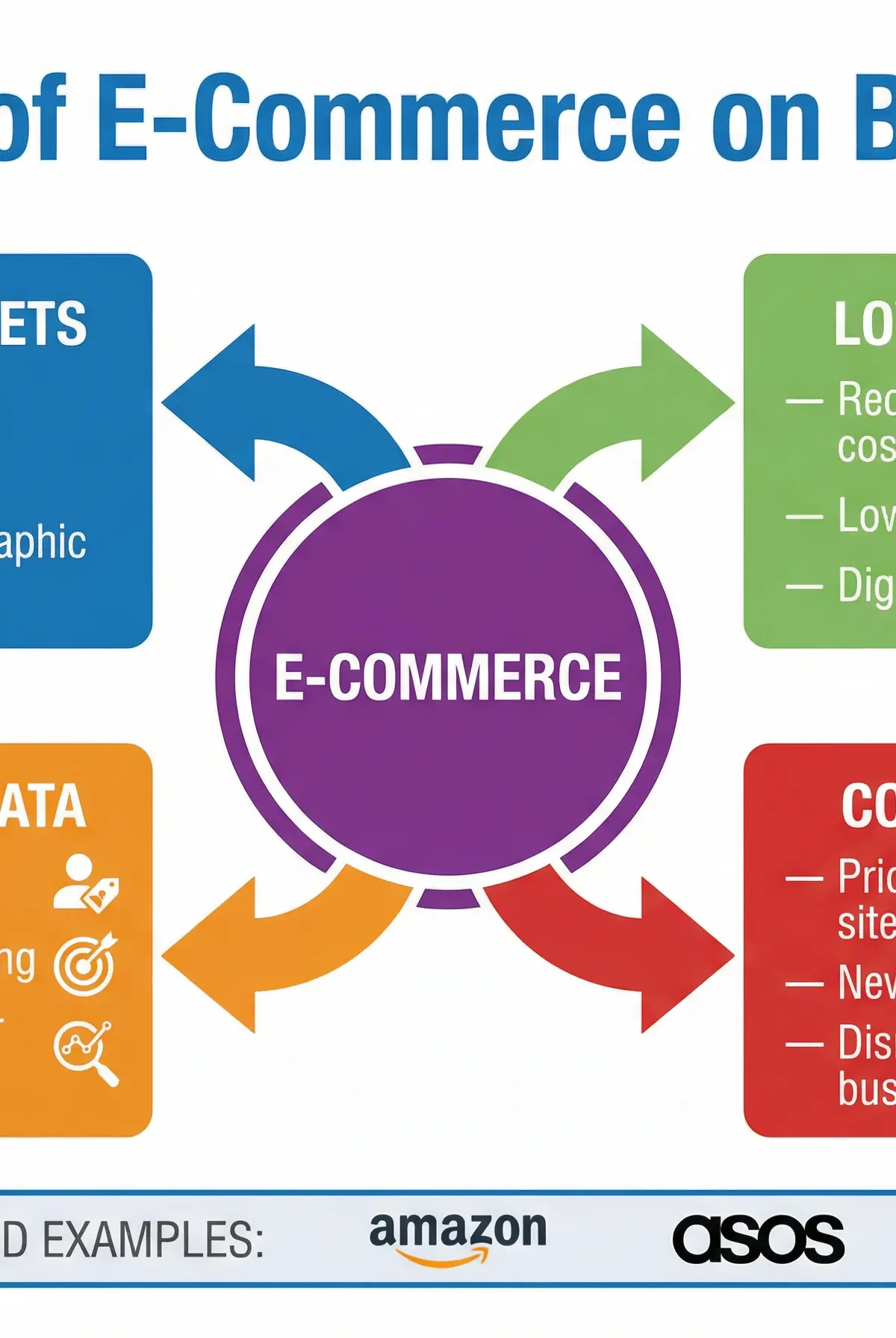
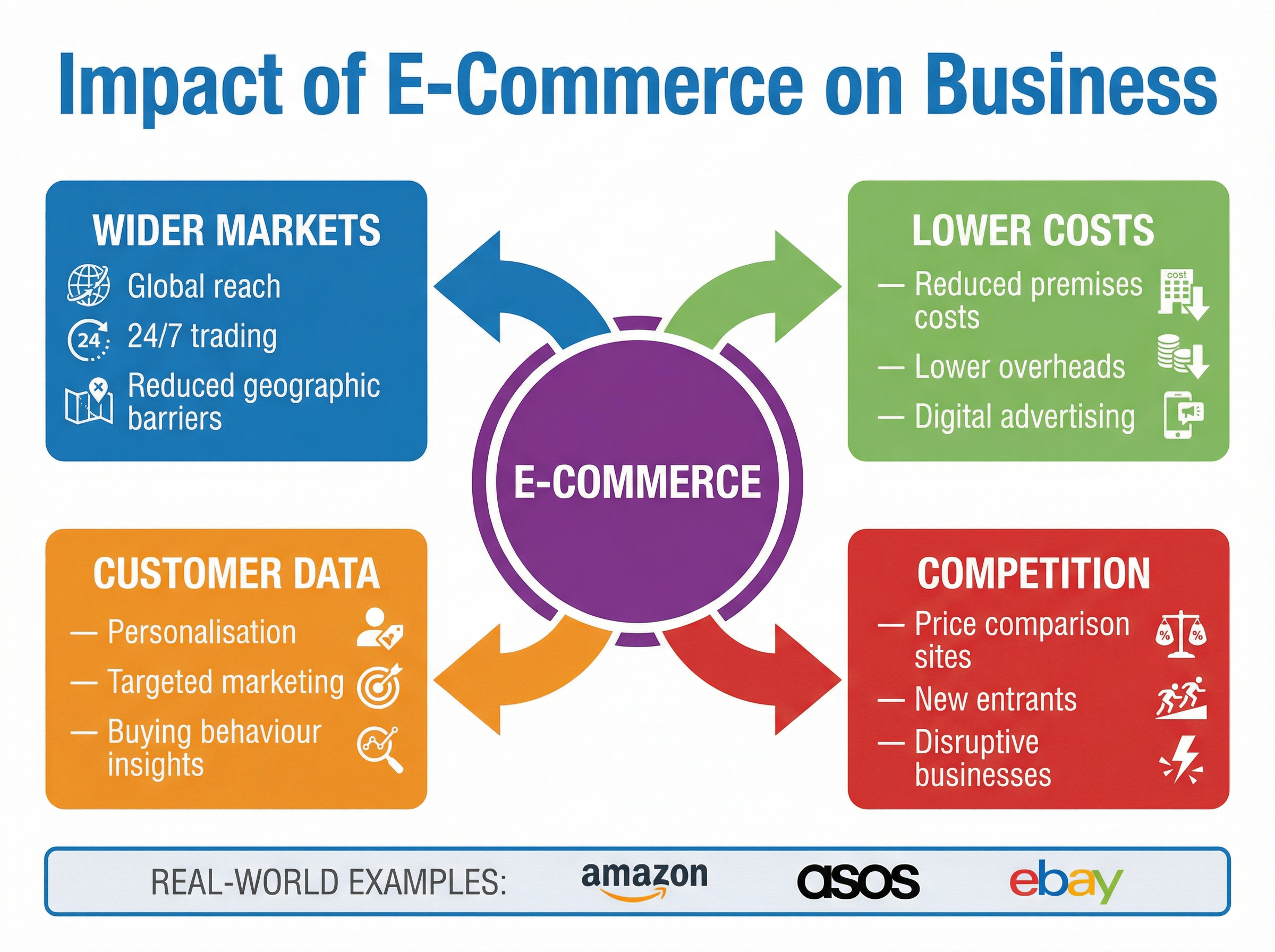
E-commerce refers to the buying and selling of goods and services over the internet. It has fundamentally disrupted traditional retail models.
Accessing Wider Markets
What it means: Businesses are no longer restricted by geography.
Why it matters: A physical store relies on footfall in a specific location. An e-commerce website allows a business to sell to customers nationally or globally, significantly increasing potential sales revenue.
Specific Knowledge: Amazon operates in over 100 countries, demonstrating the global reach of e-commerce.
24/7 Trading
What it means: E-commerce websites do not have opening hours.
Why it matters: Customers can make purchases at any time of day or night, maximizing revenue opportunities and providing convenience that modern consumers expect.
Impact on Costs
What it means: E-commerce can alter a business's cost structure.
Why it matters: Online-only businesses (like ASOS) avoid the high fixed costs associated with physical premises (rent, rates, shop-floor staff). However, they face increased costs in areas like warehousing, logistics, and digital marketing.
The Transformation of Digital Communication
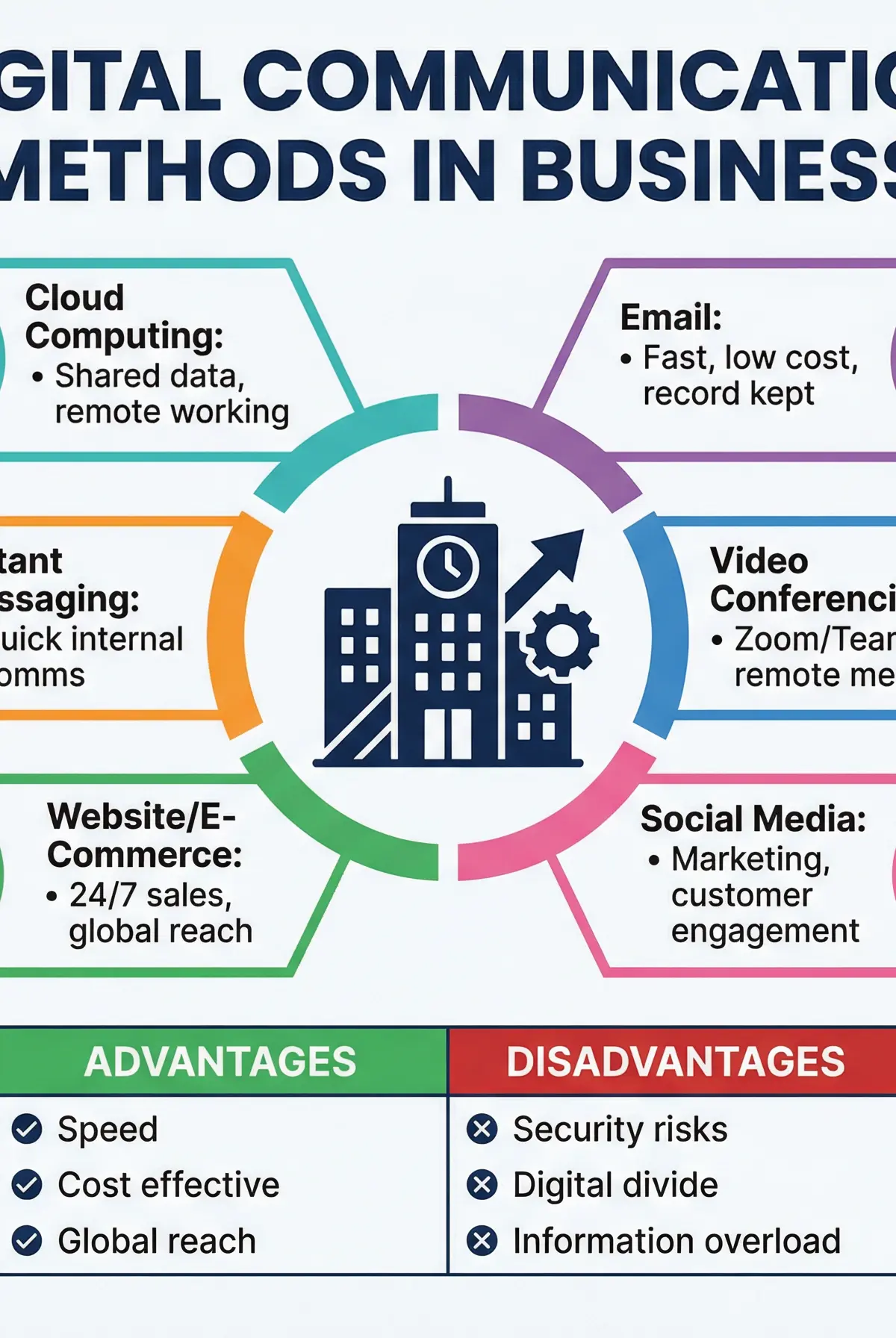
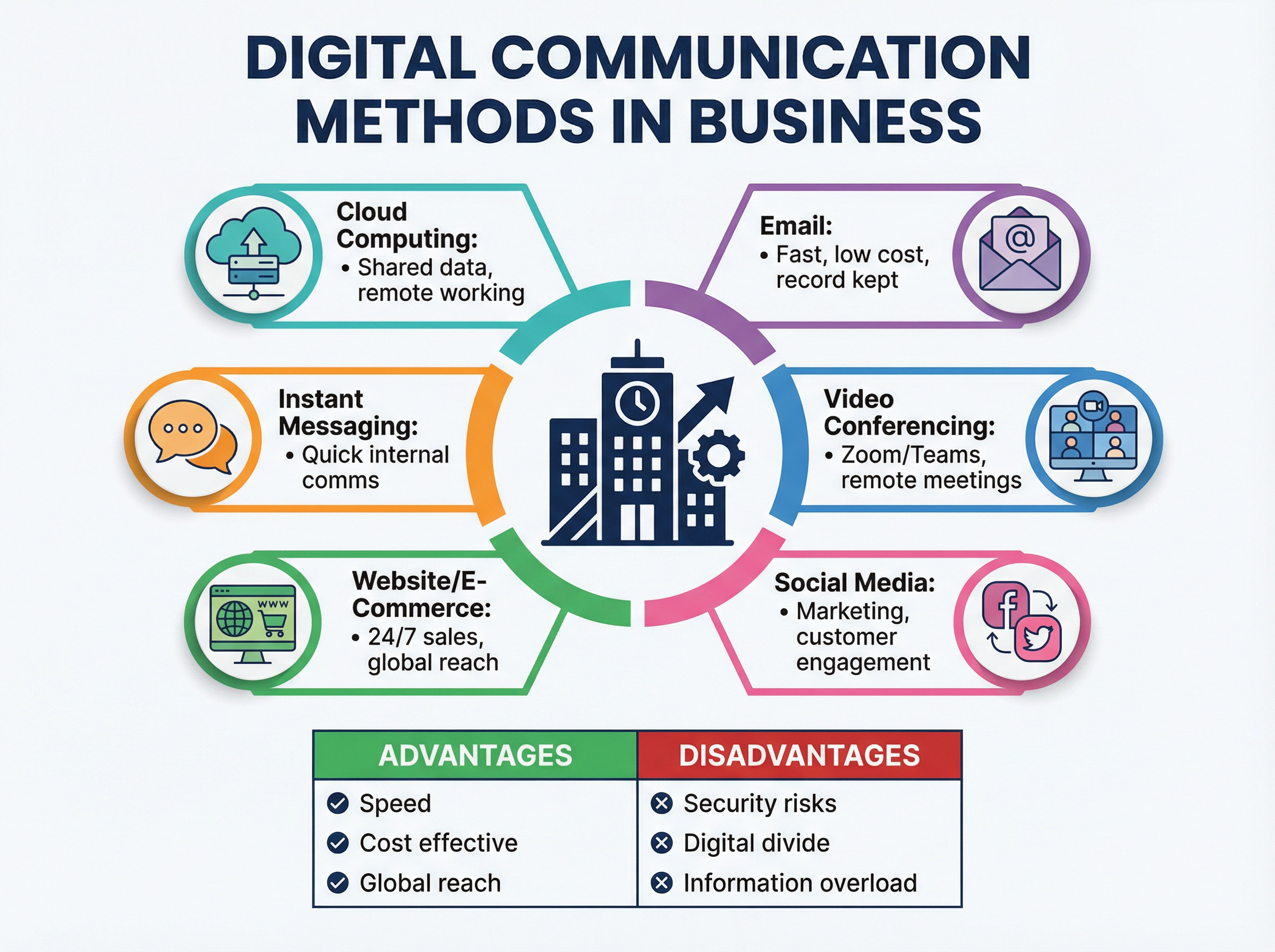
Digital communication has changed how businesses interact with both internal stakeholders (employees) and external stakeholders (customers, suppliers).
Email and Instant Messaging
Role: Fast, low-cost written communication.
Impact: Allows for instant global communication and creates a permanent written record. However, it can lead to information overload for employees.
Video Conferencing
Role: Virtual face-to-face meetings (e.g., Zoom, Microsoft Teams).
Impact: Drastically reduces travel costs and time for businesses. It has enabled the rise of remote and hybrid working models, impacting HR and operations.
Social Media
Role: Platforms like Instagram, TikTok, and LinkedIn used for marketing and customer service.
Impact: Allows businesses to engage directly with target demographics at a relatively low cost. It provides valuable customer data but requires careful management to avoid reputational damage.
Impact on the Four Functional Areas
Examiners often ask how technology affects specific parts of a business.
Operations
Technology automates production (e.g., robotics), improves stock control (e.g., Just-In-Time systems linked to EPOS), and streamlines the supply chain.
Human Resources (HR)
Digital communication enables remote working. E-commerce may shift staffing needs from shop-floor retail assistants to warehouse operatives and web developers. Automation may lead to redundancies.
Marketing
Digital marketing allows for highly targeted advertising based on consumer data. Social media provides new channels for promotion and brand building.
Finance
Cloud-based accounting software and online banking make financial management faster and more accurate. E-commerce requires investment in secure digital payment systems.
Evaluating Technology
When evaluating, always consider the drawbacks. Technology requires significant capital investment. Systems can fail, causing operational downtime. E-commerce exposes businesses to global competition and price comparison sites. Furthermore, cyber security threats (data breaches, hacking) pose severe financial and reputational risks.
Visual Resources
2 diagrams and illustrations
Interactive Diagrams
1 interactive diagram to visualise key concepts
Conceptual Flow Outline
Flowchart showing the impact of technology investment on business outcomes.
Worked Examples
3 worked examples — open one to explore the question and available guidance.
Practice Questions
Try the question, then reveal an answer plan or example response
State two methods of digital communication a business could use to contact its customers. (2 marks)
Hint: Think about how you receive information from brands.
Explain one way that the introduction of e-commerce could affect the marketing function of a business. (3 marks)
Hint: Focus specifically on marketing, not just general sales.
Explain two disadvantages to a business of using e-commerce. (6 marks)
Hint: Think about costs, competition, and security.
Analyse how the use of digital communication might improve the efficiency of a business's operations. (6 marks)
Hint: Connect digital communication specifically to 'efficiency' (speed, cost, waste reduction).
Discuss the impact of changing technology on the human resources of a large manufacturing business. (9 marks)
Hint: You need a balanced argument. How does technology help employees? How might it threaten their jobs or well-being?
Exam technique
How to turn what you know into marks
How to approach the question
How to decode Business GCSE questions: Identify the command word, identify the topic (e.g., e-commerce), and identify the context (e.g., a small startup vs. a multinational).
How to structure your answer
- Essay questions
- Introduction defining key terms → Paragraph on benefits (applied to context) → Paragraph on drawbacks (applied to context) → Justified conclusion weighing up the most important factor.
- Source questions
- Always apply your knowledge to the specific business in the case study. Use names, products, and data from the extract.
- Explain questions
- BLT structure: Because, Leading to, Therefore. Make a point, explain why it happens, and state the consequence for the business.
Timing
Approximately 1 minute per mark, plus planning time for longer questions
Common pitfalls
- Listing technologies without explaining their impact on the business.
- Ignoring the context of the question (e.g., discussing global expansion for a local hairdresser).
- Failing to provide a clear, justified conclusion in 'Evaluate' or 'Discuss' questions.
What the command words want
- Analyse
- Examine the causes and effects in detail, often requiring a balanced view.
- Explain
- Make a point and develop it with a linked reason or consequence.
- State/Identify
- Provide a brief, factual answer. No explanation needed.
- Evaluate/Discuss
- Build a reasoned argument considering both sides, leading to a supported judgement.
Watch or listen (optional)
Test your understanding of Technology
Active recall beats re-reading. Take an instant quiz now to test what you’ve learned and lock it into long-term memory.
7 days Premium · Then the free plan continues · No card, no charge