AQA · GCSE · Business
Course version: 8132 · Version from Sept 2017
The concept of quality
This topic explores the vital concept of quality in business, moving beyond simple 'luxury' to understand how meeting customer expectations drives success. You'll master the critical trade-offs between the costs of implementing Total Quality Management (TQM) and the long-term benefits of enhanced reputation and customer loyalty.
- 5 min read
- 3 worked examples
- 5 practice questions
- 6 key terms
Check what you remember
Read the wording for your board, then hide it and explain Quality in your own words. Rough notes are fine. This is a self-check, with no mark or grade.
Reference: AQA
Meeting or exceeding customer expectations by providing goods or services that are fit for purpose.
Study Notes
Overview
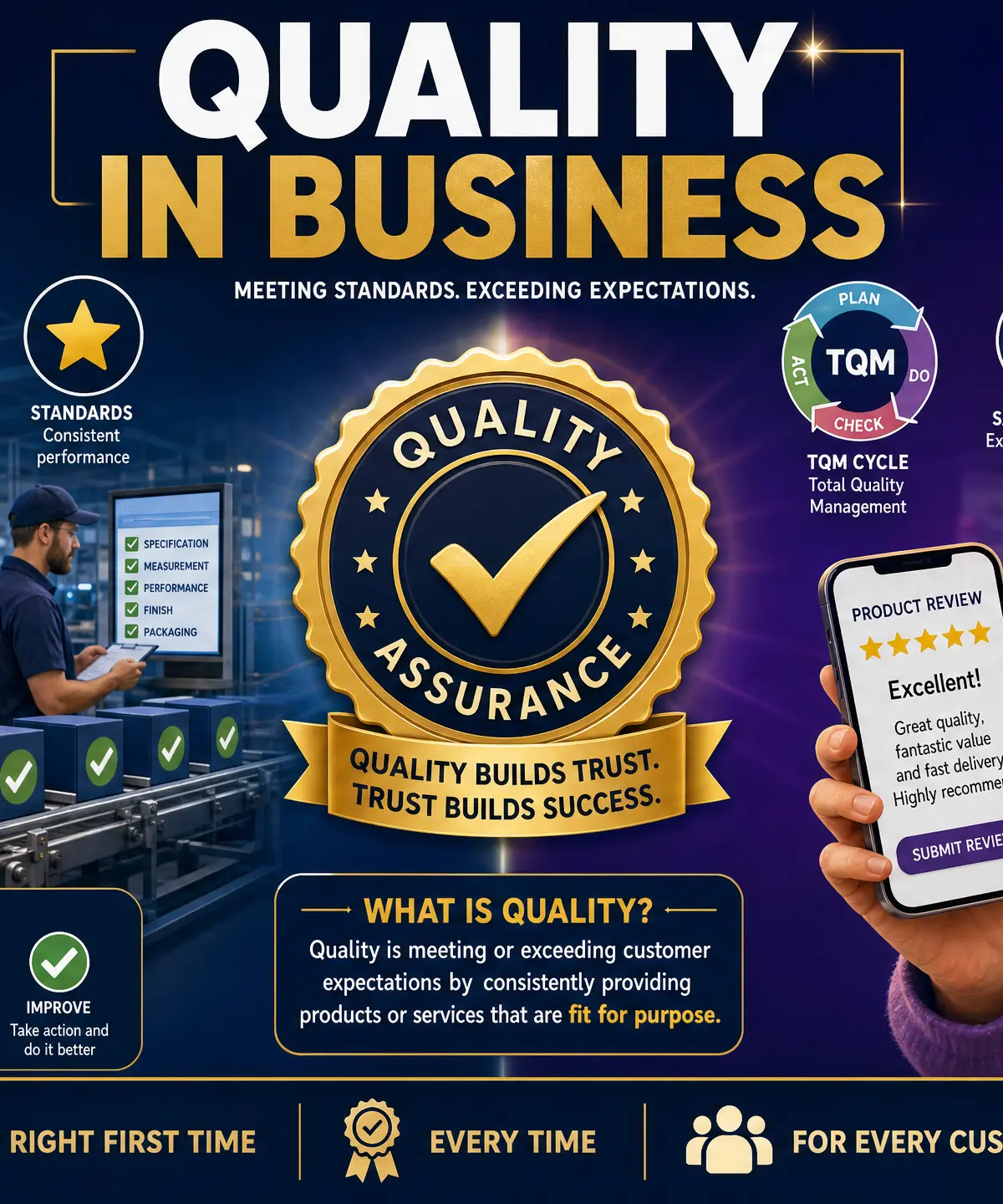
Quality is one of the most critical factors in business success, yet it is frequently misunderstood by candidates. In a business context, quality is not simply about luxury or high price; it is defined as meeting or exceeding customer expectations by consistently providing goods or services that are fit for purpose. Examiners expect candidates to apply this concept across both manufacturing (goods) and service industries. A budget hotel can provide excellent quality if it is clean, safe, and meets the expectations set by its price point. This topic requires you to understand how businesses measure quality problems, the severe consequences of poor quality, and the methods used to maintain consistent standards—most notably Total Quality Management (TQM). Furthermore, you must be able to evaluate the financial trade-offs: balancing the immediate costs of maintaining quality against the long-term benefits of improved reputation, customer loyalty, and the ability to charge a premium price.
Listen to our comprehensive podcast on this topic here:
Understanding Quality Expectations
Quality expectations vary significantly depending on the target market, price point, and nature of the product or service.
Goods (Physical Products)
What customers expect: Reliability, durability, safety, aesthetic appeal, and functionality.
Example: A customer buying a £10 kettle expects it to work safely for a few years. A customer buying a £150 kettle expects premium materials, rapid boiling, and a long warranty.
Examiner Focus: Candidates must recognize that quality is relative. The £10 kettle is 'high quality' if it consistently meets the expectations of the budget-conscious consumer.
Services (Non-Physical)
What customers expect: Timeliness, staff courtesy, knowledge, cleanliness, and consistency.
Example: A haircut appointment starting on time with a polite stylist.
Examiner Focus: A common error is applying quality concepts exclusively to manufacturing. Ensure you can discuss quality in the context of service businesses like restaurants, banks, or airlines.
Identifying and Measuring Quality Problems
Businesses cannot improve what they do not measure. They use several methods to identify quality issues:
- Customer Complaints: Direct feedback highlighting areas where expectations were not met.
- Returns and Refunds: A high rate of returned goods strongly indicates a quality failure.
- Defect Rates: The percentage of products that fail to meet the required standard during production.
- Mystery Shoppers: Used primarily in service industries to objectively assess customer experience.
Consequences of Quality Issues
When quality falls below expectations, the consequences for a business can be severe and far-reaching:
- Customer Dissatisfaction: Leads to lost sales as customers switch to competitors.
- Damaged Reputation: Negative word-of-mouth and poor online reviews can deter new customers.
- Product Recalls: Recalling defective products is enormously expensive and highly public.
- Legal Action: If poor quality results in injury or breaches consumer protection laws.
- Wasted Resources: Scrapping defective products wastes raw materials and labour time.
Methods of Maintaining Consistent Quality
Quality Control vs. Quality Assurance
- Quality Control (QC): Inspecting products at the end of the production process to identify and remove defects. It is a reactive approach.
- Quality Assurance (QA): Building quality into every stage of the production process to prevent defects from occurring in the first place. It is a proactive approach.
Total Quality Management (TQM)
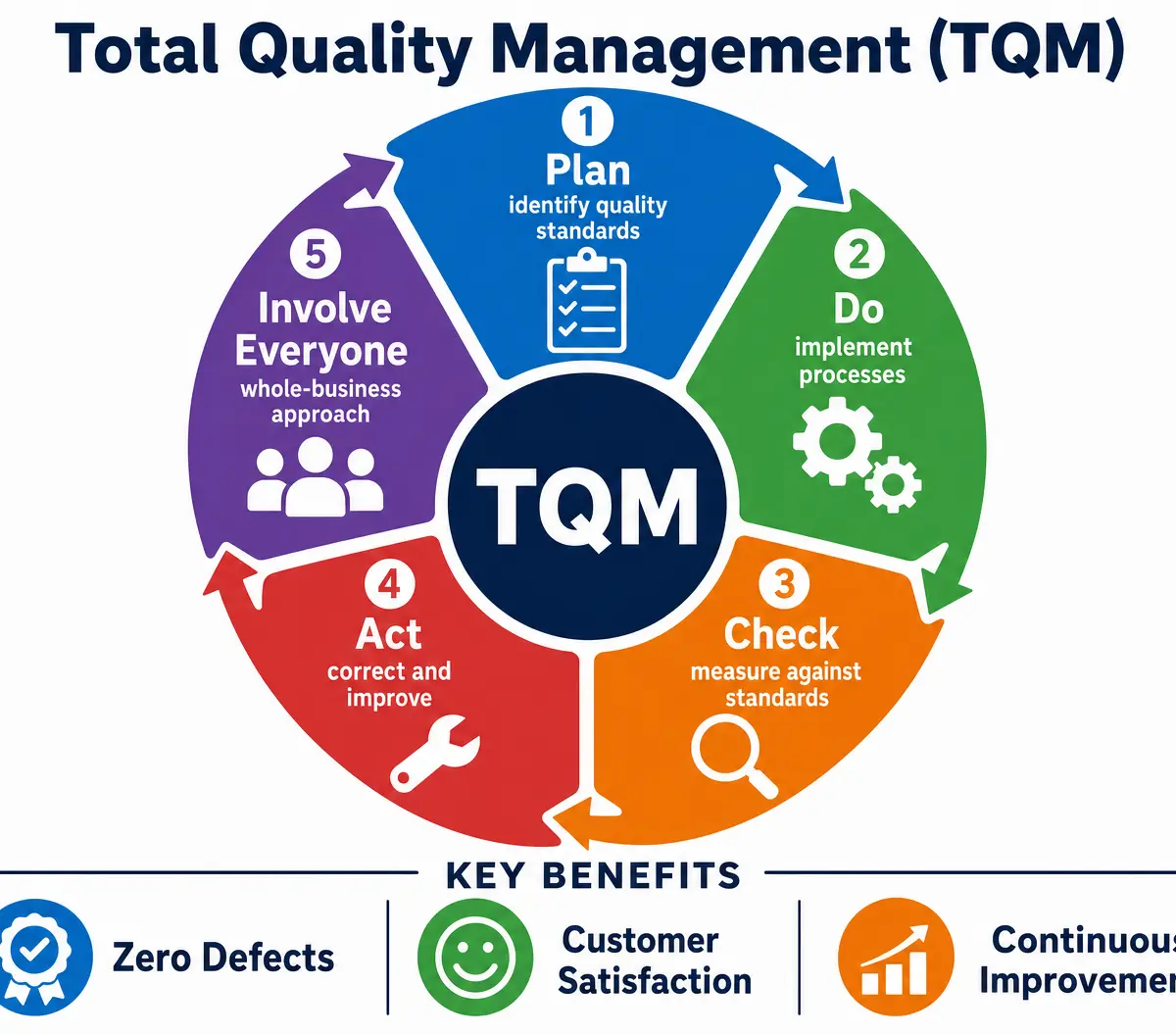
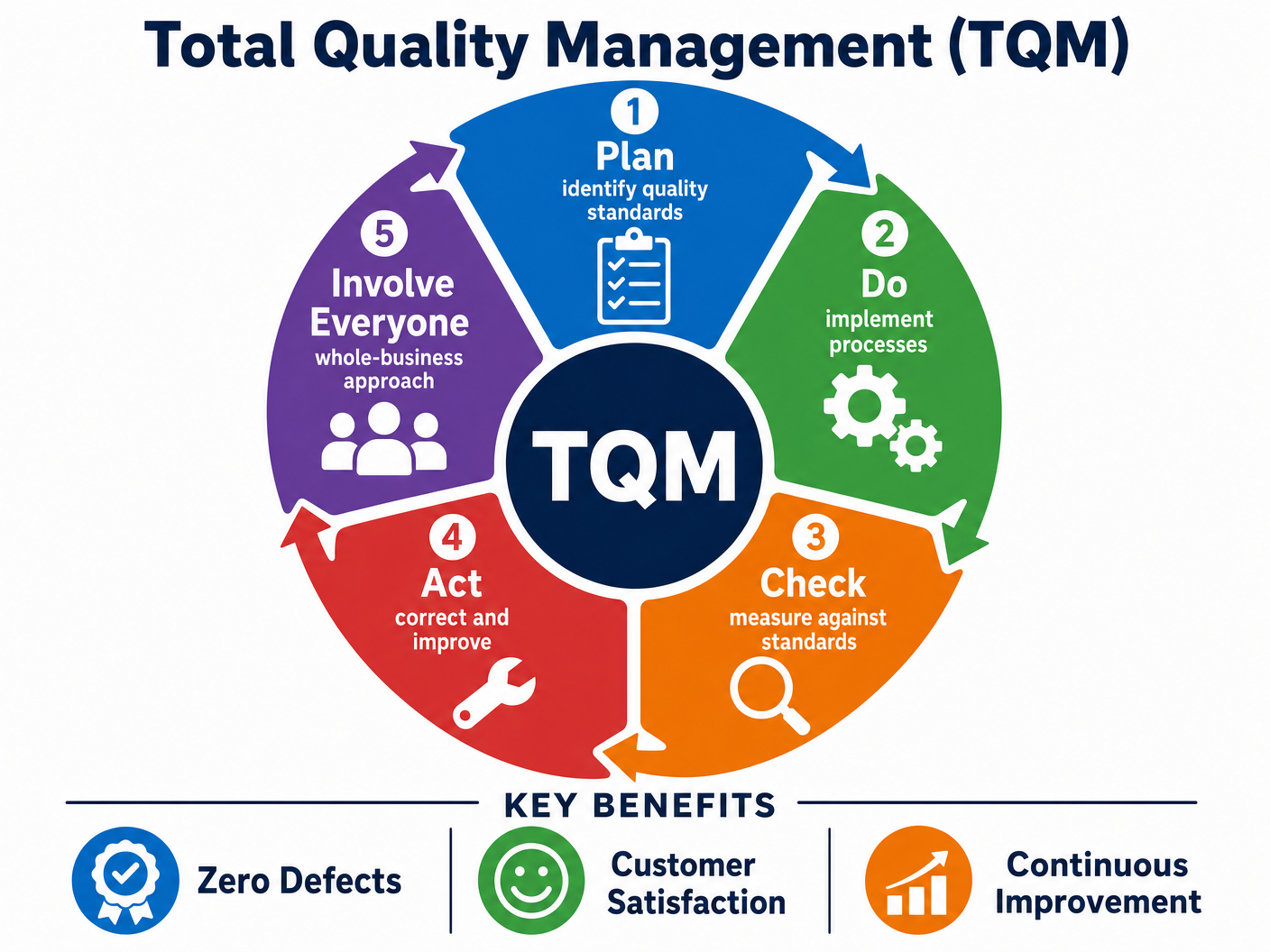
TQM is a specific form of Quality Assurance. It is a whole-business approach where quality is the responsibility of every single employee, not just an inspection department.
Key Features of TQM:
- Continuous Improvement: Always seeking ways to do things better (Kaizen).
- Zero Defects: The goal is to get things right first time, every time.
- Employee Involvement: Empowering staff to identify problems and suggest solutions.
- Customer Focus: Every process is designed with the end customer in mind.
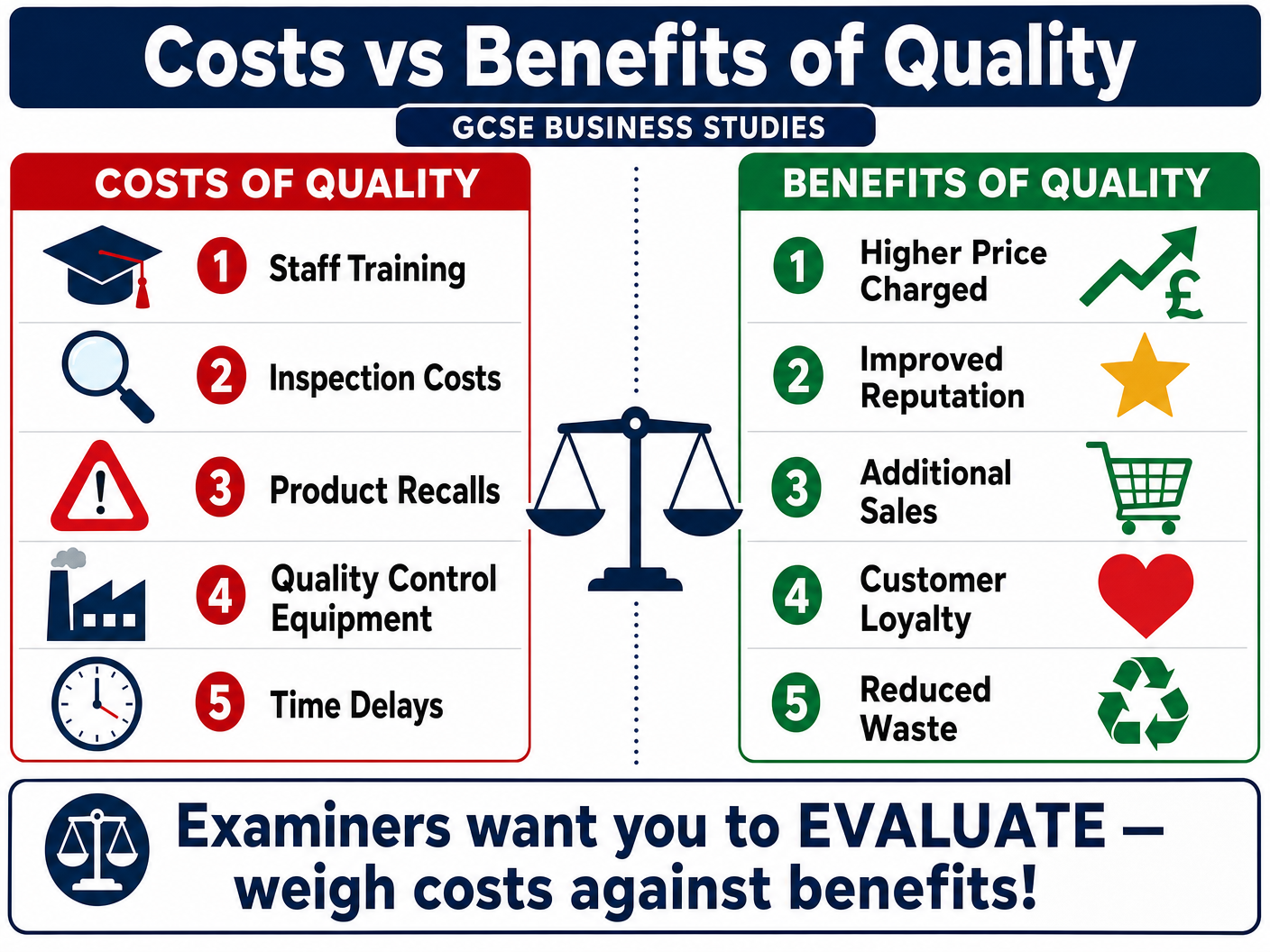
The Trade-Off: Costs vs. Benefits of Quality
Examiners frequently set evaluation questions requiring candidates to weigh the costs of implementing quality systems against the benefits.
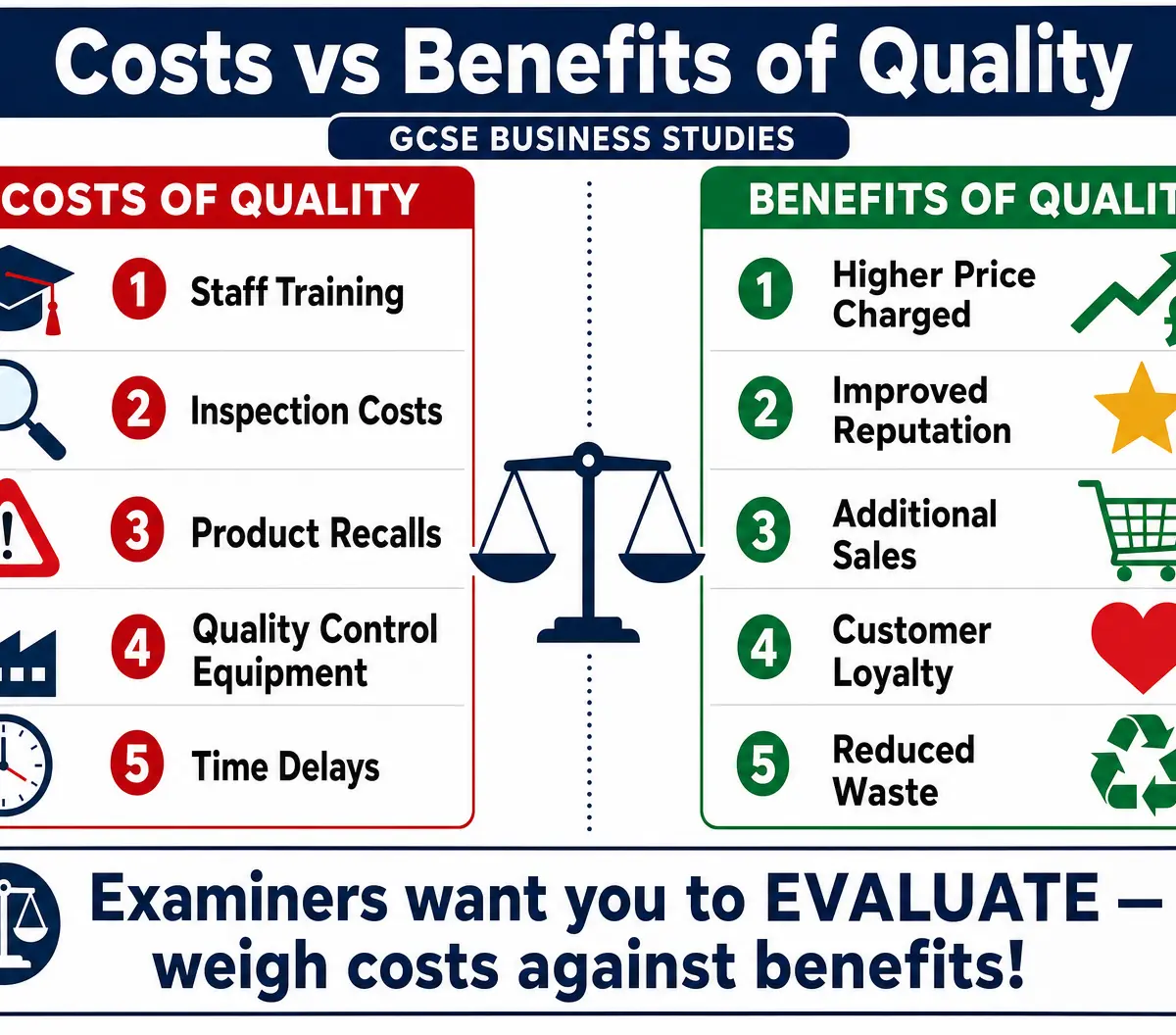
Costs of Maintaining Quality
- Staff Training: Significant investment is required to train all employees in TQM principles.
- Inspection Costs: Purchasing specialized equipment or employing quality inspectors.
- Time Delays: Implementing rigorous quality checks can slow down production.
- System Implementation: The initial cost of setting up new quality assurance processes.
Benefits of Maintaining Quality
- Improved Reputation: Builds brand trust and positive word-of-mouth.
- Customer Loyalty: Satisfied customers return, providing a steady stream of revenue.
- Premium Pricing: High-quality perception allows a business to charge a higher price, increasing profit margins.
- Reduced Waste: Getting it right first time means fewer scrapped materials and less time spent reworking products.
- Competitive Advantage: Superior quality can differentiate a business in a crowded market.
Visual Resources
2 diagrams and illustrations
Interactive Diagrams
1 interactive diagram to visualise key concepts
Conceptual Flow Outline
The flow of quality expectations and their business impacts.
Worked Examples
3 worked examples — open one to explore the question and available guidance.
Practice Questions
Try the question, then reveal an answer plan or example response
Explain how poor quality could affect the human resources department of a business. (3 marks)
Hint: Think about how employees feel when customers are constantly complaining.
A local restaurant has received several negative online reviews complaining about cold food and slow service. Recommend whether the restaurant should introduce Total Quality Management (TQM) or rely on customer complaints to fix the issue. Justify your answer. (9 marks)
Hint: Evaluate the proactive nature of TQM against the reactive nature of waiting for complaints, considering the specific context of a restaurant.
State two ways a business can measure quality. (2 marks)
Hint: Think about data a business can collect from customers or production.
Explain one benefit to a business of maintaining high quality. (3 marks)
Hint: Link high quality to customer behaviour and then to revenue.
Explain how implementing TQM could lead to a reduction in costs for a manufacturing business. (3 marks)
Hint: Think about the 'zero defects' aim of TQM.
Exam technique
How to turn what you know into marks
How to approach the question
Always look for the context in the question. If it's about a service (e.g., a hotel), do not talk about manufacturing defects.
How to structure your answer
- Explain questions
- State a point, explain how it happens, and state the business effect (Point-Explain-Effect).
- Evaluate questions
- Define the concept -> Argue the benefits in context -> Argue the costs/drawbacks in context -> Write a justified conclusion weighing both sides.
Timing
Approximately 1 minute per mark.
Common pitfalls
- Failing to distinguish between the costs and benefits of maintaining quality.
- Confusing TQM with basic Quality Control.
- Struggling to apply the concept of quality to service-based businesses.
What the command words want
- Explain
- Requires linked strands of reasoning. Use connectives like 'because', 'leading to', 'therefore'.
- State/Identify
- Short, factual answers. No explanation needed.
- Evaluate/Justify
- Requires a balanced argument and a final judgement based on the evidence presented.
Watch or listen (optional)
Test your understanding of The concept of quality
Active recall beats re-reading. Take an instant quiz now to test what you’ve learned and lock it into long-term memory.
7 days Premium · Then the free plan continues · No card, no charge