AQA · GCSE · Business
Course version: 8132 · Version from Sept 2017
The elements of the marketing mix: price, product, promotion and place (4Ps)
Master the Marketing Mix (4Ps) to understand how businesses strategically combine Price, Product, Promotion, and Place to achieve their objectives. This integrated framework is essential for analysing how companies respond to market changes and outmanoeuvre competitors.
- 4 min read
- 3 worked examples
- 5 practice questions
- 6 key terms
Check what you remember
Read the wording for your board, then hide it and explain Marketing Mix in your own words. Rough notes are fine. This is a self-check, with no mark or grade.
Reference: AQA
The combination of product, price, promotion, and place that a business uses to meet customer needs.
Study Notes
Overview
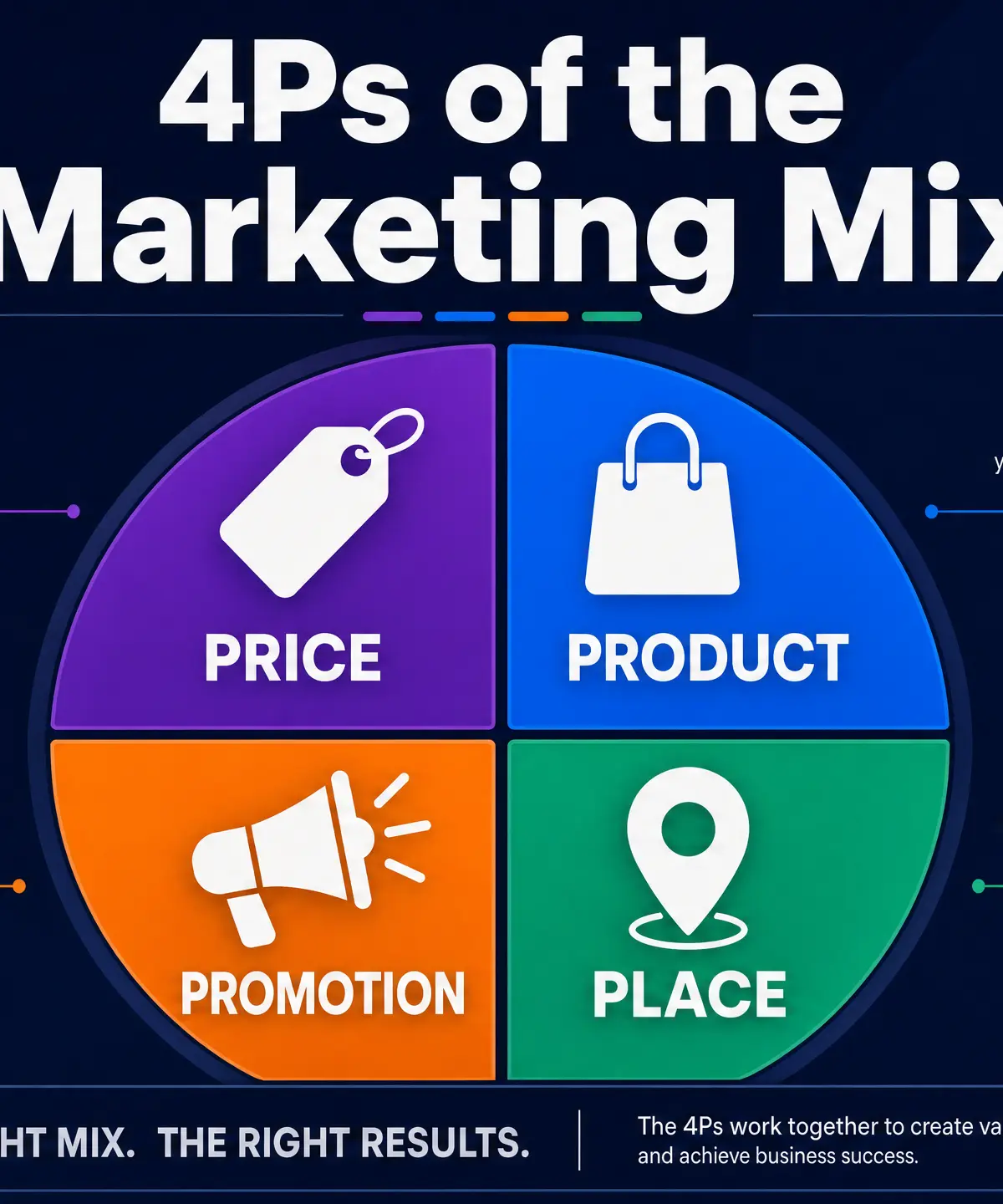
The marketing mix, commonly known as the 4Ps, is the foundation of business strategy. It represents the combination of decisions a business makes about its Product, its Price, how it Promotes that product, and where it sells it (Place). Examiners frequently test your ability to understand that these elements do not operate in isolation; they must work together as an integrated strategy to meet customer needs and achieve business objectives. For instance, a premium pricing strategy must be supported by a high-quality product, exclusive distribution channels, and sophisticated promotion.
The Four Elements of the Marketing Mix
Product
Definition: The good or service the business is selling to meet customer needs.
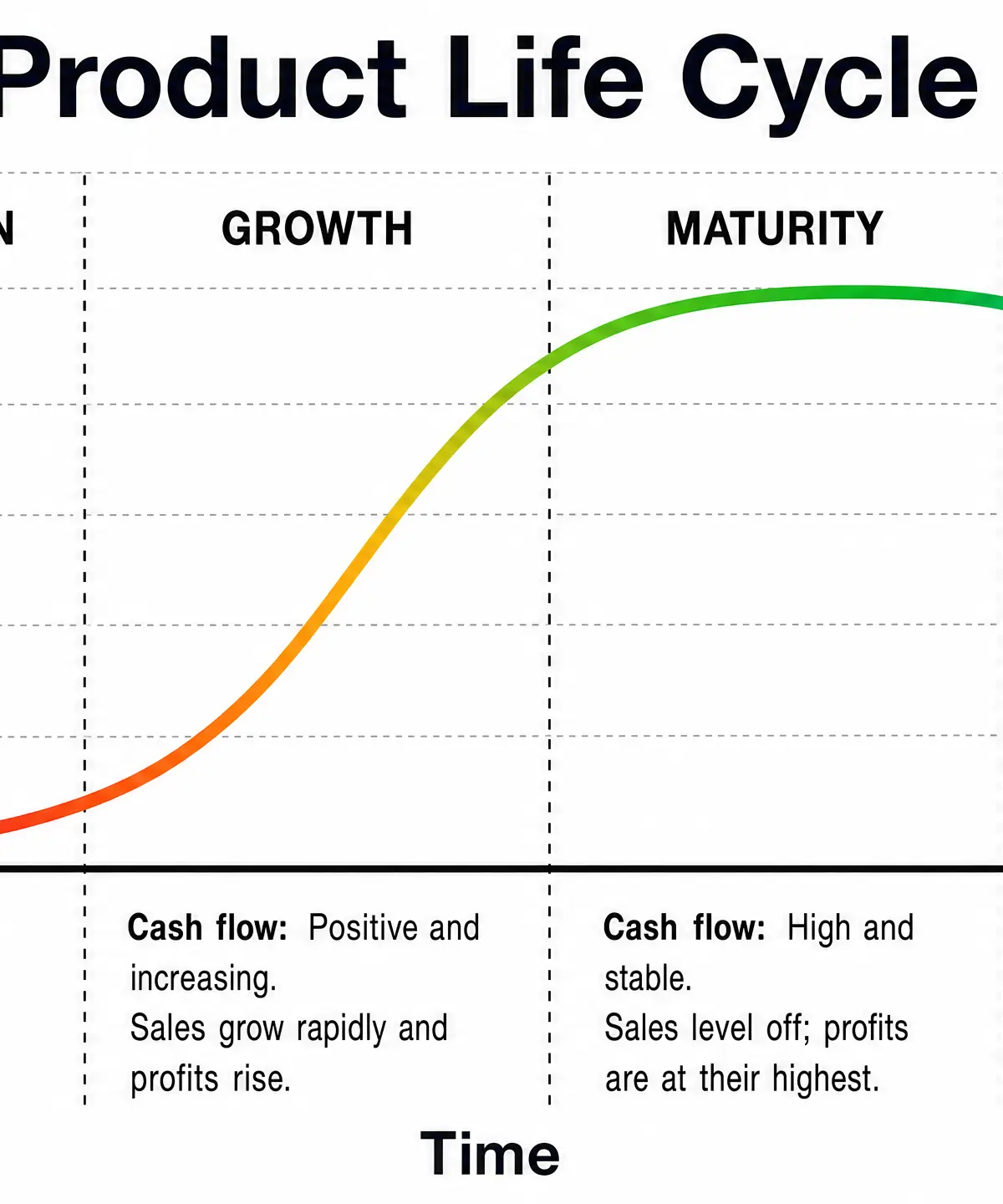
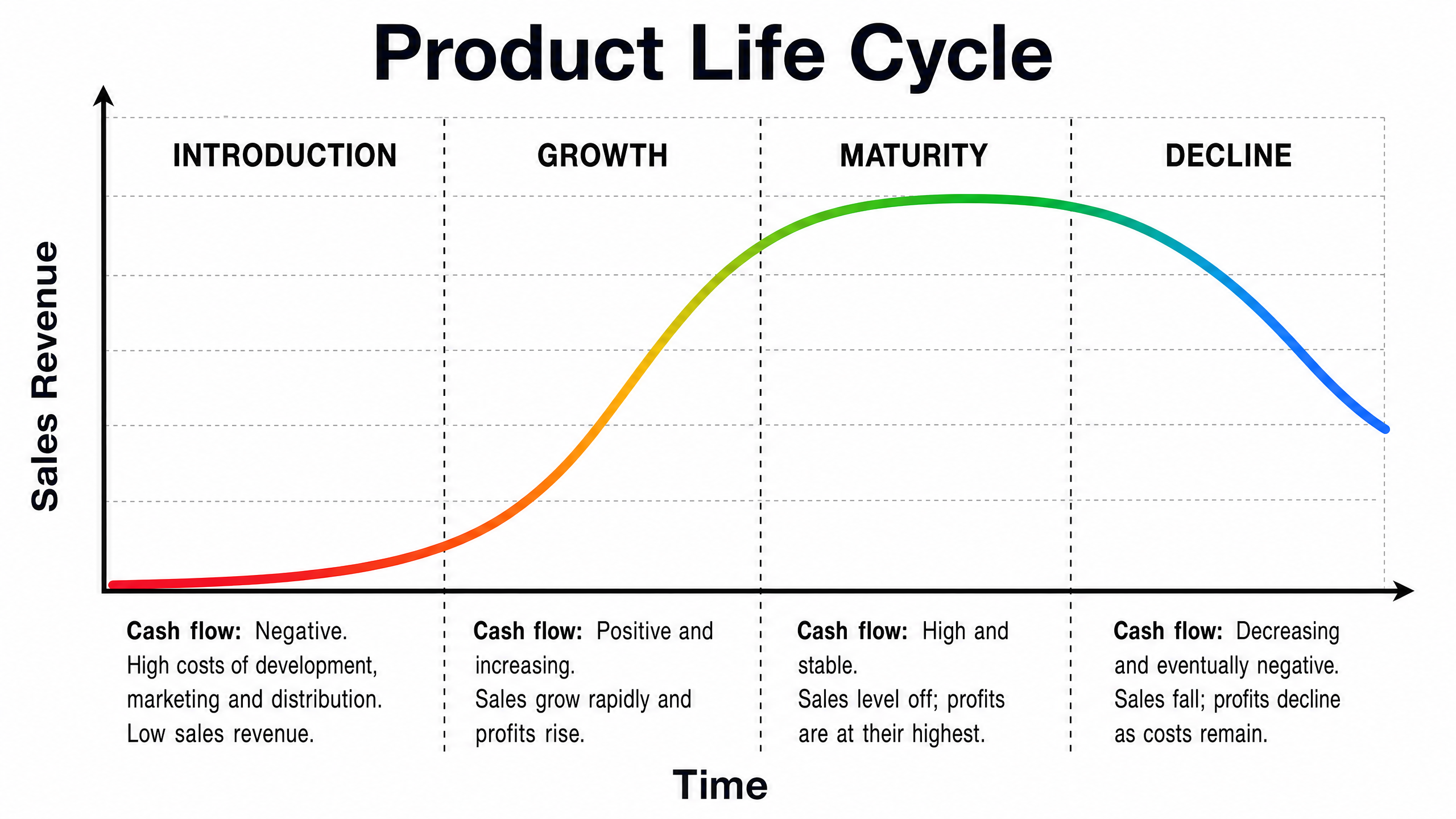
Key Concepts: It encompasses design, quality, branding, and packaging. A crucial element is the Unique Selling Point (USP), which differentiates the product from competitors. Products also move through a Product Life Cycle (Introduction, Growth, Maturity, Decline), and businesses use extension strategies (like new packaging or features) to prolong the maturity phase and delay decline.
Specific Knowledge: The Boston Matrix categorises products into Stars, Cash Cows, Question Marks, and Dogs to help manage a product portfolio.
Price
Definition: The amount customers pay for the product or service.
Key Concepts: Pricing must reflect the product's positioning and the target market. There is generally an inverse relationship between price and demand. However, a price increase does not always lead to lower revenue if the percentage drop in demand is smaller than the percentage increase in price.
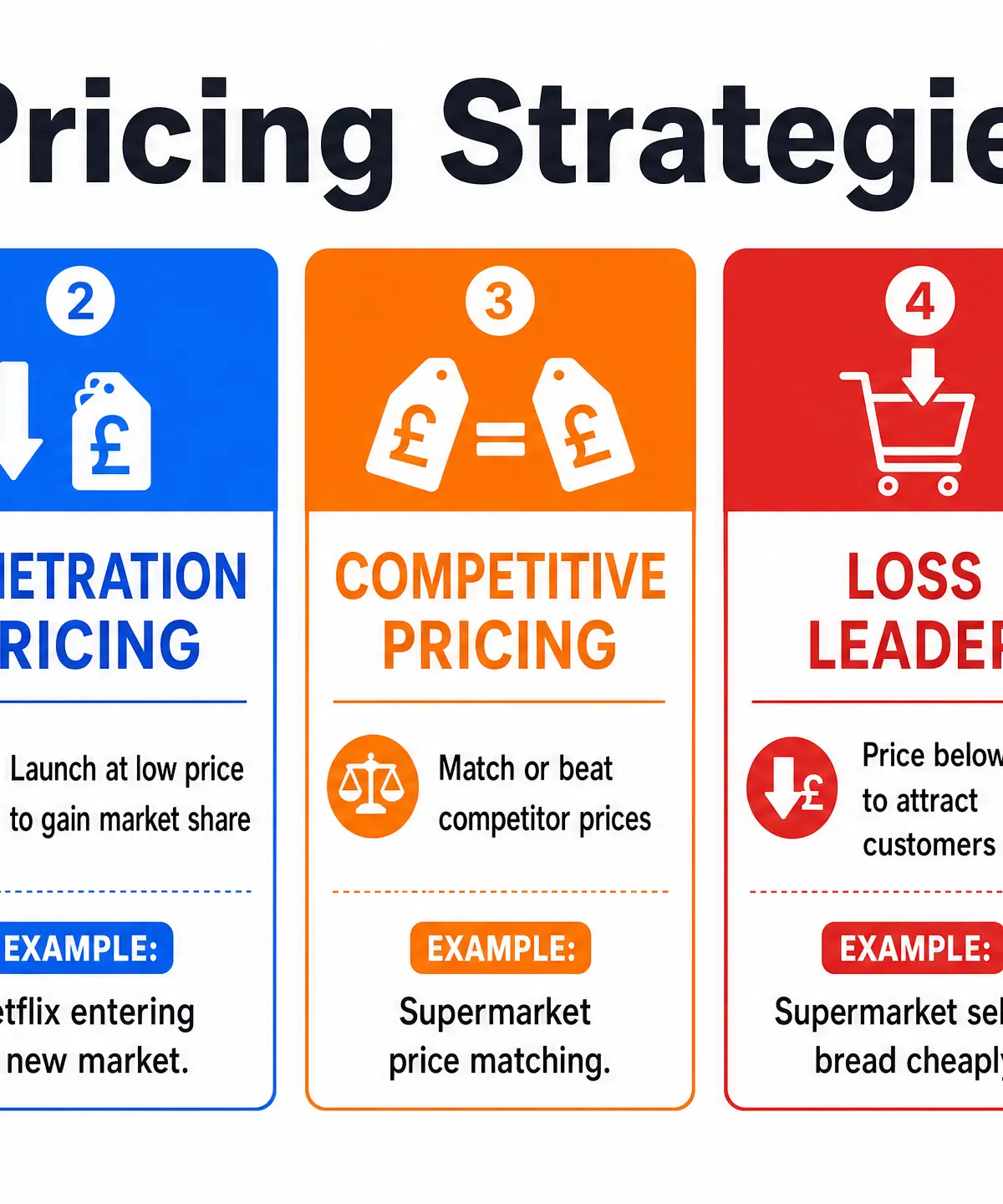
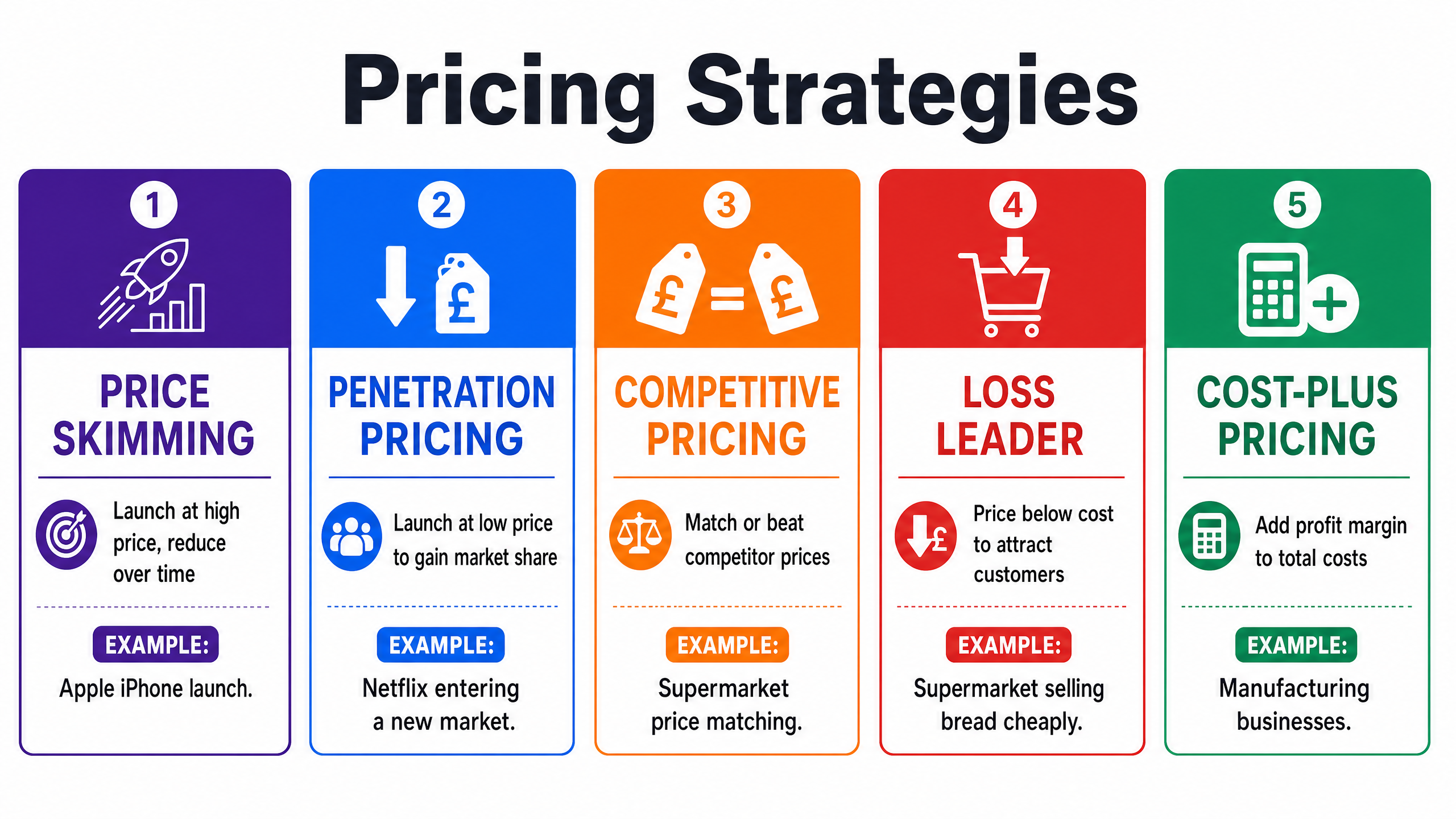
Specific Knowledge: Five key pricing strategies: Price Skimming (high initial price), Penetration Pricing (low initial price to gain market share), Competitive Pricing (matching rivals), Loss Leader (selling below cost to attract customers), and Cost-Plus Pricing (adding a margin to costs).
Promotion
Definition: How the business communicates the value of the product and persuades customers to buy.
Key Concepts: Promotional methods must match the target audience and the brand image. Methods include advertising (TV, online), public relations (PR), sales promotions (discounts, BOGOF), sponsorship, and social media marketing.
Specific Knowledge: Social media is highly cost-effective for reaching younger demographics but requires constant management to protect brand reputation.
Place
Definition: How and where the product is made available to customers.
Key Concepts: Distribution channels include direct selling (e.g., e-commerce) and using intermediaries (wholesalers, retailers). The rise of e-commerce and m-commerce has revolutionised distribution, lowering physical costs but increasing delivery logistics.
Specific Knowledge: The choice of place must align with the product's image; exclusive products require exclusive retail environments.
Integration of the Marketing Mix
The most important concept for high marks is integration. If a business launches a luxury watch (Product), it must use price skimming or premium pricing (Price), advertise in high-end magazines or sponsor elite sports (Promotion), and sell through exclusive boutiques (Place). Any inconsistency (e.g., selling a luxury watch in a discount supermarket) will confuse customers and damage the brand.
Audio Resource
Listen to the comprehensive podcast summary of this topic below:
Interactive Diagrams
1 interactive diagram to visualise key concepts
Conceptual Flow Outline
Overview of the Marketing Mix elements
Worked Examples
3 worked examples — open one to explore the question and available guidance.
Practice Questions
Try the question, then reveal an answer plan or example response
A premium chocolate brand is launching a new range of organic truffles. Recommend the most appropriate pricing strategy for this new product. (9 marks)
Hint: Consider the brand's existing image and the nature of the product (organic/premium).
Explain two stages of the product life cycle. (4 marks)
Hint: Name the stage and explain what happens to sales or cash flow during that stage.
State two methods of promotion a business could use. (2 marks)
Hint: Just name the methods, do not explain them.
Explain how e-commerce has affected the 'Place' element of the marketing mix for a clothing retailer. (6 marks)
Hint: Think about physical stores vs online stores, costs, and market reach.
Analyse the benefits to a business of having a strong Unique Selling Point (USP). (6 marks)
Hint: How does being different help a business with its pricing and its competitors?
Exam technique
How to turn what you know into marks
How to approach the question
Always read the case study first and highlight details about the target market, budget, and product type. Use these details in your answer.
How to structure your answer
- Analyse questions
- Point → Contextual Explanation → Chain of Analysis (leading to consequence)
- Explain questions
- Point → Explanation → Business Impact (PEB)
- Evaluate questions
- Contextualised Advantage → Contextualised Disadvantage → Justified Judgement based on the specific business.
Timing
Approximately 1 minute per mark, allowing time to read the case study carefully.
Common pitfalls
- Treating the 4Ps in isolation rather than showing how they integrate.
- Confusing extension strategies with new product development.
- Giving generic answers that don't apply to the specific business in the question.
What the command words want
- Analyse
- Examine the impacts or consequences in detail, showing a chain of reasoning.
- Explain
- Give a reason and develop it with a consequence.
- State/Identify
- A simple factual answer, no explanation needed.
- Evaluate/Recommend
- Weigh up both sides (pros/cons) and make a clear, supported decision.
Watch or listen (optional)
Test your understanding of The elements of the marketing mix: price, product, promotion and place (4Ps)
Active recall beats re-reading. Take an instant quiz now to test what you’ve learned and lock it into long-term memory.
7 days Premium · Then the free plan continues · No card, no charge