OCR · GCSE · Business
Course version: J204 · Version from Sept 2019
Cash and cash flow
Master the lifeblood of any business: Cash. This guide breaks down the crucial difference between cash and profit, and shows you how to use cash flow forecasting to anticipate shortages and secure a business's survival.
- 4 min read
- 3 worked examples
- 5 practice questions
- 6 key terms
Check what you remember
Read the wording for your board, then hide it and explain Cash in your own words. Rough notes are fine. This is a self-check, with no mark or grade.
Reference: OCR
The money a business has immediately available to spend (notes, coins, and bank balances).
Study Notes

Overview
Cash is often described as the lifeblood of a business. Without it, day-to-day operations grind to a halt. This study guide covers the fundamental importance of cash for maintaining liquidity and meeting short-term debts. We will explore the critical distinction between cash and profit—a concept examiners frequently test—and examine how cash flow forecasting acts as a vital planning tool. By anticipating periods of cash shortage, businesses can put remedies in place before a crisis hits. Listen to the podcast below for a comprehensive overview of the topic:
The Importance of Cash
Cash is the money that a business has immediately available. It exists in two main forms: notes and coins in the till, and money held in bank accounts.
Why it matters: Cash is required for liquidity. A business must be able to pay its short-term debts and expenses, such as wages, supplier invoices, rent, and utility bills. If a business cannot pay these debts when they fall due, it becomes insolvent and may be forced into liquidation, regardless of how successful its products are.
Cash vs Profit
One of the most common pitfalls for candidates is confusing cash with profit. They are entirely different concepts.
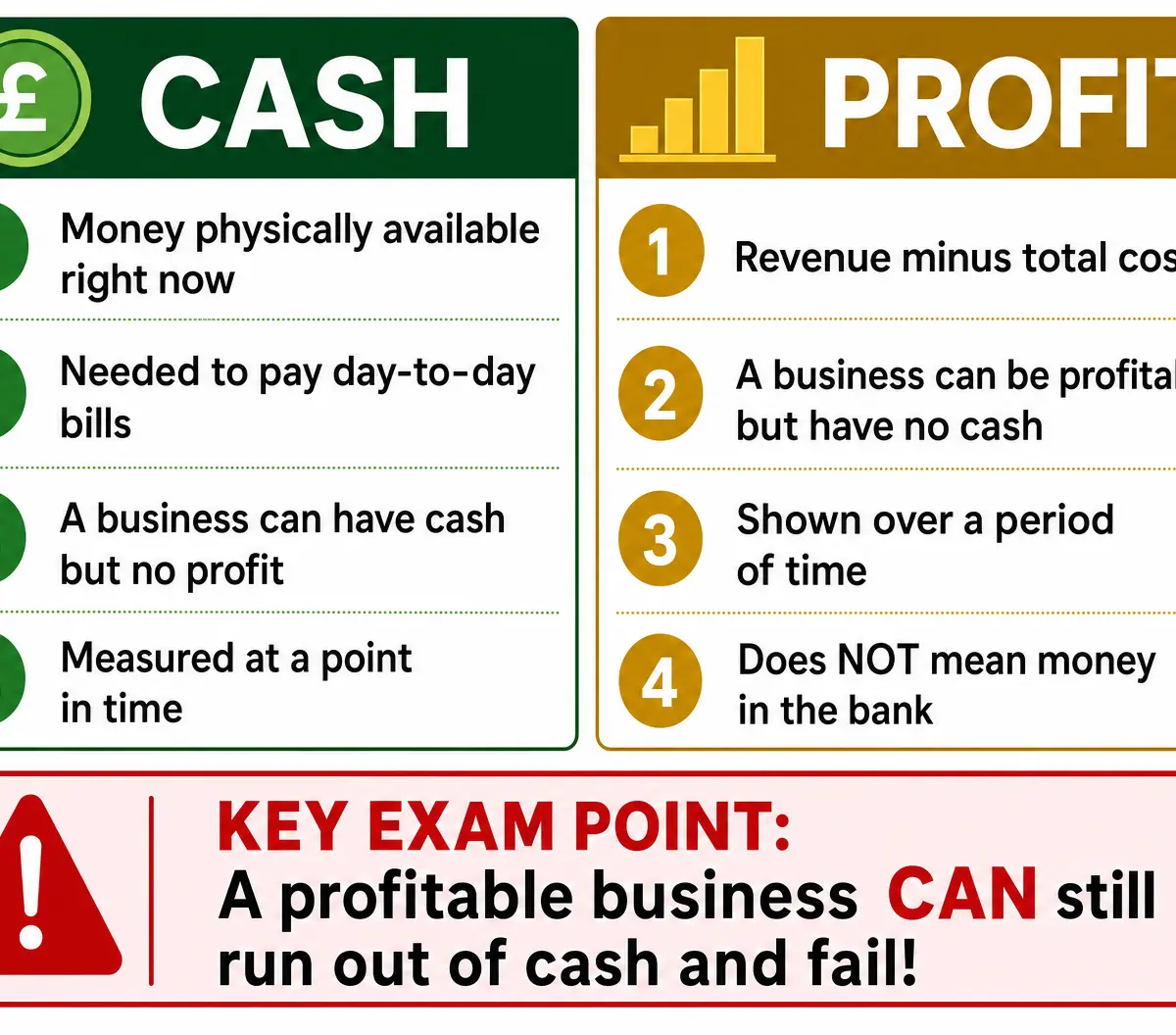
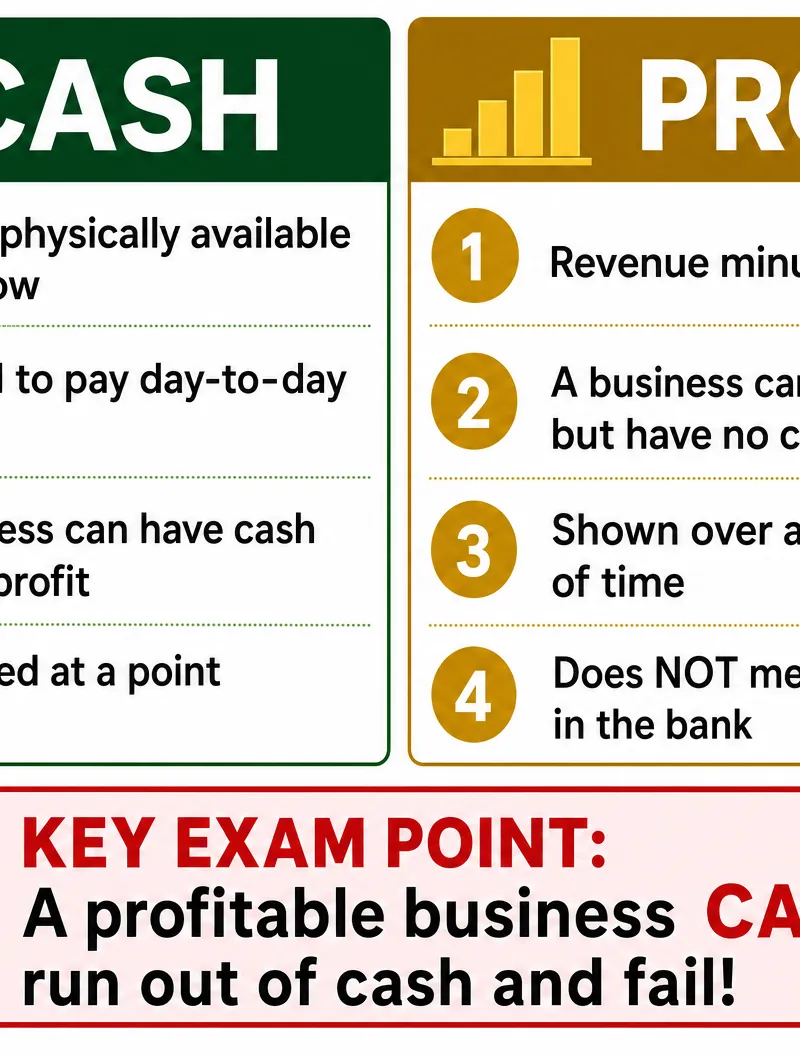
Profit is the surplus left over when total costs are subtracted from total revenue over a period of time. It is a measure of financial success.
Cash is the physical money available right now.
The crucial difference: A business can be profitable but still fail due to a lack of cash. For example, if a business sells £10,000 worth of goods on credit, it has generated £10,000 in revenue (and potentially profit), but it has received £0 in cash until the customers actually pay. Meanwhile, the business still has to pay its staff and suppliers. If it runs out of cash while waiting for customers to pay, it fails.
Cash Flow Forecasting
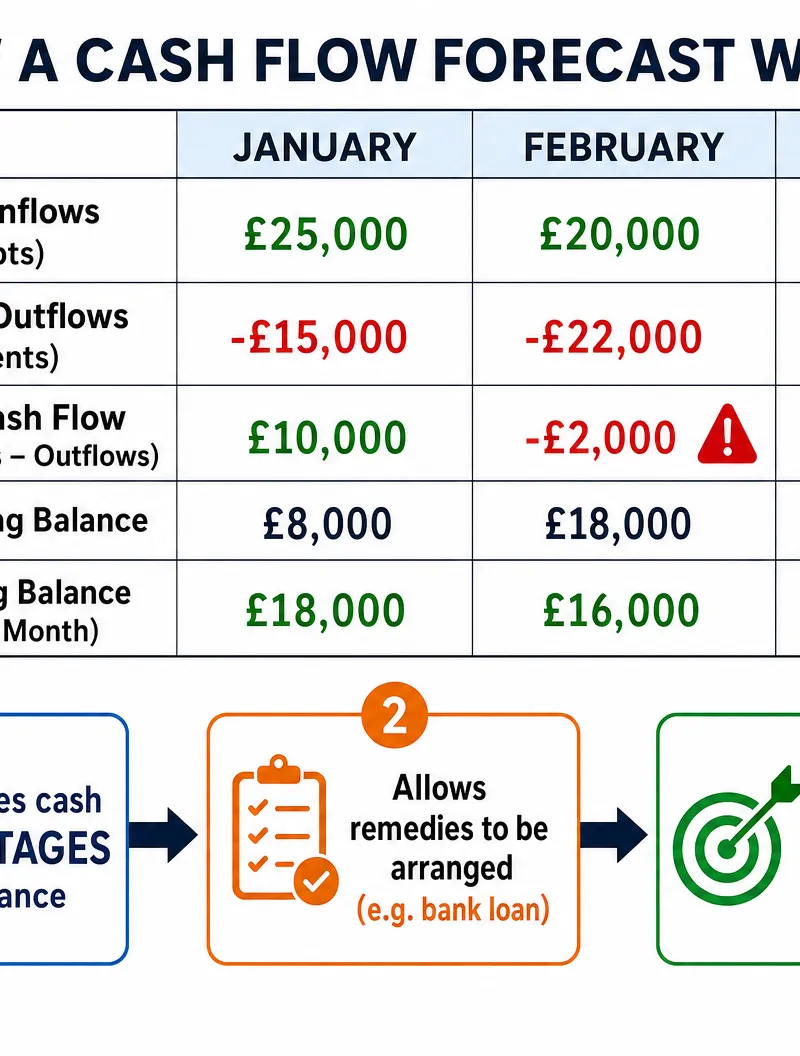
A cash flow forecast is a financial document that predicts the expected cash inflows and outflows over a future period, typically month by month.
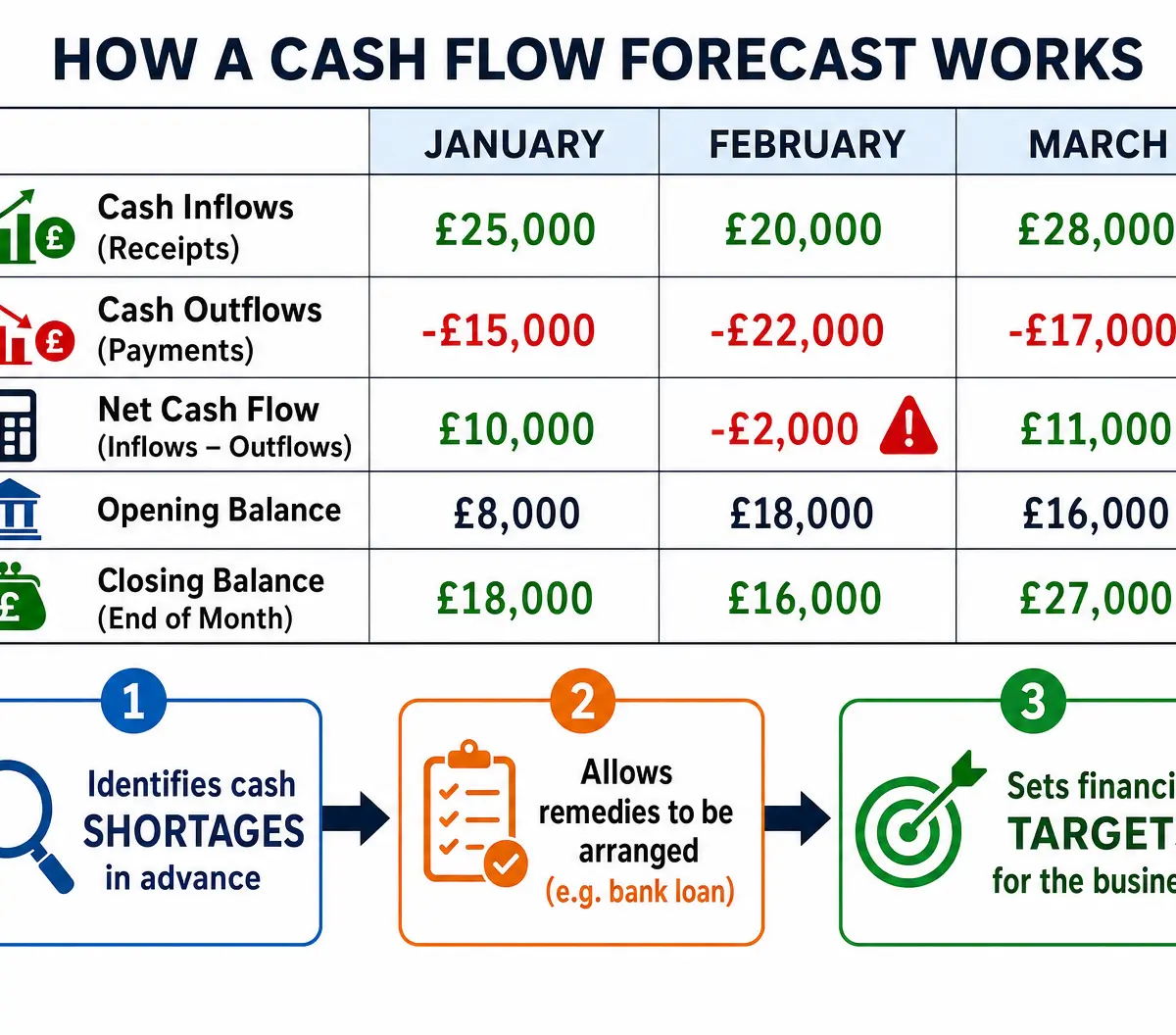
The Structure
- Cash Inflows (Receipts): Money entering the business (e.g., sales revenue, loans).
- Cash Outflows (Payments): Money leaving the business (e.g., wages, rent, raw materials).
- Net Cash Flow: Cash Inflows minus Cash Outflows.
- Opening Balance: Cash available at the start of the month.
- Closing Balance: Opening Balance plus Net Cash Flow. (This becomes the Opening Balance for the next month).
Purpose as a Planning Tool
Examiners expect candidates to understand three main purposes of a cash flow forecast:
- Anticipating Shortages: By looking at the projected closing balances, a business can identify months where it will face a cash deficit (a negative closing balance).
- Enabling Remedies: Because the shortage is identified in advance, the business has time to arrange a solution. Remedies might include arranging a short-term bank overdraft, negotiating longer payment terms with suppliers, or chasing debtors to pay earlier.
- Providing Targets: The forecast sets financial targets for revenue and expenditure. Managers can compare actual performance against the forecast to identify variances and take corrective action.
Visual Resources
2 diagrams and illustrations
Interactive Diagrams
1 interactive diagram to visualise key concepts
Conceptual Flow Outline
Process of remedying a cash flow shortage
Worked Examples
3 worked examples — open one to explore the question and available guidance.
Practice Questions
Try the question, then reveal an answer plan or example response
A business has opening cash of £5,000. In March, its total cash inflows are £12,000 and total cash outflows are £15,000. Calculate the closing balance for March. (2 marks)
Hint: First calculate net cash flow, then add it to the opening balance.
Explain one reason why a cash flow forecast is a useful planning tool for a business. (3 marks)
Hint: Think about what the forecast shows before it actually happens.
Evaluate whether arranging a bank overdraft is the best way for a small retailer to solve a short-term cash flow problem. (9 marks)
Hint: Consider the pros and cons of an overdraft, then suggest an alternative and make a judgement.
State the formula for calculating Net Cash Flow. (1 mark)
Hint: Think about money coming in versus money going out.
Explain the difference between cash and profit. (2 marks)
Hint: Define both clearly to show the contrast.
Exam technique
How to turn what you know into marks
How to approach the question
Always look for the command word. 'Identify' or 'State' means brief points. 'Explain' requires a point and a linked reason. 'Analyse' requires developed chains of reasoning.
How to structure your answer
- Explain questions
- Point → 'This means that...' → 'Therefore...'
- Evaluate questions
- Provide arguments for and against, then a justified conclusion based on the context of the business.
- Calculation questions
- Always show your working. If you make a mistake in the final answer, you can still get marks for correct working.
Timing
Approximately 1 minute per mark.
Common pitfalls
- Using 'profit' and 'cash' interchangeably.
- Forgetting that the closing balance of one month is the opening balance of the next.
- Suggesting 'increase sales' as a short-term remedy for a cash flow problem (sales take time to generate and may incur extra marketing costs).
What the command words want
- State
- Give a fact or piece of information.
- Analyse
- Examine in detail to show meaning, identify elements and the relationship between them.
- Explain
- Give a reason or cause.
- Calculate
- Work out the value, showing working.
Watch or listen (optional)
Test your understanding of Cash and cash flow
Active recall beats re-reading. Take an instant quiz now to test what you’ve learned and lock it into long-term memory.
A week of Premium from your first lesson · Then the free plan continues · No card, no charge