OCR · GCSE · Business
Course version: J204 · Version from Sept 2019
Consumer law
Consumer law is the crucial bridge between business operations and customer trust. Understanding how the Consumer Rights Act 2015 impacts business reputation and decision-making is essential for securing high marks in evaluation questions.
- 4 min read
- 3 worked examples
- 5 practice questions
- 6 key terms
Check what you remember
Read the wording for your board, then hide it and explain Consumer Rights Act 2015 in your own words. Rough notes are fine. This is a self-check, with no mark or grade.
Reference: OCR
The main piece of UK legislation protecting consumers when buying goods, services, and digital content.
Study Notes
Overview
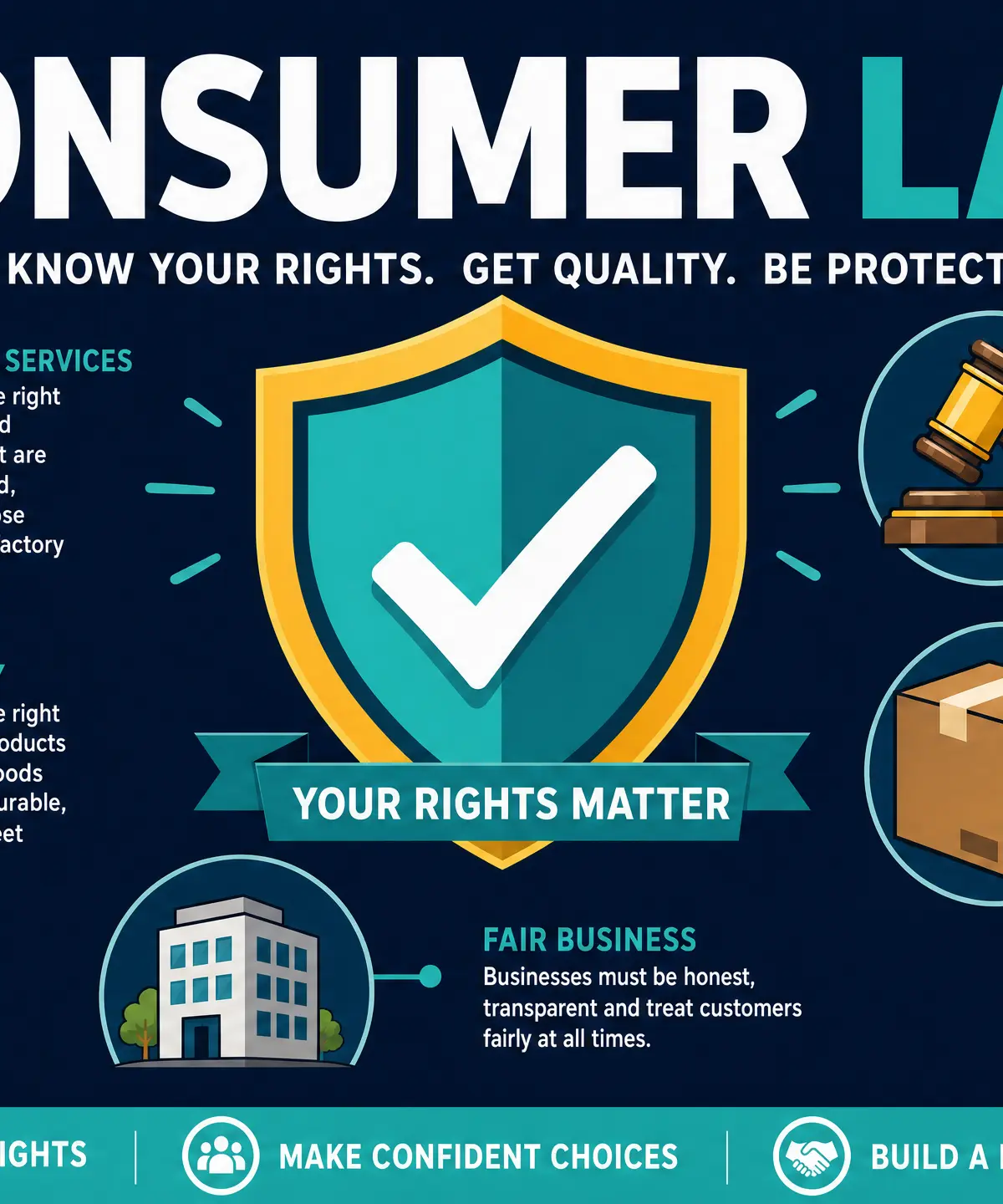
Consumer law represents the legal framework designed to protect buyers from unfair practices, unsafe products, and misleading information. For GCSE Business, the focus is not just on knowing the law, but understanding its impact on business operations and reputation. The most significant legislation you must know is the Consumer Rights Act 2015, which consolidated previous laws into one clear set of rules for physical goods, digital content, and services. Examiners expect candidates to demonstrate how a business's decision to comply with (or ignore) these laws directly affects its long-term survival, costs, and brand image.
Key Concepts in Consumer Law
The Consumer Rights Act 2015
Date: 2015
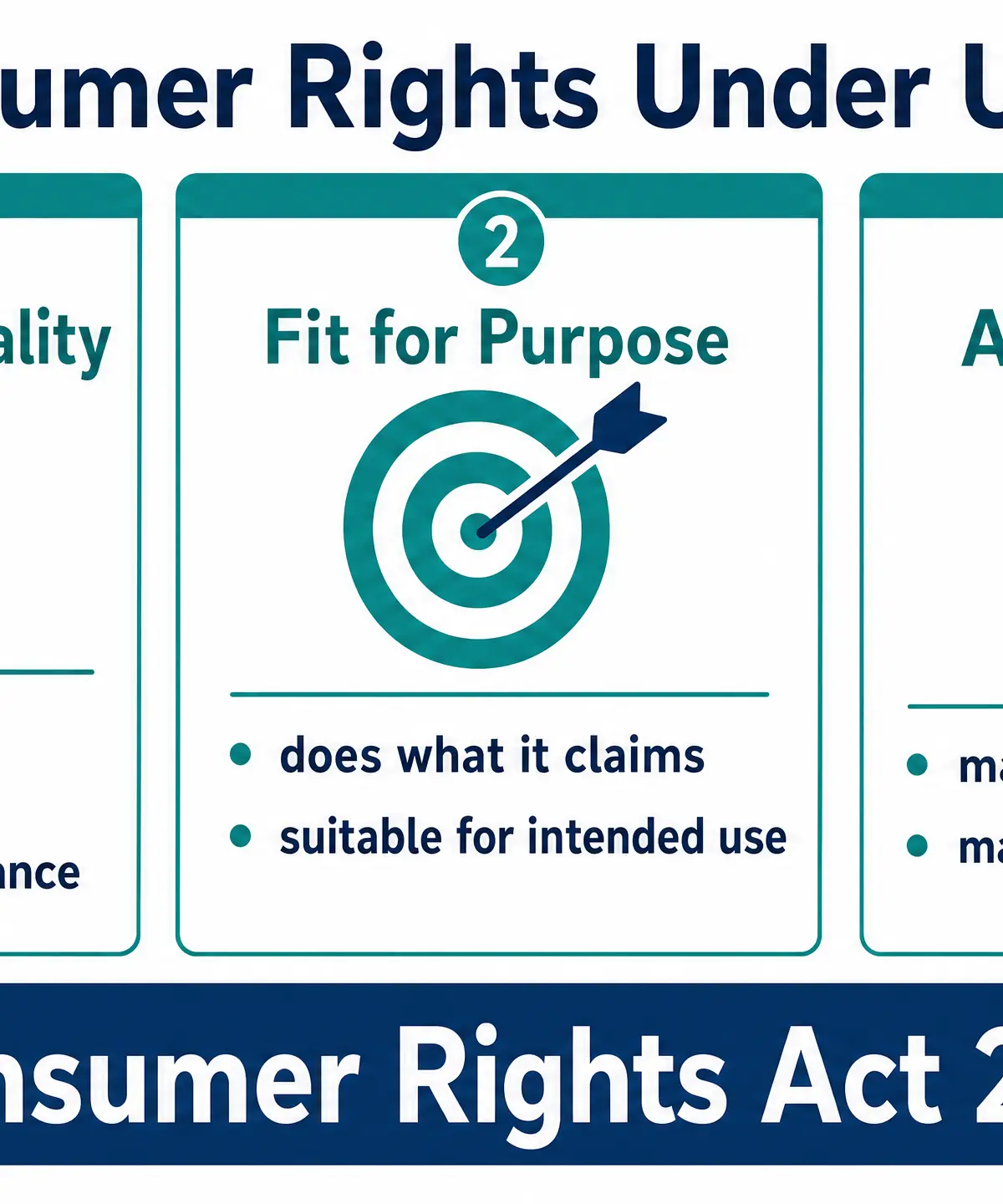
What it requires: Goods must meet three core criteria: they must be of satisfactory quality, fit for purpose, and as described.
Why it matters: This is the foundation of consumer protection. If a business fails to meet these standards, they are legally obliged to offer a repair, replacement, or refund (within 30 days). This creates a direct financial and operational consequence for poor quality control.
Specific Knowledge: Candidates must use the exact terms: "satisfactory quality", "fit for purpose", and "as described".
Satisfactory Quality
Role: Ensures products meet a standard a reasonable person would consider acceptable.
Key Actions: Businesses must ensure products are free from minor defects, safe, and durable.
Impact: Requires businesses to invest heavily in Quality Assurance (QA) and Quality Control (QC) during the production process, increasing short-term costs but protecting long-term reputation.
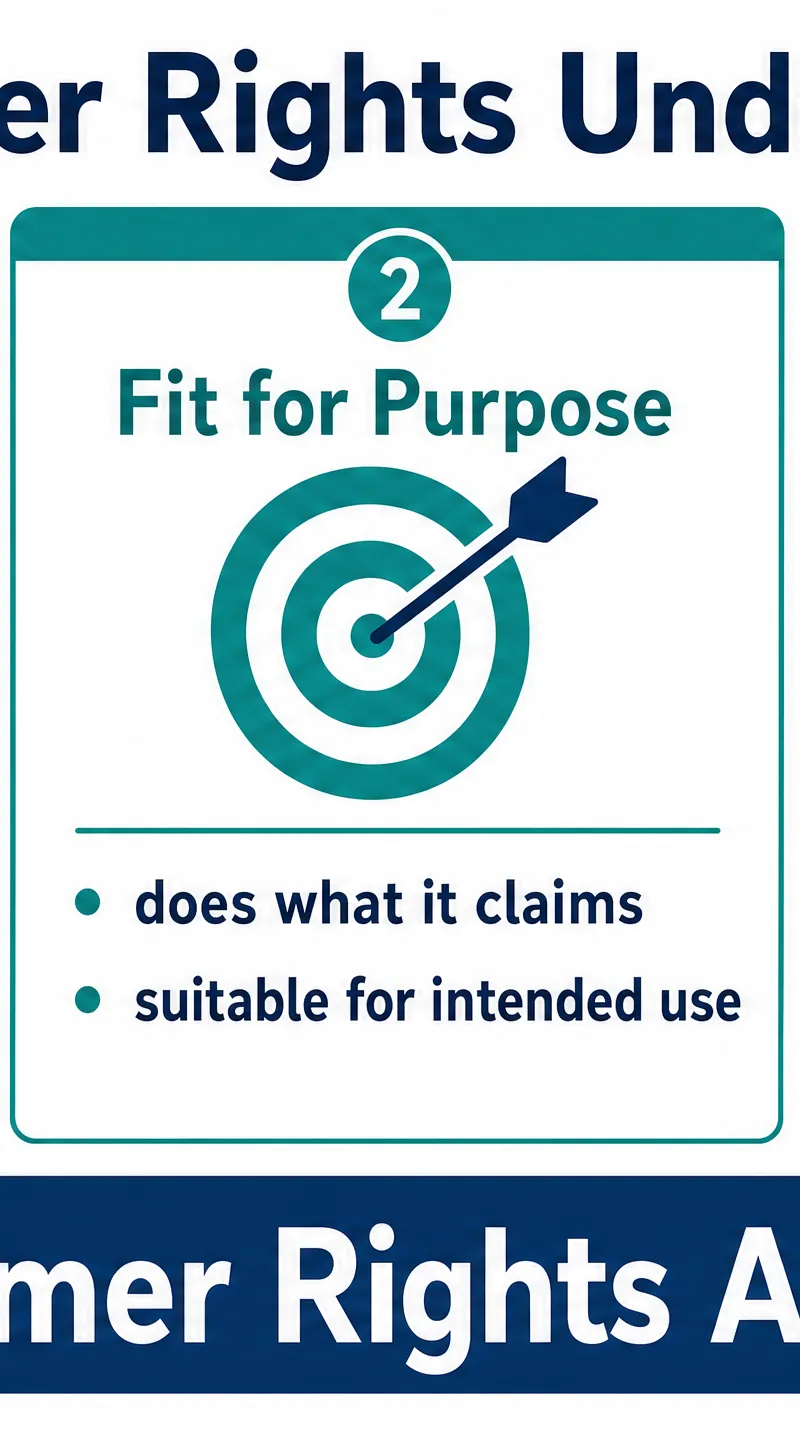
Fit for Purpose
Role: Ensures products do what they are designed to do.
Key Actions: If a customer requests a product for a specific use, the recommended product must be capable of fulfilling that use.
Impact: Forces businesses to train staff adequately so they do not mis-sell products, reducing the risk of returns and negative reviews.
As Described
Role: Ensures marketing matches reality.
Key Actions: Products must match their packaging, advertising, or any samples shown to the customer.
Impact: Requires marketing departments to be honest and accurate, preventing misleading claims that could lead to Trading Standards investigations.
Second-Order Concepts
Causation
Why do businesses breach consumer law? Short-term causes often include cutting corners to reduce costs, using cheaper suppliers, or rushing a product to market without adequate testing. Long-term causes can include a poor corporate culture that prioritises profit over customer safety.
Consequence
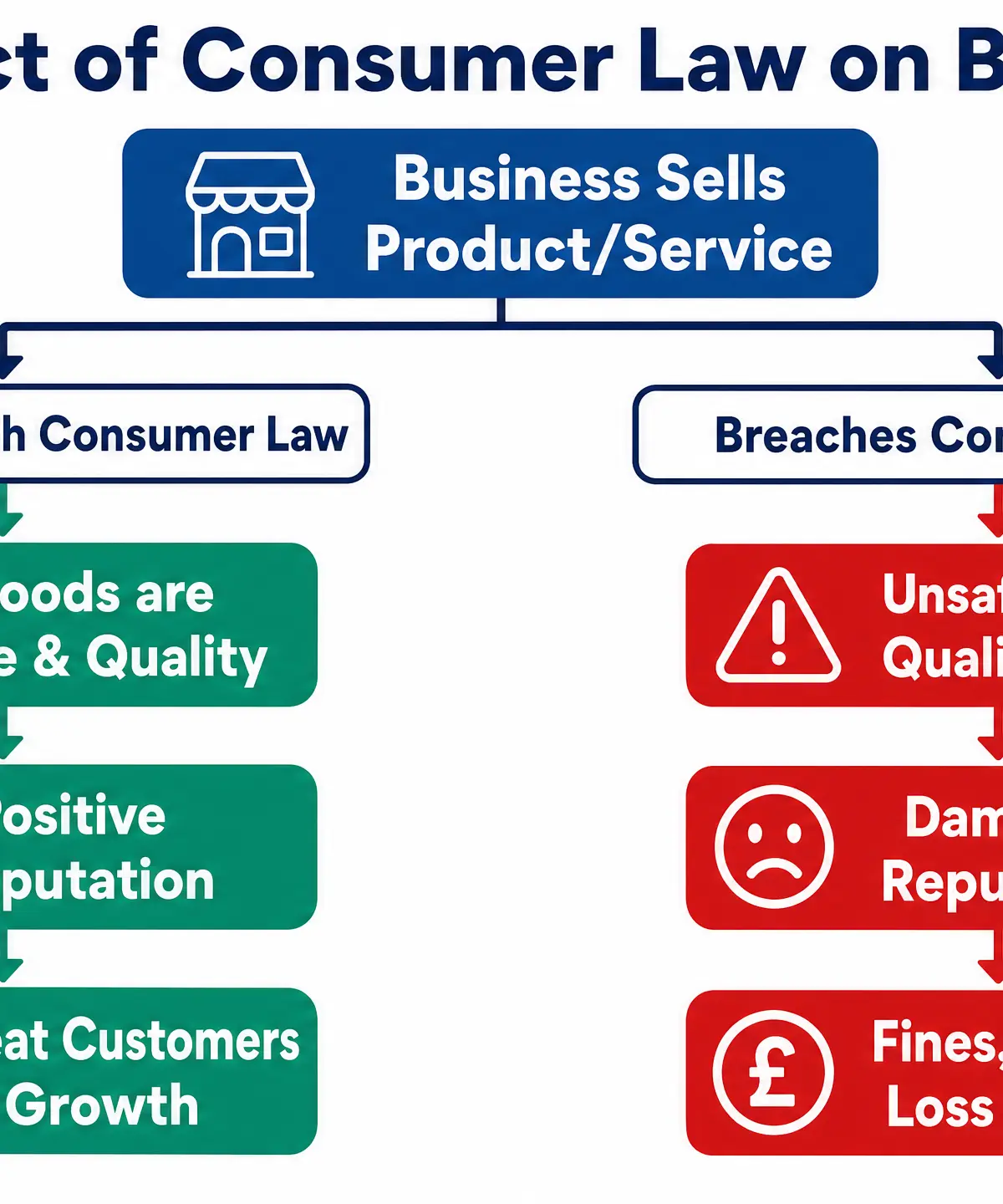
The consequences of breaching consumer law are severe. Immediate effects include the cost of refunds, repairs, and potentially massive product recalls (e.g., Samsung Galaxy Note 7). Long-term effects include severe reputational damage, loss of customer loyalty, and potential legal fines.
Change & Continuity
The shift to digital has changed consumer law. The 2015 Act updated previous laws to explicitly include digital content (e.g., software, streaming services), meaning tech businesses are now held to the same strict standards as physical retailers.
Significance
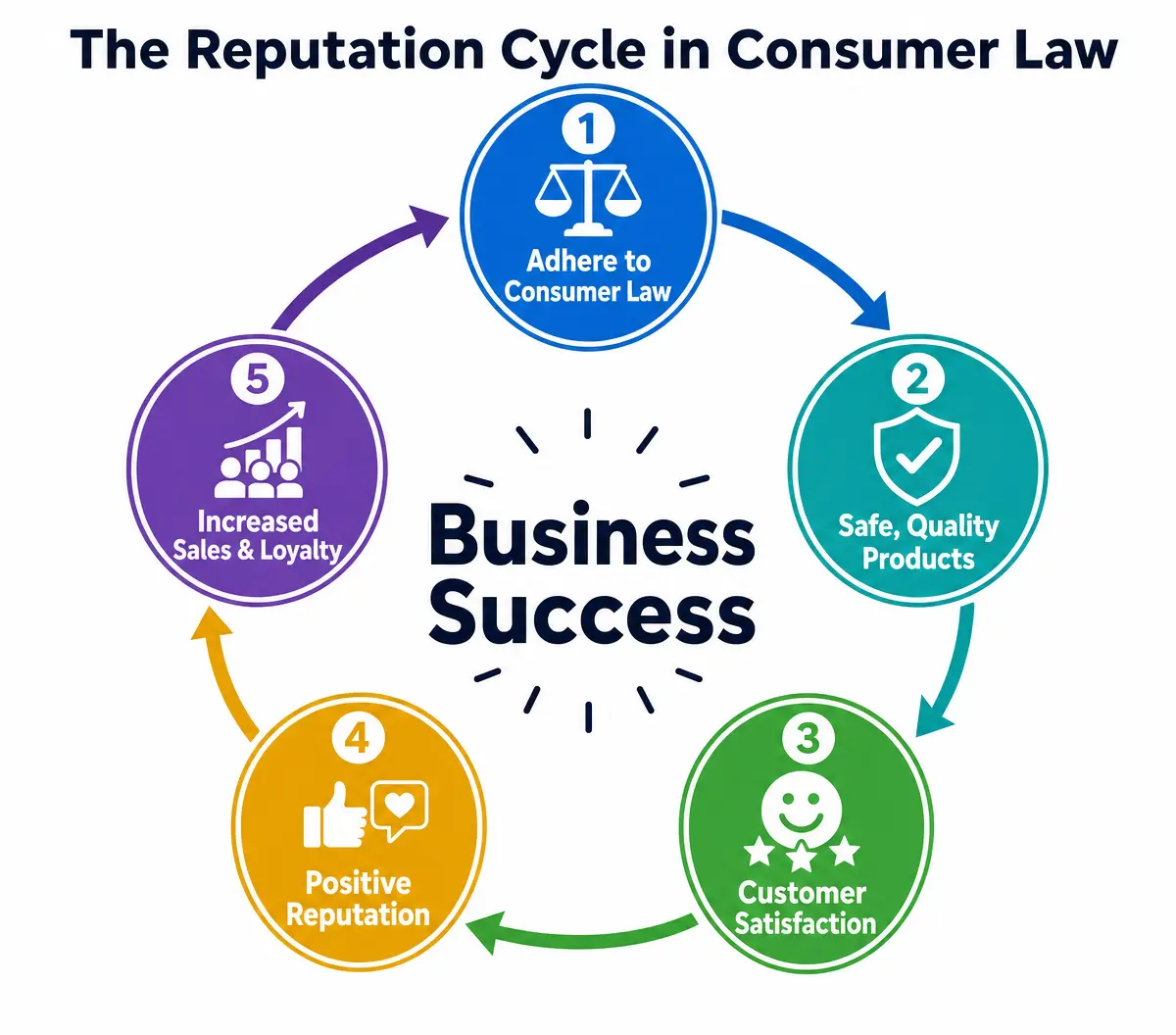
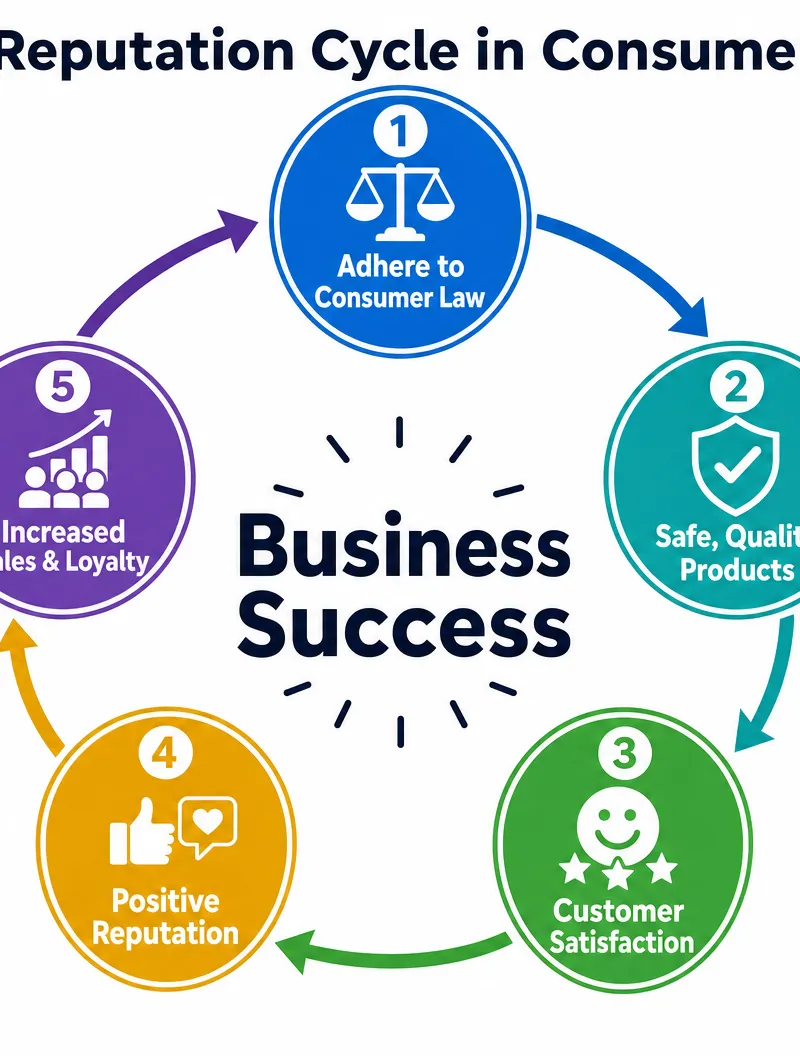
Compliance with consumer law is not just a legal hurdle; it is a competitive advantage. Businesses that consistently provide safe, high-quality goods build strong brand loyalty, leading to repeat purchases and positive word-of-mouth.
Listen to the Podcast
Reinforce your learning by listening to our examiner-focused podcast on Consumer Law:
Visual Resources
3 diagrams and illustrations
Interactive Diagrams
1 interactive diagram to visualise key concepts
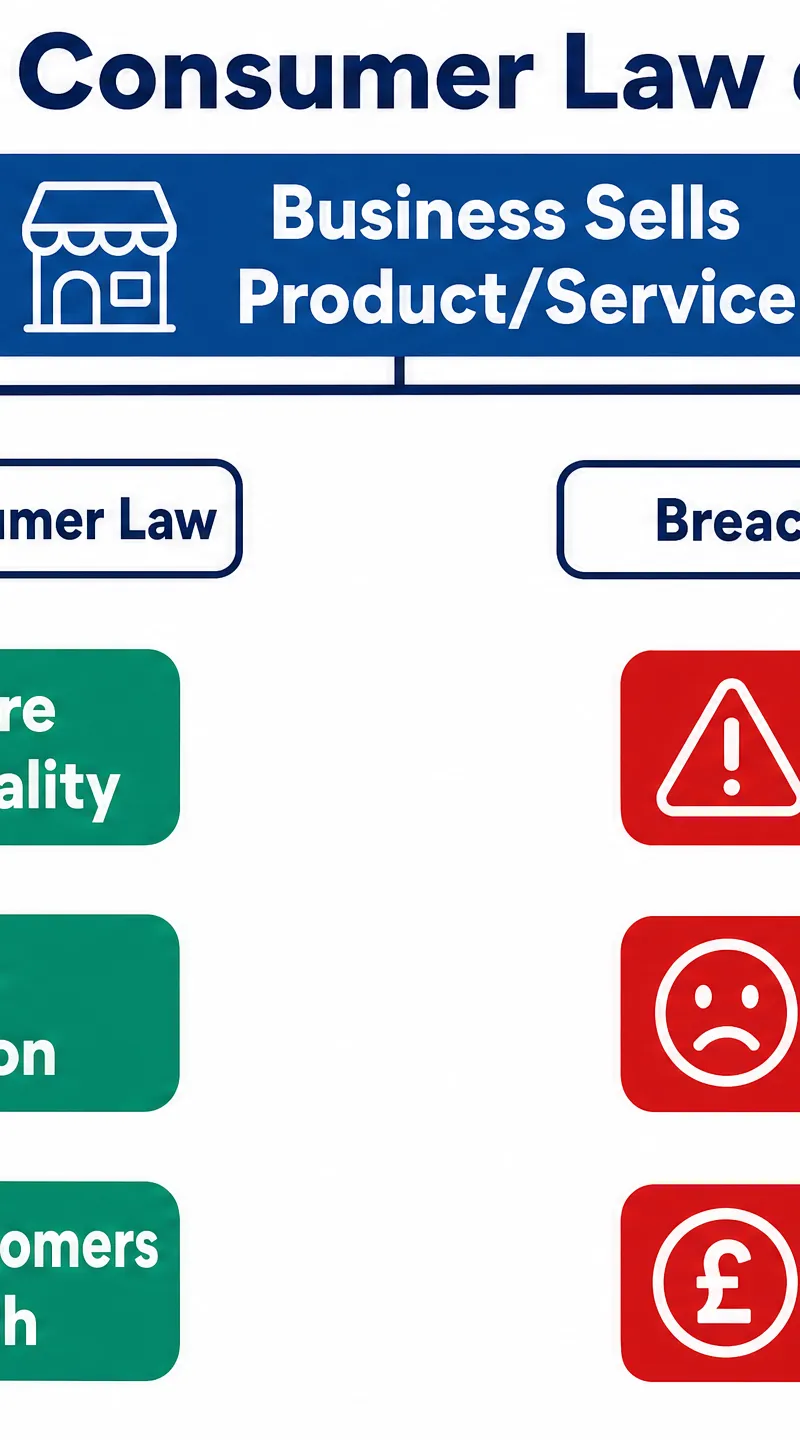
Conceptual Flow Outline
Flowchart showing the requirements and impacts of the Consumer Rights Act.
Worked Examples
3 worked examples — open one to explore the question and available guidance.
Practice Questions
Try the question, then reveal an answer plan or example response
State two requirements of the Consumer Rights Act 2015. (2 marks)
Hint: Think of the S.F.A. mnemonic.
Explain how consumer law might affect a business's marketing department. (3 marks)
Hint: Focus on the 'as described' requirement.
Analyse the impact on a smartphone manufacturer if it is discovered their batteries catch fire. (6 marks)
Hint: Discuss both immediate financial costs and long-term reputational damage.
A clothing retailer is considering using a cheaper, lower-quality fabric supplier to cut costs. Evaluate this decision in the context of consumer law. (9 marks)
Hint: Weigh up the short-term cost savings against the risk of breaching 'satisfactory quality'.
Explain one reason why consumer law is important for consumers. (3 marks)
Hint: Focus on protection from exploitation.
Exam technique
How to turn what you know into marks
How to approach the question
Always look for the specific business context in the question and apply the law directly to that scenario.
How to structure your answer
- Analyse questions
- Two developed paragraphs showing cause and effect chains (e.g., Law → Action → Cost → Reputation).
- Explain questions
- Point → Explanation (How) → Consequence (Therefore...)
- Evaluate questions
- Intro → Point For → Point Against → Supported Judgement/Conclusion.
Timing
Approximately 1 minute per mark. Spend 2-3 minutes planning a 12-mark answer.
Common pitfalls
- Defining the law without explaining the impact on the business.
- Using vague terms like 'bad for the business' instead of specific terms like 'damaged reputation' or 'product recall'.
- Forgetting that consumer law also applies to digital goods and services.
What the command words want
- Analyse
- Explore the consequences in detail, showing a chain of reasoning.
- Explain
- Give a reason or impact, and develop it with a connective (because, leading to).
- State/Identify
- Short, factual answer. No explanation needed.
- Evaluate / To what extent
- Look at both sides (benefits vs costs) and make a final, justified decision.
Watch or listen (optional)
Test your understanding of Consumer law
Active recall beats re-reading. Take an instant quiz now to test what you’ve learned and lock it into long-term memory.
A week of Premium from your first lesson · Then the free plan continues · No card, no charge