Alkenes — AQA A-Level Study Guide
Exam Board: AQA | Level: A-Level
Alkenes are unsaturated hydrocarbons that contain a carbon-carbon double bond, making them highly reactive and essential for creating everyday plastics. Mastering this topic is crucial for the exam, as it bridges organic mechanisms with real-world polymer applications.
Overview
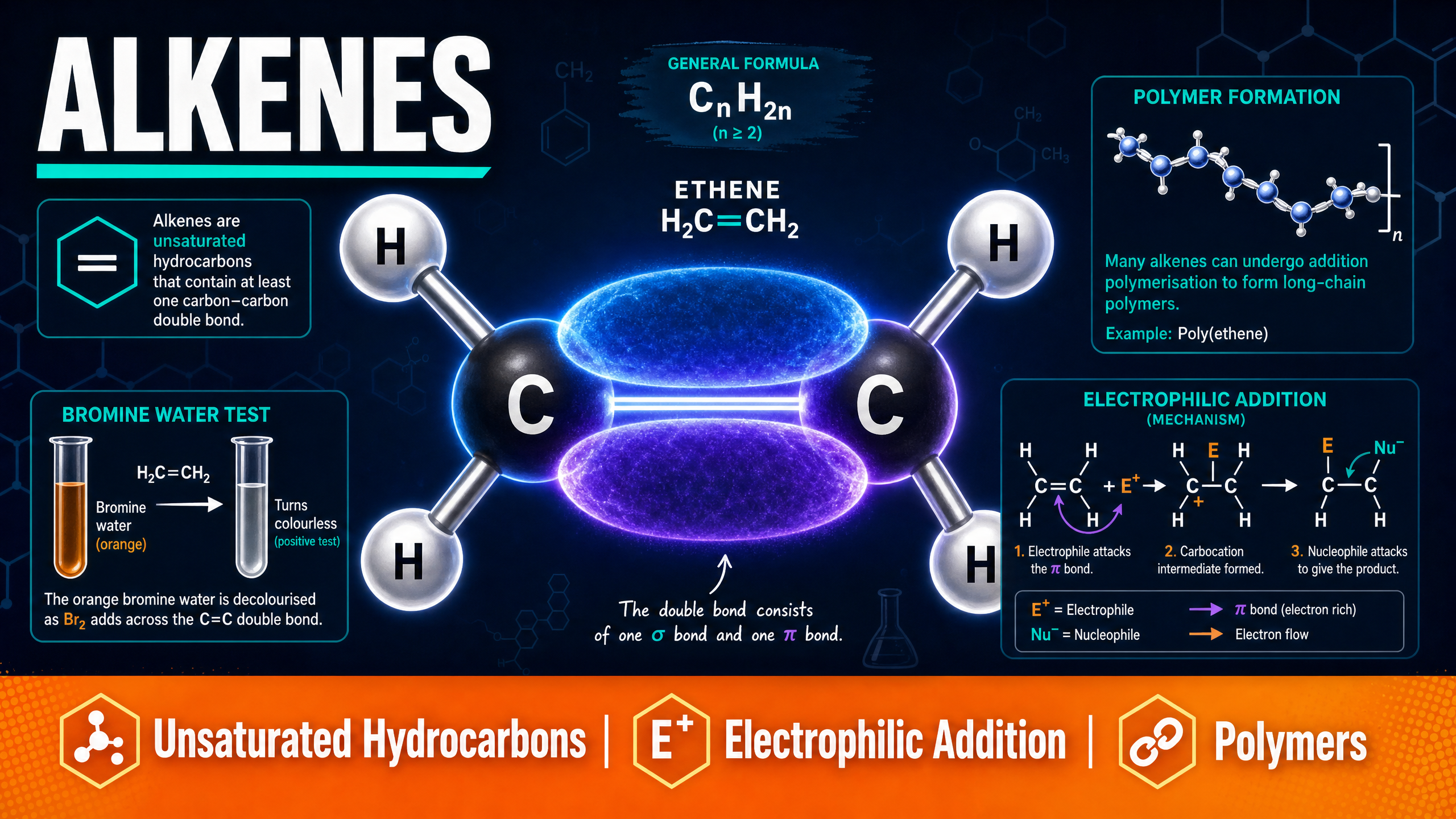
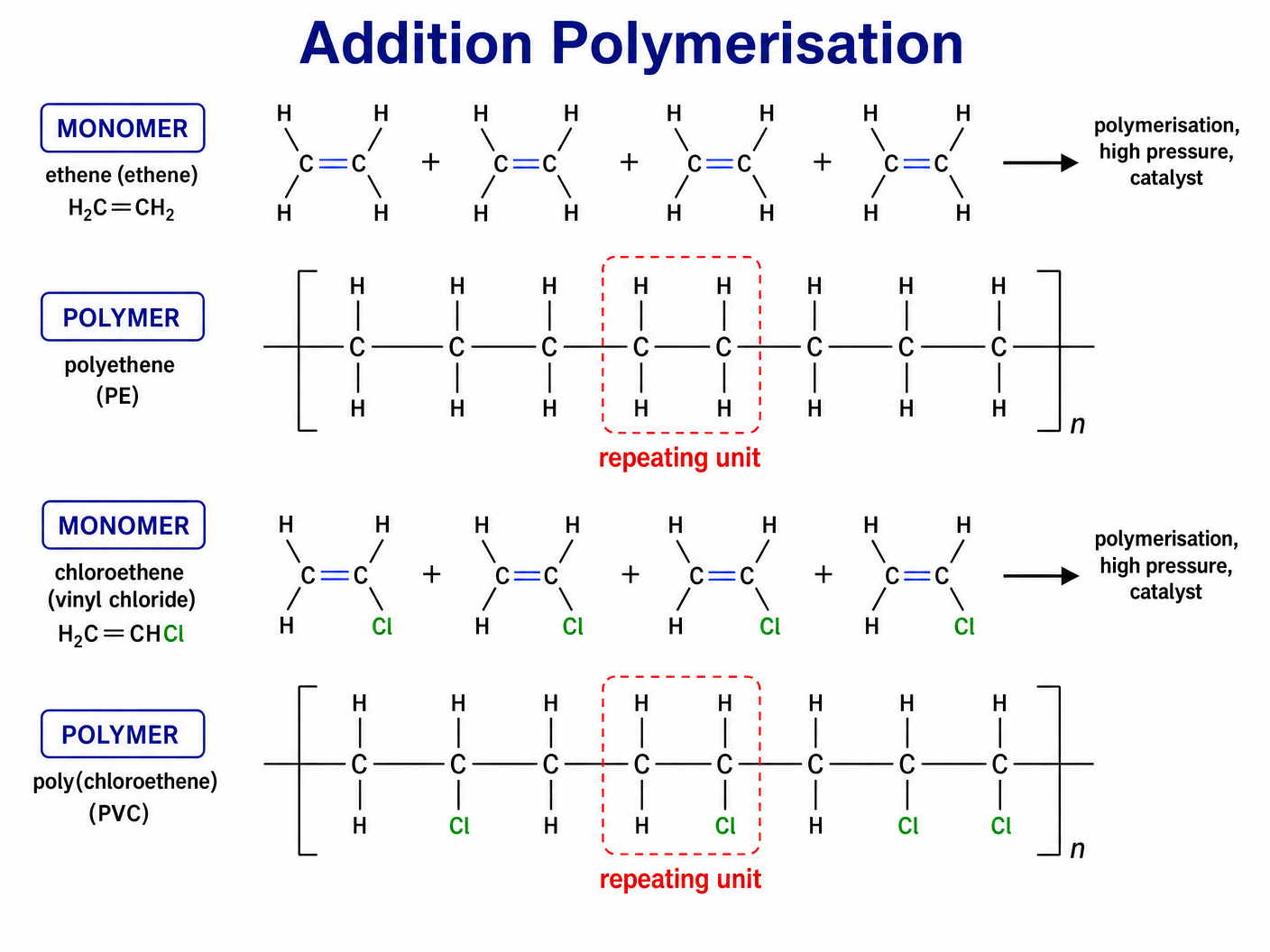
Alkenes are a vital family of unsaturated hydrocarbons, characterised by the presence of at least one carbon-carbon double bond (C=C). This double bond is the defining feature of alkenes, acting as a centre of high electron density that makes them significantly more reactive than alkanes. In GCSE Chemistry, understanding alkenes is essential because they form the basis of electrophilic addition reactions and are the fundamental building blocks for addition polymers like poly(ethene) and PVC.
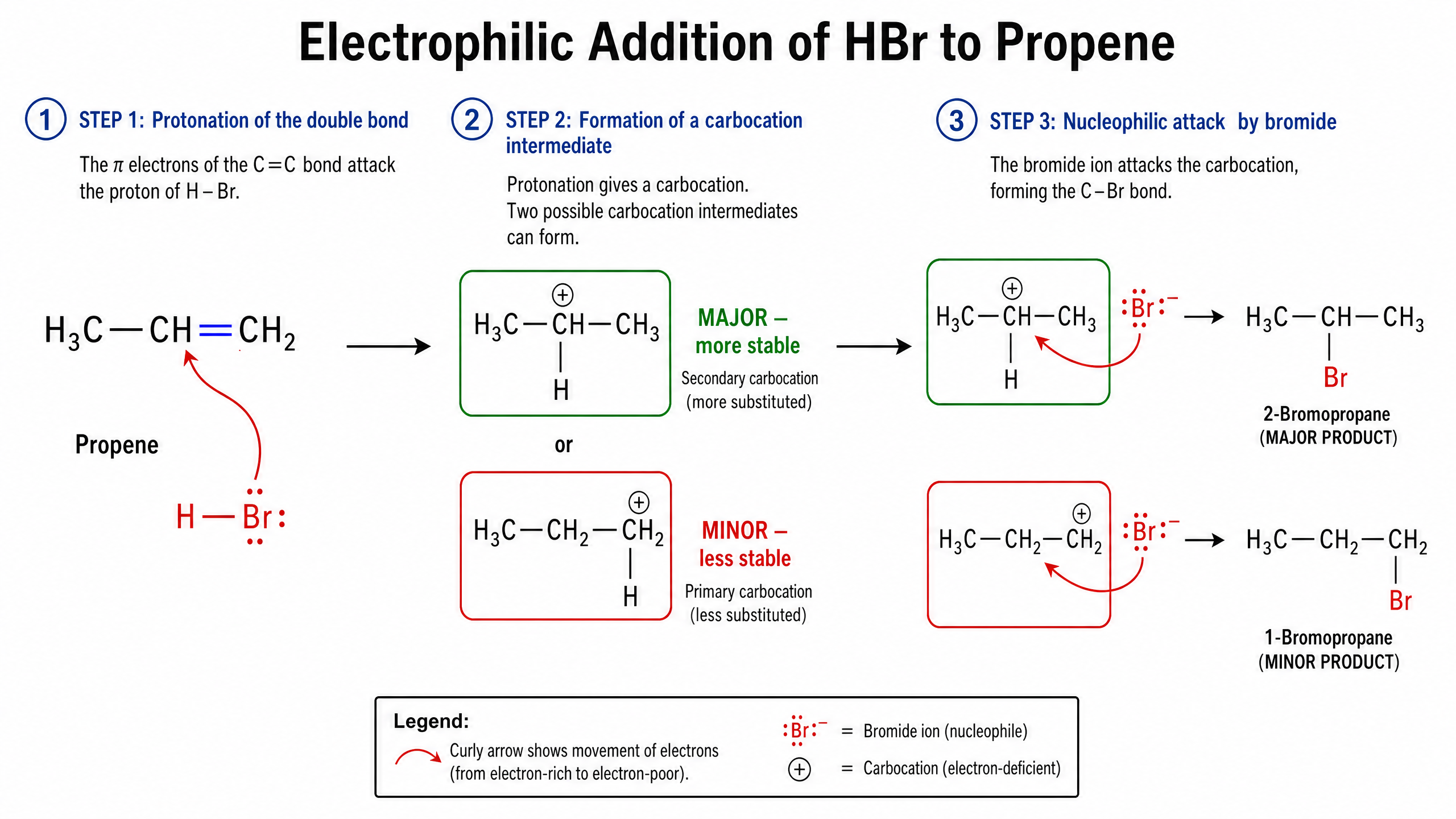
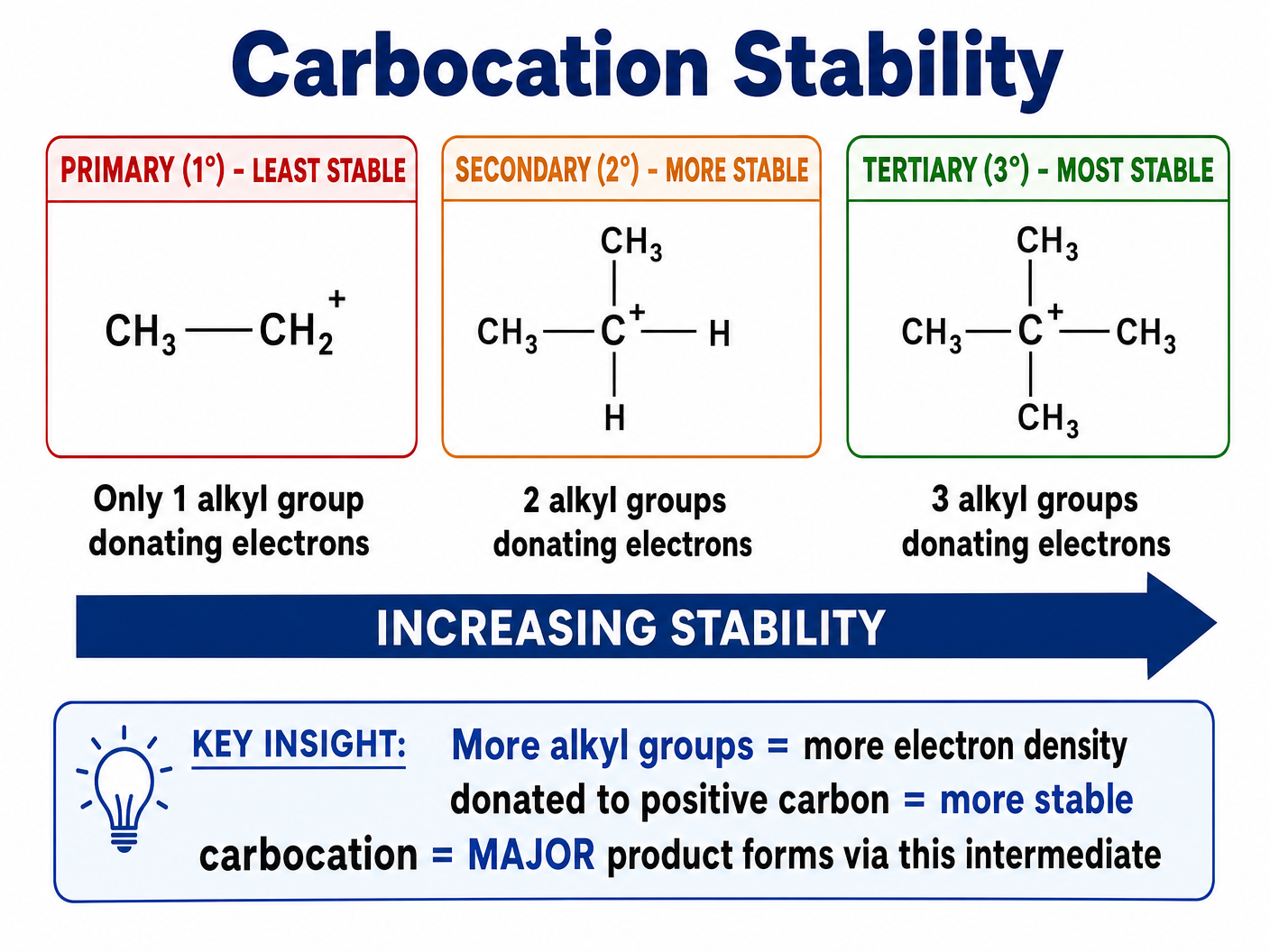
Examiners frequently test your ability to draw reaction mechanisms with precise curly arrows, explain the stability of carbocation intermediates to predict major products, and draw repeating units of polymers. This topic connects strongly with crude oil fractions, environmental chemistry (disposal of plastics), and structural isomerism.
Key Concepts
Concept 1: The Carbon-Carbon Double Bond
The defining feature of an alkene is the C=C double bond. This consists of a standard strong covalent bond (a sigma bond) and a weaker secondary bond (a pi bond) that sits above and below the plane of the atoms. The pi bond represents a region of high electron density. Because it is electron-rich, it strongly attracts electrophiles (electron-deficient species). This is why alkenes undergo electrophilic addition reactions, whereas alkanes generally undergo substitution reactions.
Continue revising: Browse all Chemistry AQA A-Level topics →