OCR · GCSE · Chemistry
Topic 7 is a practical-based topic
Topic 7 is the ultimate toolkit for any aspiring chemist, transforming theoretical knowledge into hands-on practical skills. It covers essential techniques from safe handling to precise measurements and complex separation methods, directly contributing to 15% of your final exam grade.
- 5 min read
- 3 worked examples
- 5 practice questions
- 6 key terms
Study Notes
Overview

Welcome to Topic 7: Practical Skills! This topic is the heartbeat of Chemistry. It is where the theory you learn in the classroom comes to life on the laboratory bench. This topic is designed to equip you with the essential skills required for scientific enquiry, ensuring you can safely use apparatus, perform intricate techniques, and record accurate measurements.
Why does this matter? Because the skills you develop here are not just for the lab—they are directly assessed in your written examinations, accounting for 15% of your total marks. Examiners will test your ability to describe, explain, and evaluate experimental procedures. You will need to draw upon your knowledge of the eight Practical Activity Groups (PAGs) and apply it to new contexts.
Key Concepts
Concept 1: Safe Handling and Risk Assessment
Safety is the paramount concern in any laboratory. You must be able to identify hazards associated with specific chemicals and apparatus, and state appropriate precautions. A hazard is the potential for harm (e.g., concentrated acid is corrosive), while the risk is the likelihood of that harm occurring. Examiners look for specific links between the hazard and the precaution.
Example: When using toxic chlorine gas, the hazard is inhalation causing respiratory damage. The precaution is to carry out the experiment in a working fume cupboard.
Concept 2: Accurate Measurement
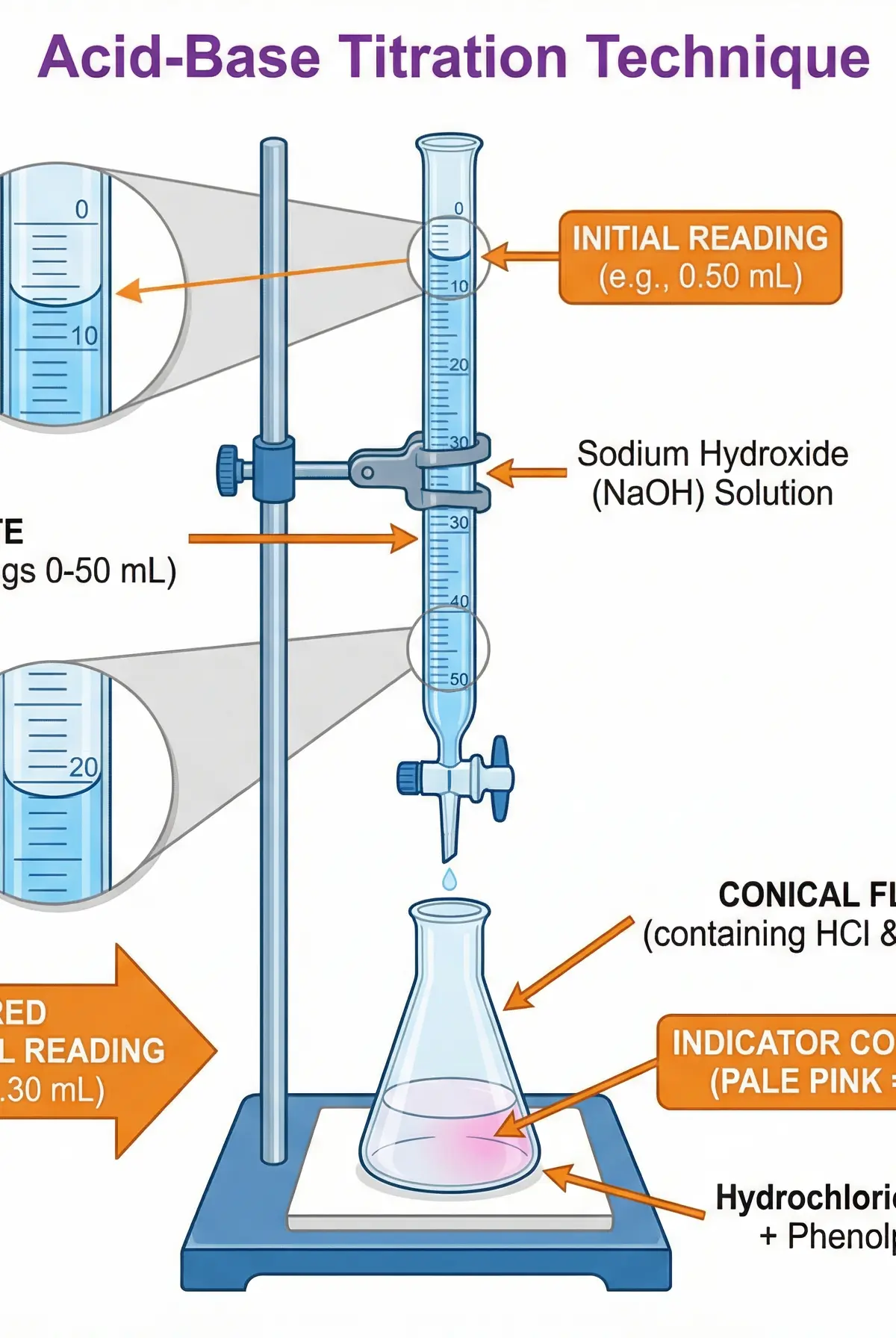
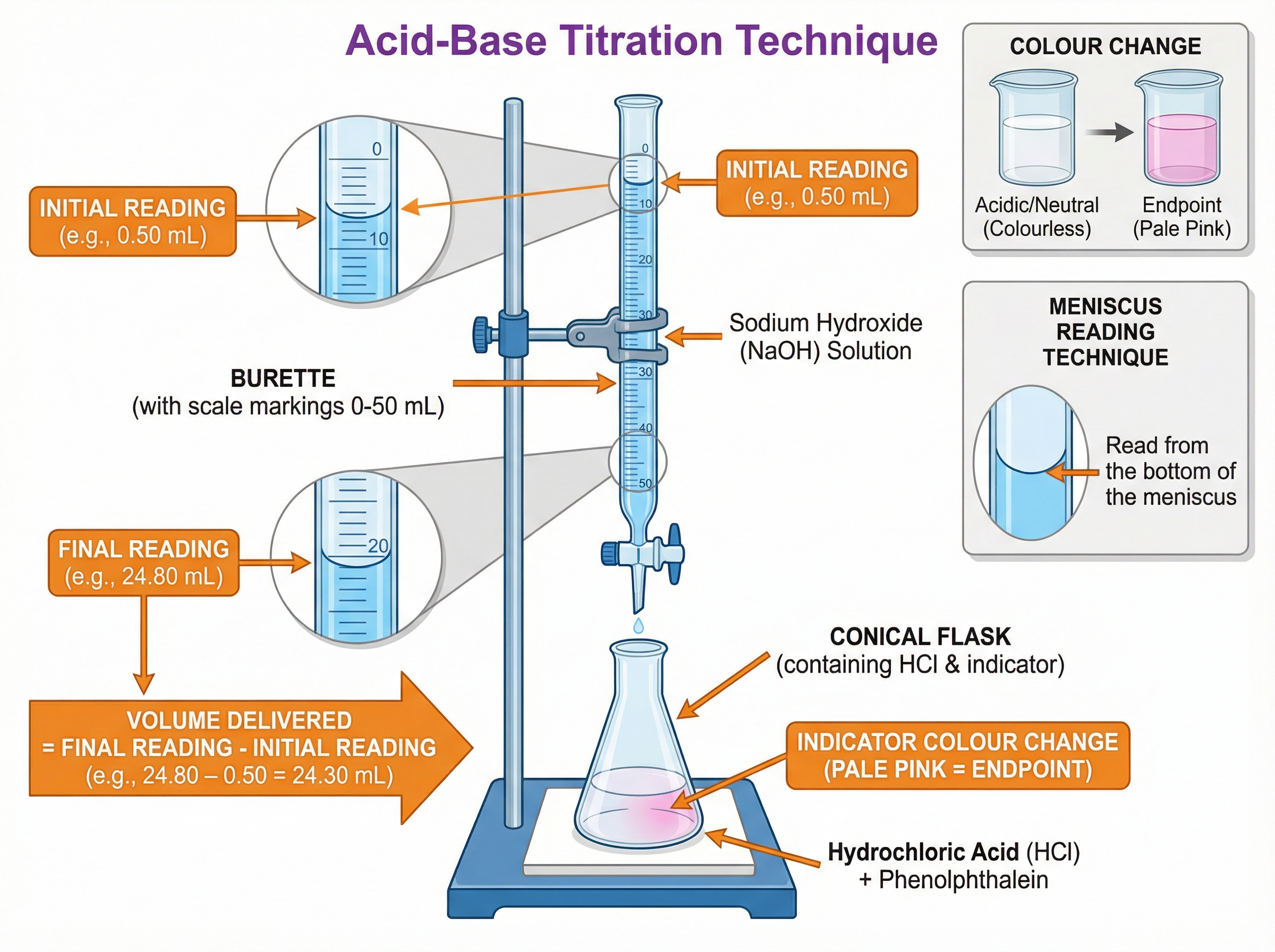
Precision and accuracy in measurement are fundamental. You must select the correct apparatus for the task and read it correctly. For example, when measuring the volume of a liquid, a burette or pipette offers much higher precision than a measuring cylinder. Crucially, when reading a volume, you must read from the bottom of the meniscus (the curve of the liquid surface) at eye level to avoid parallax error.
Example: Recording a mass of 2.50 g on a two-decimal-place balance, rather than just 2.5 g, demonstrates appropriate precision.
Concept 3: Separation Techniques
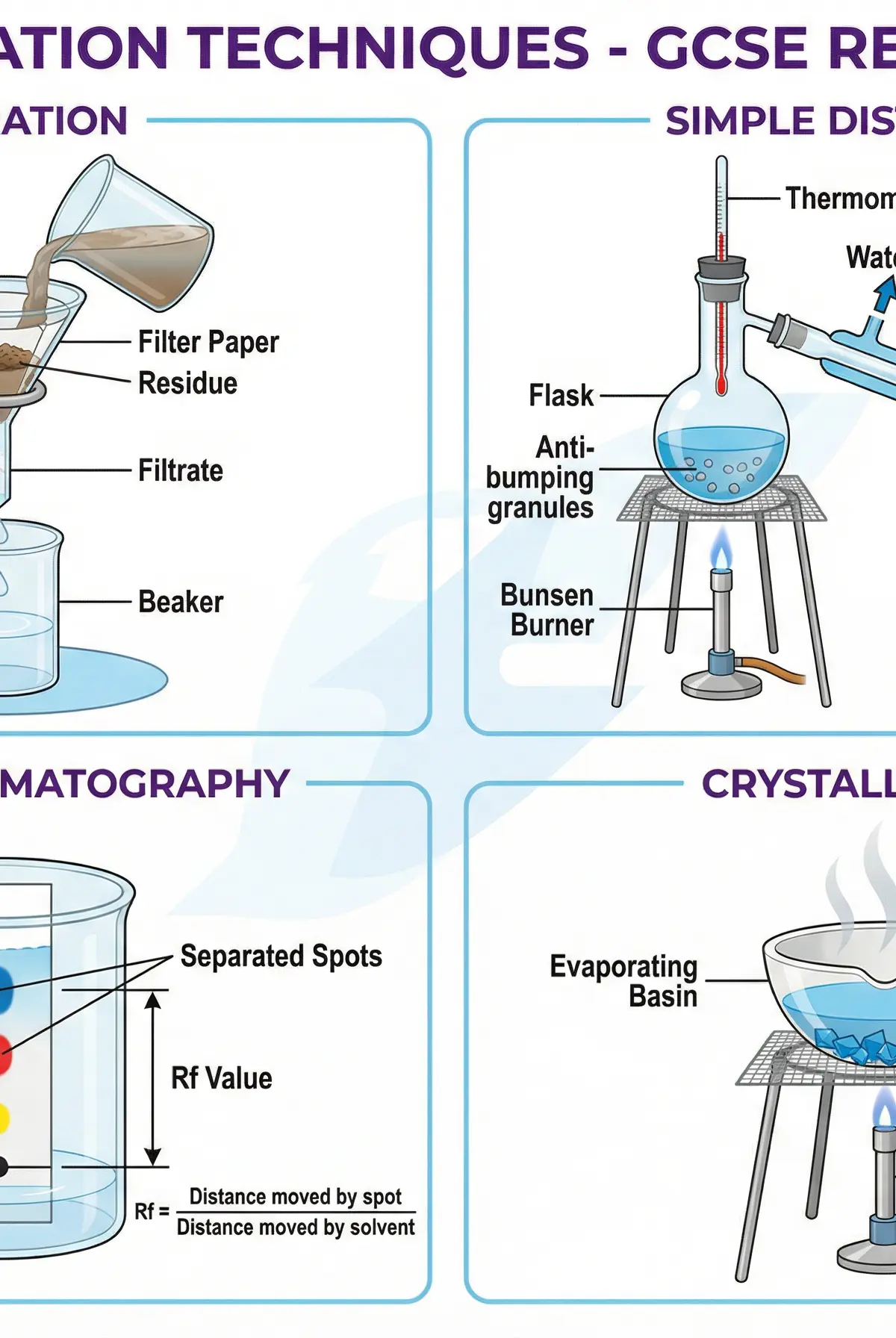
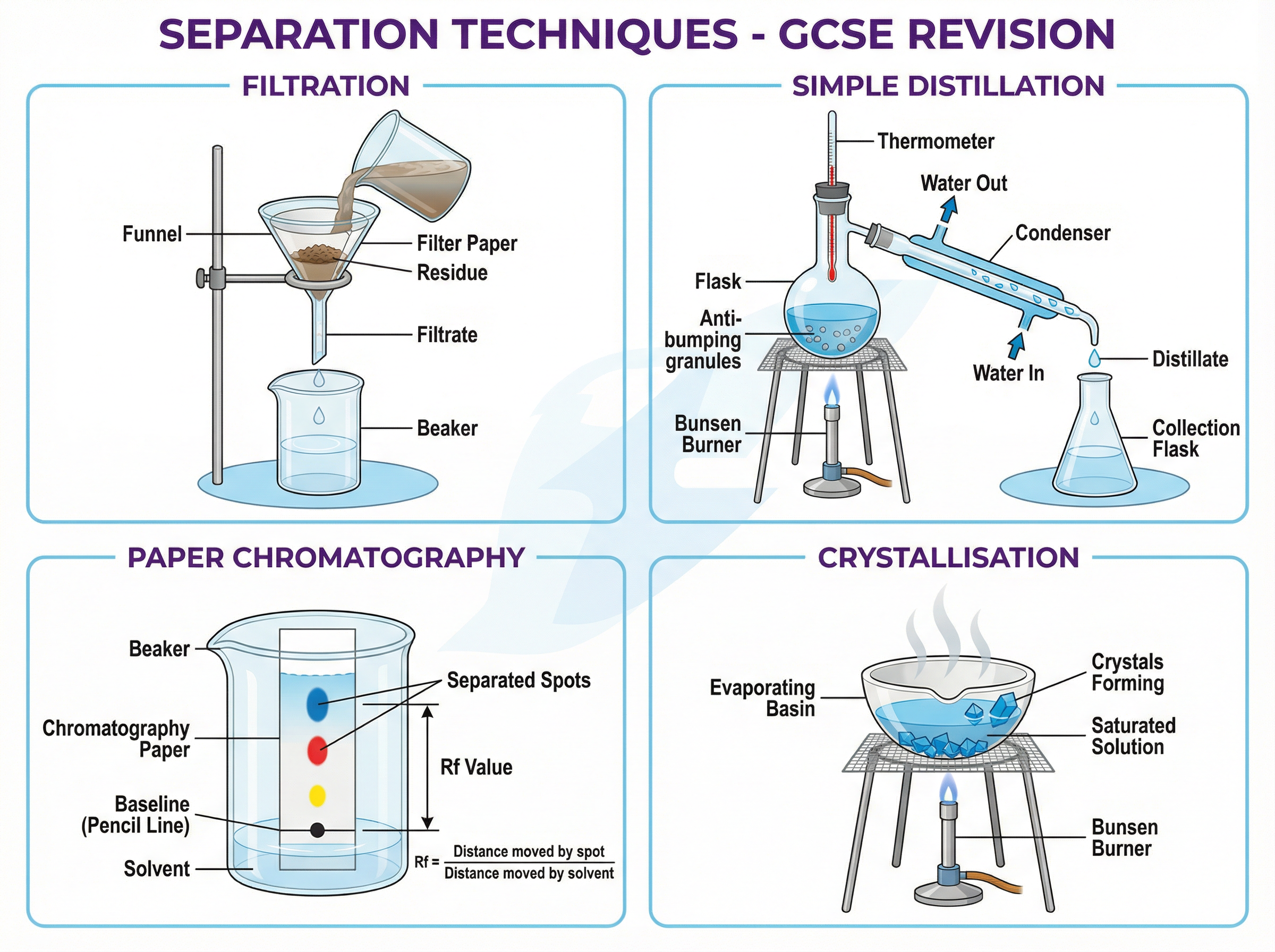
Chemistry often involves isolating pure substances from mixtures. You must master four core techniques:
- Filtration: Separates an insoluble solid from a liquid (e.g., sand from water).
- Crystallisation: Obtains a soluble solid from a solution by evaporating the solvent.
- Simple Distillation: Separates a liquid from a solution, relying on different boiling points.
- Chromatography: Separates mixtures of soluble substances (like inks) based on their relative affinities for the stationary phase (paper) and mobile phase (solvent).
Concept 4: Identification Tests
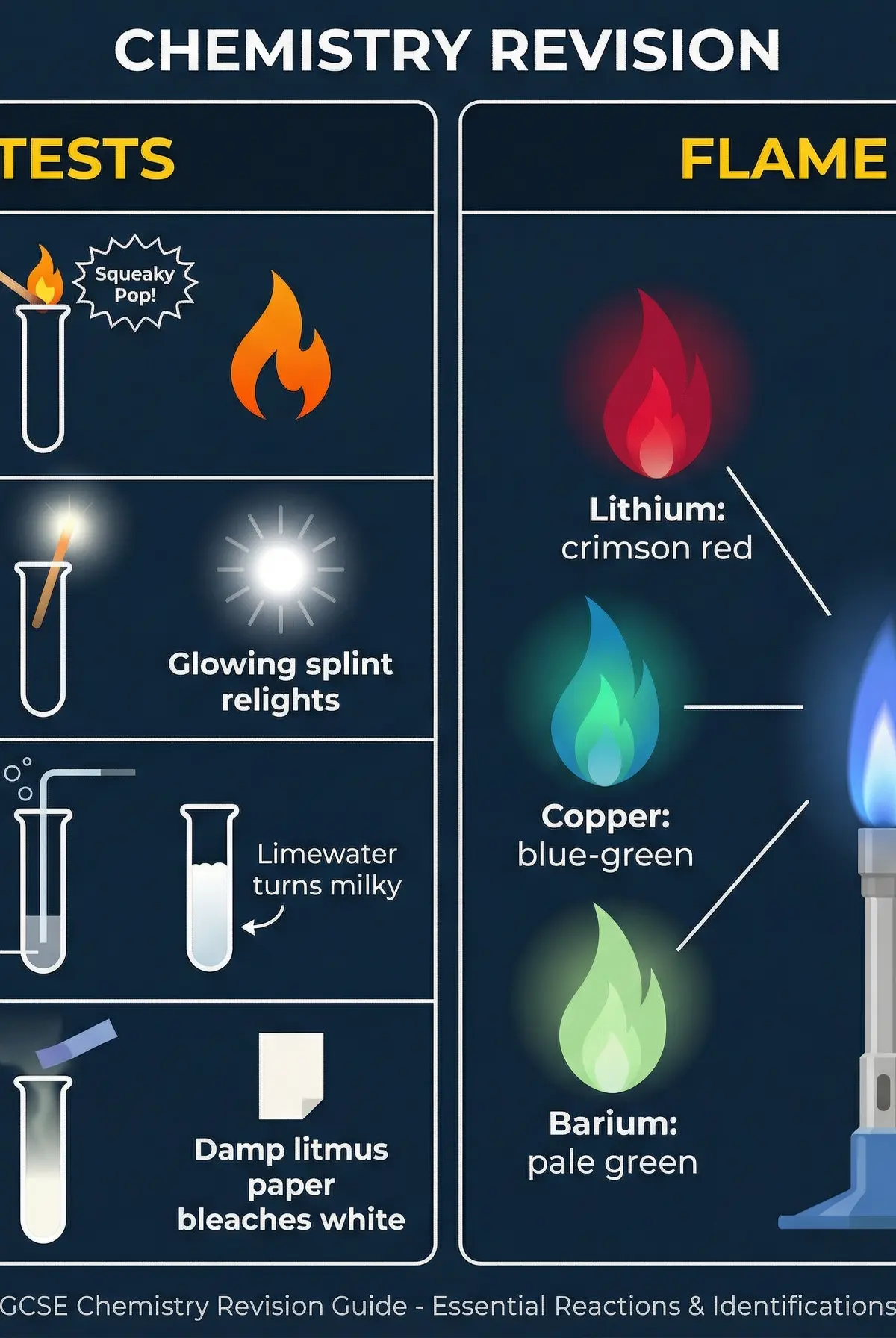
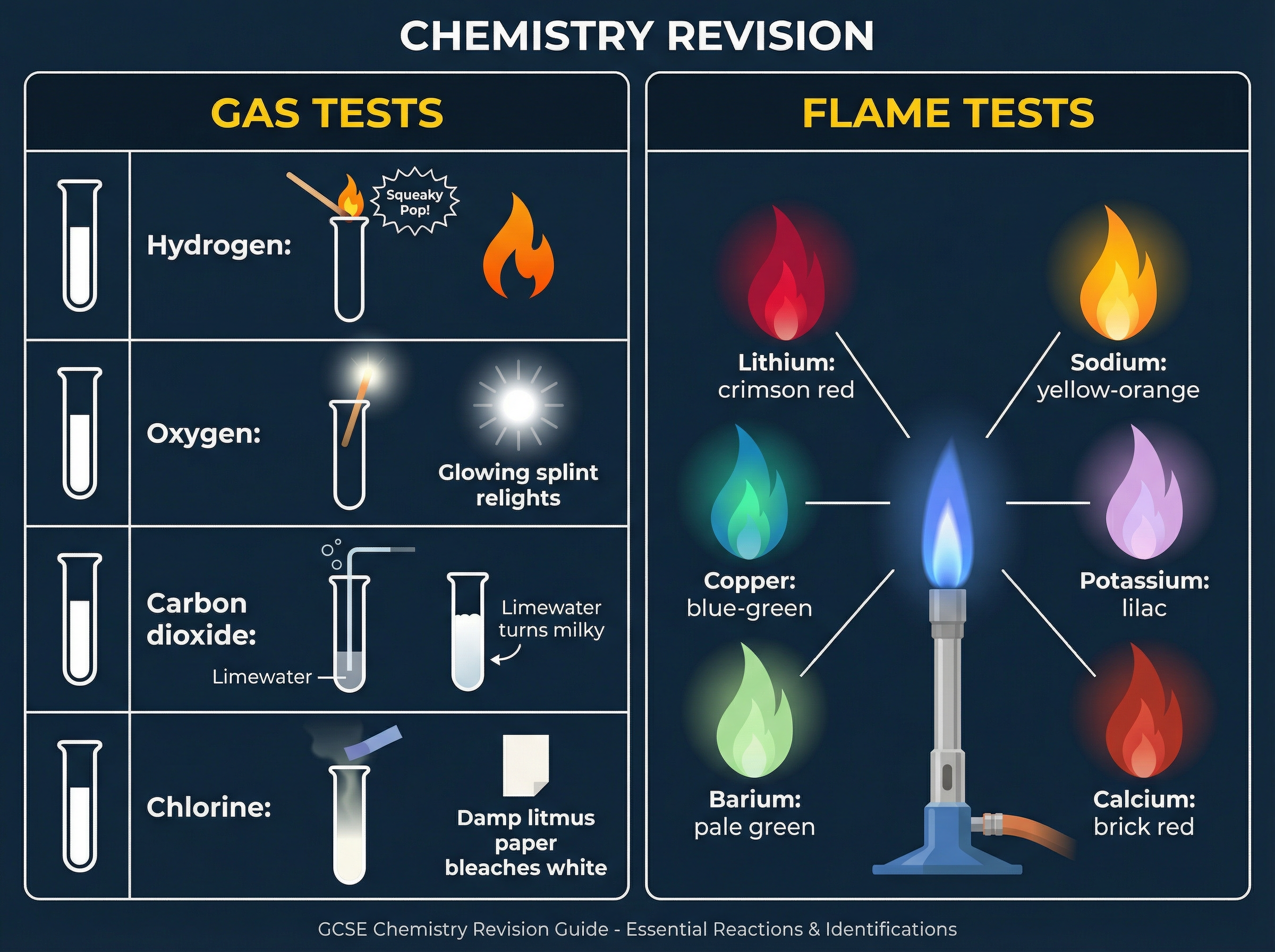
Chemists act as detectives, using specific reactions to identify unknown substances. You must memorize the standard tests for common gases (hydrogen, oxygen, carbon dioxide, chlorine) and the flame test colours for metal ions. These are high-frequency recall questions in exams.
Concept 5: Titration
Titration is a highly precise quantitative technique used to determine the concentration of an unknown solution by reacting it with a solution of known concentration. It requires meticulous technique, including the use of a volumetric pipette, a burette, and a suitable indicator (like phenolphthalein) to identify the exact endpoint of the reaction.
Mathematical/Scientific Relationships
- Rf Value (Chromatography): R_f = \frac{\text{distance moved by substance}}{\text{distance moved by solvent}}. This value is always between 0 and 1 and has no units. It helps identify substances by comparing them to known standards.
- Titration Calculations: n = c \times V, where n is the number of moles, c is the concentration (in mol/dm³), and V is the volume (in dm³). Remember to convert volumes from cm³ to dm³ by dividing by 1000.
Practical Applications
The skills learned here are applied across all scientific disciplines and industries. From pharmaceutical companies synthesising and purifying new drugs, to environmental agencies monitoring water quality using titration and chromatography, these practical techniques are the foundation of real-world scientific progress.
Visual Resources
3 diagrams and illustrations
Interactive Diagrams
2 interactive diagrams to visualise key concepts
Conceptual Flow Outline
Decision tree for choosing the correct separation technique.
Conceptual Flow Outline
Flowchart showing the link between hazard, risk, and precaution.
Worked Examples
3 worked examples — open one to explore the question and available guidance.
Practice Questions
Test your understanding — click to reveal model answers
Describe how you would carry out a flame test to identify the metal ion in an unknown salt. [3 marks]
Hint: Think about how you clean the equipment first, and what type of flame you need.
A student performs a titration and records the following titres: 24.50 cm³, 23.80 cm³, 23.75 cm³, and 23.85 cm³. Calculate the mean titre the student should use. [2 marks]
Hint: Remember that you only average concordant results. Which result is an anomaly?
Explain why a condenser is necessary in simple distillation. [2 marks]
Hint: What happens to the gas once it boils off the mixture?
During a chromatography experiment, a student notices that their spots have spread out horizontally and merged together. Suggest one mistake the student made and how to correct it. [2 marks]
Hint: Think about how the sample was applied to the paper.
Evaluate the use of a measuring cylinder versus a volumetric pipette for measuring 25.0 cm³ of a solution in a titration. [3 marks]
Hint: Consider the resolution and intended purpose of each piece of equipment.
Test your understanding of Topic 7 is a practical-based topic
Active recall beats re-reading. Take an instant quiz now to test what you’ve learned and lock it into long-term memory.
7 days Premium · Then free forever · No card, no charge