OCR · GCSE · Computer Science
Wired and Wireless Networks
Master OCR GCSE Computer Science Topic 2.2: Wired and Wireless Networks. This guide breaks down everything from LANs and WANs to network topologies, hardware, and the crucial TCP/IP model, ensuring you're ready to secure every mark in the exam.
- 6 min read
- 3 worked examples
- 5 practice questions
- 6 key terms
Study Notes
Overview
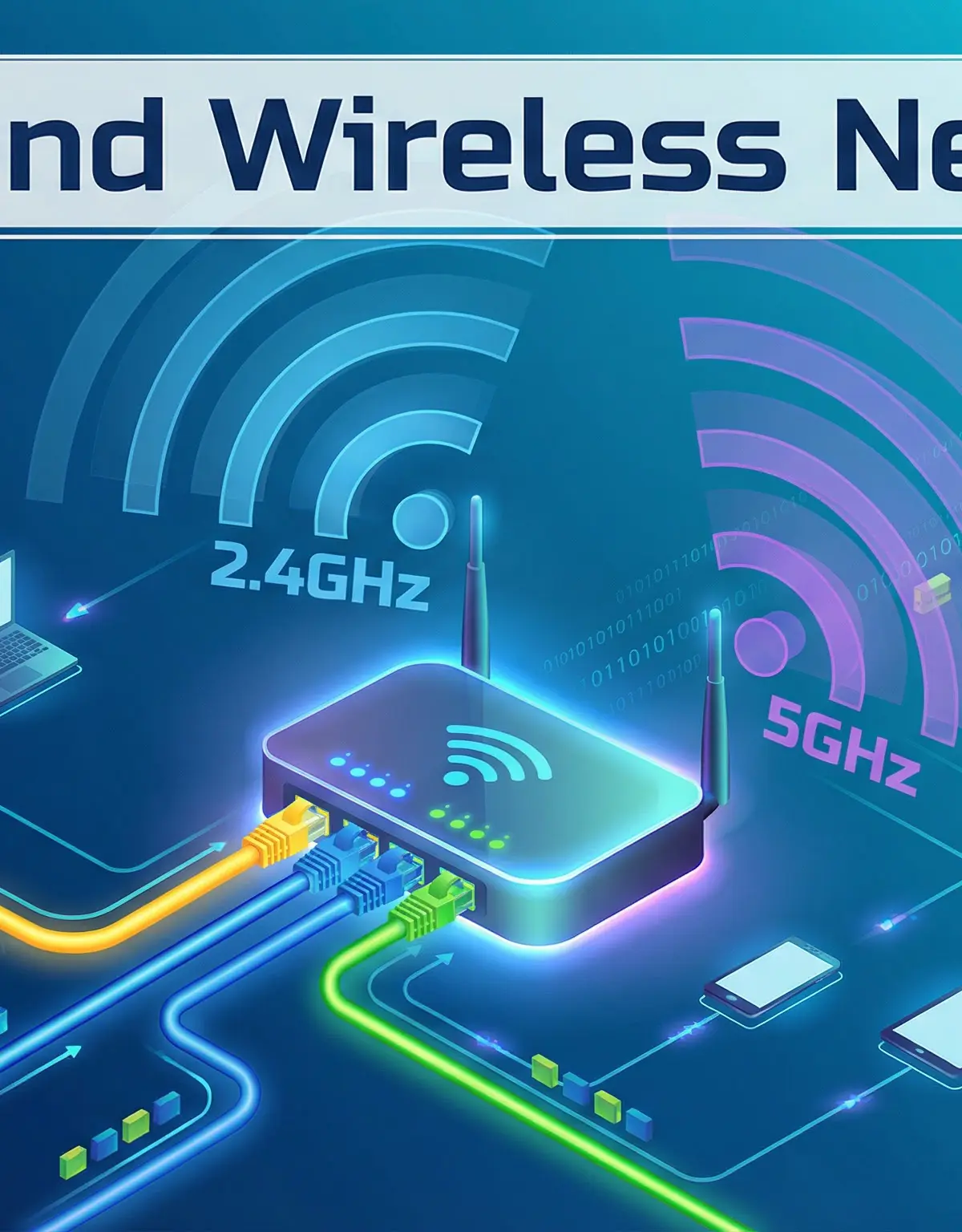
Welcome to your deep dive into Wired and Wireless Networks, a fundamental and heavily-weighted topic in the OCR GCSE Computer Science specification (2.2). This area explores how computers connect to share data, from a small office network to the vast global internet. Understanding this topic is crucial as it forms the backbone of modern computing and is a guaranteed feature in your exam, often tested through a mix of short-answer definition questions and longer, evaluative 8-mark questions. You'll see how this topic provides essential context for understanding cybersecurity (Topic 2.3) and how data is stored and accessed from the cloud. Get ready to explore the hardware, rules, and structures that make our connected world possible.

Key Concepts
Concept 1: LAN vs. WAN
A network is simply two or more computers connected together to share resources. The two main types you need to know are Local Area Networks (LANs) and Wide Area Networks (WANs). The distinction is a frequent source of exam marks.
-
LAN (Local Area Network): Covers a small geographical area, like a single building or a school campus. The most important characteristic for your exam answer is that the organisation owns and controls all its own network infrastructure (cables, switches, servers). Data transmission speeds are typically very high.
-
WAN (Wide Area Network): Covers a large geographical area, connecting LANs together over cities, countries, or even continents. The critical detail is that WANs use hired or third-party infrastructure, such as fibre optic lines from telecommunication companies like BT or Virgin Media. The internet is the largest example of a WAN.
Concept 2: Network Topologies
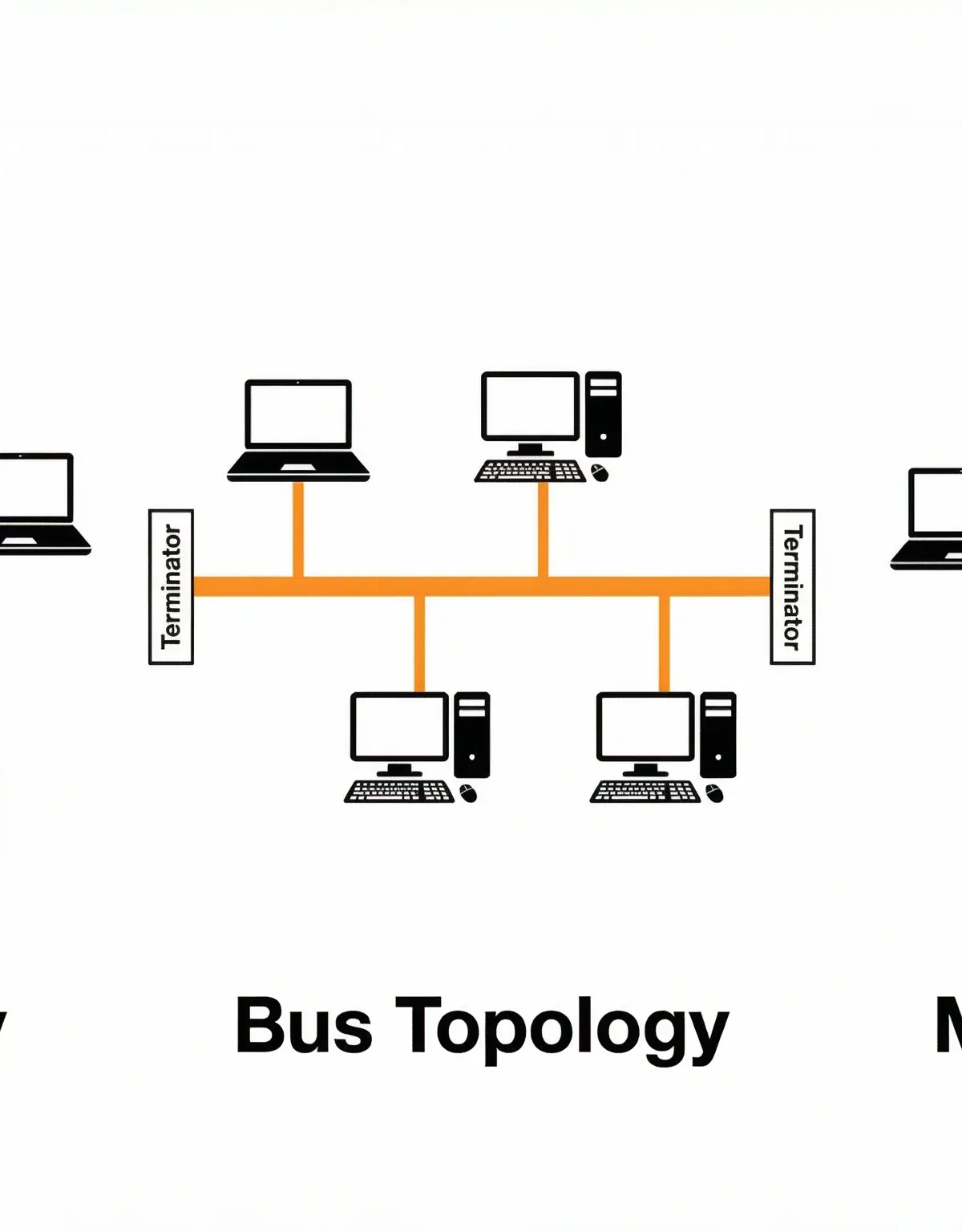
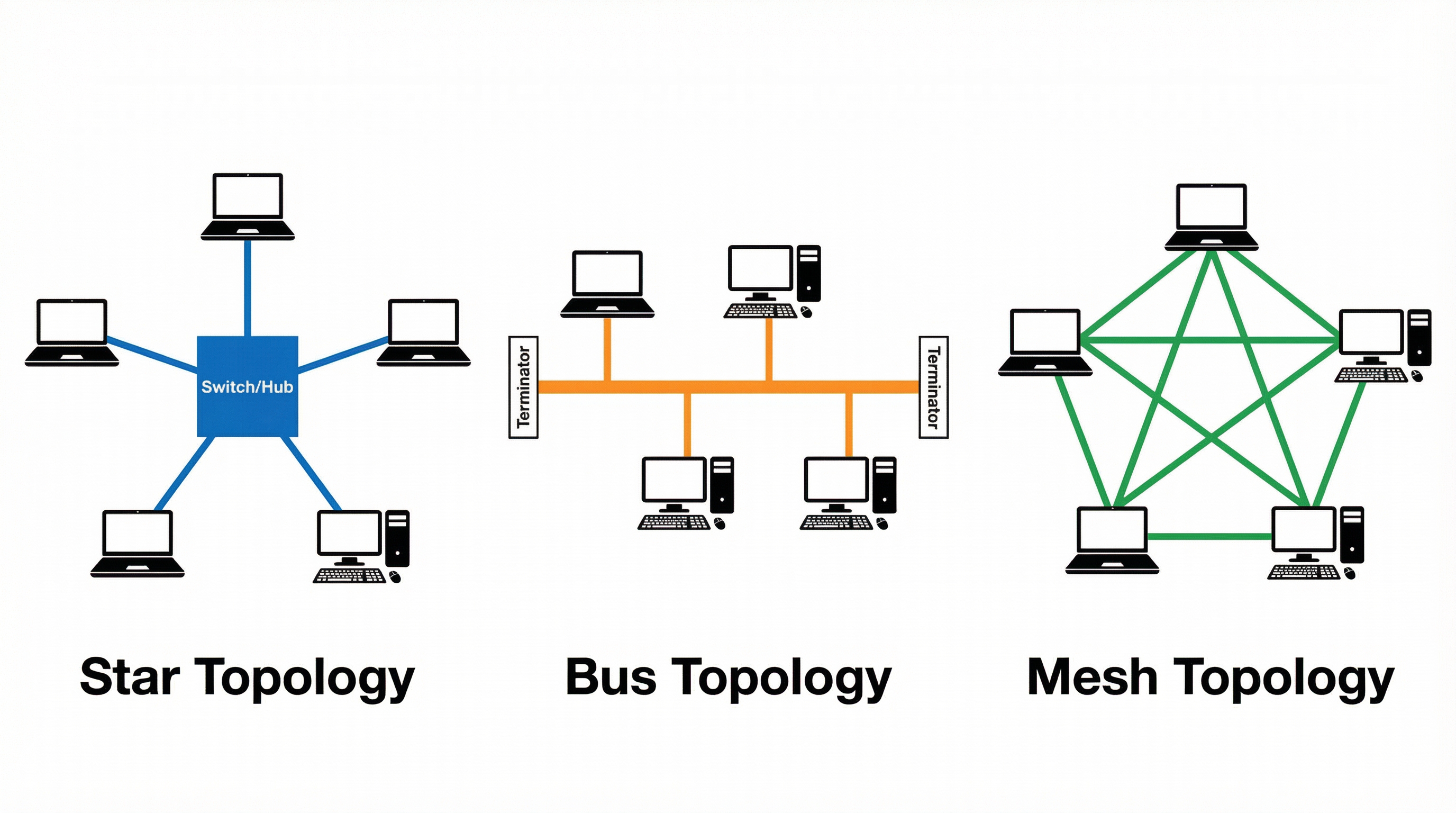
Topology refers to the layout or structure of a network. You must be able to describe and evaluate the Star, Bus, and Mesh topologies.
-
Star Topology: All devices are connected to a central hub or switch. This is the most common topology in modern LANs. Its main advantage is reliability; if one cable fails, only that single device is affected. The central switch also improves performance by sending data only to the intended recipient.
-
Bus Topology: An older design where all devices are connected to a single backbone cable with a terminator at each end. It's cheap to set up, but suffers from a major drawback: if the backbone cable fails, the entire network goes down. Data collisions are also common, as all data travels along the same wire, slowing the network.
-
Mesh Topology: In a full mesh, every device is connected to every other device. This provides excellent redundancy and fault tolerance, as data can be rerouted if a connection fails. However, it is expensive and complex to cable, making it rare for wired LANs but common in wireless networks.
Concept 3: Network Hardware
Candidates frequently confuse the roles of different network hardware. You must be precise.
-
Switch: Operates on a LAN to connect multiple devices. It intelligently filters and forwards data packets to their intended destination by reading the MAC address of each device. This prevents data collisions and improves security.
-
Router: Connects different networks together (e.g., a LAN to a WAN). It uses IP addresses to direct packets to their destination network. Your home router connects your local network to the internet.
-
Wireless Access Point (WAP): Allows wireless devices to connect to a wired network. It acts as a bridge between the wireless and wired parts of a LAN.
-
Network Interface Card (NIC): A hardware component inside a computer that allows it to connect to a network. Each NIC has a unique, hard-coded MAC address.
Concept 4: Wireless Networking
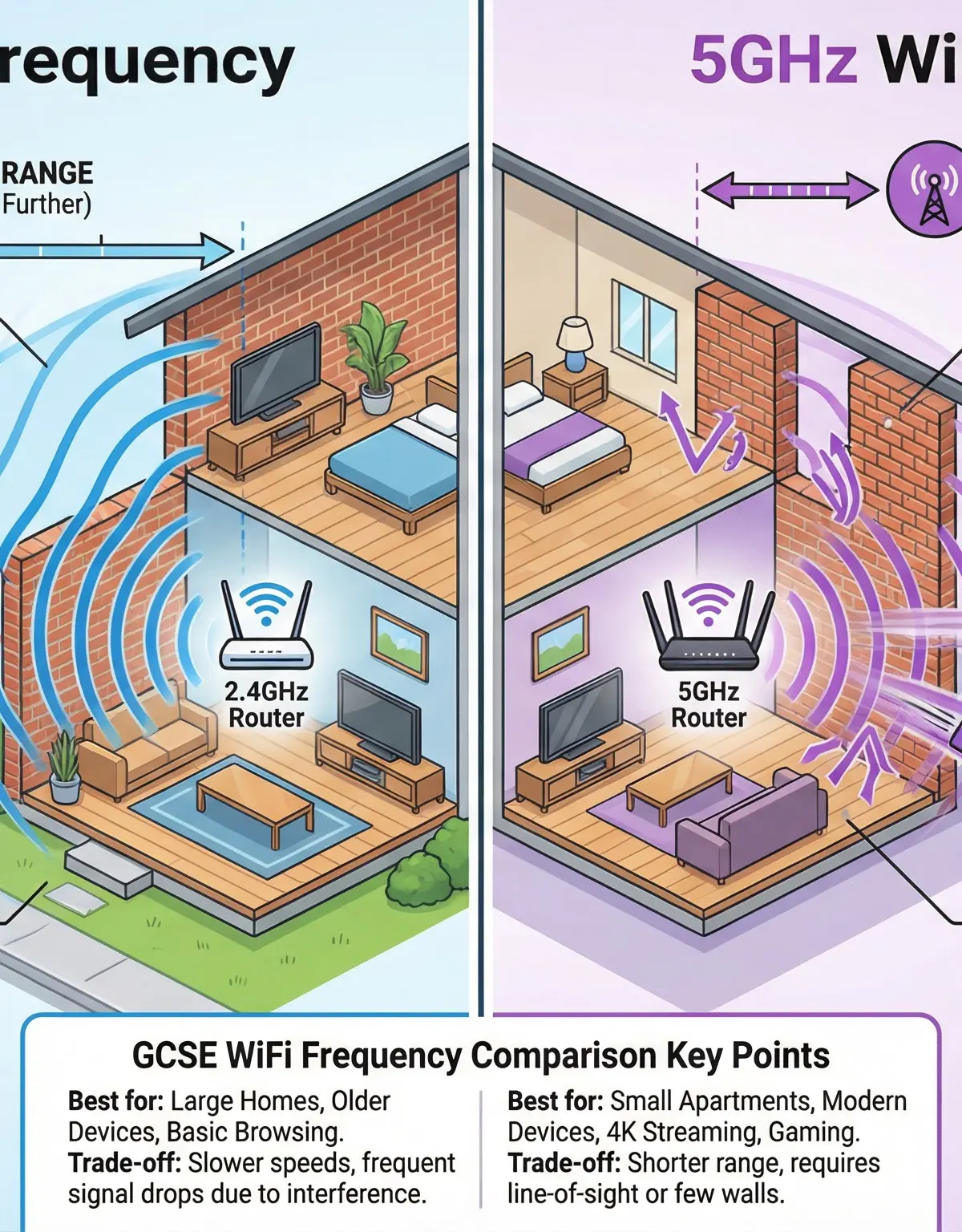
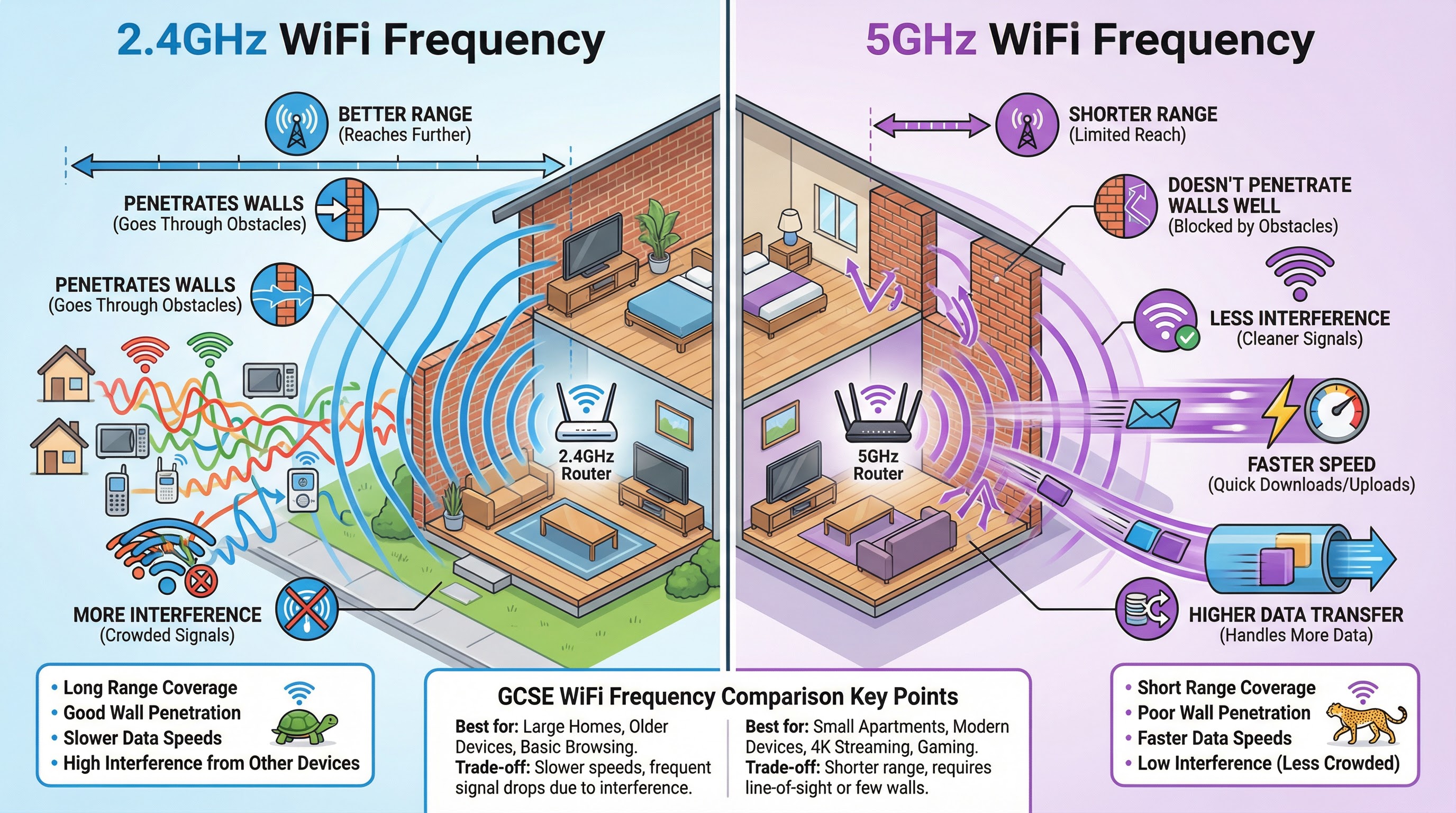
Wireless networks transmit data using radio waves. The two key frequency bands you need to compare are 2.4GHz and 5GHz.
-
2.4GHz Band: Offers greater range and is better at penetrating solid objects like walls. However, it is more susceptible to interference from other devices (microwaves, Bluetooth) and generally has slower data transfer speeds.
-
5GHz Band: Provides faster data transfer speeds and suffers from less interference. Its main drawbacks are a shorter range and being more easily blocked by walls and other obstacles.
Concept 5: The TCP/IP Four-Layer Model
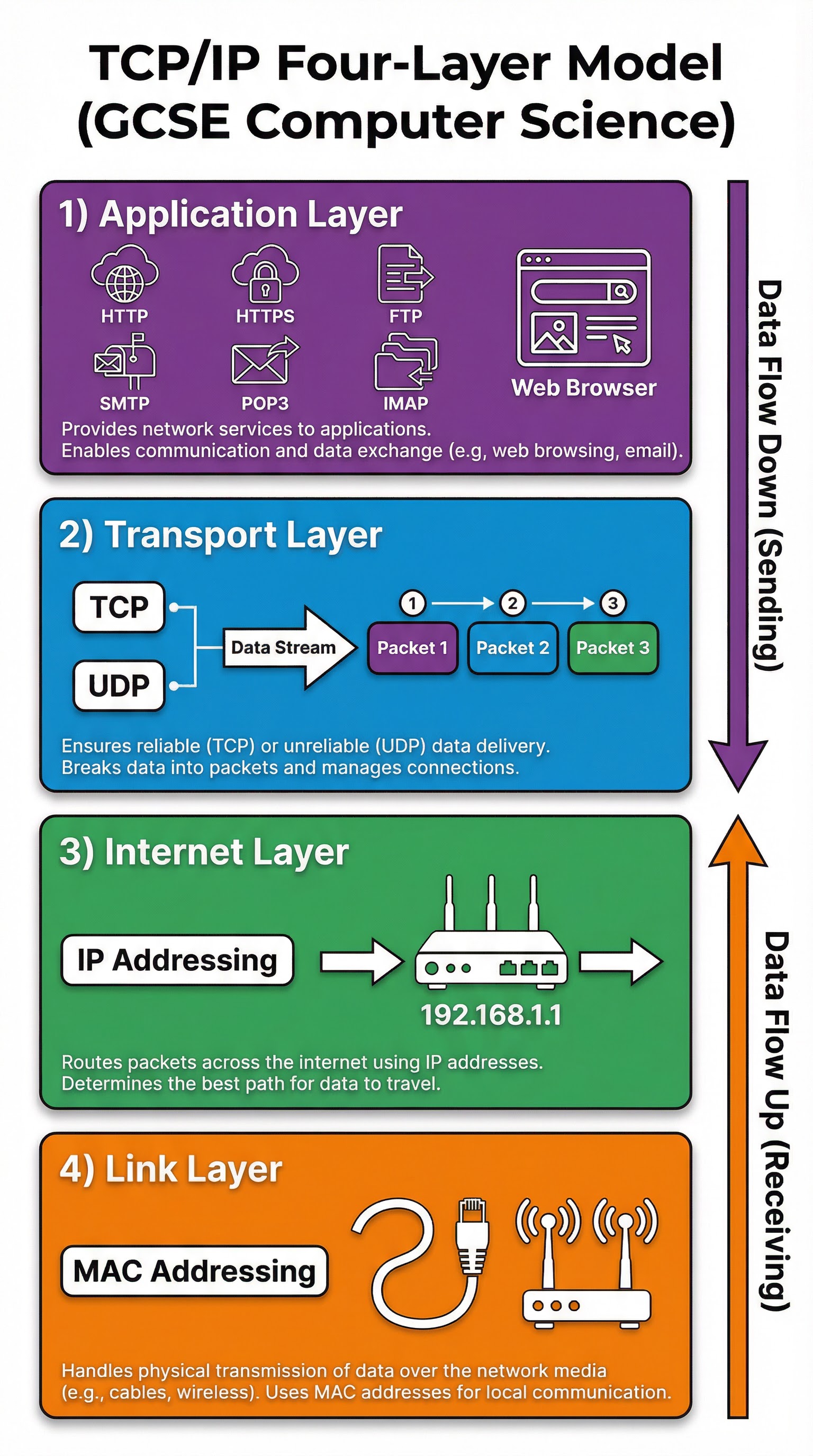
TCP/IP is a protocol stack—a set of rules that governs how data is transmitted over a network. You must know the four layers in order and their functions.
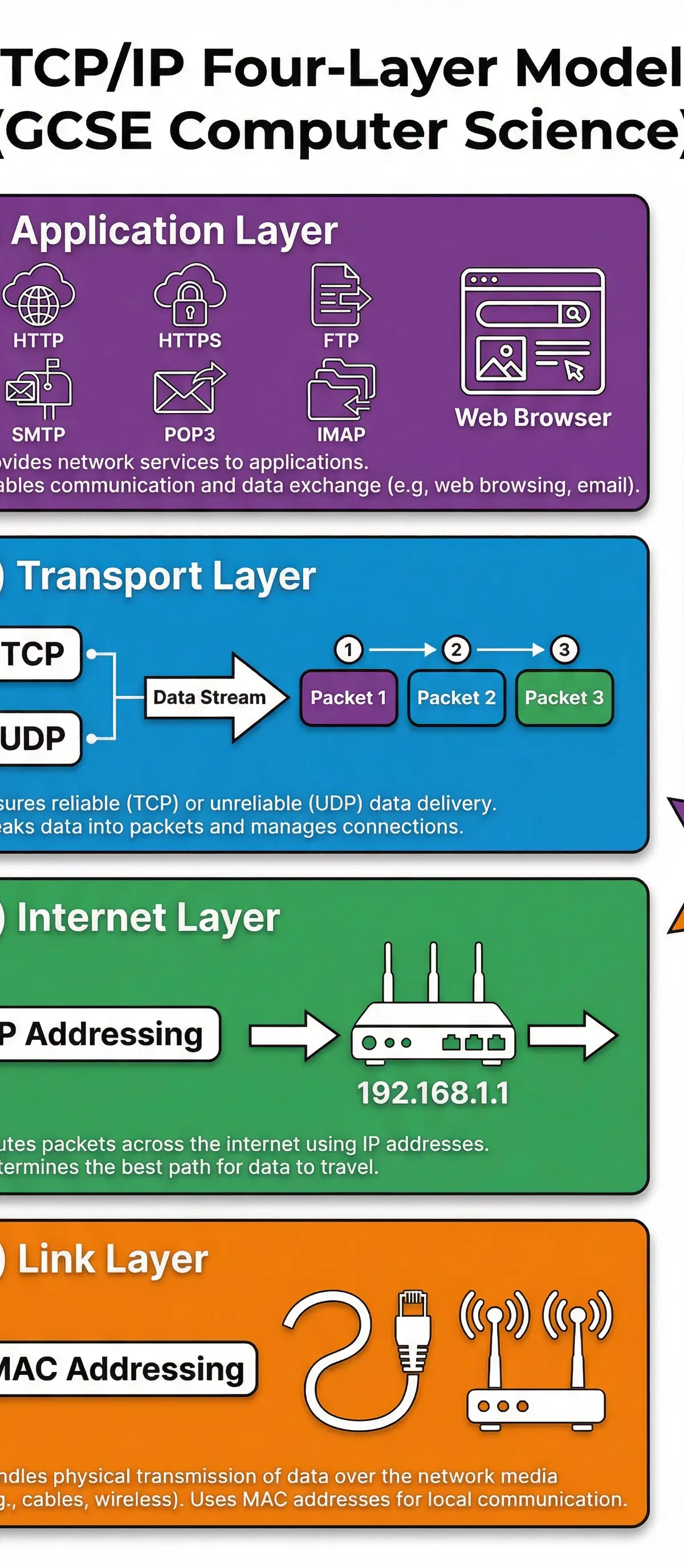
- Application Layer: Where network applications, such as web browsers or email clients, operate. Protocols like HTTP, HTTPS, SMTP, and FTP are found here.
- Transport Layer: Splits the data into smaller packets (using TCP) and adds packet numbers so they can be reassembled correctly at the destination. It manages the connection between the two hosts.
- Internet Layer: Adds the source and destination IP addresses to each packet. This is where routing happens, using routers to forward packets across networks.
- Link Layer: The physical layer of the network. It adds the MAC address of the source and destination devices and handles the physical transmission of data over cables or radio waves.
Concept 6: DNS (Domain Name System)
The DNS acts as the internet's phonebook. Humans access websites using memorable domain names (e.g., www.ocr.org.uk), but computers communicate using IP addresses. The DNS is responsible for translating domain names into their corresponding IP addresses. When you type a URL, your computer sends a request to a DNS server, which looks up the IP address and returns it, allowing your browser to connect to the correct web server.
Visual Resources
3 diagrams and illustrations
Interactive Diagrams
2 interactive diagrams to visualise key concepts
Conceptual Flow Outline
Flowchart showing the steps of a DNS lookup.
Conceptual Flow Outline
Diagram showing how data flows down the TCP/IP layers for sending and up for receiving.
Worked Examples
3 worked examples — open one to explore the question and available guidance.
Practice Questions
Test your understanding — click to reveal model answers
State the purpose of a MAC address. [1 mark]
Hint: Think about which piece of hardware uses this address and on what type of network.
Describe the role of the Transport Layer in the TCP/IP model. [3 marks]
Hint: Think about how large files are sent over a network. What needs to happen to them first?
A business is setting up a new office. The manager decides to use a wired LAN. Explain one benefit and one drawback of using a wired connection compared to a wireless connection. [4 marks]
Hint: Think about speed, security, and convenience.
Explain why a network might use both the 2.4GHz and 5GHz frequency bands. [4 marks]
Hint: Consider the different strengths of each band and how they could complement each other.
A school has a bus network topology. The headteacher is complaining the network is slow and unreliable. Evaluate the school's decision to use a bus topology. [8 marks]
Hint: This is an 'evaluate' question. You need to consider both the pros and cons of a bus topology and then make a final judgement.