OCR · GCSE · Economics
Elasticity of Demand (Price, Income, Cross)
This guide provides a comprehensive overview of the concept of Elasticity of Demand for OCR GCSE Economics (J205). It covers Price, Income, and Cross Elasticity, equipping students with the knowledge to analyze market behavior, make informed business decisions, and excel in their exams.
- 3 min read
- 3 worked examples
- 5 practice questions
- 6 key terms
Study Notes

Overview
Elasticity of Demand is a fundamental concept in economics that measures the responsiveness of quantity demanded to a change in a variable such as price or income. For the OCR GCSE Economics exam, a thorough understanding of Price Elasticity of Demand (PED), Income Elasticity of Demand (YED), and Cross Elasticity of Demand (XED) is crucial. Examiners expect candidates to not only calculate elasticity coefficients but also to interpret their meaning and apply them to real-world scenarios, such as business pricing strategies and government policy decisions. This guide will break down these concepts, provide worked examples, and offer exam-focused advice to help you secure top marks.
Key Concepts
Price Elasticity of Demand (PED)
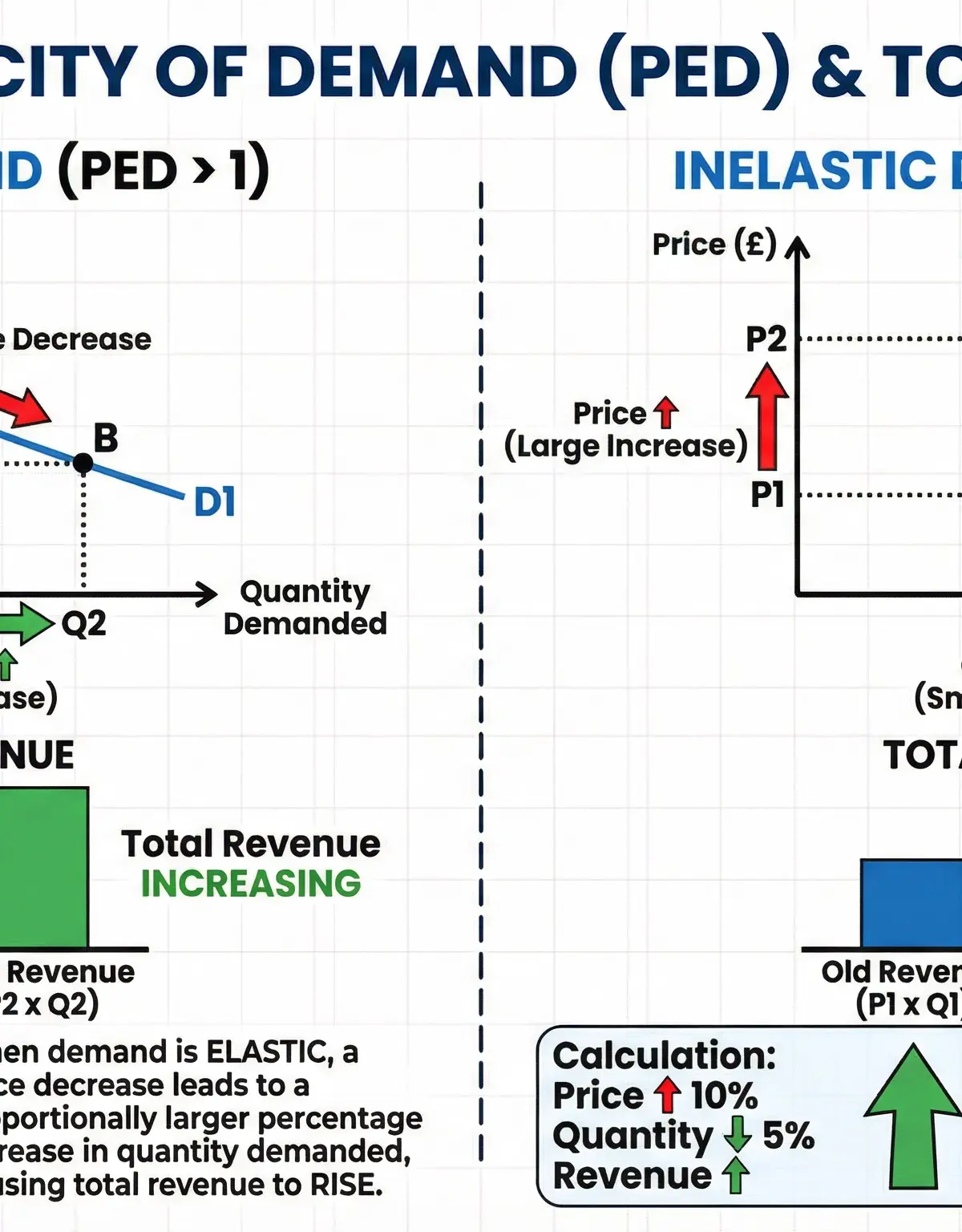
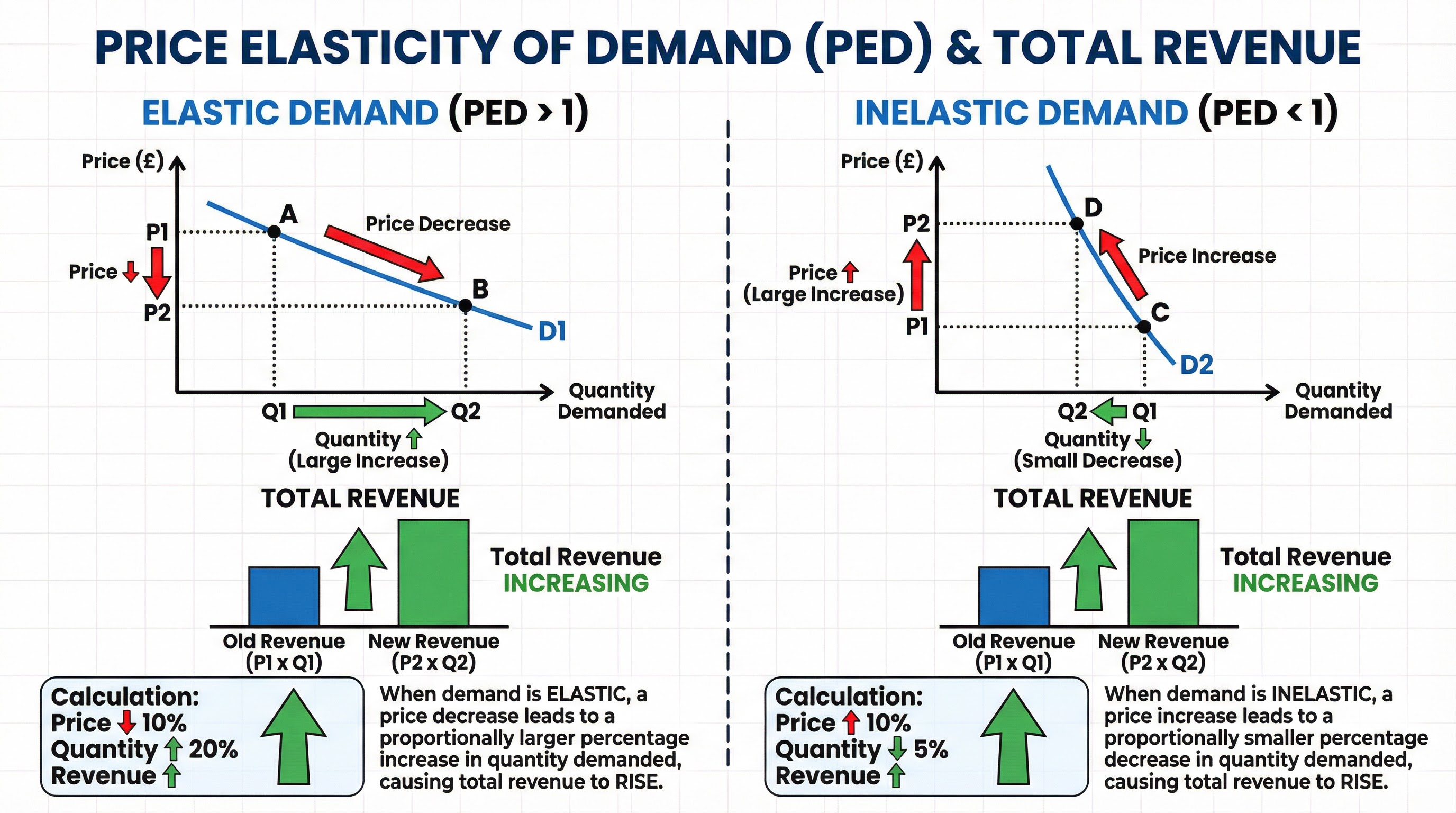
PED measures how much the quantity demanded of a good changes in response to a change in its price. The formula is:
PED = % Change in Quantity Demanded / % Change in Price
- Elastic Demand (PED > 1): A change in price leads to a more than proportional change in quantity demanded. These are typically luxury goods or goods with many substitutes.
- Inelastic Demand (PED < 1): A change in price leads to a less than proportional change in quantity demanded. These are typically necessities or addictive goods.
- Unitary Elasticity (PED = 1): A change in price leads to a proportional change in quantity demanded.
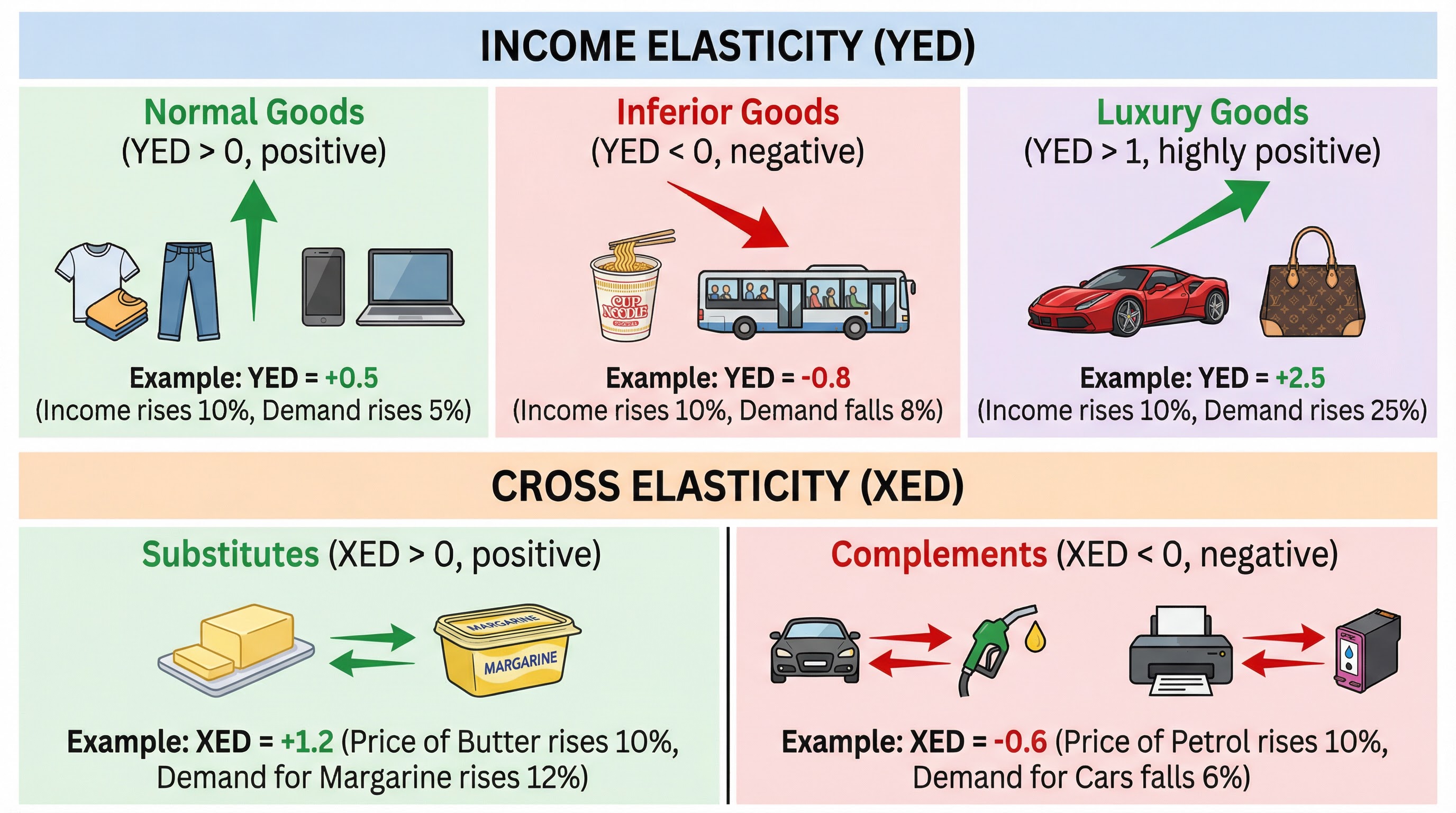
Income Elasticity of Demand (YED)
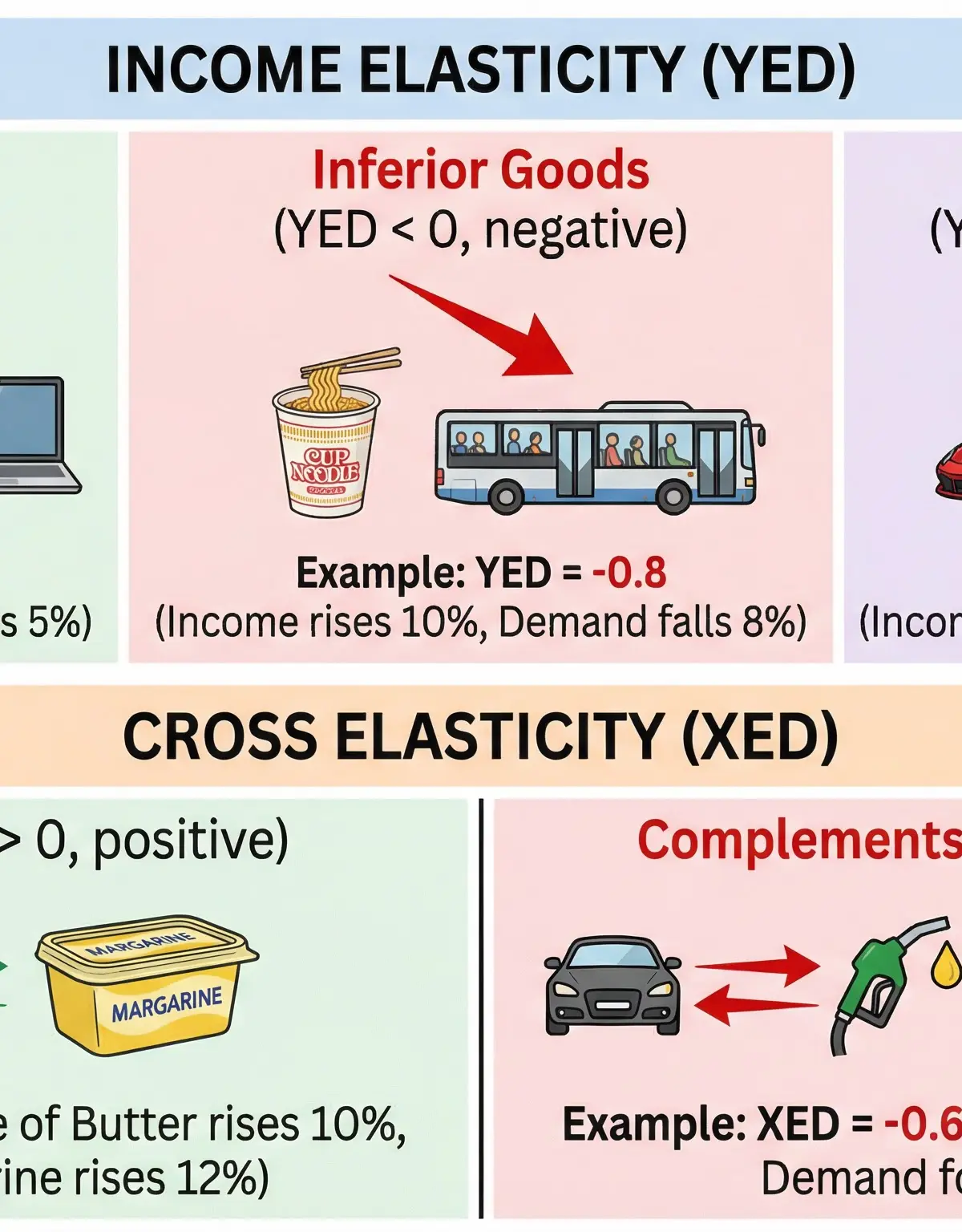
YED measures how much the quantity demanded of a good changes in response to a change in consumer income. The formula is:
YED = % Change in Quantity Demanded / % Change in Income
- Normal Goods (YED > 0): As income rises, demand increases.
- Inferior Goods (YED < 0): As income rises, demand decreases.
- Luxury Goods (YED > 1): A type of normal good where an increase in income causes an even bigger increase in demand.
Cross Elasticity of Demand (XED)
XED measures how much the quantity demanded of one good changes in response to a change in the price of another good. The formula is:
XED = % Change in Quantity Demanded of Good A / % Change in Price of Good B
- Substitutes (XED > 0): An increase in the price of one good leads to an increase in demand for the other (e.g., Coke and Pepsi).
- Complements (XED < 0): An increase in the price of one good leads to a decrease in demand for the other (e.g., printers and ink cartridges).
Determinants of PED: The SPLAT Framework

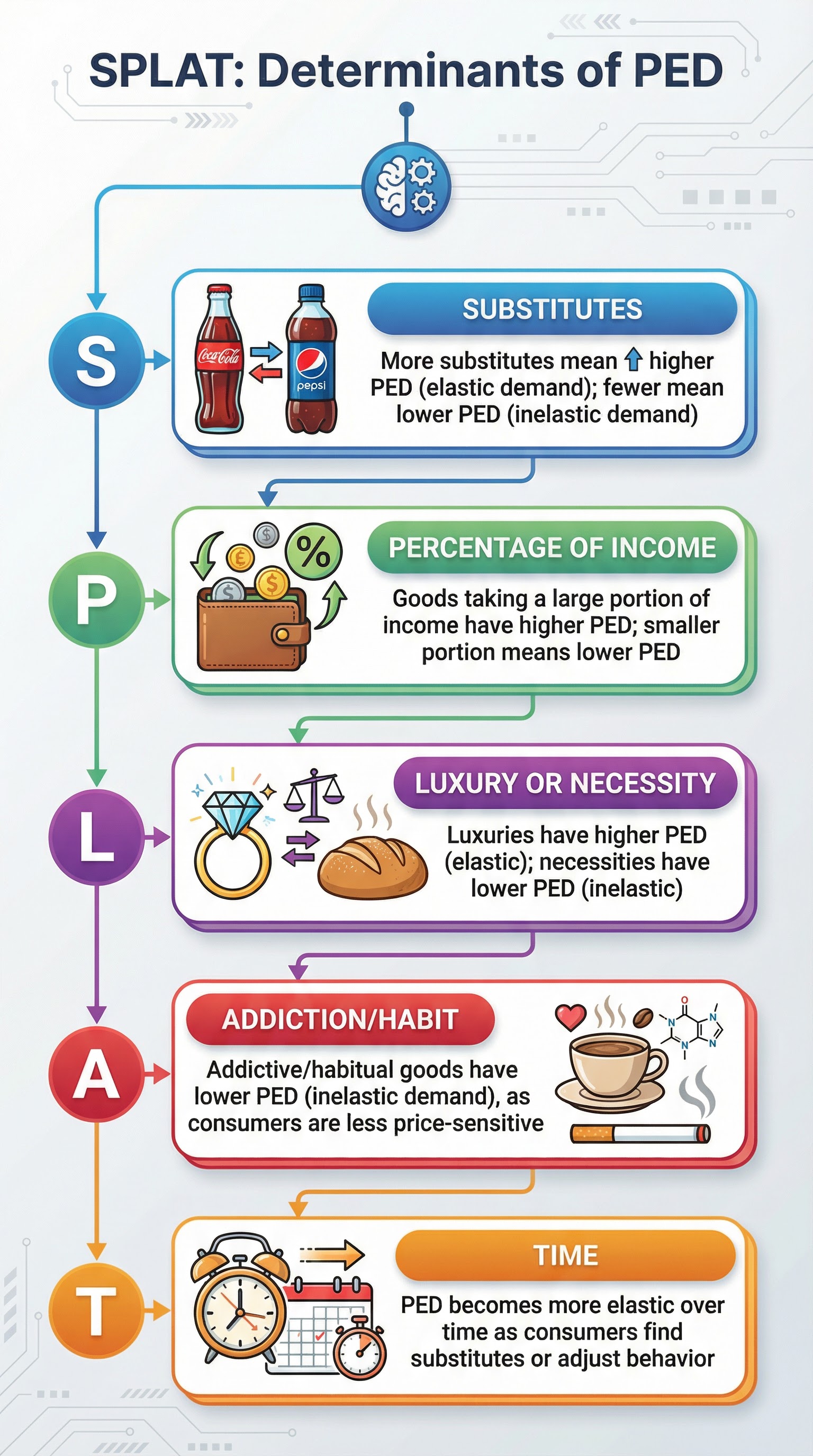
To analyze why a product has a certain PED, use the SPLAT framework:
- Substitutes: The more substitutes, the more elastic.
- Percentage of Income: The higher the percentage of income, the more elastic.
- Luxury or Necessity: Luxuries are elastic; necessities are inelastic.
- Addiction: Addictive goods are inelastic.
- Time: Demand becomes more elastic over time.
Visual Resources
3 diagrams and illustrations
Interactive Diagrams
1 interactive diagram to visualise key concepts
Conceptual Flow Outline
The relationship between PED and Total Revenue
Worked Examples
3 worked examples — open one to explore the question and available guidance.
Practice Questions
Test your understanding — click to reveal model answers
The price of a cinema ticket increases from £8 to £10. As a result, the number of tickets sold per week falls from 1,000 to 800. Calculate the PED for cinema tickets. (4 marks)
Hint: First, calculate the percentage change in price and quantity demanded.
Explain two factors that could make the demand for a product more price elastic. (6 marks)
Hint: Use the SPLAT framework.
A local council is considering increasing the price of parking in the city center. Evaluate this decision using the concept of PED. (12 marks)
Hint: Consider the factors that would make parking elastic or inelastic, and the potential consequences of the price increase.
The YED for foreign holidays is +2.5. Explain what this means. (4 marks)
Hint: Consider the sign and the magnitude of the YED value.
The XED between two products is -1.5. Explain the relationship between these two products. (4 marks)
Hint: Consider the sign of the XED value.
Test your understanding of Elasticity of Demand (Price, Income, Cross)
Active recall beats re-reading. Take an instant quiz now to test what you’ve learned and lock it into long-term memory.
7 days Premium · Then free forever · No card, no charge