OCR · GCSE · Economics
Globalisation
This guide delves into the complex world of globalisation, exploring how interconnected our economies have become. It's a crucial topic for your OCR GCSE Economics exam, and mastering it will help you understand the forces shaping our modern world and unlock top marks."
- 6 min read
- 3 worked examples
- 5 practice questions
Study Notes
Overview
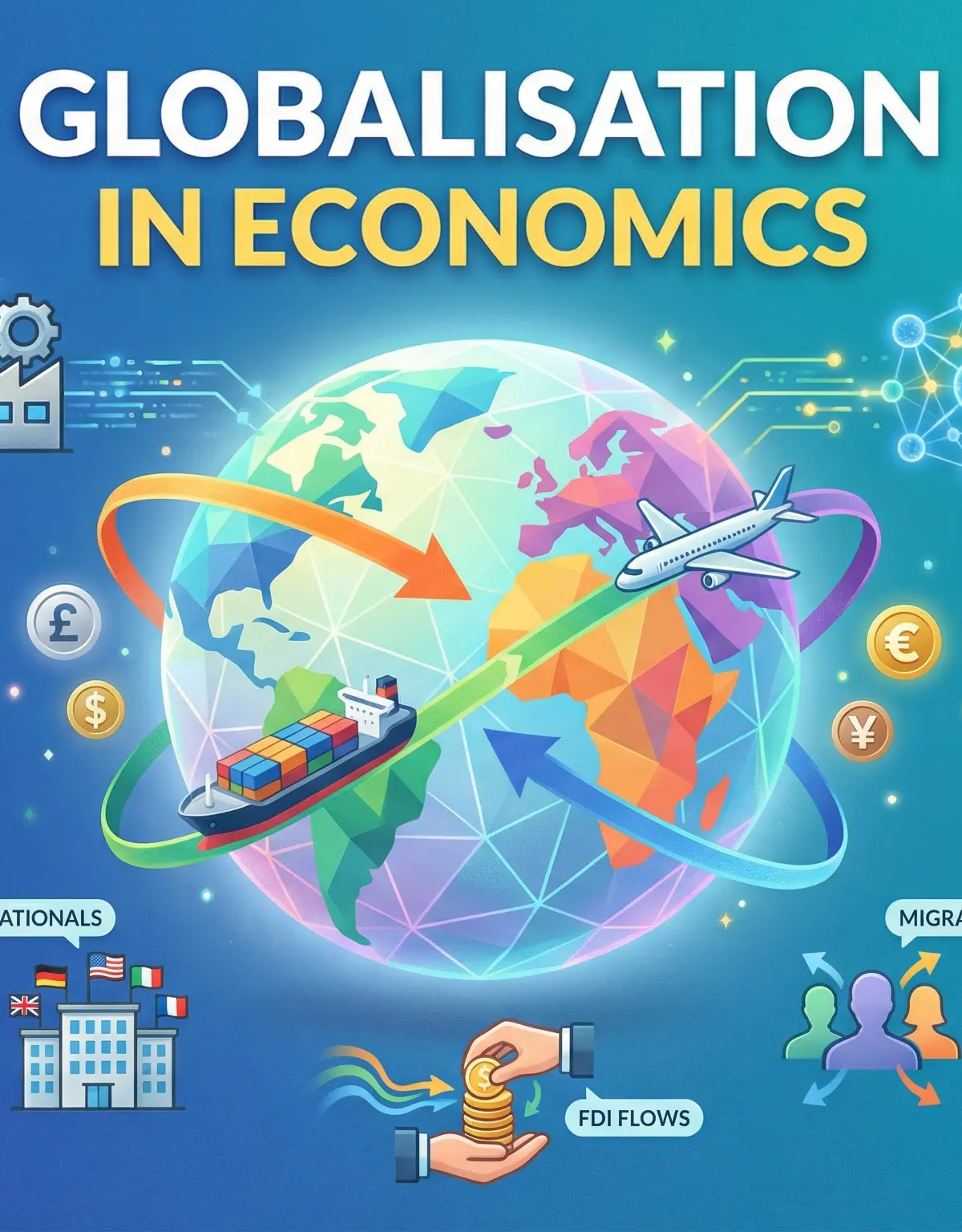
Globalisation is a core concept in OCR J205 Component 02, representing the ever-increasing integration of national economies into a single global economy. Examiners expect candidates to understand this not as a vague idea, but as a concrete process driven by technology, policy, and corporate strategy. This involves the growth of international trade, the rise of Multinational Corporations (MNCs), and significant flows of investment and migration across borders. A strong response will move beyond simple definitions to analyse the varied and often contradictory impacts of this process on different economic stakeholders: consumers, producers, workers, and governments. This guide will equip you with the precise knowledge and analytical skills needed to deconstruct exam questions, apply economic models, and evaluate the multifaceted consequences of globalisation.
Key Concepts & Developments
The Drivers of Globalisation
What is happening: The pace of globalisation has accelerated dramatically in the last 50 years. This is not accidental, but the result of two main drivers:
- Technological Advancement: The development of containerisation drastically reduced the cost of shipping goods. The internet and fibre optics have made international communication and financial transfers instantaneous and virtually free. Cheaper air travel has facilitated international business and migration.
- Political and Economic Liberalisation: Governments have actively pursued policies to open their economies. This includes the reduction or removal of tariffs (taxes on imports) and quotas (limits on imports). Furthermore, international organisations like the World Trade Organisation (WTO) have created a framework of rules to promote free trade between member nations.
Why it matters: For the exam, you must be able to explain how these factors lead to increased integration. For example, lower transport costs make it profitable for a UK firm to export to Australia, widening their market. The internet allows a UK-based architect to sell their services to a client in the USA, boosting trade in services.
The Role of Multinational Corporations (MNCs)
What they are: An MNC is a company that has its headquarters in one country but operates in at least one other country. Examples include well-known brands like Apple (USA), Toyota (Japan), and Shell (UK/Netherlands).
Key Actions: MNCs globalise production by establishing factories and operations in countries where they can minimise costs (e.g., lower labour costs in Southeast Asia) or be closer to large markets (e.g., a German car maker building a factory in the USA). This process is known as Foreign Direct Investment (FDI).
Impact: MNCs are powerful agents of globalisation. They bring investment, technology, and jobs to host countries, but also face criticism for avoiding tax, exploiting workers, and damaging the environment. Credit will be given for analysing these trade-offs.
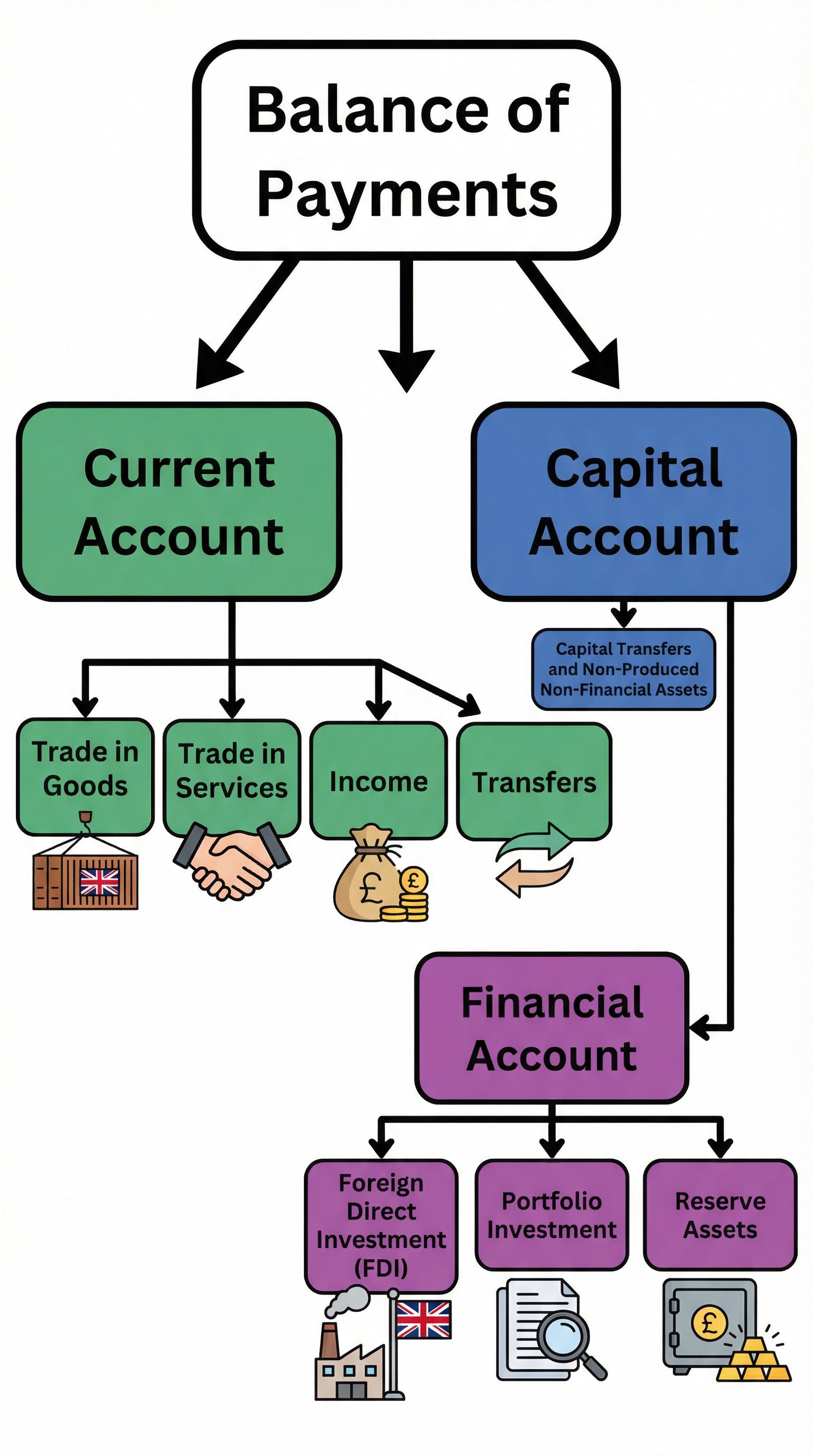
International Trade and the Balance of Payments
What it is: Globalisation is synonymous with a massive increase in international trade. The UK's economic relationship with the rest of the world is recorded in the Balance of Payments.
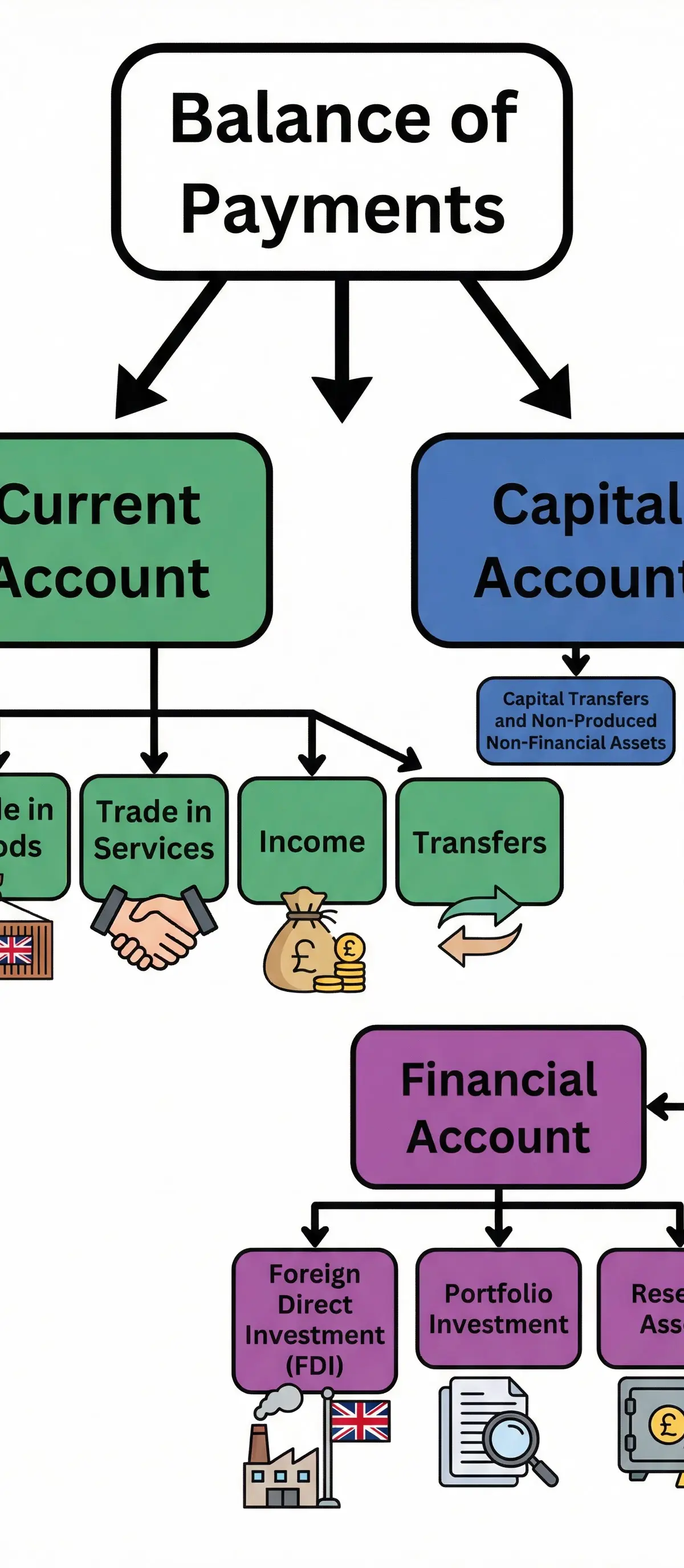
Why it matters: The Current Account is the part you need to know in detail. It primarily records:
- Trade in Goods: The export and import of physical items (e.g., cars, food, clothes).
- Trade in Services: The export and import of non-physical services (e.g., tourism, banking, insurance).
When the UK spends more on imports than it earns from exports, it runs a Current Account deficit. Candidates should be able to explain the potential consequences of a persistent deficit.
Exchange Rates
What it is: The price of one currency in terms of another (e.g., £1 = $1.25). The exchange rate is crucial for international trade.
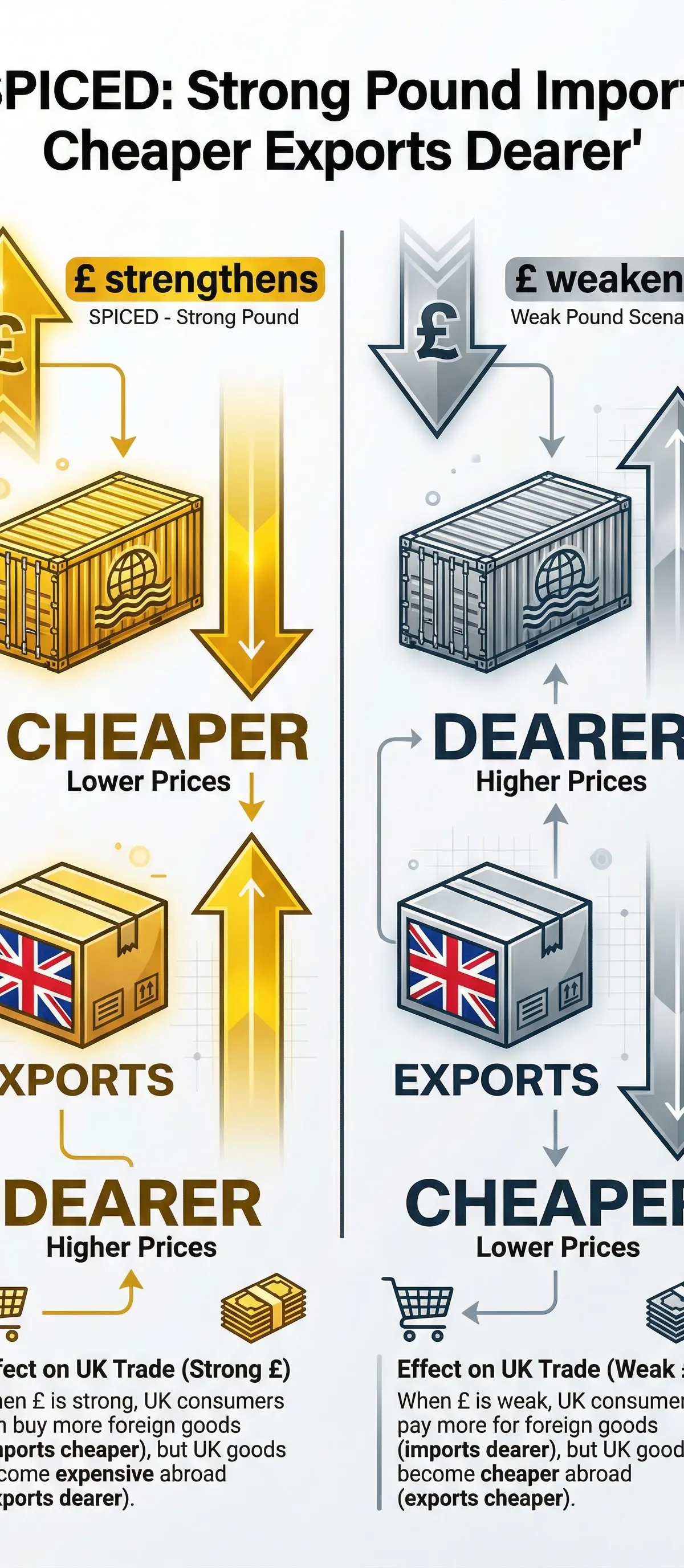
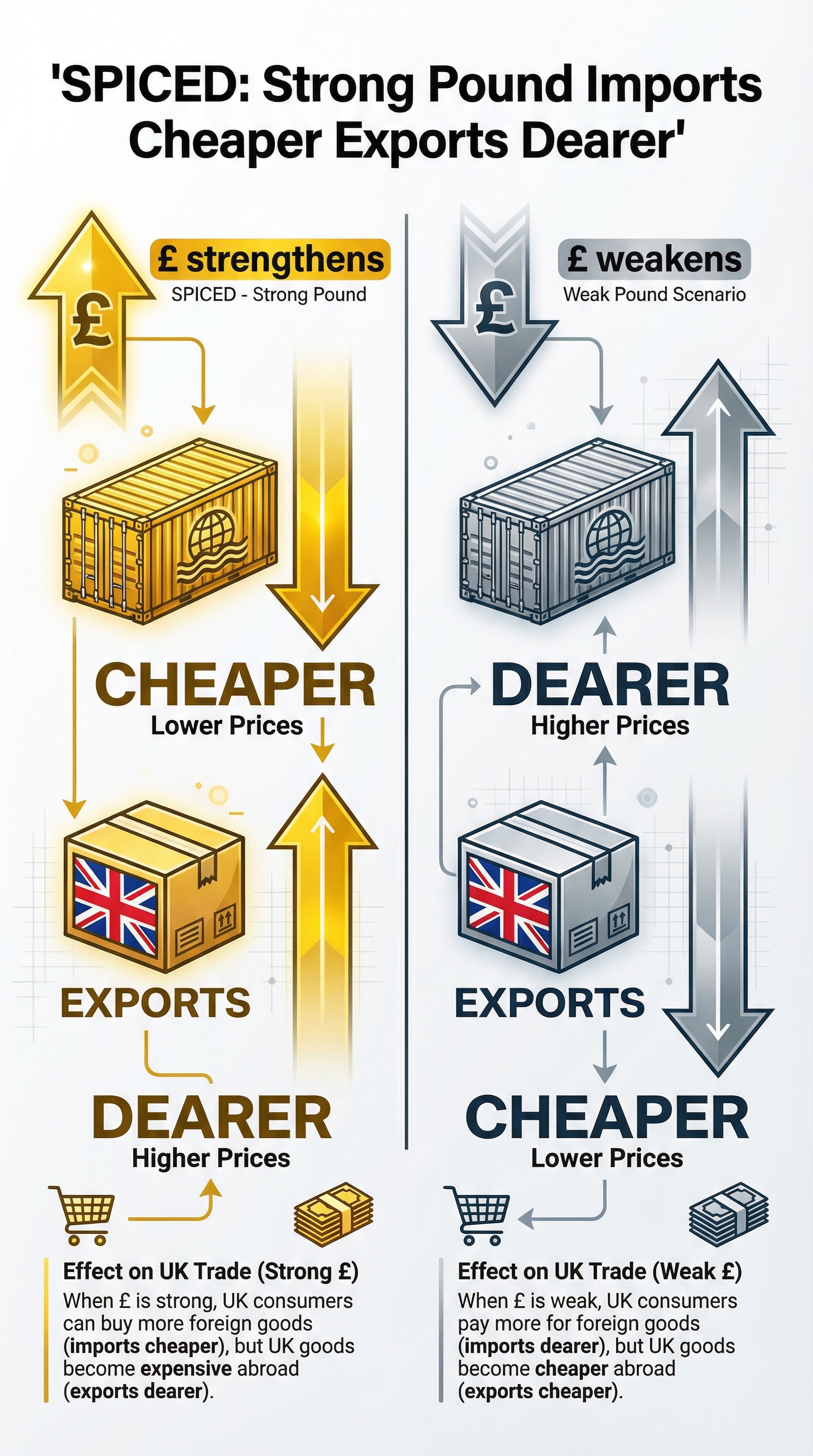
Why it matters: A change in the exchange rate affects the price of exports and imports. Use the mnemonic SPICED (Strong Pound, Imports Cheaper, Exports Dearer) to analyse this correctly. A stronger pound makes UK exports more expensive for foreigners, potentially reducing demand and creating problems for UK firms. However, it makes imports cheaper for UK consumers, increasing their purchasing power.
Stakeholder Impacts
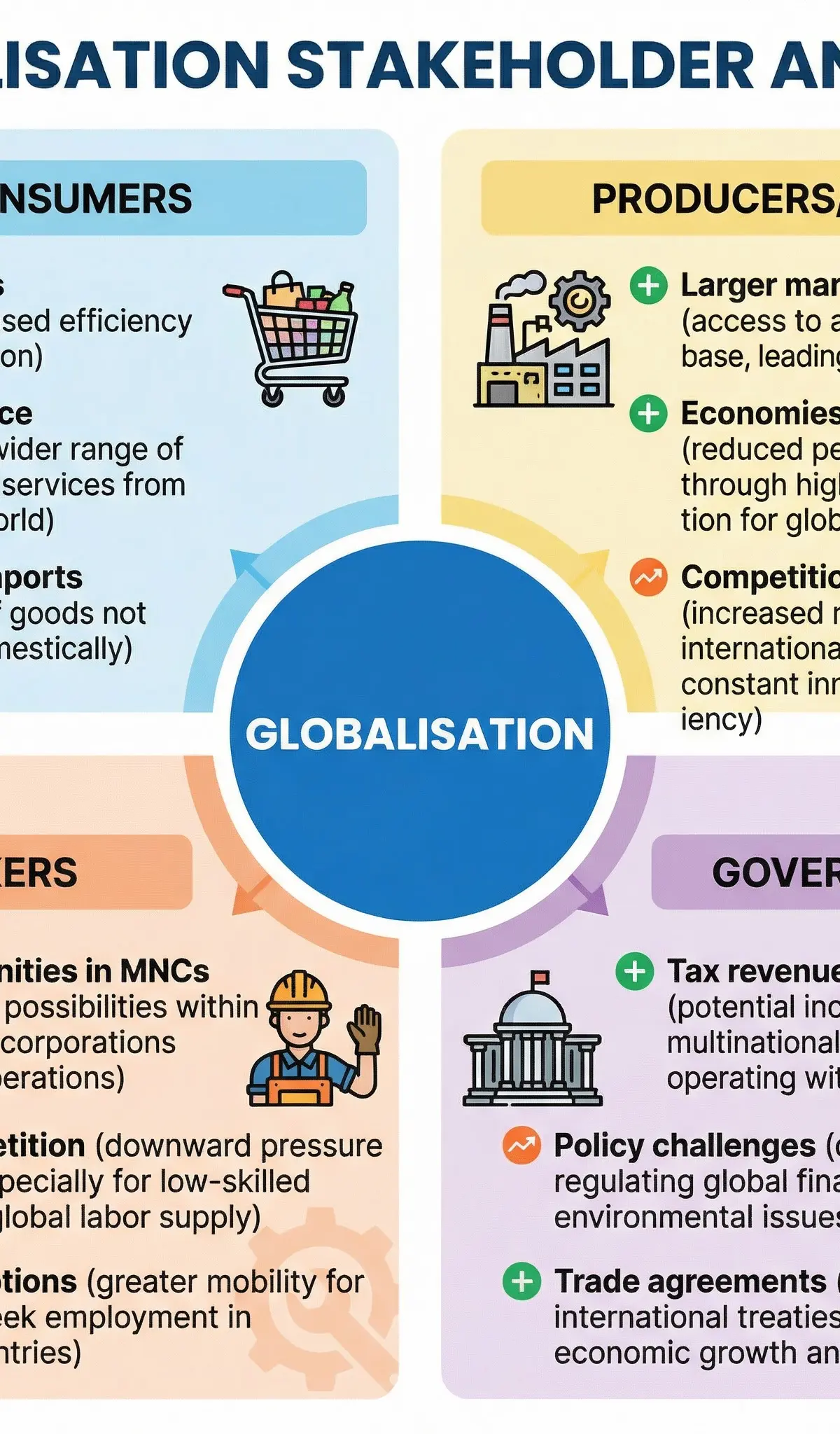
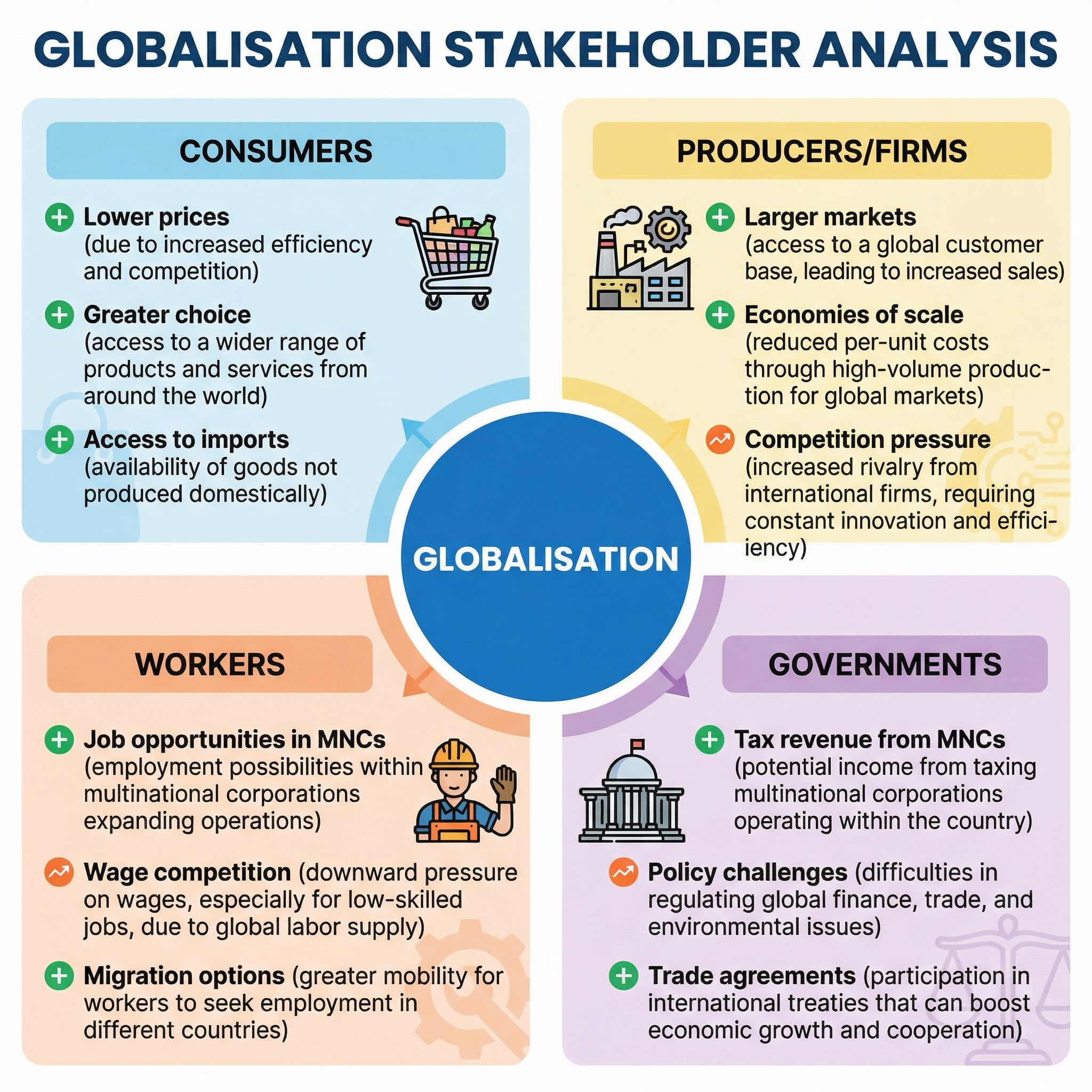
Globalisation does not affect everyone equally. High-level responses will analyse the specific impacts on different groups.
Consumers
- Positives: Lower prices due to competitive pressures and production in low-cost countries. Greater choice of goods and services from around the world.
- Negatives: Concerns over the quality or ethical standards of imported goods.
Producers/Firms
- Positives: Access to larger international markets, potential for higher sales and profits. Ability to achieve economies of scale. Opportunity to reduce costs by offshoring production.
- Negatives: Increased competition from foreign firms, which can drive down prices and profits.
Workers
- Positives: Creation of new jobs by incoming MNCs. Opportunity for migration to find work.
- Negatives: Downward pressure on wages, especially for low-skilled workers, due to competition from lower-wage countries. Job losses in domestic industries that are outcompeted by imports.
Governments
- Positives: Potential for increased tax revenue from MNCs. Economic growth driven by trade and investment.
- Negatives: MNCs may use legal loopholes to avoid paying taxes. Governments may feel pressured to lower corporation tax or environmental standards to attract FDI (a 'race to the bottom')."
Worked Examples
3 worked examples — open one to explore the question and available guidance.
Practice Questions
Test your understanding — click to reveal model answers
Define the term 'Foreign Direct Investment'. (2 marks)
Hint: Think about what a company does when it wants to set up in another country.
Explain how a reduction in trade barriers has contributed to globalisation. (4 marks)
Hint: Think about what a trade barrier like a tariff does, and what would happen if it was removed.
Analyse two potential drawbacks of globalisation for a developed country like the UK. (6 marks)
Hint: Consider the impact on UK workers and the environment.
Evaluate whether the rise of Multinational Corporations (MNCs) is the most important factor driving globalisation. (12 marks)
Hint: This is an evaluation question. Argue for the importance of MNCs, but then argue against by bringing in other factors like technology and government policy. Make a final judgement.
Explain the difference between economic growth and economic development. (4 marks)
Hint: One is about money, the other is about quality of life.
Test your understanding of Globalisation
Active recall beats re-reading. Take an instant quiz now to test what you’ve learned and lock it into long-term memory.
7 days Premium · Then free forever · No card, no charge