OCR · GCSE · Food Preparation and Nutrition
Micronutrients
This study guide delves into the critical world of micronutrients, a cornerstone of the OCR GCSE Food Preparation and Nutrition specification. Mastering the functions, sources, and interactions of vitamins and minerals is not just about healthy eating; it's about securing top marks by demonstrating precise, scientific knowledge that sets you apart from other candidates.
- 5 min read
- 3 worked examples
- 5 practice questions
- 7 key terms
Study Notes
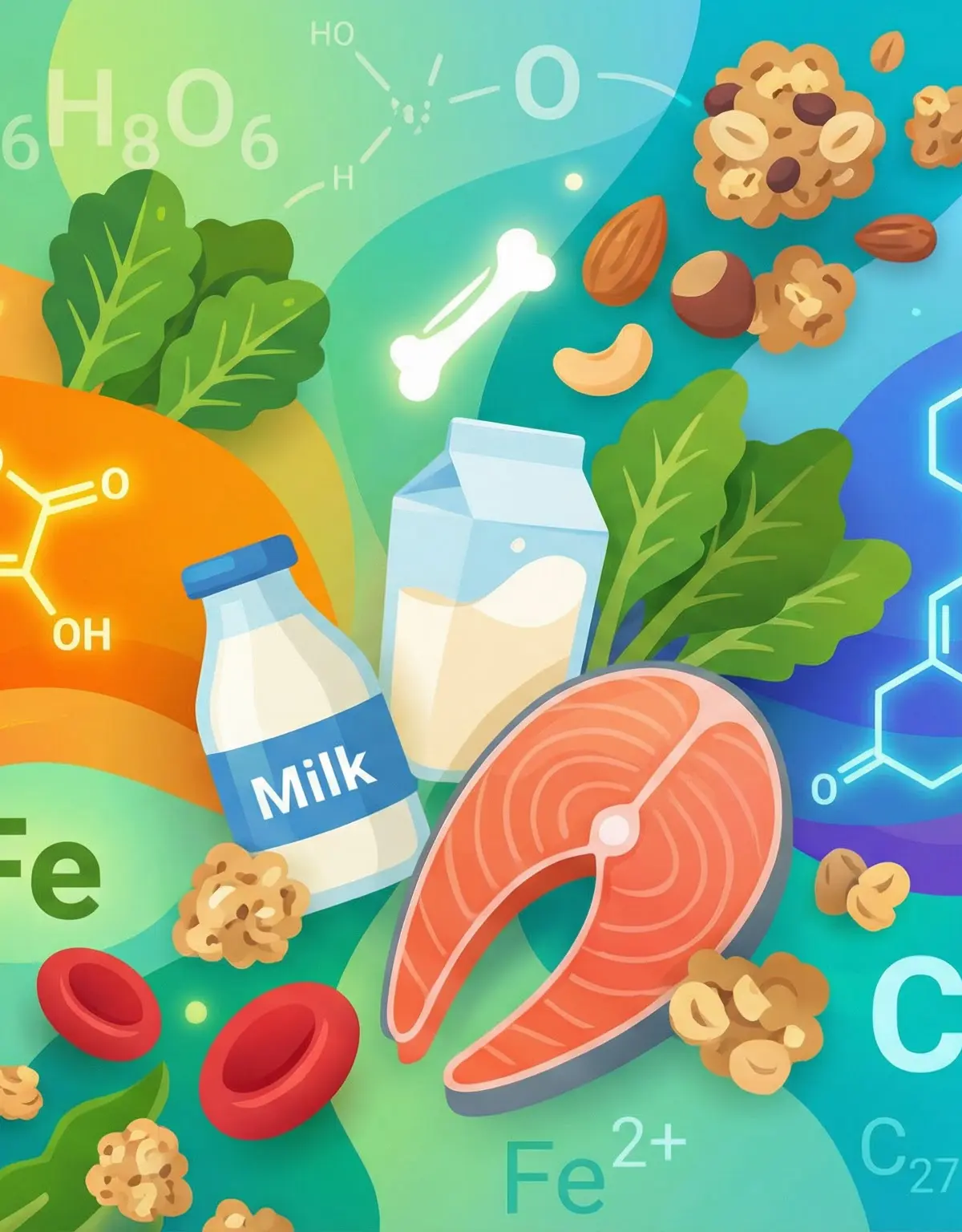
Overview
Welcome to your essential guide to Micronutrients for the OCR J309 specification. This topic requires candidates to develop a detailed understanding of vitamins and minerals, their physiological functions, and the impact of food preparation and cooking on their bioavailability. Examiners are looking for precise scientific language and the ability to apply knowledge to practical scenarios. This guide will break down the core concepts, from the chemical differences between fat-soluble and water-soluble vitamins to the synergistic relationship between nutrients like Vitamin C and iron. We will explore how marks are awarded for linking specific deficiencies to their physiological mechanisms and for evaluating cooking methods based on nutrient retention. By mastering this content, you will be equipped to tackle a wide range of questions, from short-answer definitions to extended-response evaluations, demonstrating the analytical skills required for the highest grades.
Key Micronutrient Groups
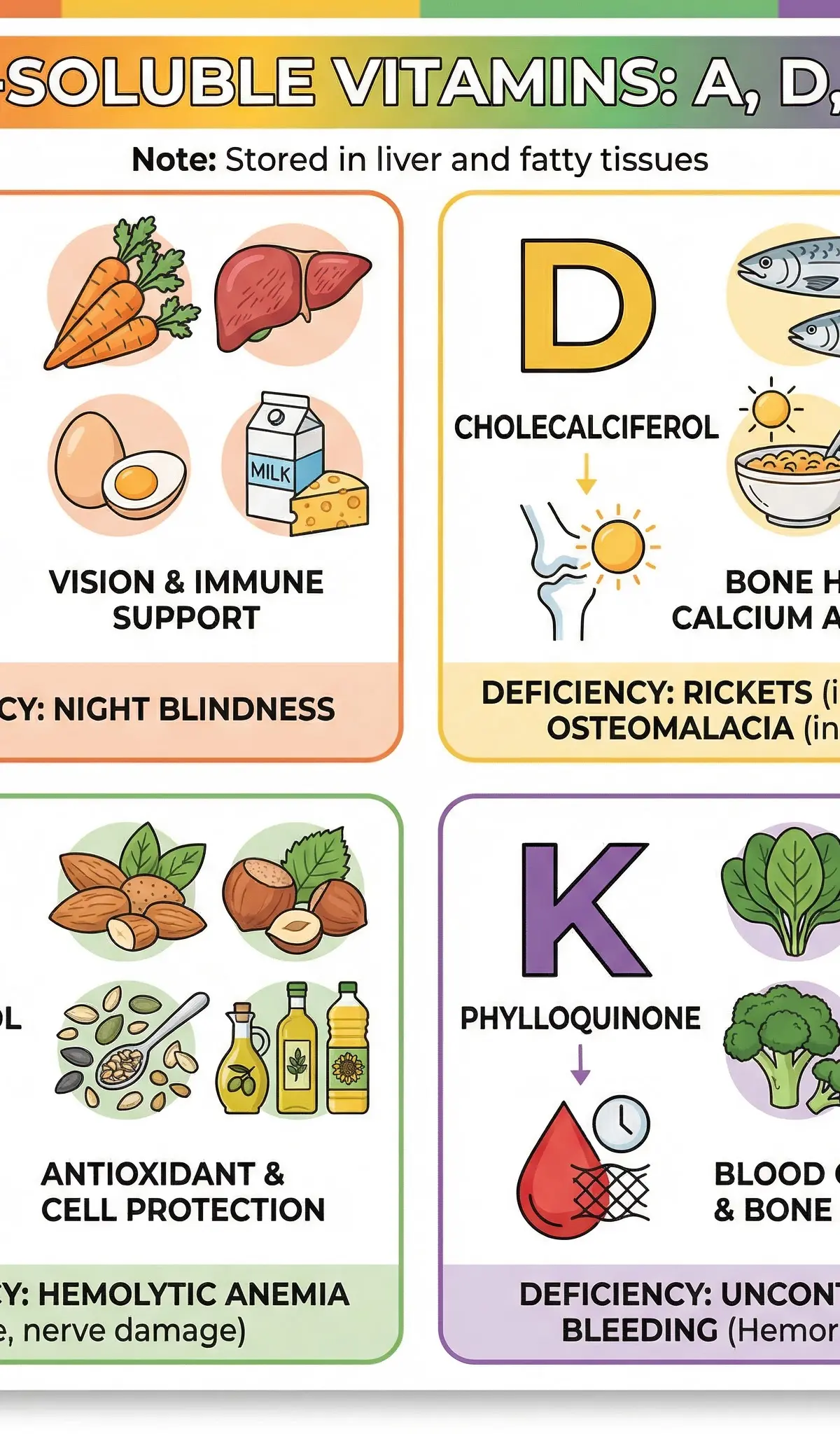
Fat-Soluble Vitamins
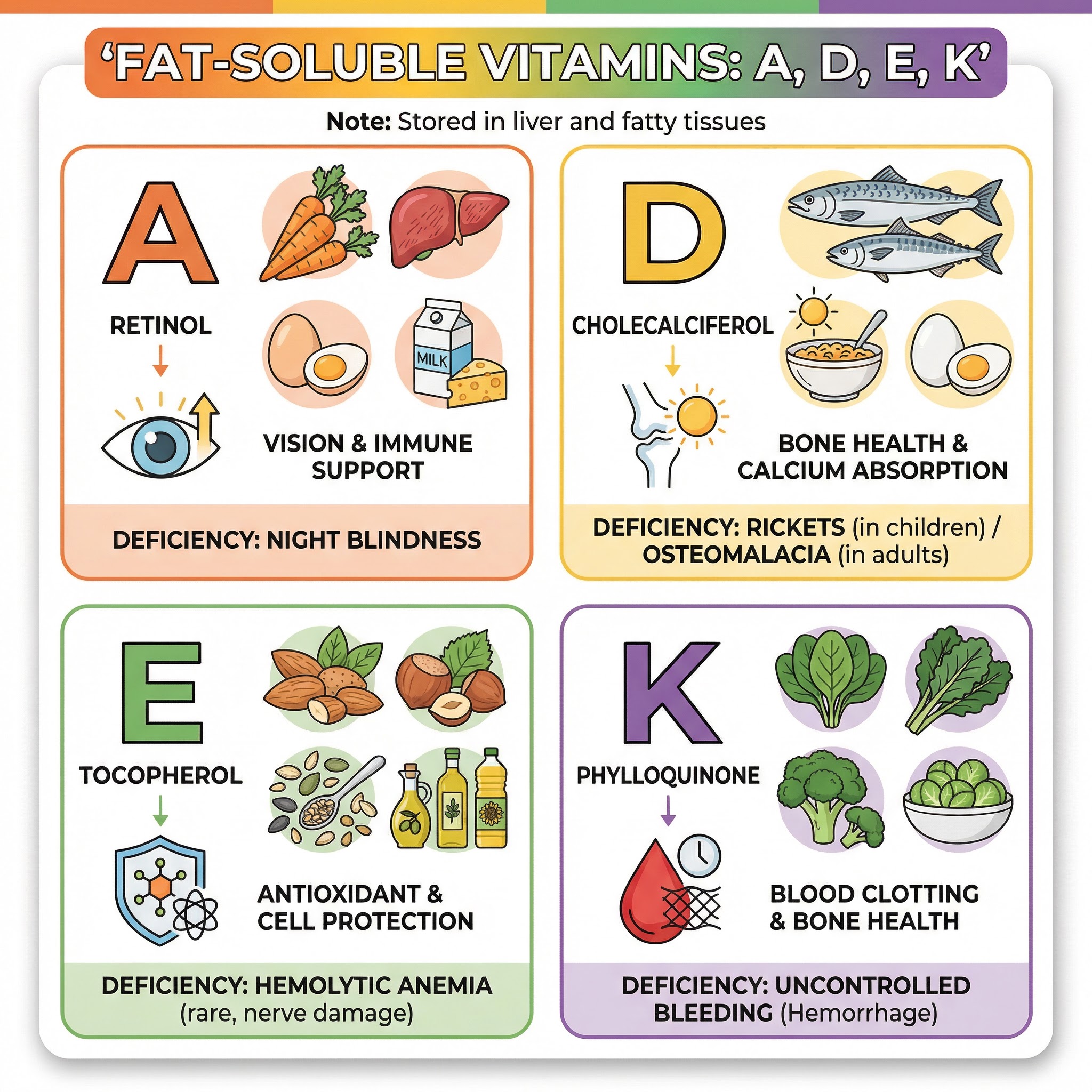
What they are: Vitamins A, D, E, and K. These are absorbed with fat and stored in the body's liver and fatty tissues. This means they do not need to be consumed daily, but excessive intake can lead to toxicity.
Why it matters: Examiners expect candidates to distinguish these from water-soluble vitamins and explain the implications of their storage in the body. For example, questions may relate to the dietary needs of individuals on very low-fat diets.
Specific Knowledge: You must know the scientific names (Retinol, Cholecalciferol, Tocopherol, Phylloquinone), specific functions, key food sources, and deficiency diseases for each.
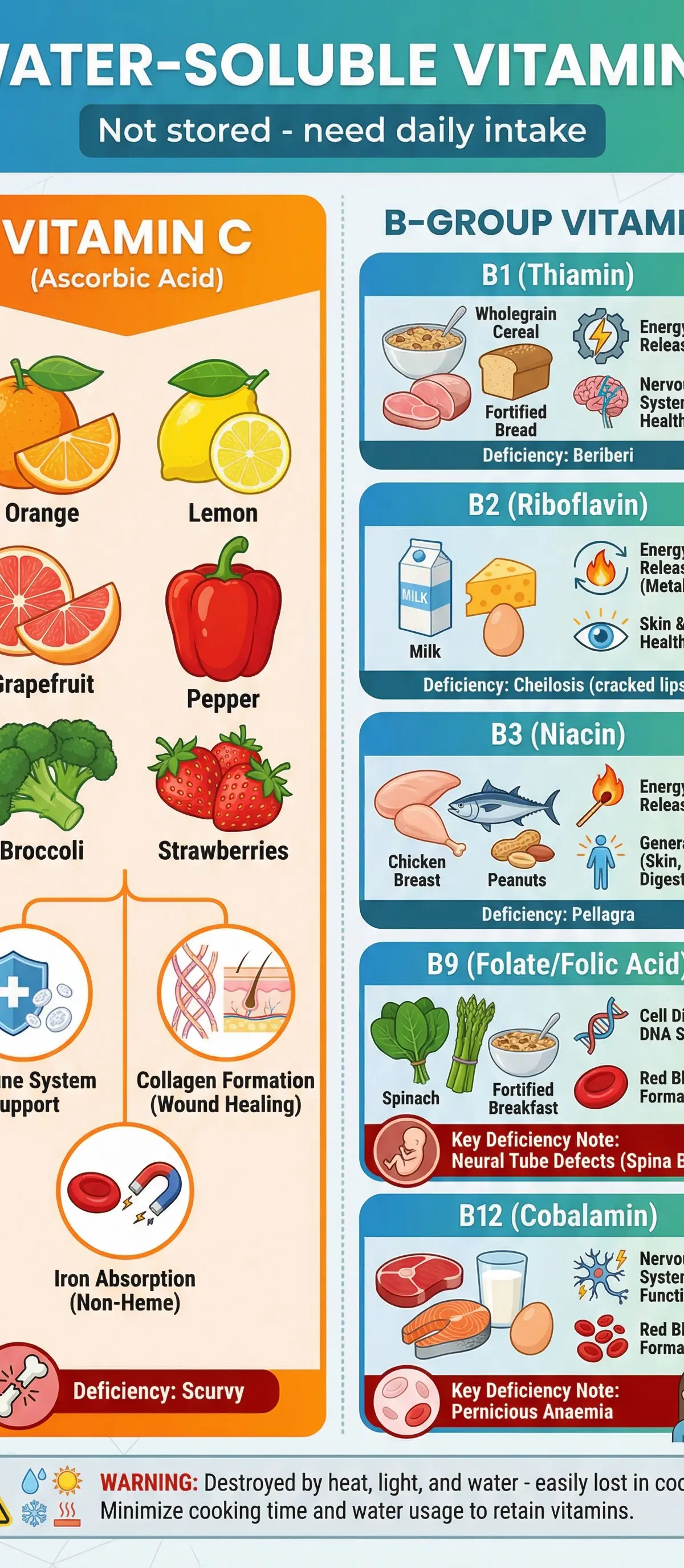
Water-Soluble Vitamins
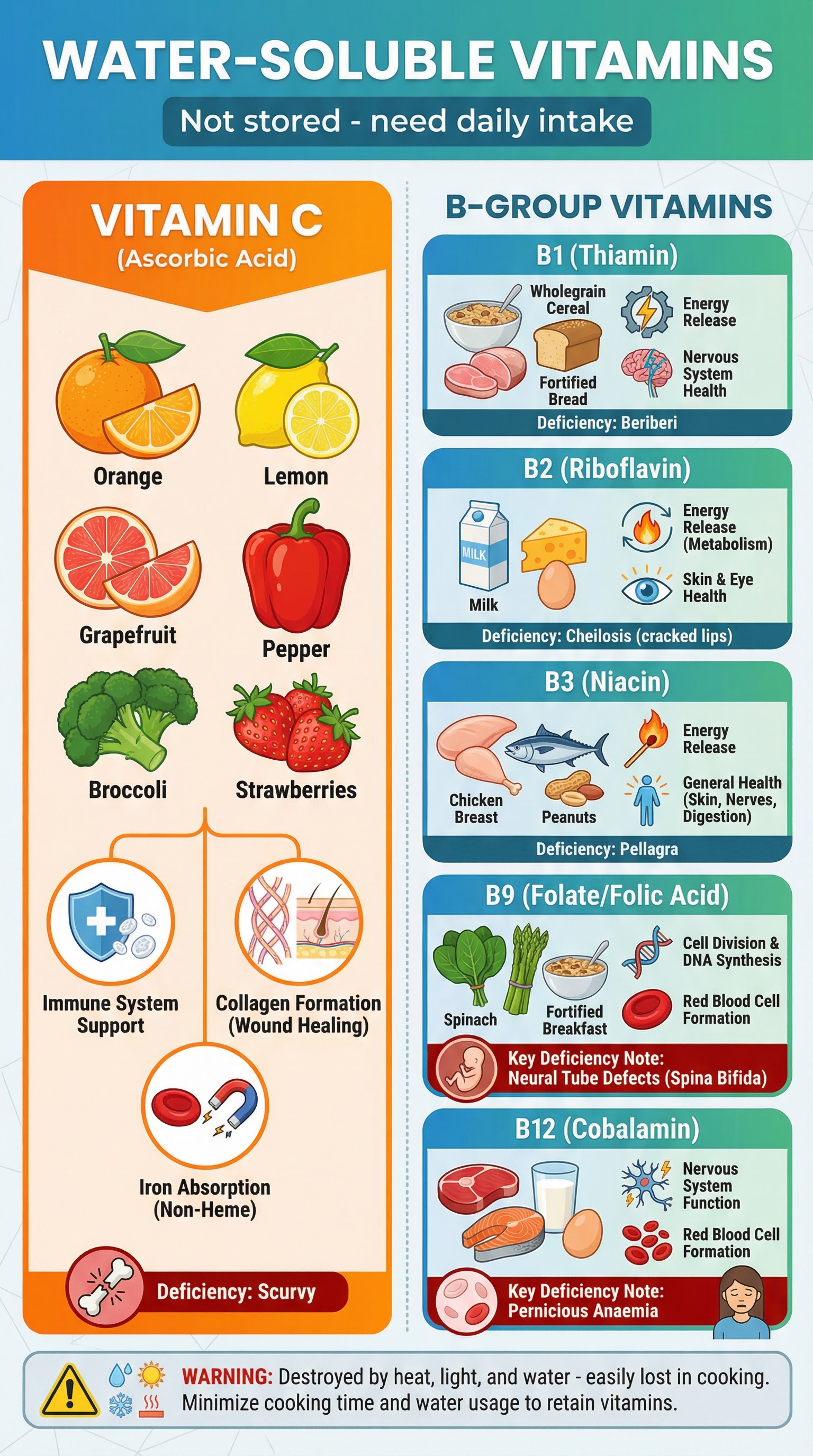
What they are: The B-group vitamins (e.g., B1, B2, B3, B9, B12) and Vitamin C. These dissolve in water and are not stored in the body; any excess is excreted in urine.
Why it matters: This is a critical concept for food preparation. Candidates must be able to explain why boiling vegetables can lead to the loss of these vitamins through leaching. Credit is given for suggesting alternative cooking methods like steaming or stir-frying to preserve them.
Specific Knowledge: Pay close attention to Vitamin C (Ascorbic Acid) and its role in iron absorption, and Folate (B9) for its role in preventing neural tube defects. You must also know that Vitamin B12 is only found naturally in animal products.
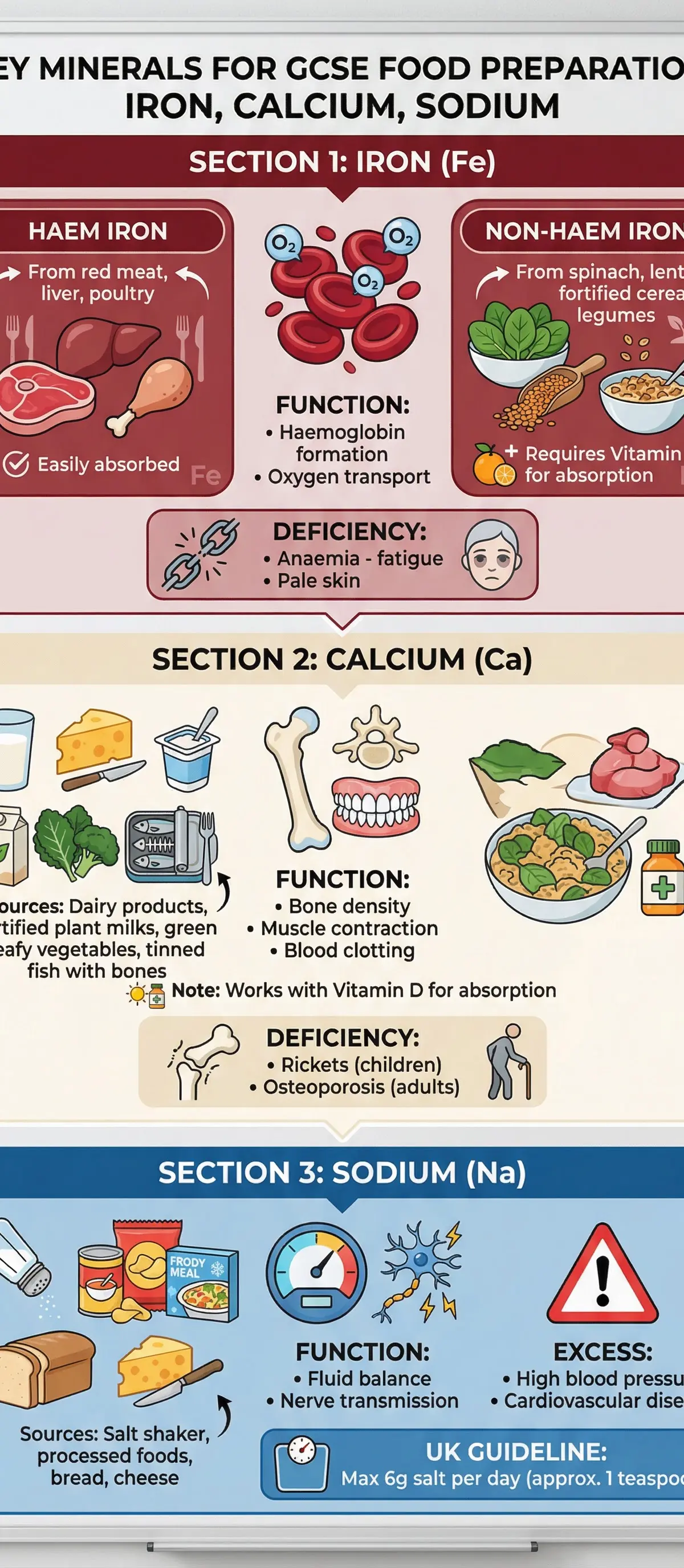
Key Minerals
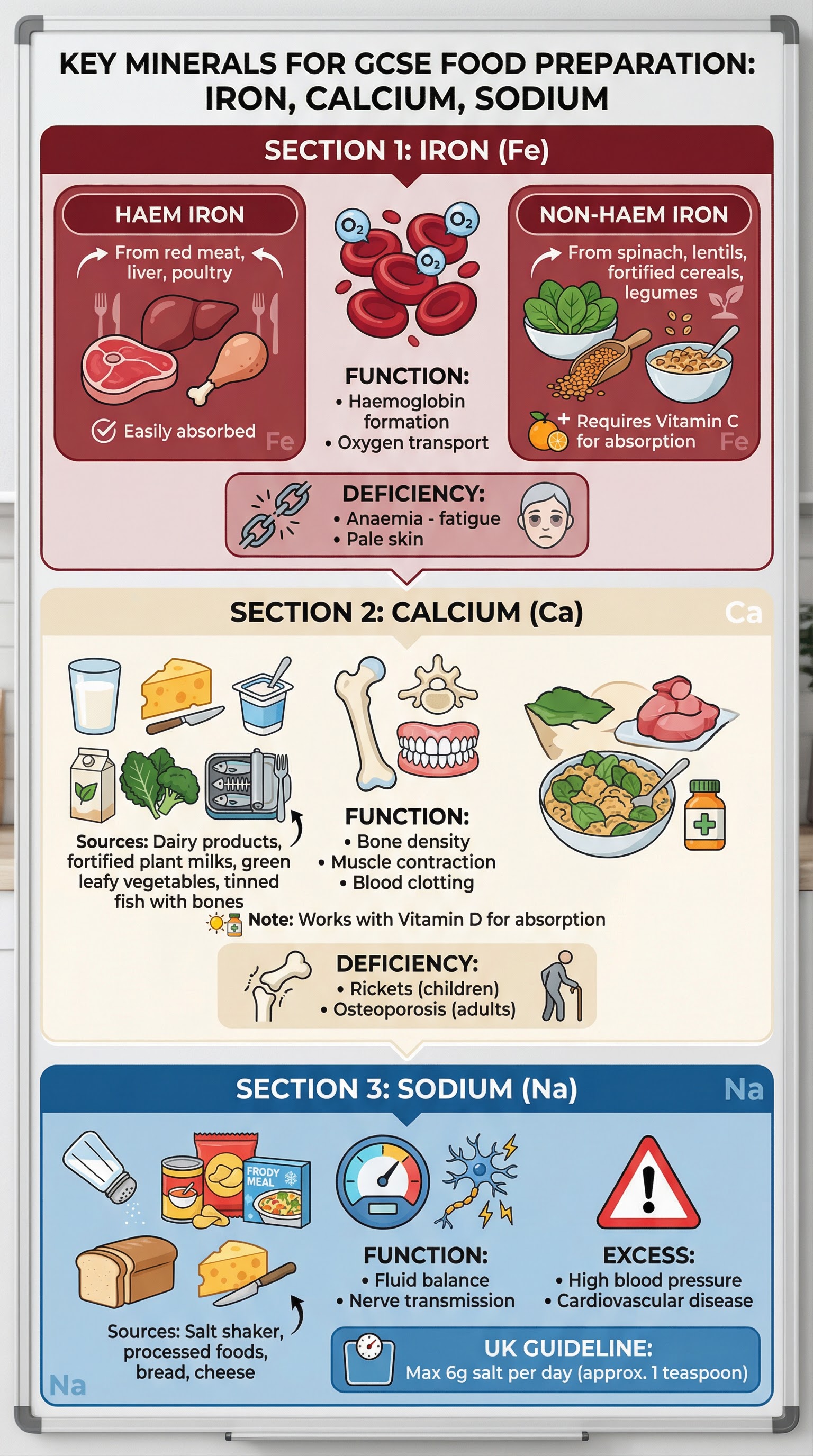
What they are: Inorganic substances required by the body for a range of functions. This guide focuses on Iron, Calcium, and Sodium.
Why it matters: Mineral knowledge is frequently tested in questions about specific life stages (e.g., increased iron needs for teenage girls, increased calcium needs for adolescents). Candidates must understand the difference between haem and non-haem iron and the role of Vitamin D in calcium absorption.
Specific Knowledge: Know the specific functions (e.g., Iron for haemoglobin formation), sources (distinguishing between haem and non-haem iron), and consequences of imbalance (e.g., anaemia from iron deficiency, osteoporosis from calcium deficiency, high blood pressure from excess sodium).
Second-Order Concepts
Nutrient Synergy
Analysis: Nutrients often work together. For example, Vitamin D is essential for the absorption of Calcium. The most important synergy to remember is Vitamin C's role in absorbing non-haem iron from plant-based sources. An examiner will award marks for a candidate who can explain that a meal of lentils (non-haem iron) and a glass of orange juice (Vitamin C) is a good choice for a vegetarian.
Bioavailability & Cooking
Analysis: Bioavailability refers to the proportion of a nutrient that is absorbed and used by the body. Cooking methods have a significant impact. Water-soluble vitamins are lost through leaching in boiling, and heat and light destroy Vitamin C. Fat-soluble vitamins are more stable but require fat for absorption. A candidate who can evaluate that steaming is better than boiling for preserving Vitamin C in broccoli will gain credit.
Fortification
Analysis: Fortification is the process of adding nutrients to food. This is a key concept for modern diets. For example, breakfast cereals are often fortified with B-vitamins and iron, and margarine is fortified with Vitamins A and D. Using the term 'fortified' in an answer shows precise knowledge.
Visual Resources
3 diagrams and illustrations
Interactive Diagrams
1 interactive diagram to visualise key concepts
Conceptual Flow Outline
Classification of Micronutrients
Worked Examples
3 worked examples — open one to explore the question and available guidance.
Practice Questions
Test your understanding — click to reveal model answers
Explain why a deficiency of Vitamin C leads to the disease scurvy. (4 marks)
Hint: Think about the main functions of Vitamin C in the body, especially related to structural proteins.
Describe the functions of two B-group vitamins. (4 marks)
Hint: Choose two from the B-group and state their primary role. Think about energy and blood.
A doctor has advised a patient with high blood pressure to reduce their sodium intake. Explain the sources of sodium in the diet and why excess sodium is a health concern. (6 marks)
Hint: Think about both obvious and hidden sources of salt in the diet and link sodium to fluid balance.
Name a fat-soluble vitamin and state one of its functions. (2 marks)
Hint: Remember ADEK.
Explain the difference between haem and non-haem iron. (3 marks)
Hint: Think about the source and bioavailability.
Test your understanding of Micronutrients
Active recall beats re-reading. Take an instant quiz now to test what you’ve learned and lock it into long-term memory.
7 days Premium · Then free forever · No card, no charge