OCR · GCSE · Food Preparation and Nutrition
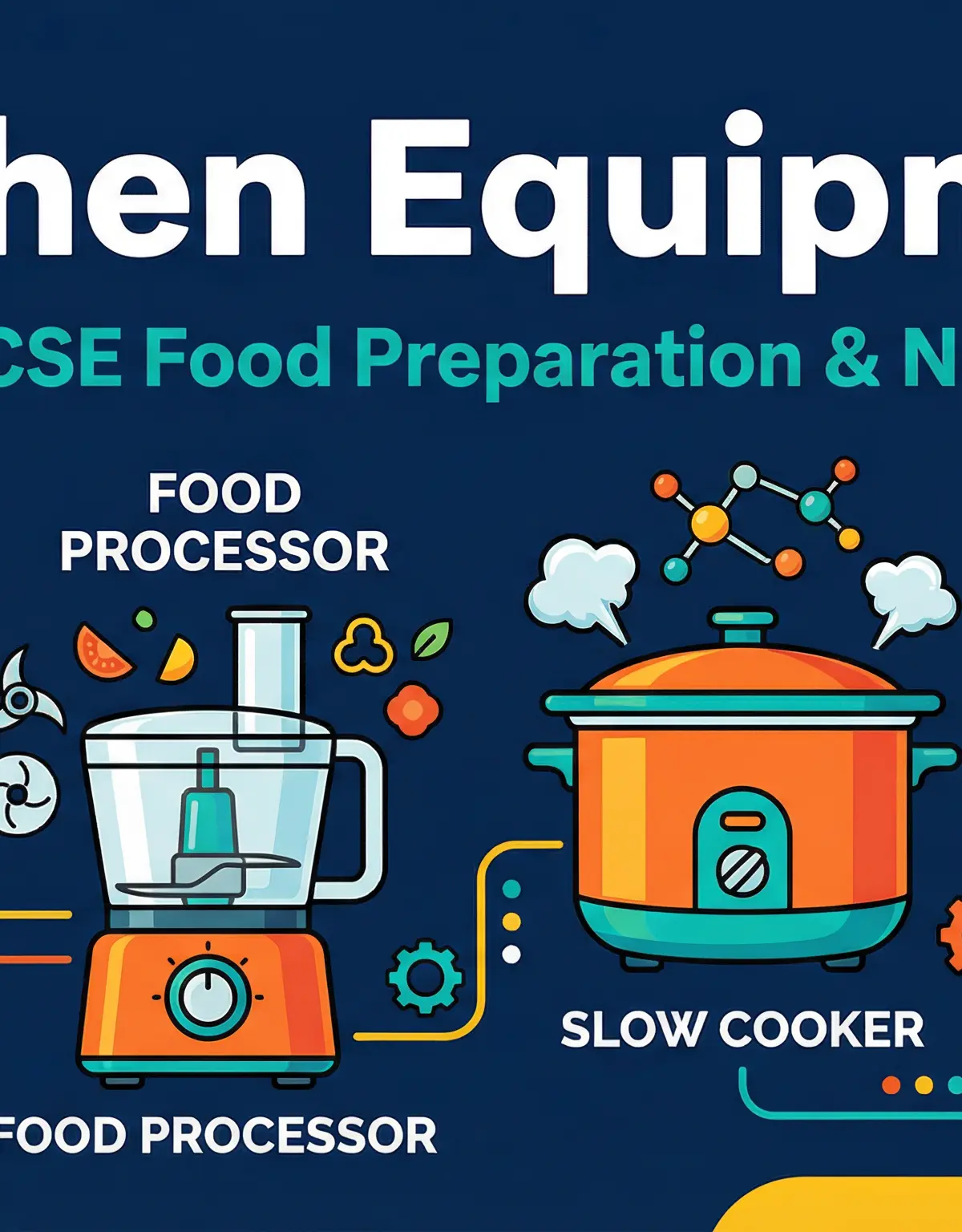
Use of equipment e.g. blender, food processor, slow cooker and microwave.
This guide provides a comprehensive, exam-focused breakdown of key kitchen equipment for OCR GCSE Food Preparation and Nutrition. It explores the scientific principles behind blenders, food processors, slow cookers, and microwaves, ensuring candidates can explain not just what they do, but the precise reasons why, securing top marks.
- 8 min read
- 3 worked examples
- 4 practice questions
- 7 key terms
Study Notes
Overview
This topic requires a deep, scientific understanding of how common kitchen equipment functions. Examiners are looking for more than a simple description; they award the highest marks to candidates who can articulate the specific physical and chemical processes at play. This guide will cover the core appliances: the blender, food processor, slow cooker, and microwave. We will dissect the methods of heat transfer (conduction, convection, and radiation), the principles of mechanical processing, and the critical impact these methods have on the nutritional and sensory qualities of food. Understanding this topic is crucial for answering a wide range of questions, from short-answer definitions to long-form evaluations. Credit is consistently given for the use of precise scientific terminology and the ability to compare and contrast different appliances effectively.
Key Equipment & Scientific Principles
Blender: Mechanical Liquefaction & Emulsification
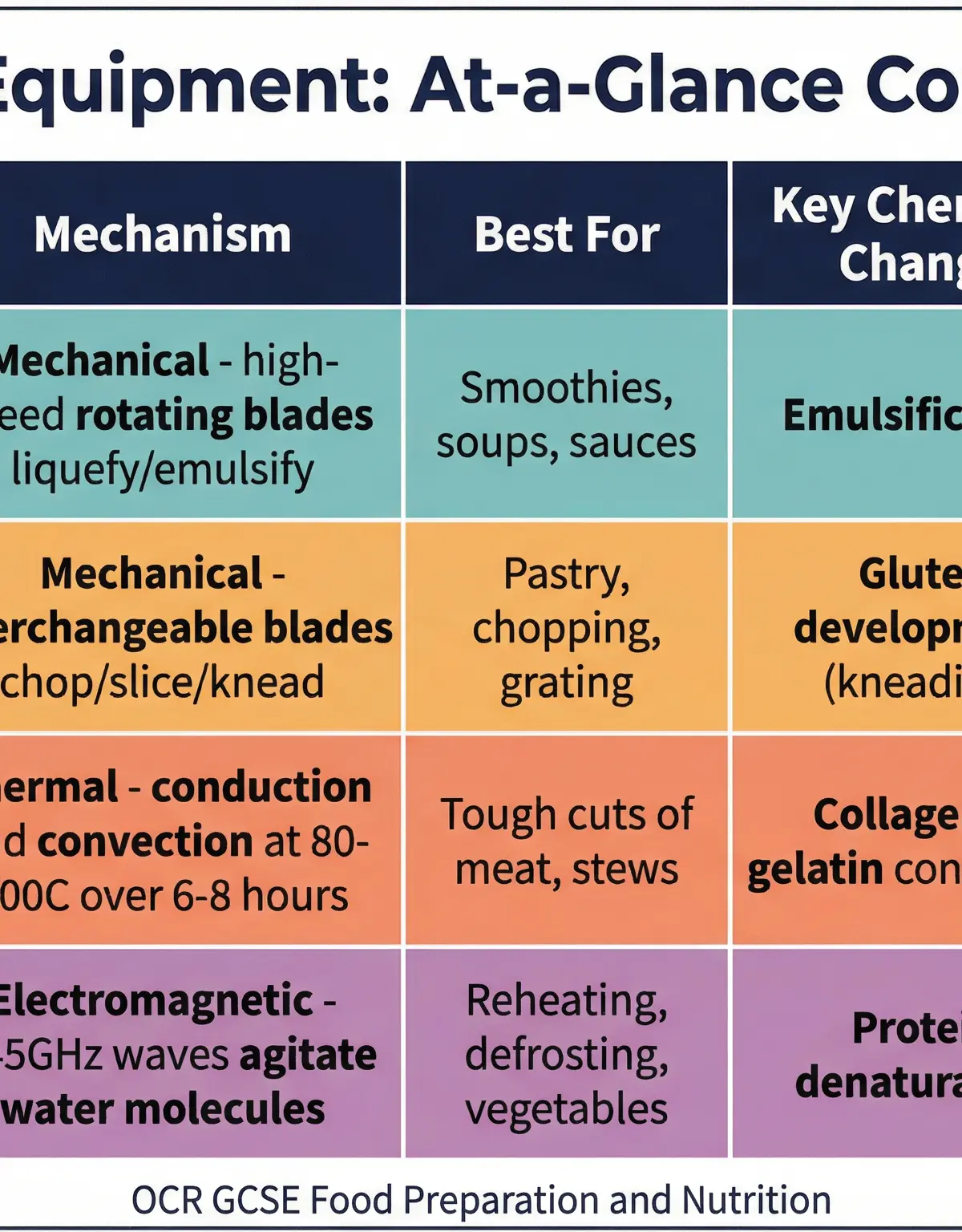
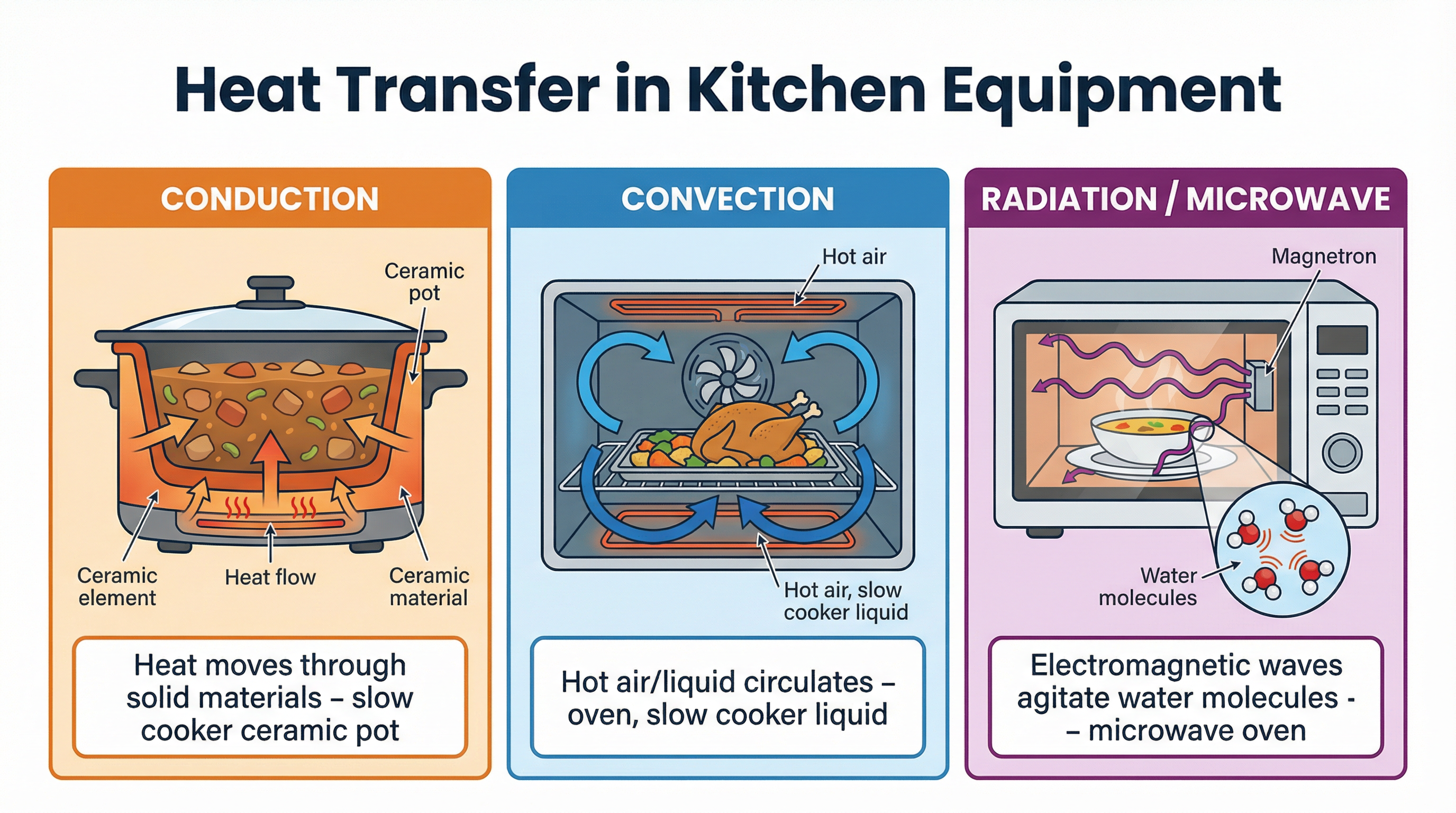
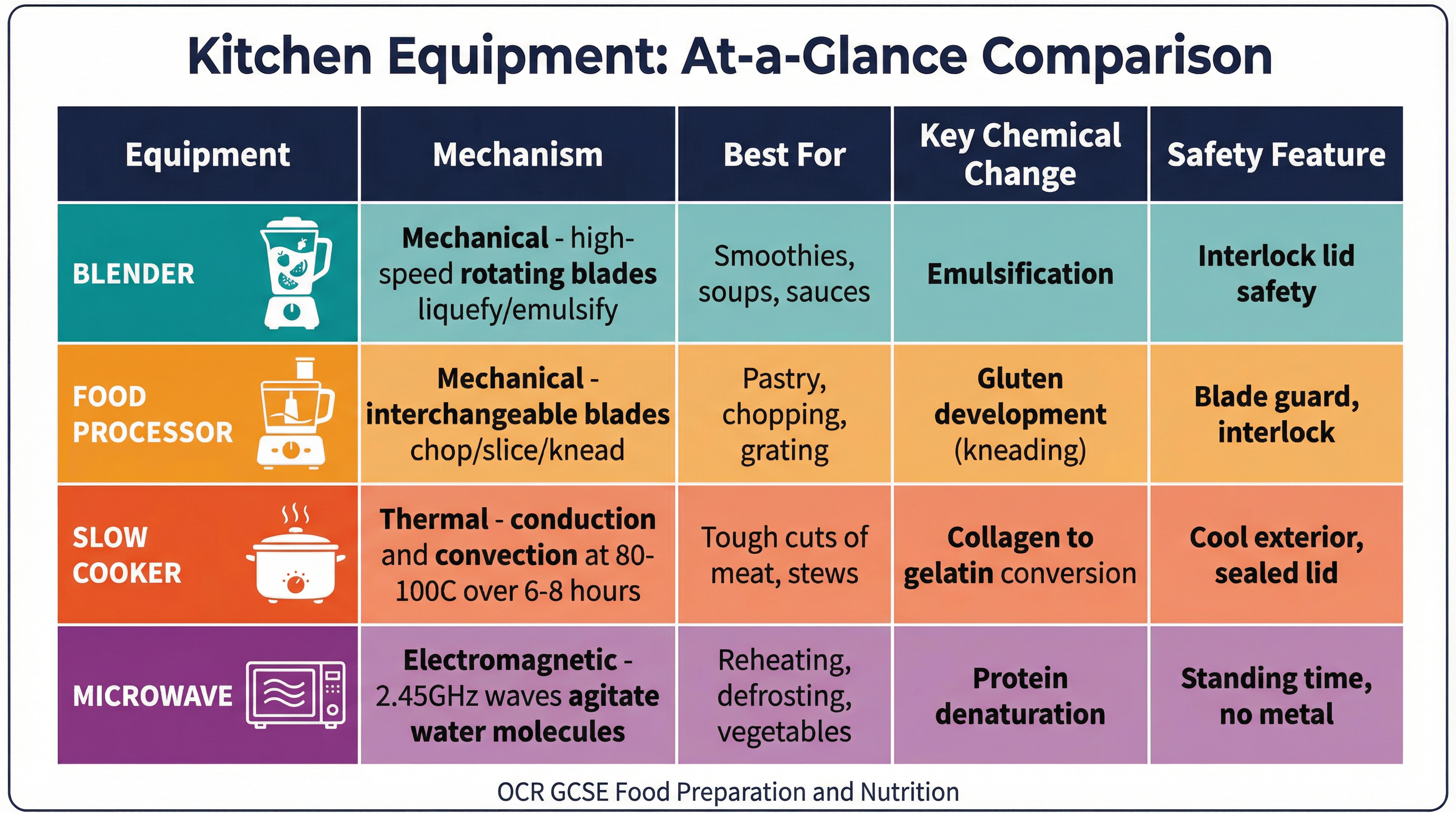
Mechanism: A blender operates through high-speed mechanical agitation. Its sharp blades, rotating at immense speed (often over 15,000 RPM), create a powerful vortex. This vortex continuously pulls ingredients down onto the blades, ensuring everything is uniformly processed. This action is ideal for liquefying solid foods (e.g., turning fruit into a smoothie) or creating stable emulsions (e.g., combining oil and vinegar for a dressing, or egg yolk and oil for mayonnaise). The speed of the blades creates a shearing force that breaks down cell walls and disperses one liquid within another.
Why it matters: For the exam, candidates must be able to explain that the blender's primary function is to create smooth liquids and stable mixtures. Credit is given for using the terms liquefaction and emulsification and explaining how the vortex contributes to a uniform consistency.
Specific Knowledge: The process of emulsification involves dispersing small droplets of one liquid (the dispersed phase) into another liquid with which it is immiscible (the continuous phase). The blender's shearing action breaks the dispersed phase into tiny droplets, while an emulsifying agent (like lecithin in egg yolk) prevents them from coalescing.
Food Processor: Mechanical Chopping, Slicing & Kneading
Mechanism: Unlike a blender, a food processor uses a variety of interchangeable blades and discs at a lower speed. This versatility allows for a range of mechanical actions: chopping (S-blade), slicing (slicing disc), grating (grating disc), and kneading (dough blade). The key principle is controlled mechanical processing.
Why it matters: Examiners will test the distinction between a blender and a food processor. The food processor's strength is its versatility in solid food preparation. A key example is making shortcrust pastry. The processor's blade cuts the cold, hard fat into the flour very quickly. This is crucial because it prevents the fat from melting from the heat of one's hands, which would result in a tough, greasy pastry. By keeping the fat solid and minimising gluten development, a short, crumbly texture is achieved.
Specific Knowledge: When kneading dough with a dough blade, the processor stretches and aligns the gluten proteins (glutenin and gliadin) in the flour, developing the elastic network needed for bread structure. This is a controlled form of gluten development.
Slow Cooker: Thermal Conduction & Convection
Mechanism: The slow cooker uses gentle, prolonged heat to cook food. The process involves two main forms of heat transfer. First, the heating element in the base heats the ceramic inner pot via conduction. Second, this heat is transferred to the liquid and food inside. As the liquid at the bottom heats up, it becomes less dense and rises, while the cooler, denser liquid at the top sinks. This creates a continuous convection current that circulates the heat, cooking the food evenly at a low temperature (typically 80-100°C) over many hours.
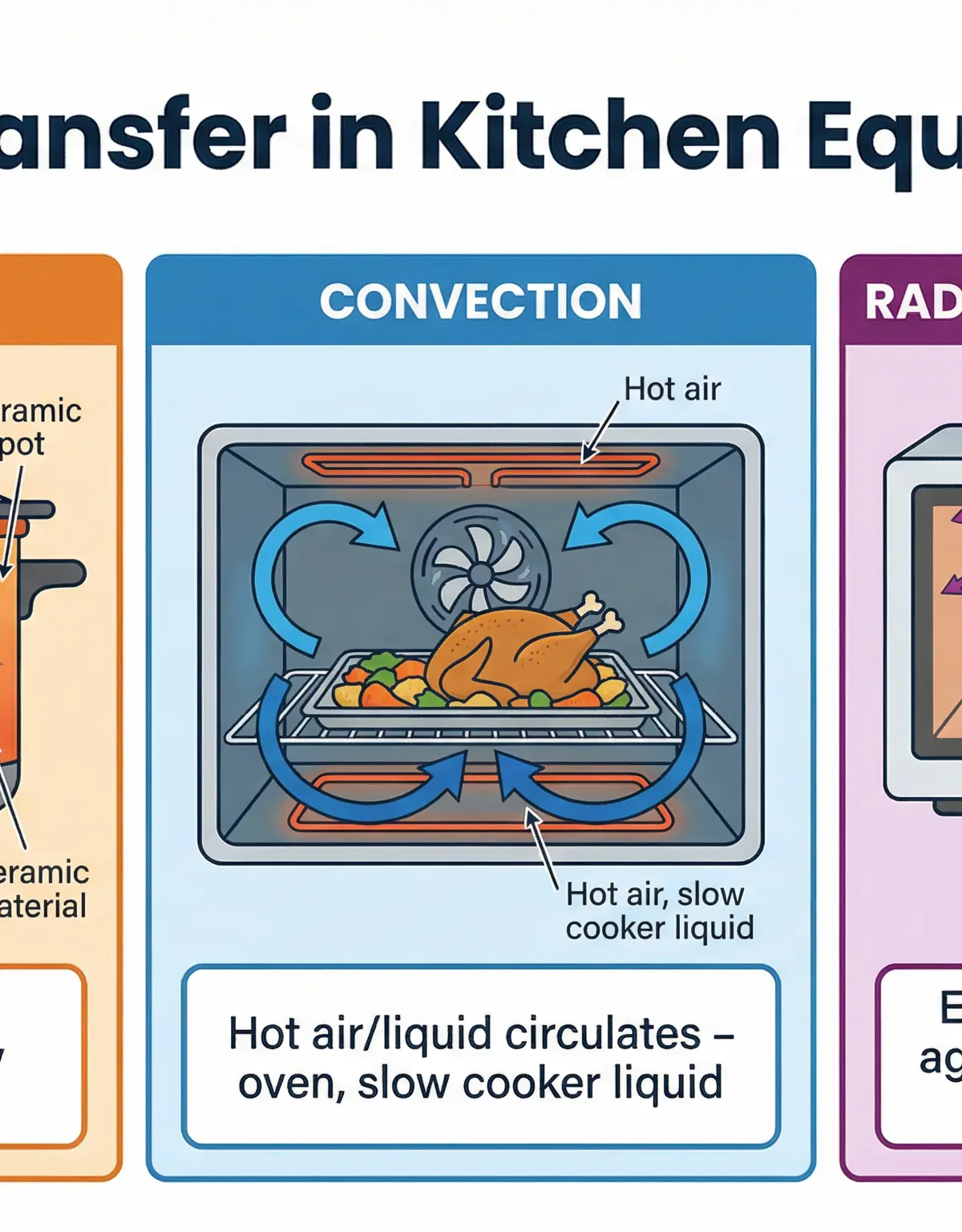
Why it matters: This appliance is perfect for tenderising tough cuts of meat. Candidates must explain why. Tough meats (e.g., beef brisket, lamb shank) are rich in a connective tissue called collagen. The slow, moist cooking environment is ideal for the chemical process where collagen is hydrolysed and converted into soft, soluble gelatin. This process makes the meat tender and succulent.
Specific Knowledge: The conversion of collagen to gelatin is a key chemical change that examiners expect candidates to know. Marks are awarded for linking the slow cooker's method (slow, moist heat) to this specific outcome.
Microwave: Electromagnetic Radiation
Mechanism: The microwave oven uses a completely different principle: electromagnetic radiation. A component called a magnetron generates microwaves, which are a type of non-ionizing electromagnetic wave, typically at a frequency of 2.45 GHz. These waves flood the oven and are absorbed by the food. They specifically cause polar molecules, primarily water, to vibrate (or agitate) millions of times per second. This rapid vibration creates friction between the molecules, which generates thermal energy, heating the food rapidly from the inside out.
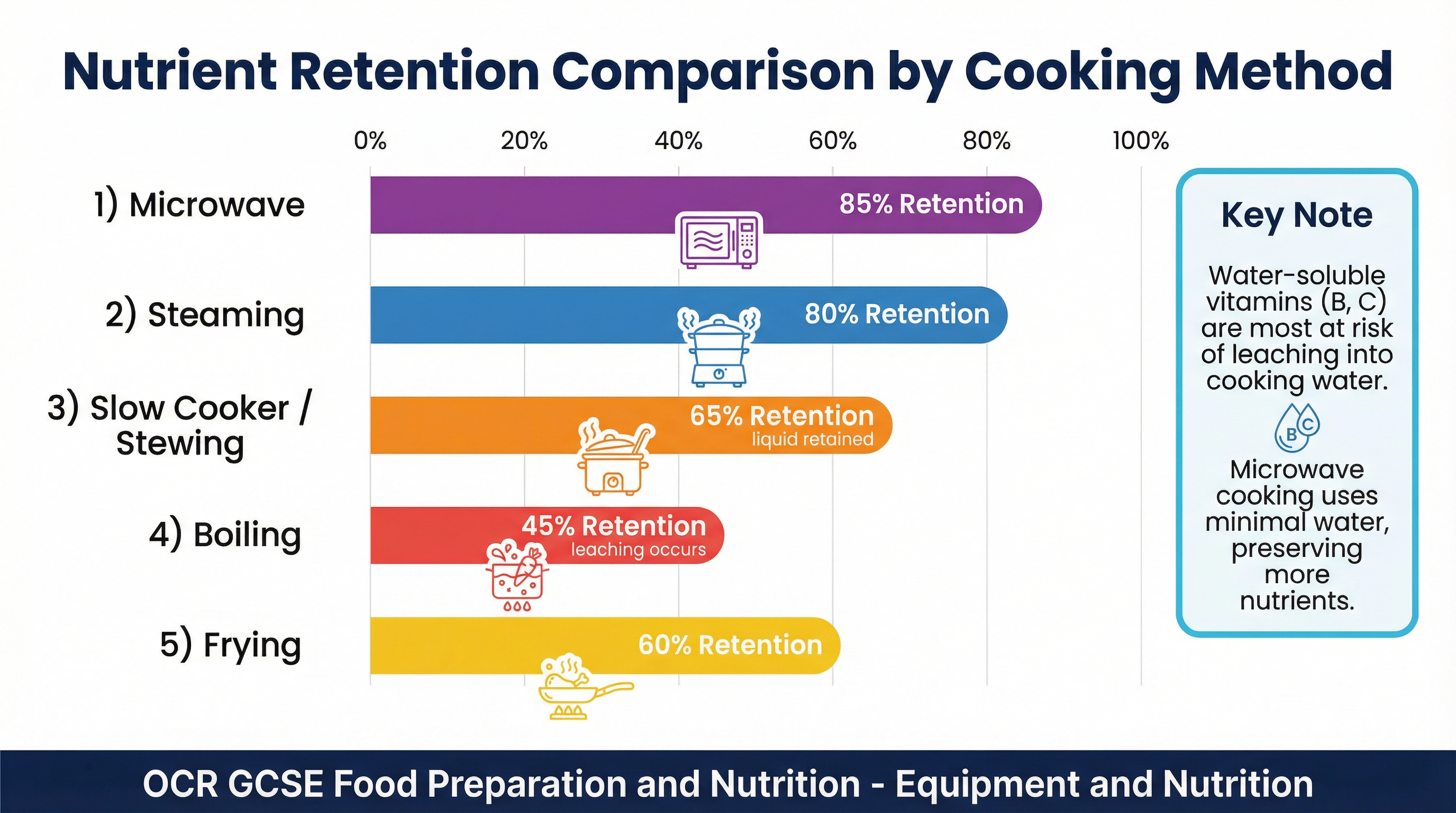
Why it matters: Candidates MUST use the correct terminology: 'agitation of water molecules'. Simply stating that the microwave 'heats food' is too basic for GCSE level. A key advantage for exam answers is its effect on nutrition. Because cooking times are short and very little (if any) water is needed, the leaching of water-soluble vitamins like Vitamin C and B-group vitamins is significantly reduced compared to methods like boiling. This makes it an excellent method for cooking vegetables to retain nutrients.
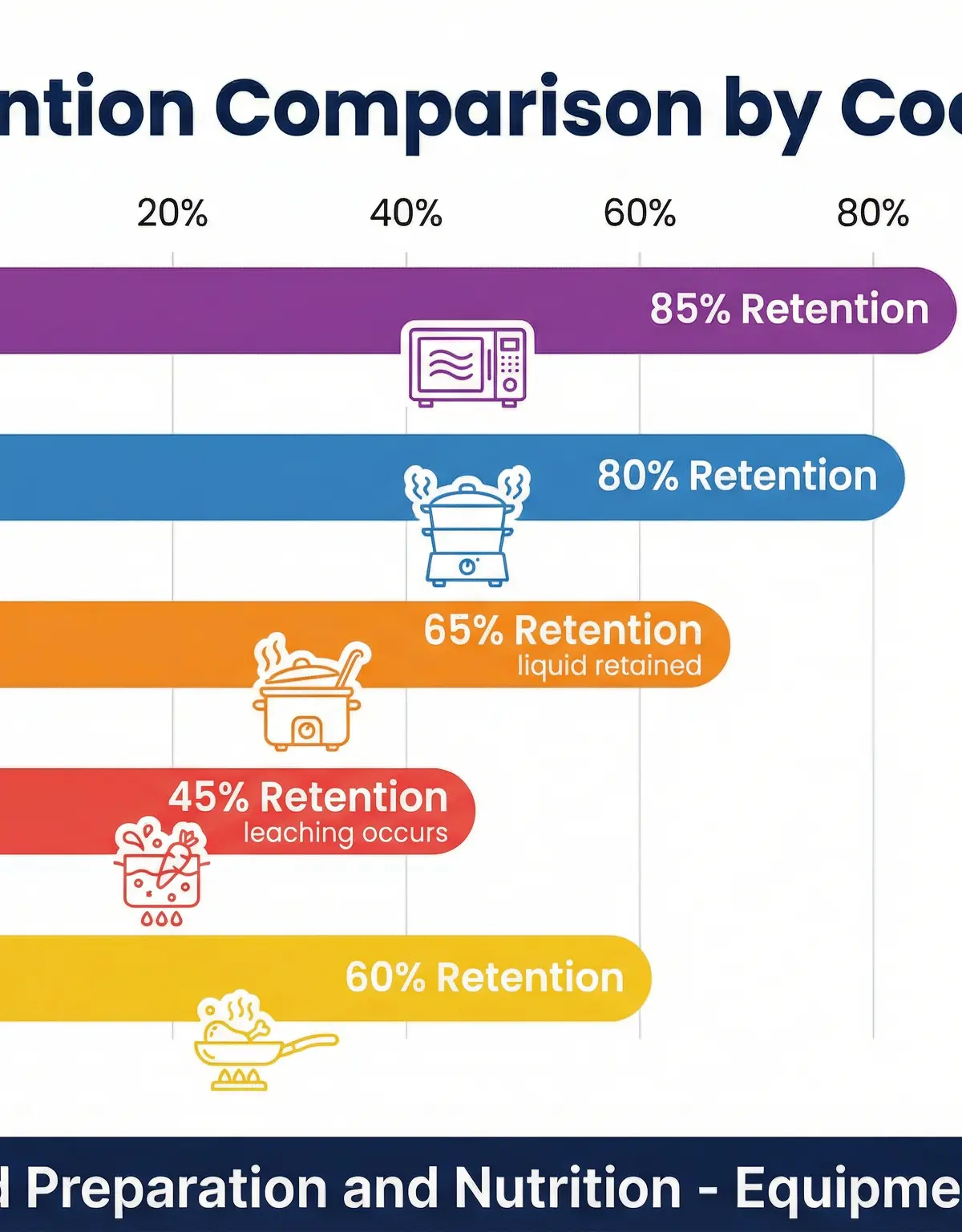
Specific Knowledge: The inability of microwaves to brown food is a crucial evaluation point. Browning, or the Maillard reaction, is a chemical reaction between amino acids and reducing sugars that occurs at temperatures above 140°C. Microwaves rarely reach this surface temperature, so they cannot produce the characteristic flavour and colour of roasted or fried foods.
Second-Order Concepts
Causation
- Technological Push: The development of smaller, more efficient motors and heating elements in the mid-20th century made domestic appliances more affordable and compact.
- Social Pull: Post-WWII societal changes, including more women entering the workforce, created a demand for time-saving devices in the home to simplify domestic chores.
Consequence
- Positive: Increased efficiency in the kitchen, freeing up time. Enabled a wider variety of culinary techniques for the home cook. Improved retention of certain nutrients (e.g., microwave).
- Negative: Potential for over-processing of food. Increased domestic energy consumption. A reliance on appliances can lead to a decline in traditional cooking skills.
Change & Continuity
- Change: A dramatic shift from manual, labour-intensive food preparation to automated, high-speed processes. The introduction of microwave radiation as a primary cooking method was a revolutionary change.
- Continuity: The fundamental principles of heat transfer (conduction, convection) remain central to cooking, even in modern appliances like slow cookers and ovens. The basic functions of chopping and mixing, once done by hand, are still the core purpose of processors and blenders.
Significance
- The widespread adoption of this equipment fundamentally changed domestic life and food culture. It democratised complex cooking techniques and played a significant role in the rise of convenience foods. From an exam perspective, its significance lies in the application of scientific principles to everyday life, a core tenet of the Food Preparation and Nutrition specification.
Worked Examples
3 worked examples — open one to explore the question and available guidance.
Practice Questions
Test your understanding — click to reveal model answers
Explain two advantages of using a microwave to cook vegetables. (4 marks)
Hint: Think about speed and the effect on nutrients.
A recipe for beef stew requires the meat to be cooked for several hours. Justify the use of a slow cooker for this recipe. (6 marks)
Hint: Link the appliance to the specific changes that happen in the meat over a long cooking time.
Describe the difference between the mechanical action of a blender and a food processor. (4 marks)
Hint: Focus on the blade type, speed, and the resulting texture of the food.
Evaluate the energy efficiency of a microwave compared to a conventional oven for cooking a single baked potato. (8 marks)
Hint: Consider pre-heating time, cooking time, and the volume being heated.
Test your understanding of Use of equipment e.g. blender, food processor, slow cooker and microwave.
Active recall beats re-reading. Take an instant quiz now to test what you’ve learned and lock it into long-term memory.
7 days Premium · Then free forever · No card, no charge