OCR · GCSE · Geography
The Living World
This study guide for OCR GCSE Geography explores The Living World, focusing on the intricate interdependence within ecosystems and the contrasting characteristics of major global biomes. It provides a detailed examination of tropical rainforests and polar regions, equipping candidates with the specific case study knowledge and evaluation skills required to achieve top marks.
- 6 min read
- 3 worked examples
- 3 practice questions
- 6 key terms
Study Notes
Overview
Welcome to your comprehensive guide to 'The Living World' for OCR GCSE Geography (Specification J384). This topic is a cornerstone of Paper 1: Living with the Physical Environment, and it requires you to think like a geographer, making connections across different scales. Examiners expect candidates to demonstrate a clear understanding of how living organisms (biotic components) and non-living elements (abiotic components) are interdependent within ecosystems. You will be assessed on your knowledge of a small-scale UK ecosystem, and detailed case studies of two contrasting large-scale biomes: tropical rainforests and polar regions. Marks are awarded for applying specific knowledge, using geographical terminology correctly, and evaluating human impacts and management strategies. This guide will break down these complex ideas into manageable sections, providing the tools you need to analyse, explain, and evaluate with confidence.

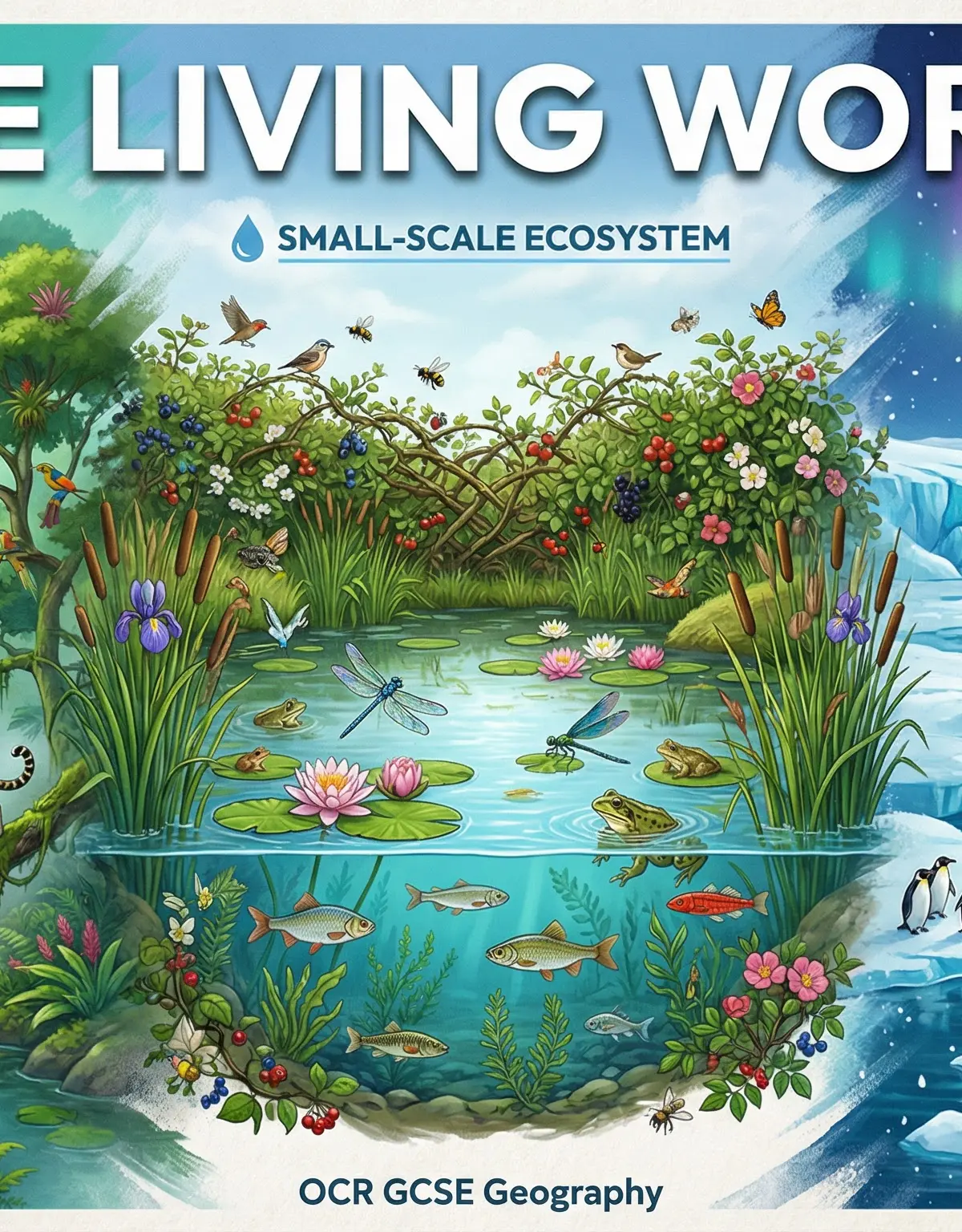
Small-Scale Ecosystems: A UK Pond
A small-scale ecosystem is a localized community of interdependent organisms interacting with their physical environment. A freshwater pond is a perfect example for your exam.
Abiotic Components: These are the non-living parts of the ecosystem.
- Sunlight: Provides the energy for photosynthesis.
- Water: The medium for all life processes, its chemistry (pH) is vital.
- Sediment/Soil: The pond floor, providing nutrients and a habitat for decomposers.
- Oxygen: Dissolved in the water, essential for respiration.
Biotic Components: These are the living parts of the ecosystem.
- Producers: Plants like algae and water lilies that convert sunlight into energy (photosynthesis).
- Consumers: Animals that feed on other organisms. A pond food web might include primary consumers (herbivores like tadpoles eating algae) and secondary/tertiary consumers (carnivores like dragonflies or fish).
- Decomposers: Bacteria and fungi that break down dead organic matter, returning nutrients to the soil and water.
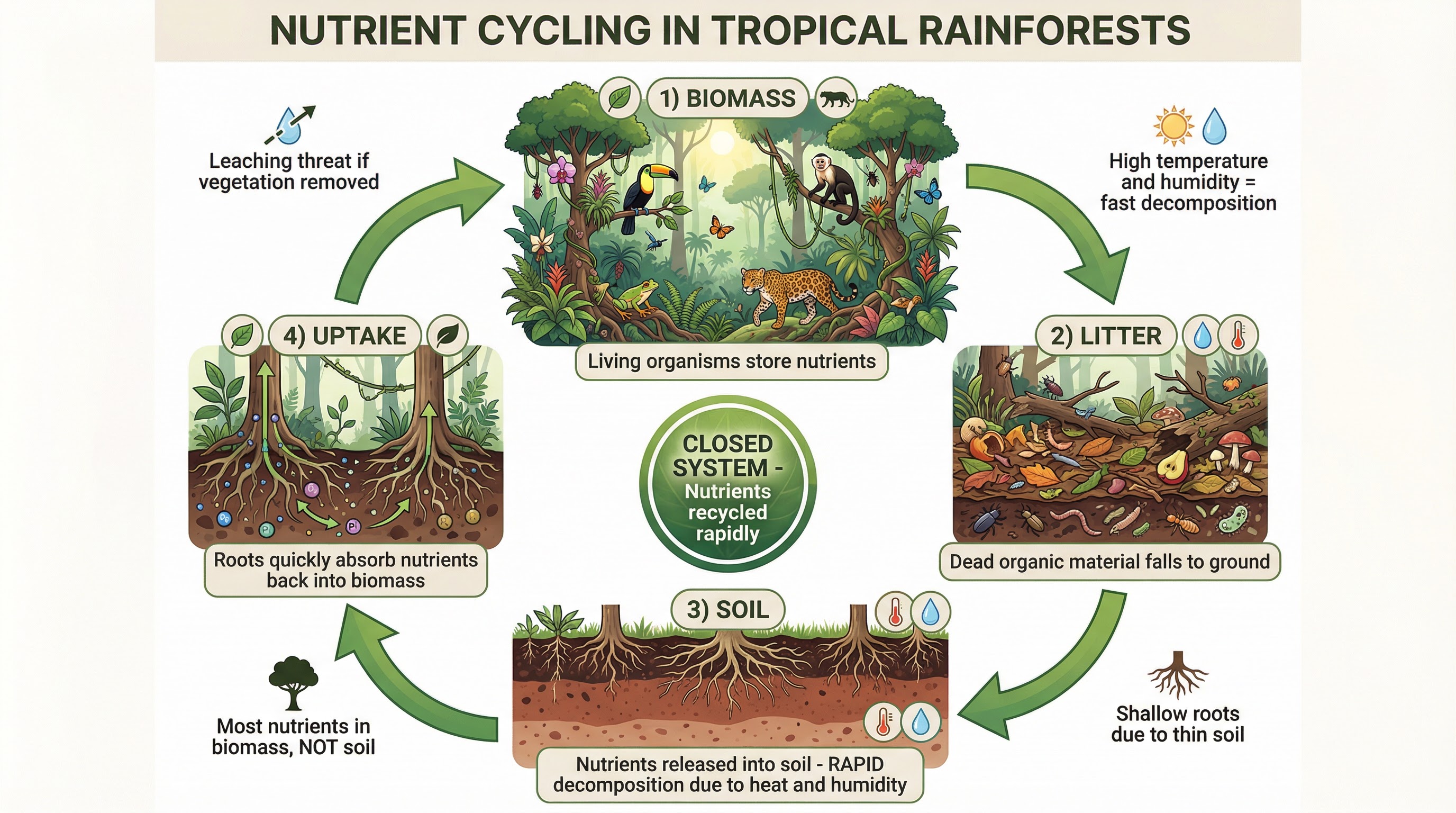
Interdependence & Nutrient Cycling: This is the core concept. Producers provide food and oxygen for consumers. When organisms die, decomposers recycle their nutrients, which are then reabsorbed by producers. This creates a self-sustaining cycle. For example, a sudden increase in predatory fish could decimate the population of smaller invertebrates, leading to an overgrowth of the algae they would normally eat. This is a negative feedback loop.
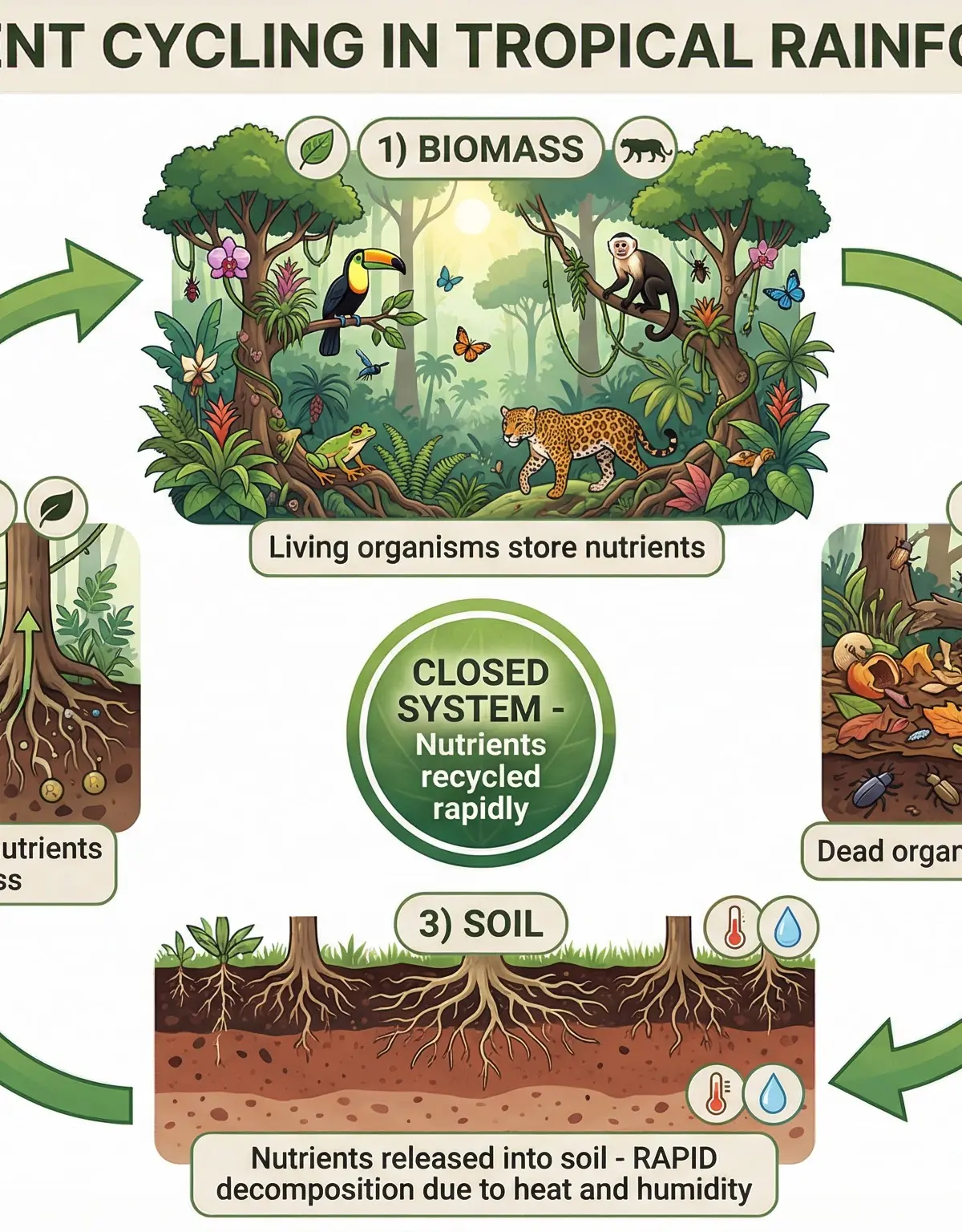
Global Biomes: Contrasting Worlds
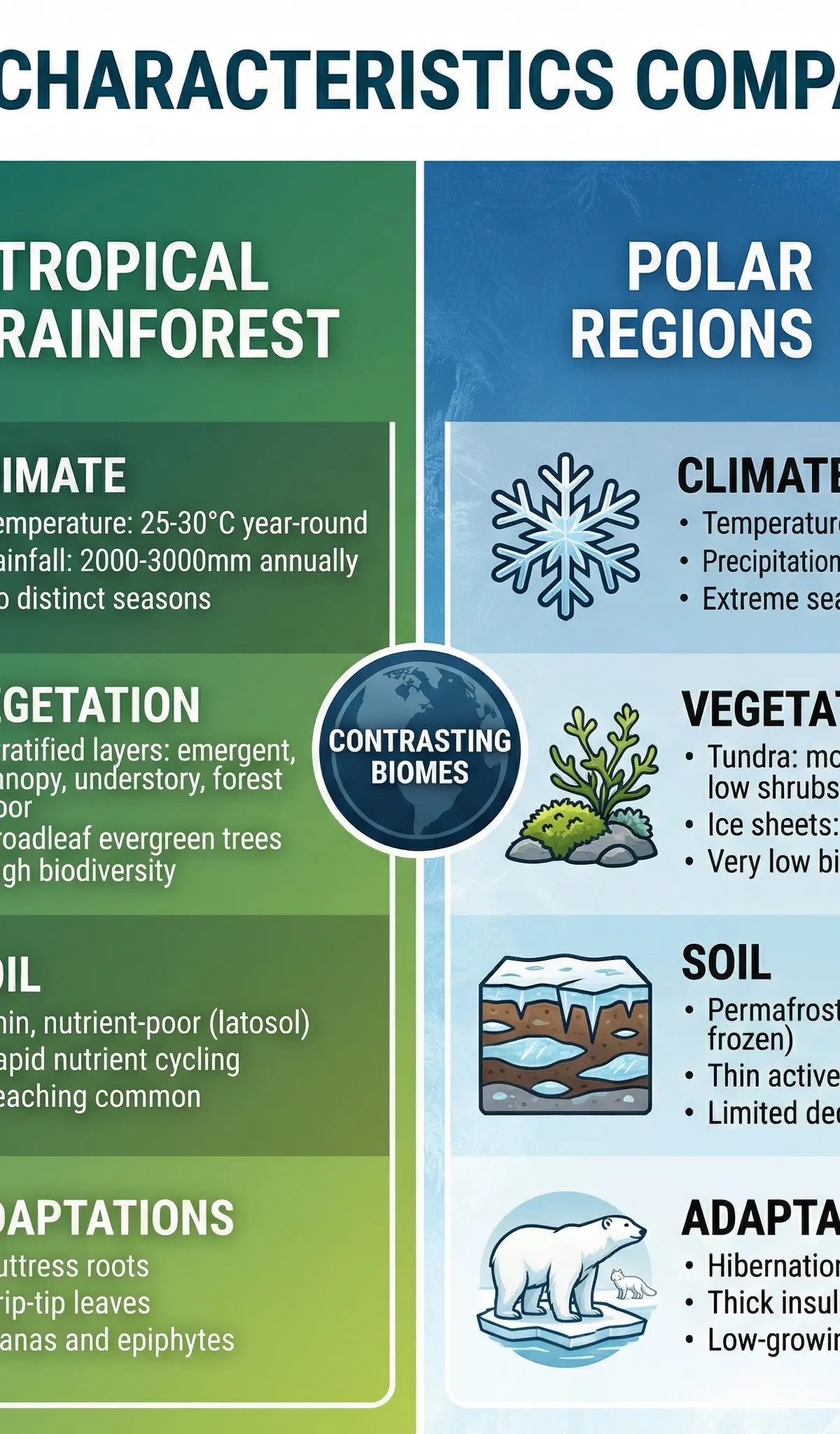
Biomes are large-scale ecosystems defined by their dominant vegetation and climate. You must be able to compare and contrast Tropical Rainforests and Polar Regions.
Tropical Rainforests (Case Study: The Amazon, Brazil)
Location: Found in a belt around the Equator, between the Tropics of Cancer and Capricorn.
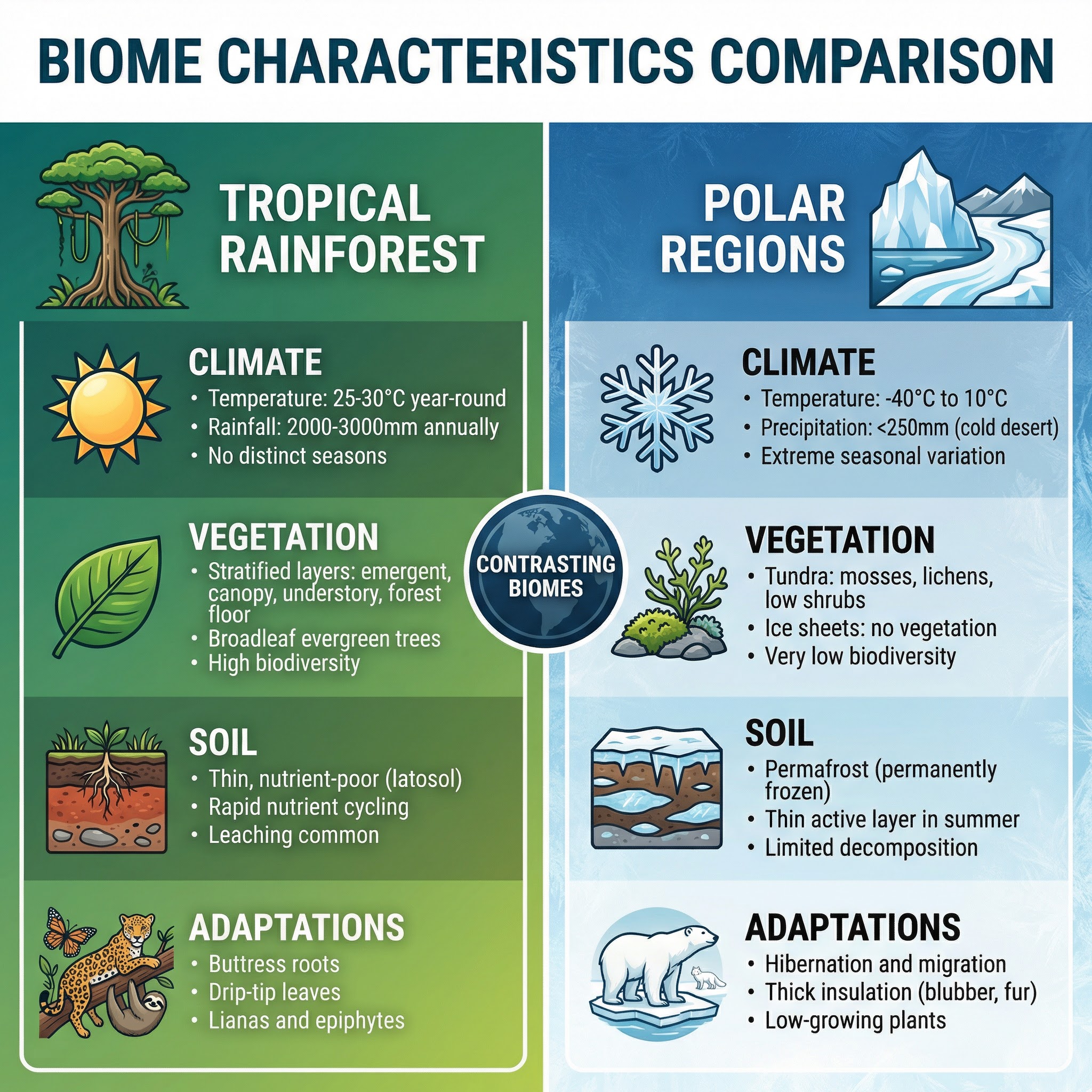
Climate: Consistently high temperatures (25-30°C) and heavy rainfall (>2,500mm/year). No distinct seasons.
Vegetation Structure: The forest is stratified into four distinct layers:
- Emergents: The tallest trees (up to 50m) that break through the canopy.
- Canopy: A continuous layer of treetops (around 30m) that captures most of the sunlight.
- Understory: Younger trees and shrubs adapted to lower light levels.
- Forest Floor: Dark and damp, with sparse vegetation due to lack of light.
Plant & Animal Adaptations:
- Buttress Roots: Large, wide roots to support tall trees in shallow soil.
- Drip-Tip Leaves: Allow heavy rain to run off quickly, preventing rot.
- Lianas & Epiphytes: Climbing plants and plants that grow on other trees to reach sunlight.
- Animal Adaptations: Many animals are adapted to a specific layer, such as monkeys in the canopy, and have camouflage to avoid predation.
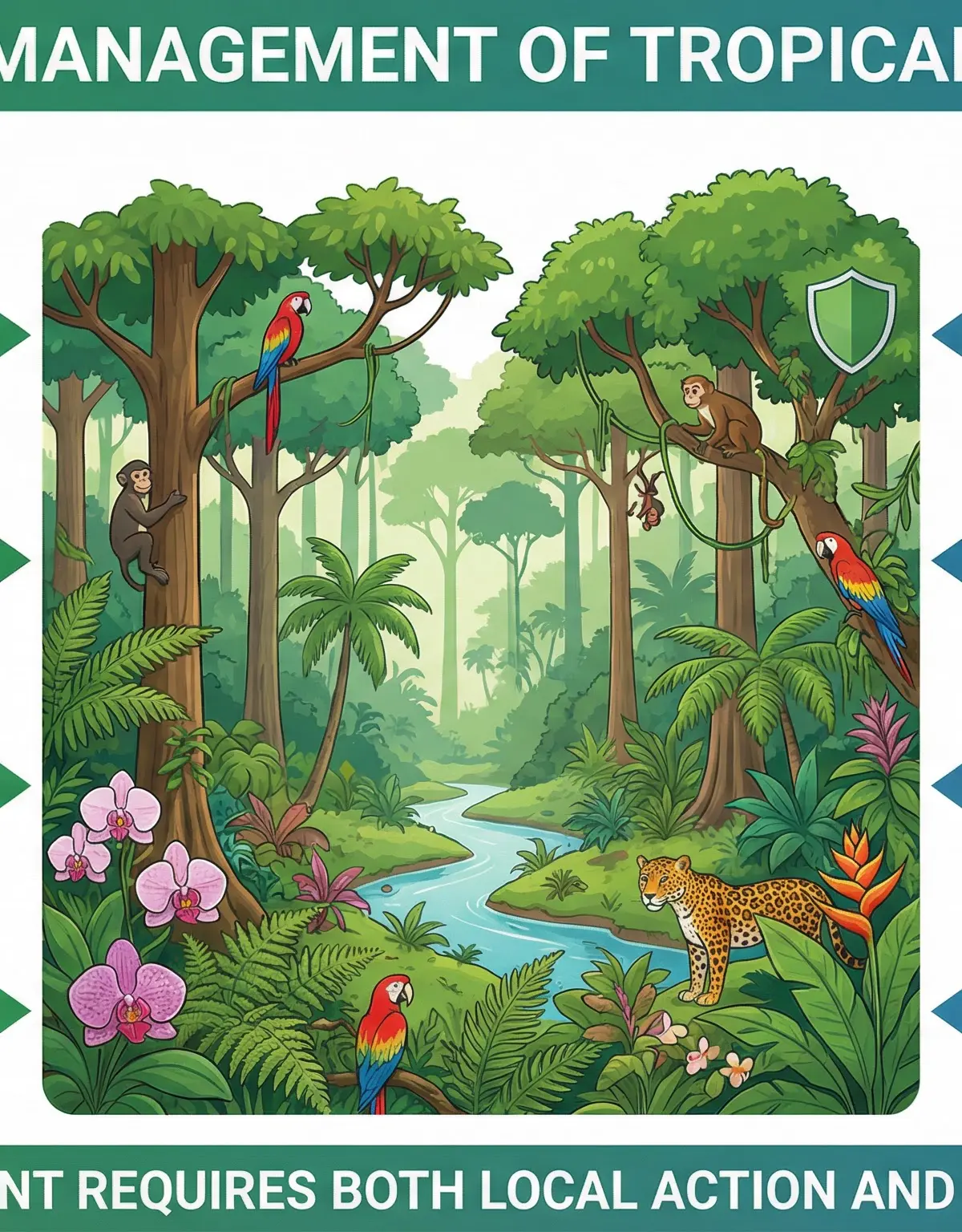
Human Impacts & Management:
- Threats: Deforestation for cattle ranching, soy cultivation, logging, mining, and road building. An area the size of a football pitch is lost every few seconds.
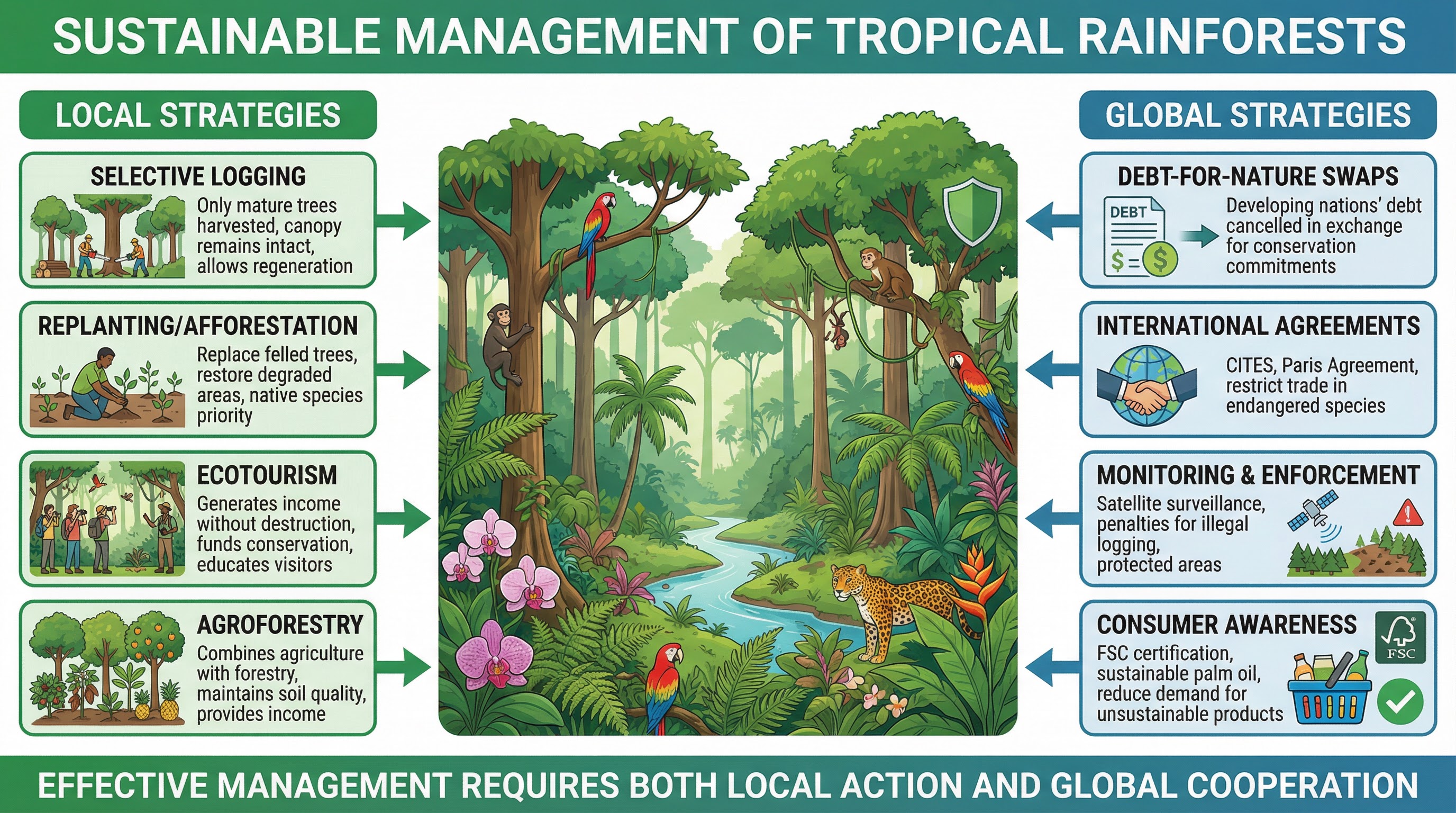
- Management Strategies: A combination of local and global efforts are needed.
Polar Regions (Case Study: Antarctica)
Location: Found at the Earth's poles - the Arctic and Antarctic circles.
Climate: Extremely cold, with temperatures often below -40°C. Low precipitation (<250mm/year), making it a 'cold desert'. Strong seasonal contrast between 24-hour daylight in summer and 24-hour darkness in winter.
Vegetation & Soil: In Antarctica, 98% of the land is covered by a permanent ice sheet. The soil is permafrost (permanently frozen ground). Vegetation is limited to mosses and lichens on exposed rock (nunataks).
Plant & Animal Adaptations:
- Low-growing plants: Mosses and lichens grow close to the ground to resist wind and absorb warmth.
- Animal Insulation: Animals like penguins and seals have thick layers of blubber for insulation.
- Migration & Hibernation: Many animals migrate to warmer areas or hibernate during the harsh winter.
Human Impacts & Management:
- Threats: Climate change causing ice melt and habitat loss, tourism pressures, overfishing of krill (a keystone species), and potential for future mineral exploitation.
- Management: The Antarctic Treaty (1959) is a key global agreement. It designates Antarctica as a natural reserve dedicated to peace and science, banning military activity and mineral exploration. The Madrid Protocol (1991) further strengthens environmental protection.
Visual Resources
3 diagrams and illustrations
Interactive Diagrams
1 interactive diagram to visualise key concepts
Conceptual Flow Outline
A simplified food web and nutrient cycle for a UK pond ecosystem, showing interdependence.
Worked Examples
3 worked examples — open one to explore the question and available guidance.
Practice Questions
Test your understanding — click to reveal model answers
Compare the characteristics of a tropical rainforest and a polar environment. (8 marks)
Hint: Use comparative language throughout. Structure your answer by theme (e.g., climate, vegetation, soil) and make direct links between the two biomes in each section.
For a small-scale ecosystem you have studied, explain how the biotic and abiotic components are interdependent. (6 marks)
Hint: Choose a specific UK ecosystem (e.g., a pond). Explain the food web and the nutrient cycle, showing how living and non-living parts are linked.
Explain two reasons why tropical rainforests have high biodiversity. (4 marks)
Hint: Think about the climate and the structure of the forest.