OCR · GCSE · History
The making of America, 1789-1900
This study guide for OCR GCSE History explores the dramatic transformation of the United States from 1789 to 1900. It covers the key themes of westward expansion, the Plains Wars, the Civil War, and the diverse cultures that shaped modern America, providing exam-focused analysis to help candidates secure top marks.
- 8 min read
- 3 worked examples
- 5 practice questions
- 6 key terms
Study Notes
Overview
This OCR B (SHP) Period Study covers the evolution of the USA from a fragile federation of 13 states into a continental superpower between 1789 and 1900. It is a story of immense change, conflict, and the forging of a new national identity. Examiners expect candidates to move beyond simple narrative and engage with second-order historical concepts: causation, consequence, change, and significance. This means analysing why events happened, what their impact was, and how they fit into the bigger picture of American development. The study is structured around five key themes: the westward expansion of the USA; life in the American West; the causes and consequences of the Civil War; the conflict with the Plains Indians; and the diverse cultures of America. Success in this paper requires a firm grasp of specific factual knowledge (names, dates, laws) and the ability to deploy it as evidence to support analytical arguments.
Key Events & Developments
Westward Expansion & Manifest Destiny
Date(s): c. 1803 - 1890
What happened: The United States expanded its territory from the Atlantic coast to the Pacific Ocean through a combination of purchase, treaty, and war. This was underpinned by the ideology of 'Manifest Destiny' – the belief that white Americans had a God-given right to occupy the entire continent.
Why it matters: This is a core theme that drives the entire period. Expansion led directly to conflict with Native Americans, Mexico, and Britain. It also fuelled the crucial debate over whether new territories would permit slavery, a key cause of the Civil War. For the exam, candidates must link the concept of Manifest Destiny to specific events like the Louisiana Purchase and the Mexican-American War, and explain its consequences.
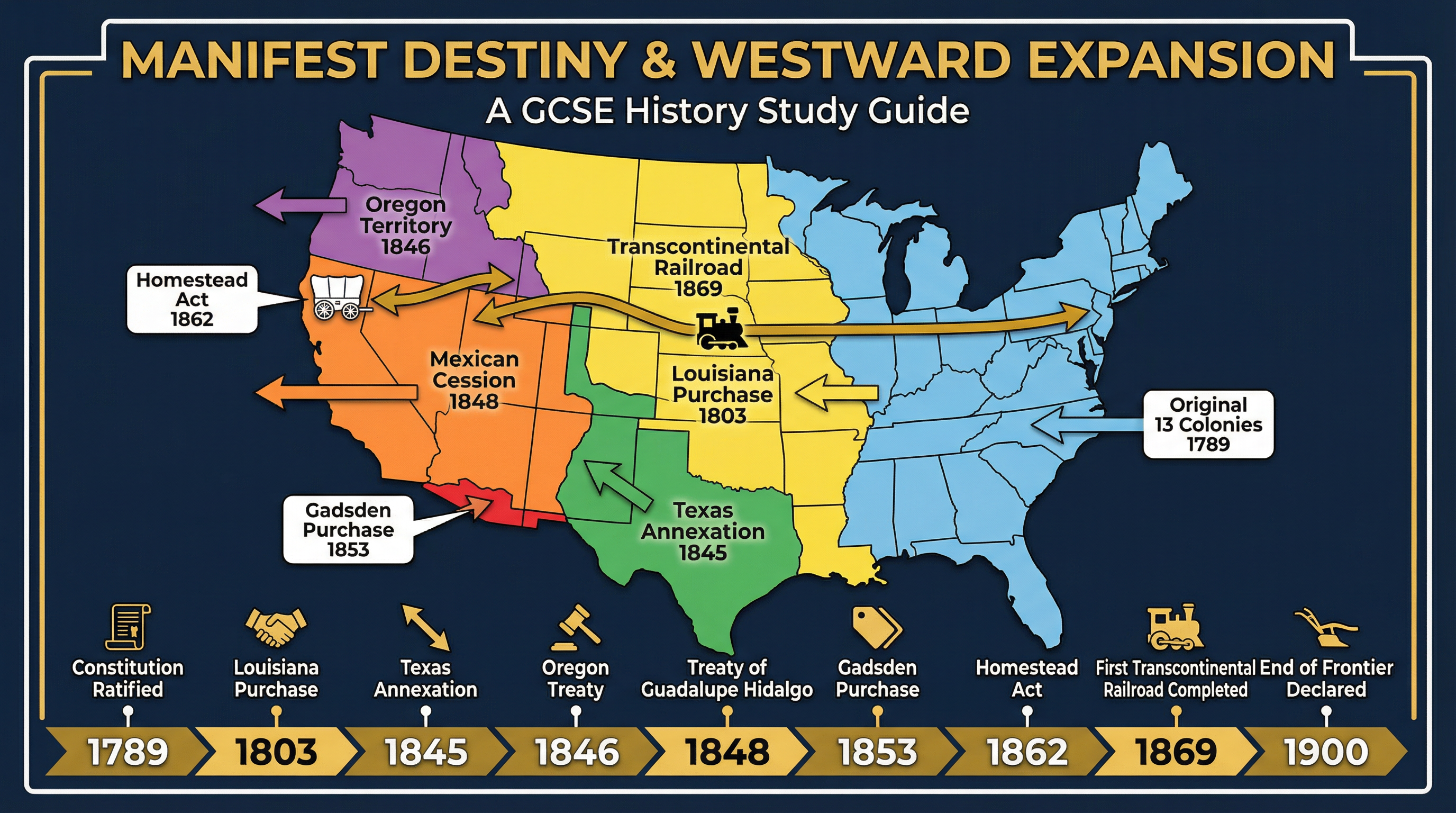
Specific Knowledge: Louisiana Purchase (1803), Lewis and Clark expedition (1804-06), Annexation of Texas (1845), Mexican-American War (1846-48), Treaty of Guadalupe Hidalgo (1848), California Gold Rush (1849), Gadsden Purchase (1853), Homestead Act (1862), completion of the Transcontinental Railroad (1869).
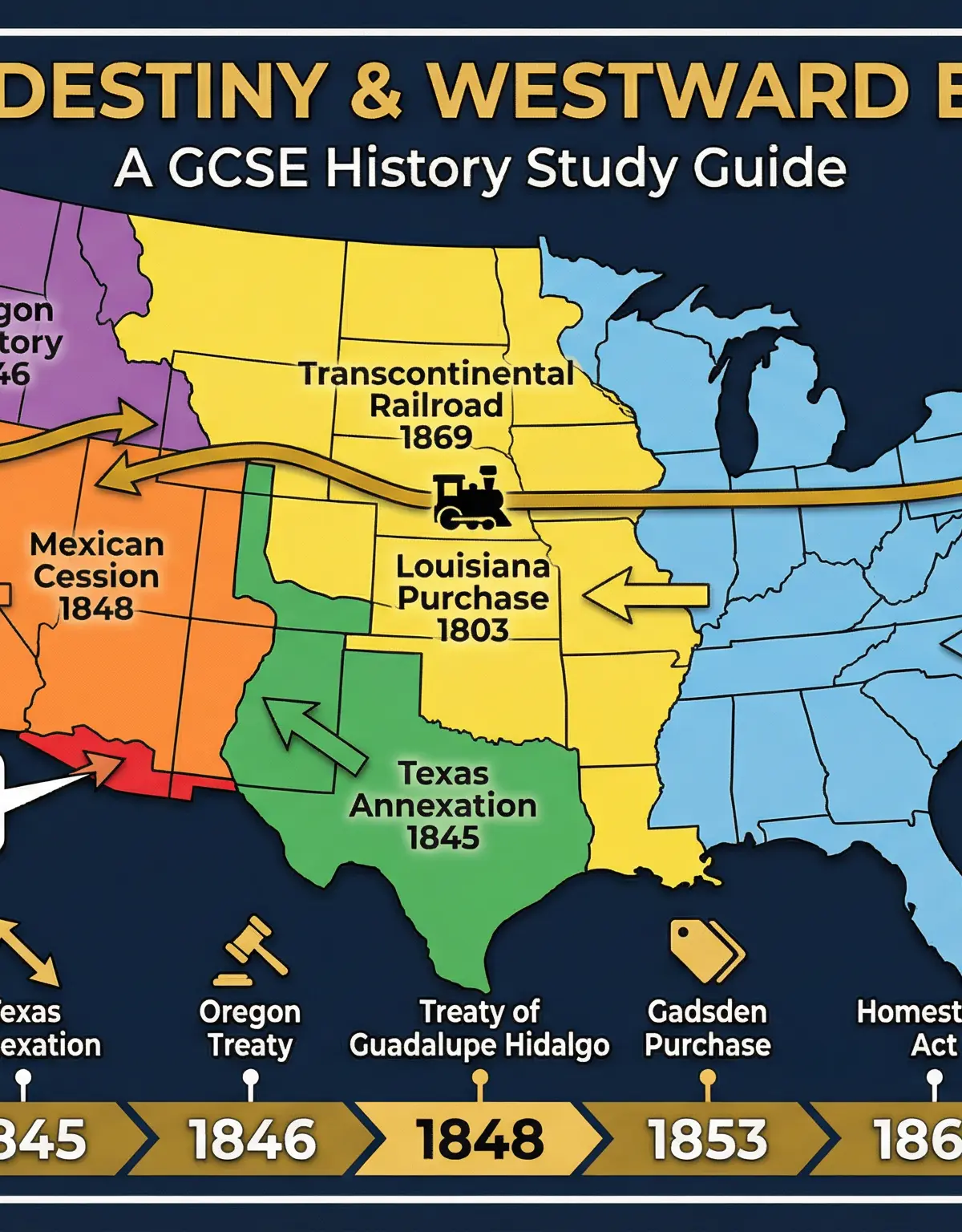
The American Civil War
Date(s): 1861 - 1865
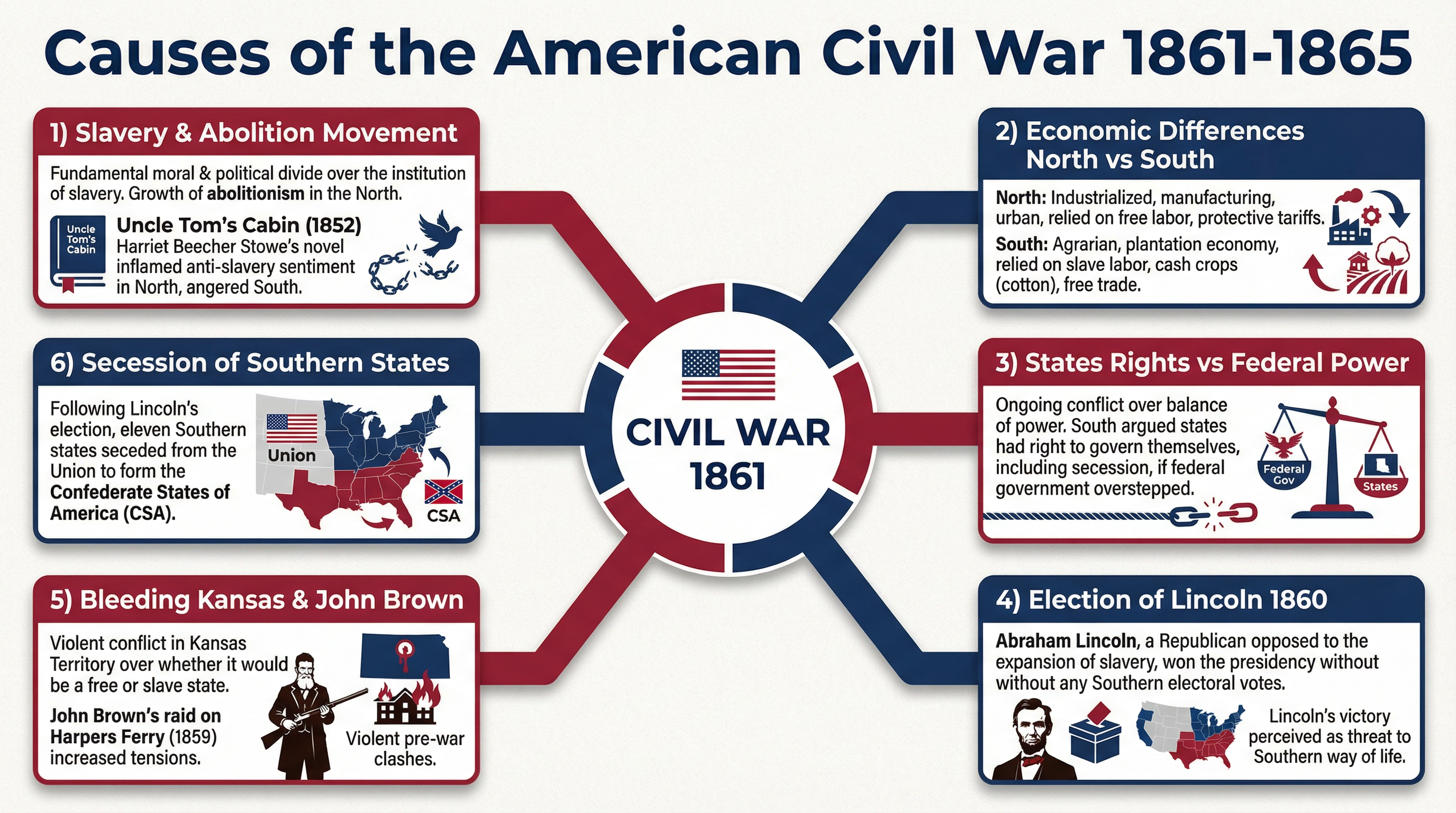
What happened: A brutal conflict between the Union (the Northern states) and the Confederacy (11 Southern states that seceded). The war was fought over the issues of slavery, states' rights, and economic differences. The Union victory led to the abolition of slavery and the preservation of the United States as a single nation.
Why it matters: The Civil War was the defining event of 19th-century American history. It resolved the question of slavery but at a terrible cost of over 620,000 lives. Its consequences, particularly the failure of Reconstruction to secure genuine equality for African Americans, shaped American society for the next century. Examiners will credit candidates who can analyse the complex causes and long-term consequences, rather than just describing battles.
Specific Knowledge: Election of Lincoln (1860), Secession of South Carolina (Dec 1860), Fort Sumter (April 1861), Emancipation Proclamation (1863), Battle of Gettysburg (1863), Appomattox Court House surrender (1865), 13th, 14th, and 15th Amendments, Black Codes, Ku Klux Klan.
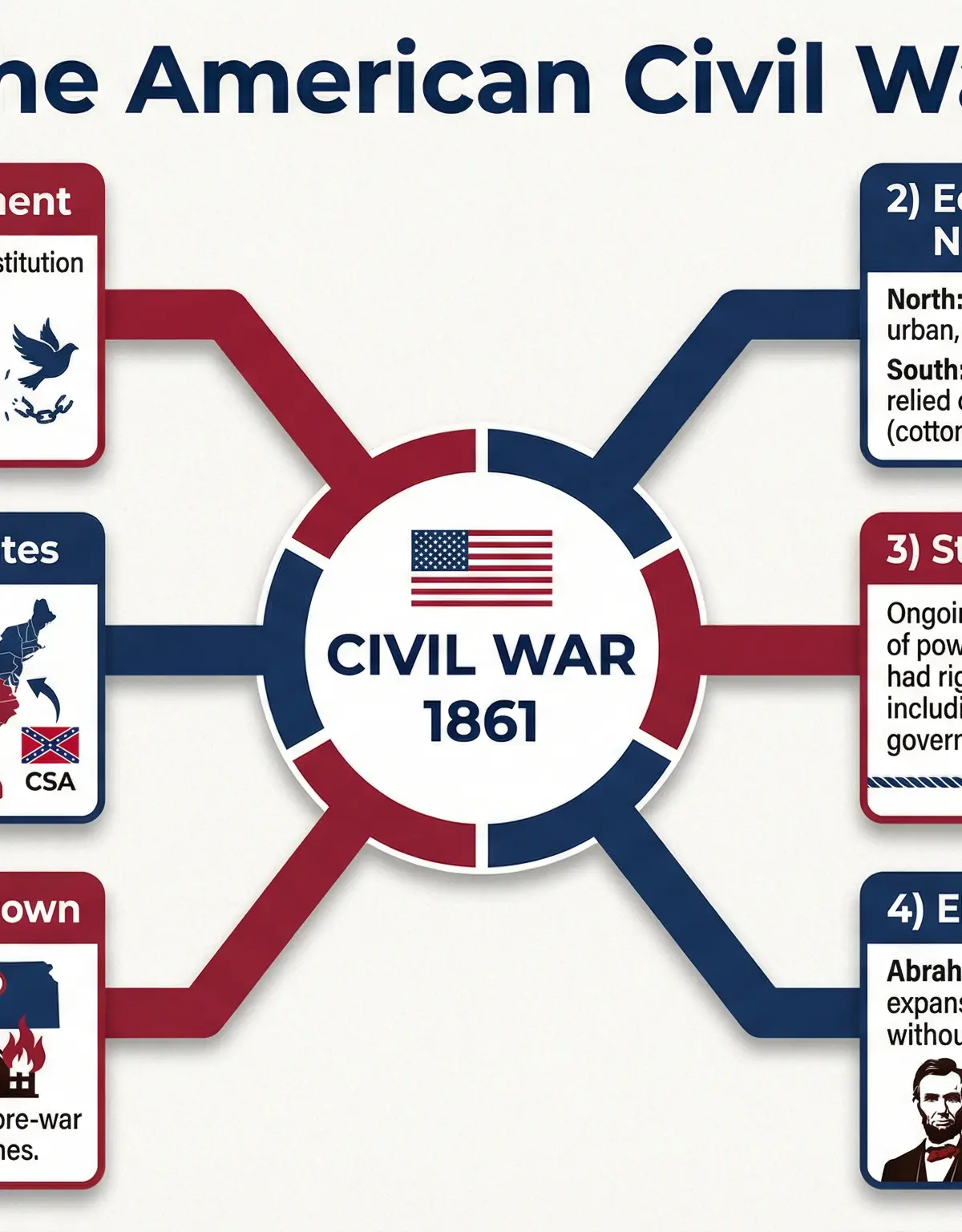
The Plains Wars
Date(s): c. 1862 - 1890
What happened: A series of conflicts between the US Army and various Plains Indian nations, most notably the Lakota Sioux and Cheyenne. The wars were caused by the encroachment of white settlers, miners, and railroads onto Indian lands, and the US government's policy of forcing Indians onto reservations.
Why it matters: This theme highlights the human cost of westward expansion. It demonstrates the clash of cultures and the destruction of the Plains Indians' way of life, which was dependent on the buffalo. Candidates must understand the chronology of the wars and avoid treating Native Americans as a single group. Credit is given for analysing the changing US government policy, from treaties to 'Total War' and forced assimilation.
Specific Knowledge: Fort Laramie Treaties (1851 & 1868), Sand Creek Massacre (1864), Red Cloud's War (1866-68), Battle of the Little Bighorn (1876), Dawes Act (1887), Wounded Knee Massacre (1890).
Key Individuals
Abraham Lincoln
Role: 16th President of the United States (1861-1865).
Key Actions: Led the Union to victory in the Civil War. Issued the Emancipation Proclamation in 1863, which freed enslaved people in the Confederacy. Delivered the Gettysburg Address, redefining the purpose of the war. Was assassinated in April 1865, just days after the Confederate surrender.
Impact: Lincoln's leadership preserved the United States as a single nation and initiated the process of ending slavery. He is widely regarded as one of America's greatest presidents. For the exam, his role in causing the war (his election) and shaping its outcome is crucial.
Sitting Bull
Role: A Hunkpapa Lakota holy man and leader of resistance against US government policies.
Key Actions: Inspired and led Lakota resistance during the Great Sioux War of 1876. He was a key figure in the coalition of tribes that defeated General Custer at the Battle of the Little Bighorn. He later toured with Buffalo Bill's Wild West show before being killed by Indian agency police in 1890 during an attempt to arrest him.
Impact: Sitting Bull symbolises Native American resistance to white expansion. He was a spiritual and political leader who fought to preserve his people's land and way of life. Candidates can use his life to illustrate the nature of the Plains Wars and the ultimate failure of armed resistance.
Harriet Beecher Stowe
Role: Author and abolitionist.
Key Actions: Wrote the anti-slavery novel Uncle Tom's Cabin, published in 1852. The book was a massive bestseller, selling 300,000 copies in its first year in the US alone.
Impact: Uncle Tom's Cabin had a profound impact on public opinion, particularly in the North. It personalised the horrors of slavery for a mass audience, galvanising the abolitionist movement and enraging the South. It is often cited as a key long-term cause of the Civil War. Credit is given for explaining how a cultural source could have such a significant political impact.
Second-Order Concepts
Causation
This topic is rich in causation questions. For the Civil War, candidates must distinguish between long-term causes (economic differences, slavery) and short-term triggers (John Brown's raid, Lincoln's election). For the Plains Wars, causes include the push for land (Homestead Act), the pull of gold, and the ideology of Manifest Destiny, all leading to the destruction of the buffalo and the breaking of treaties.
Consequence
The consequences of this period were vast. Westward expansion led to the creation of a continental nation but also the near-genocide of Native Americans. The Civil War led to the abolition of slavery but also the failure of Reconstruction and the rise of Jim Crow segregation. High-level answers will analyse both intended and unintended consequences.
Change & Continuity
Candidates should track what changed and what stayed the same. For example, the legal status of African Americans changed dramatically (from enslaved to citizen), but the social and economic reality of racism and discrimination continued. The Plains Indians' way of life was almost entirely destroyed (change), but their cultural identity and resistance continued in new forms.
Significance
Why do these events matter? The significance of the Civil War lies in its role in forging a modern, unified American nation-state and ending slavery. The significance of the Plains Wars lies in what it reveals about the cost of American nation-building and its impact on indigenous peoples. Candidates should be able to make a supported judgement about the historical importance of an event or individual.
Source Skills
For this topic, sources could include political cartoons about Manifest Destiny, photographs of homesteaders or Civil War battlefields, extracts from speeches by Lincoln, or accounts from Native Americans. When evaluating a source, always use the Content-Provenance-Limitations-Judgement framework. What does the source show or say? Who made it, when, and why? What does it not tell you? How useful is it for a specific enquiry? For example, a photograph of the dead at Wounded Knee is powerful evidence of the massacre's brutality (content), but its provenance (taken by a white photographer for a white audience) might shape its perspective. Its limitation is that it cannot tell us about the causes of the conflict from a Lakota viewpoint.
Visual Resources
2 diagrams and illustrations
Interactive Diagrams
1 interactive diagram to visualise key concepts
Diagram could not be rendered
A timeline showing the chronological order of key events in the Making of America period. Note how events relating to expansion, the Civil War, and the Plains Indians overlap.
Worked Examples
3 worked examples — open one to explore the question and available guidance.
Practice Questions
Test your understanding — click to reveal model answers
Describe two features of the life of a homesteader on the Plains.
Hint: Think about the challenges they faced and the type of house they lived in. Be specific.
Explain why the buffalo were so important to the Plains Indians.
Hint: Think about survival, culture, and religion. Explain at least two distinct reasons with specific examples.
How far do you agree that the main consequence of the Civil War was the abolition of slavery?
Hint: This is a 'how far' question, so you need a balanced argument. Consider other consequences like the preservation of the Union and the failure of Reconstruction.
Explain why the building of the Transcontinental Railroad was so significant.
Hint: Think about its impact on westward expansion, the economy, and the Plains Indians. Aim for two developed points.
Describe two key terms of the Dawes Act of 1887.
Hint: Think about how it changed land ownership for Native Americans.
Test your understanding of The making of America, 1789-1900
Active recall beats re-reading. Take an instant quiz now to test what you’ve learned and lock it into long-term memory.
7 days Premium · Then free forever · No card, no charge