E2E stub topic — AQA GCSE Study Guide
Exam Board: AQA | Level: GCSE
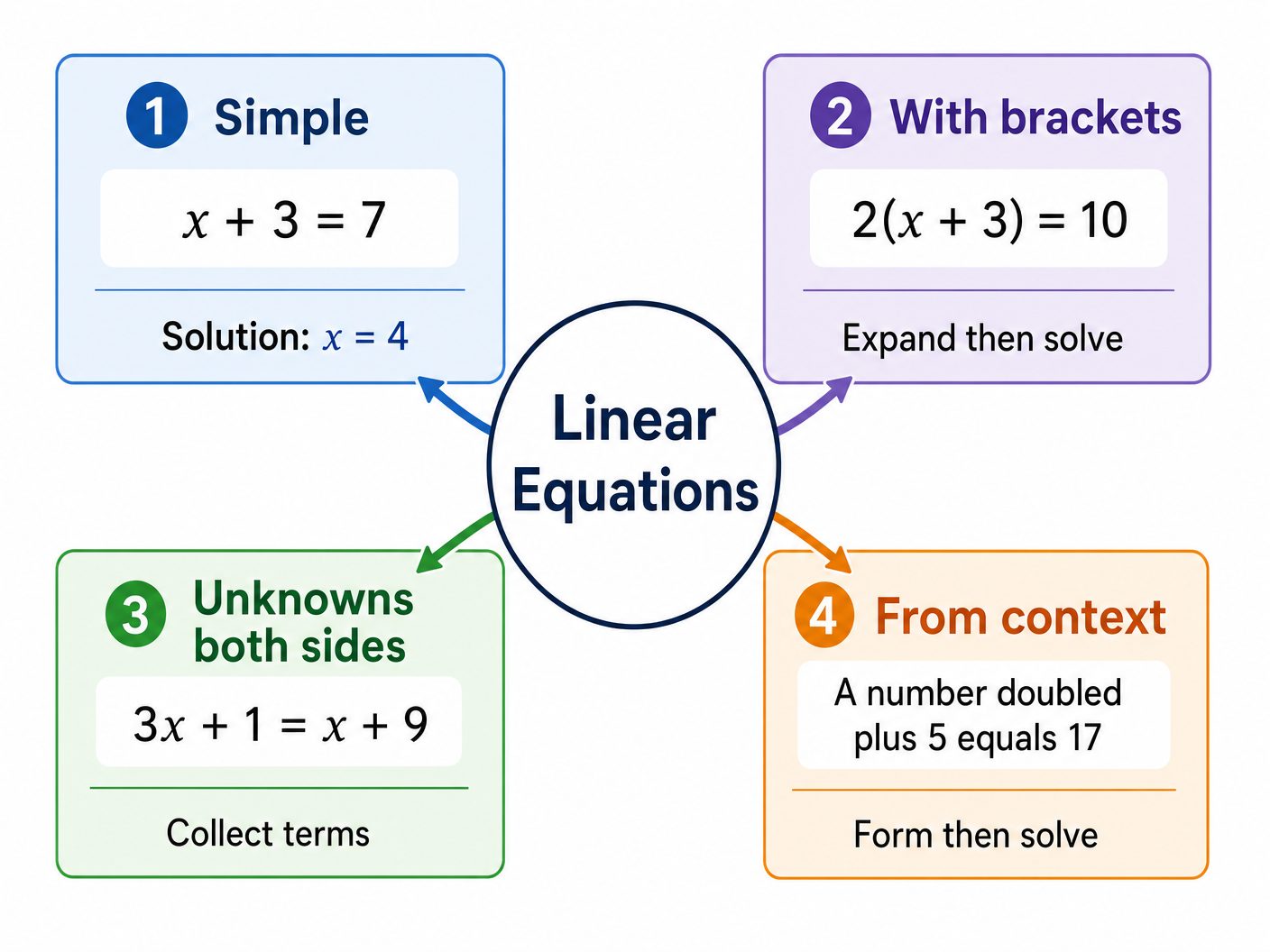
Solving linear equations is the cornerstone of GCSE Algebra, appearing in virtually every exam paper. Mastering this skill allows you to unlock complex problem-solving questions and secure essential method marks.
Overview
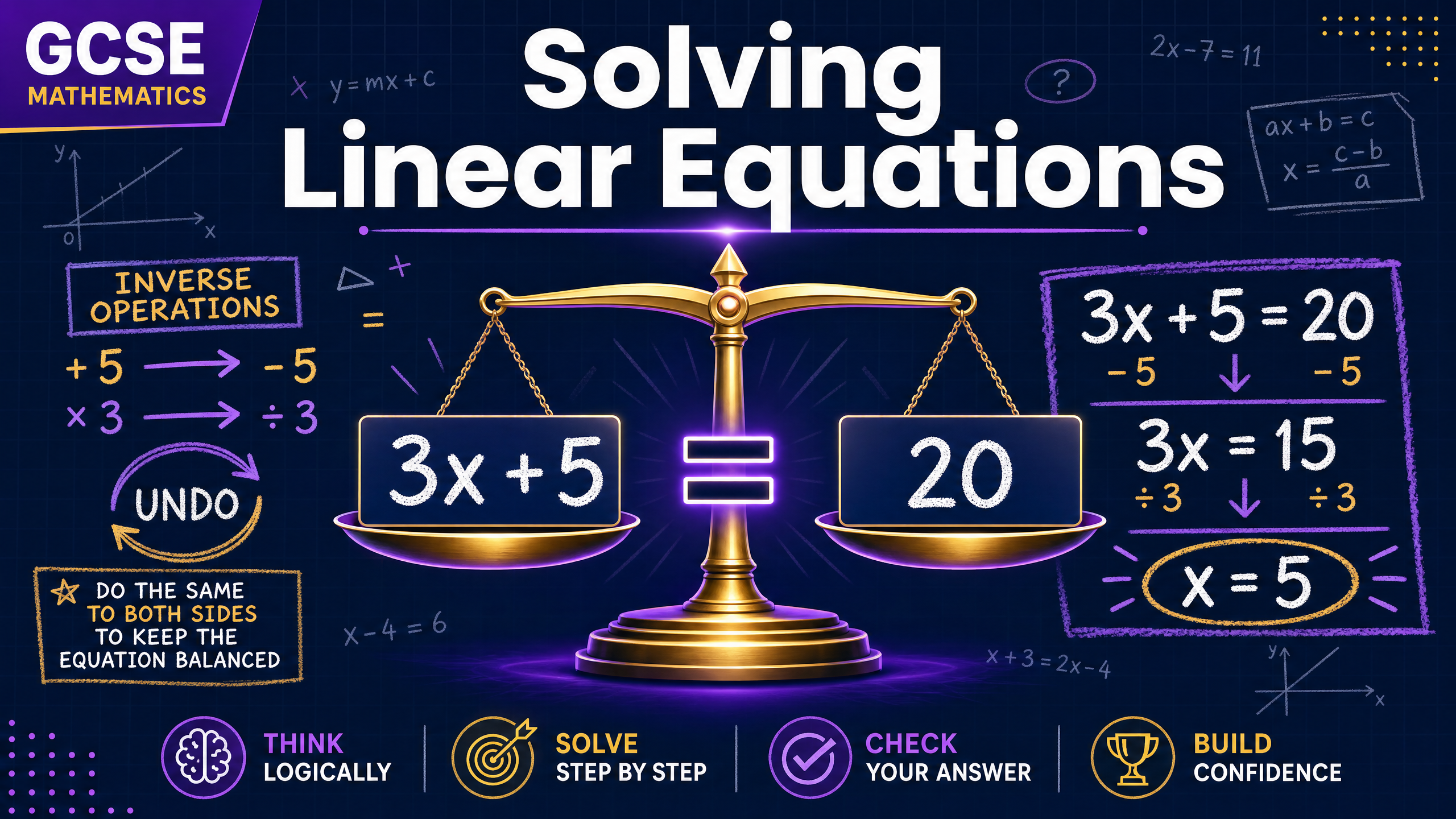
Solving linear equations is one of the most fundamental skills in GCSE Mathematics. It forms the foundation for almost all algebraic topics, from simultaneous equations to inequalities and coordinate geometry. Examiners consistently test this topic because it demonstrates logical thinking and mathematical fluency.
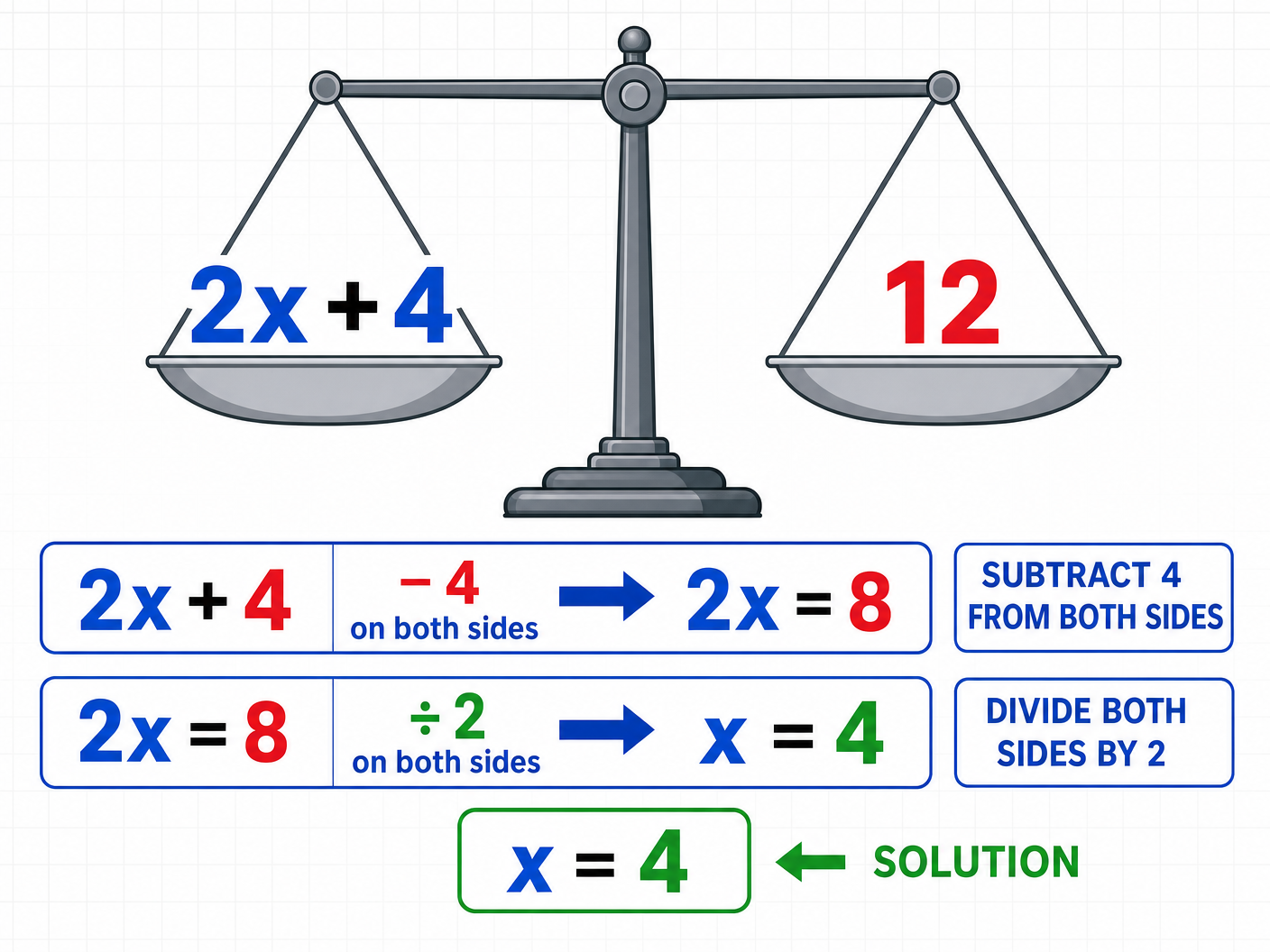
A linear equation is an equation where the highest power of the variable (usually x) is 1. Your goal is to find the exact value of the unknown that makes the equation true. Think of an equation as a perfectly balanced scale—whatever operation you perform on one side, you must perform on the other to maintain that balance.
This topic is heavily linked to geometry (finding missing angles or side lengths) and probability (where probabilities sum to 1). Exam questions range from simple one-step operations in Foundation tier to complex multi-step problems involving brackets, fractions, and unknowns on both sides in Higher tier.
Key Concepts
Concept 1: The Balance Method (Inverse Operations)
Continue revising: Browse all Mathematics AQA GCSE topics →