E2E stub topic — Edexcel GCSE Study Guide
Exam Board: Edexcel | Level: GCSE
Mastering Fractions, Decimals, and Percentages (FDP) is essential for GCSE Mathematics. This topic unlocks proportional reasoning and forms the foundation for solving complex real-world financial and data problems.
Overview
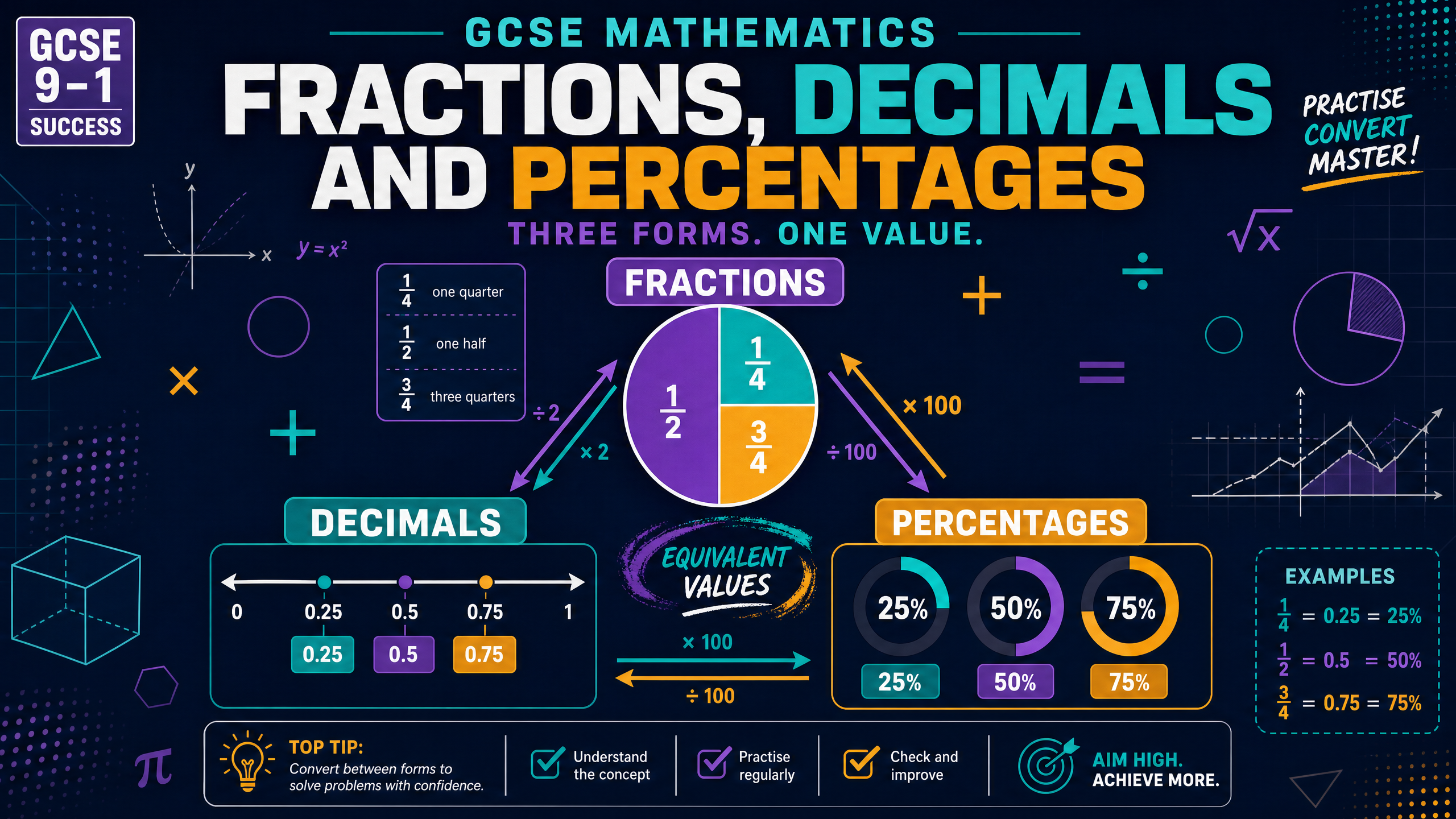
Fractions, Decimals, and Percentages (FDP) are simply three different languages used to describe the exact same value. In GCSE Mathematics, examiners are testing your fluency—your ability to seamlessly translate between these three forms and select the most efficient one for a given problem. This topic is foundational; without a solid grasp of FDP, you will struggle with ratio, proportion, compound interest, and probability.
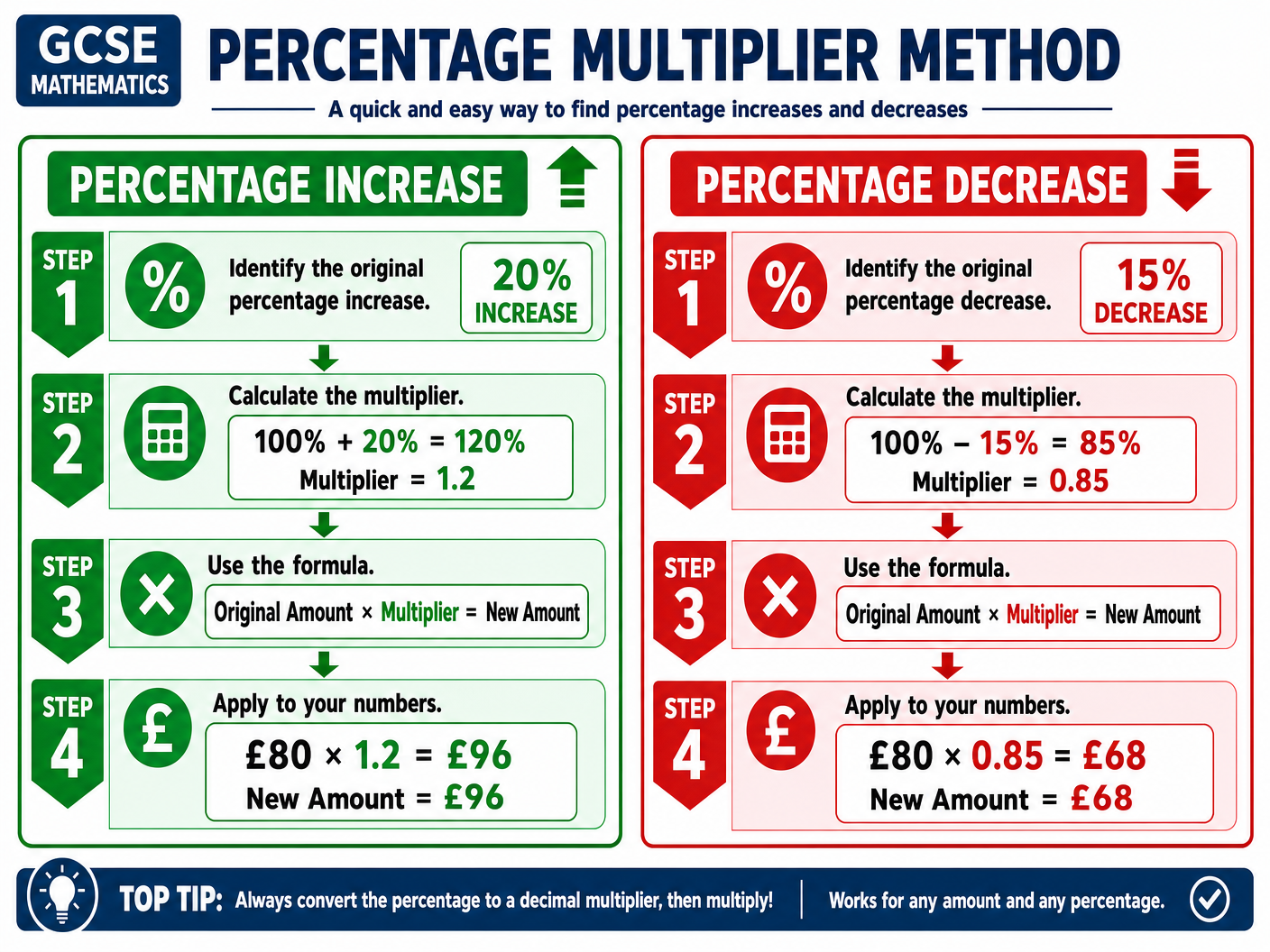
Exam questions frequently require you to order mixed quantities, calculate percentage changes using multipliers, and apply these skills to real-world contexts like sale prices or population growth. The key to securing top marks is demonstrating your method clearly, especially when converting between forms.
Key Concepts
Concept 1: The FDP Conversion Triangle
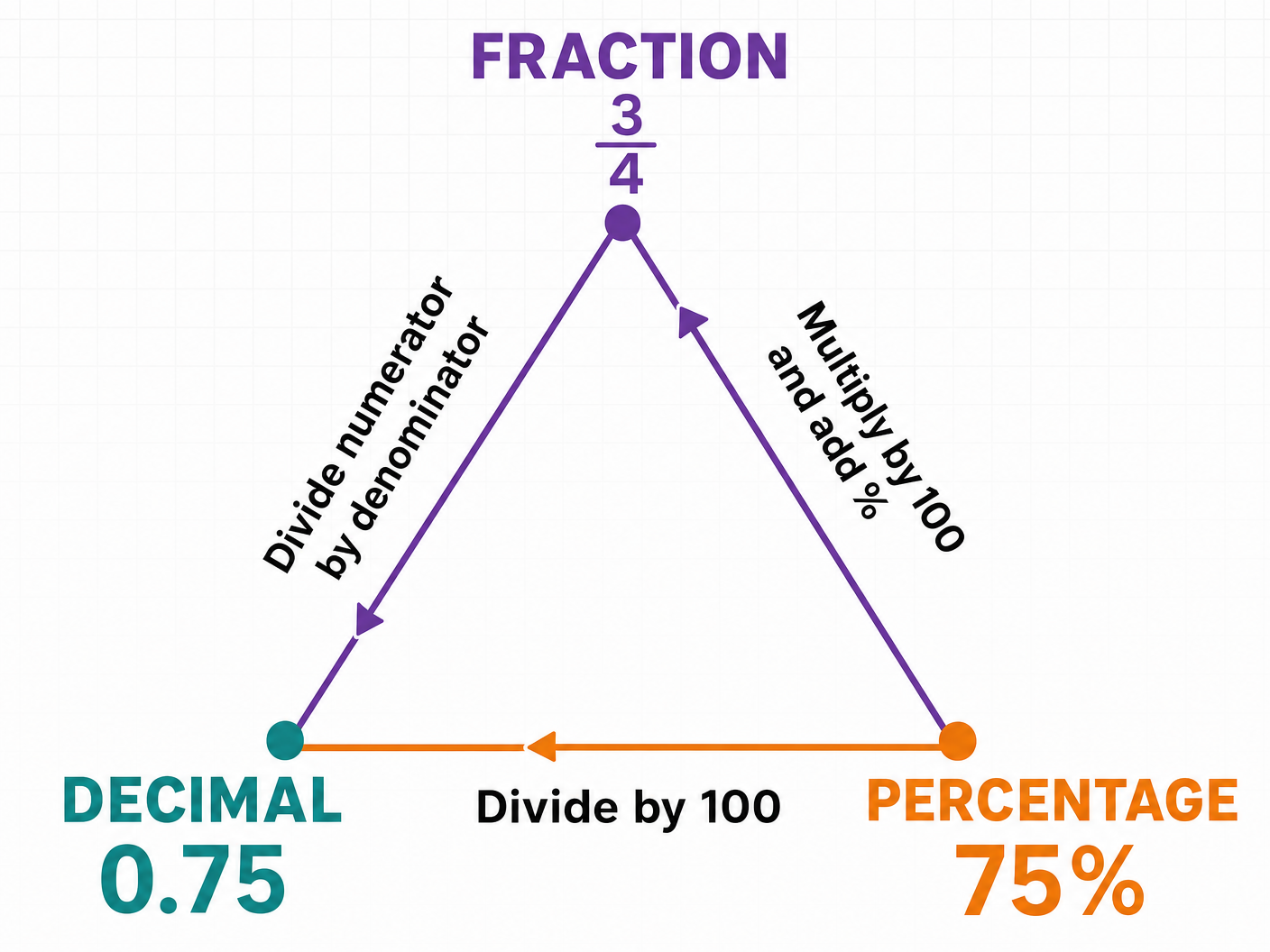
To move between fractions, decimals, and percentages, you must follow specific rules. The most critical rule is that a fraction line simply means "divide". To convert a fraction to a decimal, you divide the numerator (top) by the denominator (bottom). For example, to convert 3/8 to a decimal, you calculate 3 ÷ 8 = 0.375.
Continue revising: Browse all Mathematics Edexcel GCSE topics →