E2E stub topic — OCR GCSE Study Guide
Exam Board: OCR | Level: GCSE
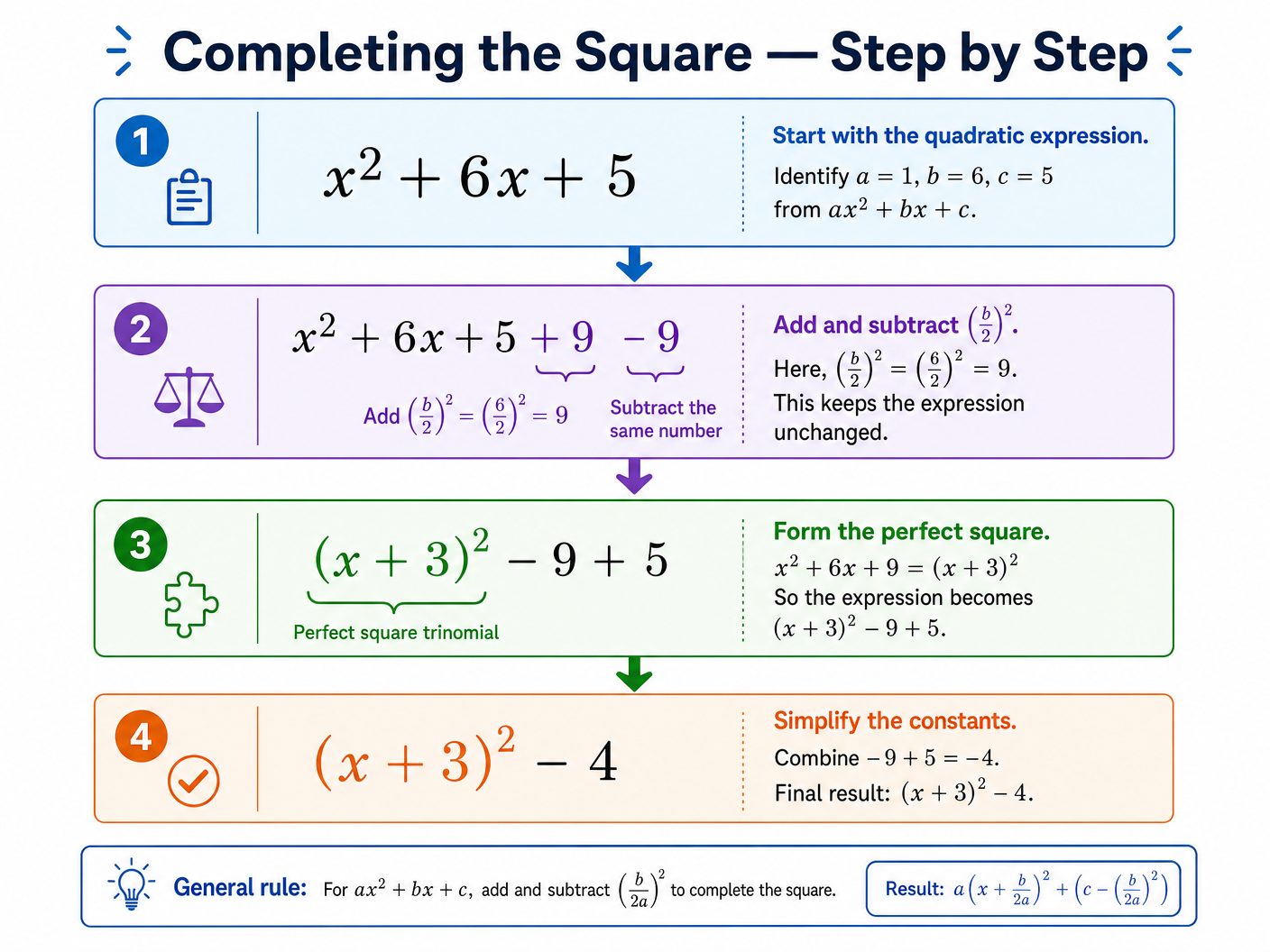
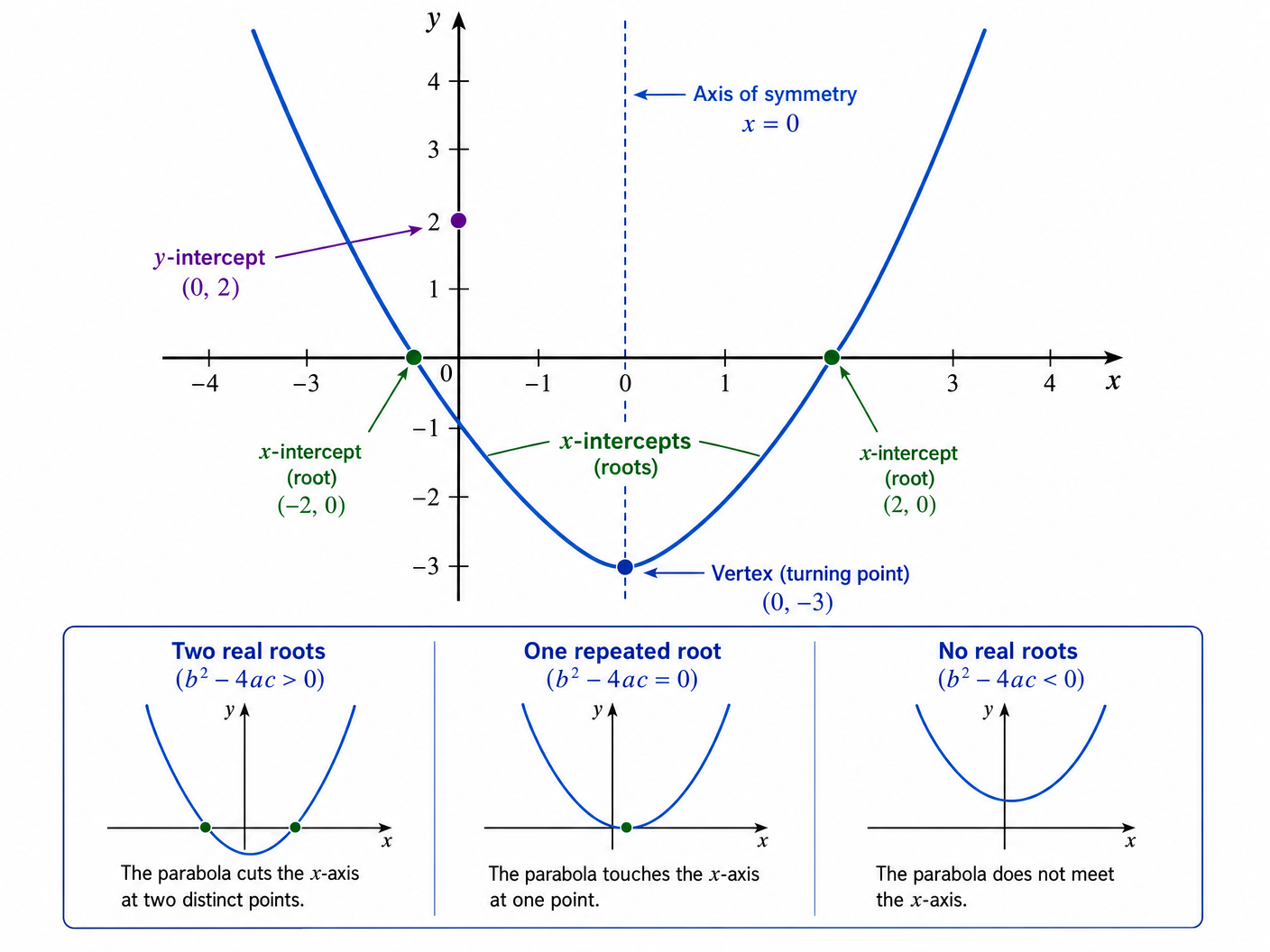
Master the art of solving and graphing quadratic equations. This guide covers factorising, the quadratic formula, completing the square, and graphical features, ensuring you secure those high-tariff marks in your GCSE Maths exam.
Overview
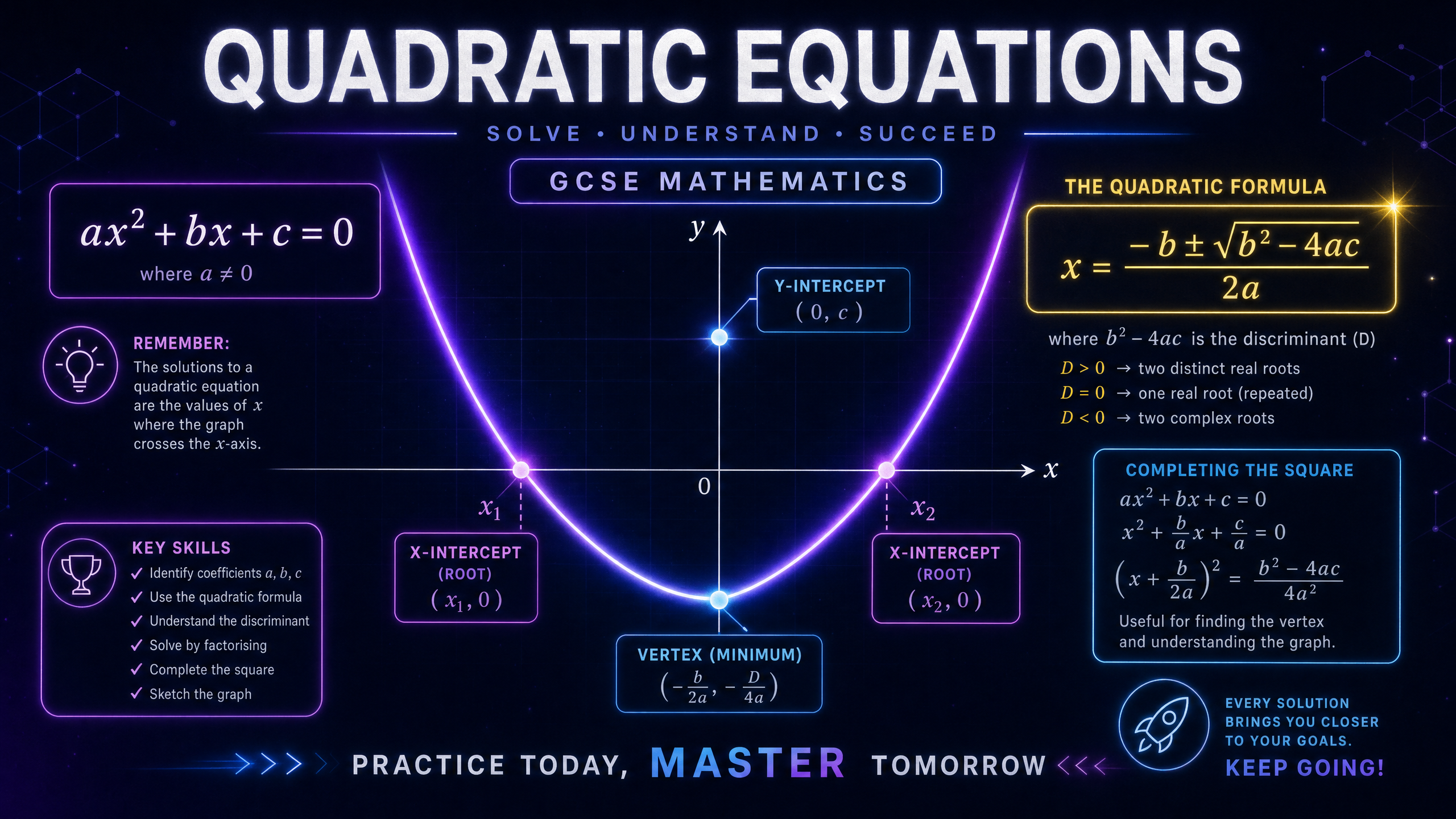
Quadratic equations are a cornerstone of GCSE Mathematics, bridging the gap between basic algebra and advanced calculus. A quadratic equation contains an x^2 term as its highest power and typically takes the form ax^2 + bx + c = 0. This topic is heavily assessed across all exam boards, often appearing in high-tariff questions that require multi-step problem solving.
Understanding quadratics isn't just about finding 'x'; it's about modelling real-world scenarios like projectile motion, optimizing areas, and analyzing curves. In your exams, you will be expected to solve these equations algebraically—using factorisation, the quadratic formula, or completing the square—and graphically by sketching parabolas and identifying key features like roots and turning points.
This guide will walk you through each method, showing you exactly where examiners award marks and how to avoid common pitfalls.
Key Concepts
Concept 1: Solving by Factorising
Factorising is the process of putting a quadratic expression back into brackets. It relies on the zero product property: if A \times B = 0, then either A = 0 or B = 0.
When you have x^2 + bx + c = 0, you need to find two numbers that
Continue revising: Browse all Mathematics OCR GCSE topics →