Algebra — Pearson GCSE Study Guide
Exam Board: Pearson | Level: GCSE
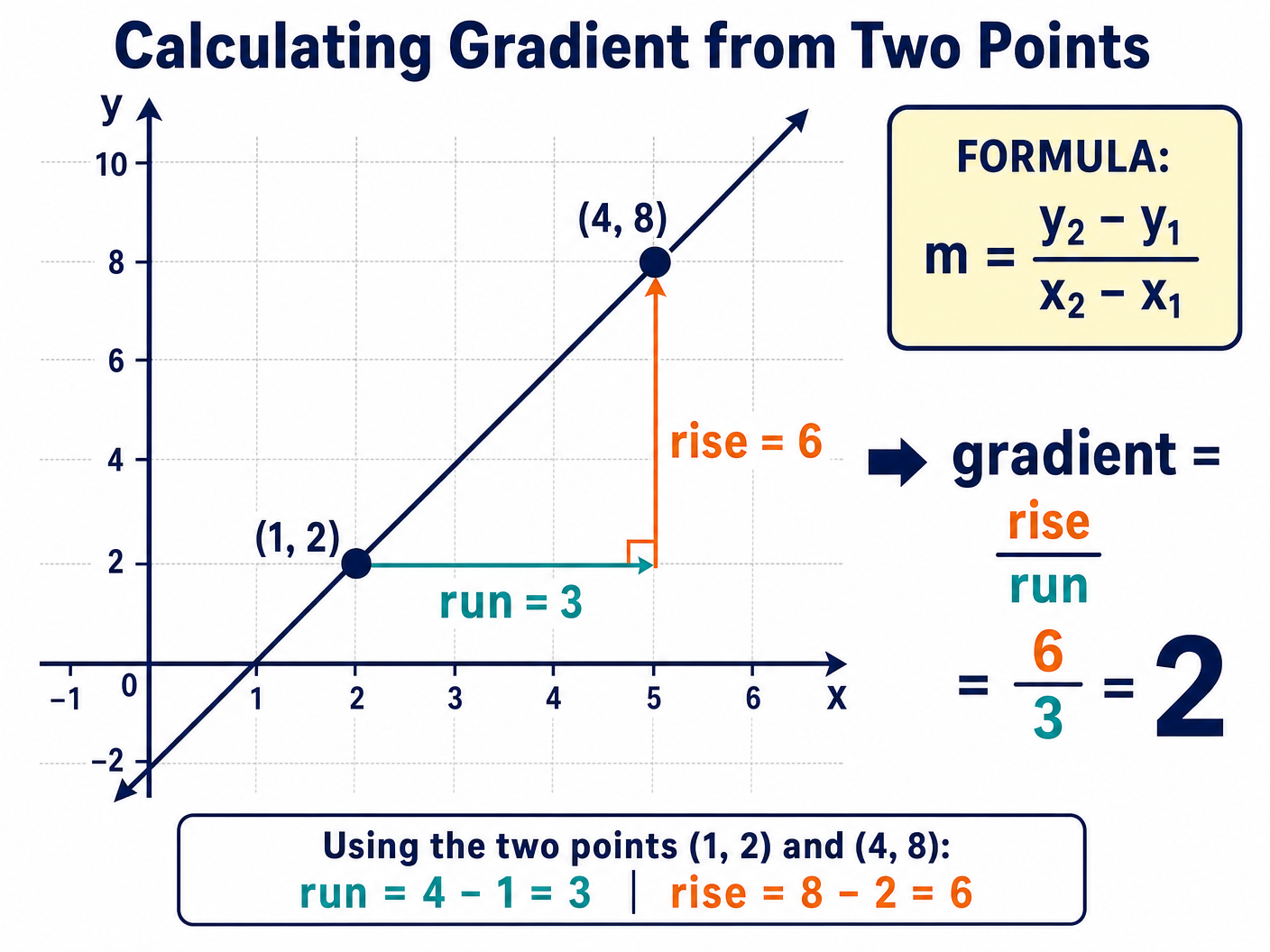
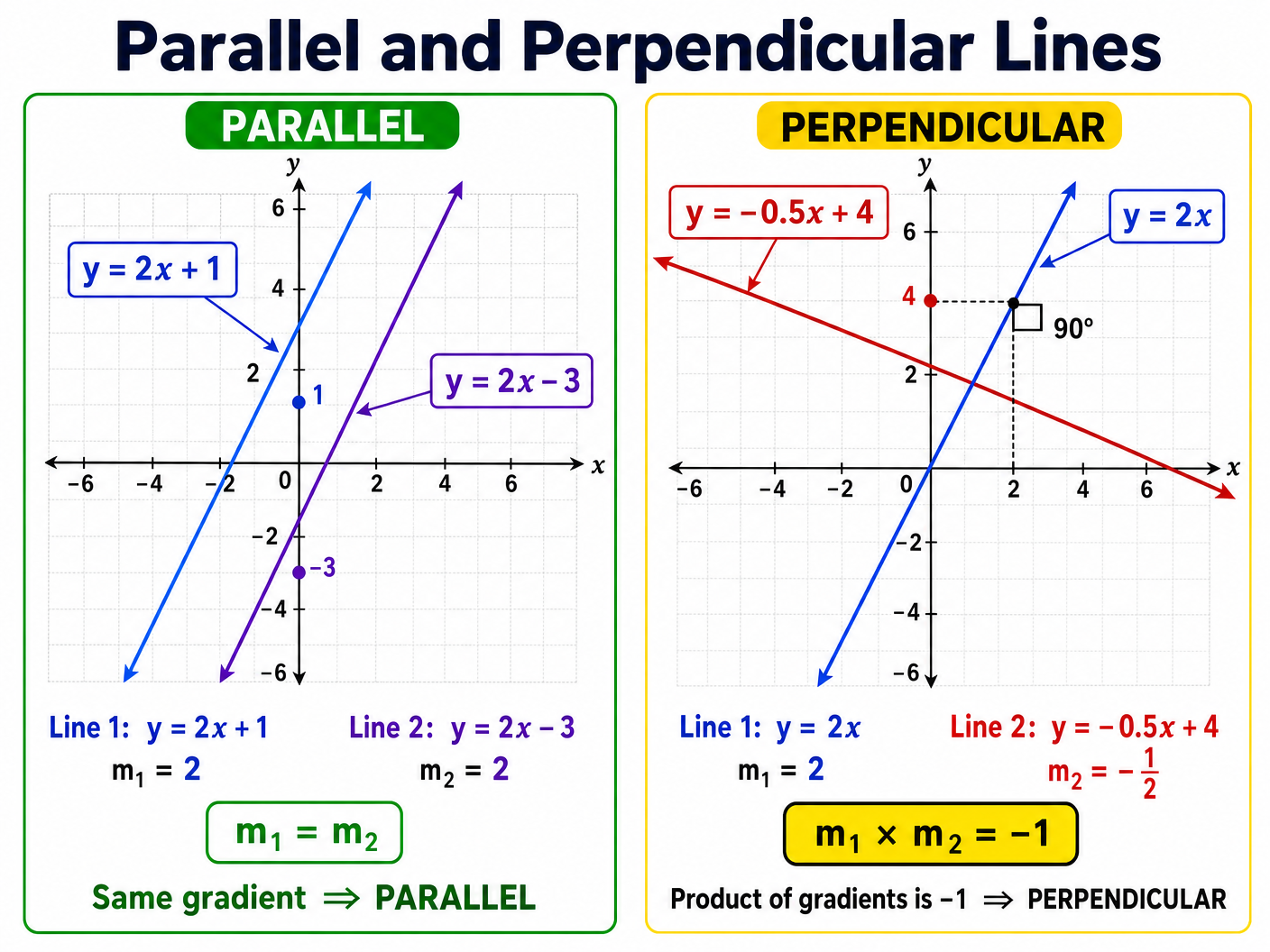
Mastering straight-line graphs is essential for securing high marks in GCSE Mathematics. This topic connects geometry with algebra, allowing you to visualise equations, calculate rates of change, and determine relationships between parallel and perpendicular lines.
Overview
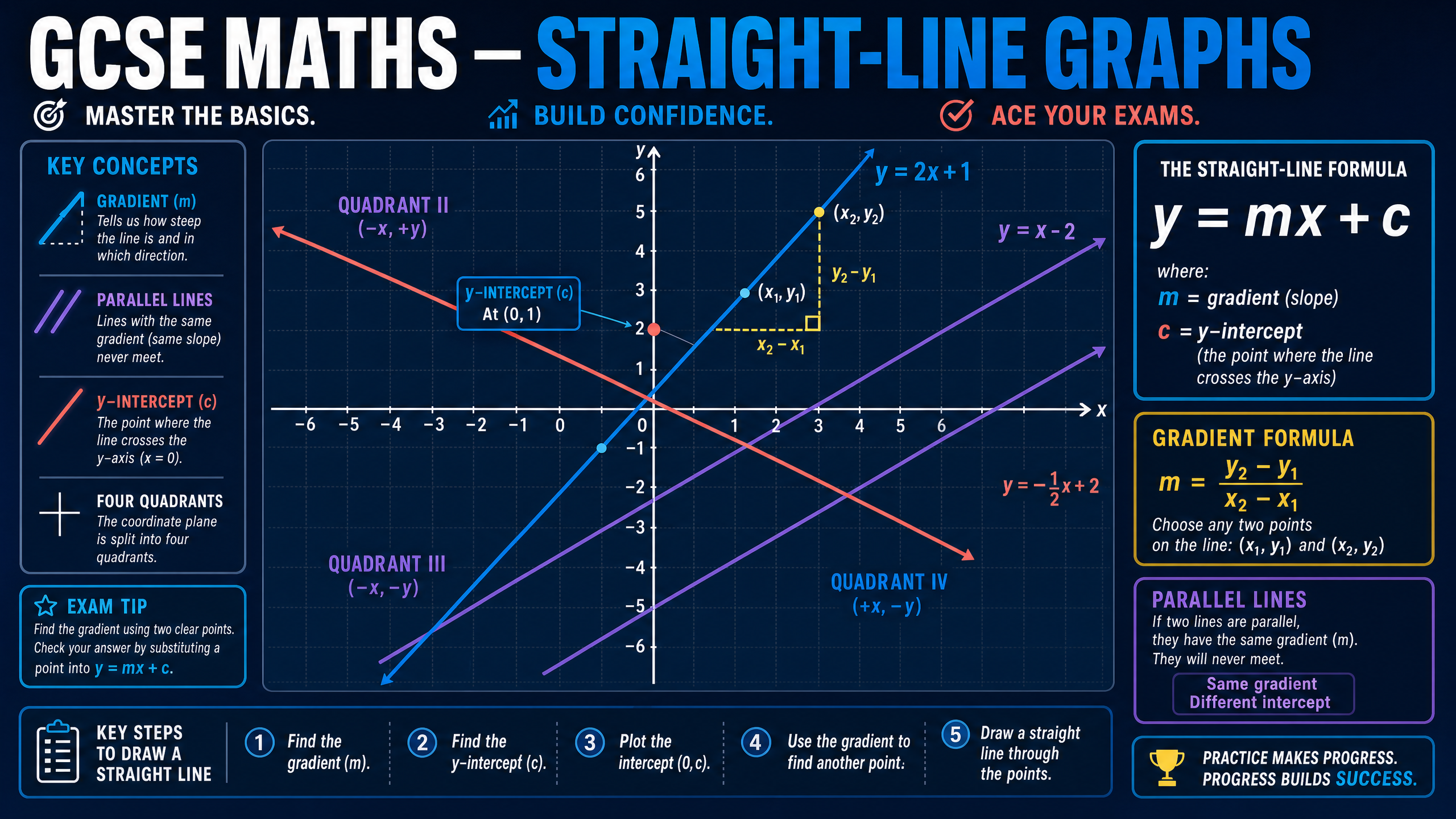
Straight-line graphs form the bridge between visual geometry and algebraic equations. Understanding how to plot points, calculate gradients, and identify intercepts is fundamental to GCSE Mathematics. This topic is heavily tested because it underpins more advanced concepts like solving simultaneous equations graphically, interpreting real-world data (such as distance-time graphs), and understanding rates of change.
Examiners typically assess this topic through a mixture of direct calculation questions (e.g., "Find the gradient of the line passing through...") and applied problem-solving (e.g., "Line L1 is perpendicular to Line L2. Find the equation of L1"). Strong candidates can fluidly move between the visual representation of a line on a grid and its algebraic equation in the form y = mx + c.
Listen to our comprehensive podcast guide to straight-line graphs here:
Continue revising: Browse all Mathematics Pearson GCSE topics →