OCR · GCSE · Music
Use of Musical Elements (e.g., dynamics, tempo, articulation)
This guide provides a comprehensive overview of how to analyse the use of musical elements for OCR GCSE Music. It covers the essential terminology and analytical skills required to secure top marks in listening exams, comparison essays, and composition portfolios.
- 8 min read
- 3 worked examples
- 4 practice questions
- 6 key terms
Study Notes
Overview
Understanding and analysing the use of musical elements is the single most important skill for a GCSE Music candidate. It forms the foundation of the listening exam (Ao3), underpins comparative analysis (Ao3 & Ao4), and is crucial for demonstrating technical control in composition (Ao2). This guide will equip you with the precise terminology and analytical frameworks required by examiners to deconstruct music across all Areas of Study: The Concerto Through Time, Rhythms of the World, Film Music, and Conventions of Pop.

Key Knowledge & Theory
Core Concepts
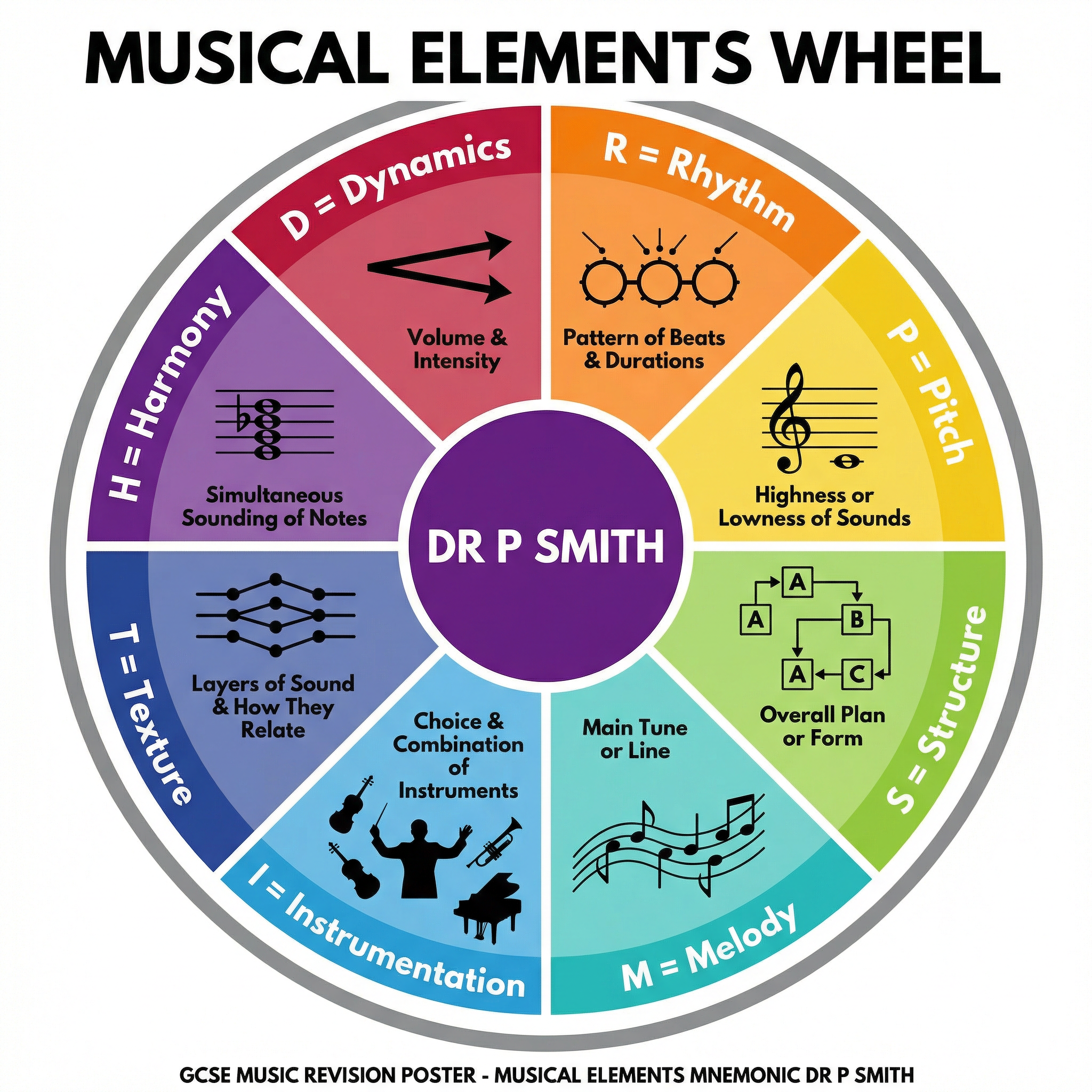
The core of this topic is understanding the interrelationship between the musical elements. Examiners are not looking for a simple list of features; they want to see that you understand how these elements work together to create a specific mood, style, or effect. The mnemonic DR P SMITH is an invaluable tool for ensuring you cover all bases in a systematic way when analysing an unheard piece.
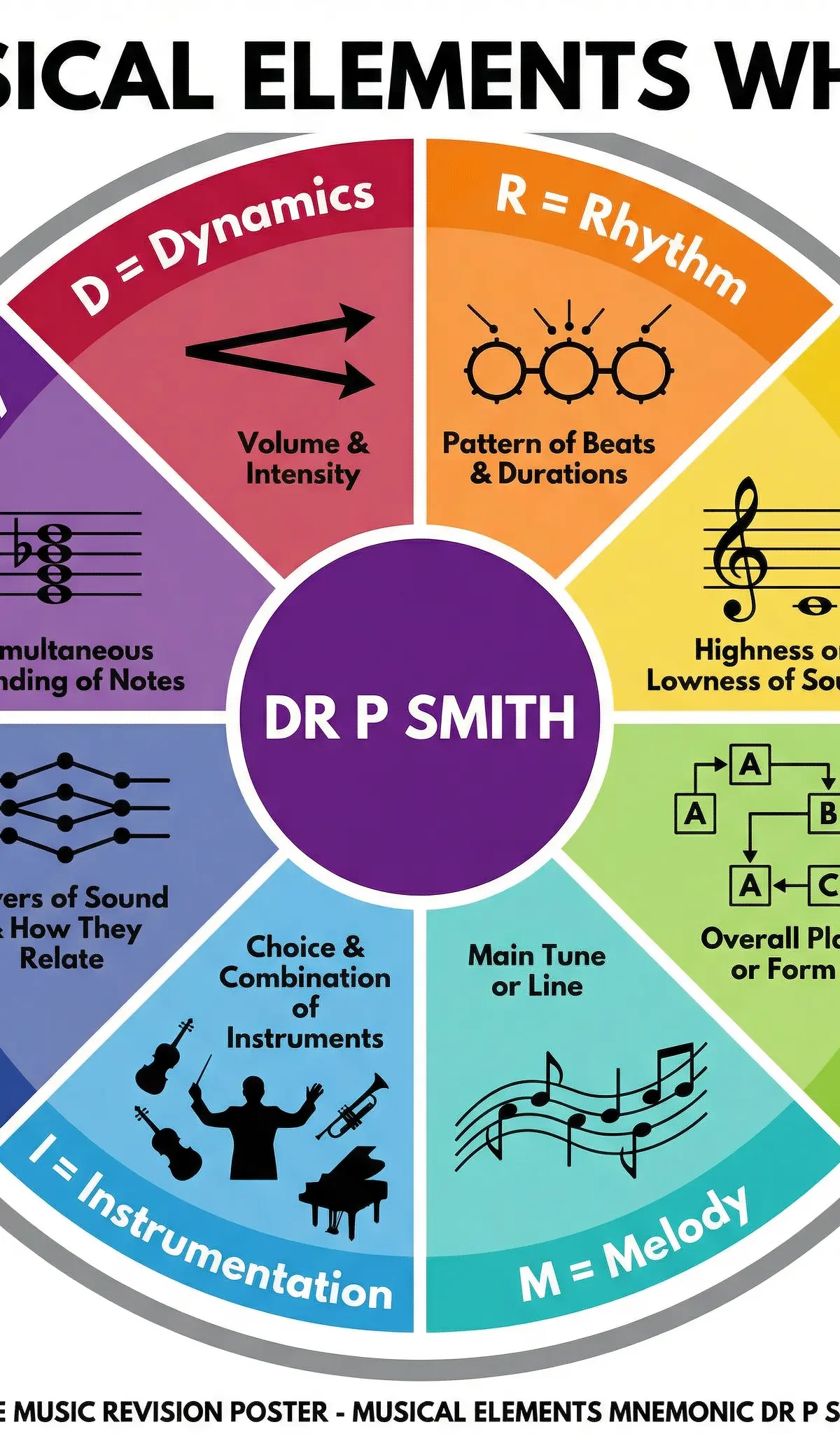
- Dynamics (D): The volume of the music and the way it changes.
- Rhythm (R): The patterns of long and short notes.
- Pitch (P): The highness or lowness of the notes.
- Structure (S): The overall plan or form of the music.
- Melody (M): The main tune.
- Instrumentation (I): The choice of instruments or voices (also called sonority or timbre).
- Texture (T): The layers of sound and how they interact.
- Harmony (H): The way chords are used and progress.
Key Practitioners/Artists/Composers
Understanding how composers from different eras manipulate musical elements is key to the comparative aspects of the course.
| Name | Period/Style | Key Works | Relevance |
|---|---|---|---|
| J.S. Bach | Baroque | Brandenburg Concertos | Master of polyphonic texture and terraced dynamics. His concertos show clear contrast between the concertino (soloists) and ripieno (orchestra). |
| W.A. Mozart | Classical | Piano Concerto No. 21 | Exemplifies the elegant, balanced structures of the Classical period. Use of clear homophonic textures and graduated dynamics. |
| Ludwig van Beethoven | Romantic | Symphony No. 5 | Pushed the boundaries of dynamics and structure, using dramatic crescendos, powerful sforzandos, and cyclical forms to create intense emotional journeys. |
| John Williams | Film Music | Star Wars, Jaws | A master of using leitmotifs, where specific instruments and melodic ideas are tied to characters. Uses dissonance and tremolo strings to build immense tension. |
| Queen | Rock (Conventions of Pop) | Bohemian Rhapsody | Demonstrates complex multi-tracked vocal textures, sudden changes in tempo and style, and a highly unconventional structure for a pop song. |
Technical Vocabulary
Using precise Italian terminology is non-negotiable for achieving high marks. Vague terms like 'fast' or 'loud' will not receive credit where a specific term is required.
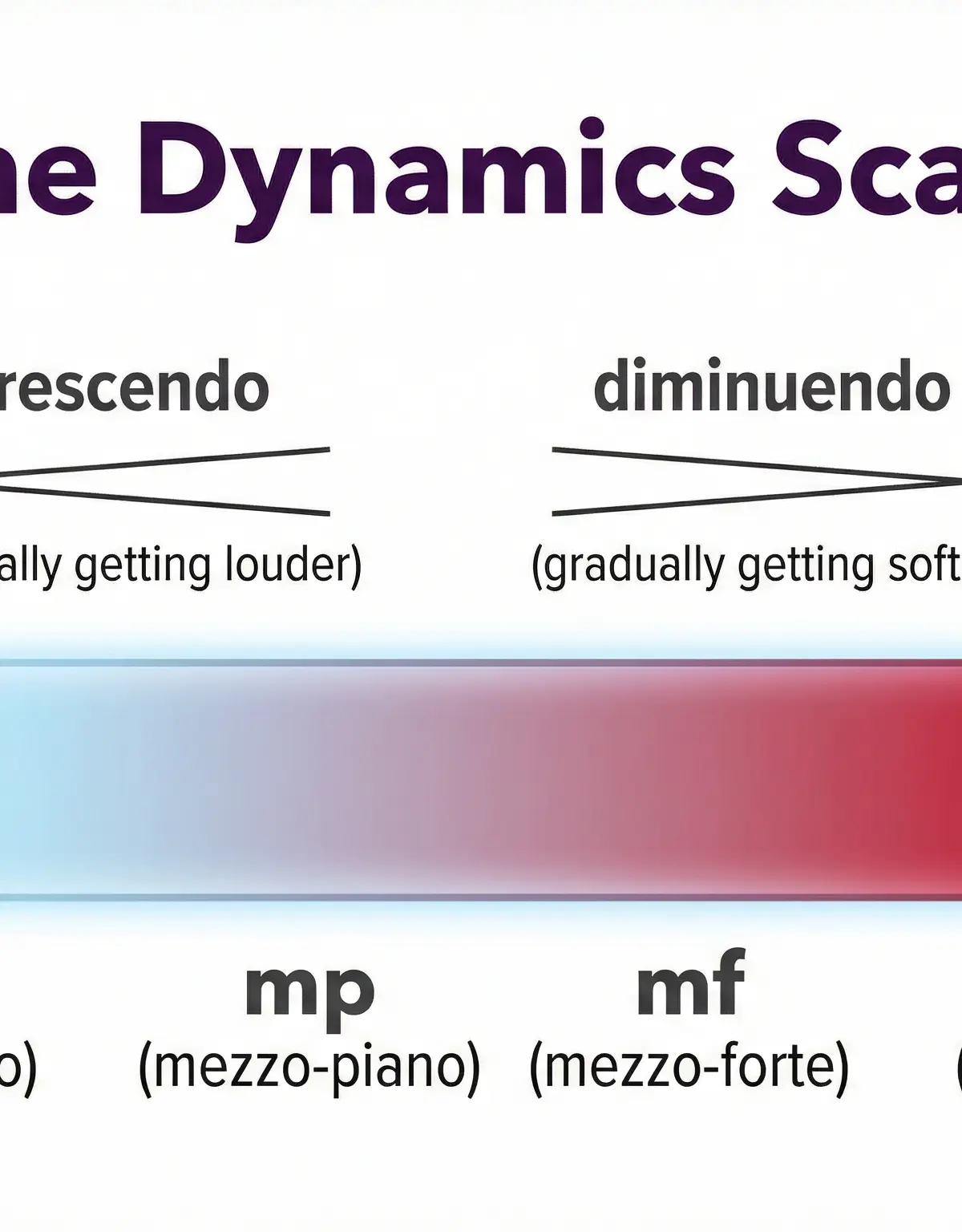
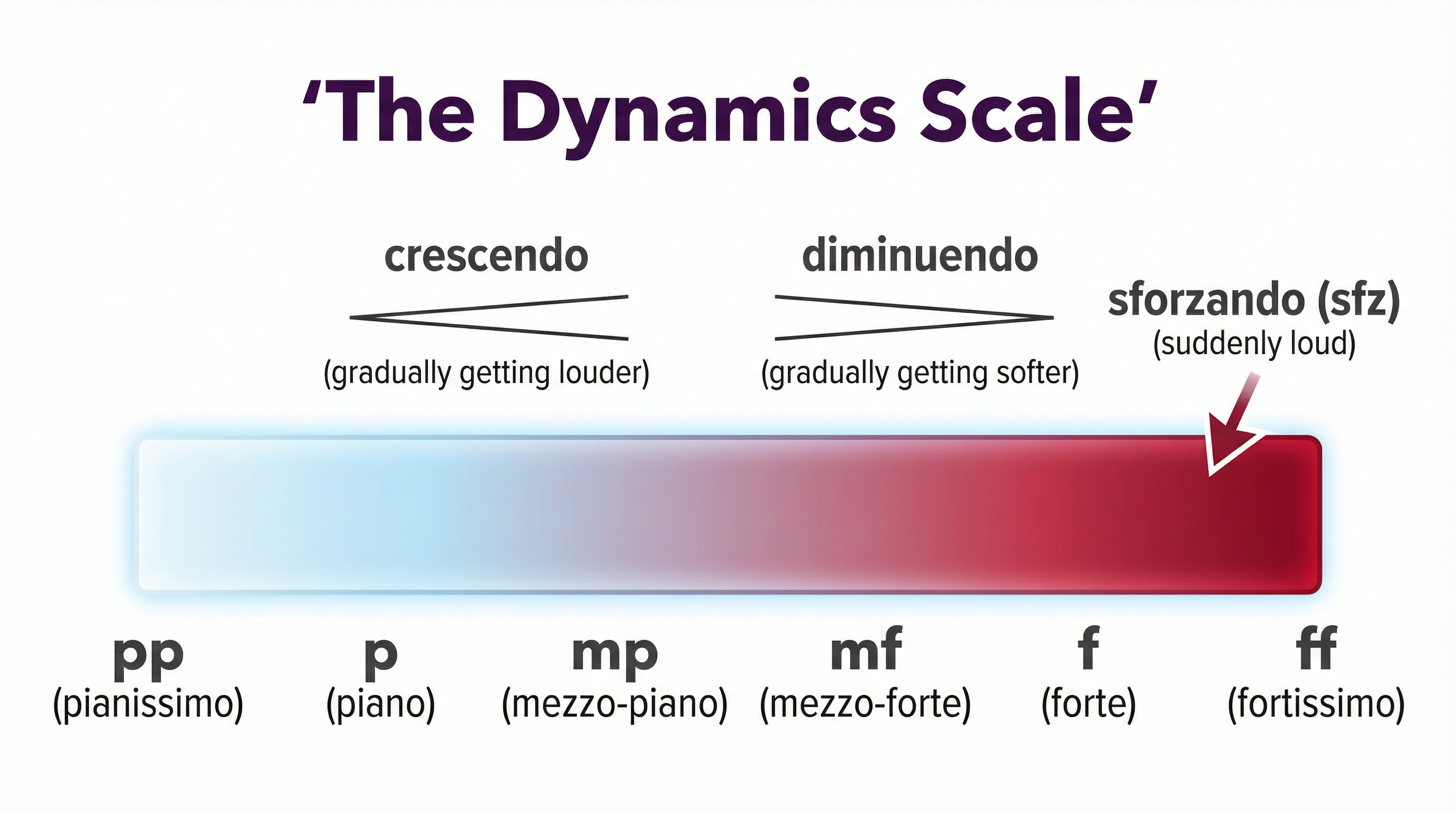
- Dynamics: pianissimo (pp), piano (p), mezzo-piano (mp), mezzo-forte (mf), forte (f), fortissimo (ff), crescendo, diminuendo, sforzando (sfz).
- Tempo: largo, adagio, andante, moderato, allegro, presto, ritardando (rit.), accelerando (accel.), rubato.
- Articulation: staccato, legato, accent, tenuto, pizzicato (pizz.), arco, tremolo.
- Texture: monophonic, homophonic, polyphonic, unison, melody and accompaniment.
- Pitch/Melody: conjunct, disjunct, sequence, chromaticism, glissando, ostinato, riff.
Practical Skills
Techniques & Processes
In your own compositions (Ao2), you must demonstrate control over musical elements to shape your music effectively. This is not just about writing the notes; it's about giving clear instructions on how they should be performed.
- Shaping a Phrase: Use a combination of dynamics and articulation. A melody can be made much more expressive by adding a crescendo into the highest note of a phrase, followed by a diminuendo. A legato marking can make it sound smooth and lyrical, while staccato can make it sound playful or detached.
- Building Tension: To create suspense, a composer might use a combination of techniques: a slow crescendo over many bars, a repetitive rhythmic ostinato in the bass, the addition of layers to thicken the texture, and the use of dissonance or chromatic harmony.
- Creating Contrast: In a binary (AB) or ternary (ABA) form, ensure your B section has clear contrast. You could change the key (e.g., from major to minor), change the tempo (e.g., from allegro to adagio), or change the instrumentation (e.g., from a full band texture to a solo piano).
Materials & Equipment
Whether you are using notation software (like Sibelius or Musescore) or a Digital Audio Workstation (DAW) like Logic Pro or GarageBand, you must show evidence of manipulating musical elements.
- Notation Software: Input dynamics, tempo marks, and articulation symbols directly onto the score. This is the clearest way to show an examiner your intentions.
- DAW: Use automation lanes to control volume (dynamics), tempo tracks to manage speed, and velocity settings on MIDI notes to control articulation and accenting. It is good practice to include a written commentary explaining how you have used these digital tools to manipulate the elements.
Portfolio/Coursework Guidance
Assessment Criteria
For your composition portfolio (Ao2), examiners are looking for evidence that you can "develop musical ideas" and "demonstrate technical control".
- Developing Ideas (High Marks): Your initial ideas are transformed and extended in interesting ways. You don't just repeat the same 4-bar loop. You might develop a melody by inverting it, putting it in a sequence, or changing the rhythm.
- Technical Control (High Marks): Your score or DAW project contains detailed and appropriate performance directions. You have used dynamics, articulation, and tempo changes to create a musically convincing and expressive piece. The music sounds finished and polished.
Building a Strong Portfolio
- Annotate Your Score: If submitting a notated composition, add annotations that explain your choices. For example: "Here, I have used a crescendo and added the cellos to thicken the texture and build towards the chorus."
- Keep a Composition Diary: Document your process. Write down what you tried, what worked, and what didn't. "I experimented with a faster tempo here, but it lost the sad mood I was aiming for, so I changed it to adagio." This evidences experimentation and refinement.
- Get Feedback: Play your composition to your teacher and peers. Ask them what mood it creates. If they don't say what you intended, ask yourself which musical elements you could change to make your intention clearer.
Exam Component
Written Exam Knowledge
The listening exam (Ao3) will test your ability to identify and analyse musical elements in unheard extracts from the Areas of Study. You will be asked to:
- Identify specific elements using correct terminology.
- Describe the effect of these elements.
- Compare and contrast the use of elements in two different extracts (the 8-mark question).
Practical Exam Preparation
While there isn't a "practical exam" for composition in the same way as Art, the principle of working under timed conditions is relevant. Set yourself a timed task: "You have 2 hours to compose a 16-bar melody for a film scene depicting a chase." This will improve your fluency in getting ideas down quickly, a skill you will have needed throughout your coursework.
Visual Resources
2 diagrams and illustrations
Interactive Diagrams
1 interactive diagram to visualise key concepts
Conceptual Flow Outline
The Compositional Process: From Brief to Evaluation
Worked Examples
3 worked examples — open one to explore the question and available guidance.
Practice Questions
Test your understanding — click to reveal model answers
What is the difference between ritardando and rallentando?
Hint: Think about how these terms are used in practice.
Describe the texture in the opening four bars of J.S. Bach's Brandenburg Concerto No. 5.
Hint: Listen to the different melodic lines. Are they independent or moving together?
Analyse how the composer uses instrumentation to create character in film music. Refer to a specific example you have studied. [6 marks]
Hint: Think about a film theme you know well. Which instruments play the main theme? What does this tell you about the character?
You are composing a piece of music for a video game level set in a tense, underground cave. Explain how you would use THREE different musical elements to create a suitable atmosphere. [6 marks]
Hint: Use the DR P SMITH mnemonic to pick three elements. For each one, state what you would do and explain the effect.